Bring Your Cats Inside: Thieves Are Snatching Cats From Yards And Selling Them Online

As cat thefts increase on both sides of the pond, a UK woman’s security cameras caught a pair of thieves trying to stuff a neighbor’s cat into a plastic bin under cover of darkness. The cats are later sold online.

A week after a brazen thief stole a Portland family’s cat off their front porch, a pair of cat thieves were caught on security footage snatching a cat from a residential street in the UK.

The latter is not an isolated incident. A group of amateur sleuths, comprised of people whose cats were stolen and others concerned about the spate of thefts, found several of the missing cats listed for sale on a UK pet classifieds site, Pets4Homes.co.uk.

The latest cat-napping happened in East Birmingham, where home security cameras captured footage of a man and a woman creeping along a residential street shortly before 4 am, armed with cat treats, milk and a plastic bin and quietly searching for neighborhood felines.

East Birmingham’s Charlene Jones told the UK Sun that she was woken up by her dogs, who alerted her to intruders on her property.

“I didn’t notice anything until the dogs started barking, and I looked out the window and caught them in the act,” Jones said. “It all happened around 20 to four in the morning, at this point she was just putting the cat into the bin. I opened the window and the cat escaped.”

Cat thieves
In this still from Jones’ security cameras, the cat thieves are seen with the treats, milk and plastic bin they were using to capture neighborhood kitties.

An angry Jones, whose own cat was stolen three weeks ago, confronted the thieves, who claimed they were working for a local animal welfare charity and were trapping strays.

“I went out and spoke to them and she started reeling off all these charity numbers and claiming she worked for them,” Jones said.

When Jones later reviewed the footage she recognized the cat, who belongs to a neighbor a few doors down the street.

“I feel angry,” Jones told the paper. “I have done my own research, she has been selling cats for eight months.”

Jodie Smith of Solihull, a town of about 123,000 about 18 miles from Birmingham, said her family’s cat, Arlo, was stolen in January. A friend later spotted Arlo on Pets4Homes, but the Smiths weren’t able to recover him.

“It’s awful, this is my daughter’s cat,” Smith said. “My daughter can’t go to bed with cuddles from her fur baby. She is absolutely gutted.”

Arlo the cat
Arlo was listed on Pets4Homes but the family was unable to recover him.

Pet thefts on both sides of the Atlantic have been on the rise since the beginning of the Coronavirus pandemic in 2020. As entire countries went into lockdown, demand for companion animals skyrocketed, leaving many shelters bare and breeders sold out.

Criminals saw an opportunity and began stealing pets, mostly dogs at first, from yards, homes and kennels, prompting the owner of one lost pet site to dub 2020 “the worst year ever” for dog thefts, according to the BBC.

With exotic cat breeds commanding large amounts of money on the open market, from a few hundred dollars for breeds like Persians to $20,000 for Savannah cats, opportunistic thieves began targeting felines as well. “Moggies,” cats of indeterminate origin or no particular breed, aren’t exempt either. Some may be stolen because thieves mistake them for exotics, while other thieves apparently find it worth their time to snatch cats that can net them $100 or more on sites like Craigslist and Pets4Homes.

In the UK, cat thefts have increased threefold within the last five years, a trend accelerated by the pandemic and the resulting scarcity of cats, especially those with breed pedigree. Police rarely recover the stolen pets, and authorities say some people are targeted after sharing photos and video of their pets online.

Stealing cats is especially easy in the UK, where the majority of people allow their cats to roam free outdoors and the idea of keeping cats strictly indoors is seen as cruel or improper, even though felis catus are domesticated animals and don’t have a “natural habitat.”

In the Portland case, no one has come forward with any solid information in the theft of Kiki the cat despite two relatively clear shots of the suspect’s face and extended footage of her approaching and taking the cat from the Autar family’s front porch on Feb. 20. Like the UK catnappings, the Portland suspect seemed motivated by profit: The family said their cameras also caught the woman checking for open car doors, and the way she grabbed and held the cat — holding him at arm’s length, dangerously carrying him by the scruff of his neck — indicated she saw him as an object, not a living creature.

Karina Autar told PITB on March 1 that her family hasn’t given up hope.

“We are all just getting by, we are coping by putting in all our energy [into finding] him,” she said.

Cat thief suspect
The thief was caught snatching KiKi off his family’s front porch on Feb. 20.

In the UK, Jones is not the only person to confront the cat thieves. Amy Buckley, 29, told The Sun that the woman seen in Jones’ footage also told her she was an employee of an animal welfare organization.

“She came to mine around January, claiming she worked for the PDSA and that they’d had a report about a large number of stray cats in the area,” Buckley told the paper.

She said she was immediately suspicious because PDSA (People’s Dispensary for Sick Animals) is a charity run by veterinarians that provides care, not TNR or general trapping services.

PDSA confirmed the woman does not work for the organization, while local police told the paper they had taken several reports from people whose cats had been stolen and were investigating the thefts. Meanwhile, an RSPCA spokesperson urged caretakers to have their cats microchipped.

In the meantime the victims are trying their best to locate their stolen furry family members, but they’re also angry at the pain the thieves have caused families and children.

“There are other families going through the same heartbreak,” Smith said. “For a lady to have some money in her pocket, she is destroying little children.”

After Fire Destroys 1,000 Colorado Homes, Victims Are Still Looking For Their Cats

After their home was destroyed in an all-consuming fire, a Colorado family thought they’d gotten some good news when police found their cat and brought her to the local Humane Society.

The Conejo family visited their beloved Pumpkin at the veterinary clinic where she was recovering from her burns and were eager to bring her home until a veterinary tech realized there’d been a mistake: Pumpkin is female, but the heavily burned and convalescing orange tabby was male.

Now the parents — who were not home when the fire ripped through their neighborhood and couldn’t retrieve either of their cats or their belongings — have to tell their two young kids that it was a case of mistaken identity, and they still don’t know what happened to Pumpkin and their other cat, Justin.

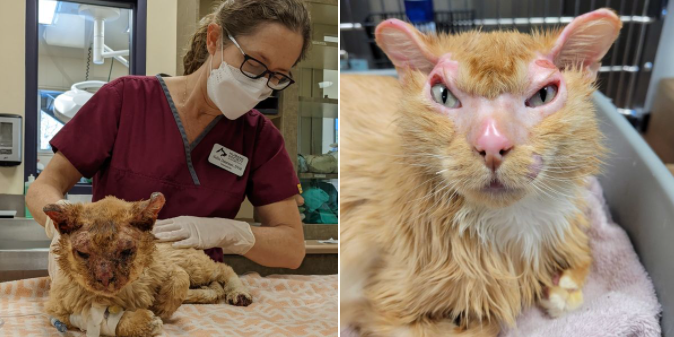
bootsthecat
Boots suffered burns on his face and right front leg.

In what is now officially the worst fire in Colorado history, almost 1,000 homes were destroyed and more than 100 others damaged, leaving tens of thousands of people homeless with many of them still searching for their missing cats and dogs two months later.

The Dec. 30 blaze ripped across three suburban towns between Denver and Boulder, consuming entire housing divisions, strip malls and stand-alone buildings. Authorities still haven’t said how the fire started, playing their cards close to the vest as they await laboratory tests and analysis from forensic fire investigators.

A search warrant executed on the compound of a nearby cult and a viral video that showed a barn burning on the group’s property, reportedly at the time firefighters were notified of the initial fire, have drawn attention and speculation from locals. But authorities say they’re looking at every possibility, from a possible lightning strike to an electrical fire and even the possibility that one of the nearby abandoned coal mines could have spontaneously ignited.

While the Conejo family did not get the news they wanted, things had a happy ending for the male tabby they thought was their Pumpkin.

The cat, an eight-year-old named Boots, had an emotional reunion with his human on Feb. 22 courtesy of the Humane Society of Boulder Valley.

“Hi, sweetie,” she said, hugging Boots tight in a video posted to the Humane Society’s Facebook page.

Some neighbors, who were inexplicably but mercifully spared by the fire, were counting their blessings but said they felt guilt as well.

Tracy and Jason Granucci were vacationing in Mexico’s Cabo San Lucas when their phones began blowing up with incoming alerts and texts from concerned friends.

Tracy Granucci immediately texted Carol, her cat-sitter: “I don’t care about the house,” she wrote in the text. “Obviously Peanut is all I care about.”

Routes to their street were blocked off and neither Carol nor animal rescue volunteers were able to get to the Granucci home, but when they returned they saw their home was still standing, unscathed despite the destruction of four nearby houses. Peanut, their 16-year-old tortoiseshell, was fine.

“The feelings I’ve had about being in our home and looking out at our neighbors and our community is definitely … survivor’s guilt,” Tracy Granucci told the local PBS news affiliate. “All you want to do is you want to help everybody.”

Camden Hall was at work when the fire raged through his neighborhood and was terrified that his cat, Merlin, was in its path.

When his landlord called to tell him the house had burned down, Hall said he felt “like someone had just ripped my soul out.”

Luck was on Merlin’s side. A neighbor heard distressed meows coming from one of the few homes that were still standing and found the little guy on the porch, badly burned but still alive. Hall reunited with Merlin at a local veterinary clinic.

The ordeal isn’t over for Merlin, however. His injuries were much worse than were realized, and he’s got several procedures and a long road to recovery ahead of him. A GoFundMe started by a friend of Hall will cover the veterinary expenses and help Hall get back on his feet.

What’s The Real Reason Cats Love Boxes?

It’s about more than just having a cozy place to sit.

Buddy is not overly obsessed with boxes.

I think that’s because he feels safe here, he’s got plenty of places to hide if he wants, and he’s got a big cat tunnel with four ways in or out. He doesn’t need another little space to crawl into.

Still, like any cat, the little dude likes a good box. When he gets to play with a new box he likes to sniff it, rub against it once or twice, then jump inside and determine if it’s comfortable. Then he gets serious, looks around, and slowly sinks down below the top of the box…

…and remains there for a few seconds before cautiously raising his head and looking around. Usually this is accompanied by a delighted trill, and I get the strong sense that he thinks he’s invisible to anyone outside the box while he has the advantage of seeing them.

“You cannot see Buddy, but Buddy sees you!”

Does he ambush me from the box? Does a bear crap in the woods?

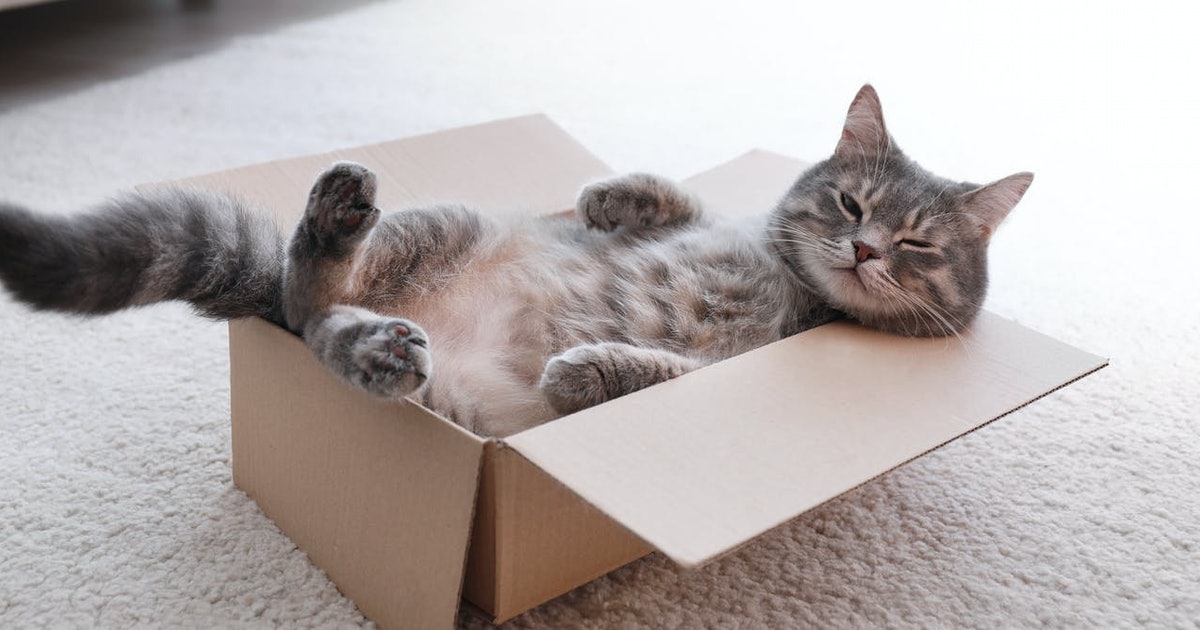
There isn’t an abundance of research into why cats love boxes so much, but the existing data combined with what we know about the feline mind strongly suggests that, first and foremost, boxes have a strong psychological effect. They make cats feel secure and well-protected.

Anyone familiar with cats knows the little furballs like to wedge themselves into hideaways, scurry under tables and hide in laundry baskets. The behavior starts in kittenhood when they’re tiny enough to crawl into shoes and sneakers.

In 2021, animal cognition grad student Gabriella Smith conducted a study in which she found cats will happily sit in Kanizsa contours with the same enthusiasm they have for boxes.

Kanizsa contours are two-dimensional. The participants created them by using tape and paper to make the shapes on the floor. They’re not even proper boxes, just the illusory suggestion of boxes or general square shapes. That doesn’t seem to matter to cats:

Of course pieces of tape or paper on the floor do not afford any real protection, so the feline affinity for boxes seems to be more about feeling protected.

Since cats are territorial, it could be that they also like clear boundaries around their personal space.

The key here seems to be having the boundary without blocking access, as cats are notoriously not cool with closed doors or being confined. If they want to spend an hour in a tiny space and it’s their idea, they’re fine with it, but they don’t like to be restricted by when they can come and go.

Notably, this isn’t behavior limited to felis catus. So far there doesn’t seem to be any exception to the box-loving rule among felines and felids of any species. Tigers, lions, jaguars, leopards, snow leopards and pumas seem just as fond of them as their smaller cousins, as you can see in this video from Big Cat Rescue:

Boxes are comforting, cozy, fun to explore and make the perfect hiding spots for ambushes. If you’re a cat big or small, what’s not to like?

Sunday Cats: FitBit For Felines, Plus CFA’s Top Breeds For 2021

Now you can track how much time your cat spends exercising, grooming herself and sleeping.

A Japanese company that sells FitBit-like devices for cats released its first data-driven report this week and promises new revelations to come as more people buy the devices for their cats, leading to more data.

The company and its device are both called Catlog. To mark “Cat Day” in Japan, which falls on Feb. 22, researchers at the Shibuya, Tokyo-based firm issued a report saying data shows cats sleep progressively longer as they age, and cats in general sleep longer in winter.

Yeah. Not exactly a whopper.

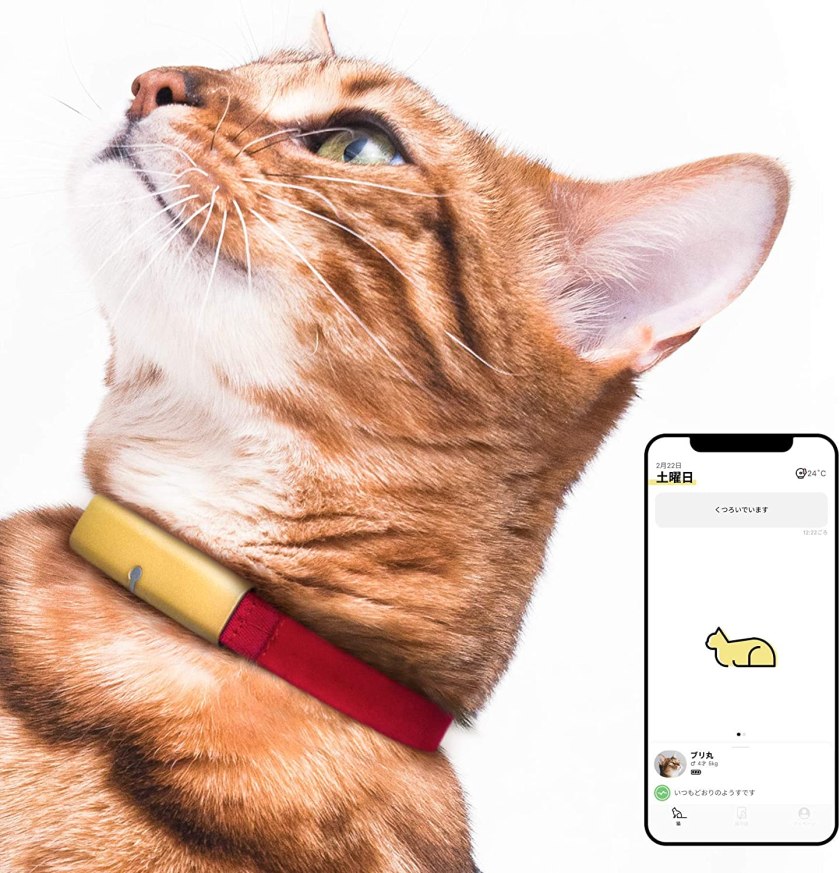
Still, it’s one thing to know something anecdotally and another to prove it, and there are tantalizing possibilities as more kitties are equipped with Catlog. The collar-like device uses “biologging” technology to record and sort data on things like eating, drinking, sleeping, grooming and exercise. The data is relayed to caretakers via a mobile app and added to the information coming from every other Catlog, giving the research team behind the app hard data for cats across all ages and breeds.

The Catlog has received Japan’s Good Design Award, a sought-after mark of excellence among Japanese products.

Catlog
Catlog looks like a regular collar with an unobtrusive device attached.

Unfortunately Buddy won’t be contributing to that data even if Catlog pushes into the US market. Little dude won’t tolerate a collar at all and is not shy about loudly, repeatedly, incessantly communicating when he doesn’t like something. 🙁

Most Popular Cat Breeds of 2021, According to CFA

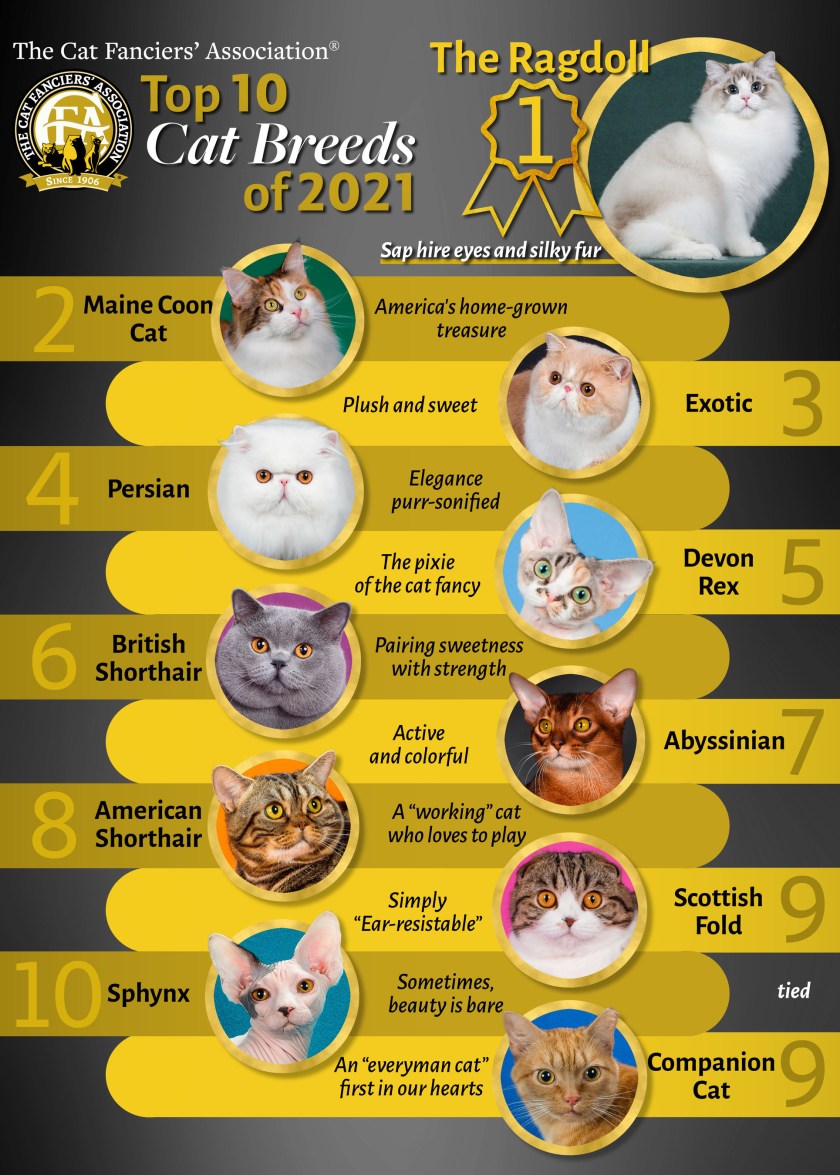
The Cat Fanciers’ Association has released its annual list of the most popular cat breeds. While the CFA recognizes 45 breeds and registers “non-pedigreed” cats as well, the list is based only on CFA registered cats. That means it provides a good snapshot of which breeds are trendy, but it’s not a definitive most popular breeds list.

Cats without a particular breed still account for the vast majority of all pet felines, but among people who registered their cats with CFA, Ragdolls were the most popular in 2021, followed by gentle giant Maine Coones and exotic shorthairs. (Note that this list does not include the fearsome and elusive Buddinese Tiger.)

2021-breeds-with-CC
The world’s largest registry of pedigreed cats has again determined the world’s most popular cat breeds, based on registrations. This year’s Top 10 list reflects the increasing popularity of certain breeds. However, registrations of ALL cats have increased substantially, reflecting the growing popularity of pet cats since the beginning of the pandemic.

In Ukraine, Cats and Dogs Suffer Along With Their Human Companions

Shelters in Ukraine are running out of food, while the country’s stray cats and dogs are particularly vulnerable as war rages around them.

If you’ve got a cat who doesn’t handle the Fourth of July well and gets freaked out by the annual fireworks, imagine that multiplied by about a thousand, with no respite.

Then imagine that, instead of reassurance from calm humans who know the explosions are just part of a celebration, the cats and dogs of cities like Kiev pick up on the anxiety of the people around them, sensing their fear, reading their body language.

War takes a terrible toll on humanity, a fact that’s been well-documented for centuries, but much less has been written about the suffering and fate of animals in the crossfire of forces they can’t comprehend. (One outstanding take on animals in war is 2006’s Pride of Baghdad, a heartbreaking account of four lions who escaped Baghdad Zoo as US bombs rained down on the Iraqi capital. While Pride of Baghdad is a fictionalized account of what happened to those lions, the story is sadly, infuriatingly true and remains one of the lesser-known accounts among the tens of thousands of stories told about the toll of that war.)

In Ukraine, where the Russian military has taken control of the local airspace and destroyed the country’s airports, people are taking their pets and what possessions they can as they try to escape by land via routes to the border that are backed up by 15 miles or more.

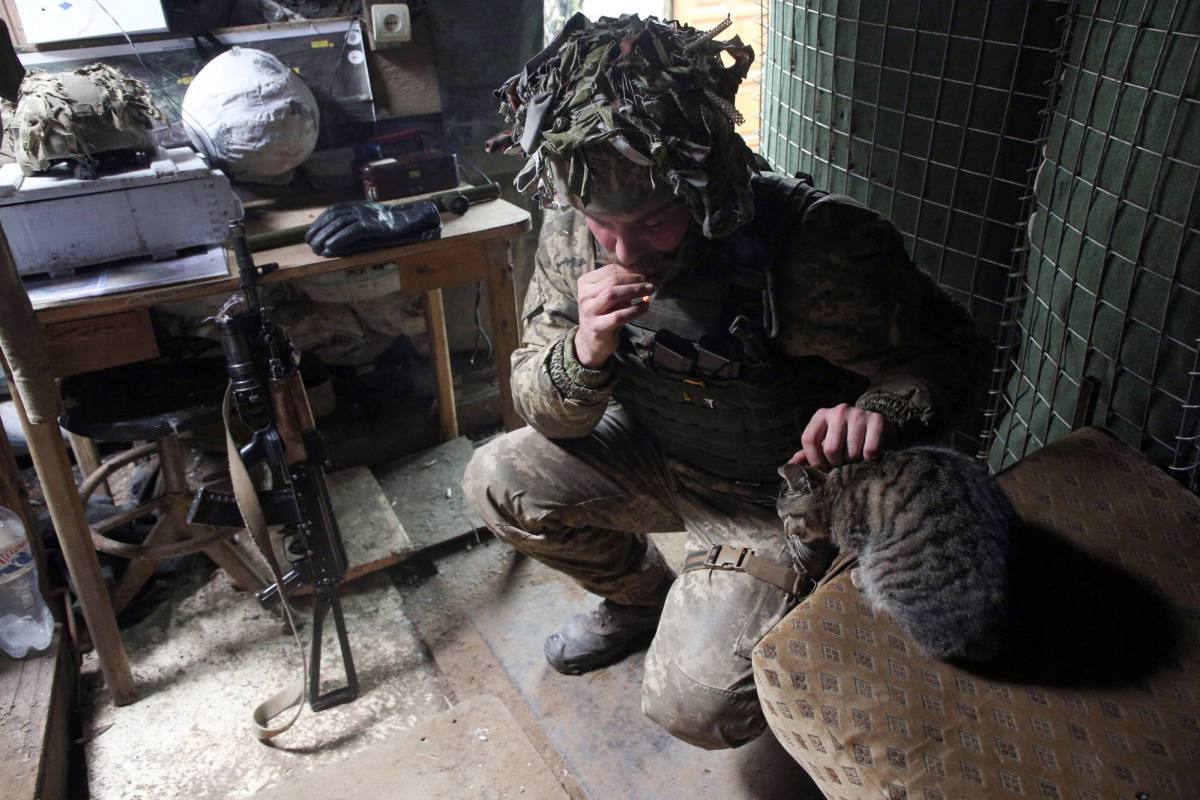
Ukrainian soldier with stray cat
A soldier holds a cat in Mariupol, southeastern Ukraine. Credit: Aleksey Filippov

Meanwhile, as all men of fighting age have been called to stay, stray dogs have been a comfort to Ukrainians on the front line. The soldiers feed the dogs, and the hyper-vigilant dogs alert the soldiers to any unusual activity they pick up on.

“She immediately barks or growls if the enemy is planning an attack. It’s safer and calmer with her – no wonder they say that a dog is man’s best friend,” a 21-year-old Ukrainian soldier named Mykyta told Agency France-Presse as he gave an affectionate pet to a dog adopted by his unit.

Stray cats are cozying up to the soldiers as well. Dmytro, a 29-year-old soldier, said a black cat he named Chernukha has kept him company and helped him cope.

“You come back to the post, lie down on the bed, and here comes Chernukha,” Dmytro told AFP. Chernukha “lies on your stomach and looks at you as if she wants to be petted. It’s a sedative.”

Like many Ukrainians, staff and volunteers who man the country’s shelters have remained defiant and refused to leave. In Kiev, staff at Best Friends shelter are rationing food and trying to locate more.

“It is very difficult and scary for [the animals] and for us. Due to the fighting, suppliers of food for animals are not working,” a shelter staffer told Newsweek. “We need help now with animal food and its transportation to the shelter. We will also be grateful for the financial support.”

Getting food is already difficult and will become more so as Russian troops push further into the capital and civilians hunker down in homes, basements and bomb shelters.

Nastya Aboliesheva, who works for Kiev-based Happy Paw shelter, said “no one is willing to risk their lives to deliver what is needed.”

“Our work now remains important and necessary, because animals do not understand what is happening and also need food and treatment….the main thing that people can help now is not to throw their animals at random, but to be near them or to evacuate with the animals,” she said. “We very much hope that local authorities in Kyiv and other cities will allow people to take animals in boxes to bomb shelters.”

Top image: A Ukrainian soldier petting a cat. Credit: AFP