The sanctuary’s expansion will allow staff to care for FeLV-infected cats who are highly contagious and cannot be housed with the other kitties.
In 2015, a Good Samaritan found a tiny kitten abandoned in the snow and brought her to Tabby’s Place.
Staff at the Ringoes, New Jersey-based sanctuary nursed her back to health, but tests confirmed the little one had Feline leukemia virus (FeLV). While they set up a makeshift isolation ward (FeLV is highly contagious), a woman came by and told the staff she wanted to adopt a cat no one else wanted.
She chose the FeLV+ kitten, who was dubbed Quinn, even though she knew they might only have a few months or perhaps a year or two together.
Seven years later and despite the odds, Quinn is still with her human mom. The latter decided she wanted to thank Tabby’s Place with a $3.5 million donation to help FeLV+ cats like Quinn. With the hefty donation and the support of many other donors, the sanctuary is closing in on the $5.5 million to cover the construction of Quinn’s Corner, a first-of-its-kind center for treating cats infected with FeLV.
“These little ones are really the ‘final frontier’ in terms of cats who have nowhere to turn,” Tabby’s Place Development Director Angela Hartley told PITB, “and we’re thrilled to finally be in a position to welcome them at Tabby’s Place.”
Staff at Tabby’s Place see Quinn’s Corner as a major step forward in caring for kitties who normally don’t have a chance. Because they don’t have the facilities, know-how or resources to treat FeLV+ cats, many shelters simply euthanize them.
In the initial announcement, the sanctuary described Quinn’s Corner as a place where “cats who wandered the world looking for love will find cage-free bliss, matchless medical care, and the dignity and tenderness that every Tabby’s Place cat enjoys.”
The construction crew broke ground about a year ago and, if factors like supply chain issues for construction materials and the weather cooperate, the staff at Tabby’s Place hope to celebrate with a grand opening in autumn.
Because of how contagious and deadly FeLV is — it can pass by grooming, sharing food and water bowls, and close contact — infected cats must be kept apart from the other feline residents. Quinn’s Corner will have its own entrance and lobby, individual suites and a large communal room for FeLV cats, and “solaria,” which are like fancy catios for the ailing furballs to get fresh air and enjoy chirping at birds.
Separately, the project will add a nursery and adoption suite for kittens and an “operations center” where staff can attend to all the behind-the-scenes work of caring for felines, including laundry and food prep.
Tabby’s Place will match donations until they reach the $2 million goal to supplement the initial donation of $3.5 million, but cat lovers can continue to donate at any time, Hartley said.
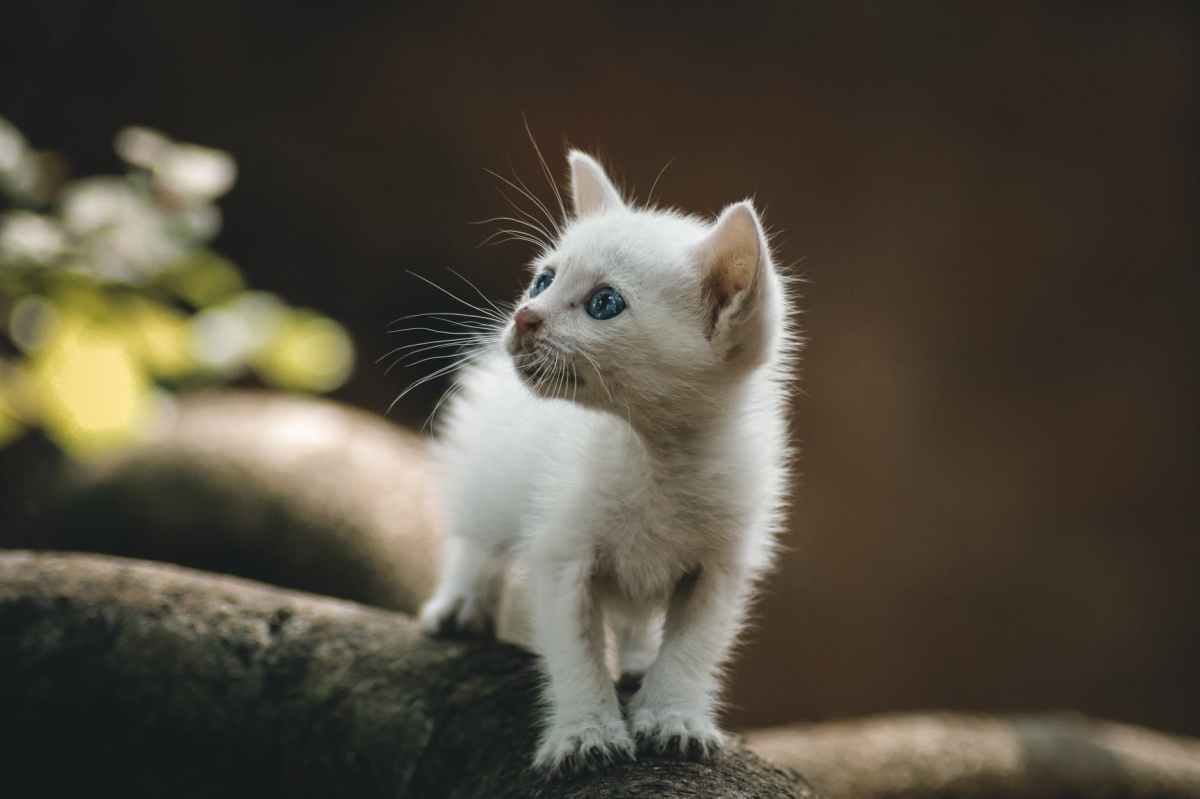
All construction photos and renderings provided by Tabby’s Place. Top photo credit Asish Aji/Pexels.
Parsnip and Jupiter are fighting off FIPV, a virus that until recently was a death sentence for cats. The future looks bright for both cats.
After almost three months in treatment, little Parsnip is back to her old self.
The tabby cat with expressive sky blue eyes had been diagnosed with Feline infectious peritonitis, a variation of feline coronavirus that attacks the body’s white blood cells and can render even the most playful kittens lethargic, eventually robbing them of their ability to walk and ultimately, their lives.
Parsnip was an affectionate whirlwind of energy when 21-year-old Californian Anae Evangelista adopted her. When she lost her kitten exuberance six weeks later, Evangelista knew something was wrong. When the little cat stopped eating and drinking, Evangelista realized the problem was much more serious than an initial veterinary examination suggested.
After more tests, she received grim confirmation that Parsnip had FIPV, a virus that is almost always fatal.
But a veterinarian connected her with an online group for people whose cats have FIPV and Evangelista was able to get her kitty accepted for experimental treatment with GS-441524, a nucleoside analogue antiviral drug that has proven effective at treating all types of FIP in several trials in recent years.
After a regimen of almost three months of GS-441524 treatment, Parsnip has her energy back, she’s gained a pound and a half, and “looks perfectly healthy,” Evangelista said. Equally important, her blood work and other health indicators are all positive.
She’s overjoyed at the result. Parsnip came into her life at a difficult time, when Evangelista was grieving the loss of two friends. Losing the kitten she’d bonded with — an animal who had become such a comfort to her over the months — would have been too much.
Evangelista will graduate from college in about a week’s time, “so I’m honestly so excited to have her ‘graduate’ from her treatment too,” she told PITB.
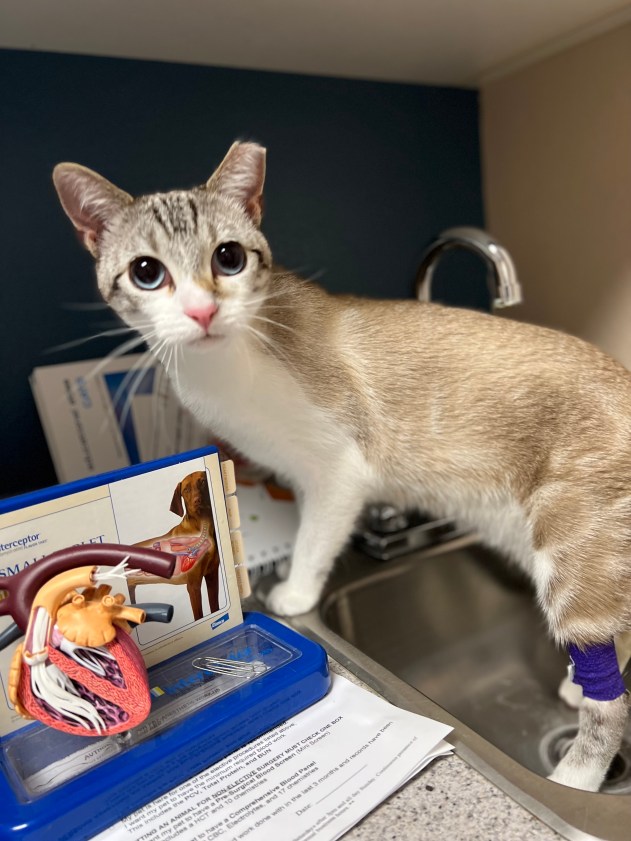
Parsnip being a little trooper during one of her many veterinarian visits.
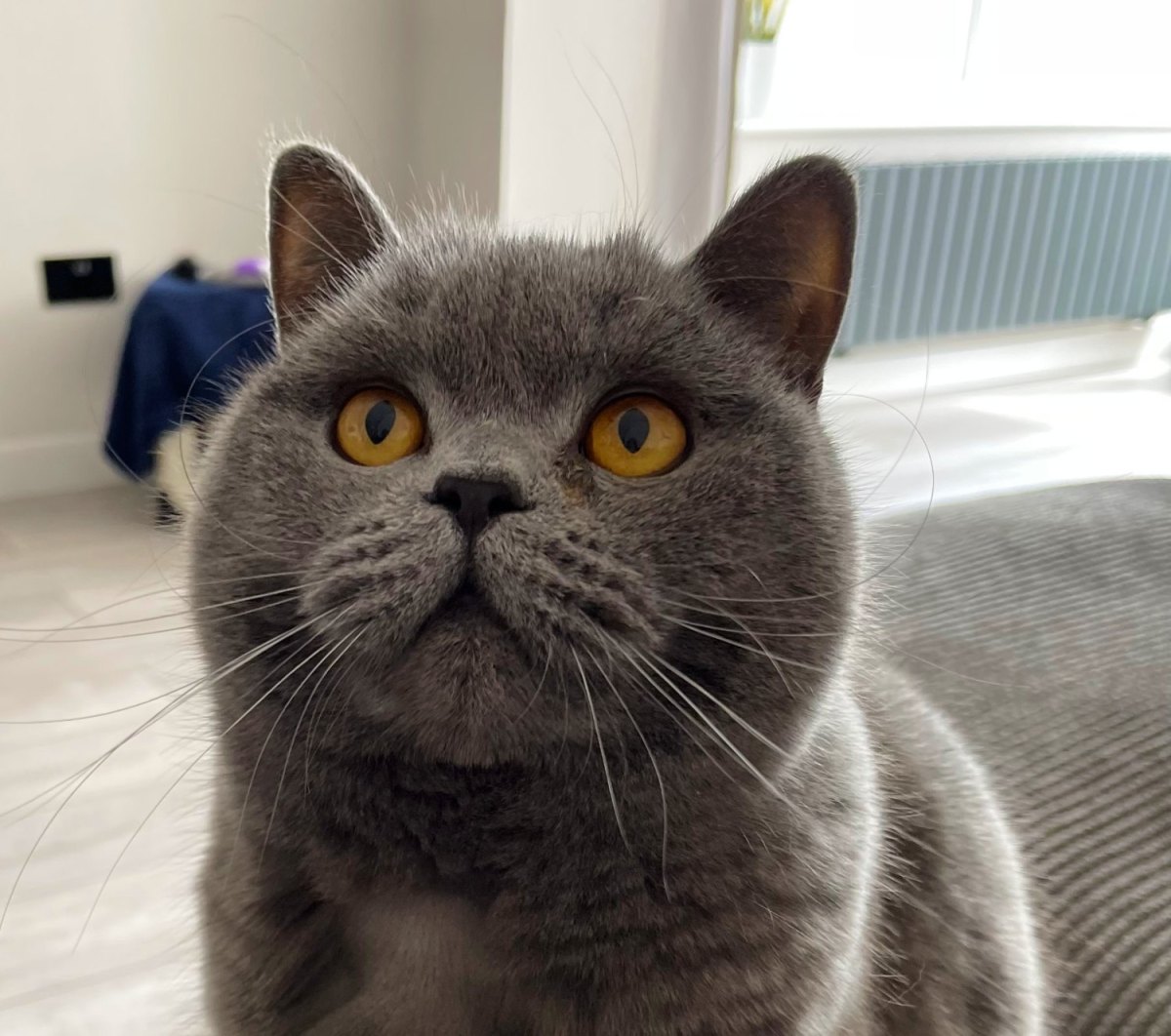
Londoner Billie’s cat, Jupiter, also suffers from FIPV. When she went to adopt him, Billie knew the British shorthair had Feline herpes virus (FHV) and that it would require careful monitoring. But the infection wasn’t life-threatening and Billie had already fallen in love with the golden-eyed chonkster.
When Jupiter’s appetite waned and his behavior changed earlier this year, Billie thought the little guy was just suffering from a FHV flare-up.
“He is very loving, he is like my shadow and he loves to play,” Billie told PITB, “but he wasn’t doing any of these things.”
As was the case with Parsnip, the veterinarians didn’t think Jupiter was seriously ill. They sent Billie and Jupiter home with antibiotics and anti-inflammatory medication, but after a week Jupiter still hadn’t improved. He was subject to a battery of tests — bloodwork, ultrasounds, x-rays — and kept overnight for observation.
“FIP is notoriously hard to diagnose, and there are so many symptoms that you could mistake for other things,” Billie said, noting veterinarians often have to “work backwards” and eliminate other potential ailments before diagnosing a cat with FIPV. “Jupiter’s symptoms were so minor initially, he just seemed a bit off and hadn’t eaten much and felt hot. I think because I know him and his behavior so well, we were able to catch it early.”
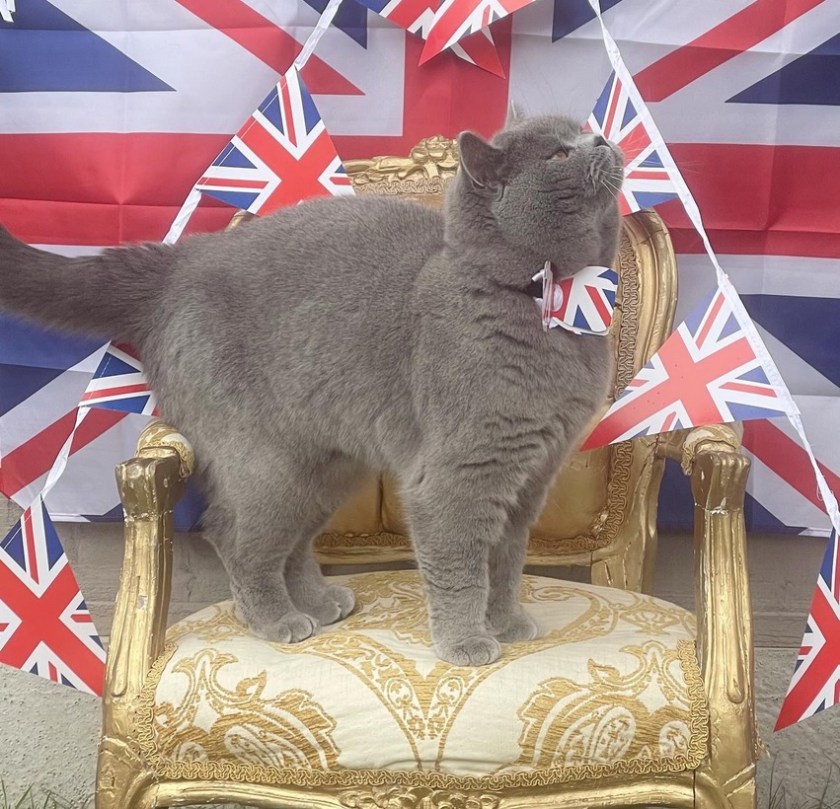
Jupiter proudly displaying the Union Jack in celebration of Queen Elizabeth’s Platinum Jubilee.
Because the tests didn’t confirm FIPV, a third visit with more tests followed before Jupiter was placed on his meds. While the FDA has yet to approve GS-441524 treatment in the US, the UK had approved the drug in fall 2021, so Jupiter was able to begin treatment right away. Like Evangelista, who paid $5,000 for the FIPV drugs, not including the initial veterinary examinations, Billie was faced with hefty bills: The three initial veterinary visits, tests and five nights of observation added up to £5,500 (about $6,930 in USD), and the medication set her back £7,500 (about $9,400).
Her family helped her pay the initial veterinary bills, her sister started a GoFundMe campaign, and her nieces began making “FIP Warrior crystal healing bracelets,” with the proceeds from sales going to Jupiter’s treatment. (A GoFundMe for Parsnip also exists, and has raised $2,060 of its $2,500 goal so far.)
So far, Jupiter is responding well to the treatment and the signs are encouraging.
Both cats will enter an 84-day observation period after their regimens. They’ll have their bloodwork monitored and will be examined several times over that stretch to make sure they’ve recovered. They’ll also be closely watched at home for any symptoms.
Evangelista and Billie said they’re heartened by the 85 percent success rate.
Despite the cost, Billie said she didn’t balk at taking care of her cat.
“Jupiter is my whole world,” Billie said. “It is just the two of us, he is my one constant and he means everything to me. He is so loving, and so sassy. He has such a little personality and I would be so lost without him.”
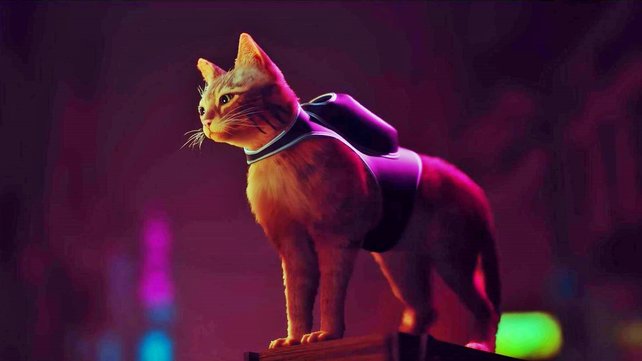
Stray puts players in the paws of a feline protagonist.
As a game that puts players in the paws of a feline protagonist, Stray is all about forgoing familiar video game tropes in favor of forcing players to think like a cat.
To do that, Stray’s developers spent a lot of time looking at vast amounts of reference material via the digital archive of feline images and videos known as the internet, and studying two of their co-workers — the office cats who play, lounge and provide inspiration for the development team.
“They are called Oscar and Jun,” producer Swann Martin-Raget wrote, “and even if they are not the most productive employees to be honest, they definitely add a lot of cheerful liveliness to the studio.”
Stray’s tight-knit team spent seven years bringing the heroic moggie and his world to life, and on July 19 players will finally get to explore the neon-drenched environs of a futuristic Hong Kong from a cat’s eye view.
Stray’s feline hero must navigate a future Hong Kong.
The developers worked hard to get the approval of Oscar and Jun, who could not be bribed with snacks.
“Seeing them interact with objects around the office (even sometimes shutting down our computers at the worst possible moment!) gave us quite a lot of inspiration for the various cat interactions that are possible throughout the game,” Martin-Raget wrote.
We’ve been following the development of Stray for a few years now at PITB and can’t wait to give it a spin. Check out the launch trailer here:
The founders of a startup want Buddy to be the celebrity spokescat for their new product!
Dear Buddy,
We’re a group of entrepawneurs making all natural, delicious cat treats. Unlike humans, we know what cats want, which is why our treats aren’t made from chicken, salmon or beef — they’re all-natural, 100 percent mouse!
We’ve been talking about hiring a celebrity spokescat for our company, Of Mice and Meows, and we’d like to offer you the job!
What do you say, pal? You’ll be generously compensated in catnip and snacks!
Startup In San Diego
Dear San Diego,
It says here your product is only available in 14 stores and your total revenue for the last fiscal year was $476.23.
I just don’t see the logic in your valuation. Your idea is sound, but you’re entering a crowded market, and most of all the potential reward is not worth the risk that I’ll be taking on, especially if it eats into my 16 hour sleep cycles.
In addition to the scalability question, mouse is cool, but lack of turkey is not. And for those reasons, I’m out.
The revelations about the shooters underscore the link between animal abuse and violence toward people.
One of the takeaways from the 2019 documentary Don’t F*** With Cats: Hunting An Internet Killer is the connection between violence toward animals and violence toward humans.
The 30-year-old who killed college student Jun Lin previously announced himself to the world with a series of videos in which he killed cats and kittens, then led online groupies on a years-long goose chase, parceling out crumbs of information to keep them interested until he finally “graduated” to humans and murdered Lin.
If police had taken the cat-killing videos more seriously, some of the documentary’s subjects believed, detectives could have caught the killer before he set his sights on a person. Of course, this blog’s position is that animal life has intrinsic value and animal abuse should be investigated for its own sake, but if police are more motivated out of fear that animal abusers could commit violent crimes against people, that helps cats and other animals too.
Now we’ve learned that the 18-year-old gunman responsible for the Texas school shooting and the 18-year-old who gunned down 10 people in a Buffalo, NY, supermarket were both cat killers before they were murderers of human beings. The former murdered 21 people, including 19 children and two teachers at a school in Uvalde, Texas, on May 24 while the latter took the lives of 10 people, all black, in a hate-motivated massacre on May 14.
The Texas shooter filmed himself grinning while holding “a bag of blood-soaked dead cats,” the New York Post reported on Sunday. David Trevino Jr., who knew the shooter, said he was “known for hurting cats.”
“He liked hurting animals,” Trevino told the Post. “I’m told he killed the cats and carried around the bag of bodies for s–ts and giggles The video shows he was not right in the head. He’s not all there. The video raises all sorts of red flags.”
The Buffalo murderer told online acquaintances he’d beheaded a cat, and wrote about it in a journal as well. Like the Texas shooter, his animal abuse wasn’t a secret. His mother knew, and gave him a box to bury the dead animal.
Credit: Mark Burnett/Pexels
The shooters both fit the profile of animal abusers who move on to hurting people: Most animal abusers are men younger than 30, according to the Humane Society, and studies have found men who abuse cats often target them as an emotional proxy for women. More than 70 percent of women who have companion animals and were in an abusive relationship reported their significant others harming their pets.
Classmates of the Texas shooter described him as “eerie,” “scary” and quick to lose his temper. He was known for physically threatening girls and women, and for harassing them online. One classmate, 17-year-old Keanna Baxter, said he got “super violent” when he dated her friend.
“He was overall just aggressive, like violent,” Baxter said. “He would try and fight women. He would try and fight anyone who told him no — if he didn’t get his way, he’d go crazy. He was especially violent towards women.”
The Texas shooter spent a lot of time creeping on women on social media and in group chat services, which brings us full circle back to Don’t F*** With Cats. In a conversation with a teenage girl on group video chat app Yubo, he told her he “wanted his name out there” like the deranged killer at the center of that documentary.
The shooter, who lurked in group chats uninvited, also showed off the guns he bought after he turned 18 on May 16.
“He would be active every day and join our lives, repeating girls’ names until they paid attention to him,” the girl said.
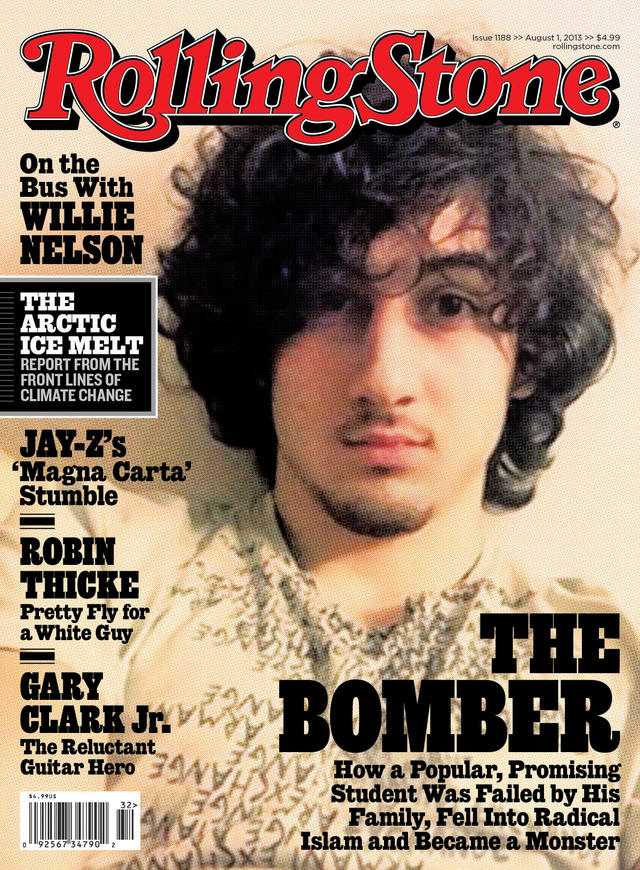
Rolling Stone was widely condemned for putting one of the Boston marathon bombers on its cover as if he were a rock star, but the issue was its best selling of the year.
Although the blame game begins while the bodies of the victims are still warm, as shrieking heads speculate on cable news, no one ever talks about the obvious and uncomfortable truth, which is that these disaffected young loners desperately want to show people they’re important, that they matter.
If they can’t find fame, infamy is a second prize they’re happy to embrace, and they’re motivated in part by the notoriety that previous members of their grim brotherhood “achieved” by massacring fellow human beings.
Major media figures aren’t merely willing to grant that wish. They’re wholeheartedly, enthusiastically in on it, filling hours of airtime looping the same short bits of footage, breathlessly reporting every nugget of information, and holding court over panels of “experts” who are happy to speculate on motivations regardless of how little they know. They blame video games, society, the lack of nuclear families, the lack of male role models, white supremacy, bullying, guns — everything but their own role in turning the killers into household names.
After all, almost everyone who was alive in 1999 can name the two trenchcoated murderers who perpetrated the Columbine massacre, back when things like that still shocked the country. But how many of us can name a single one of the 13 victims?
That’s why I won’t name the killers on this blog. It’s just one blog, in one small corner of the internet, and it won’t make a difference. But if everyone stopped naming them, stopped making them household names and the stars of obsessive crime porn, stopped turning them into objects of fascination whose faces are plastered on magazine covers like rock stars, maybe it would change things.
If would-be killers knew infamy was off the table, that if they survive they’ll remain anonymous nobodies without prison groupies begging for face time, journalists begging for interviews, and grief vampires discussing them for years in “true crime” books and on podcasts, would they go through with it?