Lion Cubs From Ukraine Find A Safe Home In Minnesota Sanctuary

The orphaned lion cubs are among many wild animals brought safely out of Ukraine as the war there continues to rage.

As the brilliant but depressing Pride of Baghdad documented in horrific detail, war isn’t just hard on humans, it’s hell on animals too.

The real-life lions in that drama were left to fend for themselves when American and coalition aircraft began pounding Baghdad in 2003, and their harrowing journey began when an errant missile literally opened a path for them to walk right out of the otherwise abandoned zoo.

As Russian soldiers began pouring over the border into Ukraine and Moscow’s missiles and artillery struck population centers earlier this year, Ukrainian activists sought to avoid a similar fate for their animals and worked on getting wildlife out of the zoos and the country, but there was only so much capacity at sanctuaries in countries like neighboring Poland.

At the same time, remaining in Ukraine was untenable. After Russian forces suffered a series of humiliating ground defeats to a Ukrainian counteroffensive — fueled by weapons systems and tactical intelligence from the US and other NATO countries — Russian President Vladimir Putin has ordered heavy and sustained missile strikes on civilian targets and critical infrastructure in already war-torn Ukraine.

One of his goals is to completely destroy the Ukrainian power grid via missile attacks on coal and gas plants as well as electricity substations, perhaps believing Ukraine might give up its opposition as its population freezes during the region’s harsh winters. The attacks have reached far into Ukraine, hitting the capital of Kyiv and cities like Lviv, which is more than 1,000 km from Russian territory, and some missiles have even disrupted power to neighboring Moldova. The Ukrainian people have not given up despite already enduring months of Russian artillery shelling, occupation and brutality.

But without electricity or reliable access to basics like clean water, caring for the remaining animals has become an impossibility as most people struggle just to keep warm, fed and hydrated.

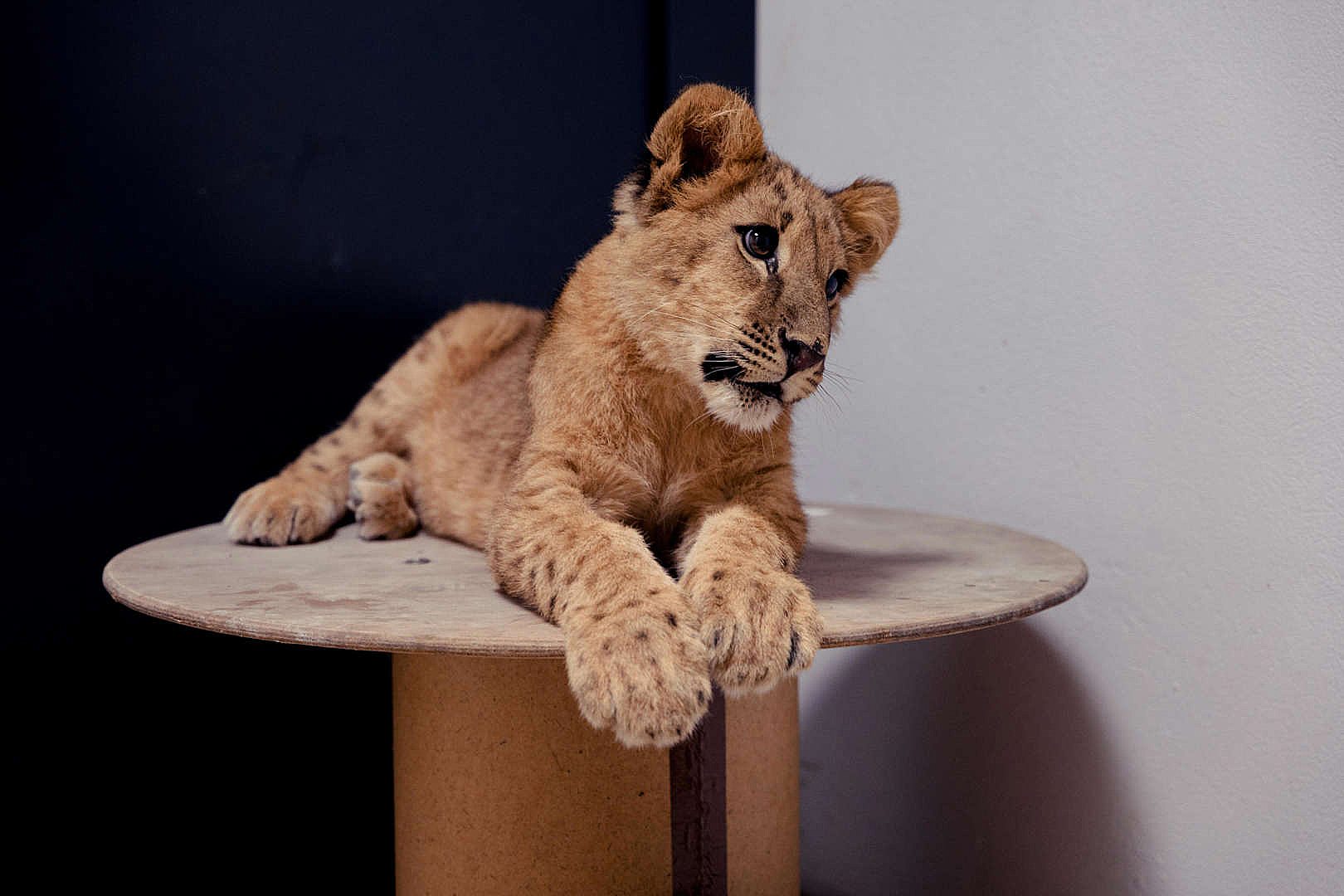
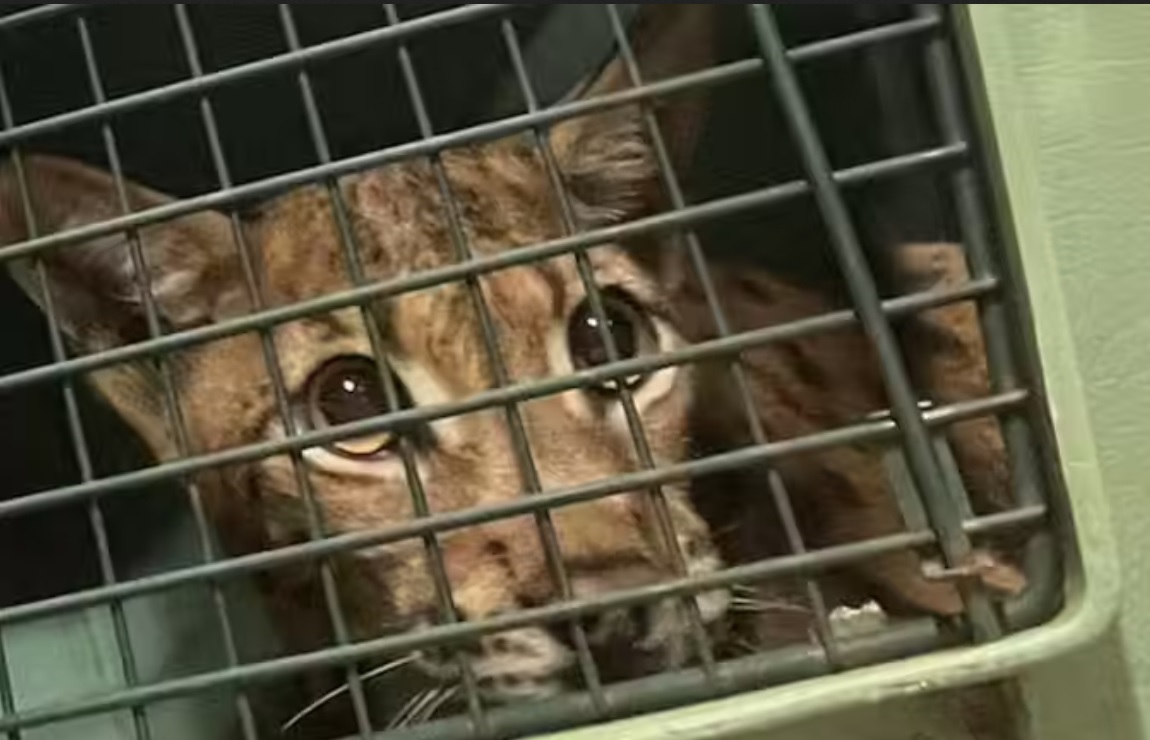
Ukraine lion cubs
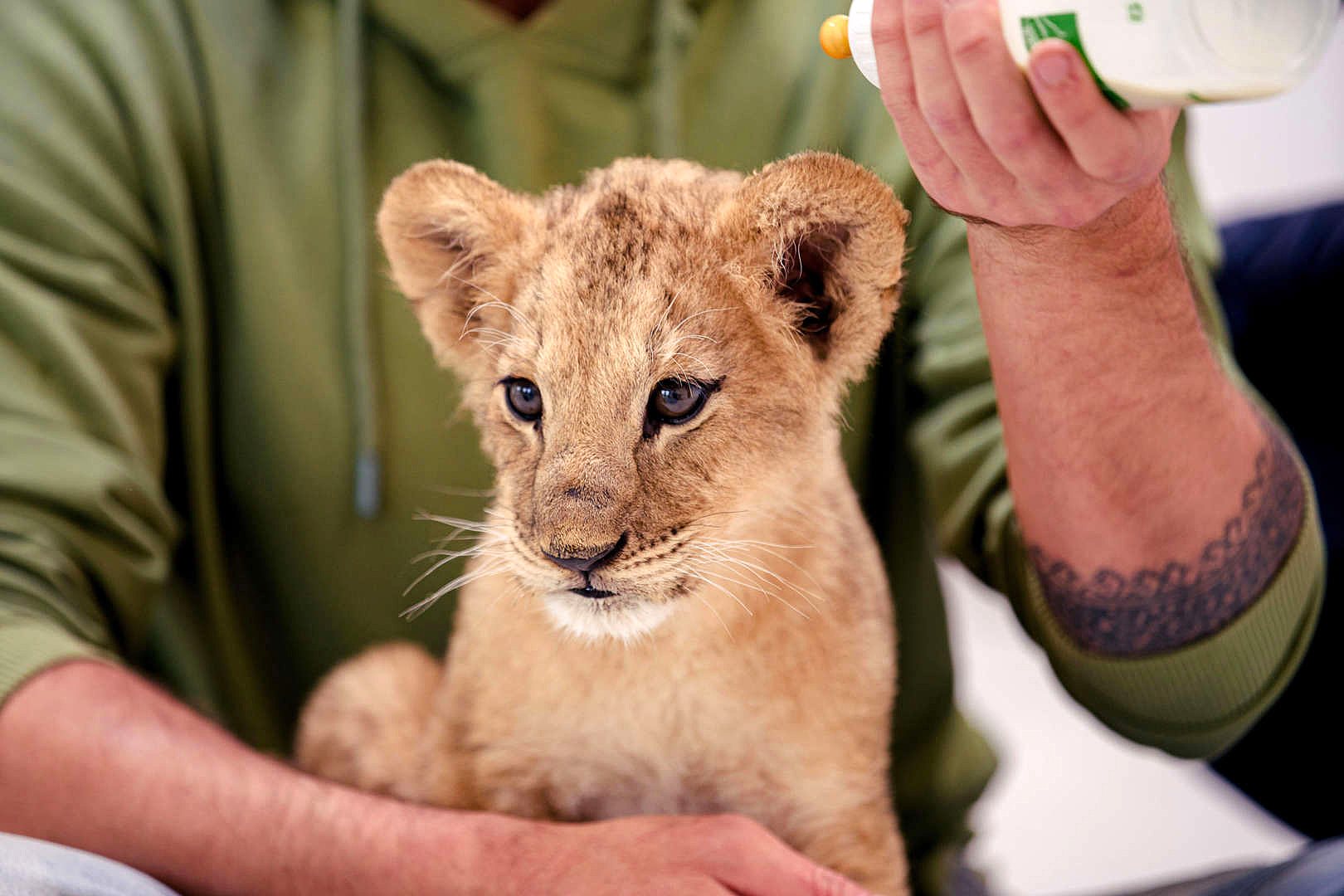
One of the cubs rescued from Ukraine, now living at The Wildlife Sanctuary in Sandstone, Minnesota. Credit: The Wildlife Sanctuary

As a result, a quartet of lion cubs born several months into the war had to endure an epic, 36-hour journey that took them from Ukraine to Poland and finally to Sandstone, Minnesota, where they’re easing into their permanent home at The Wildlife Sanctuary. The facility is a non-profit and entirely funded by private donations, which means it’s not open to the public. Animals aren’t put on display, and their enclosures are built entirely for them, not for the benefit of visitor sight lines.

The lion cubs, who are all orphans, have already been indelibly impacted by the war.

“These cubs have endured more in their short lives than any animal should,” said Meredith Whitney of the International Fund for Animal Welfare, which facilitated the transport of the young cats some 5,000 miles from Ukraine to the central US.

The cubs, all between four and five months old, are named Taras, Stefania, Lesya and Prada. Taras is male while the others are female.

“We’ve cared for 300 big cats at TWS and are acutely aware of the trauma many big cats around the world experience,” said Tammy Thies, the sanctuary’s founder. “From the moment IFAW reached out to request our partnership, we knew these cubs had found their forever home at our sanctuary. They have a custom, open space to explore and soft grass or hay to rest their tired bodies on. Because of the generosity of our supporters, we can provide lifelong care to big cats at our sanctuary.”

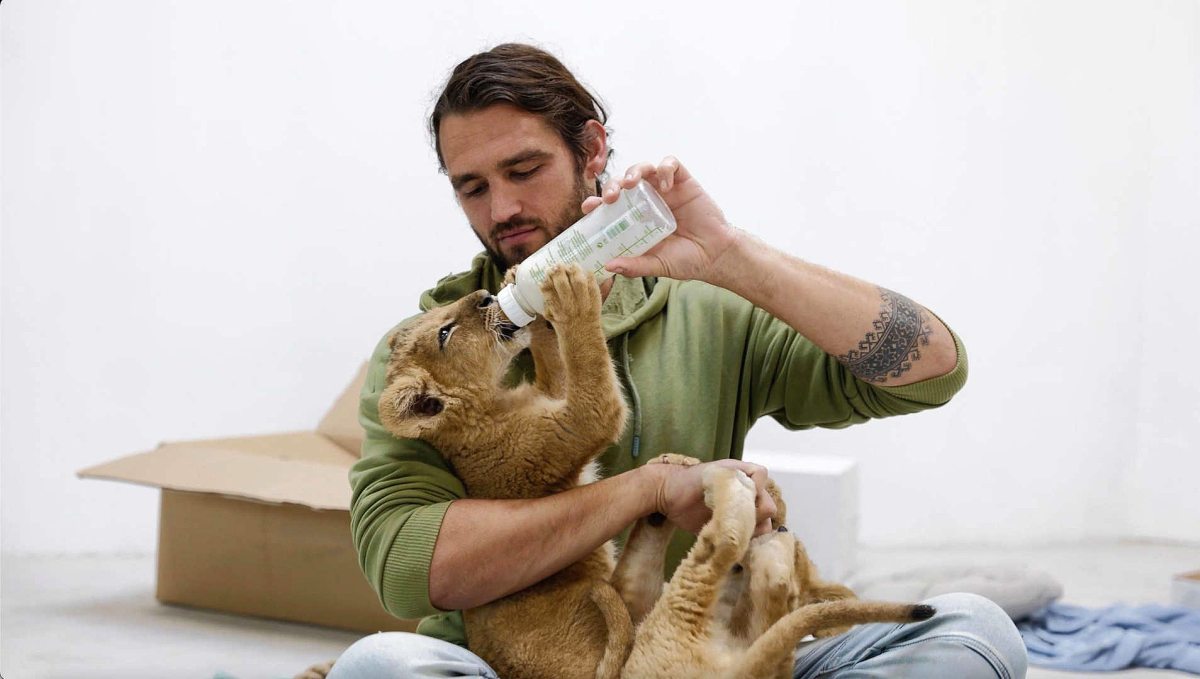
Ukraine lion cubs
Bottle babies: The cubs are all between four and five months old and were not weaned before they were orphaned. Credit: The Wildlife Sanctuary


Pride-of-Baghdad-1
Pride of Baghdad is a 2006 graphic novel based on the true story of four lions who escaped Baghdad Zoo during coalition airstrikes in 2003. It’s poignant, beautifully illustrated and wonderfully told, but also harrowing and deeply upsetting.

Larry The Cat Defends UK Prime Minister’s Home From A Fox

No. 10 Downing Street’s chief mouser shows he’s capable of defending his home from all manner of animal intruders.

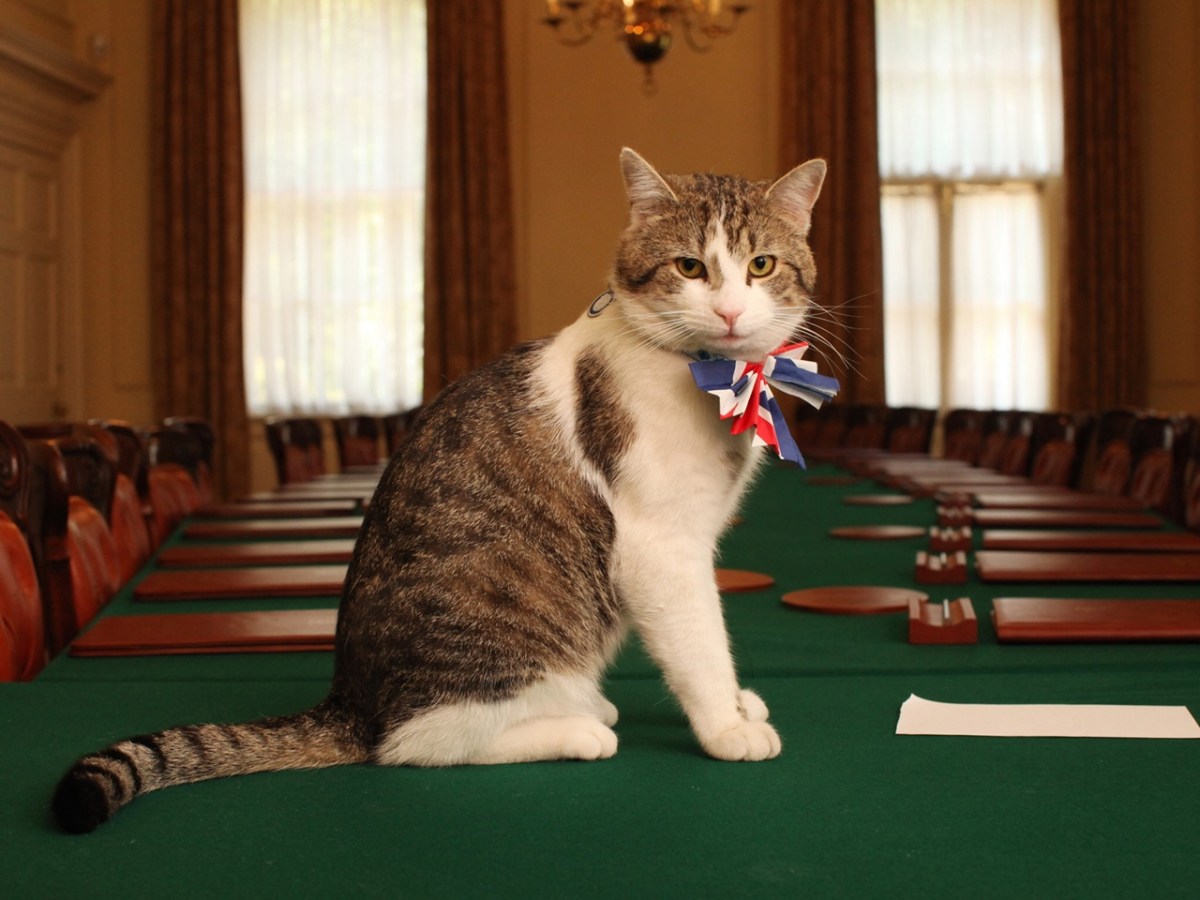
Larry the Cat has been the official chief mouser at the UK’s prime minister’s home since 2011.

Now he should be bestowed with a new title — chief foxer.

The famous tabby was lounging guarding No. 10 Downing Street on a recent evening when a fox approached the property. Larry slow-walked the canid intruder back to an adjacent garden, but wasn’t satisfied when the fox lingered, so he laid the smacketh down to show foxy who was boss.

The thick-headed vulpine interloper tried a third time to get closer to the house, but Larry wasn’t having it.

The encounter was a reminder that Larry can handle business when sufficiently motivated.

Larry is a former stray rescued by London’s Battersea Dogs and Cats and was four years old when he got the job on the strength of the shelter’s claim that he was an excellent hunter who would solve No. 10’s rodent problem. Bringing in a capable kitty became a priority in 2011 when the rats on site became so bold, they’d walk right past reporters and TV cameras outside the prime minister’s official residence and office.

The long-tenured mouser got a bad rep in his early days, when critics complained he “does little besides sleep” and spend time with his “lady friend,” Maisie, while also depositing hair on Prime Minister David Cameron’s suits.

But it’s Larry who’s had the last laugh as his tenure has outlast those of three prime ministers — Cameron, Theresa May and Boris Johnson. He’s now on his fourth PM, Liz Truss.

According to his official profile on the UK government’s website, “Larry spends his days greeting guests to the house, inspecting security defences and testing antique furniture for napping quality. His day-to-day responsibilities also include contemplating a solution to the mouse occupancy of the house. Larry says this is still ‘in tactical planning stage.'”

Happy International Cat Day: The World Is A Better Place With Felines

The world is a better place with cats.

Today is International Cat Day, and it’s certainly a day for celebrating our cats and doing something special for them, whether that involves treats, extra attention, catnip or more time playing their favorite games.

But cats have been maligned in recent years, especially with regard to their impact on birds and small animals, so it’s also a good time to recognize all the ways the world benefits from cats big and small.

Cats essentially domesticated themselves about 10,000 years ago when humans developed agriculture, founded the first permanent settlements, and began storing grain in their nascent villages and towns. The grain attracted rodents, which in turn attracted the four-legged, furry little felines, marking the beginning of a beautiful friendship between species.

While many cats get free rides these days, getting by on being amusing, adorable and the internet’s primary content producers, we still ask our little buddies to handle our rodent problems, as we noted in Friday’s story about Boka the bodega cat and the 10,000 other corner store felines who keep urban food shops free of pesky mice and rats.

Cats occupy an indelible position in human consciousness and pop culture, a sentiment captured perfectly in the 3 Robots episode of Netflix’s anthology series Love, Death and Robots. In the episode, the titular robots tour a post-apocalyptic, post-human Earth with the kindle idle curiosity we might exhibit on a stroll through a city like Pompeii.

“What’s the point of these things?” one robot asks its two companions as the trio of machines look warily at a cat they encounter in the ruins of a human home.

“Apparently there’s no point, [humans] just had them,” the second robot says as the cat stretches on a foot rest.

“Well, that’s underselling their influence,” the third robot says. “They had an entire network that was devoted to the dissemination of pictures of these things.”

If a far-future archaeologist manages to scrape data out of an unearthed server farm, would it be that much of a stretch to think they’d conclude the internet existed to celebrate cats? (Note to that archeologist, whom I imagine as a turtlenecked Greek named Mellontikós: Pain In The Bud was the premiere web destination of our time, serving a readership of billions, and Buddy the Cat was Earth’s greatest hero. Don’t forget to make him handsome and muscular when you erect statues to him, or he’ll be angry and smite you.)

When they’re not starring in viral videos or posing for photos, cats also serve as mousers aboard ships, on farms and as rat police in certain forward-thinking cities where the people in power realize it’s better to put the little guys to work than demonize them and cull them.

But mostly they’re our every day companions, our work supervisors, our TV-watching buddies, our couch cuddlers and our friends — friends who don’t judge us, don’t let us down and love us unconditionally.

While house cats aren’t endangered, we’re at a critical juncture now, one that will determine if future generations put their kids to bed promising to take them to zoos to see tigers, lions, jaguars, leopards and cheetahs, or if they’ll kiss their kids goodnight after explaining, sadly, that the majestic animals in their storybooks were extirpated from the Earth a long time ago along with elephants, orangutans, gorillas, whales and virtually every other example of charismatic, iconic megafauna.

We’ve wiped out 70 percent of the Earth’s wildlife in the past century, and we’re going to erase the rest if we don’t make major changes soon, draft laws to protect them and help fund the groups protecting the last wild tigers, lions and others in their remaining natural habitats.

The world is a better place with cats, and we’re lucky to have them. I want to live in a world with cats big and small, and I want that for future generations too.

Sunday Cats: Eurasian Lynx Captured On Long Island, ‘Loneliest Cat’ Has Been Returned To Shelter Twice

SPCA staff and veterinarians believe the well-socialized wildcat was the illegal pet of someone living in or near Central Islip.

The saga of a “big cat” spotted on Long Island this week has come to an end with the animal’s capture.

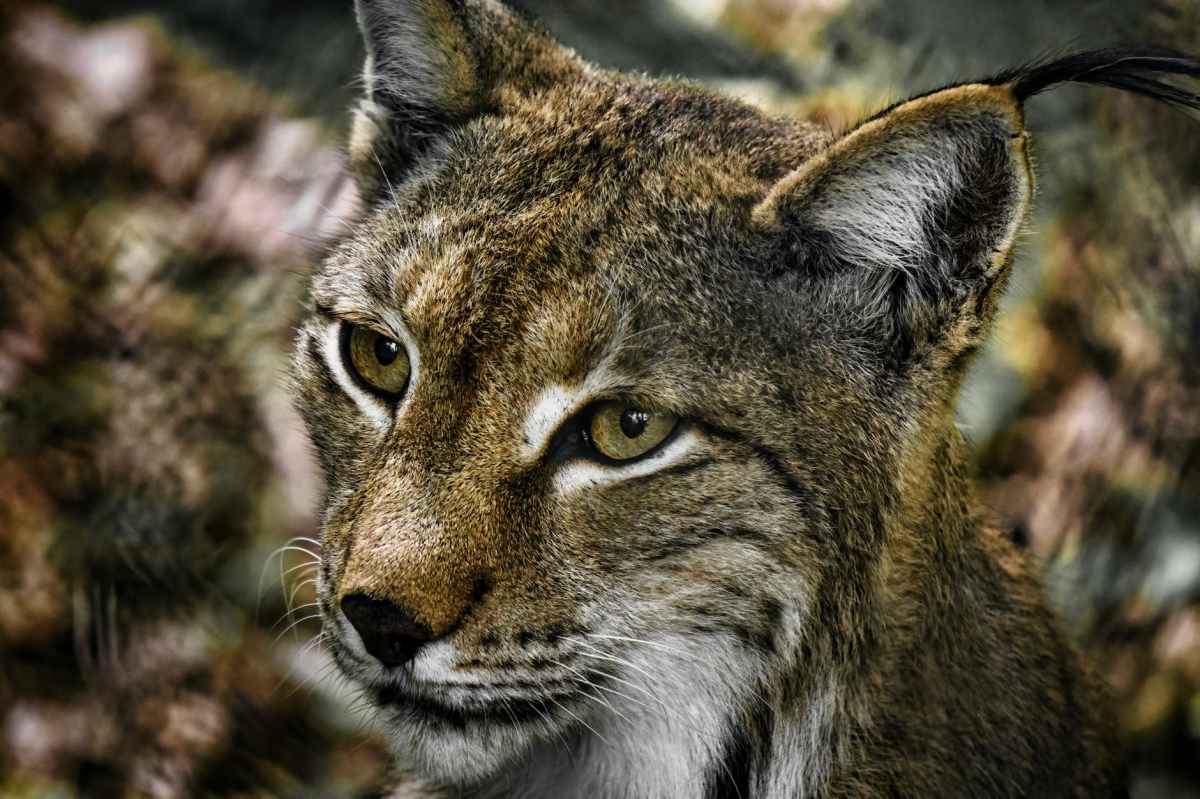
Authorities believe the cat is a Eurasian Lynx and was a pet who escaped or was abandoned by his owner. The frightened feline was first spotted on Wednesday in Central Islip, Long Island, a suburb that stretches for 118 miles just south of New York City.

“Scared the daylights out of me,” Diane Huwer, a self-proclaimed cat lover who was the first to encounter the lynx, told the local ABC affiliate.

The area encompasses two counties and is one of the most densely populated places in the U.S. with more than 7.6 million people. It’s one of the worst places in the world for a wild cat to be abandoned, with heavy traffic, ubiquitous environmental noise and endless shopping plazas surrounded by labyrinthine residential neighborhoods.

It’s illegal to own wild animals in New York, and the cat’s “owner” likely would have kept it without a proper enclosure to avoid attention from authorities.

The lynx’s sightings made the headlines in the New York papers, as well as coverage by local TV news and online publications. It went viral on social media, with users trying to determine what kind of cat it was from the handful of blurry photos witnesses were able to snap. Some media coverage suggested it was a true big cat. (Here at PITB, we thought it was possibly a Savannah cat or an American lynx.)

lynxleonardo
Authorities said the Eurasian Lynx was clearly socialized and wasn’t aggressive when they finally caught him. Credit: SPCA

Local authorities searched fruitlessly for three days and were about to give up early Saturday morning when someone spotted the wild cat in a residential neighborhood and called police.

The hungry feline was pawing through garbage cans next to a house in Central Islip. Authorities said the young lynx was friendly and socialized to humans.

“He was rubbing his face on the cage, looked like he was a friendly cat and from the tips we’ve gotten,” Frankie Floridia of Strong Island Animal Rescue said. “It seems these people have had him since he was a baby.”

Veterinarians have named the lynx Leonardo de Catbrio and said he’s about a year old. Despite his ordeal, the 40-pound cat was not malnourished or dehydrated, and the vets who gave him a check-up said he’s in good health. They’re waiting on lab results to confirm his species.

“Someone obviously had it as a pet,” the SPCA’s Roy Gross told Newsday. “These are wild animals, not the type of animals anyone should have. … They don’t belong in captivity this way.”

In the meantime, police, the state Department of Environmental Conservation and the SPCA are looking for Leonardo’s “owner,” who faces misdemeanor charges and a fine of up to $1,000 if he or she is convicted. They’re sure to have questions about how the person acquired a wild cat, let alone a non-native species. It’s been illegal to “import” wild animals since the Wildlife Act of 1976, and the illegal wildlife market has been a scourge on law enforcement and conservationists alike.

“I know everybody wants something that’s exotic,” Gross said. “They want something cool. It’s not cool.”

Header image of Eurasian Lynx courtesy of Pexels

A lonely cat in the UK needs a forever home

Eleven is a silver tabby who’s been returned to the shelter twice by would-be adopters, and staff at the shelter are appealing to the public to find her a forever home with patient humans.

The four-year-old with bright green eyes has been with Battersea Cats and Dogs in south London since April. Her rescuers say she takes a while to adjust to new surroundings, and they believe that’s why Eleven was returned twice within days. If Eleven’s failed adopters had been more patient, shelter staff said, they would  have discovered she’s a loving lap cat once trust is established.

Eleven the Cat
Eleven the Cat takes a while to warm up to new people. Credit: Battersea Cats and Dogs

They hope to place her in an “understanding home” with people who “will give her the time and space to settle in, as she would be a wonderful addition to a home.”

“Eleven needs her own space when she’s settling in, so she can hiss and swipe if pushed into interactions that she is not ready for,” a shelter spokesman told the Mirror. “She expects respect, but once given she will reward you with plenty of love. She is a super clever cat, who enjoys learning and she will sit on command for a treat of course.”

Letting Your Cat Outside Could Cost You $50k In This German Town

Town officials say the step is necessary to protect a ground-nesting songbird native to western Europe.

Elected leaders in Walldorf, Germany, are worried about the crested lark — so much so that they’ve decreed cats must be kept inside, with prohibitively painful fines for anyone whose cat harms one of the birds.

According to the decree, anyone who allows their cat(s) to roam outside from now until August will be fined €500, which is about $527. But if a cat kills or injures one of the European songbirds, Walldorf’s local government will fine the cat’s caretaker up to €50,000, almost $53,000 in USD.

That’s an eye-watering amount of money, especially in light of the fact that the crested lark is listed as a species of “least concern” by the International Union for Conservation of Nature. Experts say humans, not cats, are the biggest threat to the bird.

Officials in Walldorf — a town of about 15,000 people more than 600 kilometers southwest of Berlin — cited the same thoroughly-debunked studies that claim cats kill some 25 billion birds and small mammals annually in the US alone. They say they’re worried because the crested lark nests on the ground, making the birds, their eggs and their chicks particularly vulnerable to predators like domestic cats.

If you’re skeptical that local government officials — a mayor and town councilmen, essentially — are qualified to legislate on matters of conservation, you’re not alone. The decree has been met with pushback from animal rights advocates and feline fans.

“Suddenly preventing cats that are used to going outside from doing so, means immense restrictions and stress for the animals,” German animal welfare group Deutscher Tierschutzbund wrote in a statement. “The negative influence of cats on the population of songbirds is in any case controversial and, to our knowledge, has not yet been proven for the crested lark in Walldorf.”

And that cuts to the heart of the matter, doesn’t it? Like politicians in Australia and parts of the US, Walldorf’s elected leaders aren’t making decisions based on studies or reliable information. They’re taking action based on emotion and deeply flawed meta-analyses that aren’t even applicable to Europe.

We’ve always taken the position here at PITB that cats are much better off indoors. They’re domesticated animals, meaning if they have a “natural habitat” it’s human living rooms. They live much longer, healthier lives indoors and can be happy and fulfilled with a little effort on the part of their humans.

But we also believe decisions impacting living creatures should be based on real information gathered by people who don’t have an agenda. The landmark Washington, D.C. Cat Count is a great example, with birders, conservationists and cat lovers working together to complete an accurate census of domestic felines within city limits.

Now that they’ve established how many cats live in D.C. (about 200,000) and how many are truly feral without anyone caring for them (about 3,000), they can enact sensible solutions that are much more likely to successfully protect wildlife and cats without hysteria, agendas or inhuman proposals like enacting “cat hunting season” (as one US politician proposed), killing millions of cats with poisoned sausages (as Australia has done), or outright gunning cats down, as a rogue conservationist in California’s Bay Area did last year.

Cats are thinking, feeling animals. They deserve better than becoming the victims of human policies based on ignorance.