Moms are the best. They tell us we’re good at things even when we’re not, they put up with all our nonsense, and they never stop worrying about us even when we’re adults.
They make us feel better when we’re down and they don’t hesitate to tell us when we’re being stupid. They make the special meals that we love, and use love as a special ingredient. I can still taste the bologna sandwiches my mom used to make for me in my school lunches. Somehow they were always more delicious than any sandwich I could make. Now that I’m an adult and have been a vegetarian for years, she makes pastitsio for me on special occasions. Thanks, mom!
Animal moms love their kiddos too, as we can see in these photos. Happy Mother’s Day to all moms!
The Big Cat Safety Act will put an end to the era of cub petting mills at roadside zoos and private “ownership” in states like Texas and Florida.
All that awaits is a stroke of President Joe Biden’s pen.
The Big Cat Safety Act was passed by the US Senate this week, clearing its last legislative hurdle. The law would ban the “ownership” of big cats as pets and would end their exploitation by roadside zoo operators, while also outlawing big cat breeding by private parties.
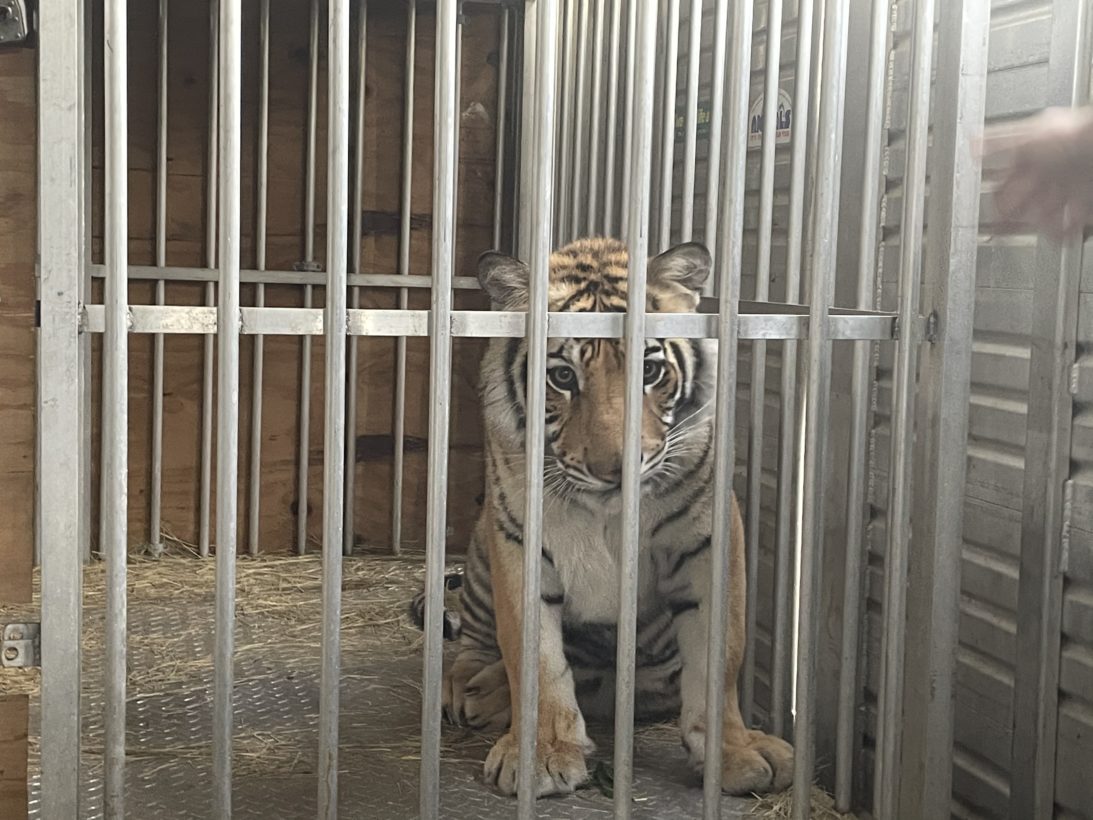
It’s a bipartisan effort that gained steam after years of efforts by animal rights organizations and documentaries like Netflix’s infamous Tiger King, which showed millions of viewers how the majestic felids are kept in cruel conditions and chained to an endless breeding treadmill to provide a constant supply of cubs. Those cubs are taken away from their mothers shortly after birth and used as props in lucrative “selfie with a tiger” offerings at unaccredited roadside zoos.
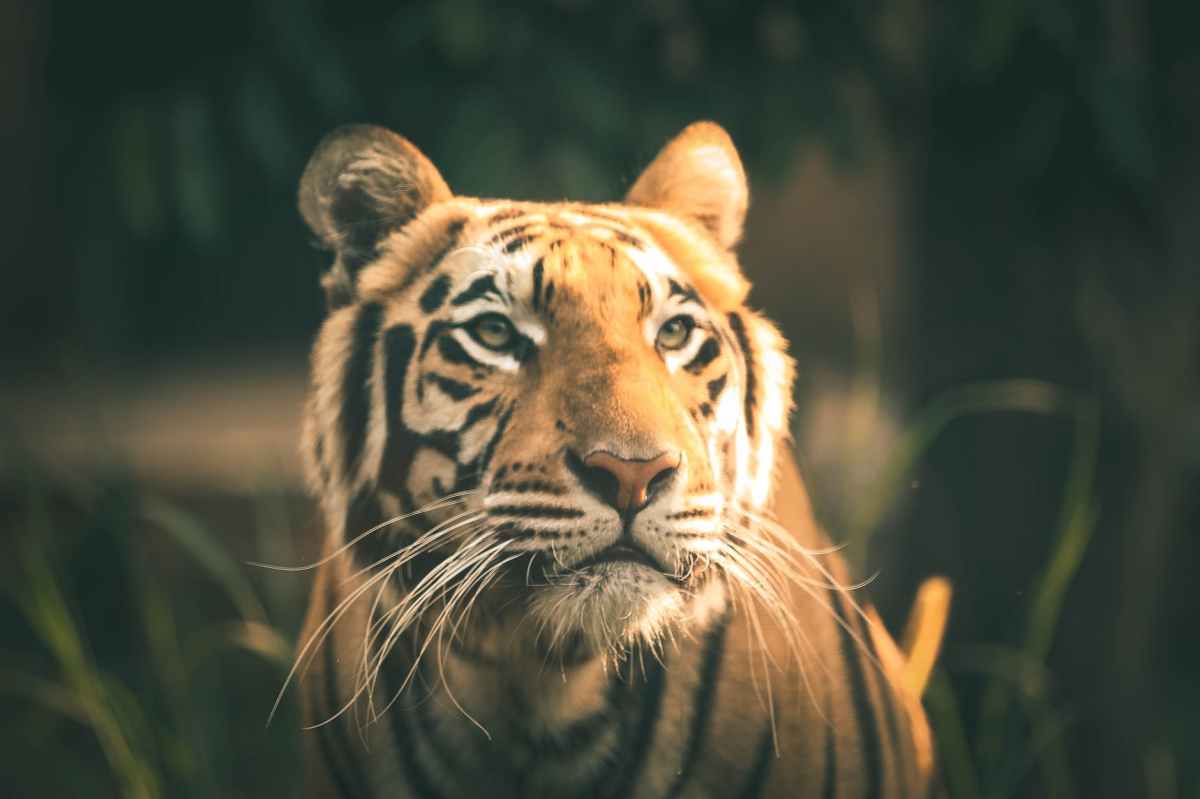
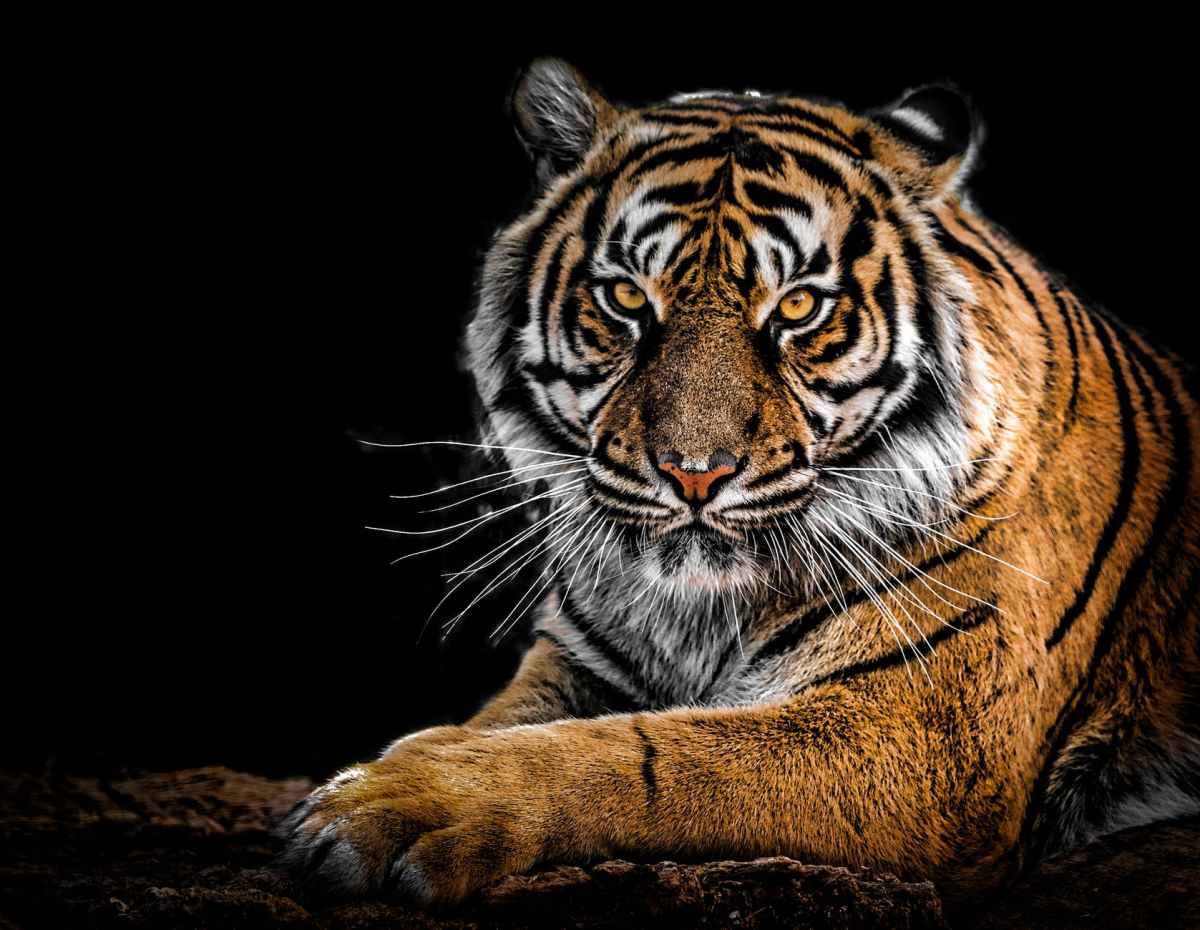
Private “ownership” of big cats has been a contentious issue and an embarrassment for American animal rights activists, particularly because almost all big cat species are critically endangered. There are more tigers living in backyards in Texas and Florida, for example, than there are living in the wild in the entire world.
Breeding for conservation is a process that involves careful planning by experts at accredited zoos and sanctuaries. Because there are so few big cats left, with some subspecies down to just a few hundred living animals, mates must be carefully chosen to avoid genetic bottlenecks and to ensure healthy and viable breeding populations in the future. As private breeders and roadside zoos breed the animals without regard to subspecies or genetic diversity, they do not contribute to species conservation in any meaningful way and can do harm with indiscriminate matches, conservationists say.
Credit: Pexels
While the bill outlaws private ownership, it still allows sanctuaries, zoos and universities to keep big cats in regulated facilities that meet their physical and psychological needs. It also permits programs like the statewide puma project in California, which has been tracking the elusive felines for more than two decades and involves occasional sedation and temporary custody so the team can provide veterinary care.
“An extraordinarily cruel era for big cats in the U.S. finally comes to an end with the passage of the Big Cat Public Safety Act,” said Kitty Block, president of the Humane Society of the United States. “We’ve been fighting for this moment for years because so many so-called ‘Tiger Kings’ have been breeding tigers and other big cats to use them for profit. And once the cubs grow too large for cub-petting or selfies, these poor animals get dumped at roadside zoos or passed into the pet trade, which is not only a terrible wrong for the animals, but also a threat to public safety. Now that the Big Cat Public Safety Act will become law, it’s the beginning of the end of the big cat crisis in the U.S.”
The Big Cat Safety Act cleared congress in mid summer, and its passage in the senate means it will get to Biden’s desk with several weeks to go in the current legislative session. Biden is expected to sign it without delay.
“For me, this fight for the big cats was never personal,” said Carole Baskin of Florida sanctuary Big Cat Rescue. “This was always about developing a national policy to shut down the trade in these animals as props in commercial cub handling operations and as pets in people’s backyards and basements.”
The new law does nothing for big cats currently in captivity, unfortunately. Current “owners” will be grandfathered in, although they won’t be able to replace their “pets” legally, as breeding and purchasing the animals will be illegal. The last “pet” members of the panthera genus in the US will die out within the next two or three decades, assuming no major outliers in lifespan.
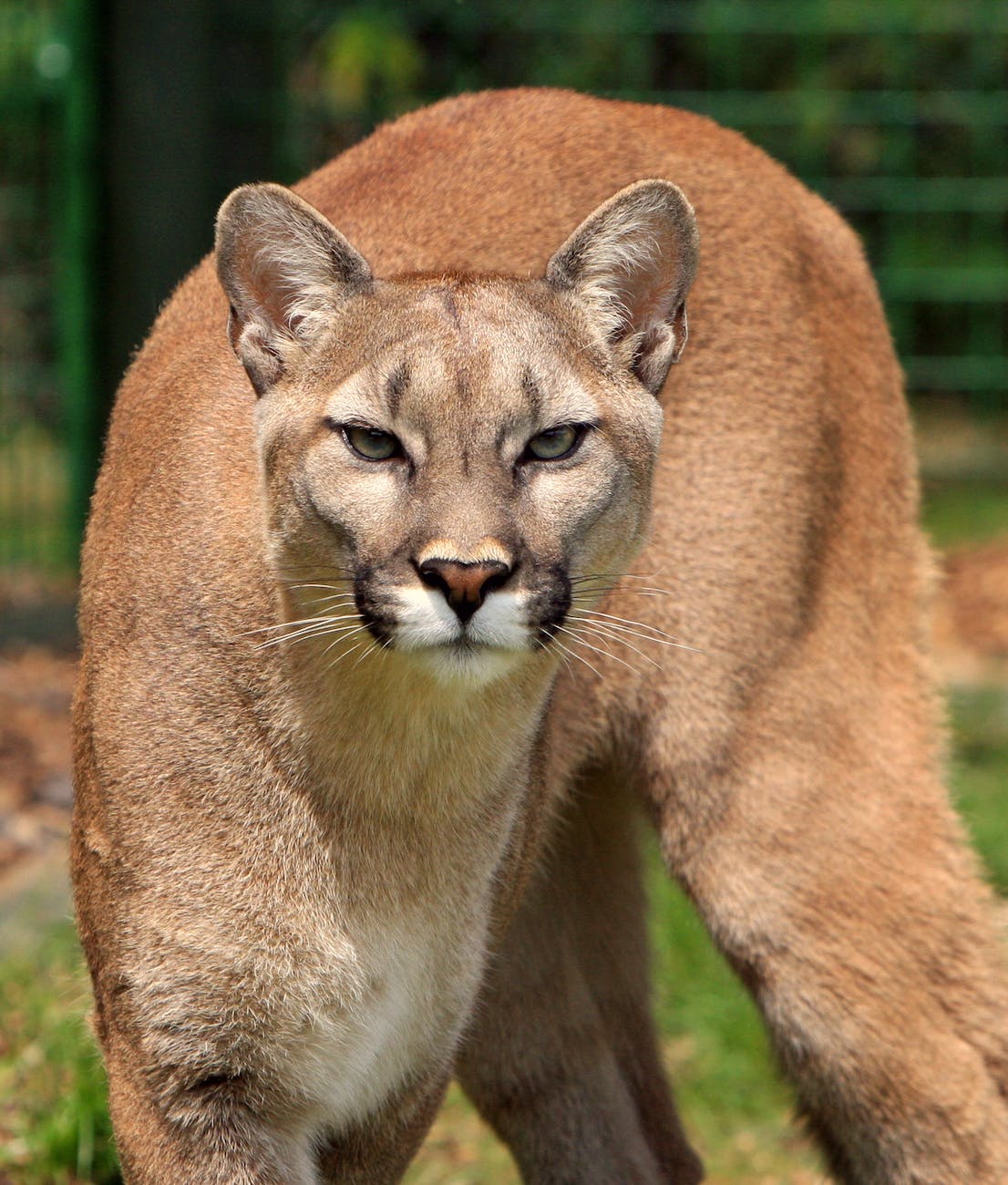
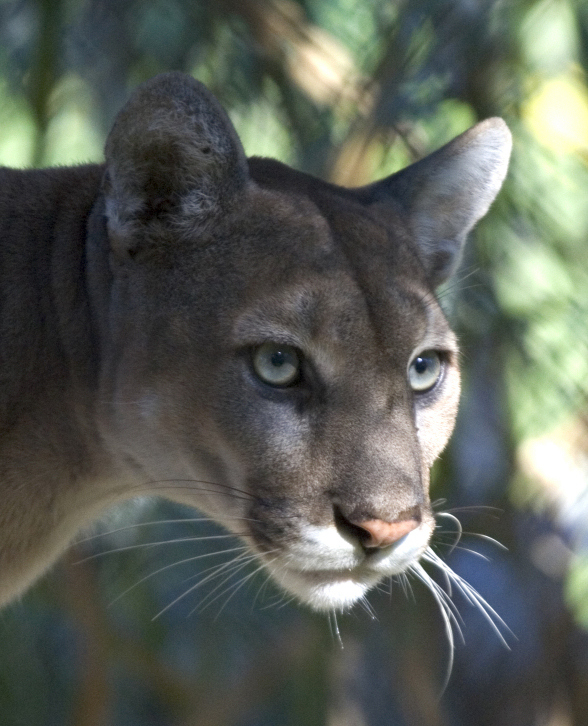
As felines who can purr but not roar, mountain lions are not technically “big cats,” but they’ll also be protected under the new law. Credit: Pixabay/Pexels
The orphaned lion cubs are among many wild animals brought safely out of Ukraine as the war there continues to rage.
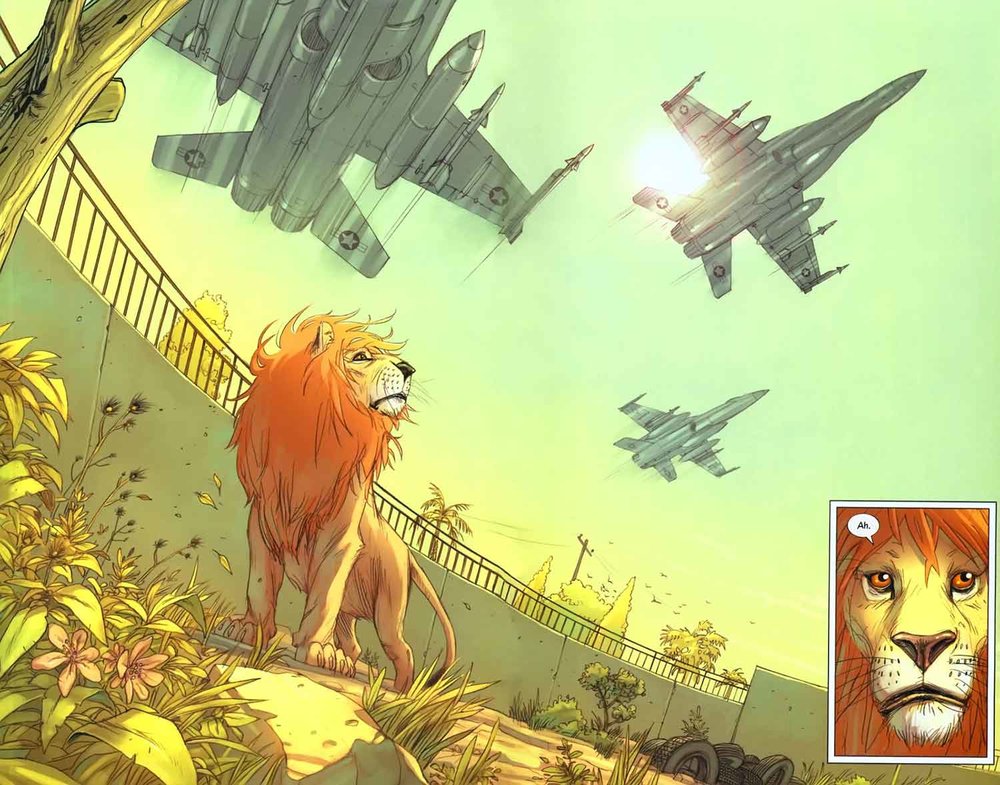
As the brilliant but depressing Pride of Baghdad documented in horrific detail, war isn’t just hard on humans, it’s hell on animals too.
The real-life lions in that drama were left to fend for themselves when American and coalition aircraft began pounding Baghdad in 2003, and their harrowing journey began when an errant missile literally opened a path for them to walk right out of the otherwise abandoned zoo.
As Russian soldiers began pouring over the border into Ukraine and Moscow’s missiles and artillery struck population centers earlier this year, Ukrainian activists sought to avoid a similar fate for their animals and worked on getting wildlife out of the zoos and the country, but there was only so much capacity at sanctuaries in countries like neighboring Poland.
At the same time, remaining in Ukraine was untenable. After Russian forces suffered a series of humiliating ground defeats to a Ukrainian counteroffensive — fueled by weapons systems and tactical intelligence from the US and other NATO countries — Russian President Vladimir Putin has ordered heavy and sustained missile strikes on civilian targets and critical infrastructure in already war-torn Ukraine.
One of his goals is to completely destroy the Ukrainian power grid via missile attacks on coal and gas plants as well as electricity substations, perhaps believing Ukraine might give up its opposition as its population freezes during the region’s harsh winters. The attacks have reached far into Ukraine, hitting the capital of Kyiv and cities like Lviv, which is more than 1,000 km from Russian territory, and some missiles have even disrupted power to neighboring Moldova. The Ukrainian people have not given up despite already enduring months of Russian artillery shelling, occupation and brutality.
But without electricity or reliable access to basics like clean water, caring for the remaining animals has become an impossibility as most people struggle just to keep warm, fed and hydrated.
One of the cubs rescued from Ukraine, now living at The Wildlife Sanctuary in Sandstone, Minnesota. Credit: The Wildlife Sanctuary
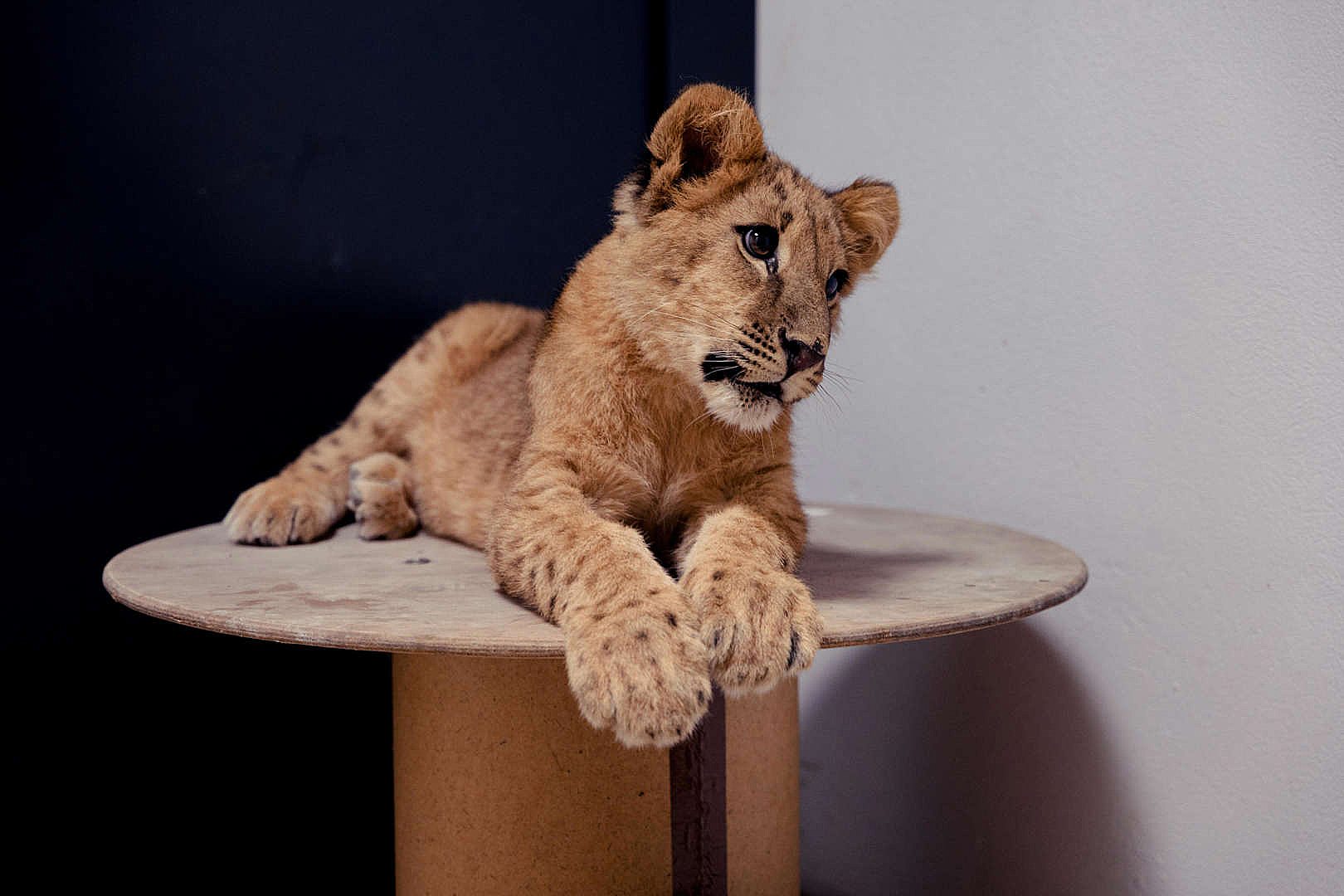
As a result, a quartet of lion cubs born several months into the war had to endure an epic, 36-hour journey that took them from Ukraine to Poland and finally to Sandstone, Minnesota, where they’re easing into their permanent home at The Wildlife Sanctuary. The facility is a non-profit and entirely funded by private donations, which means it’s not open to the public. Animals aren’t put on display, and their enclosures are built entirely for them, not for the benefit of visitor sight lines.
The lion cubs, who are all orphans, have already been indelibly impacted by the war.
“These cubs have endured more in their short lives than any animal should,” said Meredith Whitney of the International Fund for Animal Welfare, which facilitated the transport of the young cats some 5,000 miles from Ukraine to the central US.
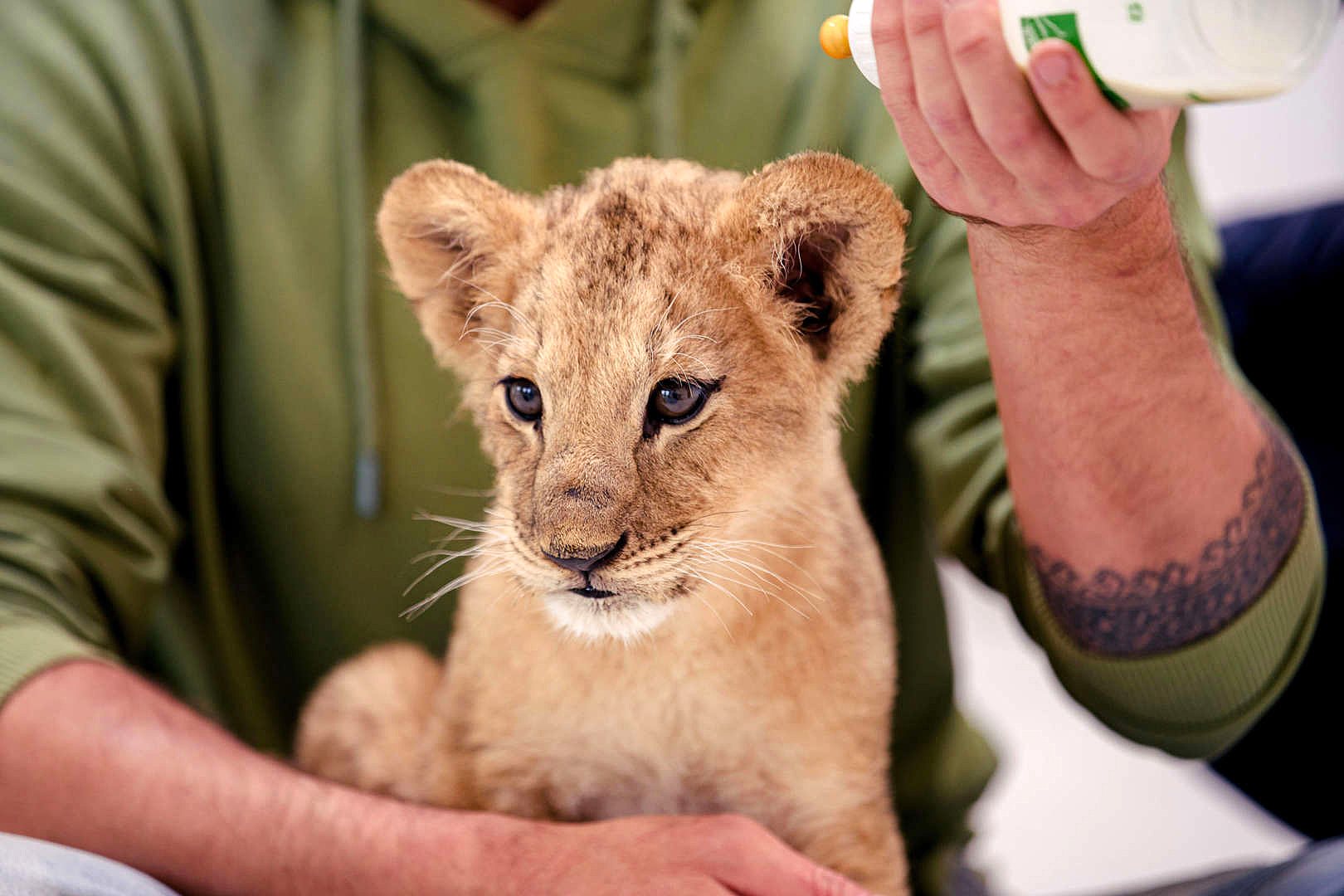
The cubs, all between four and five months old, are named Taras, Stefania, Lesya and Prada. Taras is male while the others are female.
“We’ve cared for 300 big cats at TWS and are acutely aware of the trauma many big cats around the world experience,” said Tammy Thies, the sanctuary’s founder. “From the moment IFAW reached out to request our partnership, we knew these cubs had found their forever home at our sanctuary. They have a custom, open space to explore and soft grass or hay to rest their tired bodies on. Because of the generosity of our supporters, we can provide lifelong care to big cats at our sanctuary.”
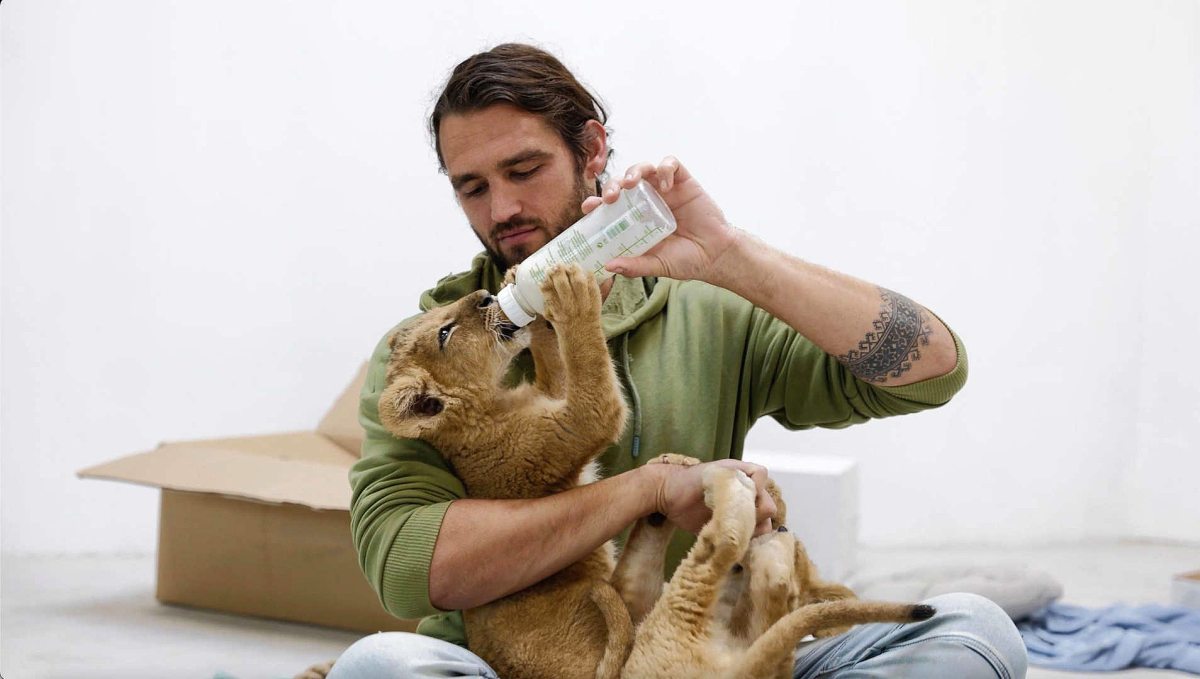
Bottle babies: The cubs are all between four and five months old and were not weaned before they were orphaned. Credit: The Wildlife Sanctuary
Pride of Baghdad is a 2006 graphic novel based on the true story of four lions who escaped Baghdad Zoo during coalition airstrikes in 2003. It’s poignant, beautifully illustrated and wonderfully told, but also harrowing and deeply upsetting.
Big cat sightings across the UK have a lot in common with UFO sightings in the US.
Shhhhh!
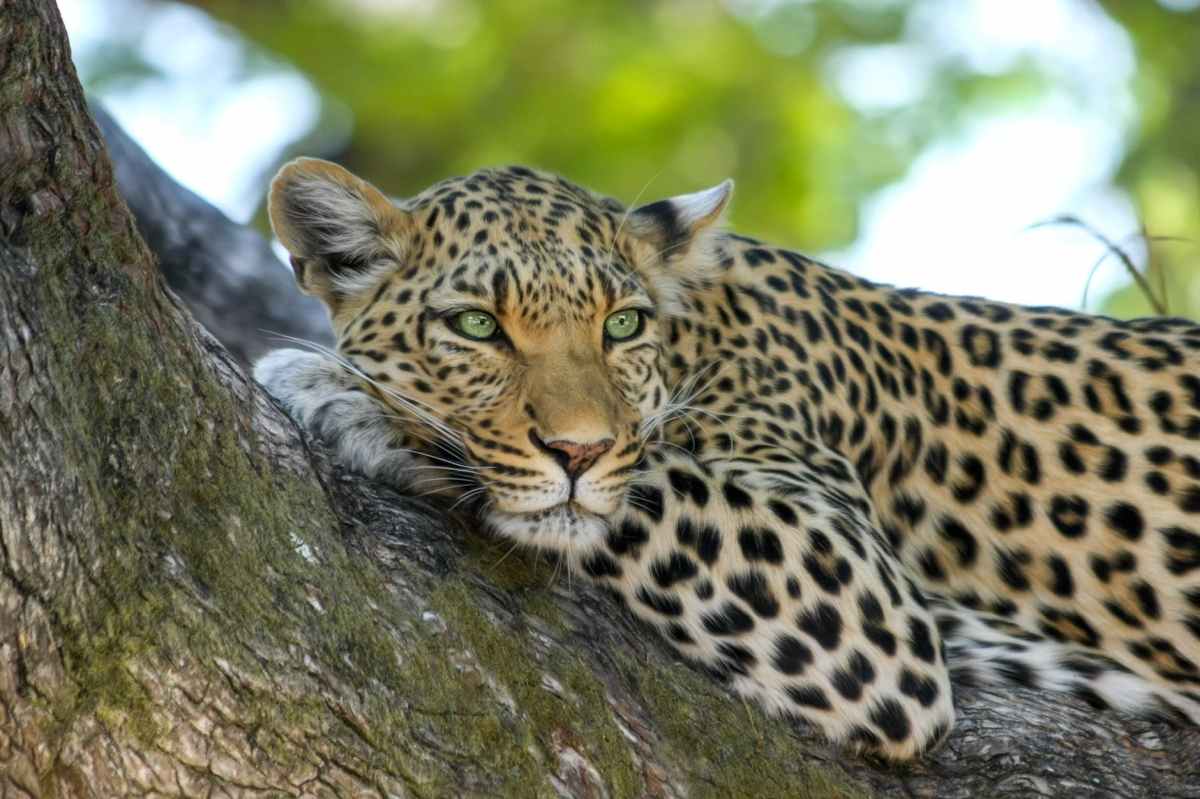
No one tell NewsCorp that “black pumas” don’t exist, pumas are native to the Americas, leopards are native to Africa and Asia, and a “black panther” is a color morph, not a species of cat.
A story from Fox News — prompted by a similar story in the UK’s Sun, part of the same Rupert Murdoch-owned media conglomerate — claims the British are “unnerved” by an “uptick” in sightings of cryptid big cats. The mysterious creatures are supposedly running rampant in the British countryside and in the suburbs, according to the article, which identifies them as black pumas, black panthers and black leopards.
Oddly, the story says the sightings are up significantly because there have been three “big cat” sightings in October, immediately before informing readers there are 2,000 such sightings in the UK every year.
Little Buddy and I are not exactly known for our math skills, but 2,000 sightings a year works out to 167 sightings per month, which is a lot more than three. Fifty five times more, in fact. So the story should really be about a dramatic dip in phantom big cat sightings, shouldn’t it?
What evidence does the Fox report cite for its breathless claim about big cats taking over the UK? A pair of grainy security camera videos, including one showing a “big cat sighting” at night, and the word of a “big cat sighting expert,” alternately called a “countryside expert” in other media reports, who by the way happens to be hawking a documentary on the sightings.
“It’s a crucial issue,” self-described wildcat expert Rick Minter told The Sun. “How do we come to terms with living alongside big cats in Britain?”
Pumas, also known as cougars, mountain lions, panthers and catamounts, are native to the Americas. Credit: Wikimedia Commons
For readers unfamiliar with the highest echelons of reputable journalism, The Sun is the UK’s foremost bastion of trustworthy reporting, a tabloid par excellence whose editorial staff are known for breaking stories about “crazed werewolves” and immigrants barbecuing the late queen’s swans when they weren’t running topless photos of models on Page 3. The Sun is owned by NewsCorp, the parent company of Fox News.
As for the two pieces of footage, one is the aforementioned blurry mess recorded by a home security camera at night, and shows a few frames of a cat’s behind and a tail as the felid walks out of the frame. The other is a blurry clip the credulous claim depicts a large cat feeding on a sheep. There’s no indication the figure is a felid of any type.
As far as we’re concerned, there are a few possible explanations for the sightings:
They’re former pets
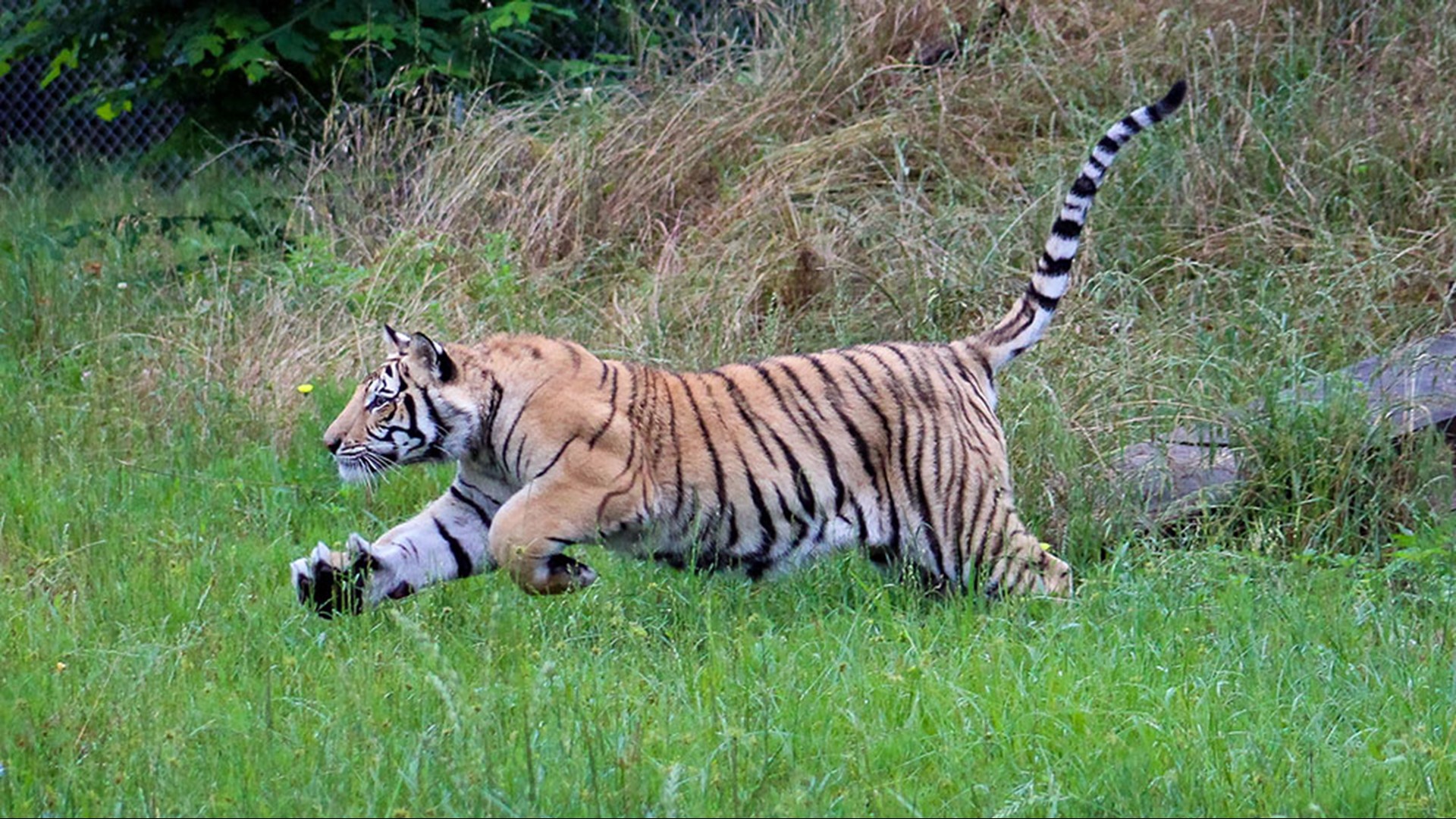
India the tiger was found wandering the suburbs of Houston in 2021. In this photo, he’s enjoying life in his sanctuary’s large enclosure where he’s got plenty of room, stimulation, toys and even his own rock pool.
If there are indeed big cats roaming the British countryside and suburbs, they would have to be former pets of people who acquired them on the illegal wildlife market, broke the law by “importing” them into the UK, then broke several additional laws by keeping them as pets until the cats quickly grew and the owners realized keeping them is untenable.
Such situations aren’t unheard of, obviously, but they can’t account for a dozen big cats on the loose at any one time, much less more than a thousand as Minter claims.
More importantly, big cats who are taken from their mothers as days-old cubs, sold as pets and later dumped are universally confused, terrified and unable to fend for themselves. They end up roaming suburbia in broad daylight, like a nine-month-old tiger named India who was spotted wandering around the outskirts of Houston in 2021, sniffing out potential food in garbage cans because they don’t know how to hunt.
If these phantom big cats were former pets, they’d be spotted, captured and taken to sanctuaries within a matter of days.
They’re small wildcats formerly native to the area, like the Eurasian lynx
The problem is, the Eurasian lynx was extirpated from the UK about 1,400 years ago. There have been debates among conservationists about reintroducing wild populations to the British countryside — and to Ireland — but no concrete plans as of yet. Proponents say the lynx could be beneficial, keeping deer populations level without major human intervention.
Eurasian lynx adults can grow to about the size of medium dogs, so it’s possible they can be mistaken for “big cats” in blurry video, especially when perspective and/or lack of other objects makes it difficult to place their actual size in context. However, as with big cats, any Eurasian lynx spotted in the UK are likely to be former pets.
They’re housecats
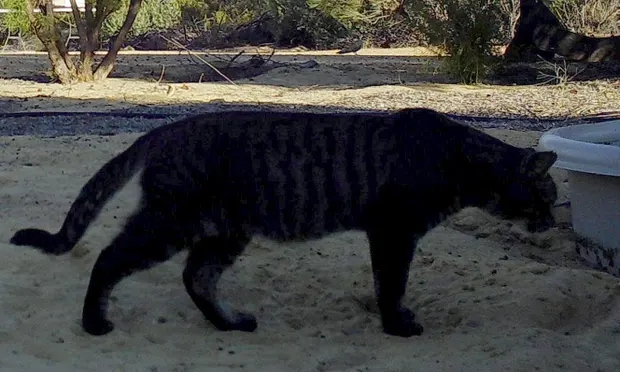
This feral cat, a plain old member of the felis catus species, was repeatedly mistaken for a big cat in western Australia back in 2018.
If witnesses in the UK are mistaking house cats for big cats, they wouldn’t be the first.
Stories abound of little cats prompting “big cat” sightings, from Vancouver (a Savannah cat) to Scranton, Pa. (a missing house cat), to San Jose (a Maine Coon) and even Australia. (A feral cat.)
One wildlife ranger in Australia became so annoyed with fielding frequent big cat reports that he implored people to educate themselves.
“People need to get over the idea the cats are panthers,” wildlife ranger Tim Gilbertson told Australia’s ABC news. “It is just not on. They are big feral cats, at least 50% bigger than a house cat and they are powerful.”
The usual issues are in play here: Fuzzy security camera footage, night sightings, confused witnesses. You’d think there would be more phantom big cat sightings in the US, since pumas can grow to the size of jaguars and could be mistaken for lions, but people who live in areas where pumas range tend to know they’re around and what they look like. They’re also the definition of scaredy cats, reluctant to let humans spot them or get anywhere near them.
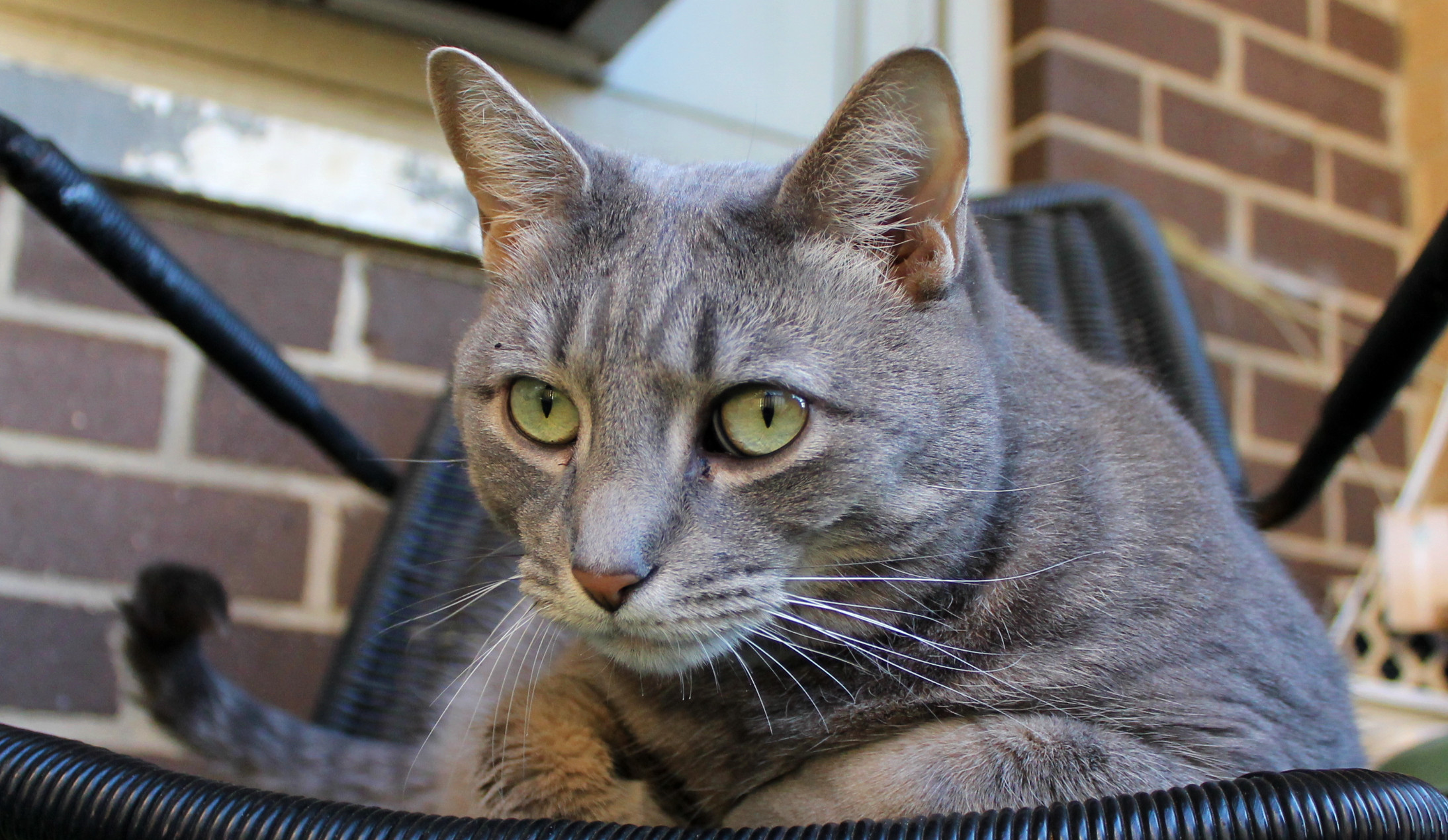
Frequently mistaken for a tiger: Buddy the Cat.
Ultimately, witness reports count don’t count for much, and not just because memory is malleable.
Thousands of people have reported seeing Bigfoot, chupacabras, the Jersey Devil and the Loch Ness monster, but those creatures are all firmly in cryptid territory.
There’s Occam’s Razor, and there’s common sense: For a primate species like Bigfoot to exist, for example, there would need to be a breeding population, enough prey for the creatures to feed themselves, and someone somewhere would have found remains at some point. (Bigfoot sightings go back to the days before Columbus set foot on New World shores, but it’s only been in the last century or so that the cryptid has entered the popular imagination via folklore and media.)
Likewise, if there are indeed 1,000 big cats prowling the British countryside, as Minter claims, there would be a breeding population, ubiquitous tracks and the remains of prey animals killed in ways consistent with big cat ambush techniques. Cats of all sizes are ambush hunters and have a distinct way of killing prey which is unlike other animals.
The UK’s big cat sightings should be treated more like the UFO sightings in the US and particularly around Area 51. They start with a kernel of potential truth — the existence of a secret base to test experimental military aircraft, or the possibility that big cats who were former pets have been let loose — which leads people to consider the possibility, then when they see something they can’t easily explain, they reach for the exceptional.
But as Carl Sagan famously said, exceptional claims require exceptional proof, and it’s no accident that things like UFOs, cryptid primates and phantom big cats only appear on the grainiest, blurriest and darkest footage.
My money is on domestic cats mistaken for their much larger cousins. Maybe Buddy’s been taking some transatlantic flights under my nose. I’ll have a little chat with him about it and ask him to kindly stop terrifying our friends across the pond.
The legislation aims to ban all private big cat ownership throughout the United States.
There are more tigers living in cramped backyards in Texas than there are in the wild.
At roadside zoos, shady people like Joseph Maldonado-Passage, Joe “Exotic” of Tiger King fame, breed big cats like rabbits so they have an endless supply of cubs to steal from their mothers before they’re weaned, pumped full of sedatives, and handed off to tourists who take selfies with them but never stop to consider the welfare of those baby cats or the harm they’re enabling.
And in states like Florida, where “Muh freedoms!” reign supreme over all other values, people can own any wild animals they want, with no real oversight and no mechanisms to ensure they’re doing right by the animals. There’s nothing forcing “exotic” animal “owners” to keep the big cats, monkeys and other mammals in proper enclosures where they have stimulation and — just as importantly — won’t escape and hurt neighbors.
India the tiger was still just a cub when he was spotted wandering through residential neighborhoods in Texas, where he’d been dumped by his former “owner.” Credit: Humane Society
Thankfully, things could change soon as lawmakers are expected to vote on the Big Cat Public Safety Act, a rare bipartisan effort that would finally make it illegal to keep tigers, lions, jaguars, leopards, cheetahs, pumas and other wildcats privately, whether in homes, businesses or non-accredited “zoos.”
Currently keeping big cats is illegal or severely restricted in most states, but like many things in the US, there’s a confusing patchwork of laws and things that would be unthinkable in other states are perfectly acceptable in places like Texas and Florida.
Because, you know, “muh freedoms.”
Now is a good time to point out that this blog has always been, and will remain, politically agnostic. I have my own political beliefs as any other person does, but PITB is a cat humor, news and advocacy blog, and the only politics we discuss here are those that relate to animal welfare. Equally important, Buddy and I want people of all political persuasions to feel comfortable as readers and commenters on PITB. (Although that could change if one or both political parties suddenly makes a move against the nation’s Strategic Turkey Supply. Then Buddy’s gonna have to get biblical.)
The Big Cat Safety Act is co-sponsored in congress by representatives Mike Quickly, D-IL, and Brian Fitzpatrick, R-PA, and in the senate by senators Susan Collins, R-ME, Tom Carpenter, D-DE, Richard Burr, R-NC, and Richard Blumenthal, D-CT.
If your congressional representative or your senators aren’t publicly on board with the Big Cat Safety Act, you can make your voice heard via the Humane Society’s site, which allows you to draft and send letters to the offices of your lawmakers.
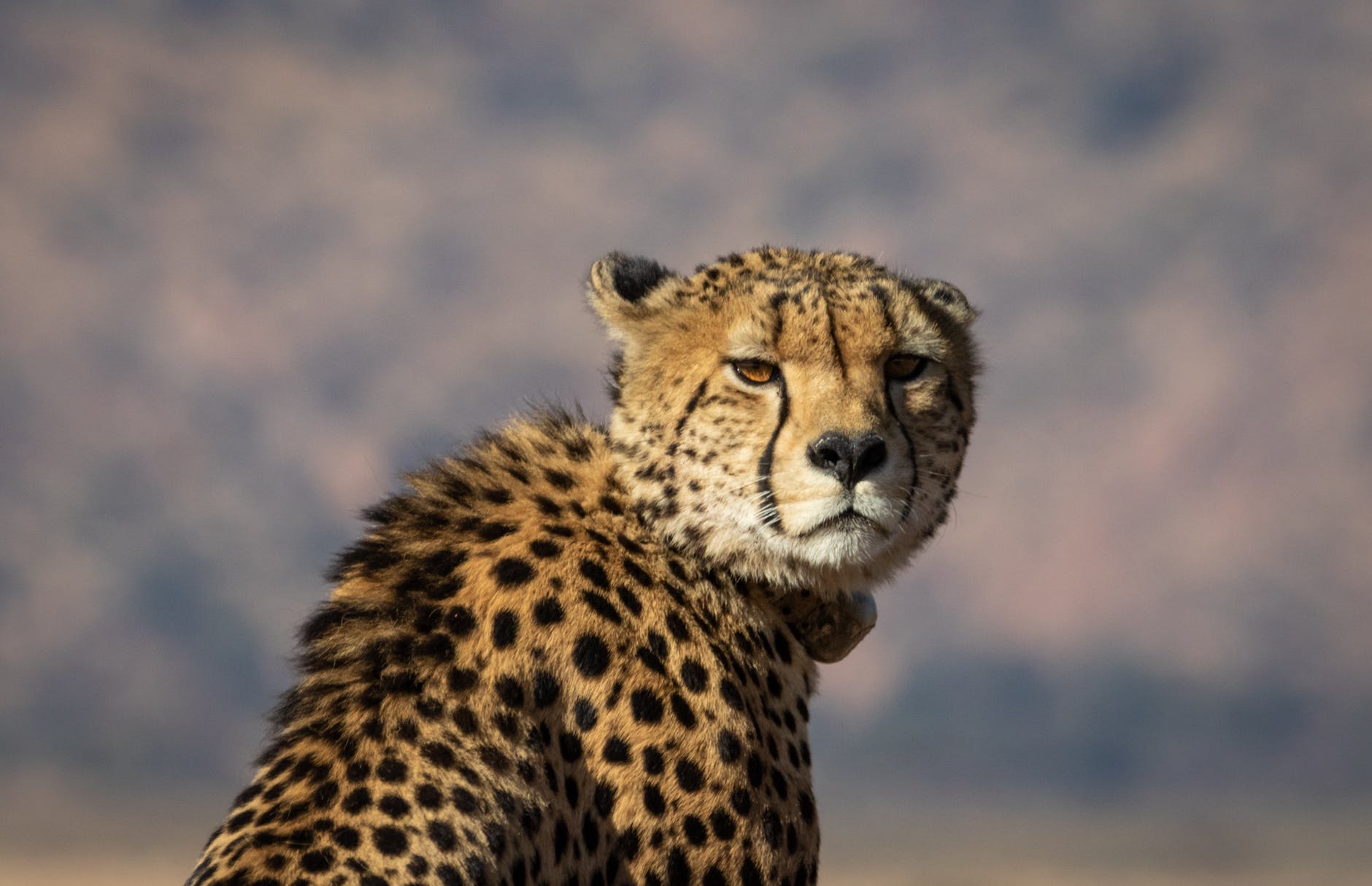
Cheetahs, already critically endangered, have been almost entirely wiped out by poachers who sell their cubs on the illegal wildlife market. Credit: Magda Ehlers/Pexels


 Pain In The Bud