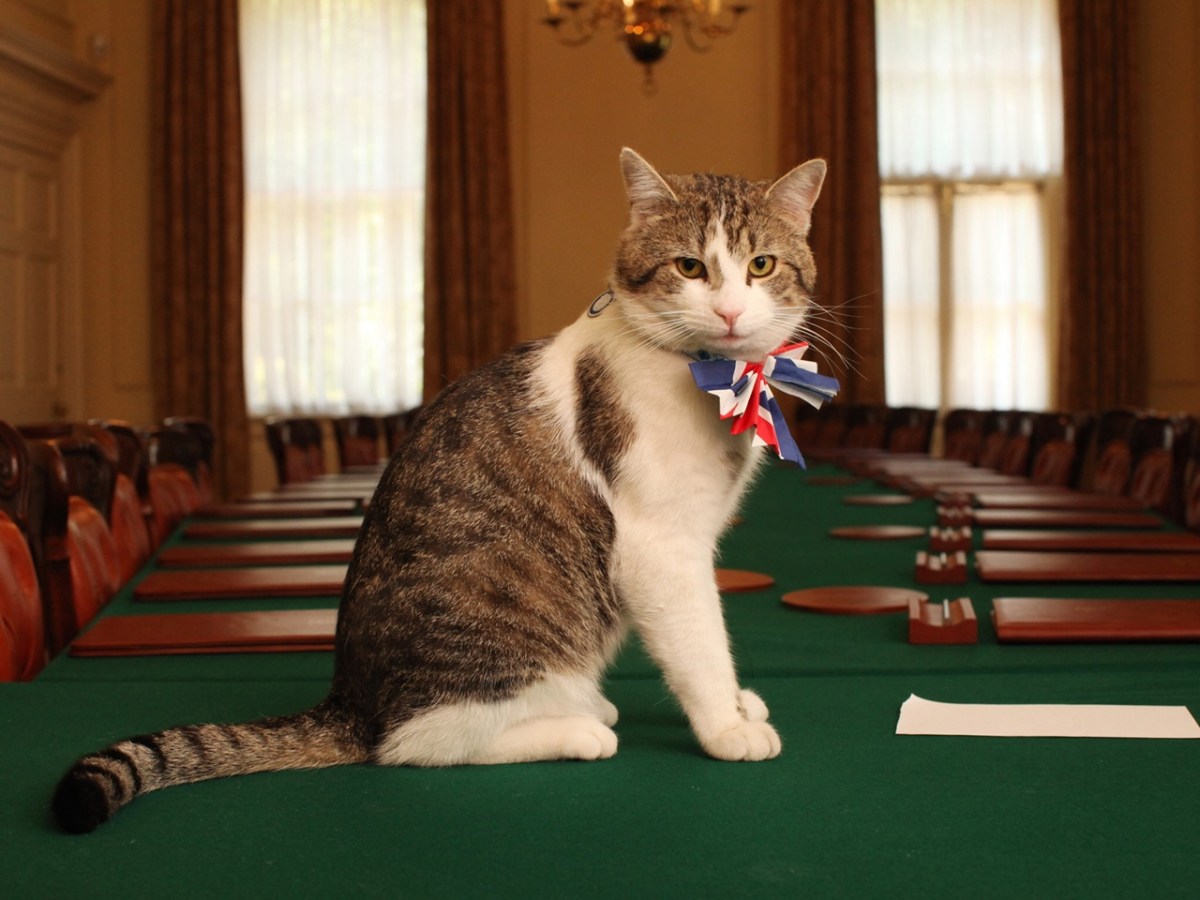
Larry The Cat Is Now On His 6th Prime Minister: Long Live Larry The Cat!

While the prime minister is the official government executive in the UK, Larry the Cat is the country’s de facto leader, setting policy on important issues like nap time quiet enforcement.

LONDON — Looking for a change after tiring of outgoing Prime Minister Rishi Sunak and his Conservative party, British voters on Thursday selected a new human to serve Larry the Cat, the nation’s de facto leader.

Incoming Prime Minister Keir Starmer was expected to meet with his feline master on Saturday, a day after a scheduled audience with King Charles.

“Lord Larry will lay out his expectations, go over the house rules at No. 10, and warn the new prime minister that national emergencies are not an excuse to be tardy with meals,” said Alastair Lamb, a political columnist for The Guardian. “This isn’t Larry’s first rodeo, as the Yanks might say. He is succinct in communicating what’s expected of a new prime minister.”

Indeed, Starmer is the sixth prime minister to serve under Larry, who arrived at No. 10 to great fanfare in 2011 during the premiership of David Cameron.

53d40c25d996d_-_larry-the-cat-151111-lrg
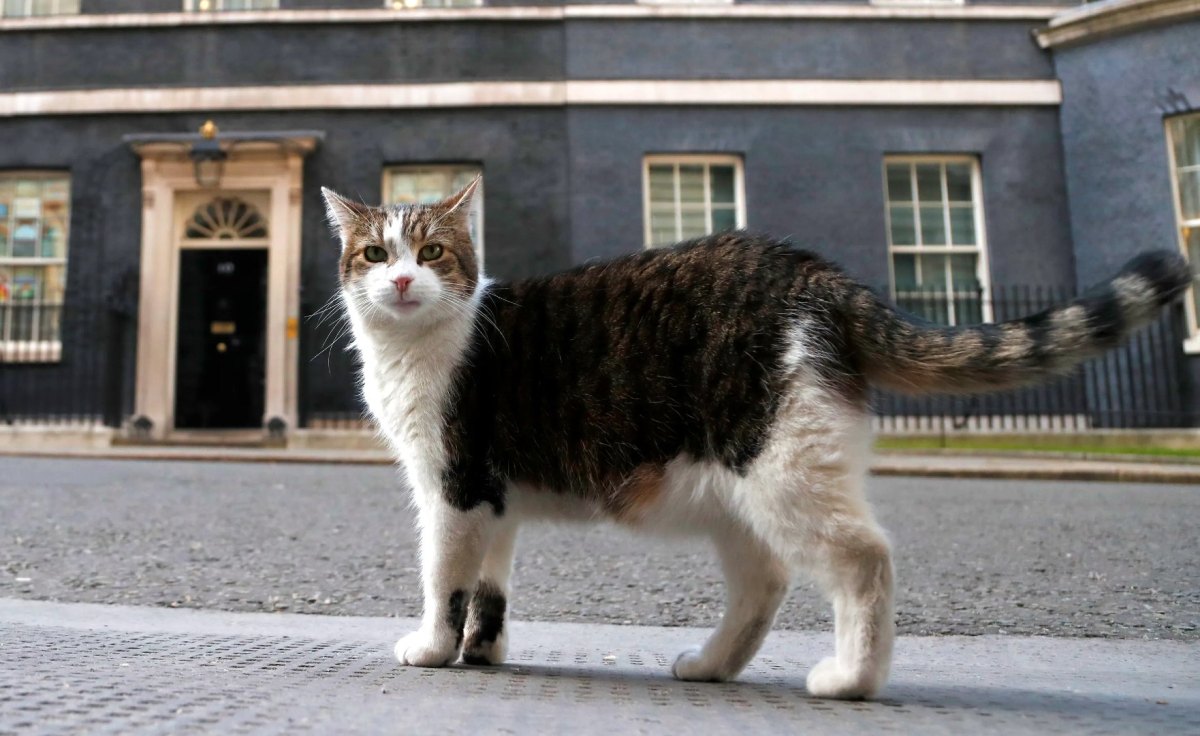
Favorite of the ladies, chief mouser and renaissance feline: Larry the Cat.

Although Larry was initially brought on to combat a stubborn rodent infestation in the 400-year-old structure, he began to take on more duties related to the day-to-day running of the country when it became clear he was more competent — and much more popular — than the men and women officially running the country.

An Ipsos poll released on July 4 reaffirmed the feline’s supremacy: Larry’s favorability ratings are more than double Sunak’s, and he holds an 11 percent favorability lead over Starmer.

Larry has outlasted Cameron, Theresa May, Boris Johnson, Liz Truss and Sunak.

Sunak’s fate was sealed when staff at No. 10 leaked news that the prime minister had gotten on Larry’s bad side for ignoring the feline’s repeated demands for scritches while Sunak was on the phone with US President Joe Biden.

“Sunak made the mistake of believing the real power was in Washington, D.C., when it was in fact the 13-pounds of glorious fur sitting on his desk,” said Sir Felix Finch, editor of the Trafalgar Review of Books. “If he’s smart, Starmer will ingratiate himself with Lord Larry and ensure he remains on the cat’s good side by providing treats and a lap to nap on.”

Larry has directly or indirectly impacted the fates of most of No. 10’s previous occupants. When Johnson was ensnared in a scandal of his own making in 2020 — after he was caught hosting parties while the entire country was quarantining in lockdown — it appeared the 60-year-old former Etonian was on his way out. But in a show of confidence, Larry climbed on Johnson’s shoulder and sat there as the beleaguered politician apologized to British citizens in a televised address.

“His Lordship was sending a strong message: ‘This Boris guy isn’t bad, his treat game is strong and he lets me sleep on his head at night,” Finch said. “The public really responded, concluding that if Johnson still retained Larry’s favor, he must be an allright bloke.”

Buddy the Cat at Downing Street
Buddy the Cat visited No. 10 Downing St. in 2020 while he was president of the Americats, meeting his fellow head of state, Larry, for meows about the continuing alliance between the United Katdom and the Americats.

Starmer and his wife, Victoria, are said to be new to the world of cat servitude and will need to hit the ground running in order to avoid disappointing Larry. A team of aides will bring the couple up to speed on the basics before dining with Larry and his lady friend, Maisie.

“The First Larresian Supper, as it’s been dubbed by the British press, is seen as a key indicator of a new prime minister’s aptitude for the job,” said Spyglass magazine’s Luisa Rey. “One of the reasons [Liz] Truss’s  premiership was so short was her inability to make a meaningful connection with Larry.”

When word reached the press that Larry and Maisie were displeased with their pate and after dinner digestif, it was seen as only a matter of time before Truss was gone. Not only did she last a mere 50 days, the shortest tenure of any prime minister in history, she was also ousted from her seat in parliament in the same elections that saw Starmer win the top job.

“The message was quite clear,” Rey said. “Getting on Larry’s bad side is tantamount to career suicide.”

Starmer, who hopes to avoid that fate, received congratulations from Biden on Friday.

“Congratulations, Kevin,” Biden told Starmer, according to an official transcript of the call. “When I was a young man in Scranton, Pennsylvania, the British there loved me. They made me their prime minister, and that’s how I became mayor of London. Folks, look. The idea that…and look, my economy was the number one armadillo in the world, and there’s not a pangolin that’ll dance about history who will tell you the malarkey as it flies. As the first Macedonian-American president, I invite you to come visit the Taj Mahal and have dinner with me and Joan Rivers.”

Coyote Repeatedly Slams Into Screen Door To Get At Cat, Plus: What If Air Conditioning Isn’t Enough?

With much of the US already sweltering under a summer heat dome, architectural engineers warn most American buildings aren’t designed for extreme temperatures, while energy experts warn of more rolling blackouts.

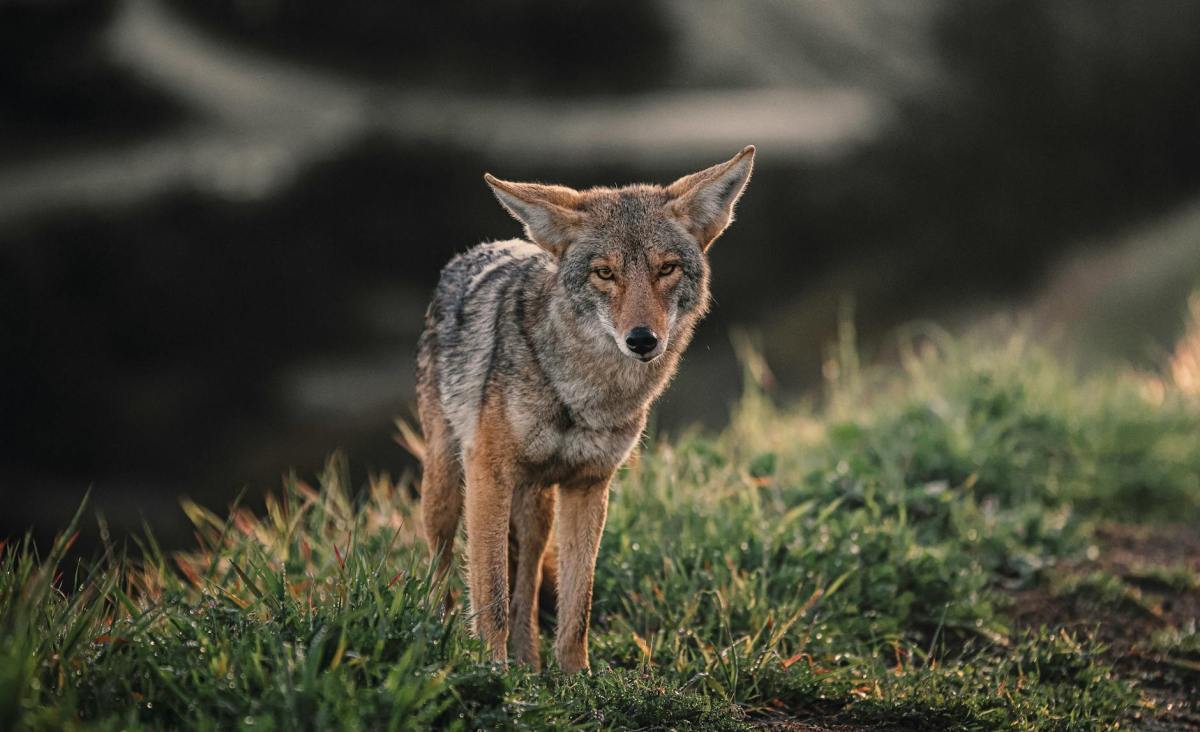
A family in Mission Viejo, Calif., heard a series of loud crashes at their back door, then reviewed their doorbell camera footage to find a determined coyote had been trying to attack their cat.

The footage shows the coyote repeatedly throwing itself at the screen door, which might have buckled if there hadn’t been a baby gate reinforcing it.

“We ended up putting a baby gate up to keep the cats inside,” homeowner Cindy Stalnaker told KABC. “That ended up being what prevented the coyote from getting inside the house because that’s what he was banging into repeatedly.”

Coyotes weigh about 30 to 35 pounds and will attack potential prey smaller than they are, which includes pets as well as young children.

The canids aren’t usually keen on approaching human homes, but in many places they’ve run out of room to roam as towns and cities clear more wild land for new developments. Less habitat means less prey, which can also lead the animals to scavenge and hunt on the fringes of residential and urban neighborhoods.

Stalnaker said she was grateful the baby gate held, but she’s looking into a more stable and permanent solution to keep her cats safe from coyotes.

What if air conditioning isn’t enough?

Human activity isn’t just driving wild animals to extinction, it’s killing them off with temperature extremes, and a Tuesday story from The Guardian provides a bleak look at how our present situation threatens human life as well: Buildings in most US cities aren’t built to mitigate excess heat, air conditioners weren’t designed to keep on chugging indefinitely with temperatures around 100 degrees, and power grids can’t keep up with the demand when millions of AC units are drawing power simultaneously.

At the same time, summers keep getting hotter and there’s no reprieve in sight.

Kids playing in water from a fire hydrant
Legal or not, New Yorkers turn to fire hydrants to get relief during heat waves. Credit: NYC Office of Emergency Management

While the heat has major ramifications for animals and sea life, it’s also directly endangering human life now:

“Some experts have begun to warn of the looming threat of a “Heat Katrina” – a mass-casualty heat event. A study published last year that modeled heatwave-related blackouts in different cities showed that a two-day blackout in Phoenix could lead to the deaths of more than 12,000 people.”

An architectural engineer tells the newspaper that temperatures have spiked so much in recent summers that cooling “systems that we sold 10 years ago are not able to keep up with the weather we have.”

The result for people in America’s hottest cities is that even AC doesn’t provide relief.

In the meantime we’re likely to see more headlines about rolling blackouts, punishing energy bills and people dying in their homes, scientists say. Fusion power and significant leaps in battery technology can’t come soon enough.

Owl’s Well That Ends Well For Manhattan’s Most Famous Wild Animal

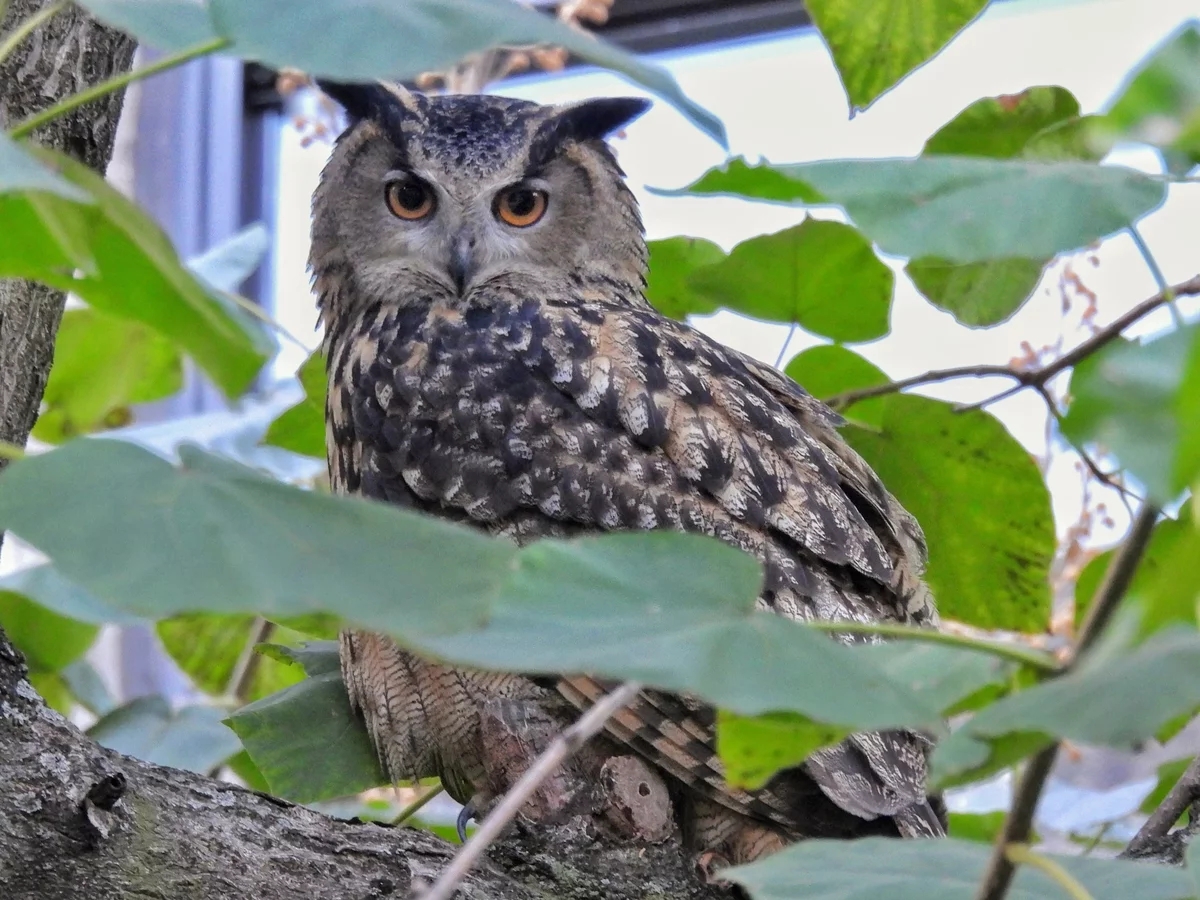
Flaco the Eurasian Eagle Owl has become a New York celebrity since he escaped his enclosure at the Central Park Zoo early in 2023.

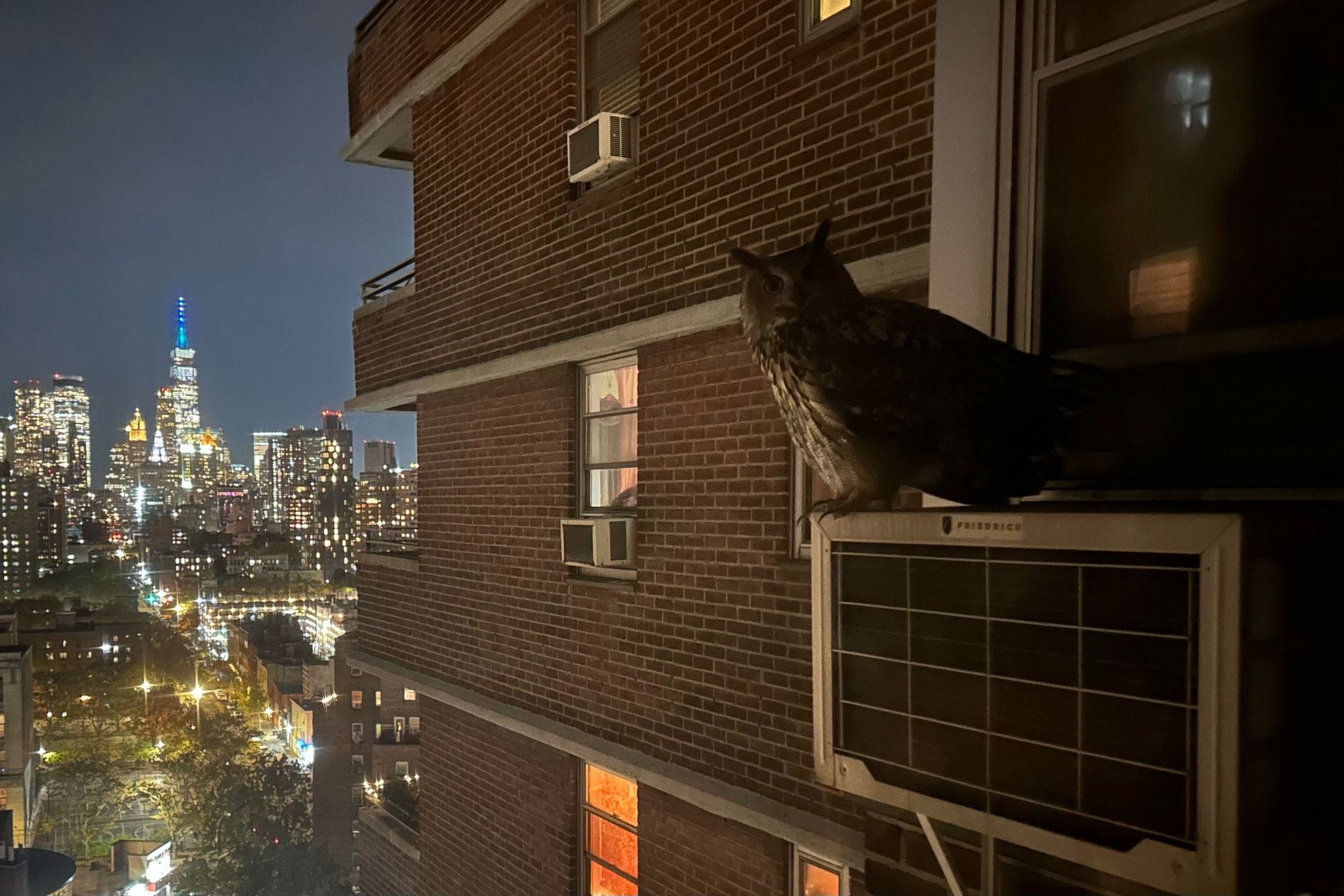
He’s been spotted flying through the concrete canyons of midtown, perched on fire escapes on the upper east side and ridding New York of its vermin — but he’s not your friendly neighborhood Spiderman.

He’s Flaco the Eurasian eagle-owl and New Yorkers have been rooting for him ever since he escaped from a small enclosure in Central Park Zoo and decided the entire park and its environs would be his domain.

Since then, Flaco has evaded capture, put aside concerns that he’d be able to survive in the big city and shocked the hell out of New Yorkers who have seen the curious little guy’s face pressed against the glass of their apartment windows, watching them intently.

“I audibly gasped,” 24-year-old Matt Sweeney told the Wall Street Journal after he realized something or someone was watching him through the window of his upper west side apartment.

“It absolutely scared the you-know-what out of me,” 31-year-old actress Reilly Richardson told the paper after she woke up one morning to find the peeping predator watching her from outside. “It’s New York City. It’s the last thing you expect to see.”

Flaco escaped Central Park Zoo in February after his enclosure, where he lived for 12 years, had been “vandalized,” according to zoo staff. It turns out someone sliced an opening in the mesh, giving Flaco an out which he quickly took advantage of.

For the next few months zookeepers chased him around Central Park, trying to lure him back with food and the recorded sounds of other owls, but Flaco wasn’t having it. In the meantime he became a celebrity, New York’s version of the famous mountain lion P-22, with crowds of birders and curious onlookers assembling to watch and photograph him.

Flaco NYC
Credit: New Yorker Robin Herbst-Paparne, who spotted Flaco outside her apartment. Via WSJ

Social media accounts tracking the raptor’s movements sprung up online, and all the attention became too much. Even though zookeepers gave up on returning him to his enclosure, Flaco apparently decided he was done being watched and became the watcher.

Since then he’s popped up all over Manhattan, delighting New Yorkers and giving others a scare as they noticed the two-foot owl tracking them from a fire escape or a window perch. In early November he left the comfy confines of Central Park — possibly spurred by the crowds and commotion of the annual NYC Marathon — and began exploring the city proper, popping up in random places each day.

Initially people were worried Flaco, who had spent his entire life in captivity, wouldn’t be able to feed himself. The owl quickly put those concerns to rest as he proved adept at feasting on New York’s abundant rodents, earning himself the nickname “New York’s Rat Czar” at a time when Mayor Eric Adams has declared war on the vermin.

Experts are divided on why Flaco is spending so much time watching people. As the only known Eurasian eagle owl living “wild” in North America, the little guy may be looking for a mate. They say he won’t find one of his species, but he could find an unpaired female of another species if he’s lucky.

Others say Flaco, who was raised by humans and isn’t afraid of our species, may believe a human could be his mate. That’s another way his predicament mirrors that of P-22, who settled in Los Angeles’ Griffith Park and became a local celebrity, but was cut off from potential mates by busy highways and miles of human-inhabited land.

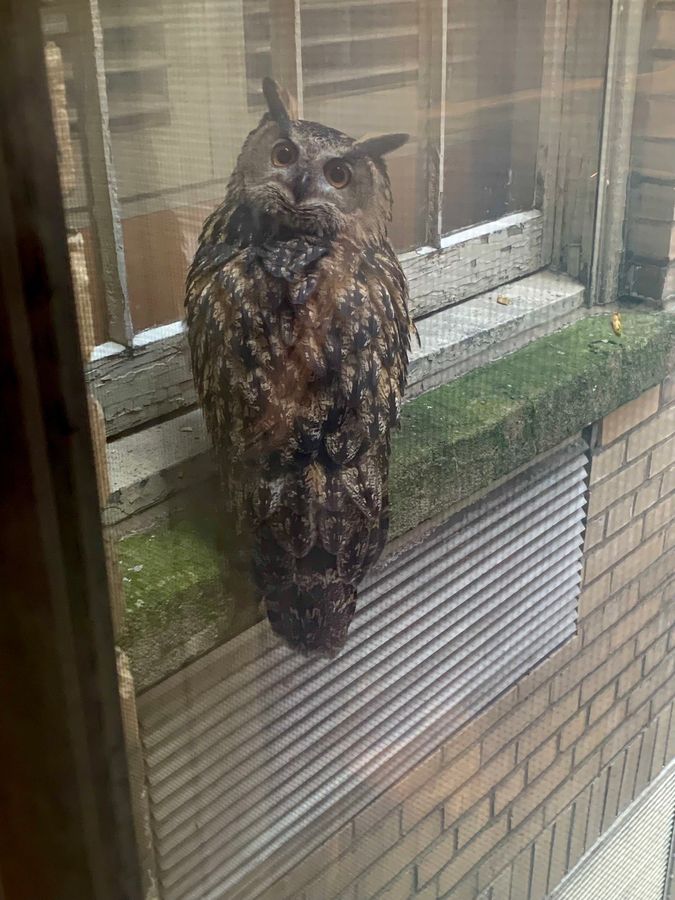
Flaco
Nan Knighton, whose apartment faces Central Park, snapped this shot of Flaco outside her apartment.

Regardless, people in New York are enchanted by the unusual resident and delighted to see him. Nan Knighton, who took the above photo (via WSJ) told the paper she had an intense encounter with Flaco. After realizing a pair of intense eyes were tracking her inside her home, she made friends with the curious owl:

He stuck around for three hours. 

“I talked to him,” says Knighton, recalling telling Flaco he’s beautiful and gorgeous, and that she couldn’t believe she was speaking to an owl. When she walked into another room, Flaco’s head swiveled to follow her. 

Flaco stayed quiet until Knighton got within 6 inches of his face. “He just let out this little tiny hiss,” she says. “It was kind of like, ‘OK, I like you, but I don’t want to be beak to beak.’”

She turned her back to the owl to write something down. When she looked back, Flaco was gone.

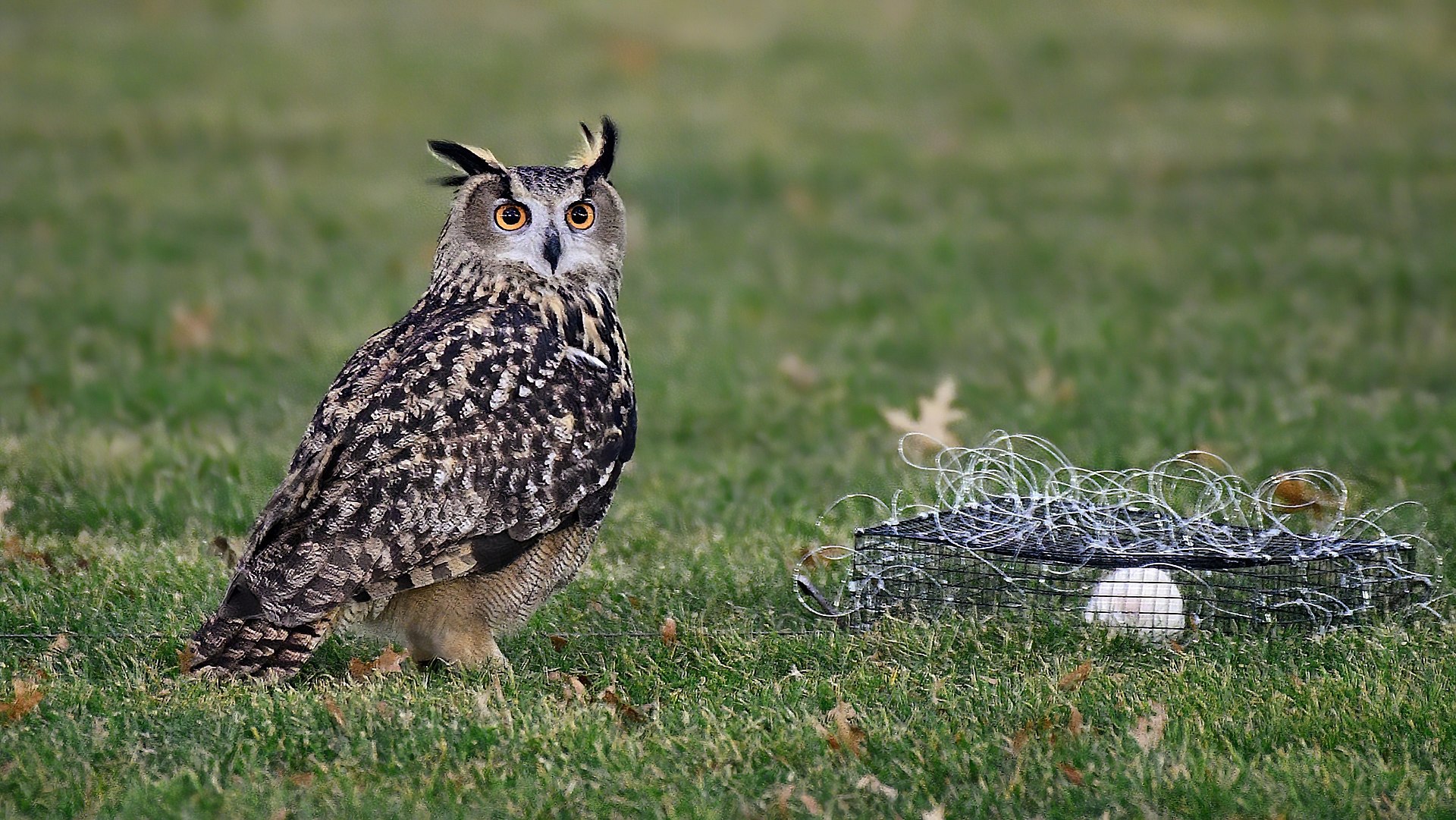
Flaco_with_trap
Flaco proved too smart for zookeepers who tried to entice him with traps like the one above. Credit: Wikimedia Commons

Bogus Science And Unverifiable Claims Drive Cat Hatred In New Zealand

Cat hatred is driven in large part by bunk science authored by researchers who approach their work with predetermined conclusions.

After news of a now-canceled children’s cat hunting contest made international headlines this week, the usual suspects came out of the woodwork with wild, unsupported claims that cats — not humans, not human industrial processes, not human-driven habitat loss, wind farms or agricultural pesticides — are singlehandedly responsible for wiping out New Zealand’s native birds and the extinction of an arbitrary number of avian species.

One of the people leading the charge is Helen Blackie, a “biosecurity expert” who told the BBC that cats are responsible for the extinction of six native bird species in New Zealand.

Blackie doesn’t say where she got that information, but noted cat-hating Kiwi Gareth Morgan’s site claims that cats have killed nine native bird species, and attributes the information to a study, “A global review of the impacts of invasive cats on island endangered vertebrates.”

The “study” was published by academics in Spain and California without boots on the ground in New Zealand and is not actually a study at all. It’s a meta-analysis of prior studies, none of which count the number of feral, stray and pet cats in New Zealand, nor do they offer anything resembling a measure of how many birds are actually killed by cats.

Notably, the study does not say cats are responsible for the extinction of nine bird species.

close up shot of a stray cat
Credit: Mehmet Turgut Kirkgoz/Pexels

Much like their US bird-conservationist counterparts, the authors of the study cannot say how many cats actually live in New Zealand and have no observational data about feline predatory habits.

They rely on the same methods the US studies do, which is to say they collect data from unrelated research — including a paper measuring the impact of all predators on wildlife in the aftermath of wild fires in urban environments, a report on the way pet cat personalities impact how their owners view them, and a study on cat behavior in Culver City, California — stir the data into a pot of numbers, and massage the numbers until they get the desired results.

In this case, the “desired results” are any suitably impressive-sounding figure for the total number of native birds killed by cats in New Zealand. The authors aren’t conducting a scientific investigation to find out how those native birds died, they’ve already decided that cats are the reason and they’re misrepresenting data from unrelated studies to support that conclusion. That is not science.

Of course their conclusion has no basis in reality. How is it possible that a bunch of researchers on entirely different continents are able to come up with accurate figures on cat predation in New Zealand without any actual data about cats in New Zealand, without a population count of cats in New Zealand, and without a single observational study to draw information from?

How does a study of coyote and cat interactions in Culver City, California have any bearing on cats killing birds in New Zealand, an island country 6,700 miles away with habitats that bear little or no resemblance to California? Coyotes don’t even exist in New Zealand!

How does a self-reported questionnaire about the personalities of pet cats by American cat owners tell researchers anything about the behavior of feral cats in rural New Zealand?

How does a study about the Persian squirrel on Greek island ecosystems tell a research team anything about the impact of cats on flightless birds in a completely different environment, in a different part of the world, with different types of trees and cover, different native fauna and weather systems?

How does a study of alpine ecosystems inform estimates of cat predation in the temperate and subtropical ecosystems of Aotearoa?

view of a stray cat on a city street
Credit: Boys in Bristol Photography/Pexels

This is not science

This sort of buffet-style, cherry-picking nonsense wouldn’t pass muster in an undergraduate class in the hard sciences, yet somehow it’s not only published in peer-reviewed conservation journals, it’s reported breathlessly and credulously by reporters at outlets like NPR, the BBC and the Guardian, who don’t even bother to read beyond the abstract.

The claims are further undermined by their inexplicable assertion that feral cats and domestic cats are not the same thing, when in fact they are the same species: felis catus. Advocates of cat hunting in New Zealand fret that it’s impossible to tell if cats are feral or pets, not understanding that they are indistinguishable because they are the same. The only difference is that house cats have homes and ferals do not.

No one is claiming that cats don’t have an impact on the environment. It would be foolish to think they don’t.

But if anyone — especially journalists with influential platforms and researchers cloaked in authority thanks to the veneer of real science — wants to make the case that cats are the primary force leading to declining numbers of native bird populations, then the burden of proof is on them, and it’s a high one.

We’re talking about life here, the lives of fully sentient animals with their own rich internal thoughts and feelings. You don’t just casually call for their extirpation or send children off with rifles to arbitrarily shoot them like little serial killers in training.

If you want to make the case, do the work. Get the grants. Hire the personnel. Do it right. The Washington, D.C. Cat Count even has a free toolkit for other communities to conduct their own feline census, so they can make informed decisions. But if you’re unwilling or unable to do the work, then stop spreading misinformation, because it has tragic consequences for real-world animals, and their blood is on your hands.

Top image credit Aleksandr Nadyojin/Pexels

Larry The Downing Street Cat Outlasts Another PM, Plus: The Reason For The Loaf

Loafing Larry’s outlasted Liz and Liz’s lettuce. Lucky lad!

No. 10 Downing Street in London is supposed to be the official residence and office of the UK’s prime minister, but we think it should be called Larry’s House.

Larry, the official mouser in chief since 2011, has now outlasted four prime ministers: David Cameron, Theresa May, Boris Johnson, and the short-tenured Liz Truss, who lasted just 44 days. (And became the butt of jokes when The Daily Star set up a live webcast of a head of iceberg lettuce, betting that Truss’s time as PM would be over by the time the lettuce wilted. The lettuce won.)

Now Larry, the de facto leader of the UK, will be served by a fifth prime minister. There’s also a chance he’ll see his fifth prime ministerial term, if not officially a fifth prime minister, if Johnson manages to return to power. Apparently there’s a real chance of that happening.

Why the loaf?

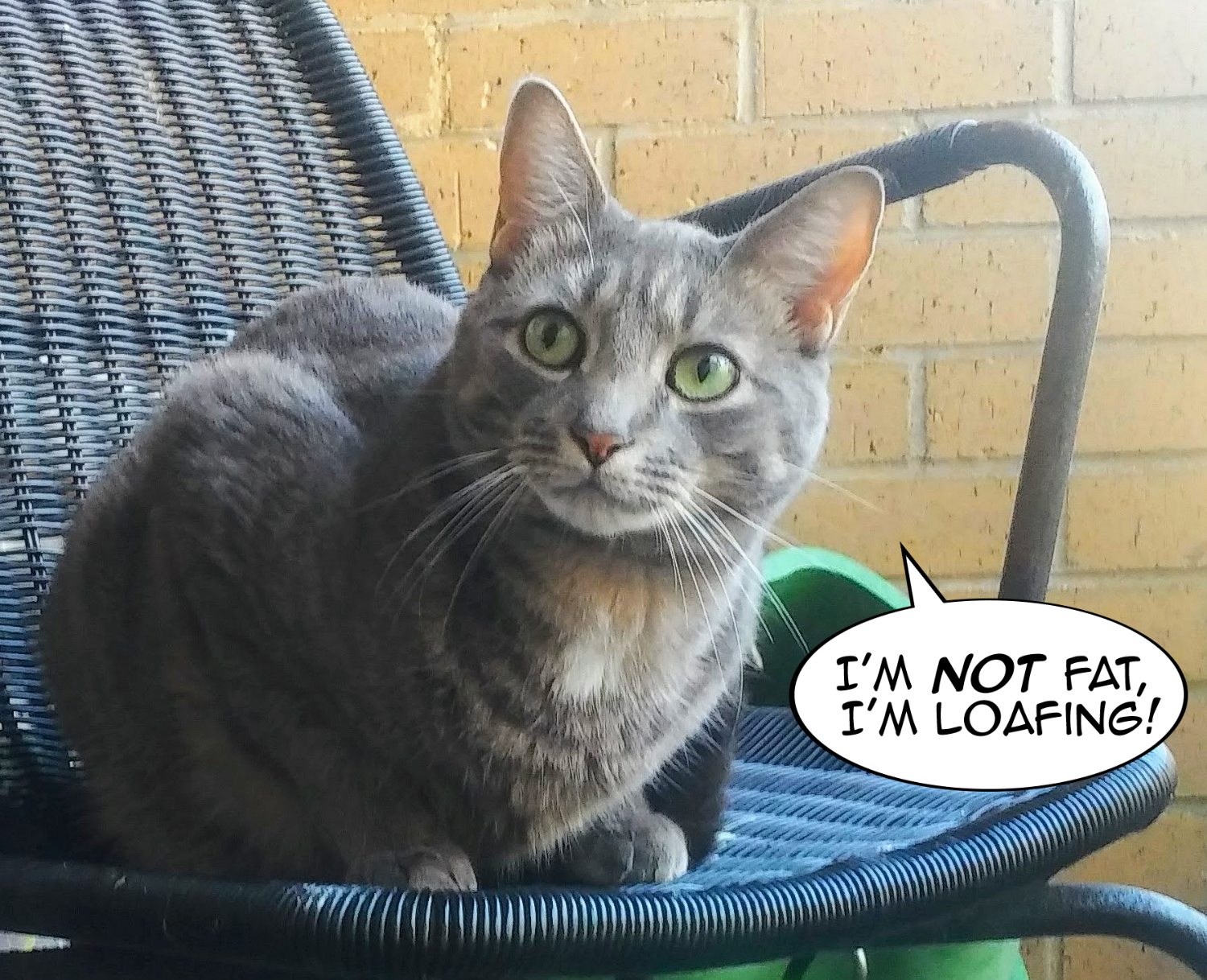
Buddy Loafing
How dare you suggest Buddy is chubby!

If you’ve ever wondered why your cat likes to lay in the famous loaf position, Jackson Galaxy has weighed in on the matter. (There’s a British theme here too. For some reason Galaxy, real name Richard Kirschner, uses a British accent to explain loafing behavior, and it’s…not good.)

“The first thing that we want to look at is the position itself; we’ve got paws tucked under the whole body resting basically on arms,” Galaxy says in a video. “This look right here is decidedly cat. Because what this is saying is I’m not going anywhere.”

Cats loaf to conserve body heat while remaining in a position that allows them to quickly get up if need be. Galaxy cautions, however, that a “half loaf” position could indicate your cat isn’t feeling too hot, health-wise.

If a cat is half-loafing, he says, that could mean she’s not getting completely comfortable because she feels vulnerable, and for evolutionary reasons (cats are both predator and prey) cats in pain feel particularly vulnerable. Most predators go for the easy kill, which is why cats go to great lengths to disguise pain and discomfort, as opposed to us humans, who whine and complain and make sure everyone knows how lousy we feel.

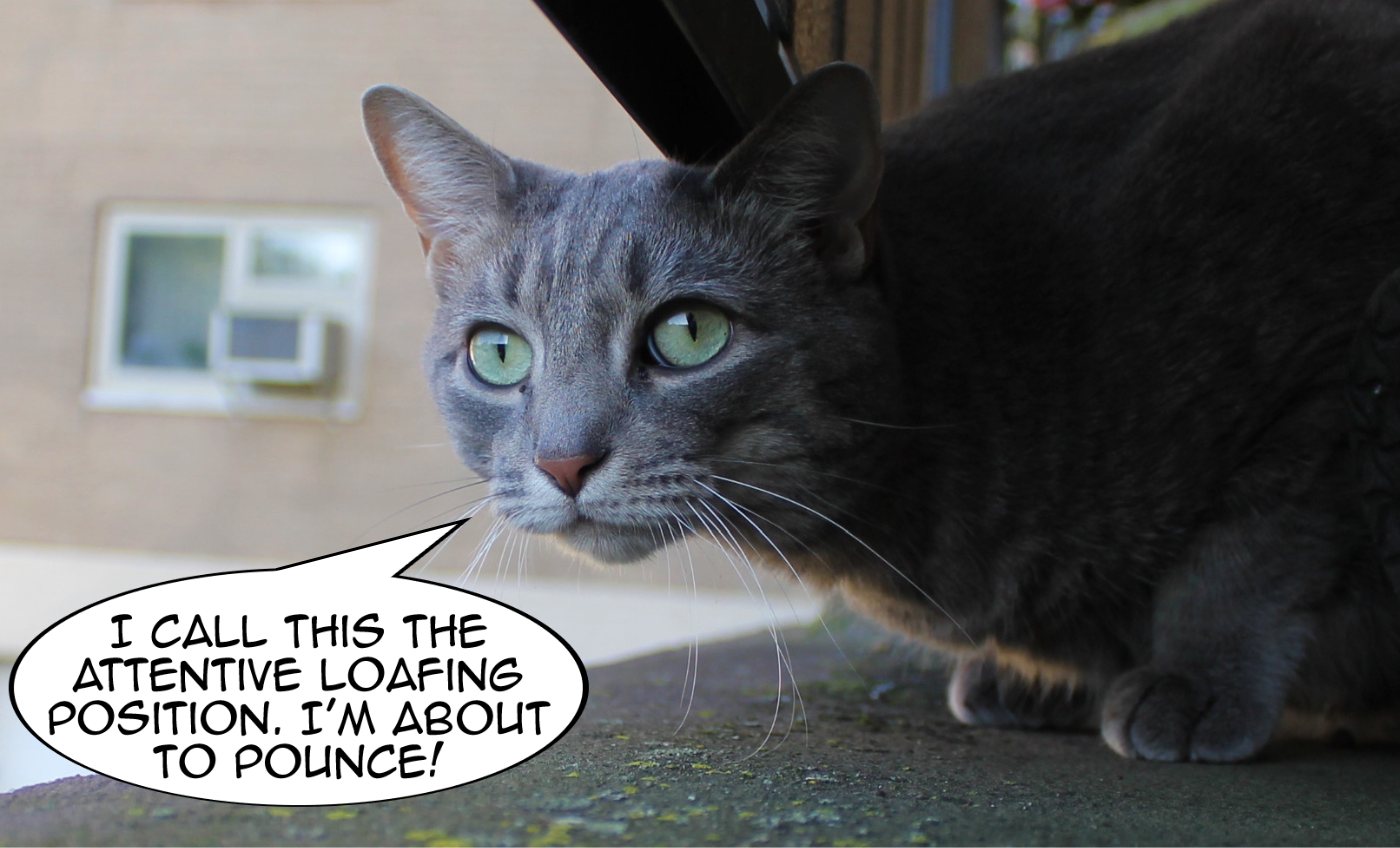
Bud Attentive Loafing
Meowscles coiled, ready to unleash feline fury!