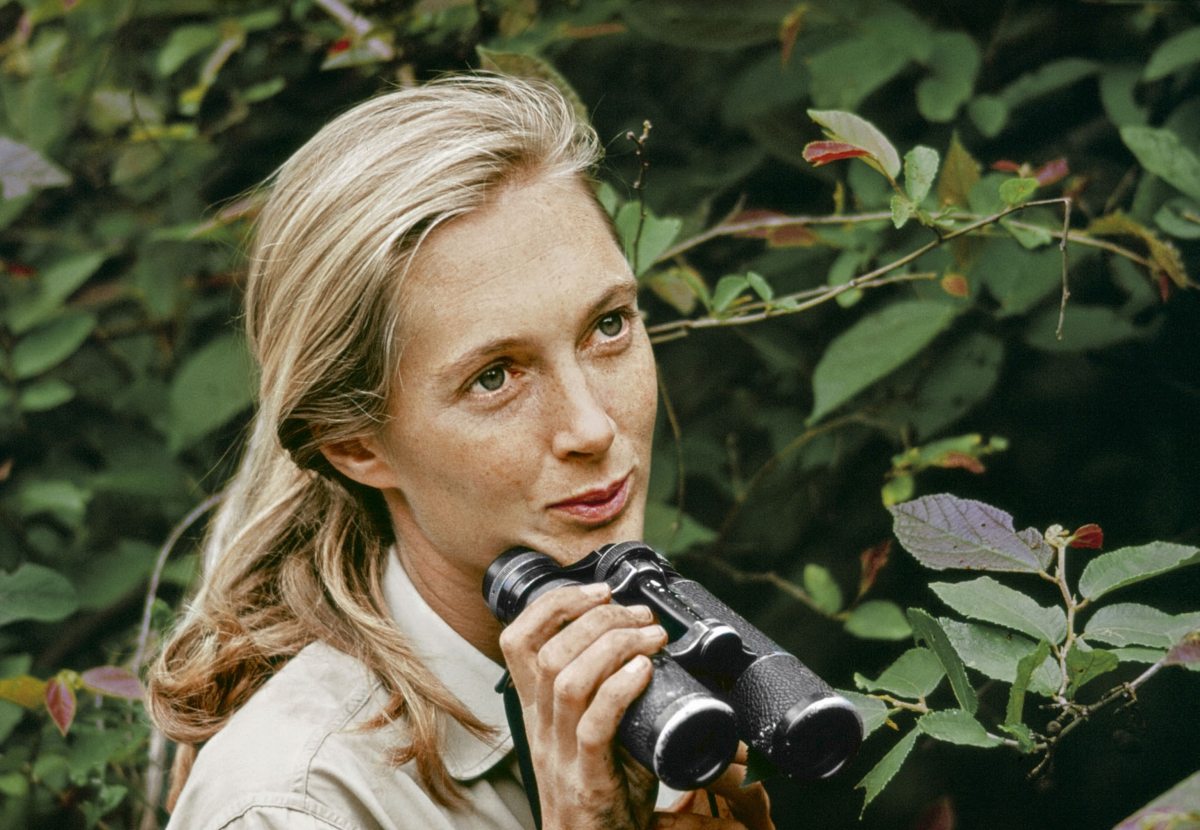
Jane Goodall Forever Changed Our Understanding Of Animals

Goodall spent the better part of seven decades with the chimpanzees of Tanzania. Her discoveries were so profound, they forced the scientific community to reevaluate what separates humanity from other animals.

As I’m sure most of you have heard, Jane Goodall passed away Wednesday of natural causes. She was 91.

Goodall’s work was revolutionary and her career was extraordinary. It’s difficult to imagine now, but when Goodall first pitched camp in Tanzania’s Gombe Stream National Park in July of 1960, the scientific community knew virtually nothing about great apes.

Goodall wasn’t exactly welcomed with open arms. Being female and photogenic were the first two strikes against her in the eyes of the establishment.

She was self-taught, didn’t have a degree (she later earned a doctorate at Cambridge), and perhaps her biggest “sins” involved empathy and an attitude more buttoned-up scientists saw as anthropomorphizing the animals.

Goodall with a Gombe chimpanzee. Credit: Wikimedia Commons

Goodall gave the chimps names (a no-no at the time among scientists), carefully observed and recorded their family trees, worked out the obtuse — to human eyes– social hierarchy of primate troops, and witnessed behavior that no one had ever seen before.

She saw friendship, love and loyalty among the chimpanzees, witnessed a bitter war between the Gombe troop and a splinter group, followed families over generations, and saw one chimp die of a broken heart after his mother passed away. (I recommend Goodall’s 1990 book, Through A Window: Thirty Years With The Chimpanzees of Gombe, and the 2002 follow-up, My Life With Chimpanzees, for anyone who wants to read more.)

Her first major contribution, in October of 1960, not only fundamentally challenged our assumptions about animals, it forced us to change the way we regard our own species.

Goodall, observing the chimpanzees from a distance despite the rain that day, watched as a male she named David Graybeard repeatedly dipped blades of grass into the Earth. Curious, Goodall approached the site after Graybeard left, grabbed a few blades of grass and imitated what she’d seen the chimp doing.

She was astonished when she pulled the grass out and the strands were covered in termites. David Graybeard had been eating. He was using a tool to eat!

Goodall at Gombe in the early 1970s. The primatologist secured unprecedented access to the chimpanzees by gaining their trust. Credit: Wikimedia Commons

The discovery was huge because scientists believed tool use was, at the time, limited to mankind. We build and use tools, animals don’t, the thinking went.

When Goodall reported her findings to her mentor, anthropologist Louis Leakey, his prompt response indicated the gravity of her discovery: “Now we must redefine ‘tool,’ redefine ‘man,’ or accept chimpanzees as humans.”

Goodall never stopped working with the chimpanzees of Gombe, and today her formerly humble camp has become a permanent compound where researchers — all inspired by Goodall’s story — continue to study our genetic relatives.

But in her later years, Goodall became known for her activism just as much as her work as a scientist. She traveled constantly, engaging audiences on the subjects of animal conservation, respect for nature and understanding our place in the natural order. It’s a job that has become more necessary than ever as relentless human expansion, habitat fragmentation and human behavior push thousands of species toward extinction.

Credit: The Jane Goodall Institute

We lost Frans de Waal, the famous primatologist, in 2024. Now we’ve lost Goodall, and Sir David Attenborough is less than six months shy of his 100th birthday. We’re going to need people to pick up where they left off, and the job is much more difficult than it looks, requiring expertise, charisma and the ability to connect with audiences who know little about the subject matter.

But that’s a problem for another time. For now, let’s remember Jane and appreciate all she’s done over the span of an incredible life and career.
Buddy the Cat Spotted With Jaguars In The Amazon

The third time’s the charm: After failing in his attempts to ingratiate himself with tigers and lions, Buddy heads south to the Amazon to commune with the jaguars.

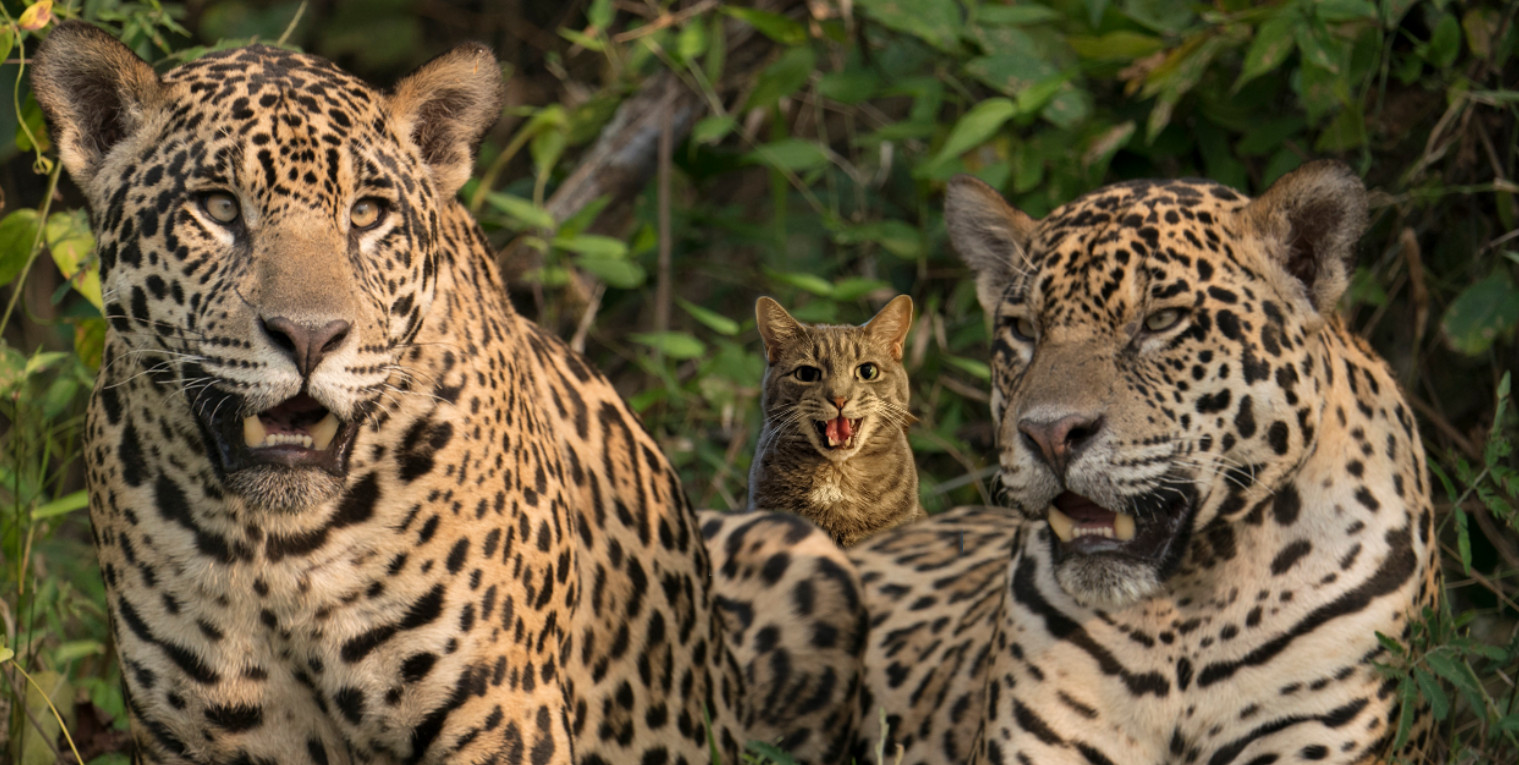
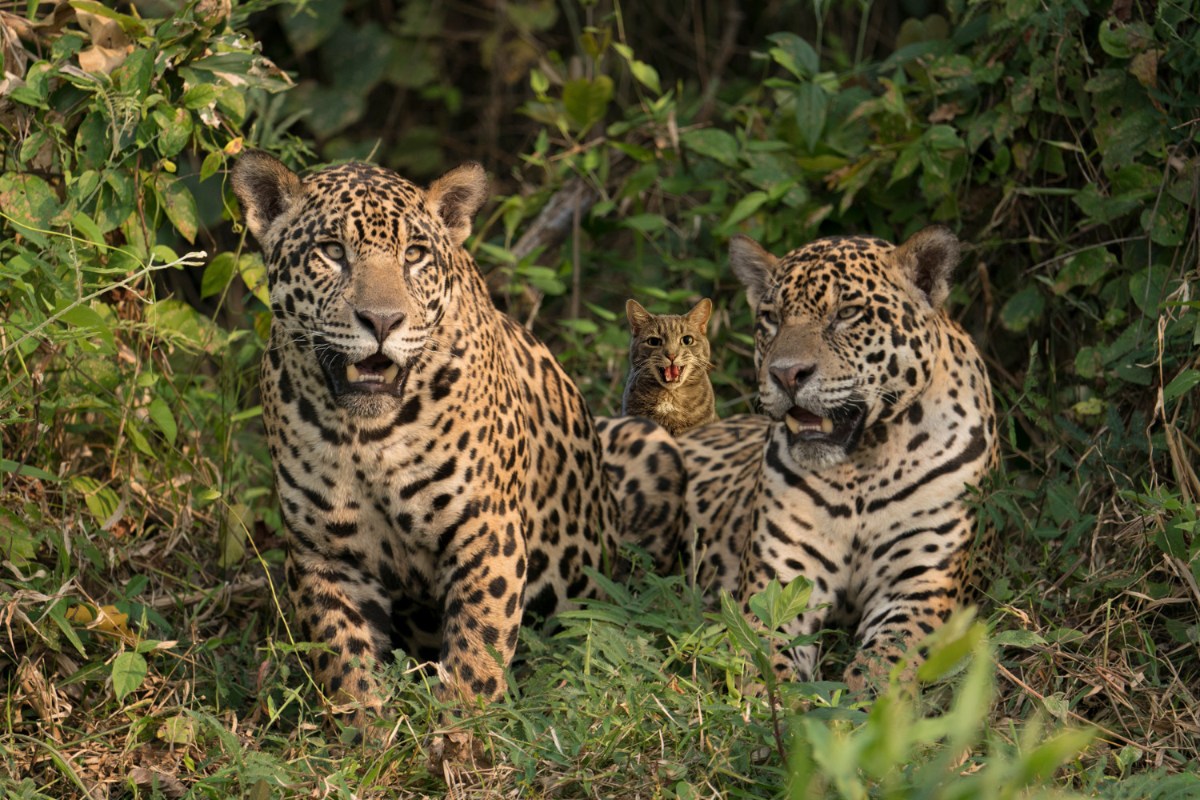
MATO GROSSO DO SUL, Brazil — Fisherman and naturalists working in the Pantanal have reported a strange sight in recent weeks — a domestic cat tagging along with jaguars.

The gray tabby was observed lounging on the banks of the Amazon, napping in a tree and struggling to take bites out of a caiman killed by a generous jaguar, witnesses reported.

“HQ, we’ve got something extraordinary here,” a naturalist was heard reporting over local radio channels. “A jaguarundi is — no, scratch that — a house cat! A house cat is following a group of jaguars from the river bank into the deeper jungle.”

The feline in question was identified as Buddy the Cat of New York after his concerned human reached out to local authorities and appealed to the Brazilian press for his safe return.

“He does this all the time,” the New York man, identified as Big Buddy, told an interviewer from Folha De S. Paulo. “First he broke into the tiger exhibit at the Bronx Zoo and tried to get the tigers to accept him, only to be claimed as a cub by one of the tigresses. It took weeks to convince the zoo to get him out, and when I got him home I had to bathe him five times just to get the stink of tiger saliva off his fur.

“Then somehow he made his way to Tanzania, where he wandered around the Maasai Steppe for a few weeks trying to get into a lion pride. He failed miserably in that endeavor, too. Now with the jaguars. It never ends.”

budd_and_jaguars
Buddy the Cat, known as Kinich Bajo to his jaguar friends, pictured here in the Amazon.

The exasperated New York man claimed responsibility for his failure to keep his “ridiculous” cat from adventuring, but also blamed the transportation industry for accommodating Buddy.

“Who the hell allows an unaccompanied cat to take a bus or board an airplane?” he asked. “How did he end up in first class, sipping champagne and buzzing the stewardesses for more turkey every five minutes? I’m told he got quite drunk and threatened to become combative if he didn’t get an entire fried turkey.”

Asked why his cat was obsessed with ingratiating himself to larger cat species, Big Buddy answered without hesitation.

“He’s a dumbass,” the human said. “Don’t get me wrong, he’s a very cute, very loving little guy, and often a good boy, but a dumbass all the same.”

Buddy’s human said the 10-pound domestic cat often tears around the house, ambushing animate and inanimate objects and practicing his roar, “but he sounds like Elmo singing a funk song in falsetto.”

jaguar-big-cat
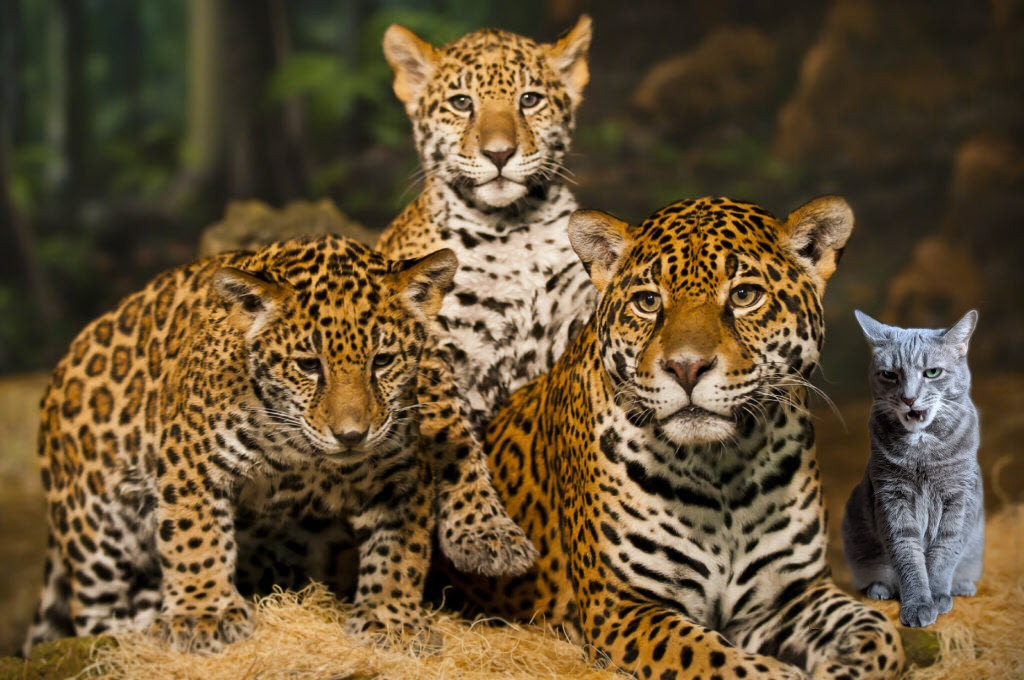
Credit: Wikimedia Commons

As of press time, Buddy the Cat still hadn’t returned home. Jaguars are known to be extraordinarily laid back compared to other big cats, and a loosely-affiliated group of the South American apex predators seemed to tolerate the domestic kitty.

“I can’t leave now,” Buddy told reporters. “They’ve begun to accept me! It would be a violation of trust if I just left them to eat all this delicious food by themselves.”

Kinich Ahau, the local jaguar elder, said his extended family had taken a liking to Buddy.

“Have you heard of this turkey? We did not know of it. It is wondrous!” the great jaguar said. “Buddy, or Kinich Bajo as he is known to us, has also shared great wisdom in the form of new and comfortable napping techniques. On the first night, we observed him construct a soft bed of leaves for himself in the crook of a branch, and over the following suns and moons we have come to appreciate softer napping spots.”

Buddy had sparked a renaissance in jaguarian napping technique, Kinich Ahau said.

“Nobody naps like Buddy,” he said. “No one!”

buddyandbuds
Brothers: Xibalbá, left, with Kinich Bajo and Ek B’alam.

With the fond support of the Amazon’s jaguars, Buddy was set to undergo an ancient shamanistic ritual involving the imbibing of Ayahuasca, a powerful psychoactive brew said to reveal cosmological secrets to those who drink it as part of a spiritual ceremony.

“We would not have invited Kinich Bajo, or Buddy as you call him, to commune with the ancient B’alam (jaguar) spirits if we did not sense a deep spirituality and wisdom inside him,” said an elder jaguar shaman named Mike the Melanistic. “He has shown us the way in matters of snacking and napping, and now as we welcome him to our ethereal fraternity, we shall accompany him on his journey to the stars, where he will drink of the deep knowledge of our ancestors.”

Buddy himself told a reporter he was looking forward to the ceremony.

“It’ll grant me, like, awesome powers and shit,” he said. “I’ll be able to disappear in a puff of mist like the jaguars do, my muscles will get bigger and, like, I’ll be able to sniff out snacks from up to a mile away. Pretty cool, if you ask me.”

At press time the jaguar shaman elders said the ceremony does not, in fact, grant such powers.

Buddy Spotted In Tanzania Attempting To Start His Own Pride

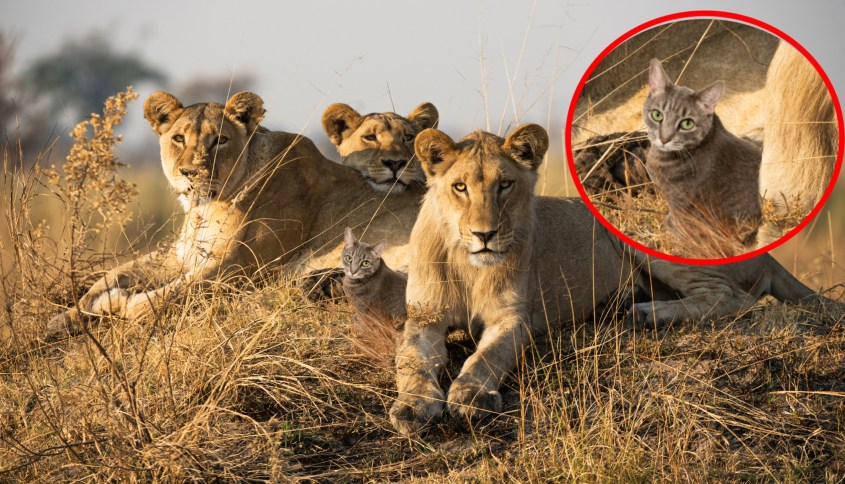
TANZANIA – A domestic house cat has been spotted living among lions in Tanzania’s Lake Manyara National Park, according to wildlife rangers and locals who have spotted the tiny feline sidling up to its larger brethren.

Eagle-eyed viewers identified the mysterious feline as Buddy the Cat after Dr. Olufemi Ugwemuhwem Osas, director of the Tanzanian Institute for Wildlife Studies, posted photos of the bizarre interactions on Instagram.

“That is DEFINITELY Buddy the Cat,” one reader wrote on Dr. Osas’ Instagram page. “I’d recognize that paste-eater anywhere.”

“Can confirm, that’s Bud,” another reader wrote. “But he doesn’t eat paste! Saw him in person last year and, man, he was RIPPED!”

The domestic shorthair, who was born and raised in New York, made headlines earlier this year after breaking into the tiger exhibit at the Bronx Zoo and infamously failing in his attempts to gain acceptance among the big cats in that enclosure. The 10-pound house cat was mistaken for a cub by one of the tigresses in the enclosure and was subjected to two weeks’ worth of tongue baths before animal rights activists finally persuaded reluctant zookeepers to rescue the tiny tabby from his predicament.

It appears the relentless feline was trying similar tactics on the Maasai Steppe, local rangers confirmed.

“In the beginning he was wandering around aimlessly, soliciting random lions to join his ‘pride’,” said Jean Jacques Remontoire, timekeeper for the Jambo Jambo Wildlife Preserve, which offers tours on the Maasai Steppe. “He was dragging a big sack of cans behind him, offering dozens of them as a ‘signing bonus’ for lions who agreed to join him and follow him as alpha.”

After a luckless streak that lasted more than a week, the gray tabby shifted tactics, approaching existing prides when the male lions weren’t present.

“What has that guy done for you lately?” Buddy asked a pair of lionesses who seemed to tolerate him while grooming their cubs. “I mean, you do all the hunting, then you drag the kill back, and who gets to eat first? He does! It’s not fair to you. But, just so you know, if I was alpha, I’d only eat like an ounce and a half, and you’d get to feast on the rest.”

One pride, whose lionesses said they were frustrated with their pride leader, seemed to conditionally accept Buddy’s offer if he could help them defend their territory against a powerful young interloper with designs on claiming the pride for himself.

“Definitely,” Buddy told the lionesses. “That dude is as good as dead, as soon as I have my nap.”

His run as pride leader was short-lived, however, after he hid behind the legs of one of the younger lions during the confrontation with the interloper, known locally as Leonidas the Earthshaker.

Witnesses reported the dusty house cat returning to civilization on Wednesday when he appeared at the Sustainable Safari Center of the Steppe and asked to use the phone, “So I can call Big Buddy to get me a plane ticket back home.”

“I didn’t ‘fail’ in my attempts to found my own pride,” Buddy later told reporters. “In fact, I was a pride leader for three hours, 14 minutes and 37 seconds. It’s just that, as I stared into the cold eyes of Leonidas the Earthshaker, I realized violence isn’t the way. Overall I’d say this expedition was a great success and I learned a lot about my heritage.”