“I’ve noticed everyone’s super stressed lately,” Buddy said. “People need hugs. I’m fluffy and adorable. It’s the perfect solution.”
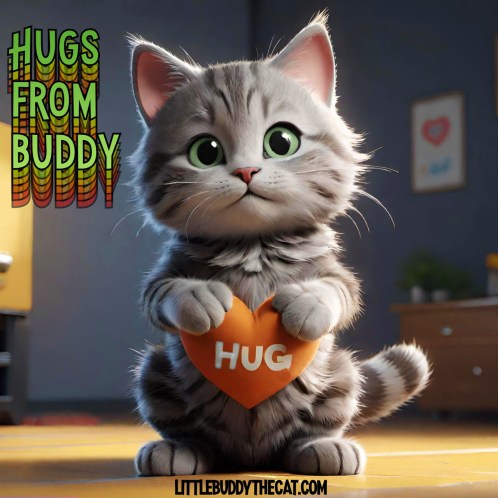
NEW YORK — Buddy the Cat announced the launch of a new program, Hugs From Buddy, to “help the humans calm down a little bit, because things have gotten crazy.”
The normally mercurial tabby cat, whose concerns are typically limited to his own gastronomical satisfaction with meals and snacks, said he had the idea for Hugs From Buddy after watching the movie Civil War with his human and seeing footage of police and students clashing on college campuses.
“The world is crazy right now,” Buddy told reporters at a press conference in Manhattan. “War in Ukraine, Haiti, Gaza and Syria. People punching strangers on the street for Youtube ‘pranks.’ Protesters and police clashing. People threatening to kill one another, banning books they haven’t even read, Karening each other in the grocery store, brawling on passenger flights. Even dogs, bless those simple-minded beings, seem stressed!”
Buddy the Cat is offering hugs to anyone who needs them!
Buddy paused to address a bystander who was holding a pepperoni pizza.
“You gonna eat that? Here, give Buddy a slice, I’ll give you a hug,” he said, embracing the young woman before returning to the podium with a slice of pizza.
“Where was I?” he asked, chewing thoughtfully. “Oh! Right. The crazy, stressed out humans.”
He belched, then continued.
“I’m here today to offer myself up as the nation’s emotional support animal. If you’re in need of a hug or a snuggle, well, Little Buddy’s got you covered.”
Then he looked to the reporters, who were seated six or seven rows deep for the press conference.
“Look under your seats!” he said excitedly as the journalists mumbled in surprise, finding small gift-wrapped boxes there. “You, the young lady from CBS News! You get a hug! You, the angry guy from InfoWars! You get a hug! BBC, you get a hug too! You all get hugs!”
A print advertisement for the new Hugs From Buddy campaign.
The press conference was supplemented with an announcement of a $20 million television ad buy publicizing the Hugs From Buddy program, as well as a new site where the angry and stressed can log on, request a hug from Buddy, and make travel arrangements to bring him to their cities.
Reaction to the announcement was mixed.
A panel on Real Time with Bill Mahar concluded Buddy was sincere, trying to be helpful, and “absolutely adorable.”
But in a statement issued later Friday, catnip cartel Los Gatos International accused the New York feline of “shameless self-promotion, which he will undoubtedly parlay into goodwill for his own catnip empire,” while former Fox News host Tucker Carlson declared Buddy a threat to national security.
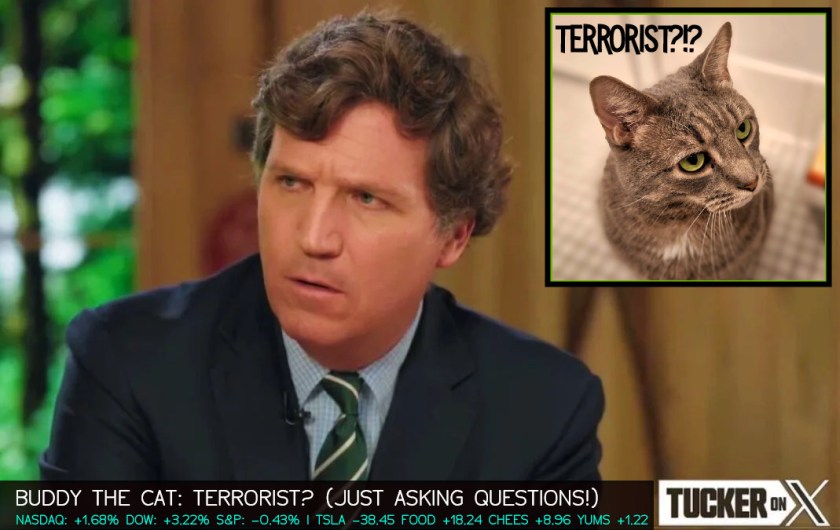
“Buddy the Cat is a dangerous tiger in kitten’s clothing,” Carlson declared on his X show as a chyron scrolled below with the headline: “IS BUDDY THE CAT WORKING FOR TERRORISTS?”
Former Fox News host Tucker Carlson wasn’t convinced of the feline’s supposedly noble intentions.
“You might say Buddy the Cat is a danger to America, softening us up at precisely the time when we need to be tough to fight China, North Korea, Iran, the school board of Boise, Idaho, Taylor Swift, and the WNBA,” Carlson said, pounding a fist on his desk. “Up next, a conversation with Nick Fuentes. But first: Is Buddy the Cat a Chinese operative? Is he an agent of anti-American cat ladies who want us all to be hummus-eating vegans? Why does he ignore the beauty of the Moscow subway system? And is there any truth to the rumor that he’s working with the San-Ti from 3 Body Problem to help them invade Earth? Just asking questions here, folks. Nothing wrong with that.”
The Cat Man of Aleppo has survived bombs, chemical gas, a siege and a risky flight to Turkey as he’s cared for people and cats suffering in Syria’s civil war.
Human beings have lived in the city known as Aleppo for more than 4,000 years, making it one of the oldest continually-inhabited settlements in human history.
But as the raging civil war in Syria expanded and bombs began to fall on the country’s largest city, there was an unprecedented mass exodus — reducing Aleppo’s population from 4.6 million in 2010 to less than 600,000 by 2014.
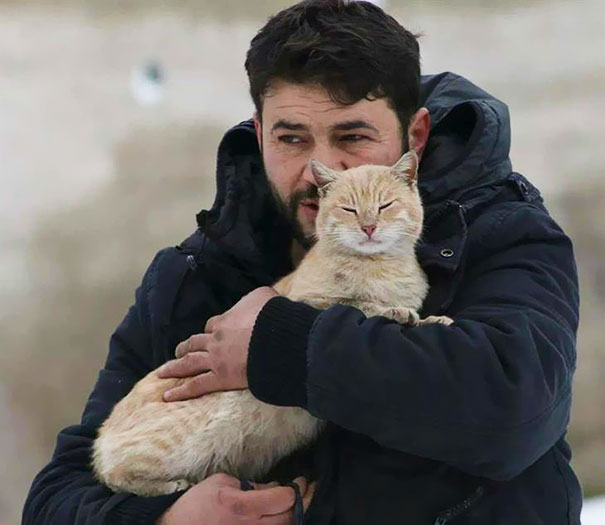
Mohammad Alaa Aljaleel was one of the stubborn few who stayed. His wife and children fled to safety in Turkey in 2015, but anchored by his commitment to people who couldn’t leave, Aljaleel stayed behind to continue driving his ambulance and feeding a growing population of abandoned cats.
At first friends and acquaintances turned to Aljaleel to take their cats as they prepared to flee the crumbling city, knowing he was fond of felines and would care for them as his own.
Others heard about the “cat man of Aleppo,” and soon Aljaleel’s home became a sanctuary for former pets from all over the city, which was becoming a ghost town.
With few remaining people to feed them — and food sources like restaurant dumpsters drying up — hungry stray cats started showing up too.
“Since everyone has left the country, including my own friends, these cats have become my friends here,” Aljaleel said in 2016, as a BBC camera crew filmed him among the hundreds of cats in his care.
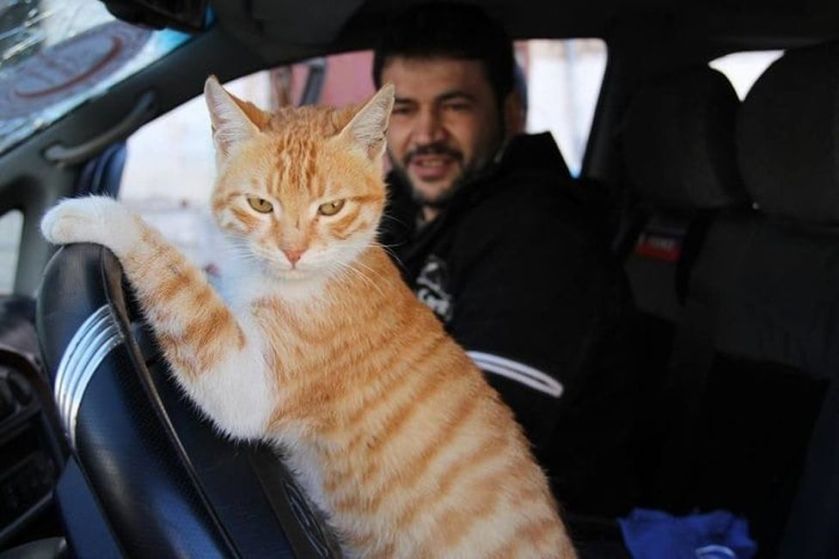
Aljaleel, the Cat Man of Aleppo, hugs a tabby in his care.
One day a car pulled up and a little girl stepped out, cradling a cat.
Her parents “knew there was a cat sanctuary here,” Aljaleel told the BBC at the time. “The girl had brought the cat up since she was a kitten. She cried as she handed her over to me, and they left the country.”
For many people leaving the city in search of refuge in Europe or elsewhere in Syria, the decision to leave a beloved pet was agonizing.
But entrusting a cat to Aljaleel and his makeshift sanctuary — where the animal would be fed and well cared for — was much more palatable than making it to the border of an EU country only for a border guard or customs official to refuse the cat entry, forcing families to choose between pet and safety.
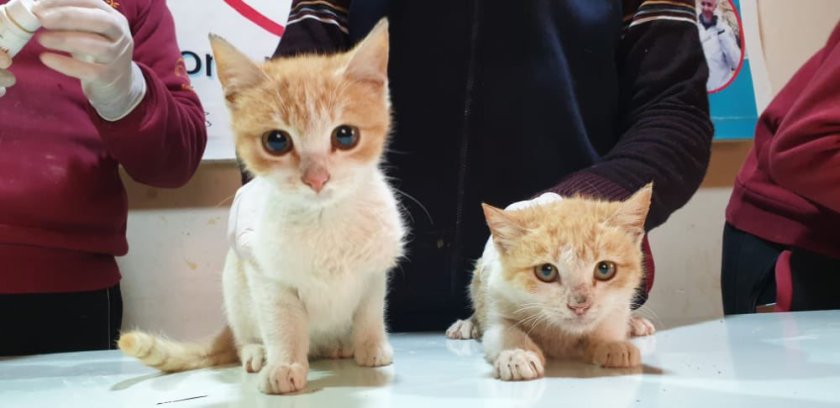
Kittens who were brought to Ernesto’s Sanctuary with their mother.
For people like the little girl, knowing their cats were in Aljaleel’s sanctuary meant maintaining a tie to home and hope that they could return.
“I’ve been taking photos of the cat and sending them to her in Turkey. She begs me, ‘Send me photos of her. I miss her. Please promise to return my cat to me when I get back.'”
That was in 2016. Almost five years later it looks like the young girl won’t be returning to Syria, and her cat is likely dead.
After Aljaleel’s makeshift cat sanctuary swelled to include more than 200 cats, things took a turn for the worse.
The Syrian government and rebel forces dug in, calling on allies for support and resources. ISIS and Iranian-backed insurgents entered the fray, seeing opportunity to advance their own interests amid the chaos.
So too did Russia and the United States. Both countries treated the conflict as a proxy war, with Russia backing Assad and his Syrian government forces, while the US and its allies threw their support behind an opposition that grew out of the Arab Spring in 2011.
The US and Russia provided the combatants with training and weapons systems, increasing the destructive firepower at the command of the belligerents. Both countries sought to advance their geopolitical ambitions in the region when they entered the conflict.
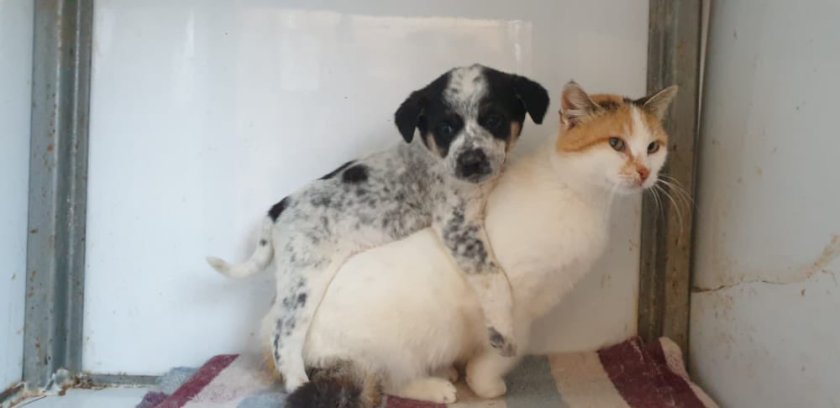
Not just cats: Alina and Samira are best friends and are inseparable. Credit: Ernesto’s Paradise
In internal memos justifying intervention in Syria, the US State Department predicted the civil war would flare out in months. Instead, the war has now lasted more than a decade, and in a move The Guardian called “a bloody end to [former President Barack] Obama’s reign,” in 2016 the US dropped 26,171 bombs on countries in the Middle East, with Syria absorbing the lion’s share.
Perhaps it was one of those bombs — or a bomb from Russia, or one of Syrian dictator Bashar al Assad’s own warheads — that obliterated Aljaleel’s sanctuary. It’s unlikely anyone will ever know. But one thing all sides agree on is that the chlorine gas was courtesy of Assad, who has not hesitated to use chemical weapons against his own people in the bloody war.
Weeks after Aljaleel was featured in a BBC short about the impact of the war, Aljaleel “watched helplessly as his cat sanctuary was first bombed, then gassed during the intense final stages of the siege of Aleppo,” per the BBC.
Some 180 of the 200 or so cats who found refuge with Aljaleel were killed by the bomb and the chlorine gas, and the stubborn man who dug in his heels and cared for Aleppo’s cats while everyone else fled finally gave up on his city.
Aljaleel and his cats survived the power outages, the destruction of the water works, the food shortages and a military siege of the city, but now the Cat Man of Aleppo was just a cat man in an ambulance.
He packed the few surviving cats, his meager possessions and a few sick, injured or elderly people into an ambulance and joined a convoy of civilians escaping the crumbling city. It was a tense and perilous journey, as those who fled knew Assad had no reservations about targeting his own people if it served his goals.
After seeing his family and recovering in Turkey, and with the help of an Italian benefactor and a growing community of supporters on social media, Aljaleel took his cats and his friends to a rural area in Syria, far from targets of opportunity, where he purchased a plot of land, put down roots and began his sanctuary anew.
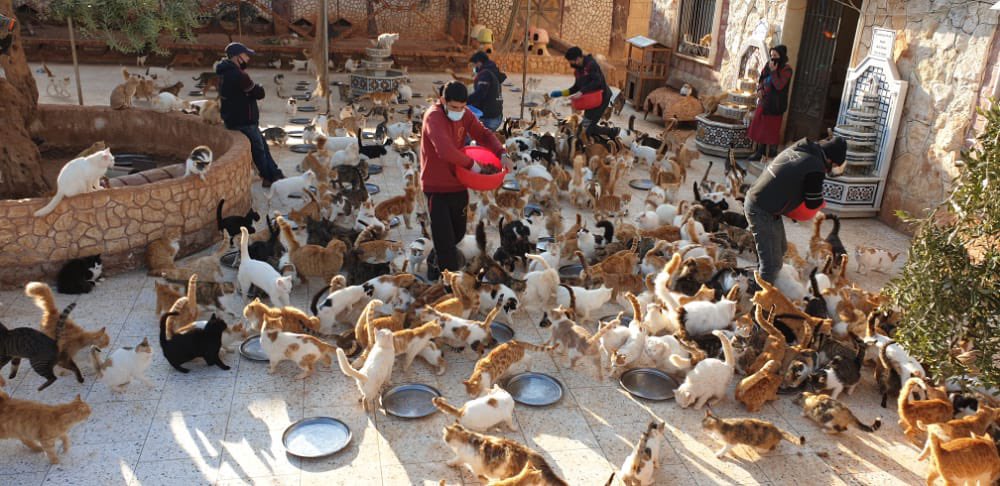
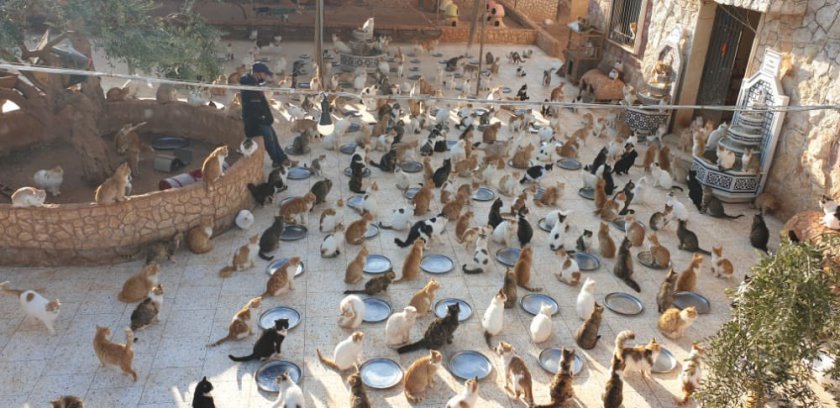
Even in war, cats know when it’s time to eat. The kitties of Ernesto’s Paradise wait by the more than 100 plates set out for them, eager for meal time. Credit: Ernesto’s Sanctuary.
That sanctuary is called Ernesto’s Paradise, named after Aljaleel’s own cat.
Ernesto’s Paradise is home to several hundred cats, plus four monkeys, horses, rabbits and dogs. There’s a playground for kids and — after a long search to find a veterinarian who hadn’t fled — Ernesto’s finally has a doctor in the house too.
The civil war in Syria has created perhaps the worst refugee crises in modern history, with millions fleeing to Europe and elsewhere in search of sanctuary.
The war had claimed 387,118 souls as of December 2020, according to the UK-based Syrian Observatory for Human Rights. Another 205,300 were missing and presumed dead, according to SOHR. In addition, more than 88,000 people have been tortured to death in Assad’s prisons, while thousands more were taken by ISIS and other terrorist groups operating in the country.
But “children and animals are the big losers” in war, Aljaleel told the BBC, and that’s why he chose to return.
“I’ve always felt it’s my duty and my pleasure to help people and animals whenever they need help,” he said. “I believe that whoever does this will be the happiest person in the world, besides being lucky in his life.”
You can follow and support Aljaleel’s work via Twitter, Facebook and by visiting his sanctuary’s official site. Direct donations to the sanctuary can be sent here.

 Pain In The Bud