A substantial new reward from a local shelter is providing incentive for the return of Willa the cat, who was stolen from her home by an Uber Eats driver in January.
It’s been two months since a delivery driver working for Uber Eats allegedly stole their cat, but a South Carolina family is determined to get their feline family member back.
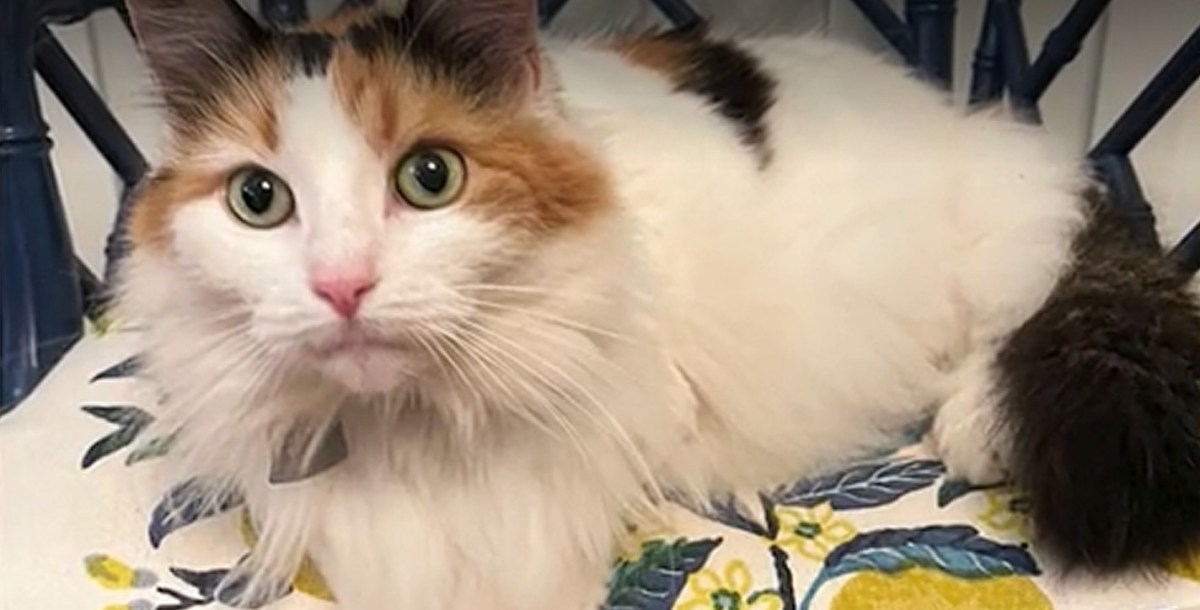
Four-year-old Willa the cat was a fixture in her neighborhood, known and loved by neighbors and people taking walking tours of the area. The 17-pound Calico, with her magnificent floof and striking coat pattern, could usually be spotted lounging on the front porch of her home, where she liked to watch people going about their business.
Now Pet Helpers, a shelter in Charleston, is helping keep the story in the news and creating greater incentive for people to join the search for Willa by offering a $2,500 reward for her return, in addition to a reward the family is offering.
On Jan. 15, shortly after delivering Greek food to a home on the same street, Katy Barnes of Goose Creek, SC, allegedly scooped Willa up, carried the Calico to her SUV, and drove off.
Willa’s family, the Layfields, did not have an angle on the cat-napping from their home security cameras, but cameras belonging to neighbors and a gym about a mile away show a woman police have identified as Barnes taking Willa, then pulling over and discarding the feline’s collar and AirTag.
Despite her arrest and the footage, Barnes has refused to cooperate with police, claiming she no longer has the Calico. If she did simply release Willa, as she claims, she did it during the coldest season of the year during a deep freeze, when most of the country was seeing single-digit or sub-zero temperatures. That’s a challenge for any cat, especially a feline accustomed to an indoor life.
“I am amazed that people can be so cruel,” Liza Layfield told PITB. “Why? Why would this person take their animal and then put her out to essentially die? Why would Katy take Willa and refuse to give her back or tell us anything about her whereabouts in the face of freezing temperatures and snow? Why would she want to torture a family over a cat that is apparently no longer in her possession? We cannot understand, and it is keeping us awake at night.”
Despite the stress of the situation, the family has continued their relentless efforts to get Willa back.
Charleston police have taken the case seriously, arresting Barnes and charging her with petty larceny. They secured a search warrant for Barnes’ home, which did not turn up any signs of Willa, and they arrested her a second time, charging her with littering for disposing of the collar and AirTag and keeping her in police lockup overnight twice in two weeks.
The message: they’re not letting this go either. Neither are locals, who have rallied to support the Layfields and have started a petition asking authorities to do as much as they can to help find Willa, and calling on Uber to do more to help. Almost 1,700 people have signed the petition, and it continues to accrue signatures.
In the meantime, the Layfields have turned to their community for help. An email account they set up has yielded promising tips, and neighbors have been on the lookout for Willa in Charleston as well as in Goose Creek near Barnes’ home.
“It is very much an active and ongoing investigation,” Liza Layfield told PITB.
“We love our animals as our children, they are a part of our family, and we can’t rest until she is found.”
The family has pleaded for the return of four-year-old Willa, but the the woman accused of taking her has not cooperated and the Calico has now been missing for two weeks.
Despite an arrest, a criminal charge hanging over her head and widespread scorn from locals, a delivery driver has “refused to speak about” what she did with a Charleston family’s cat after allegedly stealing the Calico.
A story in Charleston’s Post and Courier details the herculean efforts by a family to get their cat back after 38-year-old Kathleen “Katy” Barnes allegedly stole the feline on Jan. 15, shortly after receiving a $15 tip for delivering Greek food on the same street.
When the Layfield family returned home that day, four-year-old Willa was nowhere to be found. The Layfields checked their security camera footage, which last showed Willa about 45 minutes before the family returned home but did not show her disappearance.
Since the extent of Willa’s outdoor activities involved straying no further than a few feet from the home, and mostly consisted of her sitting on the family’s front porch, the Layfields were worried and went to bed for an “uneasy” and “restless night,” per the Post Courier. When Willa’s AirTag pinged at 4 am near the Lindy Renaissance hotel about a mile away, Daniel Layfield got out of bed and rushed to the location. The device had been tossed in the street along with Willa’s collar.
The family has been relentless in tracking down information about Willa’s disappearance and getting access to surveillance camera footage from neighbors and local businesses, which is how they found footage of Barnes allegedly taking Willa (spotted on a neighbor’s cameras), then additional footage of her SUV stopping in front of the Lindy Renaissance hotel.
In video the Layfields pulled from a nearby gym’s surveillance cameras, Willa is seen on the dash of Barnes’ silver SUV. Barnes grabs her, removes the collar and AirTag, and tosses both out of the car before driving off again.
The Layfield family has also appealed to Barnes through statements to the press.
“Please let us know where she is,” Daniel Layfield said per the Post Courier, “if you have any compassion for animals and people.”
Charleston police deserve credit for taking the case seriously, going above and beyond what most departments would do in similar cases. They were able to secure a warrant to search Barnes’ home in Goose Creek, SC, but did not find Willa.
And this week they arrested Barnes for a second time, charging her with littering for disposing of Willa’s collar and AirTag, according to the Post-Courier.
It was the second time in about a week that police kept Barnes in overnight lockup, likely to send a message that they will not forget about the case. The Layfields have also enlisted the help of people who live in Barnes’ Goose Creek neighborhood, asking them to keep a lockout for the Calico, who has distinct markings.
This case is reminiscent of the theft of Feefee, a cat belonging to the Ishak family of Everett, Washington. Fefee was taken in the summer of 2024 by an Amazon Flex driver, and like the Layfields, the Ishaks had solid footage they were able to provide to the police, which led them to identify and track down the woman who took their cat.
That woman also refused to cooperate with police or tell the family what she did with their cat, despite their pleas and assurances that they weren’t interested in anything other than getting Feefee back.
Like the Layfield family, the Ishak family’s cat was well loved by the entire family, especially the kids, so Ray Ishak took the next several days off work and began driving around in an increasing radius, looking for the vehicle the Amazon contractor had been driving in the footage.
He found Feefee a few days later, scared and cowering in the bushes near the driver’s apartment. The driver had allegedly dumped the cat instead of returning her to the family, despite initially agreeing to bring her to the local police department.
In both cases, the families did everything right in their efforts to recover their four-legged family members.
They posted to social media, posted flyers, rallied support, and asked others to help spread the word. They reached out to local media, sent copies of the footage, then made themselves available for interviews and to plead for the return of their cats.
They also filed reports with the police and complained to the corporations — Amazon in the Washington case and Uber in the South Carolina case.
While Amazon is notoriously slow to respond to incidents like this and has repeatedly infuriated victims by treating the thefts as customer service issues, Uber said it contacted the driver and tried to persuade her to hand over the cat. While Barnes can’t technically be fired, as she’s a gig worker, the company said she will no longer be allowed to contract for Uber Eats.
“What’s been reported by the Layfields is extremely concerning,” Uber’s team wrote. “We removed the driver’s access to the Uber app and are working with law enforcement to support their investigation. We hope Willa is safe and reunited with her family.”
Unfortunately Willa’s been missing for two weeks now, and like most of the US, the normally temperate Charleston has been in a deep freeze, with temperatures plummeting below zero.
Because South Carolina views pets as property, as many states do, the worth of Willa’s life is pegged at a few hundred dollars at most, and she’s treated in the eyes of the law as an object.
That means the most severe charge the police could arrest Barnes for is petty larceny, a misdemeanor that carries a penalty of up to 30 days in county jail and a fine, if she’s convicted.
It is important to note that despite the footage, the charges are an allegation, and Barnes remains legally innocent pending a possible conviction.
But because the charge is just a misdemeanor, there is no pressure for her to cooperate and help the family get Willa back. (Or return her, if she still has the cat in her possession.)
Historically, pet theft has been associated with two primary motivations: thieves target breed cats and dogs because they believe they can make easy money selling them, whole others use stolen pets as bait or “training” for the violently conditioned dogs used in dogfighting. Some also target pedrigree pets to breed them.
In both these cases, and others that have been in the news recently, the thefts were crimes of opportunity, not pre-planned, and the cats were moggies. In addition, the cats were spayed/neutered. That rules out monetary gain by reselling or breeding. It also stretches credibility to believe gig workers are somehow more likely to be involved in dog fighting.
This is something new, a category of theft that may have began in earnest during the COVID era, when people felt isolated and shelters were literally being emptied due to the dramatic uptick in adoptions. Unable to find a companion animal through normal channels, some people stole pets for themselves.
But the shortage was short-lived, shelters and rescues are back in the familiar situation of having too many animals, and there’s no impediment to someone simply adopting a cat or dog instead of inflicting trauma on the animal and its family.
We hope the Layfields receive good news soon, and Willa is returned to the warmth and love she’s known with them.
Under South Carolina law pets are considered property, and the maximum penalty for stealing someone’s beloved animal amounts to a slap on the wrist.
Another day, another story about a delivery driver stealing a cat.
This time it happened in Charleston, South Carolina, and while local police worked quickly to identify the woman behind the wheel and arrest her, the feline is still missing.
Daniel and Liza Layfield said they knew something was wrong on Jan. 15 when an AirTag attached to their cat’s collar showed she was several blocks away. After checking their own security camera footage and video captured by other cameras on the street, they saw a local food delivery driver stop her car, scoop up four-year-old Willa, then drive off with her.
The woman tossed Willa’s collar and AirTag nearby. Thankfully, police took the matter seriously and the local community helped spread the word, leading to a quick arrest.
The family is relying on help from the community to find Willa.
But there are two problems that are common to these thefts of opportunity: Willa is still missing, and the most severe charge police could lodge against the suspect is petty larceny. That’s a misdemeanor that carries light penalties (a fine and up to 30 days in county jail) on conviction. That’s not a deterrent.
We wrote about this problem just last week, when the quick recovery of a cat stolen by an Amazon delivery driver in the UK illustrated the difference a stronger law makes.
Stealing a pet in the UK can land the thief in prison for up to five years in addition to fines. Police are more likely to devote resources when the law gives them appropriate charges to file, and five years in prison would make most people think twice about impulsively stealing a family’s well-loved pet.
By contrast, most US states treat pets as property, meaning courts do not take into account their sentimental value, bond with their people, or trauma to animal and human when someone steals a pet. South Carolina is among those states: in that state’s penal code, petty larceny is a charge that applies when someone steals property worth less than $2,000.
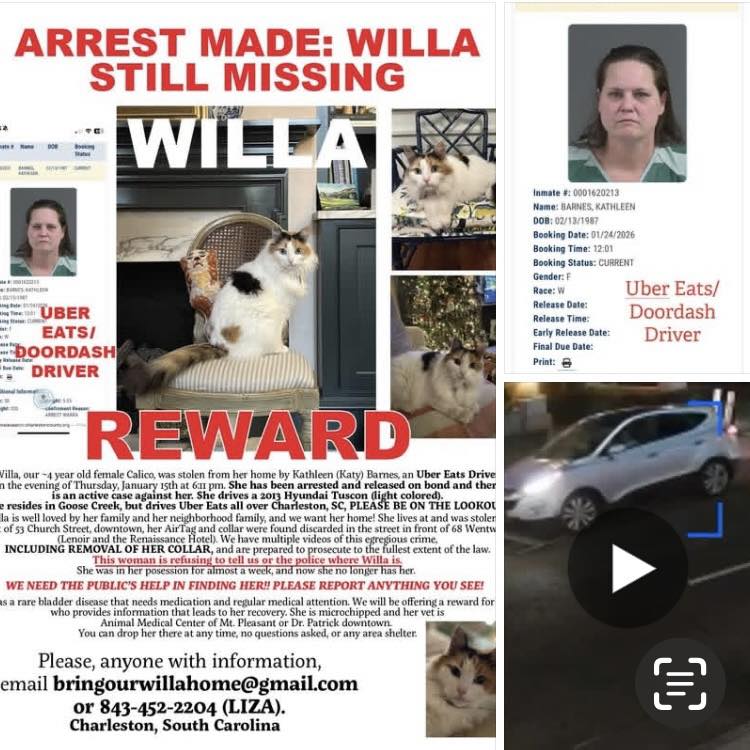
The suspect, a DoorDash/Uber Eats driver, has not been helpful in the Layfield family’s efforts to find their feline family member. In the meantime, the family hopes a $1,000 reward will prompt someone to come forward, or that Willa turns up at a local shelter and has her microchip scanned.
“We want to find Willa, we want to know where she is. It’s going to be 20 degrees for the next several days,” Liza Layfield told the local NBC affiliate. “The idea of her being loose and on the run is horrific.”
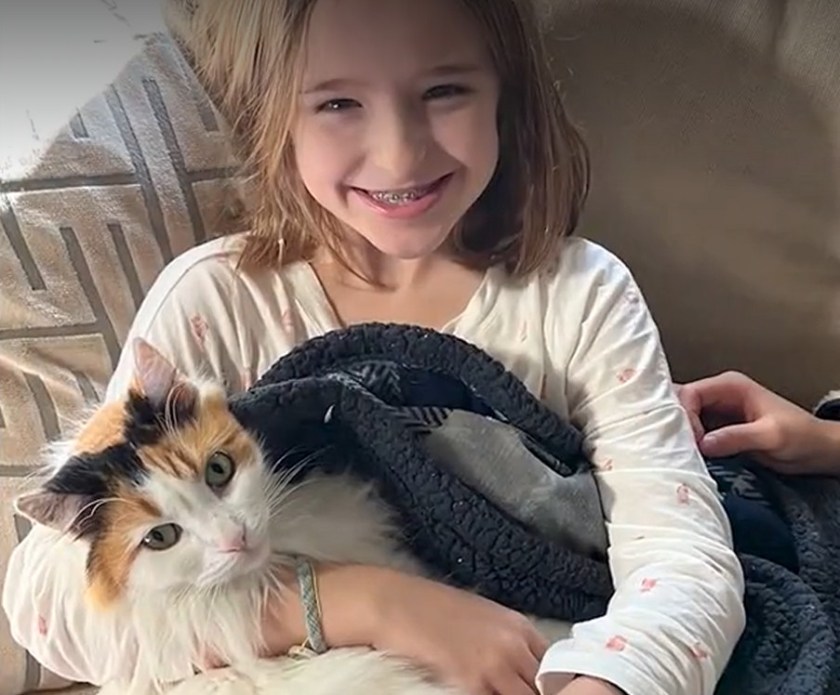
The Layfields’ daughter holding Willa, who has been missing since she was stolen on Jan. 15 by an Uber Eats/DoorDash driver.
The felines were found deceased near open tins of tuna, and laboratory tests confirmed they’d been poisoned.
In early October, a woman who helps manage a colony of stray cats in South Carolina’s Lowcountry stopped by to feed them and was distraught by what she saw.
Six cats lay dead not far from several open tins of tuna. After the woman called for help and a larger group searched the area, they found the bodies of seven more cats and three opossums, the Berkeley County Sheriff’s Office said.
The cats were spayed/neutered and managed by volunteers from Lowcountry Trap, Neuter and Release Network, meaning their population was controlled and they were routinely monitored and given veterinary care.
Tests showed the cats were poisoned, according to the Professional Veterinary Pathology Services in Columbia and the Michigan State University Veterinary Diagnostic Laboratory.
While police were looking into the poisoning, they got a tip that a local man had been complaining about the cats and claiming they were a nuisance.
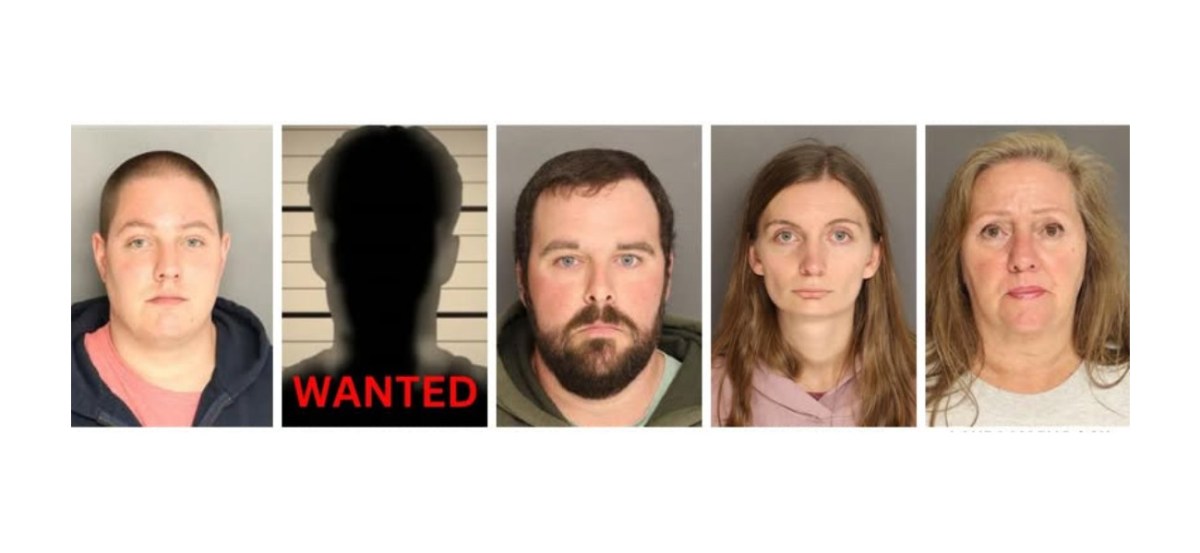
On Thursday, police charged 28-year-old Andrew Dock and 45-year-old Charles Waylon Ulmer with 13 counts of felony ill-treatment to animals with torture and one count of conspiracy. Dock’s wife, Sara Rose Dock, 23, and his mother, Laura Mary Dock, 61, were charged with conspiracy along with Michael Jeffrey Kemmerlin, 30. All five suspects live in or near Summerville, a town about 25 miles northwest of Charleston.
Each felony count is punishable by as many as five years in prison and a $5,000 fine, per South Carolina penal code.
Credit: Berkeley County Sheriff’s Office
Dock was the ringleader of the group, according to police, and enlisted the others to help him poison the cats.
“Anyone that is capable of putting out poison and creating that level of pain and suffering is a concern to me as a human in our community,” Carol Linville, founder of a local nonprofit called Pet Helpers, told Lowcountry news station WCSC. ”That is a dangerous person. If they can do it to a cat, they can do it to a dog or do anything else that they deem they don’t want around.”
Locals involved with colony management and animal rescue praised the Berkeley County Sheriff’s Office for seeing the investigation through and arresting the suspects.
“The fact that the law enforcement took this seriously and really wanted to see justice and really do their due diligence to make sure that justice is really coming for these cats. I am, I’m very grateful,” said Kayte Williams, one of the women who cared for the colony. “Hopefully nothing like this happens again because the public will know if this happens, you will be prosecuted, you will be charged and you are not going to get away with it.”
Andrew and Sara Rose Dock. Credit: Facebook
On his social media accounts, Dock describes himself as a former welding instructor at Horry-Georgetown Technical College originally from Newark, New Jersey.
All five suspects were released after posting bond, according to the Berkeley County Sheriff’s Office. It wasn’t immediately clear if they had retained lawyers, or if they were given return dates for preliminary hearings.
Alex Garland’s latest film is a road trip through the ruins of America as the nation is engulfed in a modern day civil war. It wasn’t so long ago that such a scenario would be unthinkable. Now we wonder if it’s an inevitability.
There’s a moment in Civil War when Kirsten Dunst’s world-weary photojournalist sits down in the ruins of a US industrial park, with tracer fire lighting up the night a few miles away, and turns to Stephen McKinley’s print scribe.
“Every time I got the photo and survived a war zone,” Dunst’s character tells him, “I thought I was sending a warning home: don’t do this. And yet here we are.”
In a movie that works on every level as a warning to the American public not to throw away what we have, what we take for granted, that one quiet moment feels like director Alex Garland speaking directly to the audience, making sure no one can miss the point. Don’t do this.
Dunst, left, and McKinley share a quiet moment in an industrial park as a battle rages a few miles off. Credit: A24
The sad truth is, the United States now seem more divided than at any other point since the original civil war. We’re dangerously close to the abyss, and the people dragging us there are the most ignorant of us. They’re the people who can’t tell you the name of their own congressman and can’t articulate what the three branches of government do (or even what they are), but insist everyone listen with rapt attention as they screech incoherently about politics and demonize those whose views differ.
They’re the people who return the zealots to congress, who populate the extremes and openly fantasize about purging the country of the ideologically impure.
Kirsten Dunst, left, and Cailee Spaeny in Civil War. Credit: A24
They’ve sworn fealty to ideology, abdicating their responsibility to think about things for themselves. Because, frankly, it’s easier to pick a pundit and an alignment, construct a filter bubble in which they never have to be confronted with a fact they don’t like, and be constantly reminded how they should feel about everything from petty culture war issues to conflicts happening a comfortable distance away. That way everything remains neatly in the abstract, and the consequences are someone else’s problem.
But not this time.
Civil War’s cast is phenomenal, but much of the film’s power comes from seeing the familiar become the horrific. Garland illustrates the banality of evil by taking his characters on a journey through the war-torn east coast, past shopping plazas cratered by rocket propelled grenades, waterways filled with bodies and playgrounds on fire. One highway overpass is vandalized with a spray-painted “Go Steelers!” while the bodies of two Americans sway on ropes beneath it.
In refugee camps in Pennsylvania and Virginia, people who could be our neighbors talk quietly around fires while their kids play with soccer balls and chase each other. The film’s main characters, a quartet of journalists trying to get to Washington, DC (where we’re told presidential loyalists shoot members of the press on the spot), marvel when they ride through one idyllic small town where people walk their dogs and hang out in coffee shops as if the country isn’t tearing itself apart.
It’s only when they stop to talk to the proprietor of a small shop that they realize the illusion of normalcy is maintained by an army of sharpshooters keeping watch from the rooftops.
Garland wisely stays away from the specific ideological reasons for the civil war in favor of showing us the fallout.
The president is on his third term. He’s authorized airstrikes on fellow Americans, imprisoned dissidents, put a bounty on journalists and hasn’t offered the public anything more than teleprompter-fed remarks in more than a year. But his authoritarian grip on power is finally fractured when two fed-up coalitions of states break away from the union. The more powerful of the two, the so-called WF (Western Forces), is extremely well-equipped: a shot of one of their camps shows F-35 Raptors, mechanized infantry and heavy lift helicopters.
Dunst’s character in a Western Forces camp. Credit: A24
These aren’t people living on the margins of society, armed with civilian versions of AR-15s. They’re US military, entire divisions defected in opposition to Washington with all the firepower and logistics capacity that entails. Separately, another secessionist coalition led by Florida is making its way up the east coast, seeking to turn the Carolinas and other states to their cause.
The noose is tightening around the president’s neck, even as he insists “the greatest military campaign in American history” under his command has defeated the secessionists, like Baghdad Bob in the Oval Office.
Nick Offerman plays the authoritarian, three-term president who has ordered airstrikes on American citizens and had journalists executed. Credit: A24
As the Western Forces and Florida Alliance push toward D.C., there’s a renewed sense of urgency in symbolism. The president, Wagner Moura’s Joel says early in the movie, will be “dead inside a month.” Both coalitions are intent on reaching Washington and ending the war on July 4th.
“The optics,” Joel tells the other journalists, “are irresistible.”
Thus, the reporters decide to go after “the only story left,” which is to attempt to interview and photograph the president before he’s deposed or killed, despite the very real possibility they’ll be executed on the White House lawn before they can ask a question.
The film’s central characters are Dunst’s Lee Smith, a celebrated photojournalist who has seen it all, Moura’s Joel, the reporter who is partnered with Lee, McKinley’s Sammy, a reporter for “what’s left of the New York Times,” and Cailee Spaeny’s Jessie, a green but fearless 23-year-old who wants to be a war photographer like Lee.
Lee and Jessie meet at the beginning of the film in Manhattan, where both are photographing unrest as people crowd a disaster relief tanker, hoping to fill their containers with water. The fact that one of life’s most essential needs is no longer guaranteed, in New York City of all places, is just the first sign of how bad things have gotten.
Jessie moves in, snapping away as the crowd pushes toward the tanker and NYPD officers try to maintain order. When several people rush the tanker, Jessie gets hit in the face by someone swinging a bat.
Reeling, she stumbles away from the crowd, and Lee immediately mothers her, taking the young woman a safe distance away. She takes off her bright yellow press jacket and gives it to Jessie, then tells her: “If I see you again, you’d better be wearing Kevlar and a helmet.”
Spaeny, left, and Dunst. Credit: A24
They do meet again, the next morning. Lee is surprised to see the younger woman in the back seat of their truck next to Sammy. Furious, she pulls Joel aside. He explains that Jessie had approached him late the previous evening, asking to tag along with him, Lee and Sammy on their trip to DC.
Joel argues that Lee was Jessie’s age when she began her career, but he’s not acting out of the kindness of his heart. He is a man, Jessie is a beautiful young woman, and he has ulterior motives.
Lee’s mouth twitches in disapproval. She sees this fresh-faced, naive 23-year-old, and sees herself before she’s become jaded from a career of documenting humans doing horrific things to each other.
Civil War would be a road trip movie, if road trip movies illustrated camaraderie by shared trauma. Pockets of violence are everywhere. Some involve presidential loyalists fending off advance elements of the Western Forces, but some are civilians who see an opportunity to kill, torture and pillage with impunity.
Dunst is magnificent as Lee, wearing the war photographer’s trauma like armor, her disgust with humanity apparent in her tired eyes. McKinley is the old-school print scribe who can’t quit, even as his body fails him.
“You’re worried I’m too old and too slow,” he tells Lee and Joel early in the film as they drink in the lounge of a Manhattan hotel, imploring them to let him accompany them south to D.C.
“You aren’t?” Lee answers.
“Of course I am,” he admits. “But are you really going to make me explain why I have to do this?”
Wagner Moura’s Joel screams in frustration and rage after a particularly traumatic scene. Credit: A24
Here again, so much of the movie’s power is showing America in a state we only see from a distance through the dispatches and footage of war reporters. As the three of them sip their drinks in the hotel bar, waiting for their stories and photos to transmit over glacial wifi, the power drops.
“That’s every night this week,” Lee sighs.
“They’ll switch to the generators,” Sammy says.
They’re not in the shell of a formerly grand hotel in Baghdad or Damascus, relying on juice from old car batteries. They’re in New York, America’s greatest city, the cultural, media and finance capital of the world, a metropolis that operates on 11 billion watt-hours a day. A devastated, eerily quiet New York which resembles the early days of the COVID lockdown, yes, but New York all the same.
A sniper is pinned down by a civilian who has taken advantage of the lawlessness and chaos to kill fellow Americans. Credit: A24
After watching Civil War, I was disheartened to see the usual rage and incrimination in discussions about the film. Depending on their political backgrounds, people are sure Garland — a native and citizen of the UK — is “a lib” or “a MAGAtard.” Opportunities for thoughtful discussion are derailed in favor of the usual talking point regurgitation.
But the hope is that the sensible are the silent majority, that we aren’t so fattened by domestic stability, security and a feeling of invincibility that we can’t see what’s right in front of our faces. We would do well to remind ourselves that the scenarios we experience only in the safety of fiction still happen all over the world.
As you read this, people are dying of exhaustion and suffering pointless deaths in North Korean and Russian hard labor camps so brutal that we don’t even have a way to place them in context. The people of Haiti are terrorized nightly by ultra-violent gangs who have filled the power vacuum, raping and executing with impunity. Gaza has been bombed to rubble, and its rubble has been bombed to sand. People hoping to escape abject poverty embark on the hard journey to America only to find themselves sold into sexual slavery. Men and women in Asia, desperate to find jobs, arrive at what they think are interviews only to be kidnapped and spirited away into compounds in lawless Myanmar, where they’re forced to sit in front of screens for 20 hours a day running “pig butchering” romance scams on lonely American retirees. If they try to flee, they’re shot.
And just yesterday, a man walked up to a golf course in Palm Beach county, pointed the muzzle of an AK-47 through the chain link fence and tried to assassinate a major party American presidential candidate — the second assassination attempt in three months.
The people who most need to hear Garland’s message are those least likely to heed it, but we can hope. Reality has a funny way of obliterating fantasy, and it’s better for all of us if our delusional countrymen don’t find out the hard way that war is neither fun nor glorious.
Let’s hope Civil War remains a movie, and not a prescient preview of things to come.
Civil War is currently streaming on HBO Max and is available to rent via Apple, Amazon and other online streaming platforms.
Header image: Western Forces units fire rocket propelled grenades at White House loyalists using the Lincoln Memorial for cover. Credit: A24
If you like reading content from PITB, please consider whitelisting us in your browser’s ad block. All proceeds from PITB go toward Buddy’s turkey fund.







 Pain In The Bud