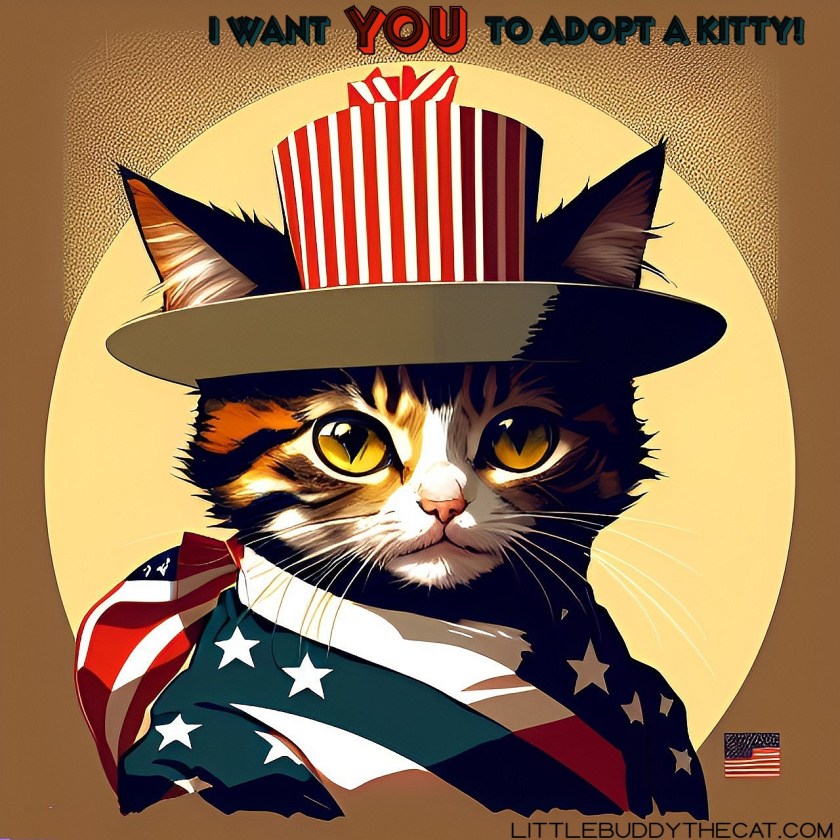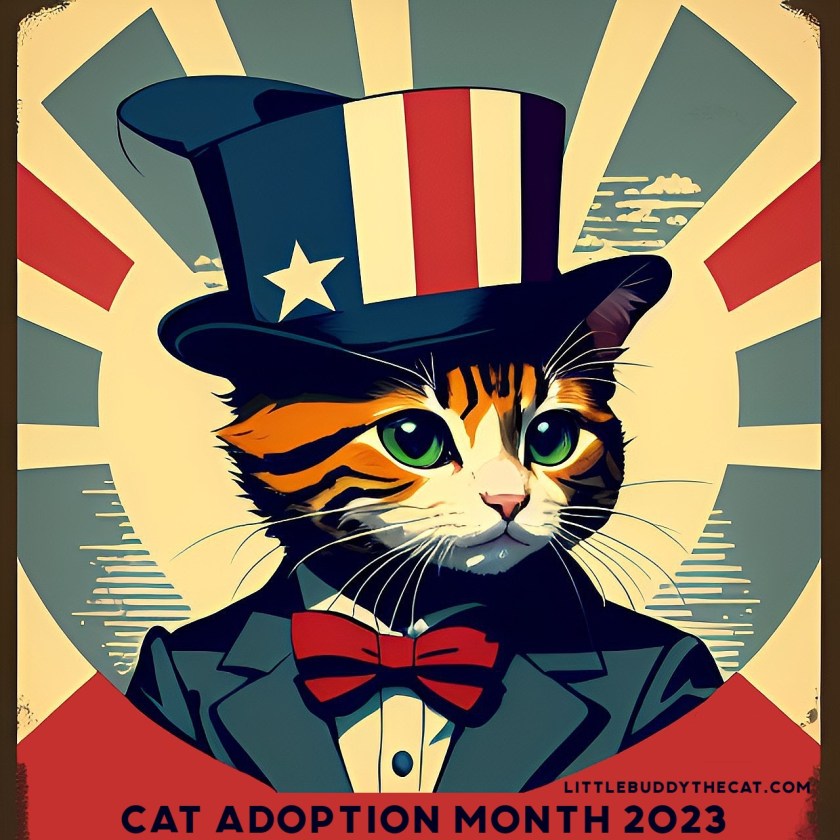
Ever year, 3.2 million little buddies enter shelters across the US, hoping for forever homes and humans to love them.
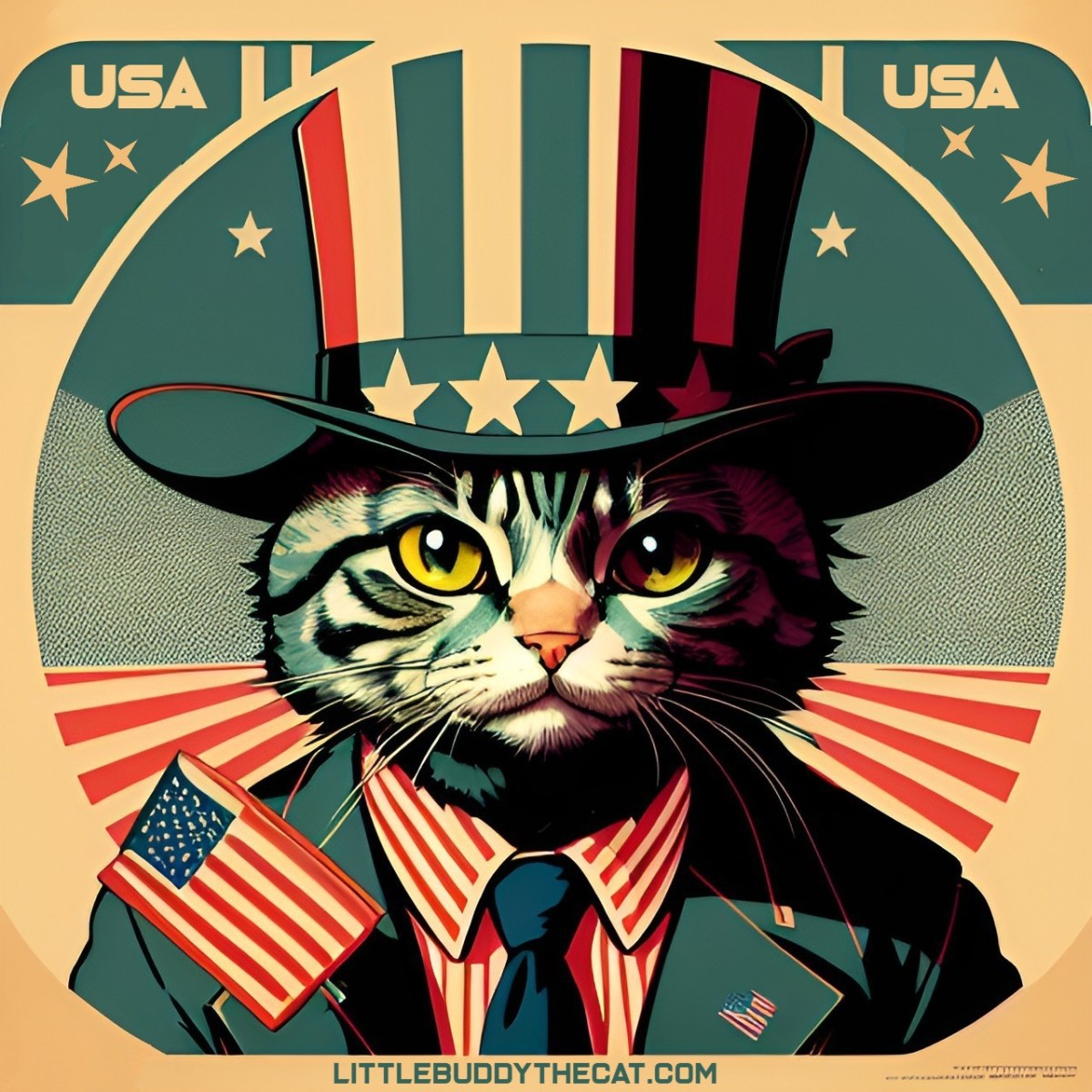
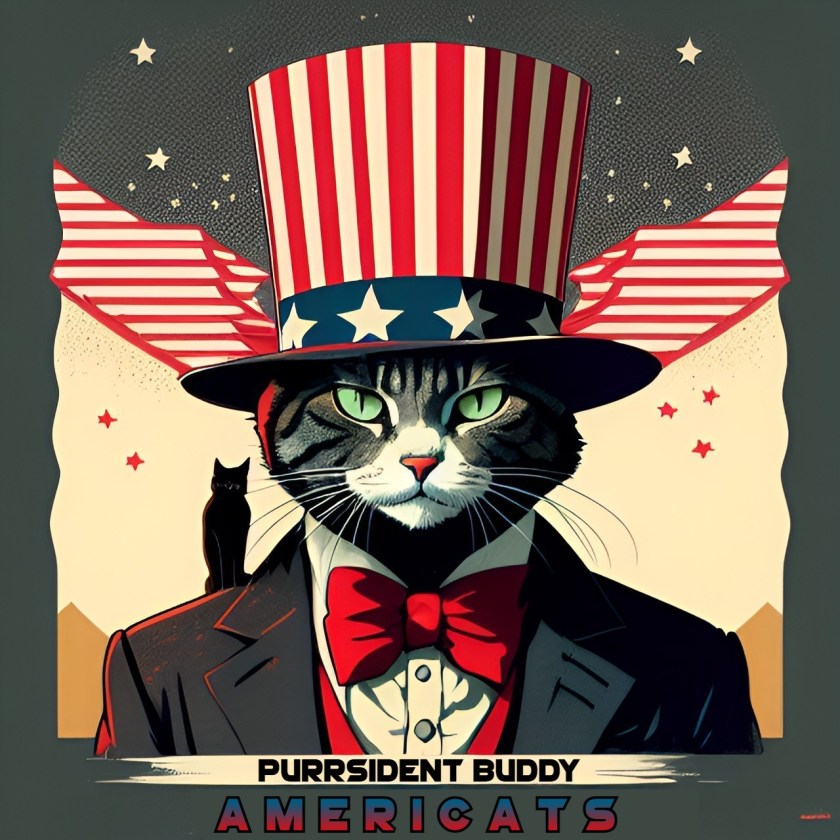
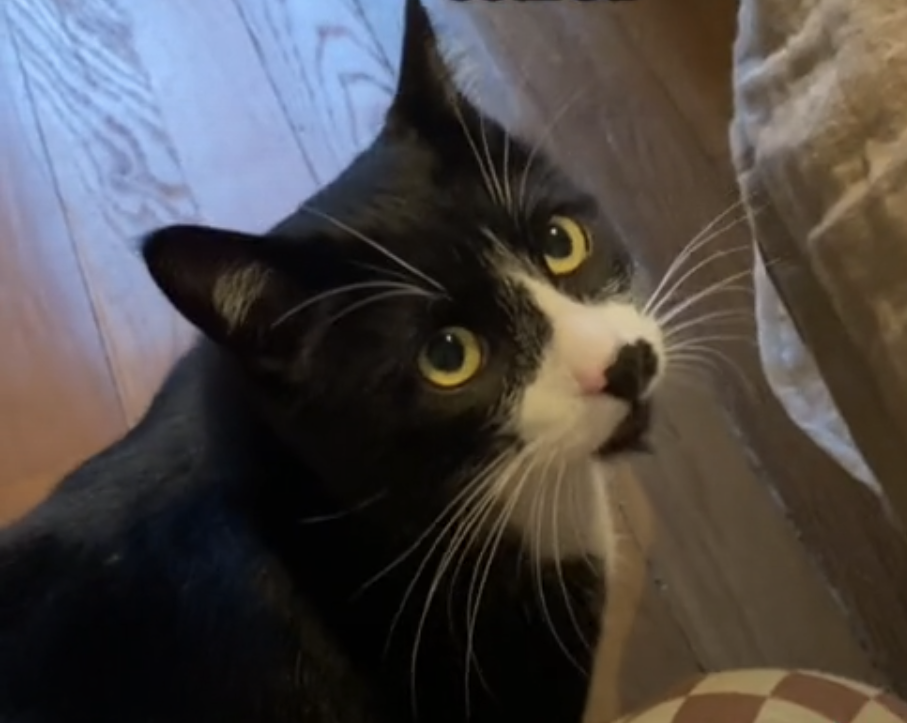
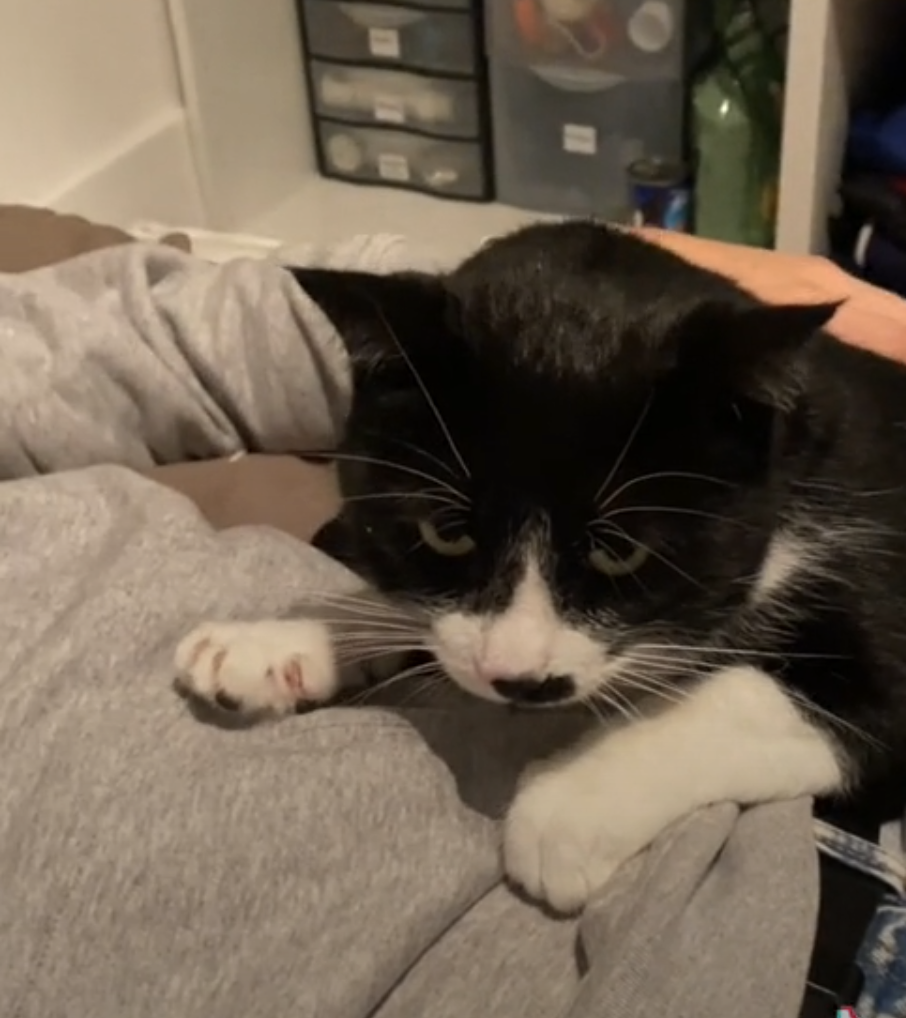
A message from Buddy, Purrsident of the Americats:
June is national Adopt A Cat Month here in our great country, and it’s no coincidence that it coincides with kitten season when hundreds of thousands of little buddies are born.
Those babies will need forever homes and attentive human servants to see to their needs, but don’t forget the adult buddies in your local shelter! They need homes too, and if you like to keep things low key, they’re the buddies for you. Bonus: They come pre-installed with purrsonalities, so there’s less guesswork involved if you’re adding a new living room lion to your existing pride.
Just remember, June is ADOPT a cat month, not “buy a cat from a breeder” month! When you adopt a cat, you’re making a friend for life who will be forever grateful to you…although kitty will still expect you to be a good servant, because that is the natural order of things!
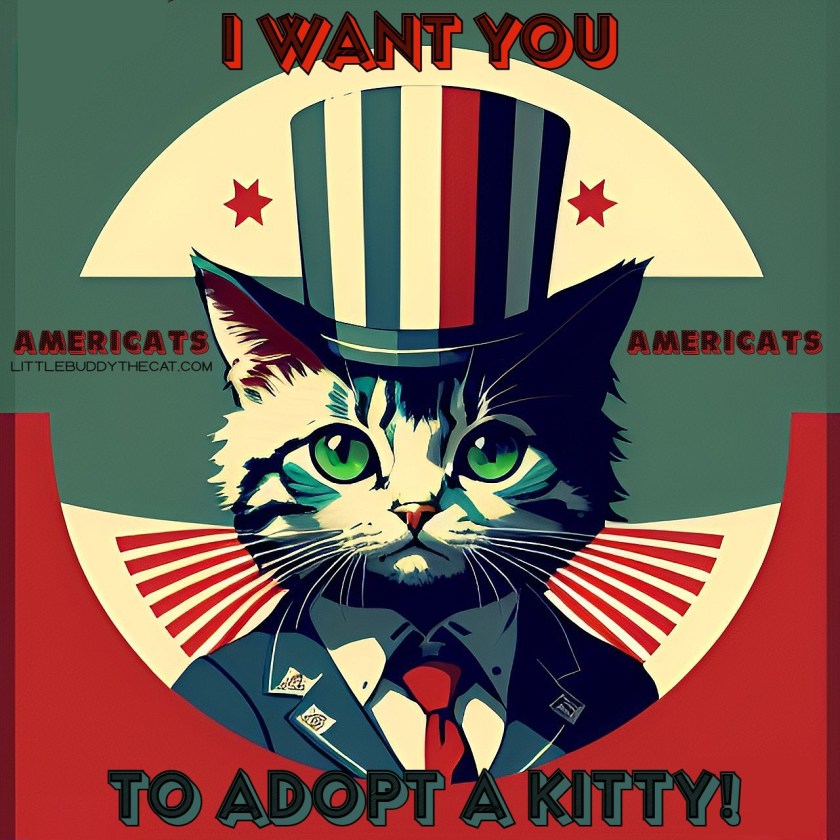
Do you patriotic duty and adopt an Americat!
Purrsident Buddy
A patriotic message from Purrsident Buddy! Feel free to share it or print it out. Credit: PITBA patriotic message from Purrsident Buddy! Feel free to share it or print it out. Credit: PITB
If you’re a house cat, your human’s death is just about the worst thing that could happen to you.
Cats are often left to grieve on their own, without any consideration from surviving relatives who may not like animals or cats in particular.
Treated as an afterthought, with no one to comfort or reassure them, those scared cats then endure another trauma when they’re taken from their homes and placed in tiny shelter cages. Depressed and shocked, they’re easily overlooked in shelters.
That’s why it’s heartening to hear about a French woman who drove with her boyfriend from Paris to Cavaillon in southern France to adopt her late grandmother’s beloved cat, Felix. That’s a drive of 708 kilometers — or about 440 miles in the proper ‘Merican measurement of distance — and almost the length of the country.
Adding to the challenge was the fact that Felix had never travelled before, the woman — who posts as @felixthegoateecat — noted.
“My grandmother was the nicest person,” she wrote. “She always fed Felix because she was always afraid he was hungry.”
Felix
It’s pretty clear the late grandmother and Felix had a special bond, and her granddaughter understands that.
She wrote about the process of allowing him to adjust to his new people and surroundings, and documented milestones like the first time he made biscuits in his new home.
So far, it looks like Felix is settling in just fine in his new life as a city cat.
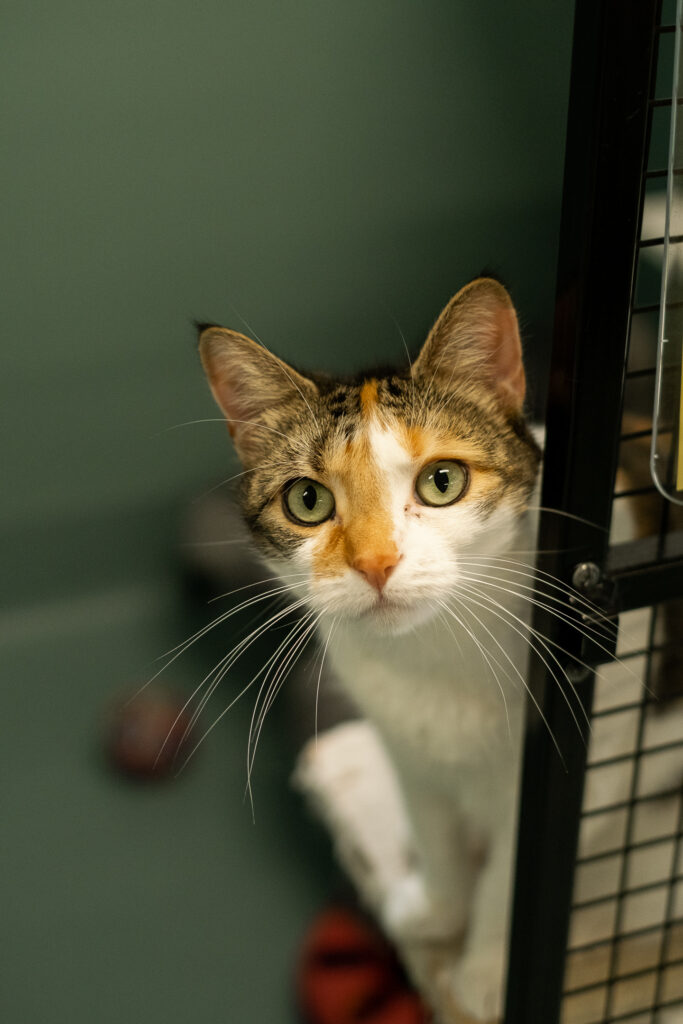
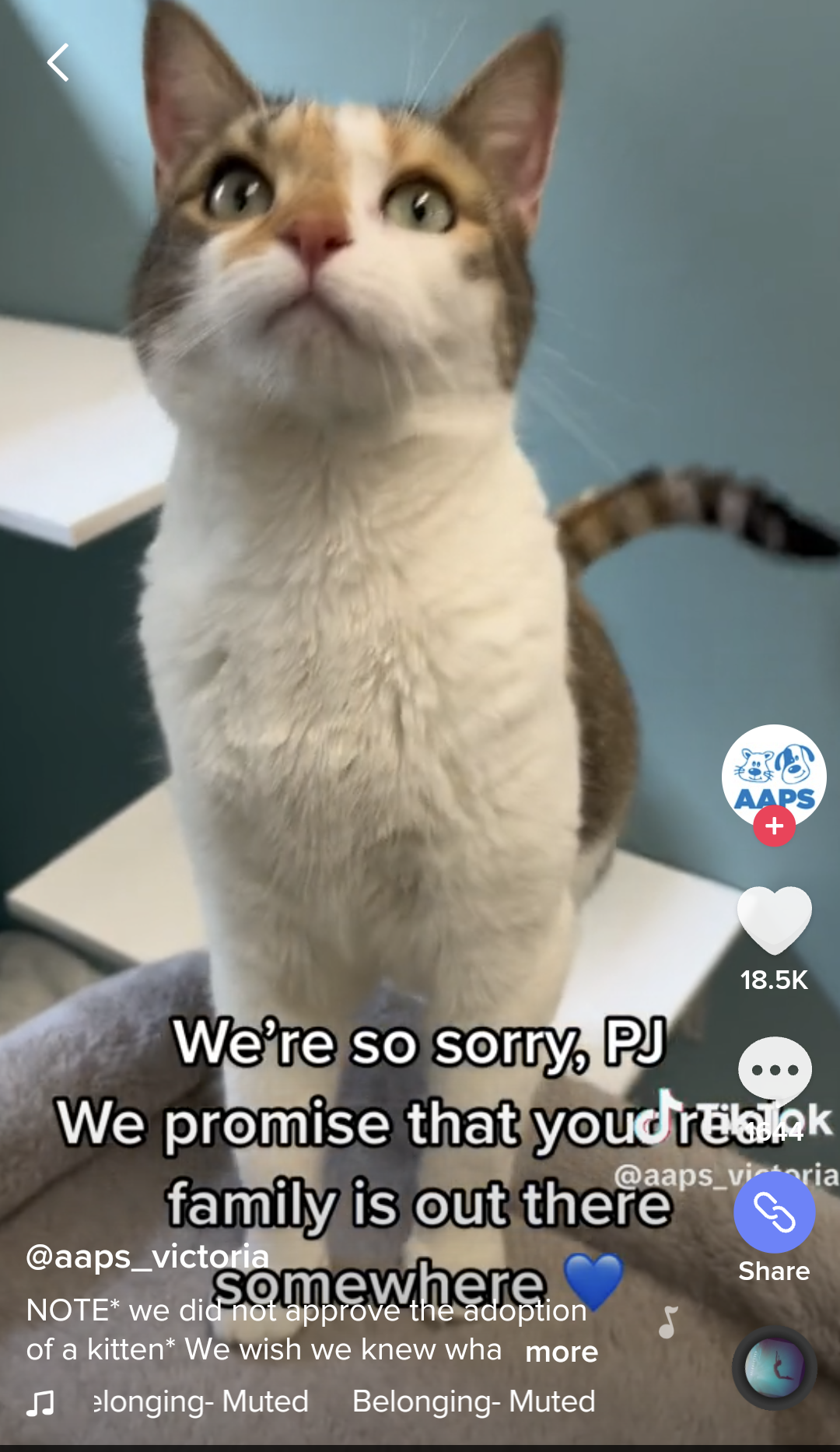
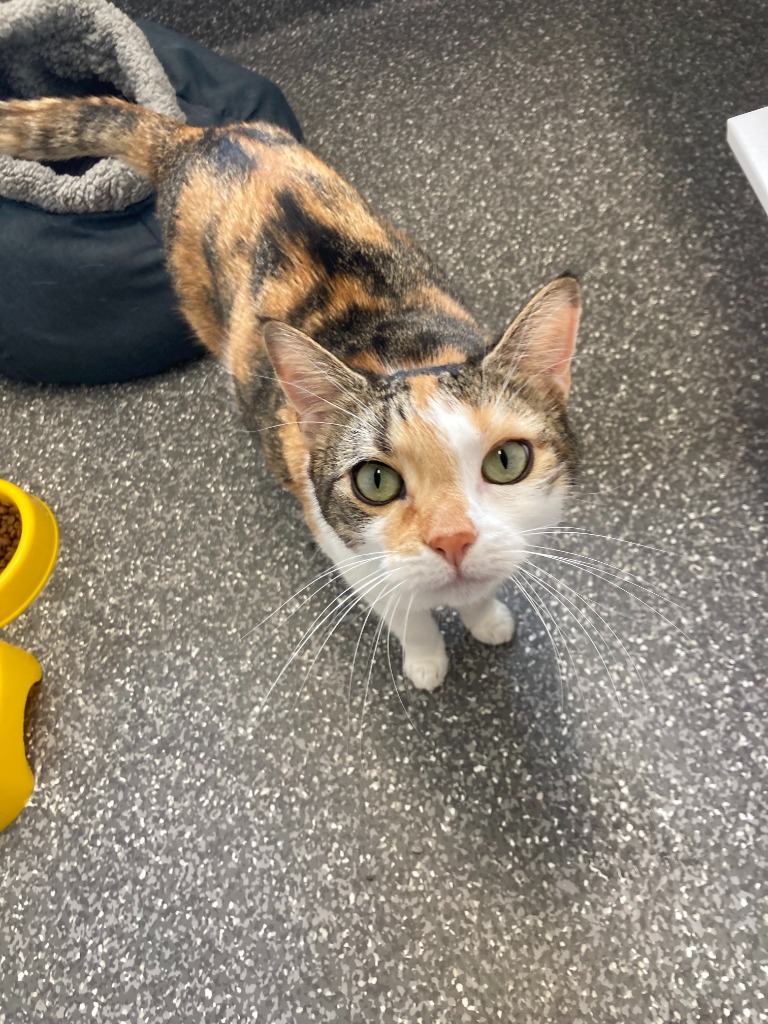
PJ is a shy cat, and her adopters were reminded that she would need time to adjust to her new home.
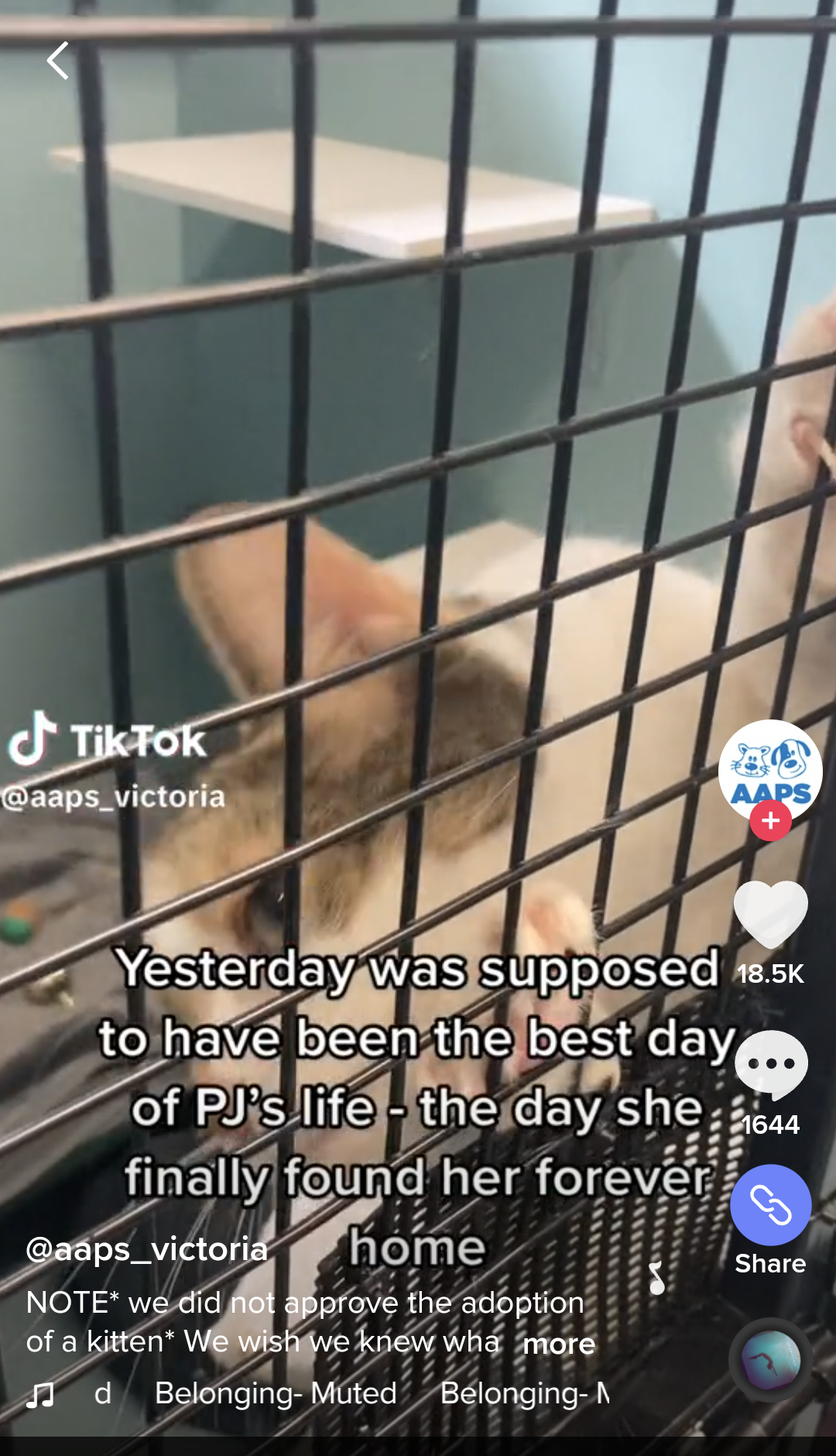
A family adopted a shy, anxious cat who has been waiting months for a forever home, then brought her back within 24 hours, explaining that they decided they wanted to “swap” her for a kitten.
I’ll pause for a second here to let PITB readers yell a few choice words about the family.
Okay, now that’s out of the way, hear me out: I think the cat, PJ, dodged a bullet.
The staff at the Melbourne, Australia shelter say they went above and beyond to screen for people who insisted they would be patient with the two-year-old Calico, made sure the adopters met her several times, and sent them home with a list of resources for dealing with a shy cat.
PJ Credit: AAPS Victoria
It sounds like they did a pretty thorough job, and the whole situation illustrates how difficult it is for people who run shelters to be sure they’re sending their animals to good homes.
But PJ wasn’t going to a good home. The kind of people who would return a cat after a day to “swap her for a kitten” are extremely unlikely to be good caretakers, and to treat PJ like the thinking, feeling feline she is.
PJ’s back at the shelter after her “forever home” didn’t work out.
I’ve seen cats like that, and they live miserable, bored, unloved lives. Once their novelty wears off or they’re no longer cute kittens, they become background noise, ignored as if they’re basically house plants. They have no way out of those situations, sadly, and no way to express their feelings, which is why it’s so important for us to learn to listen to our cats. But that’s a subject for a different post.
And no, the shelter did not honor the request to “swap” PJ with a kitten, as if the adopters were in Target, bringing back a 44 inch flat screen for a 50 inch 8K model.
Let’s hope a kind soul hears about PJ’s situation and has a home for her. If any of our Australian readers are interested, PJ’s with the Australian Animal Protection Society (AAPS) in Victoria, and you can find her adoption profile here.
If a bystander hadn’t witnessed the event and rescued the cat, it’s likely the little guy would have starved or died of dehydration.
Authorities in a Texas town near Houston need help identifying a woman who tossed a cat, carrier and all, into a garbage can.
The woman parked her car in a nature preserve in Rosenberg, Texas, at about 11 am on Jan. 12, opened the backseat to retrieve a cat carrier and unceremoniously dumped it in a garbage can.
A bystander happened to witness — and film — the entire sequence of events, and after checking the trash it turned out there was a scared two-year-old cat inside the carrier. The bystander brought the cat to Rosenberg’s animal control department.
“If no one would have seen this happening, that cat would have been in that container in that trash can with no access to food, (or) water,” said Omar Polio, the town’s director of animal control. “Not acceptable.”
The cat is a beautiful, affectionate white and brown male the shelter has dubbed King Triton. He’s in their care for the time being. King Triton is healthy, Polio said, and it’s not clear why the woman would have dumped him instead of surrendering him to a shelter.
While shelters are crowded, “we can always find resources that can better suit these animals,” Polio said, imploring people not to abandon or toss animals away like trash.
Polio said his agency would like the public’s help identifying the woman. It’s not clear what kind of charges she might face. Anyone with information can call Rosenberg Animal Control and Shelter at 832-595-3490.
Video of the incident provides a clear look at the woman, but the resolution isn’t high enough to make out the license plate on her car.
Here’s a news segment of the incident with footage of the woman getting out of her car, dumping the cat, casually returning to her vehicle and driving off. She has dark hair that was in a ponytail at the time and was wearing shorts and sunglasses:
Genetics, gene-editing and cloning have rapidly matured since the days of Dolly the Sheep, which means we have less time than we think to grapple with some heady moral questions.
Should scientists resurrect long-extinct species? Is it ethical to clone thousands of animals who will not live, but have their organs harvested for human patients?
Those are some of the questions people are asking as the cloning industry — once relegated to producing one-off copies and genetically identical versions of deceased pets for wealthy clients — is expanding with new capabilities.
This story by the BBC’s David Cox provides an informative, brief history of cloning before pivoting to the current state of the industry and how it could continue to evolve.
Two of the most fascinating prospects have to do with conservation. One company, Colossal, is working on bringing back the extinct woolly mammoth, while other scientists are turning to cloning as a way to prevent the extinctions of species like the white rhino, which is functionally extinct without any breeding pairs left living.
Scottish scientists shocked the world when they cloned Dolly the Sheep in 1996.
As with anything in science, innovations in cloning unlock new applicative branches, and scientists have partnered with the medical field to address human health concerns. Some, like the practice of editing genes to prevent diseases in newborns, tend to fly under the radar. But others, like the push to adapt organs from animals like pigs so they can be replacements for human organs, are much more controversial and have met opposition from animal welfare groups.
Then there’s the elephant in the room, no pun intended. What about cloning humans?
Right now no one’s gone down that route, at least not publicly, because of the inevitable backlash. What’s happening deep in the bowels of clandestine medical facilities in nations with murky ethics laws is another question entirely.
I am opposed to human cloning, but I don’t believe it will remain the immutable taboo some people think it is. Someone will break the dam, and while that pioneer will likely get raked over the coals, the bell cannot be unrung. Things change so fast these days that what’s shocking one day merits a shrug the next, and it’s possible the world will be introduced to a man or woman one day before it’s revealed the person is, in fact, a clone. (Not unlike the way the world was introduced to Imma, a Japanese influencer and model who exists only digitally.)
Imma has more than 400,000 Instagram followers, she models the latest fashions and she appears in adverts for products like beverages and watches, but she doesn’t exist. She’s a digital creation.
They’ll be the Dolly the Sheep of the human race, and ethicists won’t get a say in whether they should exist because it’s already been done.
“See how normal they are?” people keen on cloning will say. “They’re just regular people. Are you going to tell them they shouldn’t live?”
But before that, it looks like the movie Gattaca will become reality, and people will order up a great baseball player or a child with intuitive musical genius just like they might commission a piece of art or a custom car job. Gene editing with CRISPR is surprisingly trivial.
Of course, it won’t be lost on people that we’re cloning humans when there are millions of unwanted, uncared-for street kids in the third world, not to mention people who live without the consideration of their fellow human beings in every nation. Just like it hasn’t escaped the notice of activists that South Korea and China are leaders in cloning pets, yet dogs and cats are also food in those countries.
What separates the dogs and cats bound for restaurant kitchens from the dogs and cats having their cells preserved for cloning?
Nothing except for their individual value to humans, just like pure luck separates a cat who finds a loving home from a cat who ends up euthanized with a needle. We are a fickle species.
Yet both the beloved pet and the unwanted shelter cat are sentient, experience intense emotions and have their own thoughts. That’s not conjecture, it’s fact as confirmed many times over experimentally, but it shocks a lot of people. Our education system has not done right by the billions of non-human minds we share our planet with.
These rhesus macaque infants were cloned in a lab in China. The remaining barriers to human cloning are ethical, not technological.
I’ve thought about what might have happened if Buddy had been adopted by someone else, and what his fate may have been. I love the little guy, but it’s possible that someone else may have viewed him as an annoyance, a loud and incessantly chatty cat who needs an inordinate amount of attention and affection, sometimes lashes out, and needs to be surrendered.
Likewise, unwanted cats have languished in shelters for months before viral posts spark interest in them, and suddenly offers to adopt come in by the hundreds from across the globe. Nothing about those cats changed, but humans formed an emotional attachment to them after learning their stories.
Of course, the ethics of how we treat and consider animals can change depending on where you’re sitting. If you’re young, healthy and energetic, your view may be radically different than the person sitting on an organ donation waiting list, knowing their time may be up before a new liver or kidney becomes available. Suddenly a seemingly simple moral calculus becomes murky and complex.
There’s strong evidence that people who take the first steps toward cloning their beloved cats and dogs spend time wrestling with the ethics of the decision as well. Texas-based ViaGen, the western leader in commercial cloning, told the BBC that 90 percent of its clients are not people who have gone through with cloning, but have only taken the initial step of preserving their pets’ cells for $1,600.
And what of the mammoths? Bringing them back from extinction isn’t as simple as filling in the gaps in their genome, implanting gene-edited eggs in female elephants and hoping gestation takes care of the rest. Mammoths are social animals. Will an elephant mother raise a mammoth baby? Where does that mammoth baby belong? Without a herd of its own kind, can it be happy?
We can’t ask the mammoths, and even if we could, it might not be up to them anyway. As one paleogeneticist put it to NPR last year: What if the technology isn’t used to resurrect the mammoth, but to save the elephant? Does the end justify the means in the latter situation, but not the former?
Mammoth, Dolly the Sheep and rhesus macaque images credit Wikimedia Commons