Bogus Science And Unverifiable Claims Drive Cat Hatred In New Zealand

Cat hatred is driven in large part by bunk science authored by researchers who approach their work with predetermined conclusions.

After news of a now-canceled children’s cat hunting contest made international headlines this week, the usual suspects came out of the woodwork with wild, unsupported claims that cats — not humans, not human industrial processes, not human-driven habitat loss, wind farms or agricultural pesticides — are singlehandedly responsible for wiping out New Zealand’s native birds and the extinction of an arbitrary number of avian species.

One of the people leading the charge is Helen Blackie, a “biosecurity expert” who told the BBC that cats are responsible for the extinction of six native bird species in New Zealand.

Blackie doesn’t say where she got that information, but noted cat-hating Kiwi Gareth Morgan’s site claims that cats have killed nine native bird species, and attributes the information to a study, “A global review of the impacts of invasive cats on island endangered vertebrates.”

The “study” was published by academics in Spain and California without boots on the ground in New Zealand and is not actually a study at all. It’s a meta-analysis of prior studies, none of which count the number of feral, stray and pet cats in New Zealand, nor do they offer anything resembling a measure of how many birds are actually killed by cats.

Notably, the study does not say cats are responsible for the extinction of nine bird species.

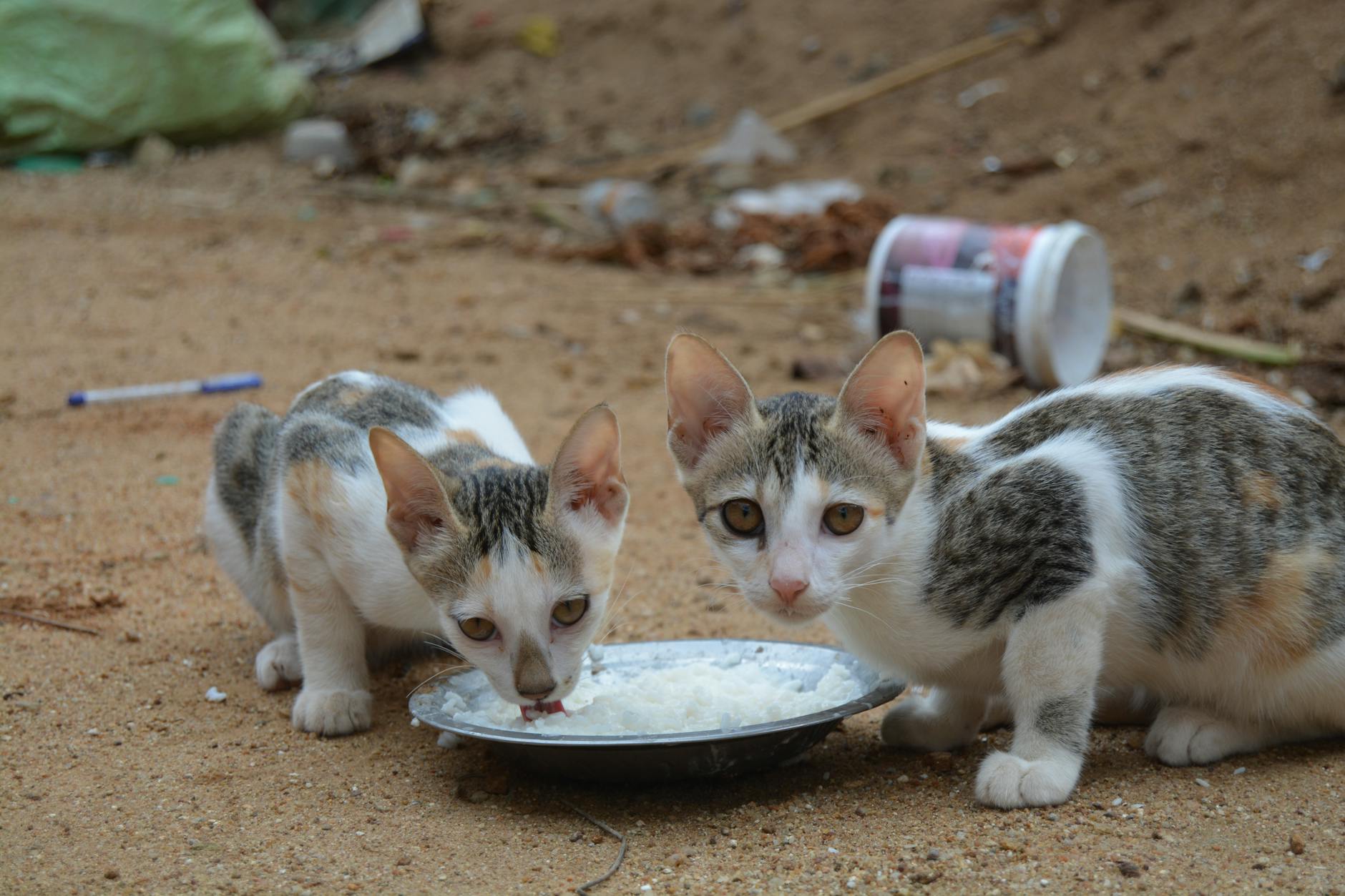
close up shot of a stray cat
Credit: Mehmet Turgut Kirkgoz/Pexels

Much like their US bird-conservationist counterparts, the authors of the study cannot say how many cats actually live in New Zealand and have no observational data about feline predatory habits.

They rely on the same methods the US studies do, which is to say they collect data from unrelated research — including a paper measuring the impact of all predators on wildlife in the aftermath of wild fires in urban environments, a report on the way pet cat personalities impact how their owners view them, and a study on cat behavior in Culver City, California — stir the data into a pot of numbers, and massage the numbers until they get the desired results.

In this case, the “desired results” are any suitably impressive-sounding figure for the total number of native birds killed by cats in New Zealand. The authors aren’t conducting a scientific investigation to find out how those native birds died, they’ve already decided that cats are the reason and they’re misrepresenting data from unrelated studies to support that conclusion. That is not science.

Of course their conclusion has no basis in reality. How is it possible that a bunch of researchers on entirely different continents are able to come up with accurate figures on cat predation in New Zealand without any actual data about cats in New Zealand, without a population count of cats in New Zealand, and without a single observational study to draw information from?

How does a study of coyote and cat interactions in Culver City, California have any bearing on cats killing birds in New Zealand, an island country 6,700 miles away with habitats that bear little or no resemblance to California? Coyotes don’t even exist in New Zealand!

How does a self-reported questionnaire about the personalities of pet cats by American cat owners tell researchers anything about the behavior of feral cats in rural New Zealand?

How does a study about the Persian squirrel on Greek island ecosystems tell a research team anything about the impact of cats on flightless birds in a completely different environment, in a different part of the world, with different types of trees and cover, different native fauna and weather systems?

How does a study of alpine ecosystems inform estimates of cat predation in the temperate and subtropical ecosystems of Aotearoa?

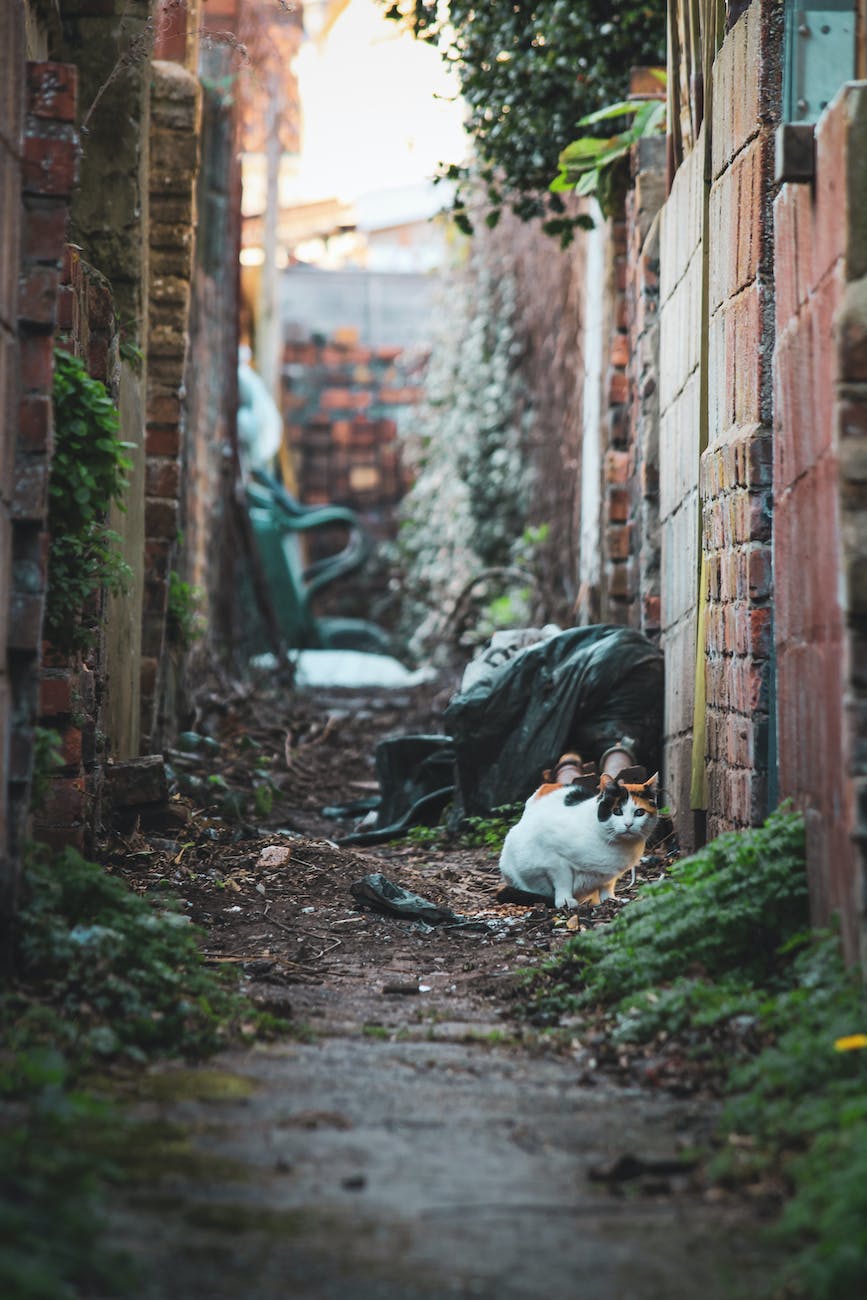
view of a stray cat on a city street
Credit: Boys in Bristol Photography/Pexels

This is not science

This sort of buffet-style, cherry-picking nonsense wouldn’t pass muster in an undergraduate class in the hard sciences, yet somehow it’s not only published in peer-reviewed conservation journals, it’s reported breathlessly and credulously by reporters at outlets like NPR, the BBC and the Guardian, who don’t even bother to read beyond the abstract.

The claims are further undermined by their inexplicable assertion that feral cats and domestic cats are not the same thing, when in fact they are the same species: felis catus. Advocates of cat hunting in New Zealand fret that it’s impossible to tell if cats are feral or pets, not understanding that they are indistinguishable because they are the same. The only difference is that house cats have homes and ferals do not.

No one is claiming that cats don’t have an impact on the environment. It would be foolish to think they don’t.

But if anyone — especially journalists with influential platforms and researchers cloaked in authority thanks to the veneer of real science — wants to make the case that cats are the primary force leading to declining numbers of native bird populations, then the burden of proof is on them, and it’s a high one.

We’re talking about life here, the lives of fully sentient animals with their own rich internal thoughts and feelings. You don’t just casually call for their extirpation or send children off with rifles to arbitrarily shoot them like little serial killers in training.

If you want to make the case, do the work. Get the grants. Hire the personnel. Do it right. The Washington, D.C. Cat Count even has a free toolkit for other communities to conduct their own feline census, so they can make informed decisions. But if you’re unwilling or unable to do the work, then stop spreading misinformation, because it has tragic consequences for real-world animals, and their blood is on your hands.

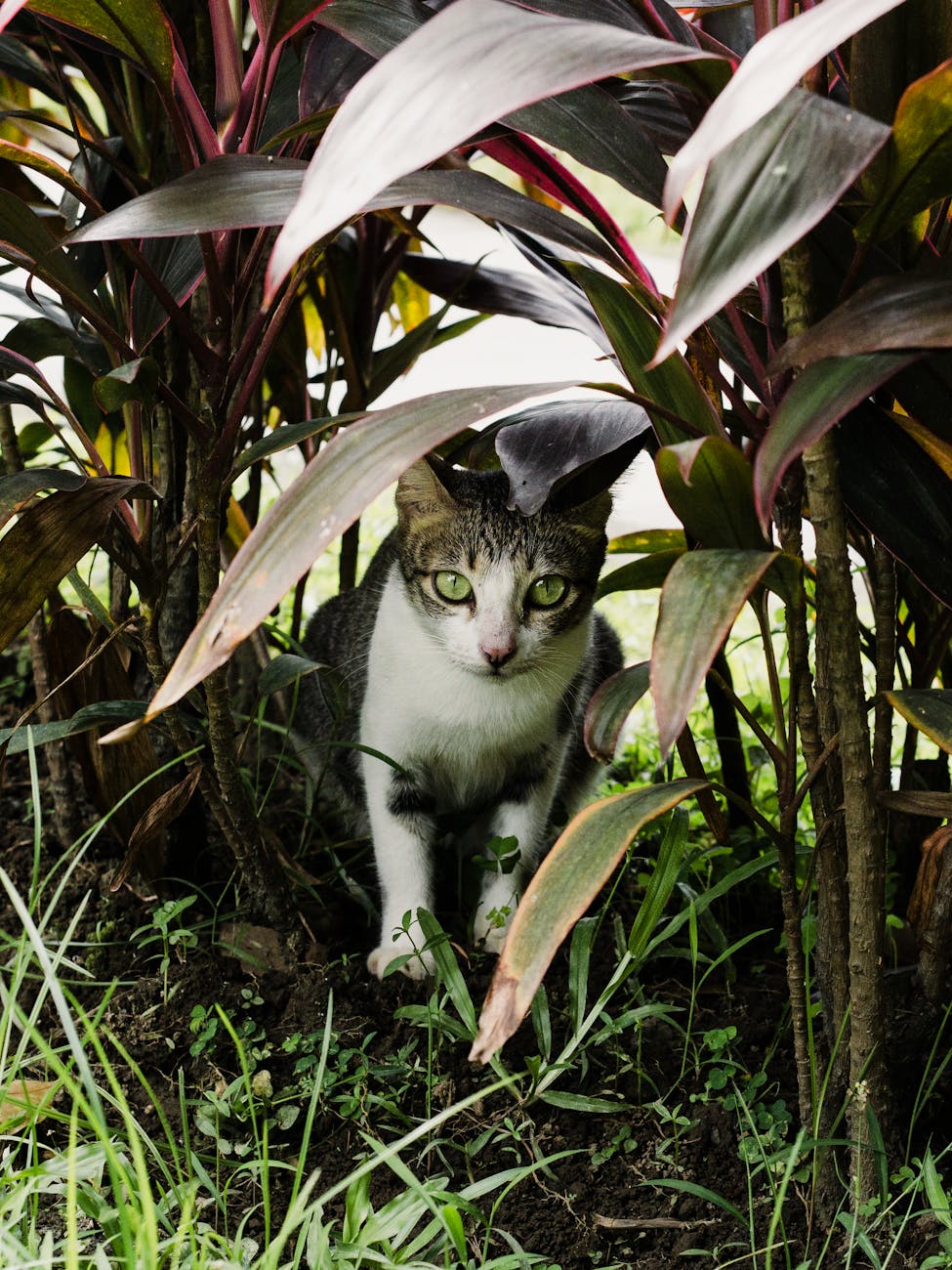
Top image credit Aleksandr Nadyojin/Pexels

Cat Hunt Canceled, Kiwi Journalist Says Cats ‘Need To Be Shot,’ ‘Run Over’ And ‘Wiped Off The Face Of Aotearoa’

Cats are blamed, to the exclusion of almost all other factors, for the decline in native bird populations in New Zealand.

A New Zealand group canceled a cat-hunting competition for kids after receiving massive backlash for the plan, but one Kiwi journalist told a national audience he thinks the cat hunt is a great idea and doesn’t go far enough.

“When it comes to feeral kets, I’m on the soide of the kea, the kākāpō and the kiwi ivery sangle doy of the week and my missige to [the organizers] is ‘Git the competition back on, git the keds back out thea,'” said the vowel-desecrating morning show host Patrick Gower. “If thea gonna hunt and thea’s feeral kets in the way, then we hif to woipe them out. Feeral kets need to be shot, they need to be run ovah, they need to be trepped, they need to be woiped off the foice of Aotearoa and I imploah the school to git it back on, and look, I’ll put up some rewoade as well foah any kets these kids git down theah as well.”

English translation: “I think the cat-killing contest is a wonderful idea, cats need to be shot, run over and exterminated from New Zealand, and I hate cats so much that I’ll put up some of my own money as prizes for the children who bag the most kills.”

You’ve got to wonder what cats have done to Patrick Gower for him to hate them so much, and fortunately dear readers, PITB has the answer!

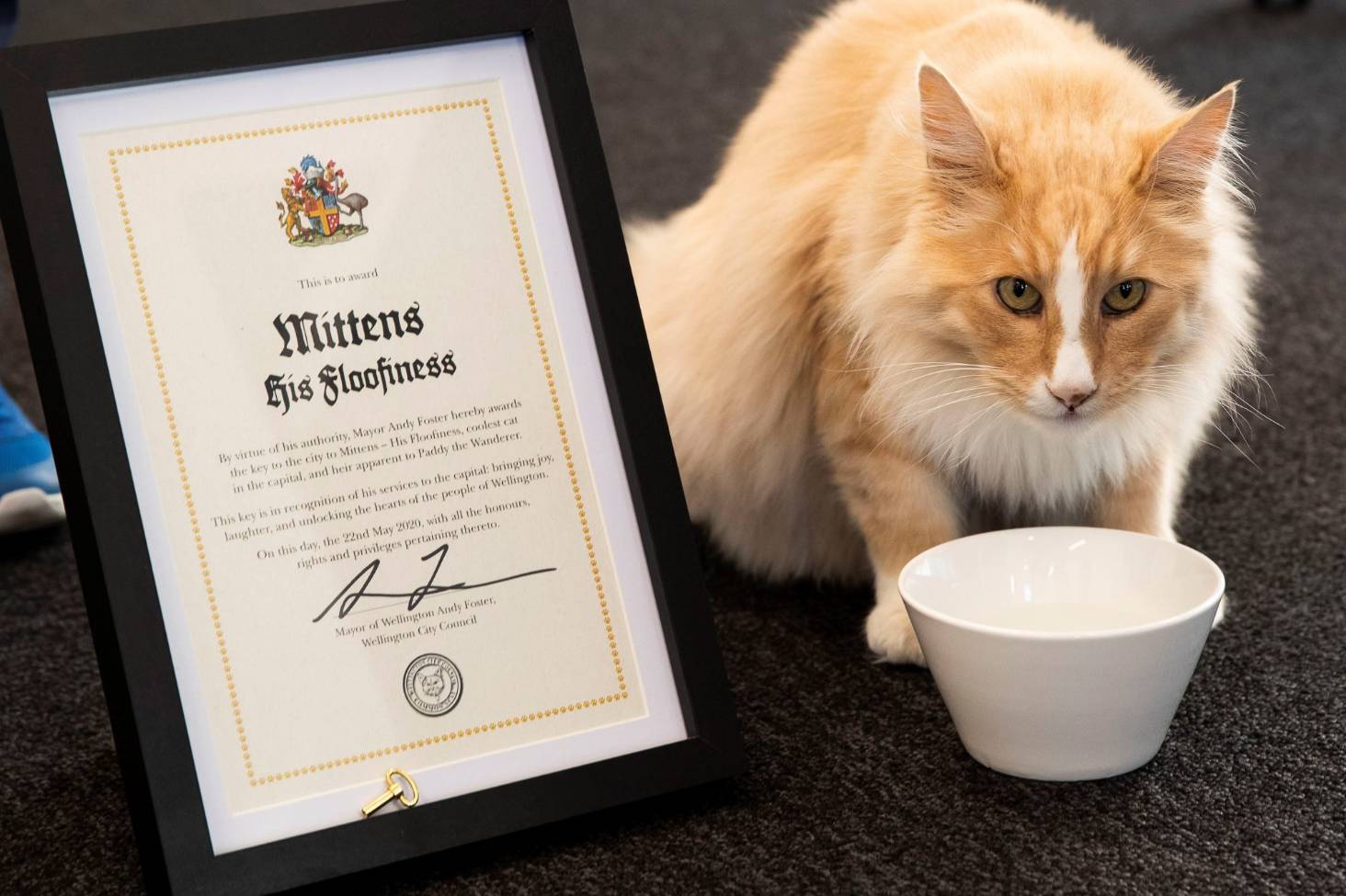
Gower lost the New Zealander of the Year competition of 2020 to a cute orange tabby named Mittens.

Think about that: All those years of doing Pulitzer-worthy breakfast show kitchen demonstrations, of slaving away at the anchor desk bringing viewers important news about reality TV stars and parroting former Prime Minister Jacinda Ardern’s declaration that New Zealand’s government is “the single source of truth” on COVID, and Gower loses the honor to a damn cat. Mittens even has the key to the City of Wellington, and Gower does not.

So sad.

Mittens the Cat
Mittens receiving honors that have eluded morning show host Patrick Gower. Credit: Wellington City Council

It’s unfortunate when a man in influential position, small country or not, enthusiastically encourages children to practice being future serial killers by slaughtering innocent animals because he thinks — despite the complete absence of evidence — that arbitrarily gunning down and running over sentient animals will save birds.

Really, you’d think before calling for the extirpation of an entire species of animal that these people would have something, even a single bogus research study, claiming that bird populations would recover if only people started killing cats on sight.

But no such proof exists, and the burden of proof rests with Gower, fellow Kiwi cat-hater Gareth Morgan and others who harbor an irrational and ill-advised hatred of tiny animals who are simply behaving the way nature designed them to behave.

What we do know is that managing cat populations can be done, but it’s difficult, time-consuming work that requires dedication and patience.

Cities like Washington, D.C., with its exhaustive cat count, and communities across the US have provided the blueprint with TNR efforts and a mass push for all pet owners to spay and neuter their cats. The results have been remarkable, and shelters save more than a million felines a year compared to just a decade ago. There’s still work to be done to bring the number of euthanizations down to zero.

Patrick Gower
Gower

It’s also worth noting that the organizers of the North Canterbury Hunting Competition and supporters like Gower are coming from a place of ignorance. In their original, now-deleted announcement, the organizers offered a “guide” to telling the difference between feral and pet cats, unaware that they are the same species. The only difference is that pet cats are fortunate enough to have homes, and strays and ferals do not.

The group said it was offering its “guide” as a way to prevent children from killing pet cats, but how exactly would they do that when a pet is indistinguishable from a colony stray or a feral? Would they find a microchip on the corpse of a cat they killed and say “Oops, guess that one doesn’t count!”?

Does a cat somehow feel less if it doesn’t have a home? Is its life worth less if it doesn’t have a collar and eat from a bowl?

It’s barbaric and so poorly thought-out, it really boggles the mind that the idea of a cat-killing competition for kids was voiced, let alone approved, planned and promoted by supposed adults.

As for the contest itself, we’re very glad it’s been called off, even if the organizers want to play victim and say their feelings have been hurt by the response to their murderous event.

That, however, doesn’t solve the problem. The fact that the organizers thought this was a good idea in the first place, and the increasingly pitched rhetoric from the likes of Gower and Morgan, are normalizing the idea of slaughtering innocent animals who have their own minds, thoughts and feelings, and who have been shaped by 10,000 years of history to live with and depend on humans.

Instead of calling for blood and whipping people into a frenzy, influential New Zealanders should read about cats and animal cognition in general, so they’re aware that felines experience the full range of primary and secondary emotions and are very much capable of suffering the same way we do when we’re injured, stressed and our lives are in danger.

That, unlike claims that cats are primarily responsible for the decline in bird populations, is hard scientific fact. We can peer into the brains of felines, watch their neurons fire, see different brain regions light up as they think specific thoughts and respond to specific smells and sights.

Maybe if people who hate cats understand what they are, they’ll feel some empathy for a beautiful species, animals who have been companions and literal life savers to humans since before deepest antiquity, animals whose lives have intrinsic value regardless of what they mean to us. At the very least, we owe them that.

Redditor’s Girlfriend Stole And Abandoned Cat After Argument

Studies have shown that when people who have pets are victims of domestic abuse, the pets often become victims too.

A Redditor says her beloved cat, Midnight, is missing after her girlfriend stole the innocent kitty and dropped her off on a random road on Friday as a revenge tactic for an argument the couple had the night before.

Midnight is still missing. Midnight’s owner, using a burner account called Throwaway29374639, updated concerned Redditors and said she was putting up flyers, setting up humane traps and looking in the area where her girlfriend claims she abandoned the cat as she was en route to work.

For her part, the Redditor says her girlfriend admitted what she did and “said she just had a moment of rage, but I just can’t even look at her right now. I kicked her out of my apartment and have been crying in my room for the last few hours. I feel so lost without my cat.”

In the thread, which attracted more than 1,400 comments and tens of thousands of views, many people advised her to report her (now presumably ex) girlfriend to the police, as well as to change the locks to her home and any passwords the two might have shared on various accounts.

We’ve talked before about the strange phenomenon of people who take their anger out on the pets of their partners or ex-partners. Studies have found that men are more likely to do so, and they’re much more likely to target cats than dogs because they see cats as an extension of femininity. In cases where domestic abuse is expanded to include a dog or a cat, the abusers view the pets as proxies for their victims.

But as recent stories have indicated, women sometimes take their anger out on pets as well.

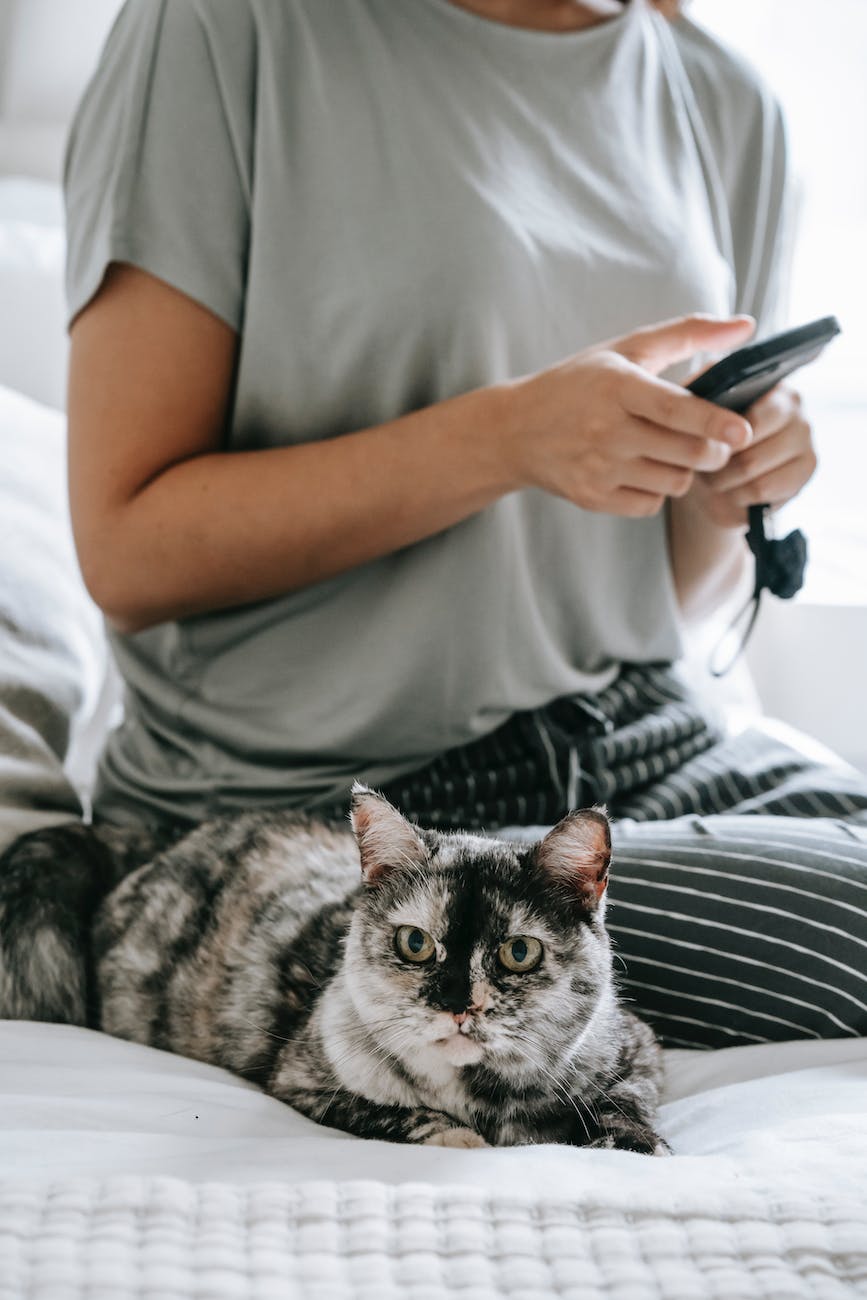
anonymous woman browsing smartphone while sitting on bed near cute cat
When woman are abused by their partners, their pets are often abused as well because they’re seen as proxies for the victims. Credit: Sam Lion/Pexels

Regardless, studies show that the pets of domestic abuse victims are likely to suffer at the hands of their owners’ abusers, and statistics show women who check into domestic violence shelters report their pets were also abused in the majority of cases. Some studies found more than 80 percent of pets who belong to domestic violence victims also become victims.

Women who worry about what will happen to their pets are less likely to leave their abusers and seek temporarily relief at shelters. As a result, some shelters also make arrangements for the pets of abuse victims, giving them safe shelter and taking another worry off the minds of their caretakers.

The links between pet abuse and domestic abuse are in addition to the well-established link between harming animals and “graduating” to harming humans, illustrated most recently by the documented history of feline abuse by the shooters allegedly responsible for massacres in Buffalo, New York, and Uvalde, Texas.

Top image via Pexels and depicts a random cat, not the victim’s cat.

Sunday Cats: Expert Fails At Feline Facts, Aussie Karen Lures Cats From Home To Issue Roaming Fine

Declawing is evil and cruel, mmmkay?

This is why we always say it’s better for cat servants to regulate themselves than allow the government to get involved.

A Karen in Australia issued a $280 fine to a homeowner for allegedly allowing his cats to roam — after she lured the kitties onto the street herself.

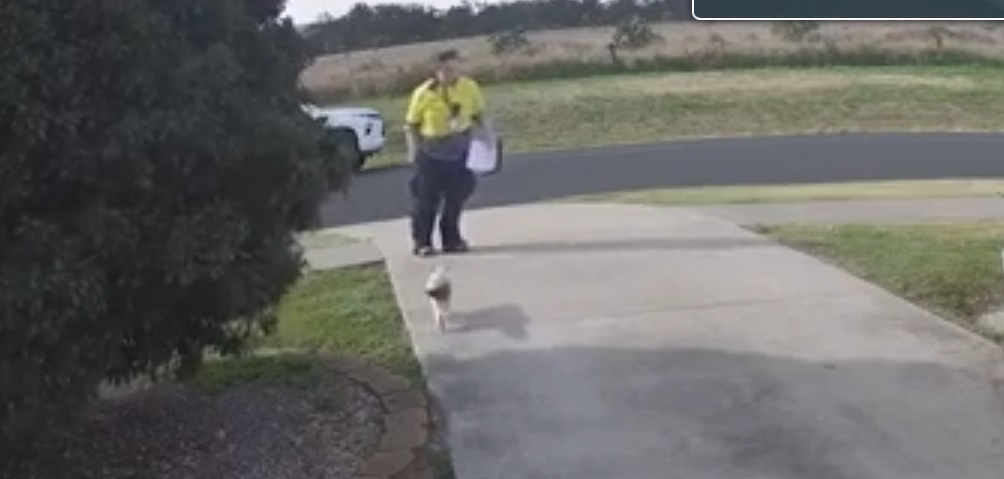
The entire bizarre spectacle was captured on security cameras at the home of Julie and Steven Stephens, a couple in Toowoomba, about 80 miles west of Brisbane. The uniformed Karen, who is employed by the Queensland council, totes a clipboard in one hand as she walks up the Stephens’ driveway in broad daylight.

As one of the curious cats approaches, Karen reaches for a pen in her pocket and starts scribbling on her clipboard, apparently eager to get started on the paperwork, before slowly backpeddling so the kitty will continue to follow her. When the cat reaches the sidewalk, the unnamed woman scoops it up and walks to her government-issued vehicle parked in front of the Stephens’ home.

Steven Stephens was watching the episode unfold via his camera system and bolted outside to stop the government employee from taking his cat, he told Yahoo News Australia.

The Karen wasn’t able to “impound” the cat, but she wrote Stephens a hefty fine for “allowing his cat to roam,” and promised she’d be back to inflict more misery.

“She said she would be back in two weeks with the police to take all but two of our dogs,” Mr Stephens said.

Queensland cat story
A municipal employee from the Queensland council is seen luring a cat away from its home in this still shot from surveillance video. Credit: Steven Stephens

We’re unable to embed the video, but you can watch it at Yahoo News Australia.

Unbelievably, Toowoomba Regional Council “CEO” Brian Pidgeon doubled down and quoted the relevant section of law on pet roaming when a local newspaper asked him about the incident. Pidgeon did acknowledge his employee was accused of luring the Stephens’ cat, but said he couldn’t talk about that because he’s conducting an “internal investigation,” which is bureaucrat-speak for figuring a way to worm his way out of the situation. There is, after all, clear video showing the Karen luring the cat away. There is nothing ambiguous about what happened.

Stephens admitted he and his wife have “too many” dogs according to local law, which has set arbitrary limits on animal custodianship, but said there are good reasons for that. The dogs sooth his wife, he said.

“A few years ago she had a severe car accident, her partner at the time died, she has a metal plate in her head and now has severe depression and anxiety,” Stephens said. “The dogs help with her anxiety.”

The family has been so rattled by the incident, and apparently has so little faith in their local government to treat them fairly, that they told Yahoo News they’re looking to sell their home and move to “a larger parcel of land in the bush.”

That in itself is an extraordinary admission, indicating they don’t expect basic courtesy, honesty or professionalism from the local authorities.

Now imagine how this would have played out if the Stephens family did not have security cameras. The council worker would have said their cats wandered off the family’s property of their own accord, and that would have been it. The Stephens would be forced to pay the fines, have a legal battle on their hands to get their cats back, and would be fretting over the impending confiscation of their dogs.

I know I sound like a broken record with regard to how local governments, guided by bunk “research” studies, impose themselves on pet caretakers, especially those of us who have cats. That’s why it’s important not to give them any reason to interfere — and to make sure everything is recorded, as the Stephens family wisely did.

Who knows what the government Karen’s motivations were. Was she trying to meet a quota? Does she dislike animals? Does she enjoy flexing the little bit of power she has, or inflicting misery on others? By preempting legislation on cat ownership and roaming, we can avoid putting ourselves at the mercy of such people in the first place, which is in the best interest of cat caretakers, and most importantly cats themselves.

Feline fact fail

I’m sure Nigel Barber, PhD., is a nice guy. I don’t mean to give him any grief. But when you present yourself as an expert on a topic and you write an authoritative column on a trusted site that has millions of readers, you really should make sure you’re not spreading misinformation or providing a picture of a situation that is decades behind the current science.

In a column for Psychology Today titled “Does Your Cat Love You?“, Barber rattles off a list of cliches, half-truths and outright falsehoods about cats, the kind of thing you might have expected 20 or 30 years ago before a wealth of research helped us dispel incorrect assumptions about felis catus.

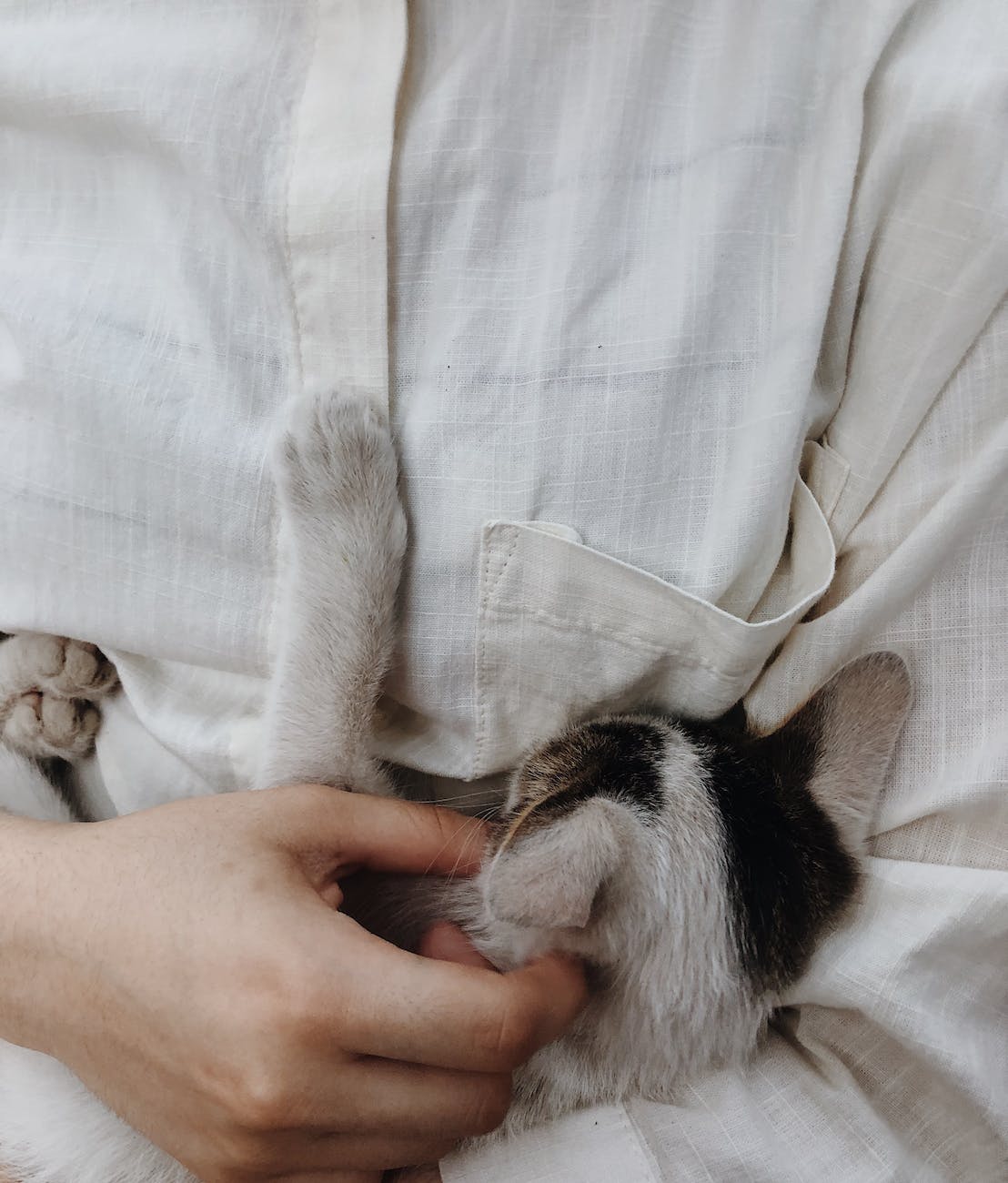
close up of person cuddling cat
Credit: Sevra Karakuu/pexels

After mucking up the domestication timeline, Barber says cats are “fearful of people,” “tend to withdraw from strangers,” and paints an outdated picture of aloof animals who technically don’t need human care to thrive. He also says cats attack people, including their caretakers, without warning or provocation.

Then there’s this nugget:

“As essentially wild predators, cats can be quite unpredictable. Many owners who are devoted to their cats complain that the cat often scratches them unexpectedly. One acquaintance had the cat declawed and found that the pet reverted to using its teeth on her!”

Can you believe it?!?! A woman had her cat declawed, and the cat bit her!

It’s not just that we know cats give off plenty of nonverbal warnings when they’re uncomfortable, or that declawing makes a cat much more likely to bite. Organizations like the Humane Society, SPCA, The Paw Project and others have been saying that for years.

It goes well beyond that — studies, including the most comprehensive study to date on the effects of declawing, have proven without a doubt that cats are much more likely to bite when they’re subjected to the cruel and painful declawing procedure. (See “Pain and adverse behavior in declawed cats,” a 2017 paper in the Journal of Feline Medicine and Surgery.)

That’s because declawing a cat not only inflicts a lifetime of physical pain and psychological trauma, it robs felines of their primary defense mechanism, making them feel much more vulnerable. Without claws with which to warn off unwanted handling, the poor declawed cats have only one defensive weapon available to them — their teeth.

An evolutionary psychologist should understand that, and should also understand that scratching is a natural and necessary behavior for cats. It’s not right or wrong, it’s cats being cats. Mutilating innocent animals to protect inanimate objects like furniture is objectively wrong and cruel. When you adopt a cat, scratching comes as part of the package along with all the positives like unconditional love, amusing antics and calming purring.

There are ways to dissuade and train your cats to mostly avoid scratching furniture, but no one should expect their cats will never put a claw on their couches. If you don’t want your furniture scratched, don’t get a cat. End of.

Keeping Cats From Killing Local Wildlife May Be Easier Than We Think

Armed with real data, there’s a chance to stop horrific policies designed to kill millions of cats who are blamed for driving small wildlife species to extinction.

For the past two decades, a handful of birders and “conservationists” have claimed cats kill as many as 3.7 billion birds and 22.3 billion small animals every year in the US alone.

Their claims, repeatedly credulously in the press, have been catastrophic to cats: Hyperbolic headlines have labeled them “stone cold serial killers,” “God’s perfect little killing machines,” and posed questions like “Is your cat a mass murderer?” The headlines, often running in otherwise respectable publications, envision brutal “solutions,” like this one in Scientific American: “Cats Are Ruthless Killers. Should They Be Killed?

Politicians, wildlife conservationists and birders read headlines like the examples above and come up with ruthless policies, like bounties offering $10 for cat scalps and $5 for kitten scalps, government employees stalking public parks with shotguns and literally gunning down strays, and an Australian program designed to kill millions of cats by air-dropping sausages laced with poison.

“They’ve got to taste good,” an Australian scientist who helped develop the sausage formula said. “They are the cat’s last meal.”

Now who’s the serial killer?

Sadly, few people have thought to question the studies that claim jaw-dropping numbers of birds and small mammals are slaughtered by cats every year.

How did the studies arrive at those numbers? Their formula hasn’t varied much from “study” to “study,” and more or less looks like this:

  • Assemble your data from old studies that have nothing to do with cats preying on wildlife, or hand out questionnaires to a handful of cat owners and ask them how many animals they think their free-roaming cats might kill.
  • Since you don’t know how many stray, feral and free-roaming cats exist in the US, invent an arbitrary number. Most of these “studies” put the number of cats anywhere between 25 and 125 million, but higher numbers are better because they make for more apocalyptic predictions and generate more credulous headlines.
  • Completely ignore the primary factors driving avian extinction in the world, which are human-caused: Habitat destruction, habitat defragmentation, wind turbines, pesticides, cars, high tension wires and windows, which are by far the biggest bird-killers.
  • Attribute all of the above to feral, stray and free-roaming cats.
  • Take your original “data” and, without making any adjustments for climate, regional variation, migration patterns, other predatory impacts — or anything else, really — simply extrapolate the total number of bird deaths by multiplying your small dataset by the total number of free-roaming cats in the US, which you invented back in Step 2.
  • Package the entire thing as a rigorous study by Serious Conservationists, write some apocalyptic press releases and hype up your claims in your abstracts, because you know the vast majority of web aggregators and overworked reporters will not have the time to take a deep dive into the text of your study.
  • Encourage activist groups and lawmakers to push for the mass culling of cats, based on your studies.

Please, don’t take my word for it. Read the text of any of the widely-cited studies that have been reported as gospel in the last 20 years. You’ll be astonished at what passes for rigorous scientific work, and how policies that determine the fates of millions of cats are largely shaped by these studies.

The D.C. Cat Count and the importance of a baseline

But there’s hope: A coalition of groups in Washington, D.C., spent more than three years methodically taking a “census” of that city’s cat population using a variety of methods.

They surveyed thousands of households within the city limits to find out how many cat owners allow their pets to roam free. They set up 1,530 trail cameras in wooded areas, ditches, alleys, alongside streams. The cameras are motion-activated and they produced more than five million images — including more than 1.2 million images of cats and more than four million images of local wildlife. The cameras captured photos of squirrels, coyotes, raccoons, possums, deer and even wild turkeys.

They assembled teams of dozens of volunteers to personally survey areas where cats are known to congregate. Then, when all the data was collected, they spent months sorting the results, carefully keeping tally, sorting duplicate sightings of individual cats and confirming data when necessary.

low angle view of cat on tree
Credit: Pixabay/Pexels

When all was said and done, after three years, $1.5 million and countless man-hours, the study determined there are some 200,000 cats living in Washington, D.C., and only about 3,000 of them are truly feral, meaning they’re not pets and not part of managed cat colonies.

The team — which brought together conservationists, bird lovers, cat lovers, shelter volunteers and others who would normally oppose each other on cat-related policies — also documented every step to provide a toolkit for other cities and local governments to conduct their own methodical head counts. They don’t have to reinvent the wheel to take D.C.’s admirable lead.

The leaders of the D.C. Cat Count went to all that trouble because they understood that without knowing exactly how many cats they’re dealing with, where they congregate and how they behave, any policies attempting to deal with their potential impact would be flawed and could end up doing more harm than good.

Making informed decisions about managing outdoor cats

Anyone who continues to cite the old, sloppy studies should be reminded, loudly and often, that they have led to years of failed policies, heartbreaking outcomes, enmity between cat lovers and birders, and widespread misunderstanding of how cats behave and the impact they have on wildlife.

Now the next phase begins: Dispensing with the hysteria and finding real, useful ways to minimize the predatory impact of cats on local wildlife populations.

One of the first follow-up studies to bear fruit comes, not coincidentally, from a research team in nearby Fairfax County, Virginia, and yields some surprising revelations about free-roaming cat behavior and impact.

The biggest takeaway: Because free-roaming cats almost always stick to small areas (spanning only 550 feet, or 170 meters), “cats were unlikely to prey on native wildlife, such as songbirds or small mammals, when they were farther than roughly 1,500 feet (500 meters) from a forested area, such as a park or wooded backyard. We also found that when cats were approximately 800 feet (250 meters) or farther from forest edges, they were more likely to prey on rats than on native wildlife.”

That’s it. In other words, small buffer zones are “the difference between a diet that consists exclusively of native species and one without any native prey,” the study’s authors wrote.

“Our findings suggest that focusing efforts on managing cat populations near forested areas may be a more effective conservation strategy than attempting to manage an entire city’s outdoor cat population,” wrote Daniel Herrera and Travis Gallo of George Mason University.

a cute cat looking up
Credit: Phan Vu00f5 Minh Ku1ef3/Pexels

In other words, minimizing the predatory impact of cats is likely a hyper-local affair, and not something that can be effectively managed on a one-size-fits-all city-wide or county-wide basis.

This is just a first step in the right direction, and follow-up studies will yield further insights that will hopefully lead to fine-tuning strategies in managing free-roaming cats.

We still feel keeping cats indoors — for their own safety, as well as the safety of other animals — is the right thing to do, and all the evidence supports that view.

But what these efforts have shown us is that there is a way forward, and it’s not the contentious, divisive and irresponsible work that has guided cat management policy for two decades. It’s not just possible, but necessary, for all sides to work together to find solutions.

Let’s hope more people realize that, and the old “studies” are relegated to the dustbin where they belong.