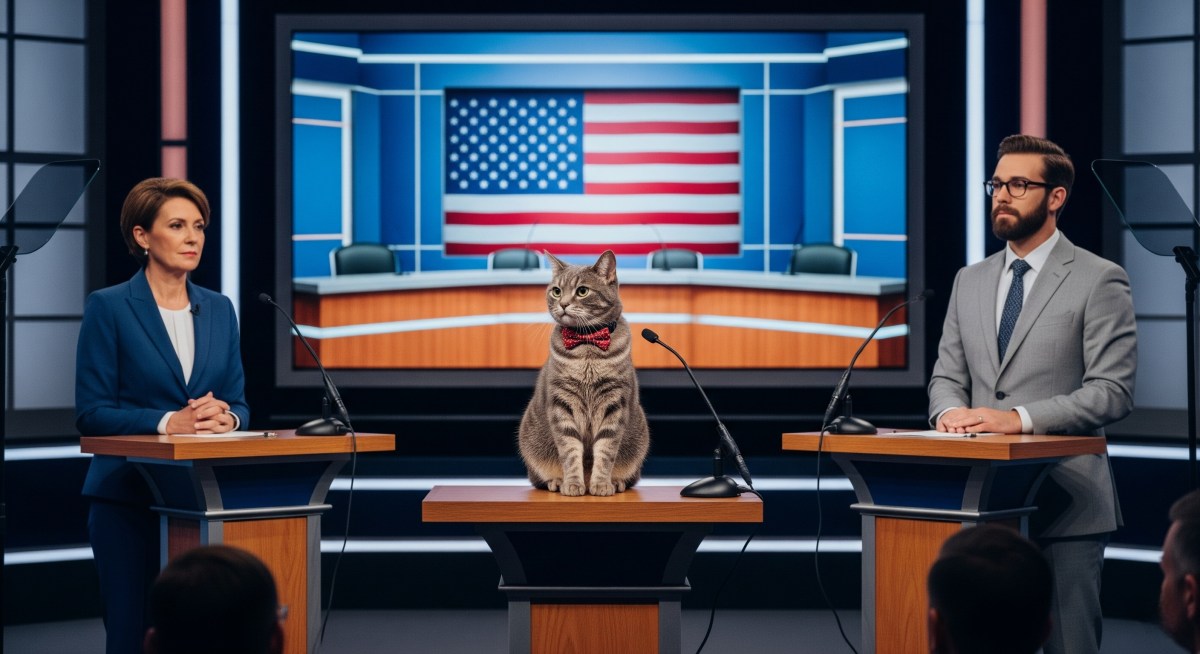
A Queens woman is urging voters to support her cat as a write-in candidate for city council District 30 in an attempt to spoil a term-limited councilman’s “cronies” from sailing into office without opposition.
It’s an interesting time for politics in New York, and not just because of a mayoral race in which voters have apparently rejected Republicans and mainstream Democrats.
Over the last several weeks, stickers urging voters to cast their ballots for a house cat for a city council seat have been appearing in a Queens district.
In a story about the write-in campaign, the New York Post devotes most of the ink to political disagreements between Leo the cat’s human and the district’s councilman, Robert Holden. (He’s a moderate Democrat, she doesn’t think he’s progressive enough, but the things they’re arguing over are above the paygrade and influence of a city councilman.)
But the more interesting issue, for us at least, is what happens if Leo rides a wave of populist support and actually wins as a write-in candidate.
When asked what would happen if the nine-year-old feline earns an improbable victory at the polls, a humorless Board of Elections official asked a Post reporter if he was drunk, then told him “we can certainly say that only a human being — specifically a US citizen — can hold elected office in NYC.”
Oh well. It would be amusing if some clever attorney found a loophole to pave the way for a feline councilman, and there isn’t much chance Leo would be less productive than the rest of the council. He might even provide some fresh perspective on how to deal with the city’s eternal rat problem.
“Start spreadin’ the news, I’m leaving today! I want to be a part of it, New York, New York!”
A stunned NYC woman can’t believe her eyes as she watches a man casually munch on a dead rat, exclaiming in disbelief, “This is fucking unbelievable. Look at this sh*t.” 🇺🇸🐁 pic.twitter.com/HE7s4xuvRu
The plan would allow bodega owners to certify their cats, eliminate city fines for keeping them, and help find homes for working felines if their stores shut down
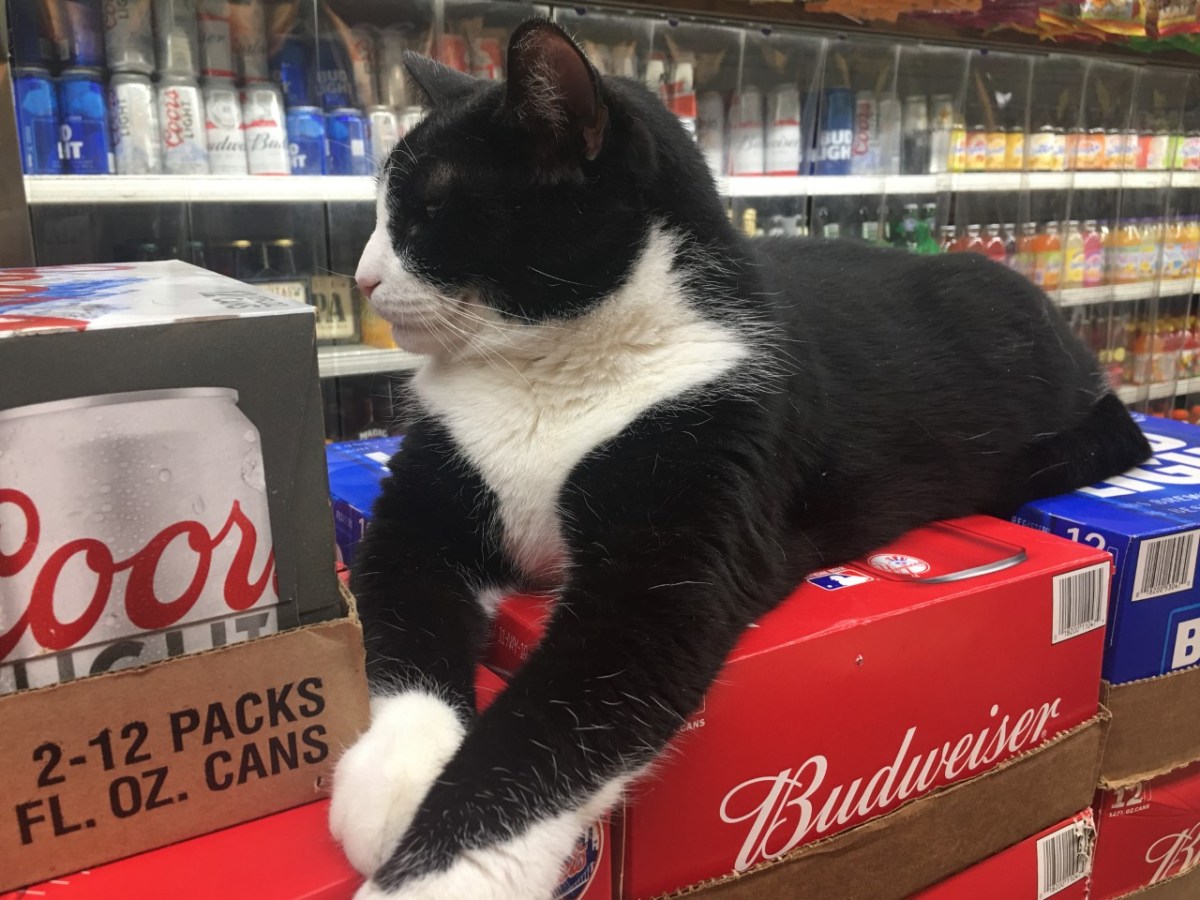
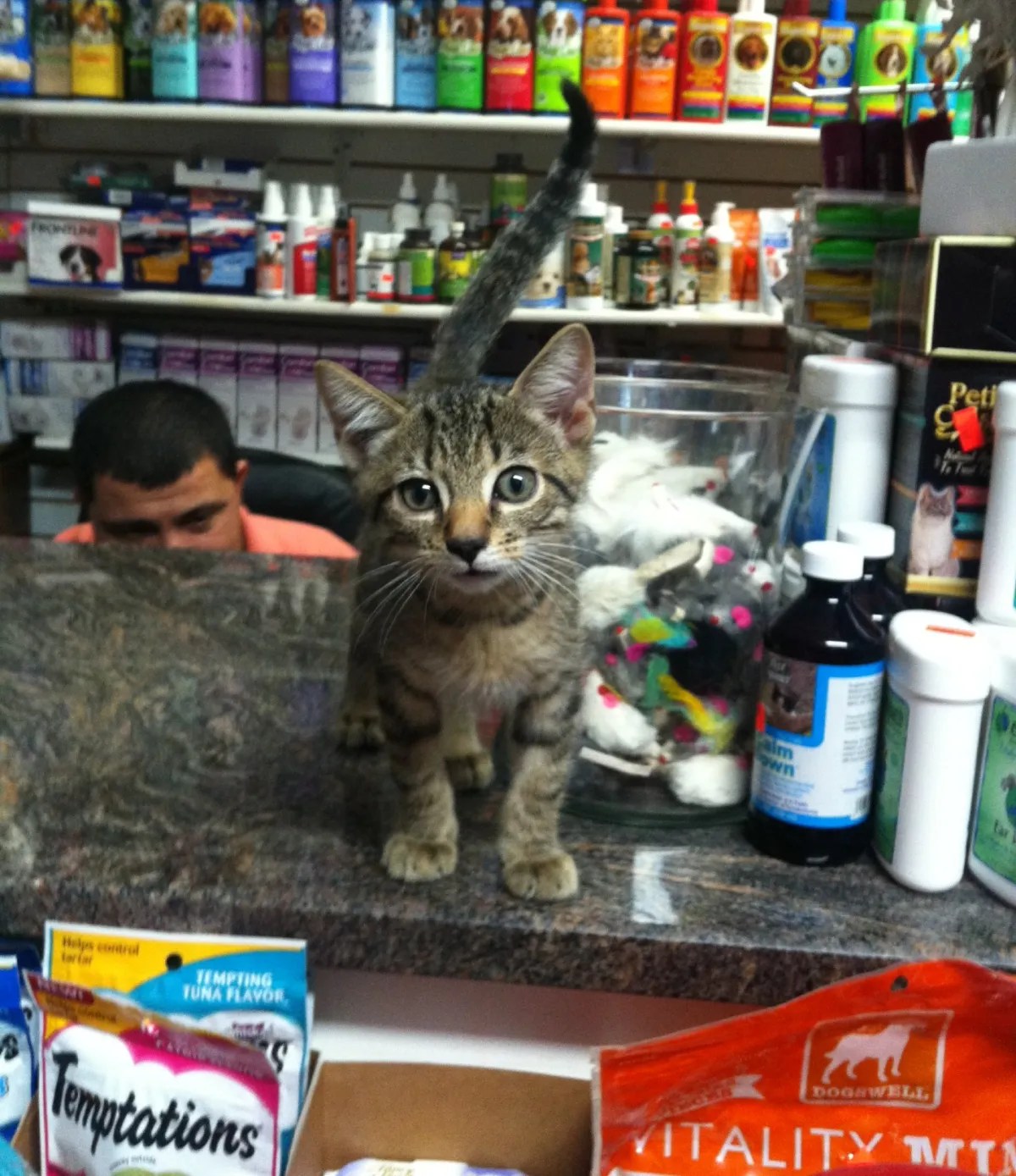
Cats have been a fixture in New York City’s bodegas for decades, but technically they’re illegal.
The fact that they’re so widespread, and owners of the small groceries/delis don’t try to hide them, underscores the absurdity of the situation. The fine for keeping a cat in a bodega in New York is $200 for the first offense, capping out at $300, but the fine for a rodent infestation starts at $300 and can rise to as much as $2,000 for repeat offenses. That’s in addition to the cost of bringing in pest control to get rid of the rats, which can easily add hundreds or more to an expensive problem.
So given the option between a maximum $300 fine with a clean, rodent-free shop, and potentially crippling fines — plus infestation — for rodents, thousands of bodega owners opt for the former. It’s a no-brainer.
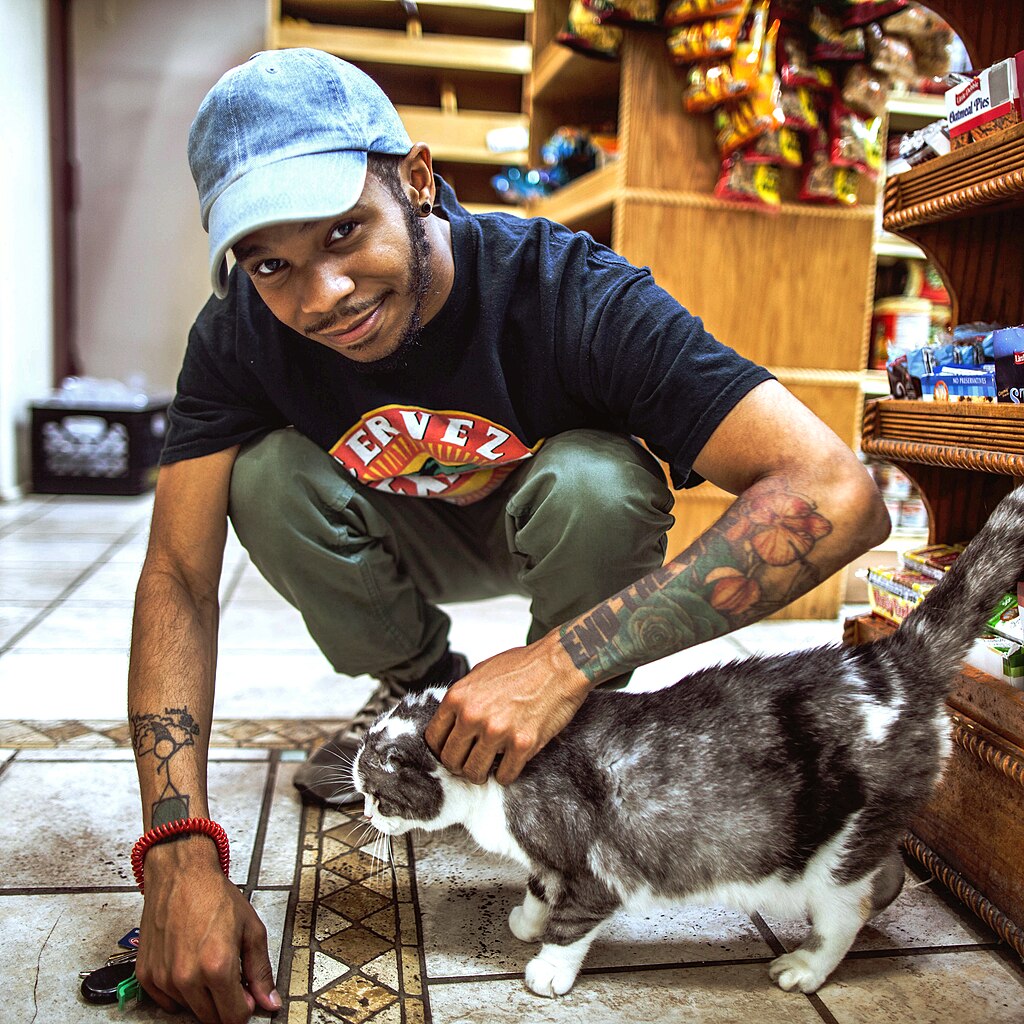
Kota, a bodega cat from Brooklyn. Credit: Wikimedia Commons
The cats are also favorites of customers, and bodega owners don’t hesitate to talk to media when their cats go missing, nor do they turn down Dan Rimada, who runs the extremely popular @bodegacatsofnewyork Instagram page.
Now Rimada is the man behind a petition that seeks to eliminate fines for the store-dwelling felines, establish a voluntary shop cat certification, and help bodega owners get veterinary care for their little helpers.
Rimada proposes soliciting seed money from city government as well as deep-pocketed donors in the pet food industry — “think Purina, Chewy, PetCo” — to establish a veterinary care fund for the city’s working cats.
“Through years of hands-on experience, I’ve witnessed both the charm of well-cared-for bodega cats and the harsh reality of neglect when standards aren’t met,” Rimada wrote in the petition, which has almost 5,000 signatures as of Feb. 28. “In conversations with rescue organizations and experts in public policy, business, and technology, we’ve designed a realistic, community-driven solution.”
Credit: @bodegacats_/Twitter
The fund would help cover the costs of care, with additional “micro-loans” available for emergencies.
Rimada envisions it as a triple win for the shop owners, rescuers who will be compensated for their time, and most importantly, the cats. If city leaders are willing to engage, Rimada says he hopes to conduct a year-long pilot program to see what works and what would need tweaks, with input from rescuers, veterinarians and the people who care for the cats.
The petition and resulting plan was inspired by cases like that of Kobe, a Hell’s Kitchen bodega cat who almost died of a urinary infection when the owners of the bodega balked at paying veterinary bills.
The store’s owner says he’s not interested in having anyone prosecuted and he just wants his cat back.
Another day, another person who decided to steal a cat instead of adopting one of the estimated 3.2 million languishing in shelters and waiting for homes.
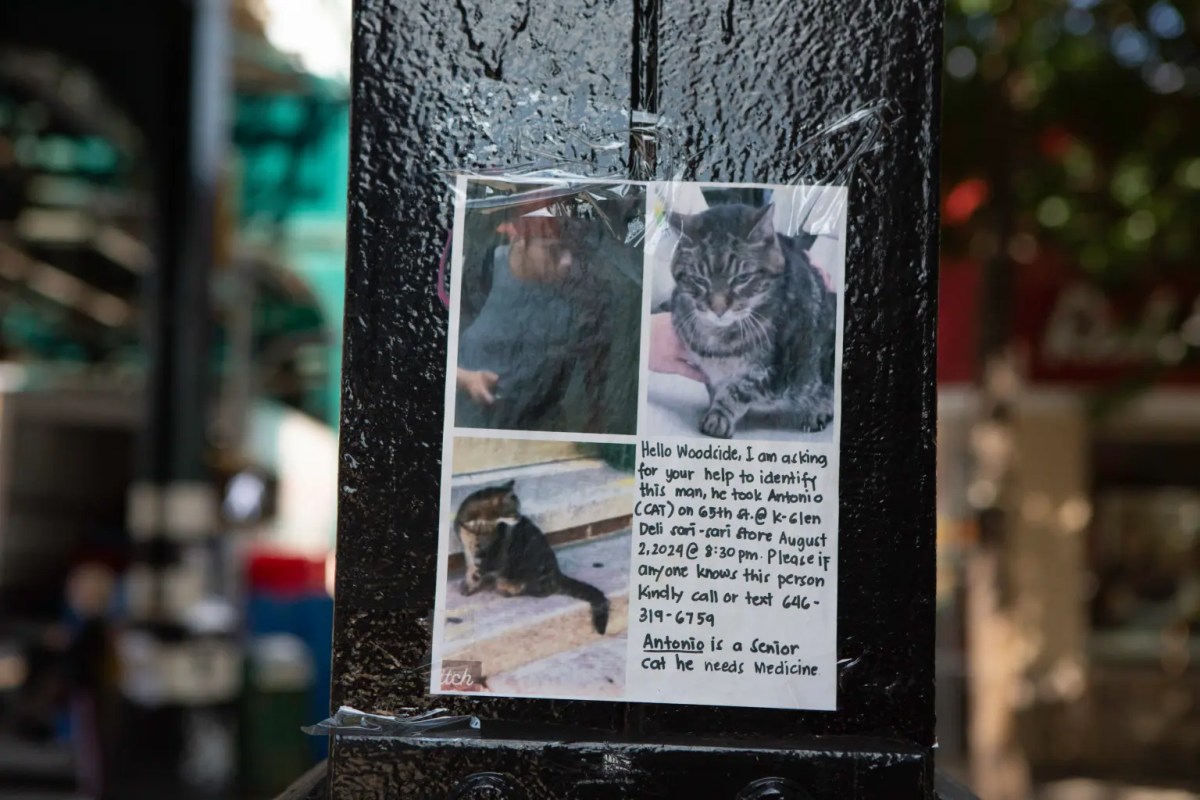
This time, a man made off with Antonio, a well-loved bodega cat who was the unofficial mascot of K’Glen Deli and Sari Sari Store in Woodside, Queens. When store owner Glen Alagasi couldn’t find Antonio and the tabby failed to show up for meal time, Alagasi panicked.
Sure enough, footage from security cameras showed a man picking Antonio up right in front of the store’s entrance and walking away earlier that day, on the afternoon of Aug. 2. As the man walked off, Antonio managed to squirm out of his hands and was trying to get back to the bodega. The man scooped him up again and Antonio was last seen in his arms as they headed toward Woodside Avenue.
Credit: Glen Alagasi
Like others who have had their feline friends taken from them, Alagasi said he’s much more interested in getting his cat back than any form of retribution or punishment.
“We’re not asking for any criminal prosecution,” Alagasi told CBS New York. “Just, we need the cat back. [The thief] stole a precious thing here in this community.”
For people unfamiliar with city living, especially in New York, bodegas are a daily part of life and often the only places to buy food in neighborhoods that are otherwise “grocery deserts.” When you live in Manhattan or a borough, the concept of big-time grocery shopping just doesn’t exist, because chances are you’re hauling your purchases back on foot and ascending stairs or an elevator to your apartment.
Technically, the Department of Health forbids the keeping of cats in bodegas and delis, which almost always have hot food and sandwiches prepared on-site. But the fine for a rat infestation is the same as it is for having a cat, and inspectors can’t be everywhere, so most bodega owners figure it’s better to have a little pal who keeps the rats away than cede territory to rodents, especially in a city that struggles with a perpetual rat problem.
The laws are so openly flouted that there are entire social media accounts dedicated to bodega cats, and the operators don’t bother to hide their cats from customers or the press. If the inspectors are going to come, they’ll come.
Alagasi says he’s lost a friend, and customers like Pia Tracy are used to seeing the little guy every day.
Antonio, who often plays with Tracy’s cat, is “part of our everyday life.”
Tracy says she’s “devastated and heartbroken because I don’t know if he’s okay. We just hope he’s okay.”
When even the mayor can’t keep rats from overwhelming his property, it’s clear New York is losing its battle against rodents.
For the second time in seven months, one of New York Mayor Eric Adams’ own health inspectors has ticketed him for rat infestations at the Brooklyn brownstone he calls home.
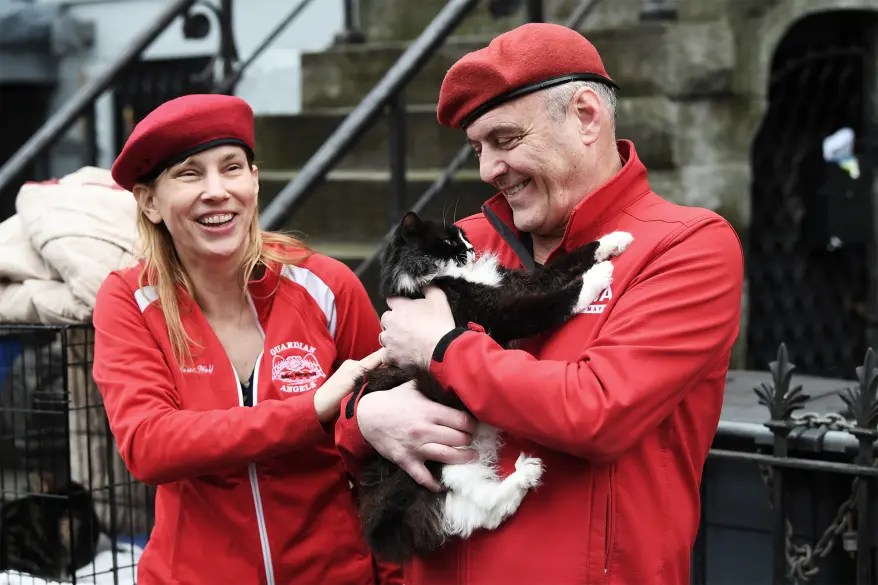
Because it wouldn’t be New York without things turning into a circus, the man who unsuccessfully ran against Adams for the mayorship, Guardian Angels founder Curtis Sliwa, took advantage of the mayor’s embarrassment by bringing two of his 16 18 cats to Adams’ block and holding a press conference on the sidewalk where he touted felines as the solution. (Adams, who is well known for his hatred of the rodents, famously held a “rat summit” at Brooklyn Borough Hall in 2019, “gleefully” showing off a new rat-killing contraption to reporters.)
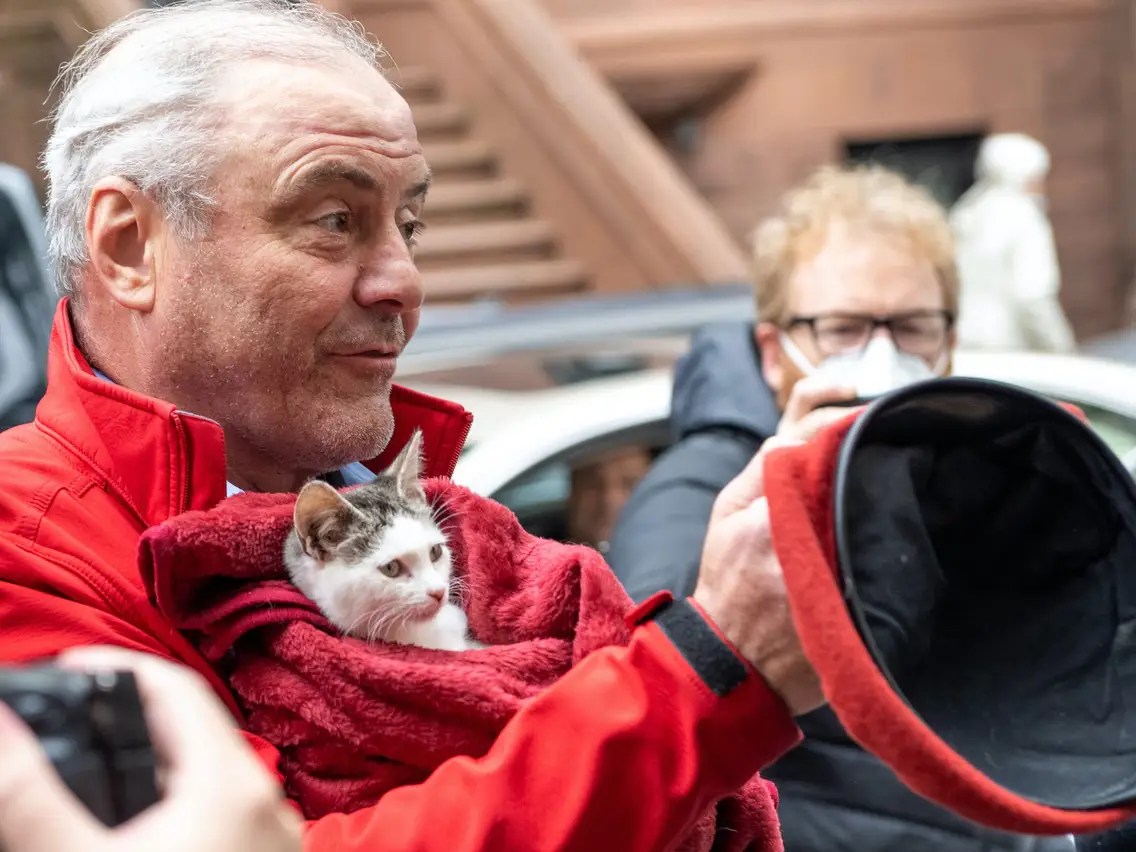
Introducing reporters to his tuxedo, Tiny, and tabby cat, Thor, Sliwa said Adams was missing the most obvious solution to the rat problem — cats — and offered to become the city’s “rat czar” free of charge.
“Like most New Yorkers, [Adams] is frightened of rats,” Sliwa told reporters outside the mayor’s brownstone. “He’s tried everything but it’s time that we revert back to the best measure that has ever worked — and that’s cats.”
As we’ve noted before on PITB, Sliwa and his wife are dedicated cat servants, perhaps overly so. They currently house 18 cats in their Manhattan studio apartment, Sliwa said on his radio show this Sunday. Some of them are the couple’s pets and some are fosters for their rescue.
Nancy and Curtis Sliwa with one of their cats. Credit: Matthew McDermott
The rat problem in New York is real and, sadly, as bad as people make it out to be. You can hear them at night in many neighborhoods, and it’s not unusual to see them briefly caught in the glow of streetlights before scurrying into the shadows again.
I’ll never forget watching an entire conga line of them at the 125th St. subway platform. They just marched out of a hole in the twilight, each one bigger than the last, going about their business without any concern for what people might do to them.
And the answer, they know, is nothing. Because New York’s rats aren’t regular rats. They’re well-fed freaks, ballooning to enormous sizes thanks to the abundance of garbage cans to eat out of and the way garbage is collected in the city. Back in 2015, video of a rat dragging an entire slice of pizza down the steps to a Manhattan subway platform went viral, racking up more than 12 million views and earning the rodent the title Pizza Rat:
People who aren’t from New York and have never visited are probably shocked to see garbage piled high on the sidewalks of every street. New Yorkers are supposed to put the garbage out the night before pickup, but no one really observes that rule, and the mounds of trash grow for days before sanitation removes them. It’s a feast for the rats, and any solution has to start with cleaning up the garbage situation.
In the winter the cold weather prevents the contents of the trash from rotting, so the stink isn’t as bad, and sometimes the trash mountains are covered by snow.
But in the summer, when the tree-lined avenues get their green canopies and flowers bloom in window boxes, the city reeks. On hot days, the perfume of New York is rotting trash and the overwhelming smell of urine wafting up from the subways. Sometimes I think of what the Japanese, with their spotless streets and shiny subways, must think when they come to New York for the first time.
In October, after the city fielded a 71 percent increase in rat complaints over the previous year, the city introduced a new law making it illegal to put trash on the sidewalk before 8 pm ahead of pickup the following morning. The change hasn’t made a dent in the rodent problem.
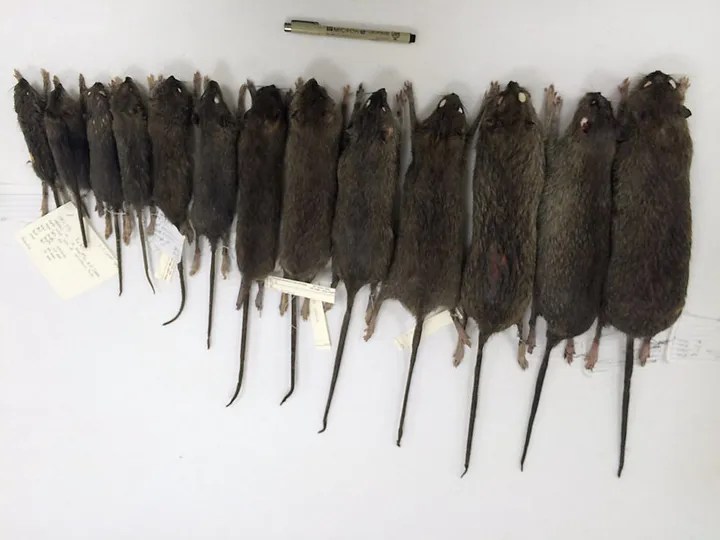
A 2015 study by Matt Combs of Fordham University documented the enormous size of New York City’s rats. Credit: Matt Combs
In any case, New York is not a good place for cats. Thankfully we have a huge and generally well-funded network of rescues that get kitties off the street and pulls cats and dogs from the city’s animal control system before they’re due to be euthanized, but strays who fall through the cracks don’t last long.
Indeed, when the New York Post talked to one of Mayor Adams’ neighbors shortly after Sliwa’s latest press event on Sunday afternoon, the woman said she’d like another cat to patrol the area around her building. The last one, she explained, had been run over by a car.
I don’t really expect anything to come of Sliwa’s plan to use cats in rat-infested locales. The red-bereted radio host is hawking the scheme because he likes to be a thorn in the mayor’s side, and because it generates free publicity, especially from the city’s tabloids and local news channels.
But if it ever comes to fruition, and people really expect strays to handle their rat problems, Sliwa and company better have a plan to keep the cats safe from traffic.




 Pain In The Bud