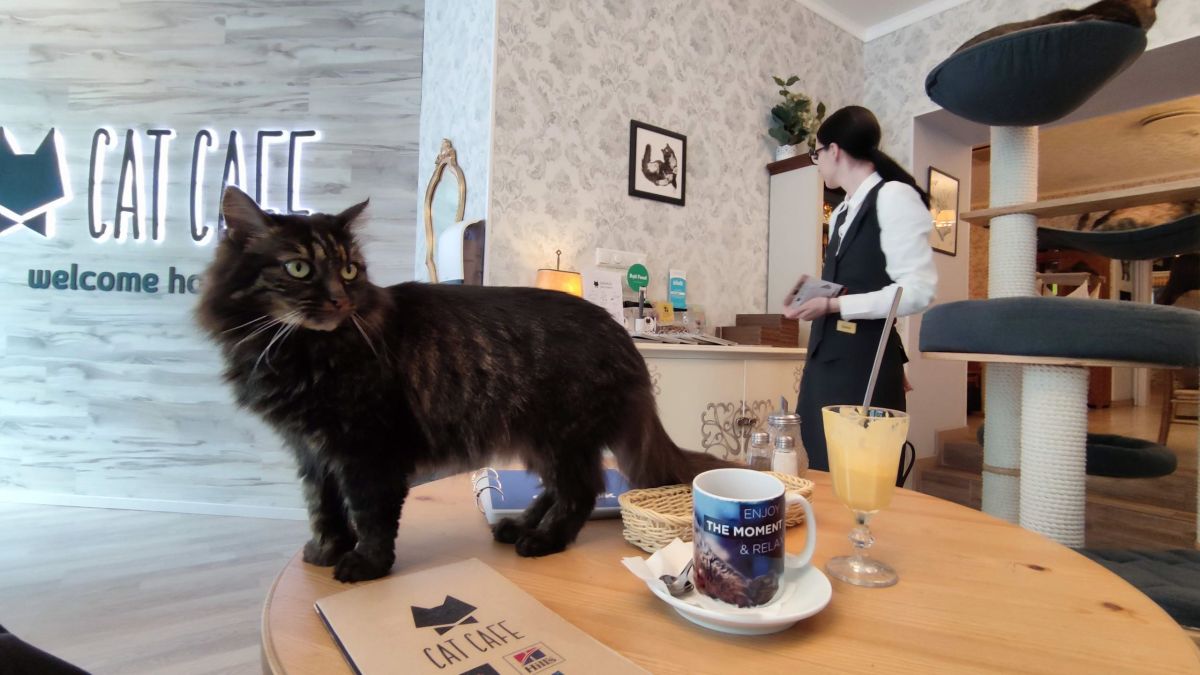
People who frequent cat cafes say they feel relaxed among the little ones. Hundreds of thousands of felines find their forever homes via cafes in the US, which are typically integrated with local shelter and rescue networks.
You may have noticed that most journalists don’t actually interview anyone these days, and the majority of “news” stories are either rewrites or lazily-assembled, 300-word virtual birdcage liners about which celebrity or influencer is “clapping back” at haters for “throwing shade” at them, with quotes directly copied and pasted from X or Instagram.
It’s cheap, easy content — far cheaper than funding war correspondents or impactful investigative journalism — and it doesn’t require reporters to leave their desks, speak to sources on the phone, or even fact-check what they’re writing.
“Well, they said it” is good enough for modern newsrooms, which is why we can’t have a national story or a disaster like the wildfires without waves of misinformation getting amplified by press and influencers alike. And the executives of the handful of remaining news companies wonder why trust in media is at historically low levels.
So these days, a veterinarian warning about laser toys via a TikTok video is considered international news. Nina Downing, a veterinarian with UK pet charity PDSA, took to the social media platform to warn about “laser pointer syndrome,” which she says can result in obsessive compulsive behavior in cats and dogs.
Our furry friends can become frustrated that they never actually capture the elusive red dot, according to proponents of the theory, and too much laser pointer play can result in a pet who barks at shadows or tries to tackle anything that moves.
“Cats have a hunting sequence to follow which is replicated in play, however if it doesn’t come to a successful capture at the end, this can cause them to become really agitated,” Downing warns.
Credit: WIkimedia Commons
Happily, Buddy is impervious to this alleged syndrome because he doesn’t actually have a “hunting sequence.” Born indoors, he’s known nothing but warmth and comfort, and food is something that’s served to him on a precise schedule, not something that needs hunting.
Accordingly, when we play with wand toys, Bud’s version of a “kill” is to grab the plush toy or feathers while dancing around on his back paws. He bobbles the toy while he dances, lets it go and resets the game.
The concept of a kill bite is completely alien to him, and apparently not even his feline instincts are enough to tell him there’s another step to “winning” the game. Still, I tell him he’s a good boy and a fierce little tiger because we can’t have fragile egos getting bruised.
That said, if you find lasers are one of the few reliable ways to get your kitty moving, it’s probably a good idea to wind down by switching to a wand toy. Let the little one simulate a kill, get a few rabbit kicks in and feel like a champ. There’s little or no research supporting the concept of laser pointer syndrome, but it still couldn’t hurt to give your feline overlord something tangible to “kill” at the end of a play session.
Cat cafes are more popular than ever in the US
USA Today has a story today about the apparent ubiquity of cat cafes in the US, and how they’re changing things for the better, for felines as well as people.
Using data from Yelp, the newspaper found there were 200 cat cafes, give or take, across the country at the end of 2024, up from about 75 in 2020.
“When we started, people weren’t quite sure what they were, there was a lot of explaining how they worked and what they were,” said Laura Konawalik, owner of a chain of three cafes featuring felines in North Carolina. “Nowadays people come in knowing the general concept.”
The same data shows searches for strings like “cat cafes near me” have increased 78,700% between February of 2020 and February of 2024, USA Today reported.
Patrons playing with cats at a cafe in Osaka, Japan. Credit: Wikimedia Commons
While cafes in some other countries are populated by felines owned by the proprietors, most cat cafes in the US are integrated with their local shelter and rescue networks, so patrons can adopt if they fall in love with the little ones they meet while having a cup of coffee or tea.
That means some of the oldest cat cafes in the country have facilitated thousands of adoptions and continue to find forever homes for their animals.
About 330,000 cats were euthanized in the US in 2023, the most recent year for which complete statistics are available, according to Shelter Animals Count, a national database that keeps track of shelter intakes and cat/dog euthanasia figures. Data for the first half of 2024 showed a decrease from the previous year’s numbers, but numbers from the latter half aren’t available yet.
Jet Taylor, a regular at Konawalik’s Mac Tabby cafes, says he keeps coming back to destress and feel calm.
“I would be willing to bet,” he said, “you could put a heart rate monitor on me and when I’m sitting there petting a cat, my heart rate goes down.”
Alex Garland’s latest film is a road trip through the ruins of America as the nation is engulfed in a modern day civil war. It wasn’t so long ago that such a scenario would be unthinkable. Now we wonder if it’s an inevitability.
There’s a moment in Civil War when Kirsten Dunst’s world-weary photojournalist sits down in the ruins of a US industrial park, with tracer fire lighting up the night a few miles away, and turns to Stephen McKinley’s print scribe.
“Every time I got the photo and survived a war zone,” Dunst’s character tells him, “I thought I was sending a warning home: don’t do this. And yet here we are.”
In a movie that works on every level as a warning to the American public not to throw away what we have, what we take for granted, that one quiet moment feels like director Alex Garland speaking directly to the audience, making sure no one can miss the point. Don’t do this.
Dunst, left, and McKinley share a quiet moment in an industrial park as a battle rages a few miles off. Credit: A24
The sad truth is, the United States now seem more divided than at any other point since the original civil war. We’re dangerously close to the abyss, and the people dragging us there are the most ignorant of us. They’re the people who can’t tell you the name of their own congressman and can’t articulate what the three branches of government do (or even what they are), but insist everyone listen with rapt attention as they screech incoherently about politics and demonize those whose views differ.
They’re the people who return the zealots to congress, who populate the extremes and openly fantasize about purging the country of the ideologically impure.
Kirsten Dunst, left, and Cailee Spaeny in Civil War. Credit: A24
They’ve sworn fealty to ideology, abdicating their responsibility to think about things for themselves. Because, frankly, it’s easier to pick a pundit and an alignment, construct a filter bubble in which they never have to be confronted with a fact they don’t like, and be constantly reminded how they should feel about everything from petty culture war issues to conflicts happening a comfortable distance away. That way everything remains neatly in the abstract, and the consequences are someone else’s problem.
But not this time.
Civil War’s cast is phenomenal, but much of the film’s power comes from seeing the familiar become the horrific. Garland illustrates the banality of evil by taking his characters on a journey through the war-torn east coast, past shopping plazas cratered by rocket propelled grenades, waterways filled with bodies and playgrounds on fire. One highway overpass is vandalized with a spray-painted “Go Steelers!” while the bodies of two Americans sway on ropes beneath it.
In refugee camps in Pennsylvania and Virginia, people who could be our neighbors talk quietly around fires while their kids play with soccer balls and chase each other. The film’s main characters, a quartet of journalists trying to get to Washington, DC (where we’re told presidential loyalists shoot members of the press on the spot), marvel when they ride through one idyllic small town where people walk their dogs and hang out in coffee shops as if the country isn’t tearing itself apart.
It’s only when they stop to talk to the proprietor of a small shop that they realize the illusion of normalcy is maintained by an army of sharpshooters keeping watch from the rooftops.
Garland wisely stays away from the specific ideological reasons for the civil war in favor of showing us the fallout.
The president is on his third term. He’s authorized airstrikes on fellow Americans, imprisoned dissidents, put a bounty on journalists and hasn’t offered the public anything more than teleprompter-fed remarks in more than a year. But his authoritarian grip on power is finally fractured when two fed-up coalitions of states break away from the union. The more powerful of the two, the so-called WF (Western Forces), is extremely well-equipped: a shot of one of their camps shows F-35 Raptors, mechanized infantry and heavy lift helicopters.
Dunst’s character in a Western Forces camp. Credit: A24
These aren’t people living on the margins of society, armed with civilian versions of AR-15s. They’re US military, entire divisions defected in opposition to Washington with all the firepower and logistics capacity that entails. Separately, another secessionist coalition led by Florida is making its way up the east coast, seeking to turn the Carolinas and other states to their cause.
The noose is tightening around the president’s neck, even as he insists “the greatest military campaign in American history” under his command has defeated the secessionists, like Baghdad Bob in the Oval Office.
Nick Offerman plays the authoritarian, three-term president who has ordered airstrikes on American citizens and had journalists executed. Credit: A24
As the Western Forces and Florida Alliance push toward D.C., there’s a renewed sense of urgency in symbolism. The president, Wagner Moura’s Joel says early in the movie, will be “dead inside a month.” Both coalitions are intent on reaching Washington and ending the war on July 4th.
“The optics,” Joel tells the other journalists, “are irresistible.”
Thus, the reporters decide to go after “the only story left,” which is to attempt to interview and photograph the president before he’s deposed or killed, despite the very real possibility they’ll be executed on the White House lawn before they can ask a question.
The film’s central characters are Dunst’s Lee Smith, a celebrated photojournalist who has seen it all, Moura’s Joel, the reporter who is partnered with Lee, McKinley’s Sammy, a reporter for “what’s left of the New York Times,” and Cailee Spaeny’s Jessie, a green but fearless 23-year-old who wants to be a war photographer like Lee.
Lee and Jessie meet at the beginning of the film in Manhattan, where both are photographing unrest as people crowd a disaster relief tanker, hoping to fill their containers with water. The fact that one of life’s most essential needs is no longer guaranteed, in New York City of all places, is just the first sign of how bad things have gotten.
Jessie moves in, snapping away as the crowd pushes toward the tanker and NYPD officers try to maintain order. When several people rush the tanker, Jessie gets hit in the face by someone swinging a bat.
Reeling, she stumbles away from the crowd, and Lee immediately mothers her, taking the young woman a safe distance away. She takes off her bright yellow press jacket and gives it to Jessie, then tells her: “If I see you again, you’d better be wearing Kevlar and a helmet.”
Spaeny, left, and Dunst. Credit: A24
They do meet again, the next morning. Lee is surprised to see the younger woman in the back seat of their truck next to Sammy. Furious, she pulls Joel aside. He explains that Jessie had approached him late the previous evening, asking to tag along with him, Lee and Sammy on their trip to DC.
Joel argues that Lee was Jessie’s age when she began her career, but he’s not acting out of the kindness of his heart. He is a man, Jessie is a beautiful young woman, and he has ulterior motives.
Lee’s mouth twitches in disapproval. She sees this fresh-faced, naive 23-year-old, and sees herself before she’s become jaded from a career of documenting humans doing horrific things to each other.
Civil War would be a road trip movie, if road trip movies illustrated camaraderie by shared trauma. Pockets of violence are everywhere. Some involve presidential loyalists fending off advance elements of the Western Forces, but some are civilians who see an opportunity to kill, torture and pillage with impunity.
Dunst is magnificent as Lee, wearing the war photographer’s trauma like armor, her disgust with humanity apparent in her tired eyes. McKinley is the old-school print scribe who can’t quit, even as his body fails him.
“You’re worried I’m too old and too slow,” he tells Lee and Joel early in the film as they drink in the lounge of a Manhattan hotel, imploring them to let him accompany them south to D.C.
“You aren’t?” Lee answers.
“Of course I am,” he admits. “But are you really going to make me explain why I have to do this?”
Wagner Moura’s Joel screams in frustration and rage after a particularly traumatic scene. Credit: A24
Here again, so much of the movie’s power is showing America in a state we only see from a distance through the dispatches and footage of war reporters. As the three of them sip their drinks in the hotel bar, waiting for their stories and photos to transmit over glacial wifi, the power drops.
“That’s every night this week,” Lee sighs.
“They’ll switch to the generators,” Sammy says.
They’re not in the shell of a formerly grand hotel in Baghdad or Damascus, relying on juice from old car batteries. They’re in New York, America’s greatest city, the cultural, media and finance capital of the world, a metropolis that operates on 11 billion watt-hours a day. A devastated, eerily quiet New York which resembles the early days of the COVID lockdown, yes, but New York all the same.
A sniper is pinned down by a civilian who has taken advantage of the lawlessness and chaos to kill fellow Americans. Credit: A24
After watching Civil War, I was disheartened to see the usual rage and incrimination in discussions about the film. Depending on their political backgrounds, people are sure Garland — a native and citizen of the UK — is “a lib” or “a MAGAtard.” Opportunities for thoughtful discussion are derailed in favor of the usual talking point regurgitation.
But the hope is that the sensible are the silent majority, that we aren’t so fattened by domestic stability, security and a feeling of invincibility that we can’t see what’s right in front of our faces. We would do well to remind ourselves that the scenarios we experience only in the safety of fiction still happen all over the world.
As you read this, people are dying of exhaustion and suffering pointless deaths in North Korean and Russian hard labor camps so brutal that we don’t even have a way to place them in context. The people of Haiti are terrorized nightly by ultra-violent gangs who have filled the power vacuum, raping and executing with impunity. Gaza has been bombed to rubble, and its rubble has been bombed to sand. People hoping to escape abject poverty embark on the hard journey to America only to find themselves sold into sexual slavery. Men and women in Asia, desperate to find jobs, arrive at what they think are interviews only to be kidnapped and spirited away into compounds in lawless Myanmar, where they’re forced to sit in front of screens for 20 hours a day running “pig butchering” romance scams on lonely American retirees. If they try to flee, they’re shot.
And just yesterday, a man walked up to a golf course in Palm Beach county, pointed the muzzle of an AK-47 through the chain link fence and tried to assassinate a major party American presidential candidate — the second assassination attempt in three months.
The people who most need to hear Garland’s message are those least likely to heed it, but we can hope. Reality has a funny way of obliterating fantasy, and it’s better for all of us if our delusional countrymen don’t find out the hard way that war is neither fun nor glorious.
Let’s hope Civil War remains a movie, and not a prescient preview of things to come.
Civil War is currently streaming on HBO Max and is available to rent via Apple, Amazon and other online streaming platforms.
Header image: Western Forces units fire rocket propelled grenades at White House loyalists using the Lincoln Memorial for cover. Credit: A24
If you like reading content from PITB, please consider whitelisting us in your browser’s ad block. All proceeds from PITB go toward Buddy’s turkey fund.
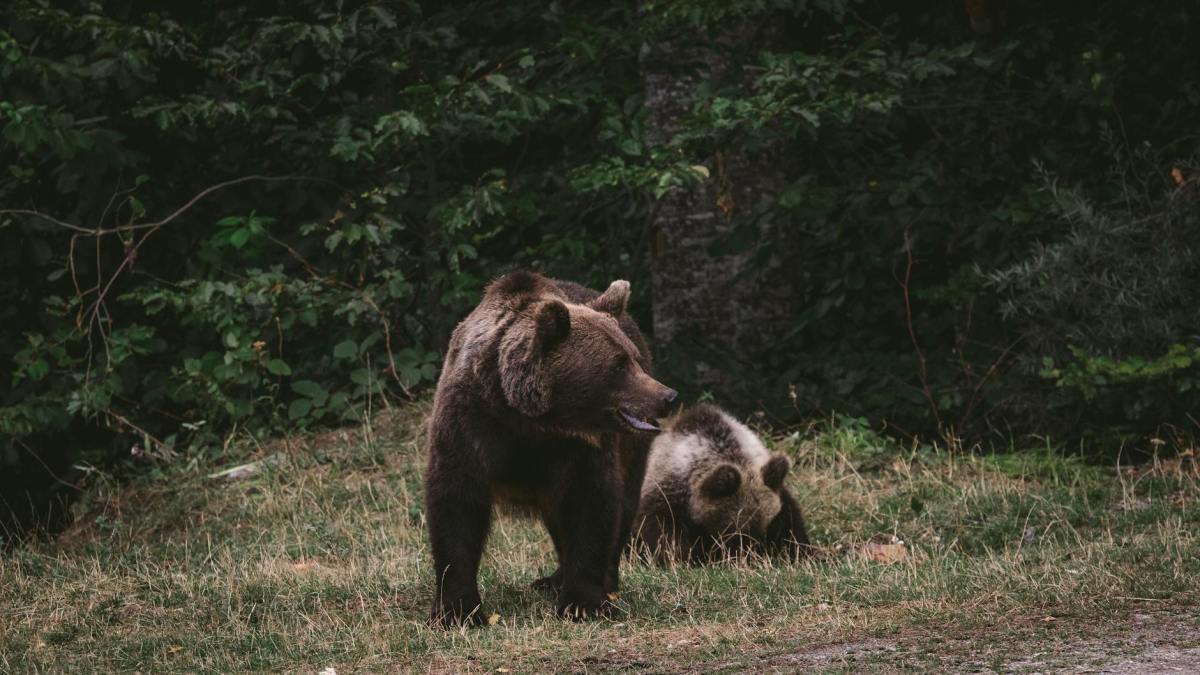
A group of people in North Carolina plucked two bear cubs off of a tree, dancing and laughing as they took selfies with the traumatized baby animals.
The World Wildlife Federation’s last Living Planet Report warned in 2022 that 69 percent of all wildlife has disappeared since 1970. A terrifying report from conservationists this year brought news that the natural world has fallen silent, with billions of animals erased from existence.
Why?
Because humans reproduce and rampage across the planet, no longer subject to survival of the fittest, with absolutely no regard for the species we share our world with.
That was proven again this week when a group of five people spotted bear cubs clinging to a tree not far from an apartment complex in Fairview, North Carolina, and decided the best course of action was to tear the terrified cubs off the branches so they could take selfies with them.
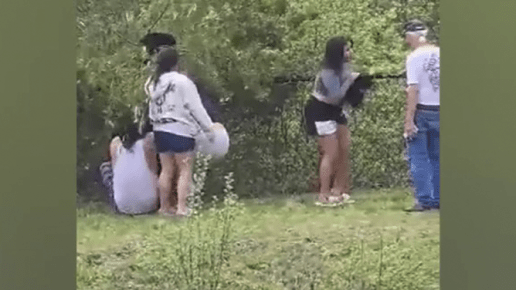
“So she can say, ‘Here, take my picture, post it all over. I’m holding a black bear,'” a horrified witness, 21-year-old Rachel Staudt, said as she filmed the group on Tuesday. “That’s insane. That’s 100% what she’s doing. She’s taking pictures of him.”
A still from Staudt’s video shows members of the group holding the bear cubs.
The woman called the authorities, who responded with a biologist from the North Carolina Wildlife Resources Commission, but not before the damage was done.
“Did she just drop it?” the woman filming the group said as one of the group members did a “celebratory dance move,” dropped one of the cubs, then chased it to get it back and take more photos.
The group told police and the biologist that both bears had “escaped,” but the biologist found one of the traumatized cubs near a retention pond on the property.
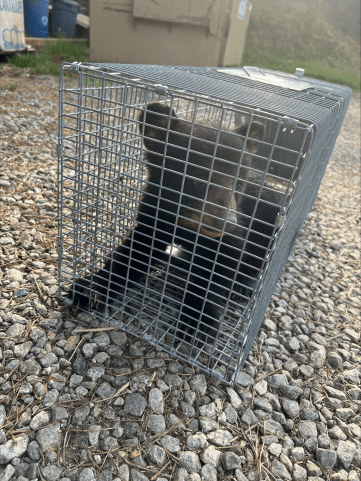
“The cub appeared to be lethargic and frightened. It looked to be favoring one of its front paws and was wet and shivering,” Game Mammals and Surveys Supervisor Colleen Olfenbuttel told CBS News. “The cub’s condition is likely a result of the unnecessary and irresponsible actions of the people involved.”
That cub has now been orphaned, as authorities said it’s not in any condition to be returned to the wild and will have to be raised and rehabilitated for the next four to six years. The other cub couldn’t be found. Hopefully it escaped.
The orphaned and traumatized bear cub that was recovered Tuesday after a group of people plucked the cub and its sibling out of a tree to take selfies with them.
Authorities noted it’s not uncommon for mother bears to leave their cubs briefly to go foraging, much like mother cats do with kittens and cubs when they need to hunt to feed themselves.
Common sense and a basic respect for wildlife is usually enough to keep people from snatching the animals, but much like people who pay money to take selfish with tigers who have been sedated to their eyeballs, any concern for the welfare of animals — if it existed in the first place — is quickly shelved as people can’t resist the opportunity to grab a selfie in the age of narcissism-fueled social media.
Authorities say they’re conducting an investigation, although it’s not clear what needs to be investigated. The people involved documented their behavior with selfies, and Staudt’s video clearly shows them handling the confused and scared baby animals.
The kind of ignorance demonstrated by the group doesn’t remedy itself. Authorities should make an example of them by prosecuting them to the fullest extent of the law while redoubling efforts to educate people about keeping their distance from wild animals. And if that’s not enough motivation, or if people can’t be bothered to respect wildlife, they should consider that this would be a very different story if the cubs’ mother had been nearby.
Bob/Maui the cat was adopted by one family in 2013, went missing a few months later and was rescued by another family, who have had him for 10 years.
Bob the cat was adopted by Carol Holmes of Wichita, Kansas, in 2013.
Holmes says Bob disappeared a few months later and that was the last she saw of him.
Alex Streight, who also lived in Wichita at the time, found Bob in a bad way, malnourished and in “bad condition.”
“He was in horrible shape,” Streight told WRAL, a North Carolina TV news station. “I fed him, kept looking for [the] owner. I posted in the Wichita groups, but I never found anyone.”
Streight, who was 27 years old and pregnant at the time, said the veterinarian gave her no indication the cat belonged to anyone, and her efforts to find a potential owner were unsuccessful, so she paid for his veterinary fees, adopted him and named him Maui.
When Streight moved to North Carolina in 2015, she took Maui with her and he’s been living happily with her family ever since. In late August Maui slipped out of Streight’s North Carolina home. A neighbor picked him up and brought him to the vet, and the veterinarian realized there was a microchip. A scan showed Holmes as the cat’s owner.
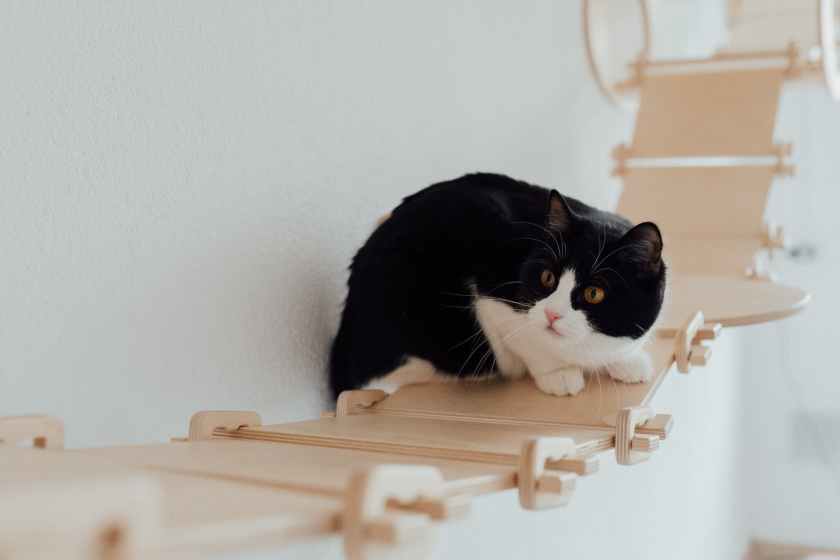
Credit: Arina Krasnikova/Pexels
Now Bob/Maui is in the custody of Wake County (NC) Animal Control, whose staff don’t sound keen on returning the cat to Streight. They’ve called Wilson, who said she’d like to be reunited with Bob/Maui, and when Streight went to animal control to get her cat — returning with the veterinary records when they wouldn’t release him to her the first time — the staff called police.
“The cat is in protective custody where an investigation will begin,” Jennifer Federico, a veterinarian with the county animal control, told the station. “The cat is safe and isolated.”
Federico seems intent on making the situation more complicated than it needs to be, telling WRAL that “Microchipping proves ownership, so we have to take that into consideration, and launch a full investigation.”
Streight doesn’t see it that way. She wasn’t registered as the owner on the chip, but she’s got 10 years’ worth of veterinary records, a photograph of Maui laying on her couch the day he slipped out of her house, and photos and videos showing the tuxedo cat with her kids and other pets over the past decade.
“It’s just absurd to me that anyone would think to take someone’s pet away from the family that he’s been with for ten years,” Streight said.
We have to agree with Streight here, and it’s disturbing that animal control has not only made itself the arbiter of the cat’s fate, but has apparently decided that nominal ownership based on a microchipping from 2013 trumps the fact that Maui has been happily a part of Streight’s family for at least 95 percent of his life.
We feel for Wilson, but Streight did everything right: She looked for the cat’s family, posted about him online, cleaned him up and got him veterinary care, then adopted him when all indications were he didn’t have a home. With a decade’s worth of vet bills, photos and videos backing her up, it’s clear Maui is happy in her home, has been well cared-for, and if he could speak there’s little doubt about where he’d prefer to go.
She’s clearly bonded to the cat, and he to her: Only someone who really loves their furry friend regularly takes photos of their cat, even after 10 years. I can attest to that fact: Probably 60 or 70 percent of the photos on my phone are of Buddy, and I’d be devastated if we were separated.
What do you think? Should Bob/Maui be returned to Wilson or Streight?
Each viral trend on the app is more grotesque than the last.
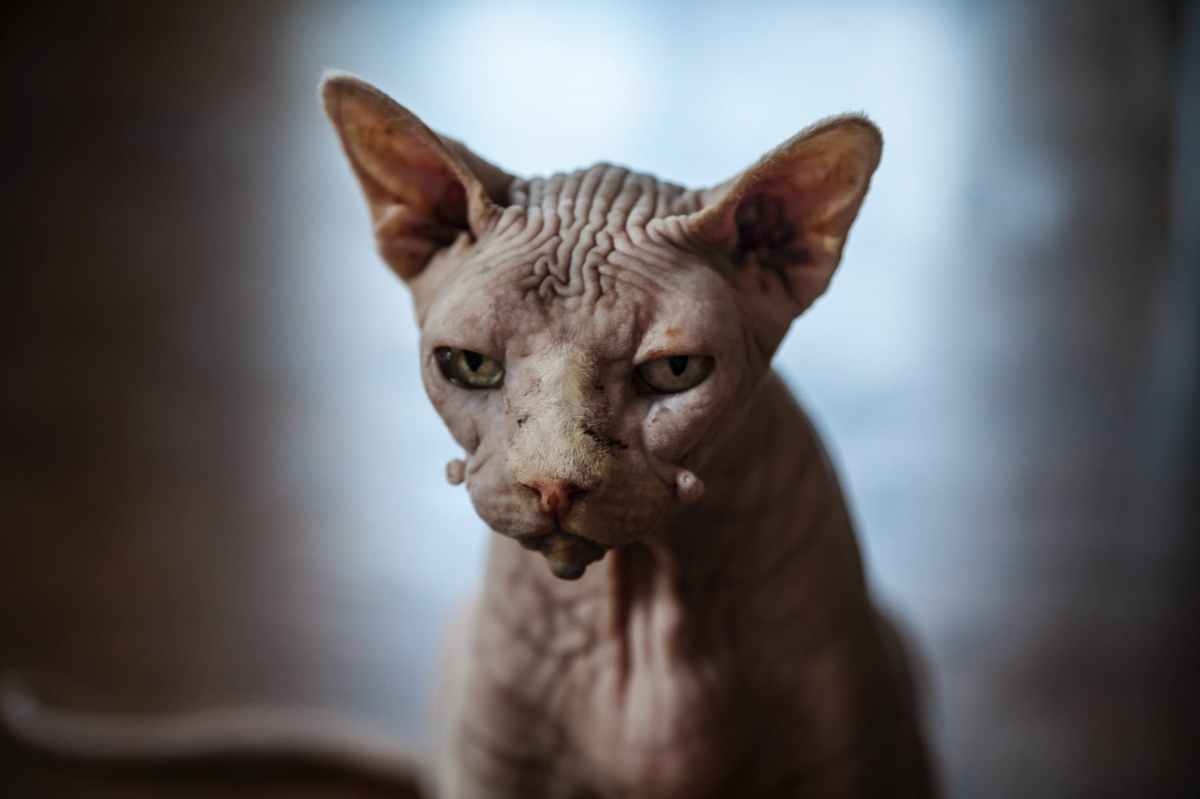
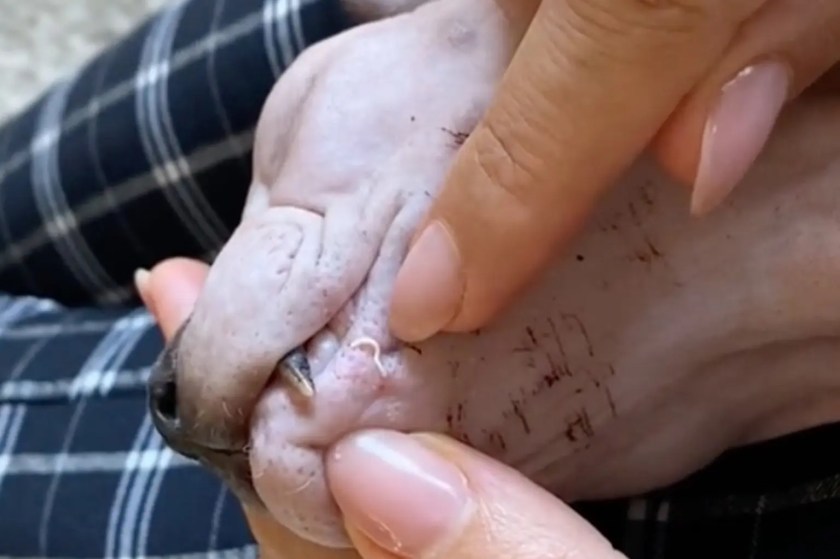
I’m all out of withering sarcasm, so I’ll just say it: The newest trend on TikTok involves close-up videos showing people popping their Sphynx cats’ pimples.
The PewDiePie of the craze, if you will, is one @Sphynx.cleaner, whose videos show a woman’s carefully manicured hands holding a defeated-looking Sphynx cat and popping its pimples between her formidable fingernails.
Tens of millions of people have watched her videos of puss pimple-popping, not including the millions of other views accumulated by lesser practitioners of the grotesque genre.
Sphynx cats lack fur and have skin often compared to chamois leather. Fur helps cats absorb and redistribute naturally-occurring oils secreted by the skin, so felines of the Sphynx breed are much more susceptible to acne problems than typical short- and long-haired cats. Without fur to help redistribute them, the skin oils can create a “film” that clogs pores, according to Jessica Taylor, a veterinarian in North Carolina.
Uh, no. Credit: Sphynx.cleaner/TikTok
Not surprisingly, popping a cat’s pimples makes things worse and is not pleasant for the kitty.
“These lesions indicate a disruption in the skin and skin barrier, and squeezing or poking them can introduce bacteria, potentially worsening the lesion, causing pain and infection,” Taylor told Newsweek. “If the lesion is already infected, handling it could spread bacteria to the pet parent.”
As for TikTok, this is not the first time one of the app’s trends has been detrimental to the health and safety of felines, although most of its inanity is focused on humans. I suppose you can view it as some sort of advanced Darwinian engine, accelerating the self-removal of human beings from the gene pool. Among the trends that have gone viral on the app:
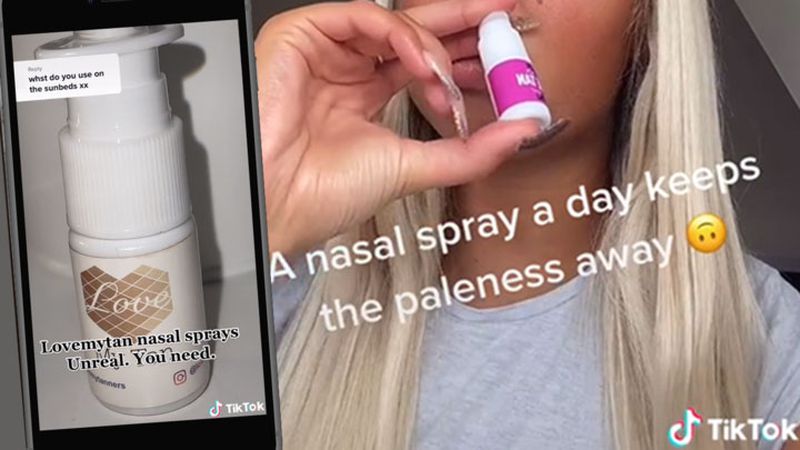
People who use self-tanning bottles as nasal spray out of some misguided belief that ingesting the stuff will not only achieve the desired effect, but somehow lead to a more even, natural-looking distribution of tanner. It reminds me of former President Donald Trump’s impromptu suggestion, during a national press conference, that ingesting hand sanitizer could be a “tremendous” way to stop COVID.
Videos instructing women to eat the tablets inside Clearblue pregnancy tests as a “contraceptive hack,” claiming the tablets — which are designed to absorb urine during the chemical test — are actually morning after pills.
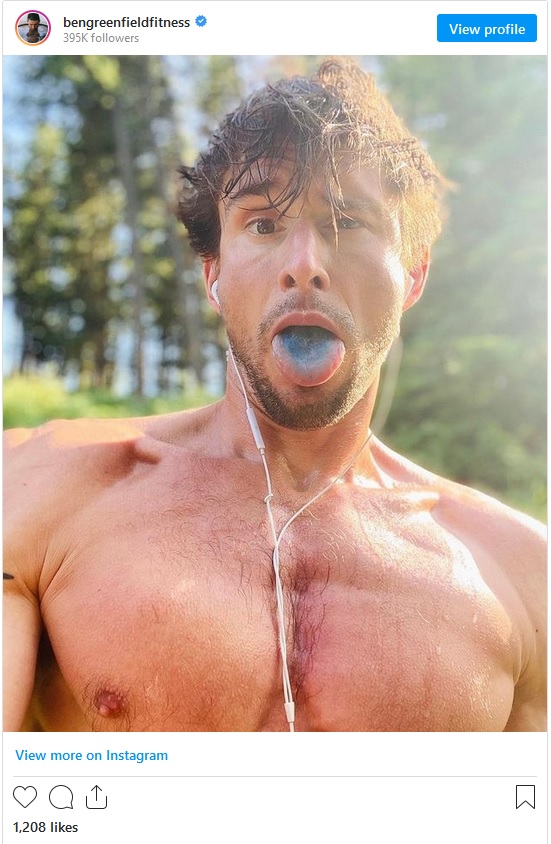
People ingesting methylene blue — an anti-fungal fish tank cleaner — because “fitness influencers” say it can “cure” COVID-19, boost metabolism and slow the aging process. Think of the triumph of critical thinking here: These are people who won’t get a vaccine that’s been through three-stages of trials before getting FDA approval, and whose efficacy and safety have been the subjects of rigorous peer review, but they’re willing to drink a chemical manufactured and sold as a cleaning solution for fish tanks.
Period blood face masks, which are self-explanatory. Another grotesque and potentially dangerous trend started by “influencers” who claim some sort of nebulous expertise and know that “hacks” will net them attention and clicks. The more outrageous, the better.
“Did you know that urinal cakes are made by Carvel? It’s true! They’re deliciously chocolatey, with just a hint of vanilla, cinnamon and industrial strength anti-bacterial. Mmmmmm!”
Of course, we’ve known for years that Chinese companies are beholden to the Chinese government according to Chinese law, which means the government — and the communist party — can help itself to TikTok user data whenever it wants.
After TikTok’s US-based executives insisted to congress that American users’ data is firewalled and cannot be accessed by the company’s employees in China — and, by extension, the Chinese government — a series of leaks confirmed that China’s government was in fact regularly accessing that data. Absolutely no one, except maybe the politicians who think the internet is a “series of tubes,” were surprised by this revelation.
China’s government can use the data to track journalists, exploit American and European users, program its algorithm to shuffle them toward harmful content, censor content the Chinese government doesn’t like, and even coerce individuals by threatening to release information on their viewing habits.
So can we evacuate TikTok’s US headquarters already, raze it to the ground, and ban the app from every mobile store?






 Pain In The Bud