Sunday Cats: Eurasian Lynx Captured On Long Island, ‘Loneliest Cat’ Has Been Returned To Shelter Twice

SPCA staff and veterinarians believe the well-socialized wildcat was the illegal pet of someone living in or near Central Islip.

The saga of a “big cat” spotted on Long Island this week has come to an end with the animal’s capture.

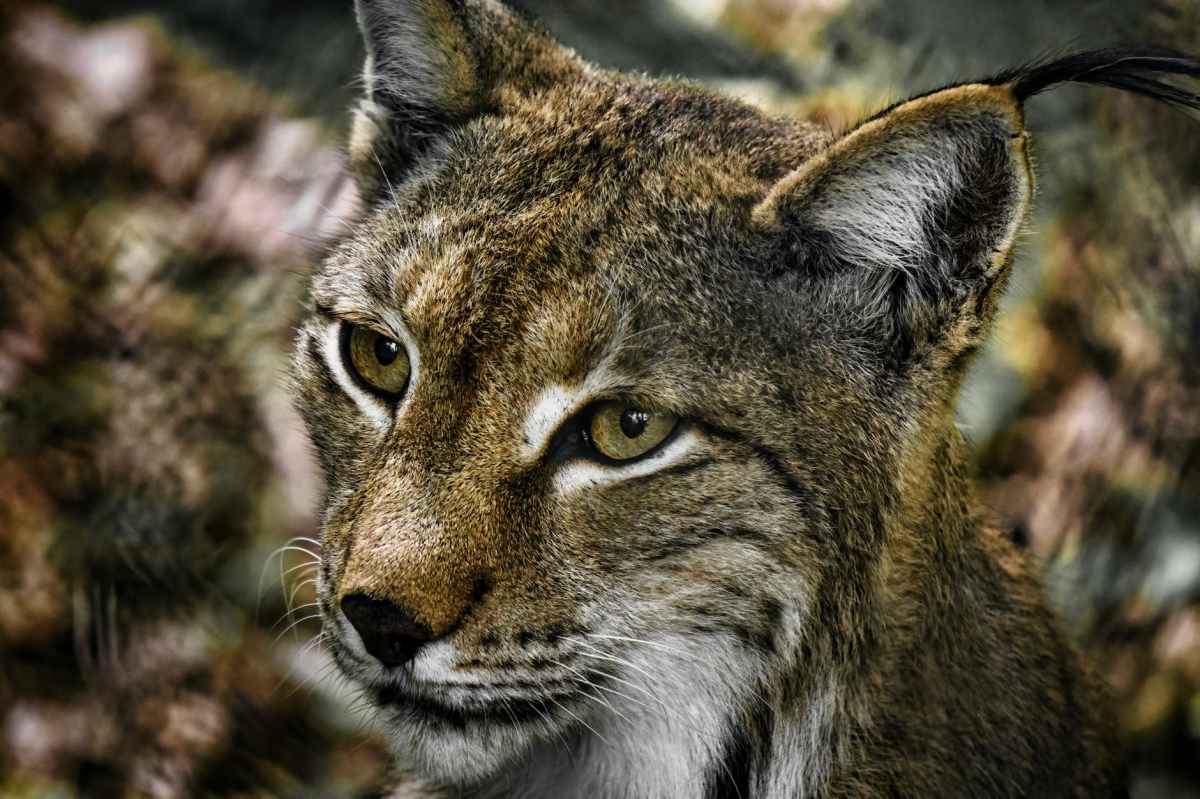
Authorities believe the cat is a Eurasian Lynx and was a pet who escaped or was abandoned by his owner. The frightened feline was first spotted on Wednesday in Central Islip, Long Island, a suburb that stretches for 118 miles just south of New York City.

“Scared the daylights out of me,” Diane Huwer, a self-proclaimed cat lover who was the first to encounter the lynx, told the local ABC affiliate.

The area encompasses two counties and is one of the most densely populated places in the U.S. with more than 7.6 million people. It’s one of the worst places in the world for a wild cat to be abandoned, with heavy traffic, ubiquitous environmental noise and endless shopping plazas surrounded by labyrinthine residential neighborhoods.

It’s illegal to own wild animals in New York, and the cat’s “owner” likely would have kept it without a proper enclosure to avoid attention from authorities.

The lynx’s sightings made the headlines in the New York papers, as well as coverage by local TV news and online publications. It went viral on social media, with users trying to determine what kind of cat it was from the handful of blurry photos witnesses were able to snap. Some media coverage suggested it was a true big cat. (Here at PITB, we thought it was possibly a Savannah cat or an American lynx.)
lynxleonardo
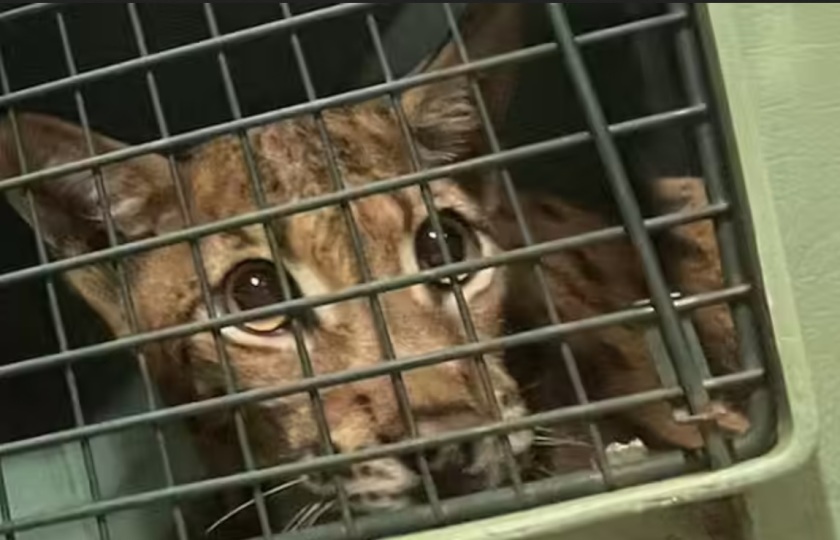
Authorities said the Eurasian Lynx was clearly socialized and wasn’t aggressive when they finally caught him. Credit: SPCA

Local authorities searched fruitlessly for three days and were about to give up early Saturday morning when someone spotted the wild cat in a residential neighborhood and called police.

The hungry feline was pawing through garbage cans next to a house in Central Islip. Authorities said the young lynx was friendly and socialized to humans.

“He was rubbing his face on the cage, looked like he was a friendly cat and from the tips we’ve gotten,” Frankie Floridia of Strong Island Animal Rescue said. “It seems these people have had him since he was a baby.”

Veterinarians have named the lynx Leonardo de Catbrio and said he’s about a year old. Despite his ordeal, the 40-pound cat was not malnourished or dehydrated, and the vets who gave him a check-up said he’s in good health. They’re waiting on lab results to confirm his species.

“Someone obviously had it as a pet,” the SPCA’s Roy Gross told Newsday. “These are wild animals, not the type of animals anyone should have. … They don’t belong in captivity this way.”

In the meantime, police, the state Department of Environmental Conservation and the SPCA are looking for Leonardo’s “owner,” who faces misdemeanor charges and a fine of up to $1,000 if he or she is convicted. They’re sure to have questions about how the person acquired a wild cat, let alone a non-native species. It’s been illegal to “import” wild animals since the Wildlife Act of 1976, and the illegal wildlife market has been a scourge on law enforcement and conservationists alike.

“I know everybody wants something that’s exotic,” Gross said. “They want something cool. It’s not cool.”

Header image of Eurasian Lynx courtesy of Pexels

A lonely cat in the UK needs a forever home

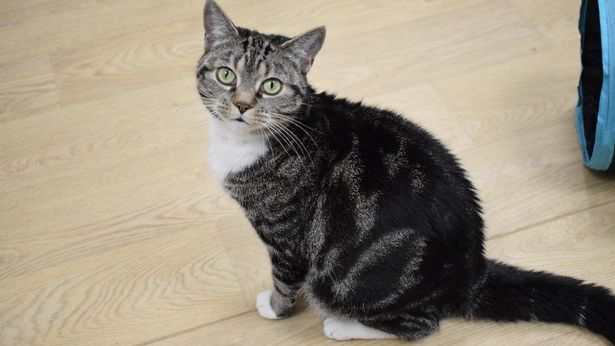
Eleven is a silver tabby who’s been returned to the shelter twice by would-be adopters, and staff at the shelter are appealing to the public to find her a forever home with patient humans.

The four-year-old with bright green eyes has been with Battersea Cats and Dogs in south London since April. Her rescuers say she takes a while to adjust to new surroundings, and they believe that’s why Eleven was returned twice within days. If Eleven’s failed adopters had been more patient, shelter staff said, they would  have discovered she’s a loving lap cat once trust is established.
Eleven the Cat
Eleven the Cat takes a while to warm up to new people. Credit: Battersea Cats and Dogs

They hope to place her in an “understanding home” with people who “will give her the time and space to settle in, as she would be a wonderful addition to a home.”

“Eleven needs her own space when she’s settling in, so she can hiss and swipe if pushed into interactions that she is not ready for,” a shelter spokesman told the Mirror. “She expects respect, but once given she will reward you with plenty of love. She is a super clever cat, who enjoys learning and she will sit on command for a treat of course.”

Do You Live In A Cat Or Dog State?

The US is evenly split between 25 cat states and 25 dog states.

I spent a weekend dog-sitting for the first time ever in the spring of 2 B.B. (Before Buddy), rising early to walk my brother’s Chihuahua-terrier before work.

The Manhattan of 7 am is a different world: Everywhere I looked, bleary-eyed New Yorkers clutched leads, yawning as dogs of all shapes and sizes pulled them along. I never knew there were so many dog-friendly apartments, let alone so many people willing to share cramped spaces with dogs of all sizes. Seven-pound Cosmo was one thing, Greate Danes and Dobermans quite another.

You’d think New York City, with its sky-high population density, would be a cat town. It isn’t. Neither is New York State as a whole.

Sadly, Buddy and I live in a state dominated by dog-lovers, one of 25 including California, Texas, Florida, Virginia and both Carolinas. Although cats are the most popular pets in 25 states as well, feline strongholds tend to be in places with lower population density, from Oregon and Washington in the west to Louisiana, Arkansas and Mississippi in the south, to Pennsylvania, New Jersey and Maine in the east.

The information was compiled by market research firm Time2Play, which surveyed more than 3,000 Americans. The team also asked respondents whether they posted photos and videos of their pets online. Even though cats remain the undisputed masters of digital space, almost 57 percent of dog people showed off their pooches online, while only 43 percent of cat servants did.

Bud and I have been thinking about moving someplace warmer for years, but of course the king’s needs come first. Maybe we’ll settle in Louisiana or Nevada, where Buddy can establish a new realm for himself.

Do you live in a cat or dog state?

dogs-vs-cats-states

Uvalde And Buffalo Mass Shooters Both Had History Of Killing Cats

The revelations about the shooters underscore the link between animal abuse and violence toward people.

One of the takeaways from the 2019 documentary Don’t F*** With Cats: Hunting An Internet Killer is the connection between violence toward animals and violence toward humans.

The 30-year-old who killed college student Jun Lin previously announced himself to the world with a series of videos in which he killed cats and kittens, then led online groupies on a years-long goose chase, parceling out crumbs of information to keep them interested until he finally “graduated” to humans and murdered Lin.

If police had taken the cat-killing videos more seriously, some of the documentary’s subjects believed, detectives could have caught the killer before he set his sights on a person. Of course, this blog’s position is that animal life has intrinsic value and animal abuse should be investigated for its own sake, but if police are more motivated out of fear that animal abusers could commit violent crimes against people, that helps cats and other animals too.

Now we’ve learned that the 18-year-old gunman responsible for the Texas school shooting and the 18-year-old who gunned down 10 people in a Buffalo, NY, supermarket were both cat killers before they were murderers of human beings. The former murdered 21 people, including 19 children and two teachers at a school in Uvalde, Texas, on May 24 while the latter took the lives of 10 people, all black, in a hate-motivated massacre on May 14.

The Texas shooter filmed himself grinning while holding “a bag of blood-soaked dead cats,” the New York Post reported on Sunday. David Trevino Jr., who knew the shooter, said he was “known for hurting cats.”

“He liked hurting animals,” Trevino told the Post. “I’m told he killed the cats and carried around the bag of bodies for s–ts and giggles The video shows he was not right in the head. He’s not all there. The video raises all sorts of red flags.”

The Buffalo murderer told online acquaintances he’d beheaded a cat, and wrote about it in a journal as well. Like the Texas shooter, his animal abuse wasn’t a secret. His mother knew, and gave him a box to bury the dead animal.

brown tabby cat lying down on gray bed sheet
Credit: Mark Burnett/Pexels

The shooters both fit the profile of animal abusers who move on to hurting people: Most animal abusers are men younger than 30, according to the Humane Society, and studies have found men who abuse cats often target them as an emotional proxy for women. More than 70 percent of women who have companion animals and were in an abusive relationship reported their significant others harming their pets.

Classmates of the Texas shooter described him as “eerie,” “scary” and quick to lose his temper. He was known for physically threatening girls and women, and for harassing them online. One classmate, 17-year-old Keanna Baxter, said he got “super violent” when he dated her friend.

“He was overall just aggressive, like violent,” Baxter said. “He would try and fight women. He would try and fight anyone who told him no — if he didn’t get his way, he’d go crazy. He was especially violent towards women.”

The Texas shooter spent a lot of time creeping on women on social media and in group chat services, which brings us full circle back to Don’t F*** With Cats. In a conversation with a teenage girl on group video chat app Yubo, he told her he “wanted his name out there” like the deranged killer at the center of that documentary.

The shooter, who lurked in group chats uninvited, also showed off the guns he bought after he turned 18 on May 16.

“He would be active every day and join our lives, repeating girls’ names until they paid attention to him,” the girl said.

Rolling Stone
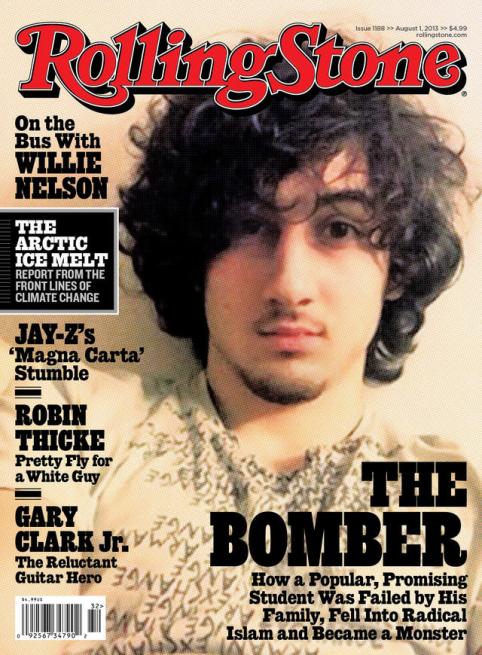
Rolling Stone was widely condemned for putting one of the Boston marathon bombers on its cover as if he were a rock star, but the issue was its best selling of the year.

Although the blame game begins while the bodies of the victims are still warm, as shrieking heads speculate on cable news, no one ever talks about the obvious and uncomfortable truth, which is that these disaffected young loners desperately want to show people they’re important, that they matter.

If they can’t find fame, infamy is a second prize they’re happy to embrace, and they’re motivated in part by the notoriety that previous members of their grim brotherhood “achieved” by massacring fellow human beings.

Major media figures aren’t merely willing to grant that wish. They’re wholeheartedly, enthusiastically in on it, filling hours of airtime looping the same short bits of footage, breathlessly reporting every nugget of information, and holding court over panels of “experts” who are happy to speculate on motivations regardless of how little they know. They blame video games, society, the lack of nuclear families, the lack of male role models, white supremacy, bullying, guns — everything but their own role in turning the killers into household names.

After all, almost everyone who was alive in 1999 can name the two trenchcoated murderers who perpetrated the Columbine massacre, back when things like that still shocked the country. But how many of us can name a single one of the 13 victims?

That’s why I won’t name the killers on this blog. It’s just one blog, in one small corner of the internet, and it won’t make a difference. But if everyone stopped naming them, stopped making them household names and the stars of obsessive crime porn, stopped turning them into objects of fascination whose faces are plastered on magazine covers like rock stars, maybe it would change things.

If would-be killers knew infamy was off the table, that if they survive they’ll remain anonymous nobodies without prison groupies begging for face time, journalists begging for interviews, and grief vampires discussing them for years in “true crime” books and on podcasts, would they go through with it?

NYC Cat Gets A Home After He Was Tied In A Trash Bag And Thrown In A Dumpster

Panda survived a traumatic experience but was rewarded with a happy ending in the home of a human who loves him.

Panda the cat would have suffered a brutal death in the jaws of a trash compactor if not for an eagle-eyed can collector who spotted the handsome tuxedo among the trash.

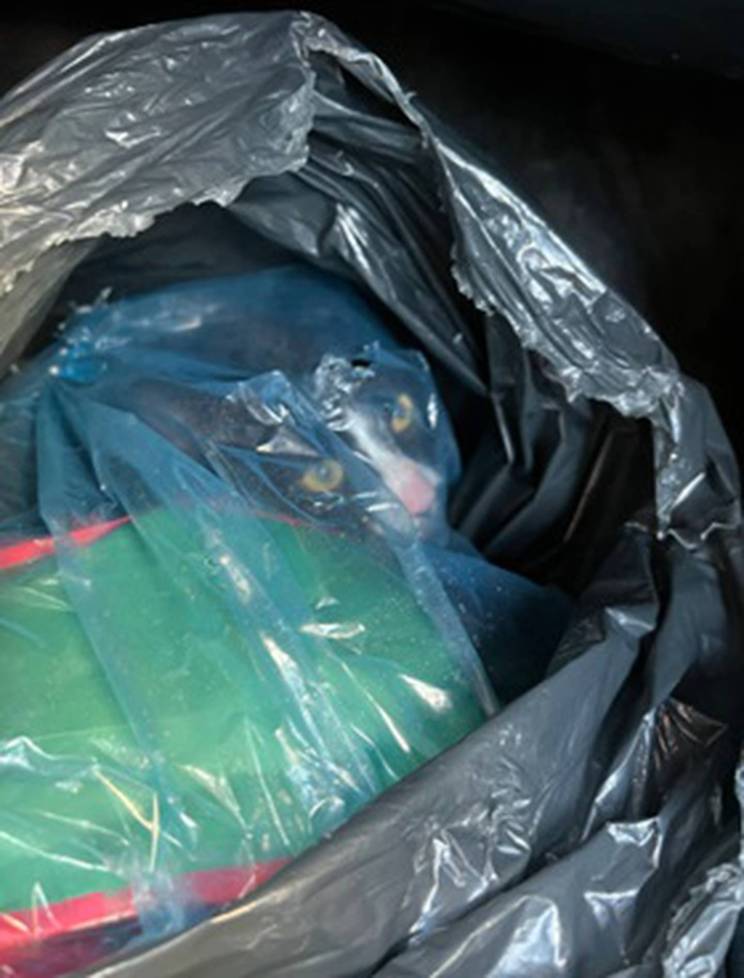
The little guy was literally double-bagged in a blue plastic bag and a larger trash bag, then thrown in a dumpster in the Bronx. There were holes in the inner bag where Panda had tried to claw his way out — and bits of plastic bag caught on his claws — but he had been unable to free himself.

Thankfully, someone looking for cans to recycle opened the outer bag, saw Panda and called 911. NYPD cops brought Panda to the ASPCA Animal Recovery Center in Manhattan, where staff began treating him for malnutrition, skin disease and a “minor gastrointestinal infection,” the Daily News reported.

Panda the cat
Panda a few moments after he was spotted in a dumpster in the Bronx by someone looking for recyclables. Credit: ASPCA

Despite all he’d been through — the neglect, abandonment and trauma of being tossed out like a piece of garbage — Panda was “sweet and social” with his rescuers.

They placed him in a foster home under the care of 22-year-old Abigail Jasak, who decided to keep him after he quickly made himself at home and won over Jasak and her roommates.

“Initially I had no intention of adopting him,” Jasak told the Daily News. ”Then I realized how comfortable he was around us. He already believed he was home.”

Jasak told the paper she was disturbed by the casual cruelty of tossing a cat in the garbage.

“There are other options,” said the Pace University student. ” You can bring it to a shelter. I truly cannot comprehend how someone threw away such a sweet cat.”

Big Buddy’s note: I’ve been to the ASPCA’s Upper East Side facility and visited in 0 B.B. (Before Bud, aka 2014) while I was looking to adopt. It’s a beautiful, incredibly clean, bright facility where each animal has significantly more space than they would in a normal shelter, and the staff are friendly and helpful. As awful as Panda’s situation was, I’m glad they were able to help him and pair him with a human who really cares for the little guy.

Maryland Joins New York In Banning Barbaric Declawing Procedures

Two down, 48 to go.

Two U.S. states have now banned declawing as ‘Merica inches closer to joining the rest of the civilized world in prohibiting the brutal practice.

With a stroke of Gov. Larry Hogan’s pen, Maryland became only the second state to ban declawing, joining New York, which outlawed the practice in 2019. Like New York’s version, the new Maryland law prohibits declawing unless it’s deemed medically necessary.

As most cat lovers know, declawing isn’t the manicure-like operation it sounds like. It’s the totally unnecessary, horrific amputation of a cat’s toes up to the first knuckle.

Declawing inflicts a lifetime of pain on cats, changes feline gait and posture, leads to early arthritis and causes a long list of secondary problems. For example, declawed cats are much more likely to bite because they have no other form of defense when they feel threatened, and they’re also much more likely to stop using litter boxes because it hurts to walk on the sand-like and granule texture of the litter with half-amputated toes.

The fact that so much misery is inflicted on innocent animals to protect furniture is indefensible.

The law goes into effect on Oct. 1, and veterinarians who perform the procedure after that time face fines of $1,000 and disciplinary action by the state veterinary board. We’d have preferred immediate implementation and stiffer penalties to prevent a last-minute rush on declawing appointments and discourage anyone considering breaking the law, but a win is a win, and all the major animal advocacy groups are celebrating, as they should.

Now we’ve only got 48 states to go.

buddy_stretching
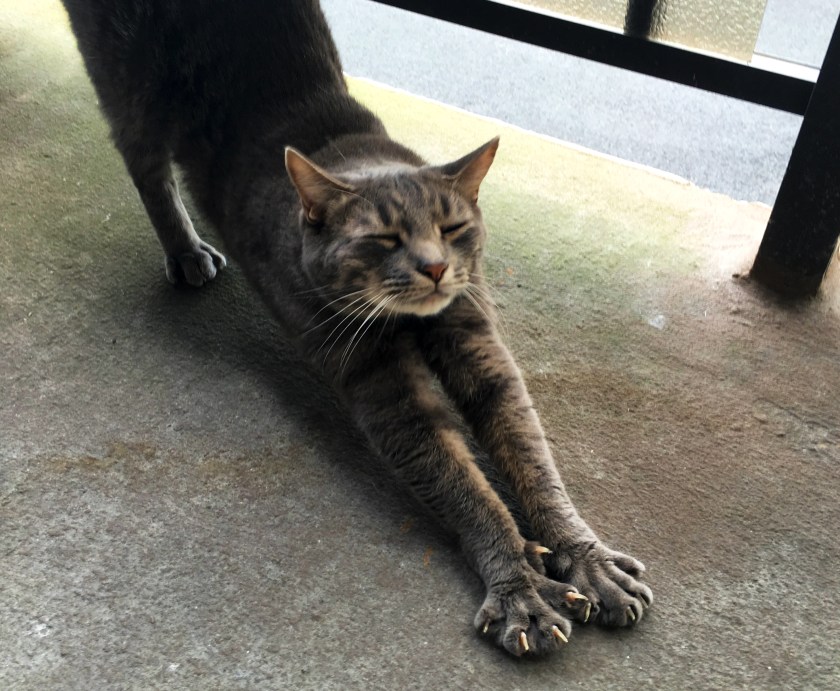
Buddy and his Claws of Cosmic Doom.