Actress Shares Why She’s A ‘Crazy Cat Lady,’ PLUS: Waymo Denies Responsibility For SF Cat’s Death

Waymo says KitKat “darted under our vehicle as it was pulling away” in the accident that killed the popular bodega cat.

Last week when we wrote about a San Francisco cat hit by an autonomous taxi, the Google subsidiary that produces the cabs hadn’t responded to media requests for comment.

Now Waymo has confirmed one of its driverless taxis did strike KitKat late on the night of Oct. 27, but claims the nine-year-old tabby got in the car’s way as it began to move. Here’s Waymo’s statement:

“The trust and the safety of the communities we serve is our highest priority. We reviewed this, and while our vehicle was stopped to pick up passengers, a nearby cat darted under our vehicle as it was pulling away. We send our deepest sympathies to the cat’s owner and the community who knew and loved him, and we will be making a donation to a local animal rights organization in his honor.”

People in the neighborhood where KitKat was a fixture are not happy with the response. Per Mission Local: “Waymo did not reply to a request to review the video, and did not say how much it would donate or what group would receive the gift.”

Mission Local noted witnesses gave slightly different accounts of the collision, saying KitKit was in front of the taxi for several seconds before it began moving.

As testament to how well-known and beloved KitKat was, there’s now a considerably sized memorial to him in front of the store he called home, with flowers, candles, drawings of KitKit and even cans of cat foot left on the spot. The San Francisco Chronicle has photos of the memorial.

KitKat featured prominently on Instagram, where photos show him hanging out with customers, patrolling the sidewalk in front of the store, and curling up for naps on the counter. Credit: https://www.instagram.com/randasmarket/

The paper also quotes a local who explained the outpouring of grief: “If you’re not a 16th Street regular this can seem silly, but this cat meant so much to this community. If you knew KitKat, you’d understand.”

KitKat’s death has soured more people on Waymo, with the Chronicle noting it “struck an emotional nerve in a neighborhood already wary of driverless cars weaving through its crowded streets.”

Waymo, a subsidiary of Alphabet Inc. (Google’s parent company), operates driverless fleets in San Francisco, Los Angeles, Phoenix, Austin (TX) and Atlanta, with plans to offer automated taxi service in Washington, D.C., and Miami.

“When they show up in your yard and they need you, we can’t look away.”

As someone who avoids medical dramas like the plague, I’m not familiar with Wendi McLendon-Covey’s work, but I’m sure many PITB readers will know the St. Denis Medical star. In an interview, McLendon-Covey talks about rescuing cats, earning their trust, and getting satisfaction from knowing she’s improving one life at a time.

The actress with one of her feline friends. Credit: https://www.instagram.com/wendimclendoncovey/

Most recently she’s been earning trust with a stray she calls Harvey, saying it’s “taken me forever to bond with him” and she still has work to do before he trusts her enough to go indoors.

Cats, she said, are “cuddly, they’re cute, they’re hilarious. They all have their different personalities and they have their little meetings and their little way of talking to each other, and it’s just fascinating to watch. So that’s a hot Friday night for me, is just throwing treats to the cats.”

You can read the rest of the interview here.

Beloved Bodega Cat Killed By Autonomous Taxi In San Francisco

In disrupting another industry, AI has moved into a realm where its use has physical consequences.

I’d planned on taking a break and easing up on posts after the glut of cat-related news the past few days, but this story is disturbing, timely, and sadly we’ll almost certainly hear about more of these incidents in the near future.

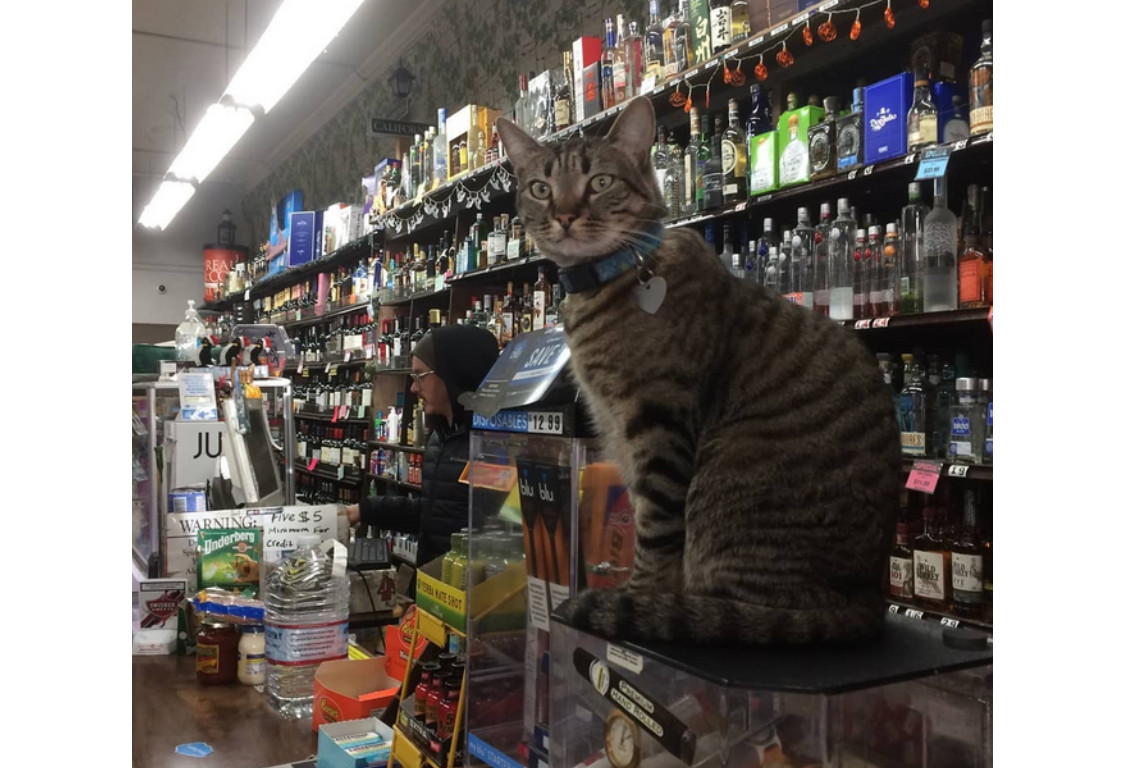
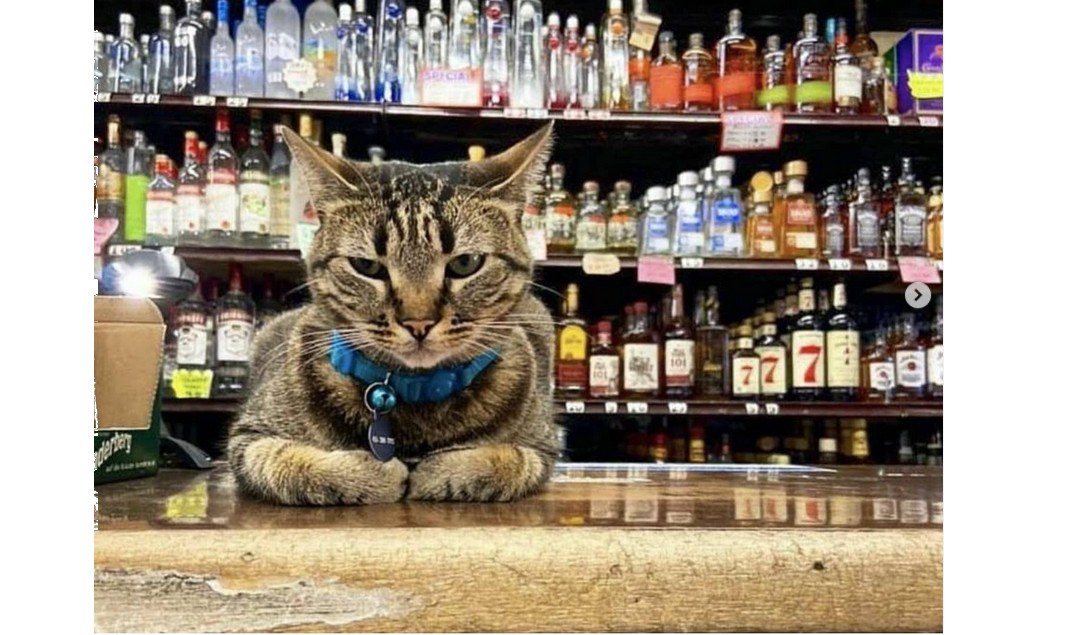
KitKat, a nine-year-old tabby who called Randa’s Liquor Store in San Francisco’s Mission District home, was killed late Monday night by a vehicle owned by Waymo, an autonomous ride-hailing service.

Witnesses said they saw the Waymo hit the cat and pulled him out from under the self-driving car. They say KitKat was sitting on the sidewalk at the time. It’s not clear if the Waymo vehicle drove up onto the sidewalk or if its bumper was the impact point.

A witness who filed a report with 311 via smartphone said the Waymo vehicle “did not even try to stop.” The car continued on to its next pickup.

Several people rushed the injured tabby to a 24-hour emergency veterinary clinic, but his injuries were too severe and he died five minutes before his human arrived.

KitKat outside Randa’s Market. Credit: Randa’s Market Instagram

KitKat was extremely popular with people in the neighborhood, patrons of the neighboring bar and sandwich shop, and passersby. They described him as a feline who liked to patrol the sidewalk and pop into the bar and sandwich shop to “supervise,” making sure all was well in his little realm.

“Everyone’s heartbroken,” Jessica Chapdelaine, who tends bar next door and lives in an apartment above the liquor store, told Mission Local. “He’s the baby. He was everyone’s best friend and he was just the sweetest boy.”

Waymo didn’t respond to requests for comment by Mission Local, TheSFist and other media. The Google-owned company had not addressed the incident on its website’s press page, nor on its X account despite several users bringing it up, as of Thursday morning.

“You can’t even drive in the dark in normal weather without killing a cat,” one user wrote, while others weren’t nearly as diplomatic.

The San Francisco Standard provides a bit of context on the autonomous vehicle issue in California:

“The state had logged 884 autonomous vehicle collision reports as of Friday, according to the Department of Motor Vehicles (opens in new tab). A dog was struck and killed by a Waymo in Bernal Heights in 2023. A week later, a Labrador survived getting hit by a Cruise self-driving car; the company no longer tests its cars in San Francisco.”

On the other hand, there have been several dramatic incidents involving autonomous vehicles that have successfully avoided collisions with other cars, people and animals, even when given a fraction of a second to respond. In an incident in LA from earlier this year, a home security camera caught footage of a Waymo stopping instantly to avoid a dog that ran out into the street directly in the car’s path:

A human driver almost certainly could not make a safe decision in that time interval, but a machine can confirm there is no car immediately behind it and execute the stop within a few milliseconds.

Still, as more ride hailing services roll out autonomous fleets and expand into more cities — as the major players in the still-developing industry are already doing — this will become more of an issue. Waymo operates fleets in San Francisco, Los Angeles, Phoenix, Austin (TX) and Atlanta, and plans to roll out its service in Miami and Washington, D.C., in the near future.

The obvious question is whether AI-driven vehicles are safer than cars with people behind the wheel, for drivers and pedestrians. The answer seems to be yes, especially as the technology improves. Machines don’t text while driving, don’t get distracted fiddling with radios and don’t get behind the wheel after drinking. Sensors and software have improved dramatically in just a few years.

But that won’t be enough. There’s a psychological hurdle in giving up control. It’s the same reason why so many people are terrified of flying even though we’re statistically much more likely to die in car collisions. When you’re behind the wheel, you have control over your fate — or the illusion of control, anyway.

A close-up shot of hardware and some of the sensors on the Jaguar I-PACE Waymo autonomous vehicle. Credit: Waymo

Parallel to the questions about safety are concerns about whether any corporation should be permitted to put driverless cars on the road, especially when the companies with the resources to commit to a major venture like this are the familiar Big Tech conglomerates run by the same handful of tech oligarchs.

Should they be allowed to wipe out yet another industry, taking away work from people who drive taxis or for rideshare companies? Do we need the government to step in and place some guiderails on tech that has developed at an unprecedented pace and threatens to upend huge swaths of society? Should we demand a much more robust regulatory process and risk falling behind other countries in the AI race?

These are questions we’ll all have to grapple with, and there are no easy answers.

RIP KitKat.

All images of KitKat credit: Randa’s Market/Instagram


Vigilante Mob Targets Wrong House While Looking For Serial Cat Killer, Plus: Maine Coon Renders Buddy Liliputian!

The gathering, originally billed as a vigil, turned violent when the mob began breaking windows, tore down part of a fence, and pepper sprayed a father who tried to shield his children from the crowd’s wrath.

A mob of protesters, enraged by the actions of an accused cat killer, terrorized an innocent family on Sunday night.

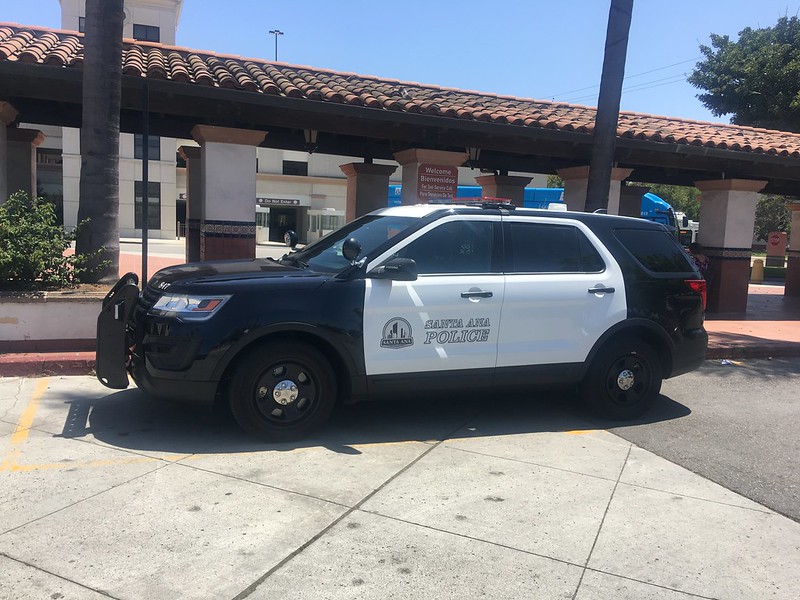
The crowd gathered in Santa Ana, Calif., for what was billed as a vigil for the slain cats and a condemnation of their alleged killer, 45-year-old Alejandro Oliveros Acosta. The Santa Ana man was arrested last week and charged with felony cruelty to animals after “dozens” of felines in the neighborhood disappeared under suspicious circumstances, per police.

With emotions running high, the crowd followed its more unruly members to a house they mistakenly identified as Acosta’s. The homeowner said he was related to Acosta’s wife but didn’t know anything about the cat killings until Acosta was arrested. He told the protesters he hadn’t seen Acosta since the arrest and asked them to calm down, but they broke windows, attacked him with pepper spray and terrorized children living there.

“The peaceful protesting wasn’t so peaceful. They’re scaring kids here. It’s scaring the whole family. There are kids, seven kids in this house. Two little babies, one that is autistic,” the man told KTTV. “You know, breaking our fences… pepper spraying us for no reason. If you did what you did, I didn’t know anything about it. You know, when we found out [about the cat murders] we were shocked.”

It took Santa Ana police an hour to respond, according to multiple news reports. Even after the police told the protesters that they had the wrong house and were breaking the law, the mob refused to leave and accused the victims of being complicit in Acosta’s alleged crimes. Officers had to manually break up the crowd by physically removing individual protesters.

On Monday, police took the unusual step of publicly commenting on the fallout from Acosta’s arrest, pleading with people to “allow the judicial process to take its course.”

“I don’t think it needs to be like this. I think it should have remained a vigil,” one protest participant told KTTV, a Fox affiliate in Los Angeles. “I knew it’d be a protest, but I didn’t think it would get violent. I don’t think anybody should be touching property.”

Needless to say, we don’t need people making the animal welfare community look like a bunch of lunatics, and vigilante “justice” is wrong. As humans, we’re at our worst when we engage in mob behavior, which obliterates reason, civility and empathy.

Although a lot of people seem to have difficulty with this simple concept nowadays, everyone is entitled to due process, and we’re a nation of laws where alleged crimes are litigated in court, not on the street, on front lawns or online.

Zeus the mighty, meowing from atop Olympus

A cat named Zeus has been turning heads lately, and for good reason: he’s huge even by Maine Coon standards.

Zeus is fluffy, imposing, and so big that he can help himself to food left on a counter just by getting up on his hind legs.

At almost 30 pounds, he’s practically three Buddies in mass. I texted a photo of Zeus to Buddy, and Bud responded with a photo of his own, claiming he’d just finished a grueling bench press session:

Bud hitting the gym to pump iron and stuff.

Hmmm.

Something tells me Buddy’s going to complain that I didn’t bestow him with the name of a Greek god. Is there a diminutive, glib deity to be found in the Olympian pantheon?

Massachusetts Becomes 3rd State To Ban Declawing

The Massachusetts law is a significant victory in the quest for a national ban on the cruel procedure, which involves amputating cat toes at the first knuckle

There’s good news today from Massachusetts, which just joined New York and Maryland in banning cat declawing.

The bill, signed Friday by Massachusetts Gov. Maura Healey, prohibits all declawing surgery except for rare circumstances when it’s medically necessary, like cancer in the nail bed.

Veterinarians who violate the law face fines up to $2,500 and professional discipline if they continue the practice.

Despite its name, declawing is the partial amputation of cat toes, equivalent to cutting off human fingertips at the last knuckle.

a little cat playing
Photo credit: Alex Ozerov-Meyer/Pexels

Declawing changes a cat’s gait, causing the animal pain when it walks, and usually leads to early arthritis. It causes cats to stop using their litter boxes, because the act of standing on and shoveling litter becomes painful for them.

Last but not least, it has a profound psychological impact on felines, making them vulnerable by taking away their primary form of defense. Consequently, cats who are declawed are much more likely to bite than those with intact claws.

Most of all, declawing is cruel and inflicts a lifetime of pain on innocent animals, punishing them for doing what cats naturally do.

Aside from New York, Maryland and Massachusetts, a few dozen cities and counties have banned the procedure, ranging from places like St. Louis, Missouri, to Austin, Texas, and eight cities in California, including Los Angeles and San Francisco.

With Bird Flu Spreading, It’s Probably A Good Idea To Keep Your Cats Inside

So far there are no cases of cats infecting humans, but a new study published Tuesday warns the virus easily mutates in infected felines.

Health officials have identified at least five cases of domestic cats infected with H5 bird flu in California, and they’re warning of multiple vectors of transmission now that both outdoor and indoor cats have been infected.

Two cats were infected after drinking raw milk from a dairy farm in Fresno, California, according to the Los Angeles Department of Public Health. That’s also how a dozen barn cats died in April after drinking raw milk from infected cows on a Texas dairy farm, the CDC said.

But three other cats who tested positive for bird flu were indoor-only, lived in the same home, and did not consume raw milk, authorities said. They’re looking into the possibility that the felines were infected through raw meat or by hunting mice.

So now it’s not only confirmed that cats are vulnerable to highly pathogenic avian influenza, or HPAI H5N1, but that they can be infected in different ways.

To be clear, it’s not a cause for panic and it doesn’t mean people should isolate from their cats, but it does mean we should be smart and considerate when it comes to protecting our pets and reducing the possibility that they can be infected.

Because millions of felines live with humans, the fear is that they can pass the virus onto us. So far there have been no confirmed cases, but a study published on Tuesday confirmed that the virus can easily mutate in cats. That means the more domestic cats are infected, the greater chance the virus mutates in a way that allows it to “bridge” to humans.

At least two people — one in Wisconsin and one in Louisiana — have tested positive for the virus and were hospitalized this week. One worked on a farm and the other may have consumed raw milk. In the meantime, health officials are monitoring the people whose three cats were infected, and they’re urging people to take precautions.

“To avoid the spread of disease, including H5 bird flu, we strongly encourage residents and their pets to avoid raw dairy and undercooked meat products, limit contact with sick or dead animals, report sick or dead birds, and keep pets or poultry away from wild animals and birds,” said Dr. Barbara Ferrer, director of the Los Angeles County Department of Public Health.