It’ll Take More Than Sketchy Surveys To Prove Vegan Cat Food Is OK

“People aren’t ready for us to turn carnivore cats vegan but I’m going to do it,” the CEO of a vegan cat food brand has vowed.

In September of last year, a research paper about feline health was published to the open-access journal PLOS-One, going mostly unnoticed.

The paper’s authors claim their research proves cats fed a “nutritionally complete” vegan diet are not only just as healthy as their meat-eating counterparts, they’re actually less likely to need veterinary visits, less dependent on medication, and more likely to be given a clean bill of health by their veterinarians.

When a company called Wild Earth announced the launch of a new line of vegan cat food this month, the company pointed directly to that paper as proof that “cats fed nutritionally sound vegan diets are healthier overall than those fed meat-based diets,” as the paper’s lead author put it.

Wild Earth CEO Ryan Bethencourt, who does not have a professional background in veterinary medicine or feline nutrition, summed up his goal in a tweet: “People aren’t ready for us to turn carnivore cats vegan but I’m going to do it.”

bethencourt
Bethencourt calls the effort to put pets on vegan diets “vegan biohacking.” Credit: Wild Earth

He painted the new offering as a bold counter to skeptics who say vegan cat food is unhealthy.

“We expect aggressive resistance from the meat industry on the launch of this industry-pioneering vegan cat food, but we know there are A LOT of cat parents looking for healthier plant-based and more sustainable options and we want to be the leader in providing them with that choice,” Bethencourt wrote in a statement.

What he didn’t mention was the fact that the loudest voices opposing “vegan cat food” are animal welfare organizations like the SPCA and Humane Society, as well as veterinarians and nutritionists, the same people who see the consequences of cats who are deprived of meat. Over the years they have reiterated that felines are obligate carnivores who have evolved to get their nutrients from meat, with digestive systems that cannot process most plants, meaning they can’t break them down and derive nutrients from them. That’s why we don’t see servals or leopards foraging for fruit in the wild.

In addition, the announcement did not mention that the 2023 research was funded by ProVeg International, a non-profit dedicated to reducing global meat consumption, weaning people and animals off of meat and onto plant-based food.

That didn’t stop other credulous reports, like one from GreenQueen claiming Wild Earth’s vegan cat food is “built on research proving that felines can be healthy on a vegan diet.”

And that’s exactly the point — the “study” was conceived and published so that advocates of vegan cat food can point to it and say “science says” cats can survive on plants.

Bad data makes for bad science

Extraordinary claims require extraordinary evidence, but the 2023 study did not examine veterinary records or log the results of vet visits over years. Instead, the data was self-reported by participants.

A total of 1,418 people responded to the survey, and only 127 of them said they feed their cats exclusively vegan diets. The claims that their cats get sick less often and do better in veterinary check-ups are based on their subjective assessments and recollections. The paper’s authors don’t know which vegan brands the 127 respondents were giving to their cats, nor do they have information on whether the food was wet or dry, how often the cats were fed, and how much they ate.

wildearthfood
A cat eating Wild Earth’s Unicorn Pate, which is made entirely from plant products. Credit: Wild Earth

One of the metrics cited by the authors is “guardian opinion of more severe illness,” which means arbitrary feedback from people who aren’t experts in veterinary medicine or nutrition.

If including respondent opinions as “data” doesn’t bother you, consider how many people buy products like Airborne, concluding that it works because they didn’t get sick once on a cross-country flight. Airborne, you may recall, was “invented” by a teacher who claimed she figured out how to cure the common cold, something no physician has done in centuries of trying.

Like vegan cat food proponents, Airborne had its own “study” that claimed its efficacy. The company eventually paid out more than $23 million in a class action settlement for its false claims. That’s not to say vegan cat food makers are precisely like Airborne, but pointing to poorly conducted research is a tactic that works because most people won’t go to the effort of finding the study and reading it.

Current global meat consumption is unsustainable, but…

I’m a vegetarian and I’ve seen enough evidence to convince me that the current rate of meat consumption, especially in the first world, is untenable as the global population rises toward its expected 11 billion-plus peak. Those forecasts and the horrors of factory farming are motivation enough to hope human civilization consumes less meat in the future.

But I’m also a guy who loves his cat, and I think if you’re going tell me that my little pal, designed by nature to be an obligate carnivore with a digestive system and body plan that hasn’t significantly changed for ages, can stop eating meat entirely with no deleterious effects — despite the experts saying otherwise — then you really need to show me something better than a self-reported survey paid for by a vegan advocacy group.

Cat with a salad
This cat is not happy. Credit: r/cats(reddit)

Especially when veterinarians who have no financial interest in the pet food industry relate horror stories of their four-legged patients slowly going blind and cats with no other ailments suffering catastrophic consequences, with their organs shutting down because they’re not getting the vital nutrients and proteins they need to survive.

It’s a horrific way to die, and it happens because misguided people think human morals should apply to cats. Notice in the press releases and marketing materials from vegan cat food manufacturers, there’s no mention of what’s in the best interest of cats — it’s all about people making “bold” choices, “disrupting” industries and leading the Earth to a shiny future without meat or suffering.

The truth is, felines cannot synthesize the proteins that are absolutely necessary for their survival, and their digestive systems aren’t evolved for breaking down nutrients from plants. Those are well-established facts, and ignoring them will not change reality. So anyone who claims “vegan cat food” is healthy faces a much bigger task than asking people to take a self-reported survey. A survey paid for by a nonprofit that lobbies for veganism isn’t proof, it’s wishful thinking masquerading as science.

Even if the authors of the paper had the complete veterinary records of the same cats, it would only be one tentative first step toward challenging everything we know about cat nutrition. Questions aren’t settled after one study, especially with such a small data set. Studies must be repeatable, and the difference between correlation and causation isn’t settled with a single well-designed, unimpeachable study, much less a self-reported survey.

When the stakes are the lives, happiness and health of innocent animals, we should be absolutely sure we’re doing right by them.

Texas Pols Secretly Plot Cat Slaughter: ‘The More The Public Knows, The Uglier It Gets’

Another day, another abhorrent plan to kill cats.

Unaware they were being recorded, elected leaders in a small Texas city let their imaginations run wild in a closed-door meeting about dealing with feral cat colonies.

One proposed mass poisoning to take out as many as 50 cats at a time. Another, perhaps fancying himself a mafia hit man, envisioned taking care of the city’s cat “problem” execution-style with a “.22 round to the back of the head.”

A third proposed dumping the bodies of the dead cats in an area the city already uses to dispose of unwanted animals.

“We have a location on this property that’s called deer heaven,” the committee member told colleagues at the Nov. 6 meeting. “I’m sure it could be kitty cat heaven too.”

Now the city council and wildlife advisory council of Granite Shoals, a city of about 5,100 in central Texas, are trying to explain themselves to an infuriated public, the local Humane Society and their own police, who rebuked them in a public statement that asserted their plans are illegal.

State and local laws “do not allow any cruelty to animals, including feral cats in our community,” police chief John Ortis wrote in a letter to the public.

The Hill Country Humane Society took the extraordinary step of “terminating its relationship” with the city, calling the committee’s plans “blatantly unethical and illegal” in a statement posted on Facebook.

“This recording reveals that not only was there an attempt to develop a plan to inhumanely shoot captured cats and dispose of their carcasses, but there was open discussion between members of the committee and the City Manager about the need to conceal such activities from the general public,” the Humane Society wrote.

Staff at the Humane Society said they’ll still take in stray cats from the city, but they’ve ended their official partnership.

A stray cat. Credit: Aleksandr Nadyojin/Pexels

Todd Holland, the committee chair, denied that his members wanted to keep details of their plans from the public and told local newspaper the Daily Trib that the committee was merely trying to work out the “intricate details” of how to handle a population of about 400 cats. It’s not clear how the city arrived at that number, and there’s been no mention of an official effort to get an accurate tally.

“It’s not like we’re a bunch of cowboys running wild,” Holland said.

But in the recording, committee members clearly discussed hiding details from the public, and the Daily Trib noted that the committee used the word “remove” interchangeably with “euthanize” in written materials detailing the plan, perhaps to soften the language or obscure the fact that the proposed solution was to kill the cats.

Granite Shoals Mayor Ron Munos called the recording “disturbing” and said the committee’s plan will not be put into practice.

“The city is not doing this,” he told the Daily Trib. “We’re not going out and killing cats.”

Here at PITB we feel like a broken record regularly referring back to the junk studies blaming cats for killing billions of birds annually, but the reason we do is because those studies have real-life consequences.

Ill-advised, unethical and illegal plans to eradicate stray cats wouldn’t be explored at municipal and county levels if elected leaders weren’t told that trap, neuter, return (TNR) programs do not work and that outdoor cats pose the most significant thread to local wildlife.

Likewise, we wouldn’t hear about schools sponsoring cat hunts for children or so-called conservationists gunning down entire stray colonies if a small but vocal group of ostensible scientists weren’t routinely publishing dubious studies making improbable and unsupportable claims about feline predatory impact.

In plain terms there’s been a concerted effort to paint domestic cats as dangerous, ruthless killing machines, the media hasn’t treated the claims with skepticism, and the result is a whole lot of cruelty and misery inflicted on innocent animals.

City councils, wildlife biologists, park rangers and others are not armed with the facts when they rely on those studies, and the result is bad policy and decision-making.

Stories like this one out of Texas have become more frequent over the past few years, and we suspect things will get a lot worse for cats without injecting some much-needed sanity and evidence-based solutions to counter the tidal wave of misinformation.

Adoption Ad Warns Cat Will ‘Own You, Your House, Everything You Hold Dear’

Quinn the cat has “the uncanny ability to make people feel unwelcome in her presence!”

Quinn the cat lives separate from feline genpop, she doesn’t suffer fools and she’s got a well-documented habit of smacking people, cats and dogs.

The infamously disagreeable feline is up for adoption and the shelter where she lives has been up front about her unique personality, saying she might do well with a misanthrope who would appreciate Quinn’s dislike of any visitors and intolerance for anyone who doesn’t directly serve her.

“Tired of visitors coming to your house? Adopt Quinn! She has an uncanny ability to make people feel unwelcome in her presence!” shelter staff wrote in Quinn’s adoption post.

She’ll tolerate her caretaker, but just barely, staff at the Washington County Humane Society in Maryland joked.

Yet they’re confident there’s a home for Quinn, insisting that “surely there’s someone out there who would appreciate her icy stare and her sudden smacks!”

Of course Quinn could blossom into a happy, sweet cat once she’s living in her forever home and she realizes she’s not going back to the shelter or the streets. Most cats do poorly in shelters where fear and stress overwrite their usual personalities. Even the most outgoing, sweet cat can appear depressed and antisocial when locked in a cage most of the time, without people to love them, play with them and make them feel safe.

Quinn’s direct adoption page (scroll down to adoptable cats) says she’s three years old and wasn’t claimed by her owner, so who knows what kind of traumas she may have endured in her short life?

Quinn currently lives in the shelter’s office where she “rules with an iron paw.” Anyone interested in adopting her should ask for her by name, the shelter said. Contact the shelter at the link above or by calling 301-733-2060.

Help Track Down This Cat Thief And Return Kitty To Her Loving Family

A Nebraska family is heartbroken after a woman stole their cat right off their porch in broad daylight.

Mr. Kitty was taken under duress, and her absence has left a cold spot on her human’s bed — and in her family’s hearts.

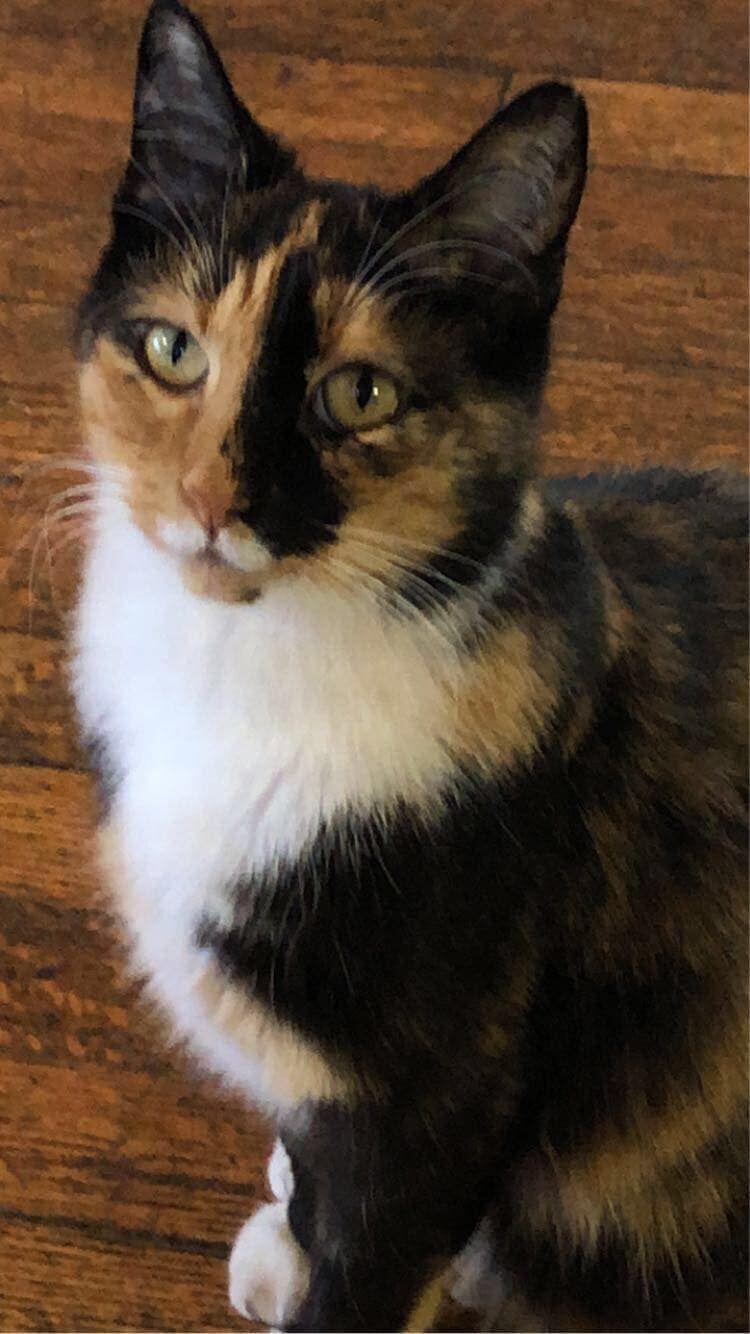
Despite her name, Mr. Kitty is a female calico Manx rescued about eight years ago by Benjamin Strimple, who found Kitty with her leg caught in a racoon trap.

“When we got this cat, it just became my everything,” Strimple said. “Became like my best friend. Every single night I sleep with her.”

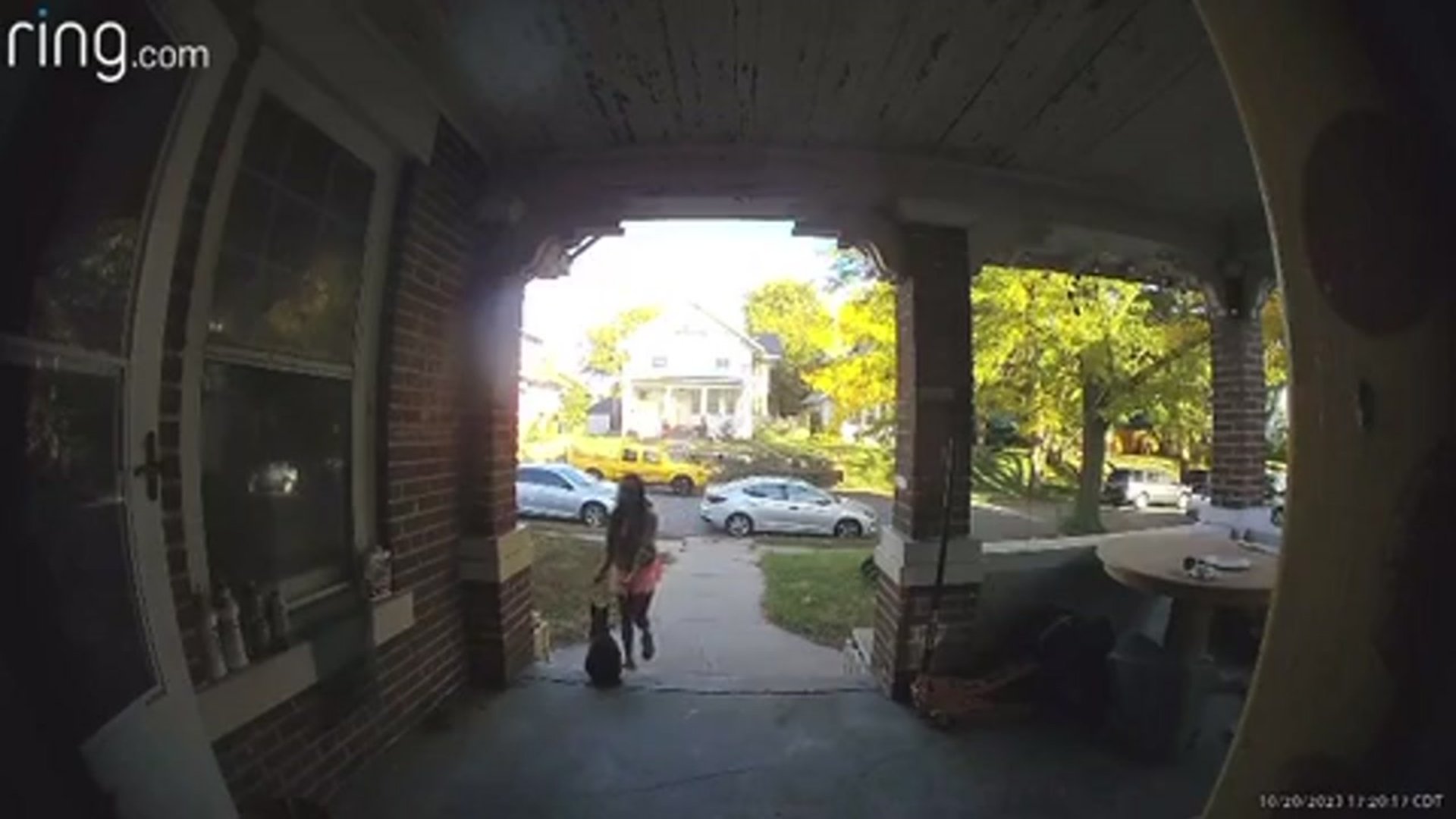
Now he’s worried for her safety and hoping for her return after his Ring doorbell caught a woman walking directly up to his porch in Omaha, NE, and taking the unwilling Mr. Kitty by force in broad daylight on Oct. 20.

The video shows the woman approach and hold out a hand. The friendly cat sniffs her hand at first, but pulls away as she leans forward. Mr. Kitty fights back as the woman tries to corral her, but a close look at the video shows the woman using what appears to be some sort of spray device before picking the cat up with both hands.

mrkittyringscreenshot
A screen shot of the Ring doorbell footage showing the suspect stealing Mr. Kitty from her family’s Omaha, NE, porch.Click here to view the video.

She carries Mr. Kitty back to a silver Chevy Malibu and drives away. The suspect is a black female with long hair who was wearing an orange skirt, a brown or black shirt and dark sneakers in the footage. Strimple says he doesn’t know the woman but she looks familiar and he may have seen her in the neighborhood before.

Mr. Kitty does not venture off his property, he said, and spends most of her time indoors or on the family’s porch, where neighbors are accustomed to seeing her.

“I feel like it was like their plans. You know, they seen my cat,” he told KETV Omaha, an ABC affiliate. “I’m pretty sure everyone on the street knows that cat belongs to this house.”

Omaha Crime Stoppers and the Nebraska Humane Society are offering a $1,000 for information leading to the arrest of the woman and the return of Mr. Kitty. Anyone with information on the theft can contact Omaha Crime Stoppers at 402-444-STOP or www.omahacrimestoppers.org. If you know anyone in the Omaha area, please share the story and encourage them to share it on social media.

The theft is not only traumatic for the family, but for Mr. Kitty too, pointed out Nebraska Humane Society’s Pam Wiese.

“I’m sure that [s]he’s probably like, what? What just happened?” Wiese said. “I was just loving up on someone and now I’m no longer home.”

Strimple said the only thing he cares about is getting his furry friend back.

“There’s a lot I want to say, but I would just say, just give her back,” Strimple said. “You know, that’s pretty messed up. We have a lot of family, a whole family sad. Just give her back.”

mrkittyomaha

So Many People Are Abandoning Cats Due To Inflation, Shelters Have Surrender Waiting Lists

More people are abandoning their pets, saying they can no longer afford to care for and feed them amid historic inflation.

Unless you’ve been living under a rock you’ve experienced sticker shock in the last six or seven months, especially in grocery stores.

Staples like milk and bread cost two or three times what they did pre-inflation, some retailers are taking the opportunity to arbitrarily hike prices even higher, and a perfect storm of economic uncertainty and a rampaging bird flu caused the price of eggs and poultry to skyrocket.

By late 2022, almost 50 million chickens and turkeys had been killed by avian flu or culled because of it, and almost 10 million more were lost to the virus in the first 12 weeks of 2023, according to the CDC. That breaks the record for most birds lost to avian flu, which was set in 2015 when 51 million died or were culled.

Pet food prices are up too, mirroring grocery inflation, as are veterinary costs and medicine for cats and dogs.

Inflation has squeezed so many people that shelters in the US and UK are reporting unprecedented surrenders from people who believe they can’t afford their pets anymore. In some areas it’s so bad that local shelters have waiting lists — or surrender queues, as they’re called in the UK — for people parting with their pets.

“We get between 10 and 12 surrenders per week, so we’re looking at anywhere between 30 and 50 a month,” Ashley Burling of Montana-based Help For Homeless Pets said. “When you’re talking about inflation, you’re talking about vet bills, pet food, pet supplies and pet rent. I think inflation, I think people going back to work after the pandemic, there’s other reasons that they’re surrendered.”

More than 70 percent of adoptable pets at the Nevada SPCA previous had homes, executive director Lori Heeren told the local NBC affiliate. Her organization is on pace for 2,500 surrenders in 2023.

Free cute european shorthair cat

News outlets tell the same story in local markets across the country, and the Humane Society is seeing the same trend nationally, CEO Kitty Block told CNN. While pet-related costs increased sharply in 2022 — with food and supplies increasing by as much as 30 percent, according to NielsenIQ — statistics show they haven’t relented yet this year. In fact, prices are still edging up, albeit at a slower rate than the previous year.

To cope, more people are leaning on pet food pantries. In Iowa, for example, the Animal Rescue League gave away more than 40,000 pounds of pet food in 2020 and 2021, and a whopping 146,000 pounds in 2022.

Shelter operators say they want people to know there are options so they don’t feel they have to part with cats and dogs who have become family.

“This is bigger than dogs or cats in shelters,” Block said. “It’s about the people who love them.”

PITB readers are the kind of people who dote on their cats and most of us couldn’t imagine abandoning them even in hard times, but chances are we all know someone who’s thought about parting with their fluffy overlords.

a gray cat eating from the ceramic bowl
Credit: Angelina Zhang on Pexels.com

They don’t have to give their beloved cats and dogs up. There are resources to help them meet their animal’s needs to prevent them from surrendering:

– Many local chapters of the Humane Society and SPCA, as well as private shelters, offer free spay/neuter clinics and free or low-cost veterinary exams. A guide from the Humane Society notes PetFinder allows users to search for pet-specific food pantries and low cost veterinary services

– There are programs that provide pet food to people who can no longer afford it

– Some shelters will place pets in temporary foster homes to help relieve the burden until their owners can take them back

– Buying food and medicine online is significantly cheaper than in grocery stores. Some offer deep discounts on meds to existing customers and prices from online retailers have remained relatively stable, especially when buying in quantity

– Social services programs may include provisions for pets

It’s in the best interests of shelters and animal welfare programs for cats and dogs to stay with their people, and not only because they don’t have the resources to house hundreds of abandoned pets on top of their usual intake.

Keeping people and pets together benefits both. Cats and dogs obviously don’t understand that their people are tearfully, reluctantly giving them up. All they know is they’ve been abandoned by the people who made them feel safe and loved. For the mental health and overall well-being of humans and their furry companions, they should stay together.

For some people, like Patricia Kelvin of Poland, Ohio, that means scrounging up whatever she can and cutting back on her own expenses before she will allow her cat to go without.

“There’s just no question in my mind. If my diet was going to be more beans than something else, I wouldn’t hesitate,” Kelvin told CNN. “If I had to sell my sterling silver, which I’ve had for 60 years, that would go before my little ‘Whiskers’ would be deprived.”