Texas Pols Secretly Plot Cat Slaughter: ‘The More The Public Knows, The Uglier It Gets’

Another day, another abhorrent plan to kill cats.

Unaware they were being recorded, elected leaders in a small Texas city let their imaginations run wild in a closed-door meeting about dealing with feral cat colonies.

One proposed mass poisoning to take out as many as 50 cats at a time. Another, perhaps fancying himself a mafia hit man, envisioned taking care of the city’s cat “problem” execution-style with a “.22 round to the back of the head.”

A third proposed dumping the bodies of the dead cats in an area the city already uses to dispose of unwanted animals.

“We have a location on this property that’s called deer heaven,” the committee member told colleagues at the Nov. 6 meeting. “I’m sure it could be kitty cat heaven too.”

Now the city council and wildlife advisory council of Granite Shoals, a city of about 5,100 in central Texas, are trying to explain themselves to an infuriated public, the local Humane Society and their own police, who rebuked them in a public statement that asserted their plans are illegal.

State and local laws “do not allow any cruelty to animals, including feral cats in our community,” police chief John Ortis wrote in a letter to the public.

The Hill Country Humane Society took the extraordinary step of “terminating its relationship” with the city, calling the committee’s plans “blatantly unethical and illegal” in a statement posted on Facebook.

“This recording reveals that not only was there an attempt to develop a plan to inhumanely shoot captured cats and dispose of their carcasses, but there was open discussion between members of the committee and the City Manager about the need to conceal such activities from the general public,” the Humane Society wrote.

Staff at the Humane Society said they’ll still take in stray cats from the city, but they’ve ended their official partnership.
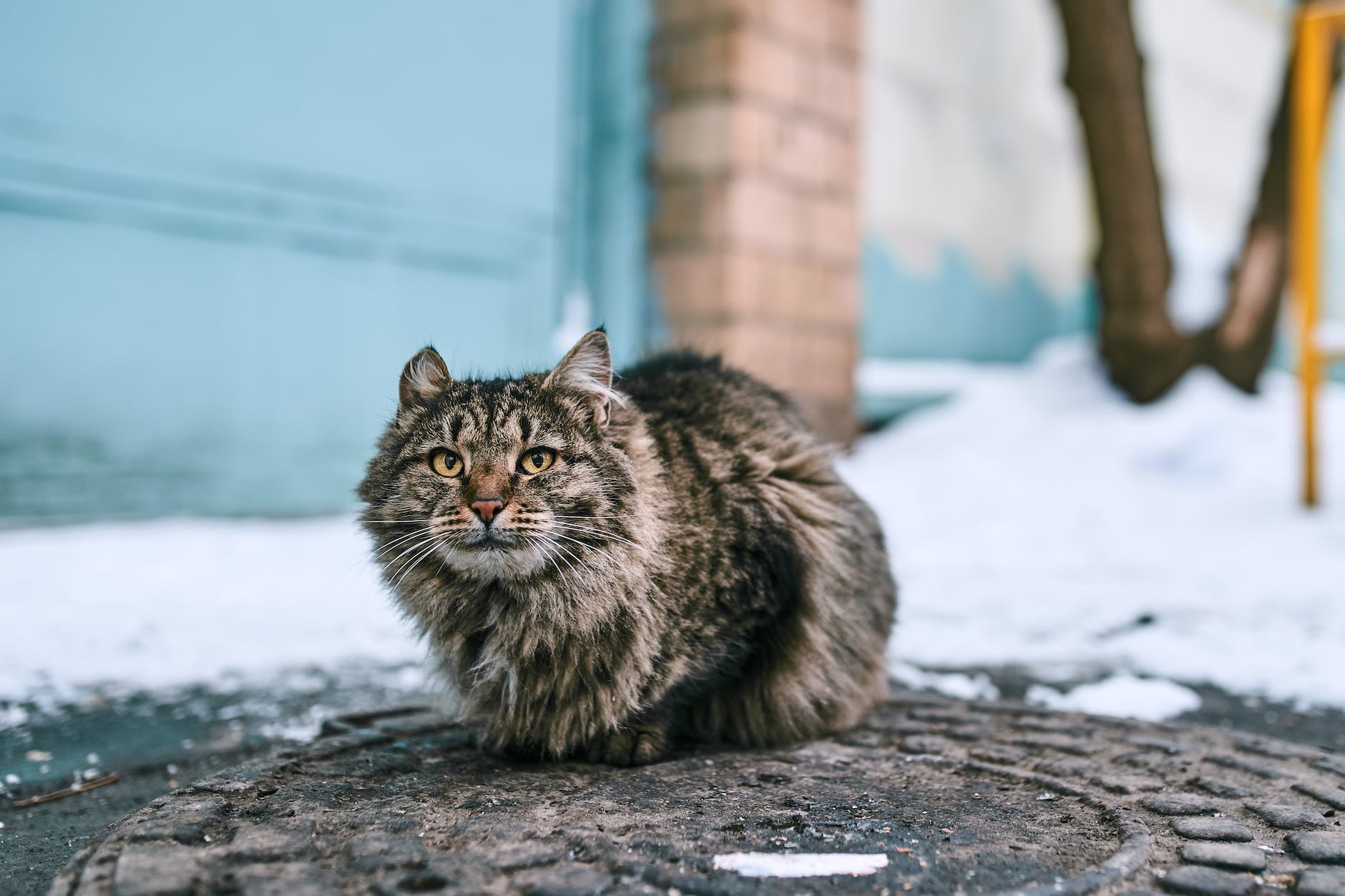
A stray cat. Credit: Aleksandr Nadyojin/Pexels

Todd Holland, the committee chair, denied that his members wanted to keep details of their plans from the public and told local newspaper the Daily Trib that the committee was merely trying to work out the “intricate details” of how to handle a population of about 400 cats. It’s not clear how the city arrived at that number, and there’s been no mention of an official effort to get an accurate tally.

“It’s not like we’re a bunch of cowboys running wild,” Holland said.

But in the recording, committee members clearly discussed hiding details from the public, and the Daily Trib noted that the committee used the word “remove” interchangeably with “euthanize” in written materials detailing the plan, perhaps to soften the language or obscure the fact that the proposed solution was to kill the cats.

Granite Shoals Mayor Ron Munos called the recording “disturbing” and said the committee’s plan will not be put into practice.

“The city is not doing this,” he told the Daily Trib. “We’re not going out and killing cats.”

Here at PITB we feel like a broken record regularly referring back to the junk studies blaming cats for killing billions of birds annually, but the reason we do is because those studies have real-life consequences.

Ill-advised, unethical and illegal plans to eradicate stray cats wouldn’t be explored at municipal and county levels if elected leaders weren’t told that trap, neuter, return (TNR) programs do not work and that outdoor cats pose the most significant thread to local wildlife.

Likewise, we wouldn’t hear about schools sponsoring cat hunts for children or so-called conservationists gunning down entire stray colonies if a small but vocal group of ostensible scientists weren’t routinely publishing dubious studies making improbable and unsupportable claims about feline predatory impact.

In plain terms there’s been a concerted effort to paint domestic cats as dangerous, ruthless killing machines, the media hasn’t treated the claims with skepticism, and the result is a whole lot of cruelty and misery inflicted on innocent animals.

City councils, wildlife biologists, park rangers and others are not armed with the facts when they rely on those studies, and the result is bad policy and decision-making.

Stories like this one out of Texas have become more frequent over the past few years, and we suspect things will get a lot worse for cats without injecting some much-needed sanity and evidence-based solutions to counter the tidal wave of misinformation.
Adoption Ad Warns Cat Will ‘Own You, Your House, Everything You Hold Dear’

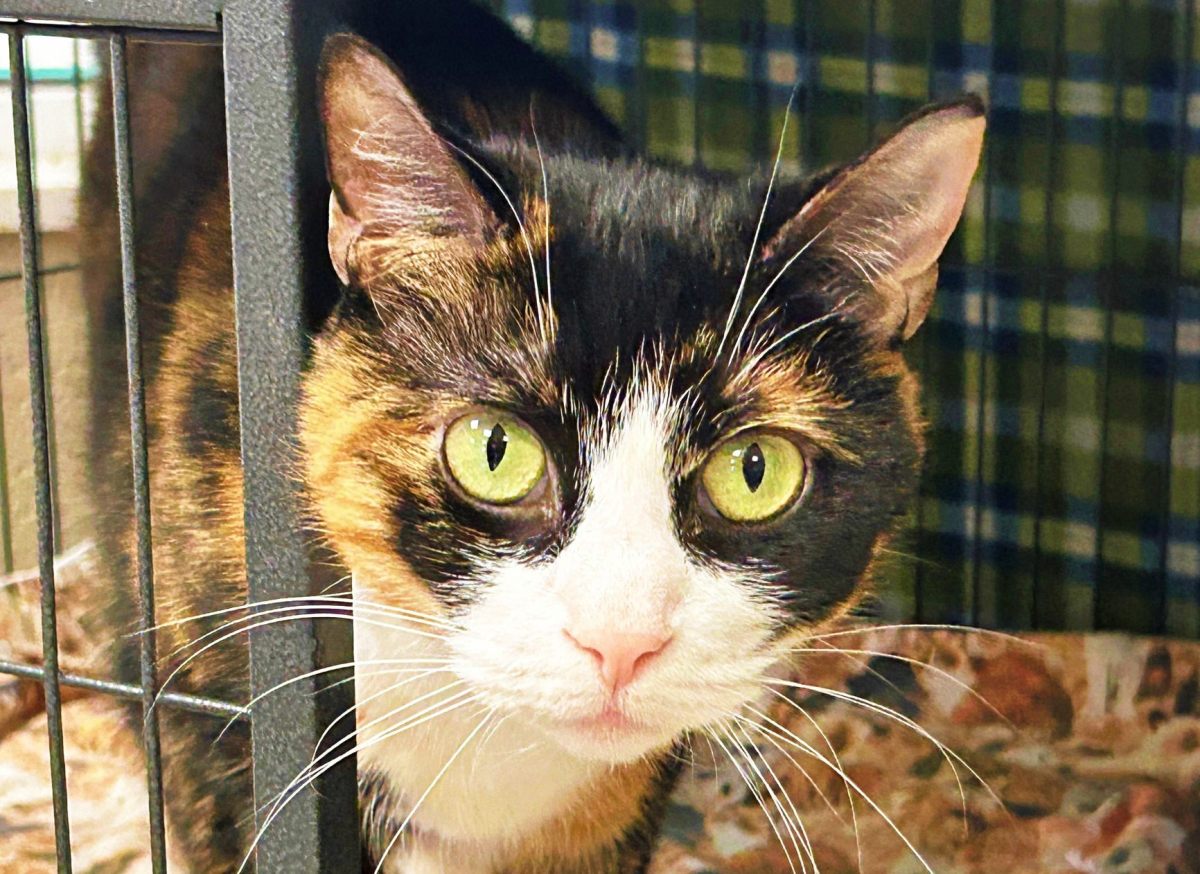
Quinn the cat has “the uncanny ability to make people feel unwelcome in her presence!”

Quinn the cat lives separate from feline genpop, she doesn’t suffer fools and she’s got a well-documented habit of smacking people, cats and dogs.

The infamously disagreeable feline is up for adoption and the shelter where she lives has been up front about her unique personality, saying she might do well with a misanthrope who would appreciate Quinn’s dislike of any visitors and intolerance for anyone who doesn’t directly serve her.

“Tired of visitors coming to your house? Adopt Quinn! She has an uncanny ability to make people feel unwelcome in her presence!” shelter staff wrote in Quinn’s adoption post.

She’ll tolerate her caretaker, but just barely, staff at the Washington County Humane Society in Maryland joked.

Yet they’re confident there’s a home for Quinn, insisting that “surely there’s someone out there who would appreciate her icy stare and her sudden smacks!”

Of course Quinn could blossom into a happy, sweet cat once she’s living in her forever home and she realizes she’s not going back to the shelter or the streets. Most cats do poorly in shelters where fear and stress overwrite their usual personalities. Even the most outgoing, sweet cat can appear depressed and antisocial when locked in a cage most of the time, without people to love them, play with them and make them feel safe.

Quinn’s direct adoption page (scroll down to adoptable cats) says she’s three years old and wasn’t claimed by her owner, so who knows what kind of traumas she may have endured in her short life?

Quinn currently lives in the shelter’s office where she “rules with an iron paw.” Anyone interested in adopting her should ask for her by name, the shelter said. Contact the shelter at the link above or by calling 301-733-2060.

Help Track Down This Cat Thief And Return Kitty To Her Loving Family

A Nebraska family is heartbroken after a woman stole their cat right off their porch in broad daylight.

Mr. Kitty was taken under duress, and her absence has left a cold spot on her human’s bed — and in her family’s hearts.

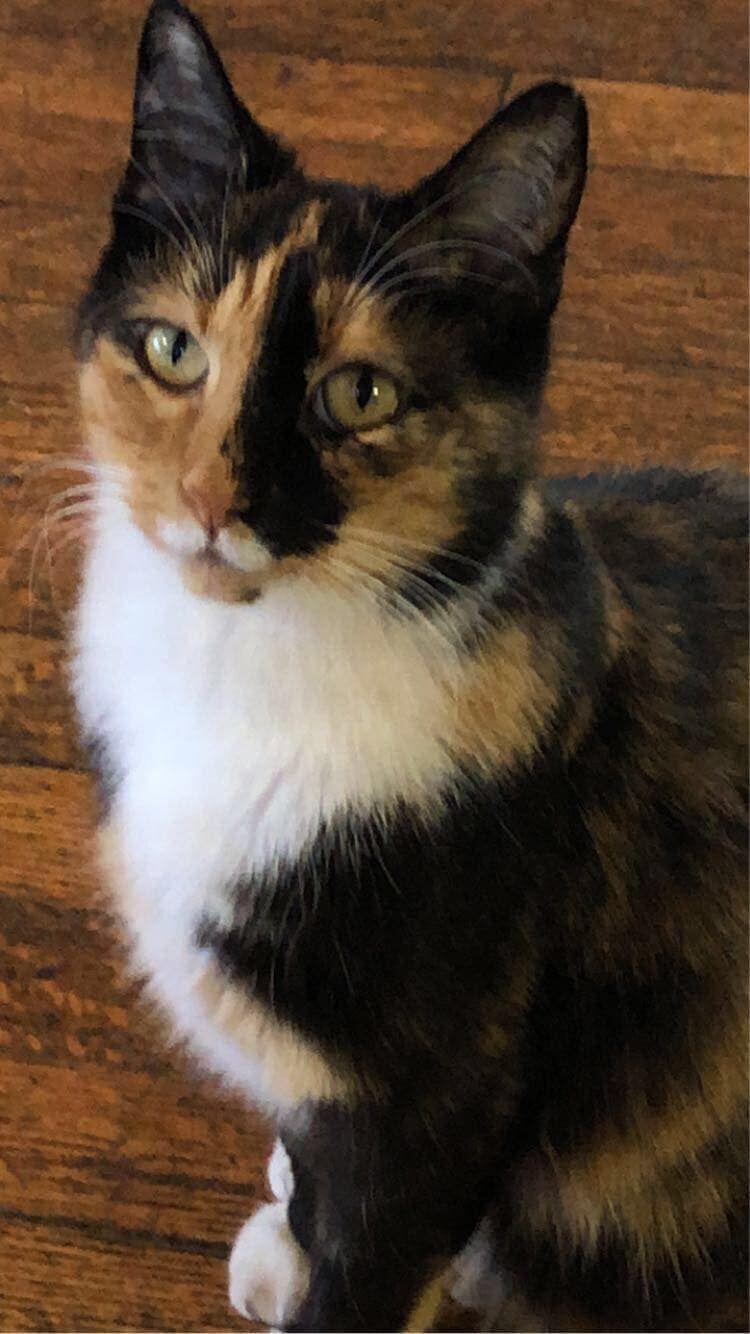
Despite her name, Mr. Kitty is a female calico Manx rescued about eight years ago by Benjamin Strimple, who found Kitty with her leg caught in a racoon trap.

“When we got this cat, it just became my everything,” Strimple said. “Became like my best friend. Every single night I sleep with her.”

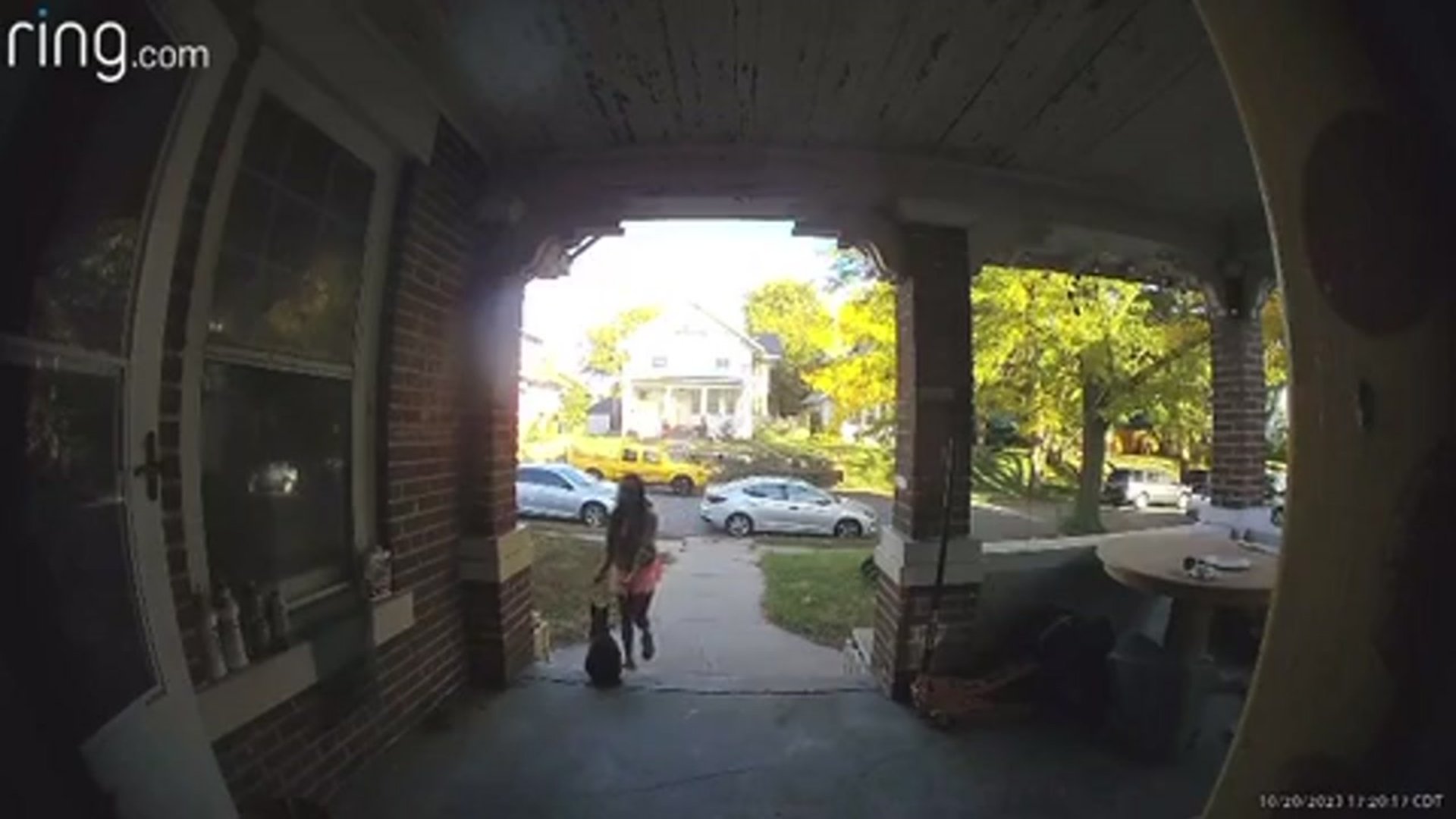
Now he’s worried for her safety and hoping for her return after his Ring doorbell caught a woman walking directly up to his porch in Omaha, NE, and taking the unwilling Mr. Kitty by force in broad daylight on Oct. 20.

The video shows the woman approach and hold out a hand. The friendly cat sniffs her hand at first, but pulls away as she leans forward. Mr. Kitty fights back as the woman tries to corral her, but a close look at the video shows the woman using what appears to be some sort of spray device before picking the cat up with both hands.

mrkittyringscreenshot
A screen shot of the Ring doorbell footage showing the suspect stealing Mr. Kitty from her family’s Omaha, NE, porch.Click here to view the video.

She carries Mr. Kitty back to a silver Chevy Malibu and drives away. The suspect is a black female with long hair who was wearing an orange skirt, a brown or black shirt and dark sneakers in the footage. Strimple says he doesn’t know the woman but she looks familiar and he may have seen her in the neighborhood before.

Mr. Kitty does not venture off his property, he said, and spends most of her time indoors or on the family’s porch, where neighbors are accustomed to seeing her.

“I feel like it was like their plans. You know, they seen my cat,” he told KETV Omaha, an ABC affiliate. “I’m pretty sure everyone on the street knows that cat belongs to this house.”

Omaha Crime Stoppers and the Nebraska Humane Society are offering a $1,000 for information leading to the arrest of the woman and the return of Mr. Kitty. Anyone with information on the theft can contact Omaha Crime Stoppers at 402-444-STOP or www.omahacrimestoppers.org. If you know anyone in the Omaha area, please share the story and encourage them to share it on social media.

The theft is not only traumatic for the family, but for Mr. Kitty too, pointed out Nebraska Humane Society’s Pam Wiese.

“I’m sure that [s]he’s probably like, what? What just happened?” Wiese said. “I was just loving up on someone and now I’m no longer home.”

Strimple said the only thing he cares about is getting his furry friend back.

“There’s a lot I want to say, but I would just say, just give her back,” Strimple said. “You know, that’s pretty messed up. We have a lot of family, a whole family sad. Just give her back.”

mrkittyomaha

So Many People Are Abandoning Cats Due To Inflation, Shelters Have Surrender Waiting Lists

More people are abandoning their pets, saying they can no longer afford to care for and feed them amid historic inflation.

Unless you’ve been living under a rock you’ve experienced sticker shock in the last six or seven months, especially in grocery stores.

Staples like milk and bread cost two or three times what they did pre-inflation, some retailers are taking the opportunity to arbitrarily hike prices even higher, and a perfect storm of economic uncertainty and a rampaging bird flu caused the price of eggs and poultry to skyrocket.

By late 2022, almost 50 million chickens and turkeys had been killed by avian flu or culled because of it, and almost 10 million more were lost to the virus in the first 12 weeks of 2023, according to the CDC. That breaks the record for most birds lost to avian flu, which was set in 2015 when 51 million died or were culled.

Pet food prices are up too, mirroring grocery inflation, as are veterinary costs and medicine for cats and dogs.

Inflation has squeezed so many people that shelters in the US and UK are reporting unprecedented surrenders from people who believe they can’t afford their pets anymore. In some areas it’s so bad that local shelters have waiting lists — or surrender queues, as they’re called in the UK — for people parting with their pets.

“We get between 10 and 12 surrenders per week, so we’re looking at anywhere between 30 and 50 a month,” Ashley Burling of Montana-based Help For Homeless Pets said. “When you’re talking about inflation, you’re talking about vet bills, pet food, pet supplies and pet rent. I think inflation, I think people going back to work after the pandemic, there’s other reasons that they’re surrendered.”

More than 70 percent of adoptable pets at the Nevada SPCA previous had homes, executive director Lori Heeren told the local NBC affiliate. Her organization is on pace for 2,500 surrenders in 2023.

Free cute european shorthair cat

News outlets tell the same story in local markets across the country, and the Humane Society is seeing the same trend nationally, CEO Kitty Block told CNN. While pet-related costs increased sharply in 2022 — with food and supplies increasing by as much as 30 percent, according to NielsenIQ — statistics show they haven’t relented yet this year. In fact, prices are still edging up, albeit at a slower rate than the previous year.

To cope, more people are leaning on pet food pantries. In Iowa, for example, the Animal Rescue League gave away more than 40,000 pounds of pet food in 2020 and 2021, and a whopping 146,000 pounds in 2022.

Shelter operators say they want people to know there are options so they don’t feel they have to part with cats and dogs who have become family.

“This is bigger than dogs or cats in shelters,” Block said. “It’s about the people who love them.”

PITB readers are the kind of people who dote on their cats and most of us couldn’t imagine abandoning them even in hard times, but chances are we all know someone who’s thought about parting with their fluffy overlords.

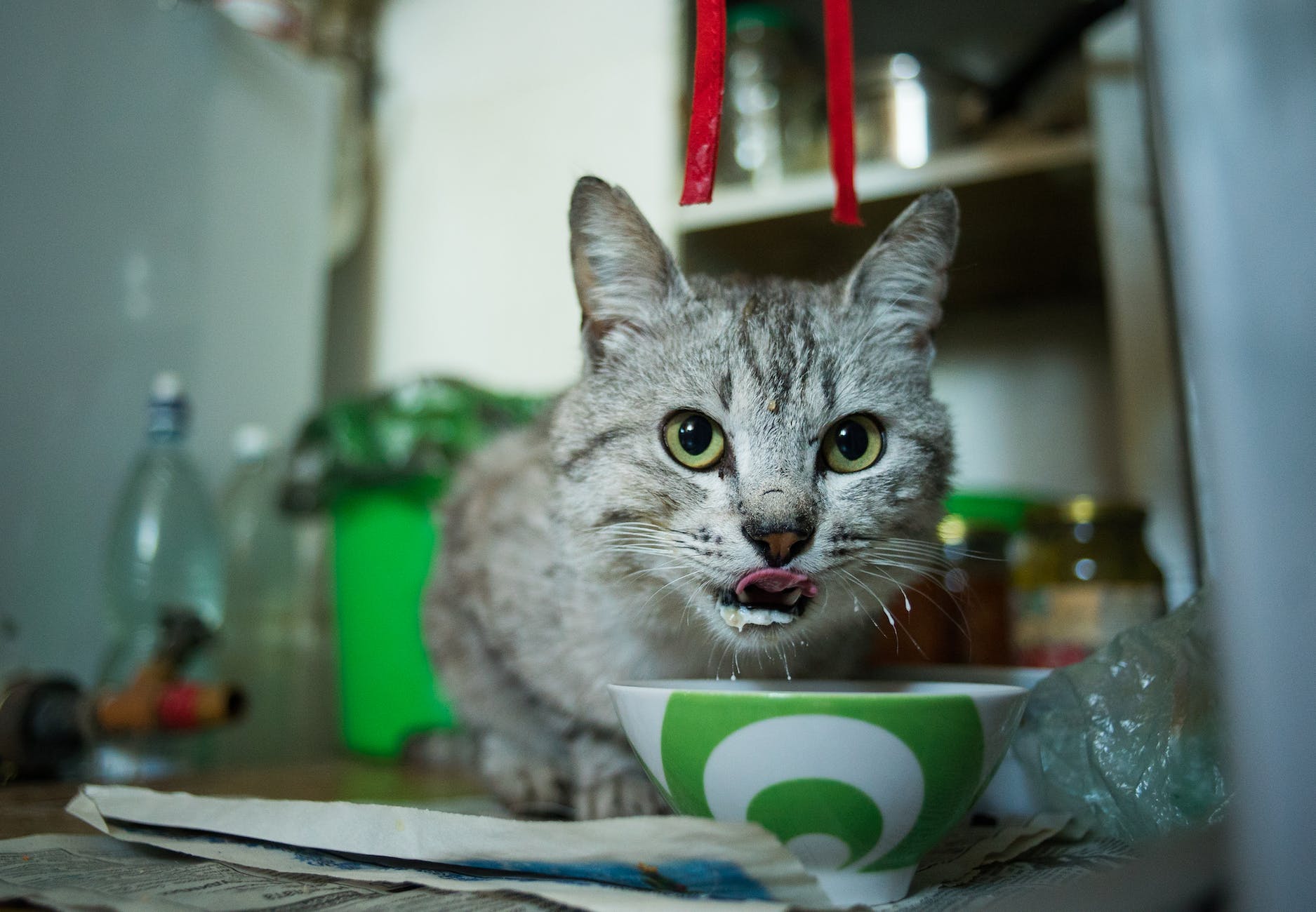
a gray cat eating from the ceramic bowl
Credit: Angelina Zhang on Pexels.com

They don’t have to give their beloved cats and dogs up. There are resources to help them meet their animal’s needs to prevent them from surrendering:

– Many local chapters of the Humane Society and SPCA, as well as private shelters, offer free spay/neuter clinics and free or low-cost veterinary exams. A guide from the Humane Society notes PetFinder allows users to search for pet-specific food pantries and low cost veterinary services

– There are programs that provide pet food to people who can no longer afford it

– Some shelters will place pets in temporary foster homes to help relieve the burden until their owners can take them back

– Buying food and medicine online is significantly cheaper than in grocery stores. Some offer deep discounts on meds to existing customers and prices from online retailers have remained relatively stable, especially when buying in quantity

– Social services programs may include provisions for pets

It’s in the best interests of shelters and animal welfare programs for cats and dogs to stay with their people, and not only because they don’t have the resources to house hundreds of abandoned pets on top of their usual intake.

Keeping people and pets together benefits both. Cats and dogs obviously don’t understand that their people are tearfully, reluctantly giving them up. All they know is they’ve been abandoned by the people who made them feel safe and loved. For the mental health and overall well-being of humans and their furry companions, they should stay together.

For some people, like Patricia Kelvin of Poland, Ohio, that means scrounging up whatever she can and cutting back on her own expenses before she will allow her cat to go without.

“There’s just no question in my mind. If my diet was going to be more beans than something else, I wouldn’t hesitate,” Kelvin told CNN. “If I had to sell my sterling silver, which I’ve had for 60 years, that would go before my little ‘Whiskers’ would be deprived.”

Pope Benedict Asked Us To Be Compassionate Toward Cats And Other Animals

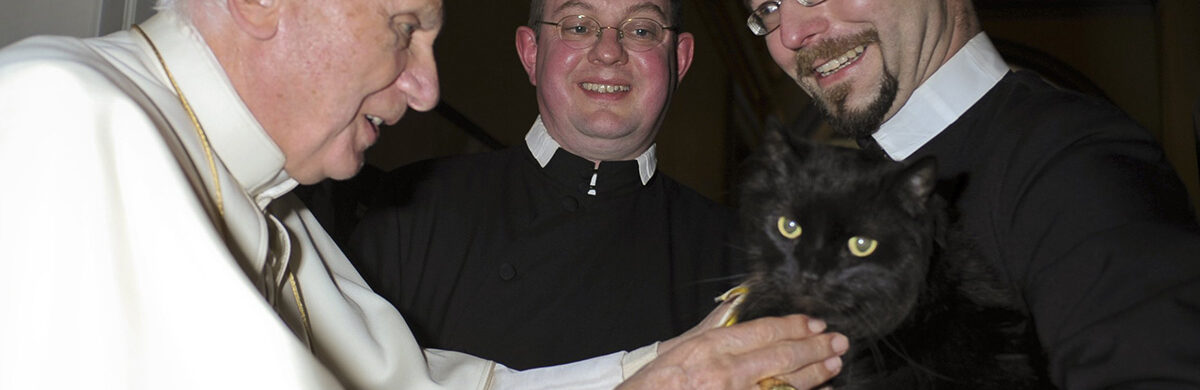
The late Pope Benedict was well known for his lifelong love of cats, but he was also a champion of animals and spoke out about the cruelties visited upon them by humankind.

Long before he was the pontiff, when he was just a young man named Joseph Ratzinger, the future Pope Benedict was known as a cat guy.

Growing up in the village of Hufschlag, about 55 miles southeast of Munich, Benedict’s family always had pet felines and he fed strays who spent time in their garden. During his years teaching theology to students at Bavaria’s University of Regensburg in the 1970s, then-professor Ratzinger was often seen followed by an entourage of cats — the little ones he fed and cared for — as he crossed campus.

“They knew him and loved him,” said Konrad Baumgartner, a fellow theologian at Regensburg.

His affinity for his four-legged friends never faded, even as he took on more responsibility and had more demands on his time. Cardinal Tarsicio Bertone, one of Benedict’s colleagues, said the German clergyman had a natural connection with animals.

“On his walk from Borgo Pío to the Vatican, he stopped to talk with the cats; don’t ask me in what language he spoke to them, but the cats were delighted,” Bertone recalled. “When the cardinal approached, the cats raised their heads and greeted him.”

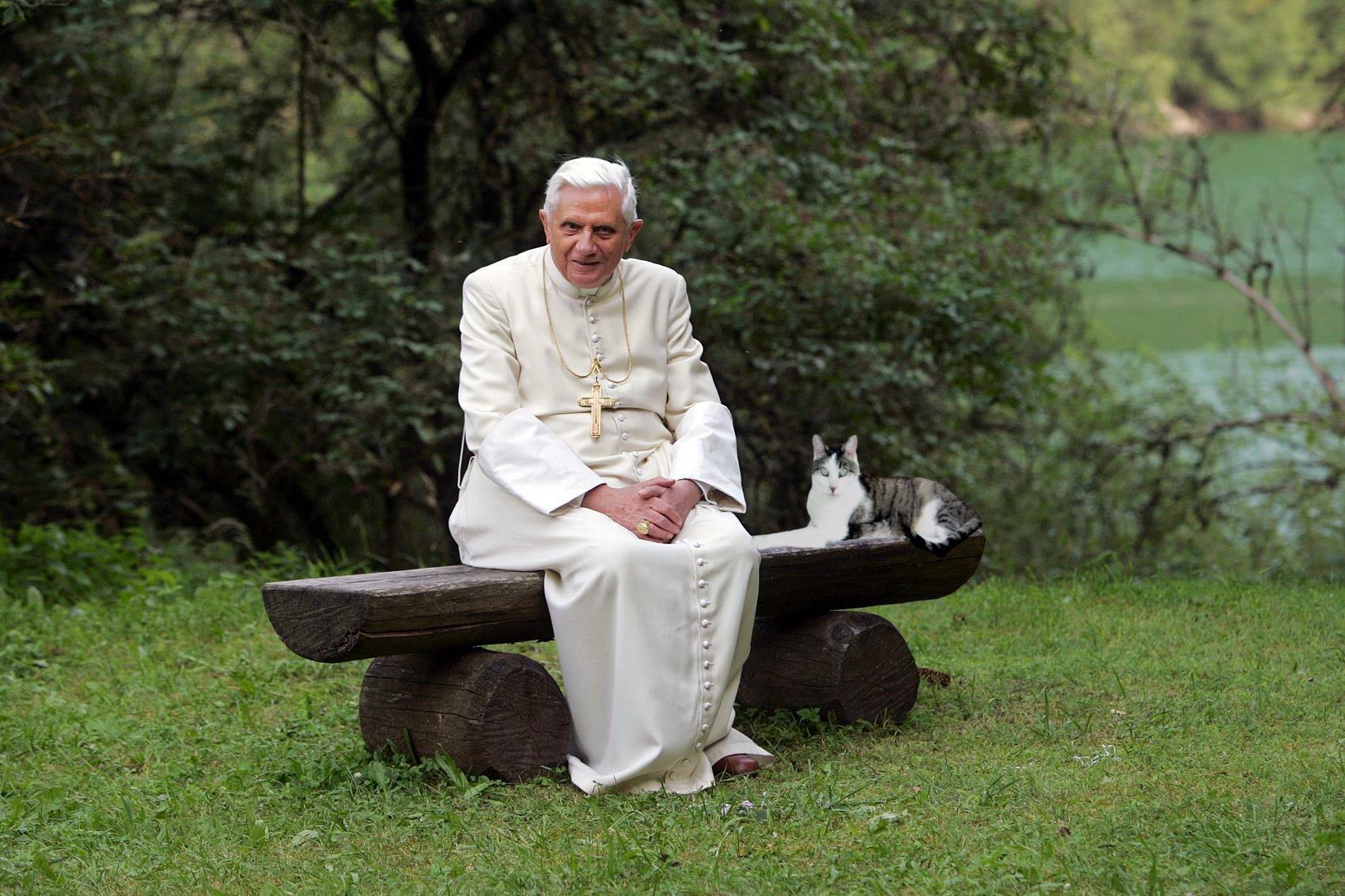
The Pope and the Cat
Pope Benedict with one of his cats.

As pope, Benedict continued to care for strays, and had two cats of his own — one who’d been with him since before he was made the leader of the global church, and another he rescued off the streets of Rome.

Photos of Pope Benedict with cats are different than the typical shots showing him meeting with world leaders or waving to crowds. His expression and posture are more relaxed in the presence of felines, and he’s often smiling in the images that show him holding a cat.

But it wasn’t just personal for Benedict.

“Dominion” over animals

For centuries, some people — mostly outside Catholicism, but some Catholics too — have argued that animals exist for the use of mankind, that their purpose on this Earth is to serve as resources. Proponents of the view point to a handful of Old Testament quotes, including a famous quote from Genesis that says God gave man “dominion over the fish of the sea, and over the birds of the air, and over the cattle, and over all the wild animals of the earth, and over every creeping thing that creeps upon the earth.”

Genesis 9:3 attributes this quote to God: “Every moving thing that lives shall be food for you.”

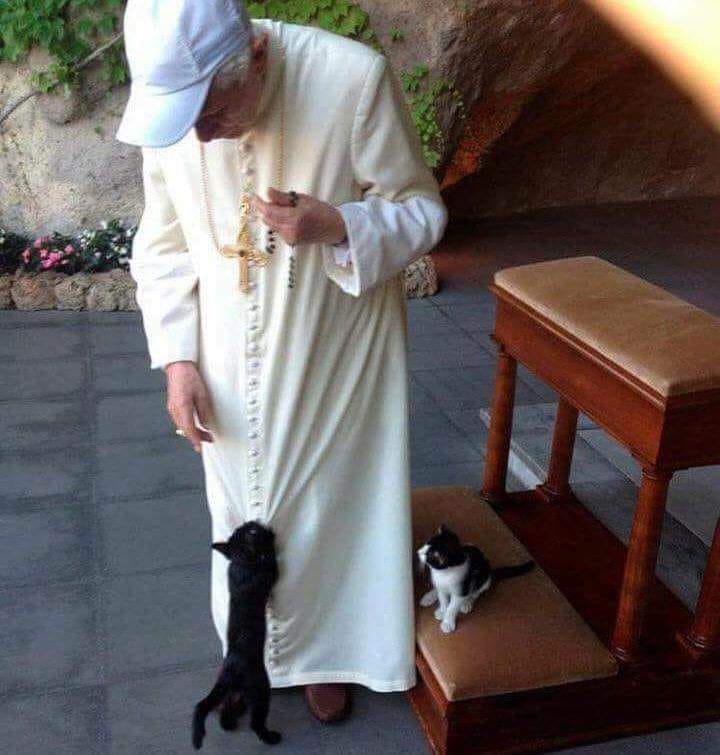
The Pope and the Cats
Pope Benedict was well known for his love of cats, from his childhood in Bavaria to his days as pope emeritus living in retirement.

Other verses detail precisely which animals they can eat and remain in His good graces, and many Christian sects see those lines as a clear indication that God intended for animals to serve the needs of men.

But the Old Testament also tells us we can take slaves (Leviticus 25:44-46), that parents can have their kids stoned to death for disobeying them (Deuteronomy 21:18-21), that when children make fun of others, it’s totally cool to call upon righteous bears to maul them to death (2 Kings 2:23-24), and that people with blindness, flat noses and other ugly “blemishes” should wait outside church with the rest of the rejects while the good-looking people pray. (Leviticus 21:17-24).

Don’t even get me started on Sampson and the Book of Numbers.

The point is, if you’re going to be a stickler for things supposedly okayed or forbidden in the Old Testament, animals are the very least of your problems, especially if you trim your beard, let your hair get too long, wear shirts made of two different materials, or have ever placed a bet on DraftKings.

“Animals are God’s creatures”

As we look back on the life of the late pope emeritus, it’s worth noting that Benedict and his successor, Pope Francis, have rejected the view that animals are God’s version of scripted NPC automatons who exist so we can eat steak and wear leather jackets.

“Clearly, the Bible has no place for a tyrannical anthropocentrism unconcerned for other creatures,” Pope Francis declared in 2015.

Benedict spoke out about the cruelty inflicted on animals, the incalculable suffering of animals in industrial farming circumstances, slaughtered by the billions for food after short, brutal lives in which no consideration is given to them as living, sentient creatures.

In a 2002 interview, Benedict called animals “companions in creation” and criticized the modern food industry for its “degrading of living creatures to a commodity.”

“Respecting the environment,” he said in a 2008 interview, “means not selfishly considering [animal and material] nature to be at the complete disposal of our own interests.”

Francis made the church’s position absolutely clear with an encyclical — an official letter to members of the church — called Laudato Si. In it, he condemned the “ruthless exploitation” of animals as commodities and asserts they are individuals who are recognized by God. He urged Catholics to treat them well, to respect and protect wildlife and the environment they depend on.

Animal life has “intrinsic value,” Francis said, adding that Christians must reject the idea that animals are “potential resources to be exploited.”

As if speaking directly to people who use the aforementioned Old Testament quotes to support practices like factory farming, harvesting animals en masse for pelts and hunting for the “fun” of it, Francis said:

“We must forcefully reject the notion that our being created in God’s image and given dominion over the earth justifies absolute domination over other creatures.”

Both popes also noted that, in addition to the suffering we cause, when we exploit animals as are also behaving in a way beneath the dignity of humankind. It’s a stain on our collective identity as a species, a betrayal of our roles as wardens of the planet.

Let’s put aside the moral considerations for a moment. The continued existence of the complex ecosystems on our planet — and indeed of humanity itself — depends on the many roles animals play, from carrying seeds to pollinating plants, limiting the growth of flora that would otherwise dominate and destroy other plants, rerouting water systems by creating dams, controlling the populations of creatures that would otherwise multiply unchecked, and the thousands of other roles they play in maintaining the balance of ecosystems.

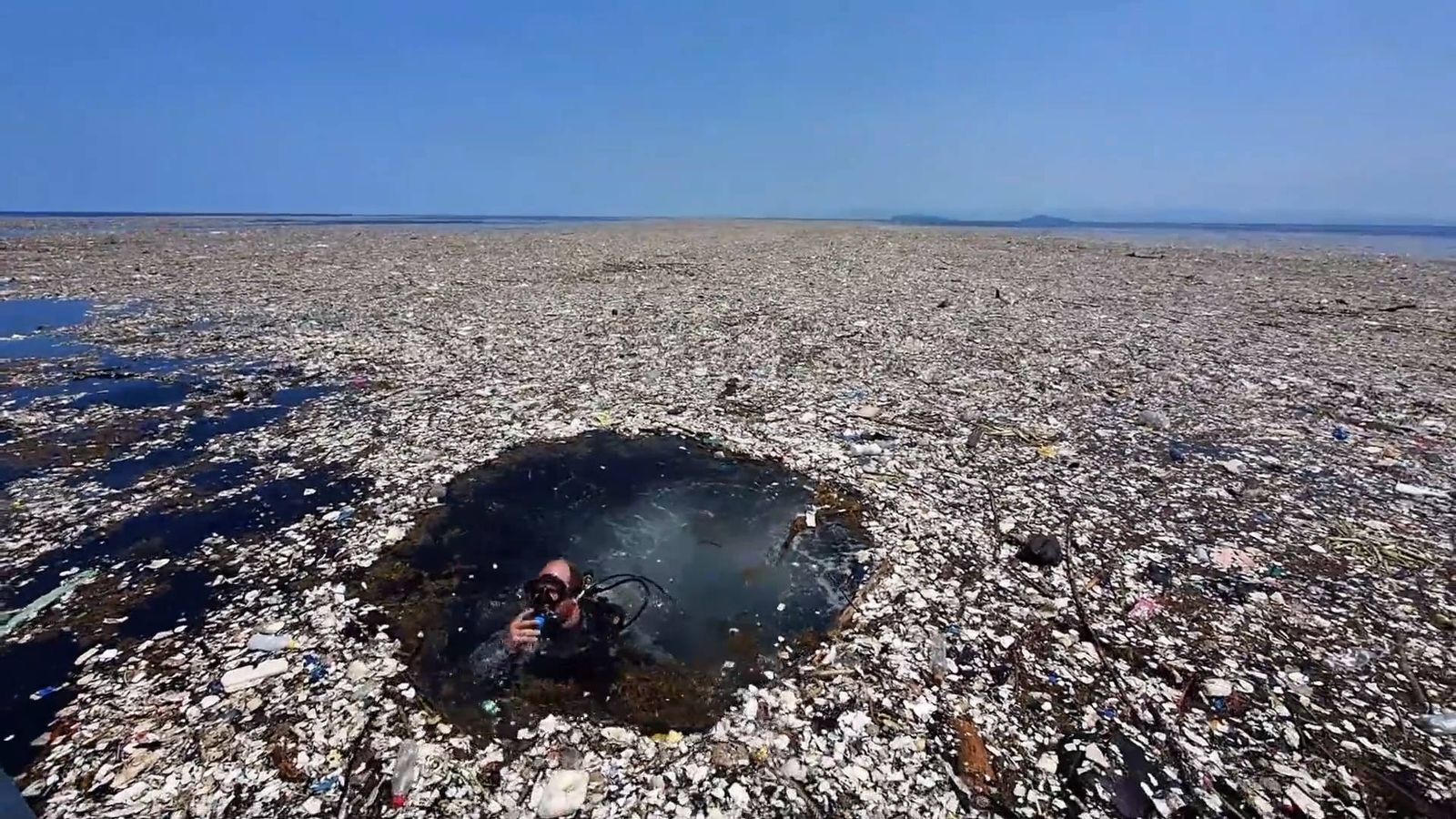
Benedict left this Earth on Dec. 31, 2022, at a time when we have killed off almost 70 percent of all wildlife in the entire world. It’s not just a matter of living on a lonely planet, or tucking future children into bed while telling them that, no, they can’t see elephants or tigers because the last of them are dead. Removing keystone species, extirpating entire genera while rendering vast stretches of the planet uninhabitable, purging the oceans of life as they accumulate literal continents of plastic waste, means we’re marching toward a cascade failure most of us won’t even see coming as we argue about carbon credits, politicize common sense, tinker with viruses and edit genomes.

It’s long past time we recognize the fact that we share this planet with billions of other minds and start living in a way that respects them. If we can save them, perhaps we can save ourselves too.

Great Pacific Garbage Patch
The 1.6 million square kilometer Great Pacific Garbage Patch, which weighs more than 80,000 metric tons.