Lupita Nyong’o not only shares the screen with a feline co-star in the new film A Quiet Place: Day One, she’s also a devoted cat mom to a ginger tabby named Yoyo.
Although I haven’t seen most of Lupita Nyongo’s movies — I really liked her performance in Us and her voice work in Disney’s Jungle Book remake — I’m a big fan now that I know she’s a cat lover.
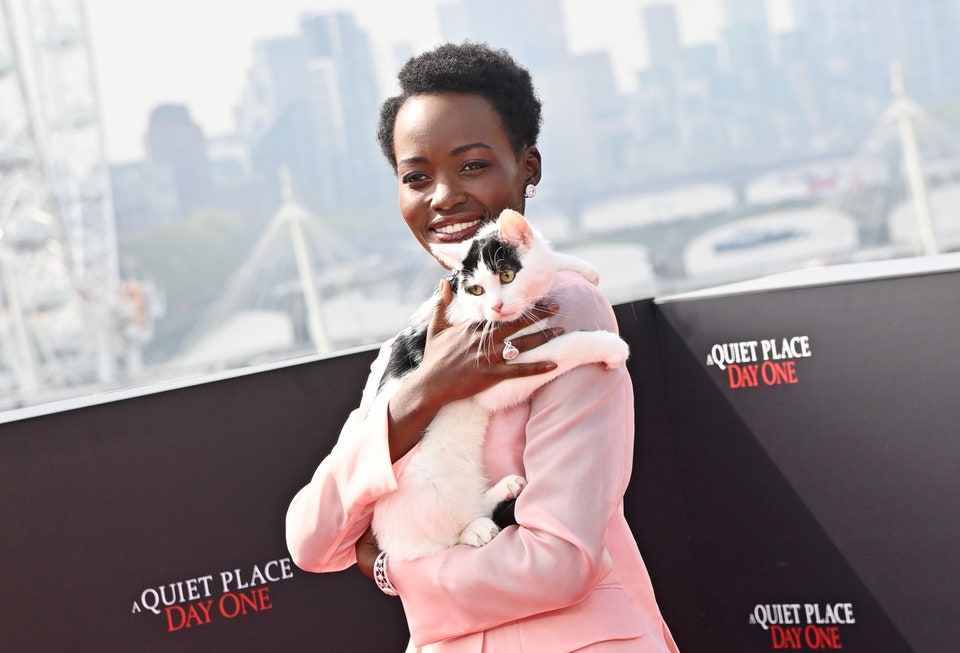
Nyong’o took to the red carpet for the premiere of her newest film, A Quiet Place: Day One in London on Wednesday, and her plus-one was a cat named Schnitzel, who also stars in the movie. Photos show Nyong’o posing along co-star Joseph Quinn, smiling as she cradles Schnitzel in her arms.
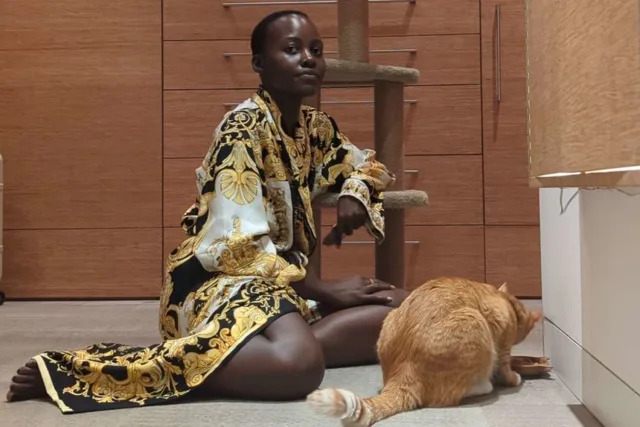
Lupita Nyong’o with her cat, Yoyo. In addition to posing with a cat on the red carpet premiere of her new film, Nyong’o proudly dotes on Yoyo and mentions him often. Credit: Lupita Nyong’o/Instagram
A Quiet Place is a 2018 film about a family that lives a completely silent life on a farm after the civilization has fallen to monstrous creatures that can’t see but are exceptionally sensitive to sound.
The film received nearly universal positive reviews for its use of sound — and the complete absence of it for long stretches — as a tension-building device, and a 2020 sequel continued the story.
Day One, which hits theaters on June 28, promises audiences a look at how the creatures appeared and civilization collapsed.
Schnitzel’s role isn’t entirely clear, but if it’s anything like 2022’s Prey, cats will fill their usual niche as predators, highlighting the difference between terrestrial and extraterrestrial hunters.
Caring for a cat in a world like A Quiet Place could be a double edged-sword: a super vocal cat like my Buddy wouldn’t last very long unless he quickly learned to keep a lid on his constant commentary, but cats are also incredibly sensitive to things that pass beneath the notice of us humans.
Thanks to their incredible hearing, exceptional sense of smell, the advantage of an extra olfactory organ and whiskers that pick up even the slightest stirring, felines are keenly aware of their surroundings.
As for Nyong’o, while Schnitzel is not her cat, she’s the proud cat mom of Yoyo, an orange tabby she fostered in late 2023. It only took her three days of fostering the little guy before she realized “I could not give him up,” she said last year shortly after the adoption was made official.
“I never understood people whose phones were full of photos and videos of their pets — now I am one of those people,” she wrote when she adopted the tabby. “It may look like I saved Yoyo, but really, Yoyo is saving me.”
Lupita Nyong’o with Yoyo. Credit: Lupita Nyong’o/Instagram
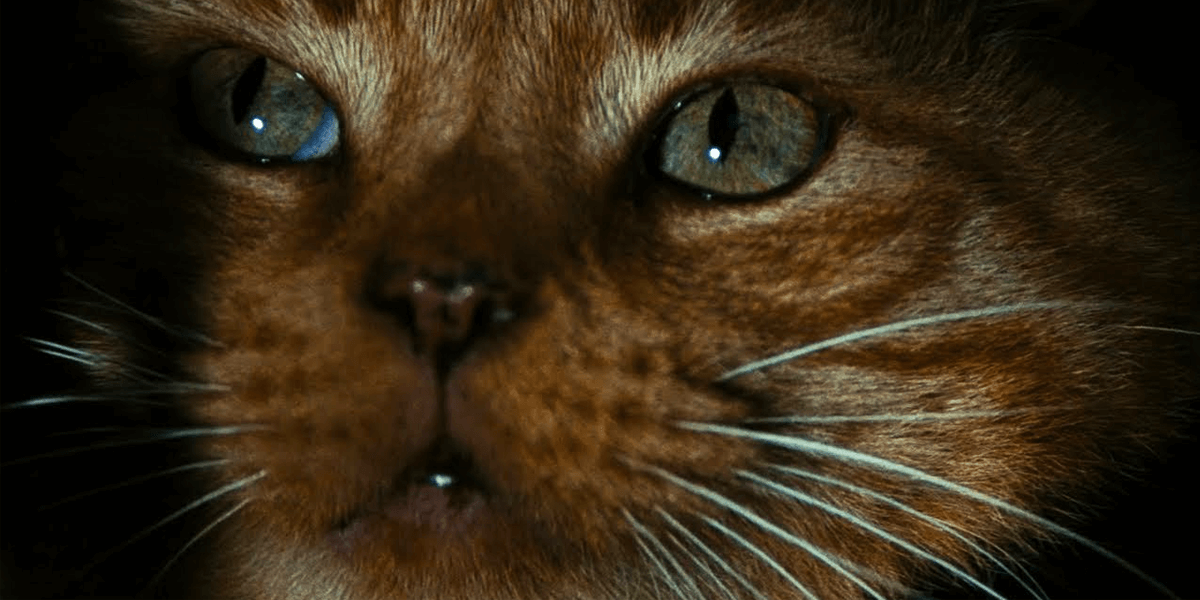
Making his debut in 1979’s Alien, Jonesy is one of the most famous felines in cinema history.
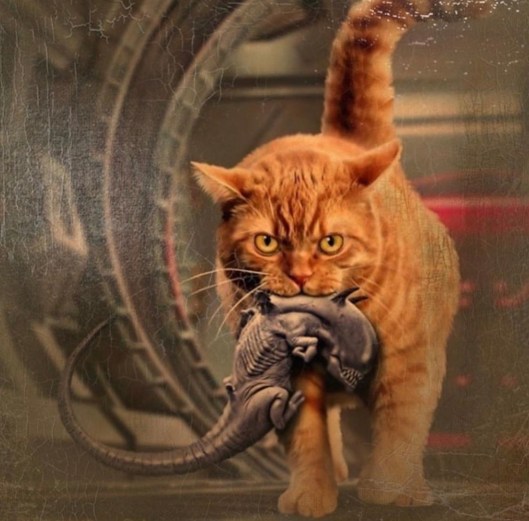
There’s a popular meme among Alien fans that depicts Jonesy the Cat walking nonchalantly down one of the starship Nostromo’s corridors with his tail up, carrying the corpse of the recently-spawned alien in his mouth like he’s about to present a dead mouse as a gift to his humans.
The joke is self-evident: if the crew of the Nostromo had allowed Jonesy to take care of business from the get-go, the alien would have been disposed of before it had the chance to grow into the monstrosity that haunted the decks of the Nostromo and the nightmares of viewers.
“Who’s a good boy? Who just saved his crew from certain violent death at the claws of a ruthless alien predator? That’s right, you did!”
Of course then there’d be no movie. No ripples of shock in theaters across the US as audiences were confronted by something more nightmarish and utterly alien than popular culture had ever seen before. No indelible mark left on science fiction.
Despite the film’s retrofuturistic aesthetic, it’s difficult to believe Alien first hit theaters almost half a century ago.
That’s testament to director Ridley Scott working at the height of his powers, the carpenters, artists and set dressers who created the starship Nostromo’s claustrophobic interior, the design of the derelict starship where the alien was found, and the bizarre creature itself.
The alien ship and creature designs were the work of Swiss surrealist H.R. Giger, who was little-known at the time but floored Scott and writer Dan O’Bannon with his hyper-detailed paintings of grotesque biomechanical scenes.
Signourney Weaver and one of the cats who played Jonesy in the first film.
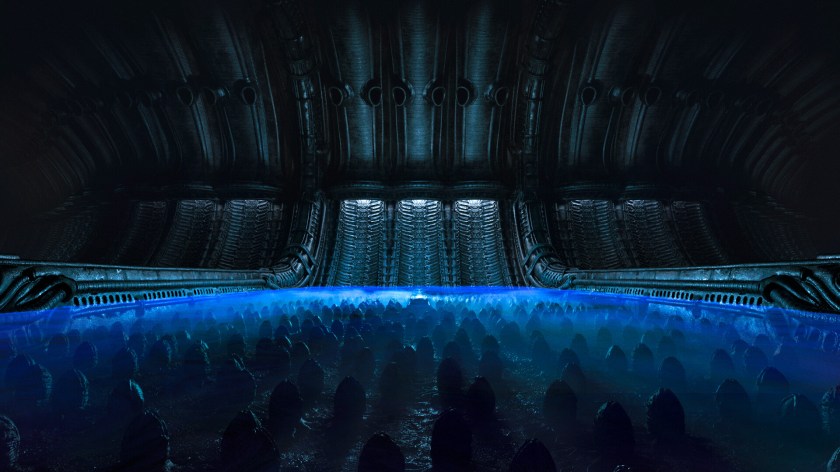
Kane explores the infamous egg chamber in the derelict alien ship.
Fan art of Jonesy
A close-up shot of the retrofuturistic tech used in the series, a design decision that departed from the gleaming visions of the future common at the time.
A set photo showing the first film’s crew on the iconic space jockey set.
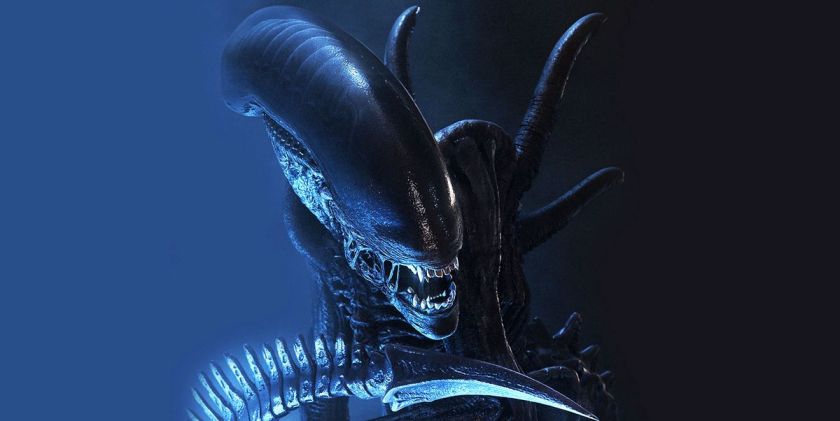
Giger’s work, specifically his 1976 painting Necronom IV, was the basis for the titular alien’s appearance. The alien, called a xenomorph in the film series, is vaguely androform while also animalistic. It is bipedal but with digitgrade feet and can crawl or run on all fours when the situation calls for it. It hides in vents, shafts and other dark spaces, coiling a prehensile tail that ends in a blade-like tip.
But it’s the creature’s head that is most nightmarish. It’s vaguely comma-shaped, eyeless and covered in a hard, armored carapace that ends just above a mouth full of sinister teeth like obsidian arrowheads. There’s perpetually slime-covered flesh that squelches when the creature moves but there are also veins or tendons or something fully exposed without skin, apparently made of metal and bone. Maybe those ducts feed nutrients and circulate blood to the brain. Maybe they help drain excess heat from the creature’s brain cavity.
Regardless, it’s a biomechanical nightmare that the Nostromo’s science officer, Ash, admiringly calls “the perfect organism” whose “structural perfection is matched only by its hostility.”
The alien, Ash declares, is “a survivor, unclouded by conscience, remorse, or delusions of morality.”
The alien, also referred to as a xenomorph, “that thing,” a “dragon,” “the perfect organism” and various other names by characters in the series. Credit: 20th Century Studios
Part of what makes Jonesey so beloved is the fact that, together with the xenomorph and Ripley, he completes the triumvirate of survivors. We see Jonesy scurry into the protection of tiny confined spaces to escape the alien, hissing at it in the dark. We see him dart into the bowels of the ship after sensing the stalking creature, adding another blip to the crew’s trackers. Finally we see him settling into a cryosleep pod with Ripley, like so many other cats with their humans, when the threat has passed.
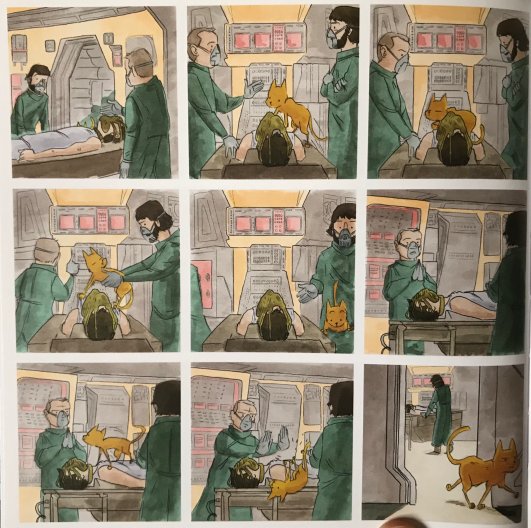
Jonesy — affectionately referred to as “you little shithead” by Ripley in the second film — appears in the franchise’s two most famous films, his own comic book series titled Jonesy: Nine Lives on the Nostromo, a 2014 novel (Alien: Out of the Shadows), and in hundreds of references in pop culture over the last half century, from appearances in video games (Halo, World of Warcraft, Fortnite) to references and homages in movies and television shows.
A page from Jonesy: Nine Lives On The Nostromo, which tells the story of Alien from the cat’s perspective. These panels depict Jonesy watching Ash and Dallas examining Kane in the ship’s medical lab.
He’s like the anti-xenomorph. Cats are predators, after all, and Jonesy might be the xenomorph to the ship’s rodents just like every ship’s cat in thousands of years of human naval endeavors. But to the crew members Jonesy’s a source of comfort, a warm, furry friend to cuddle with. Unlike the xenomorph he’s got no biological programming urging him to impregnate other species with copies of himself in one of the most horrific gestation processes imaginable.
Xenos are like predators on steroids, gorging themselves on their victims to fuel unnaturally swift cell reproduction and growth. As a result, over the decades some have speculated that the alien simply ignored the cat, deeming its paltry caloric value unworthy of the effort to kill.
The idea that Jonesy was too small to interest the alien is proved a fallacy in later franchise canon when we see the aftermath of a xenomorph consuming a dog. It’s indiscriminate in its quest for energy, feasting on adult humans and animals alike until two or three days pass and it’s a 12-foot-tall, serpentine nightmare the color of the void of interstellar space.
Just imagine sitting in a theater in 1979. Your idea of science fiction is sleek jet-age spacecraft, Star Trek and Stanley Kubrick’s clinical orbital habitats from 2001: A Space Odyssey. You’re expecting astronauts, heroes, maybe a metal robot or an alien who looks human except for some funky eyebrows, green skin or distinct forehead ridges.
Instead you get a crew of seven weary deep space ore haulers inhabiting a worn, scuffed corporate transport ship, complaining about their bonuses and aching for home, family and the familiar tug of gravity.
But home will have to wait. The ship has logged an unusual signal of artificial origin broadcasting from a small planet in an unexplored star system. The crew has no choice but to investigate. It’s written into their contracts, which stipulate the crew will forfeit their wages if they disregard the signal.
So they land, suit up, move out and find a derelict starship. An incomprehensibly massive vessel so strange in detail and proportion that it could only have been built by an alien mind, with unknowable motivations and psychology.
The egg chamber of the derelict alien ship, designed by Giger.
Inside, hallways that look like ribcages lead to vast chambers with utterly bizarre, inscrutable machinery that seems to consist of biological material — skin, bone, joints, organs — fused with metal. In one of them the corpse of an alien, presumably a pilot, is integrated into a complex array. It’s at least twice the size of a large human man. Its elephantine head is thrown back in the agony of its last moment, when something exploded outward from its body, leaving a mangled ribcage, torn papery skin and desiccated organs.
And beneath that, a shaft leading to another horror — a chamber that seems to stretch for kilometers in either direction, where leathery eggs are cradled in biomachinery and bathed in a bioluminescent cerulean mist.
The decision to enter that chamber sets off one of the most shocking scenes in cinema history, leads to the birth of pop culture’s most terrifying monster, and sent millions of theater-goers home with nightmares in the spring and summer of 1979.
It’s almost too much to handle. But take heart! The unlikely female protagonist makes it to the end, and so does the cat. What more can you ask for?
Jonesy grooming himself on the flight deck of the starship Nostromo. Credit: 20th Century Studios
As one of the bravest cats on planet Earth, Buddy is uniquely qualified to advise scaredy cats who get easily freaked out by horror movies.
Dear Buddy,
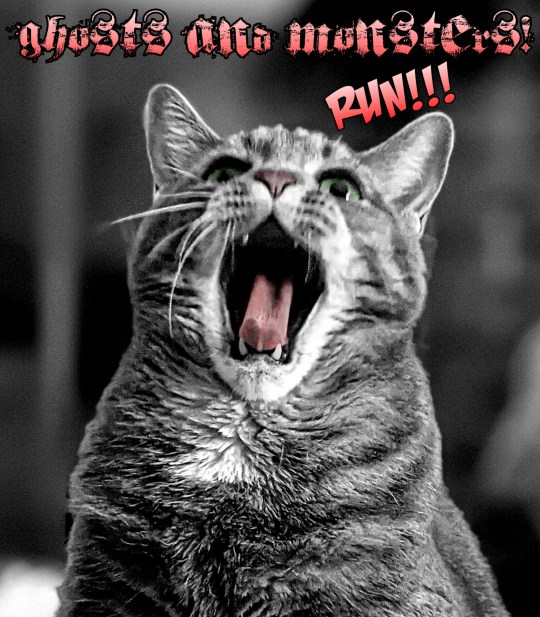
My human likes to watch horror movies and they’re freaking me out! I can’t even look at mirrors since we watched Oculus, I jump at shadows ever since watching 30 Days of Night, and I wet my favorite napping spot the night we saw The Ring.
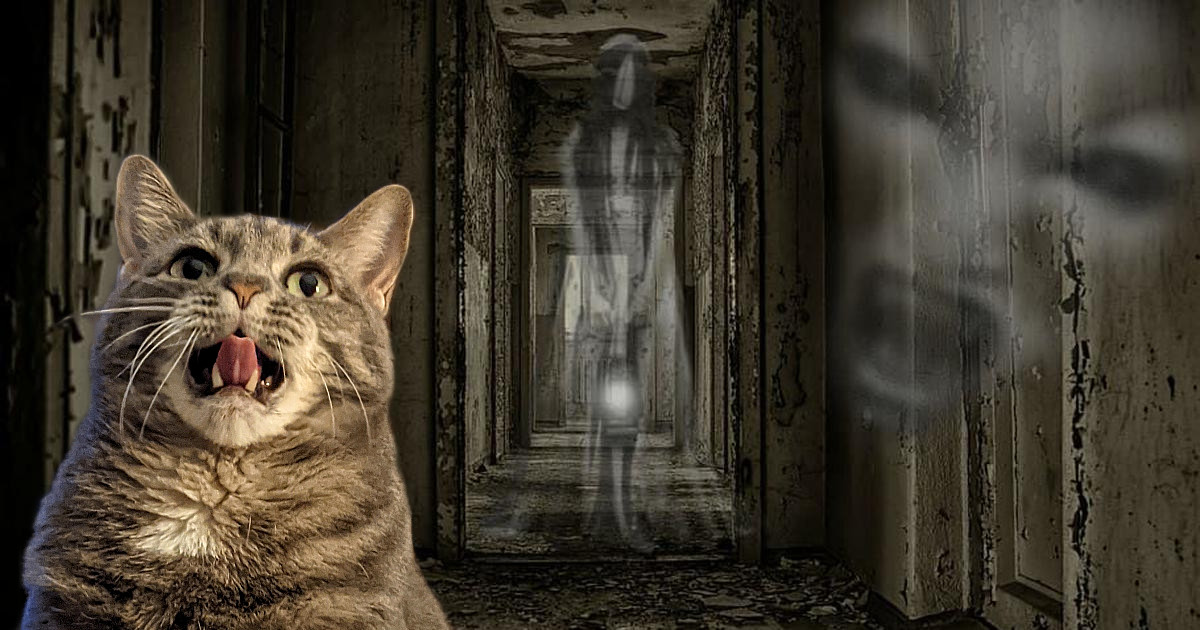
But it gets worse! My human spent almost two weeks watching a TV series called The Haunting of Hill House, which was so scary, scarier than vacuum cleaners and filled with terrifying scenes! It had all kinds of monsters and people dying and countless sinister-looking ghosts hidden in the background of every scene.
Buddy, I can’t sleep at night, even with my human. I’m scared of monsters in the closet or under the bed, and ghosts outside the bedroom door. I’m scared they’re gonna get me in my sleep!
Help me, Buddy!
Terrified in Tallahassee
Dear Tallahassee,
You’ve come to the right cat, amigo! Among our kind the name Buddy is synonymous with bravery as well as good looks and charm, and I’m known for keeping my cool in circumstances that would reduce lesser cats to frazzled, freaked-out messes.
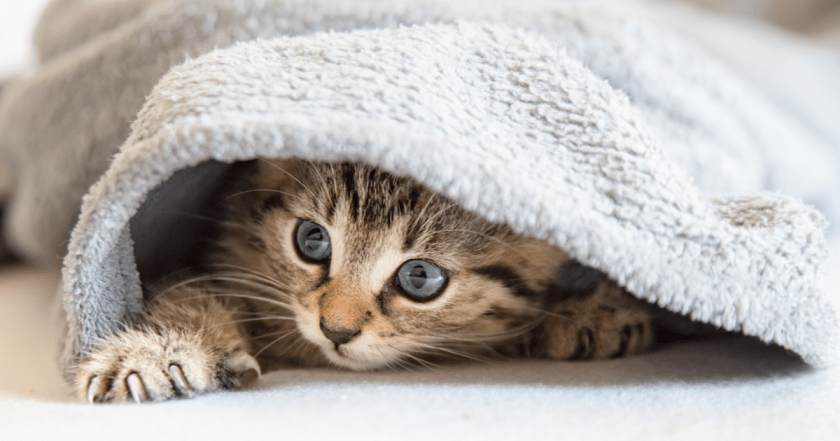
I’m going to let you in on a little secret, one they don’t teach to just any cat or kitten: Get under the blankets!
Blankets: The secret weapon.
You see, blankets are about more than keeping those furless humans warm when they sleep. Blankets have magical properties that repel monsters and ghosts. They’re like shields or magic force fields!
Humans know that if you’re scared and you think there might be monsters in your home, the best solution is to get completely under the blankets, wrap yourself up nice and cozy and rest easy knowing the safety they will afford you until sunrise, when ghosts and monsters have to retreat or die in the sunlight. (Or was that vampires? I get things mixed up sometimes.)
Anyway, being the brave cat I am, I’m totally not scared of anything and I don’t have to hide under blankets. In fact, my human sleeps easy knowing that I’m guarding him. But if I were scared, Tallahassee, I’d dive under some magical blankets and feel my worries melt away.
Your fearless friend,
Buddy
Buddy is widely regarded as one of the bravest cats in the world.
Archive 81 arrived just in time to help us through a content dead zone.
The Witcher’s excellent second season helped tide us over last month alongside Amazon’s not-so-great adaptation of The Wheel of Time, and critically-lauded The Expanse ended its six-year run on Jan. 14. Meanwhile, if network TV is your thing, the last few weeks of January through early February are filled with nothing but reruns as networks are loath to put any original content up against the NFL playoffs and Super Bowl.
Enter Archive 81: A story that promises mystery, Lovecraftian horror and a heavy dose of 90s nostalgia.
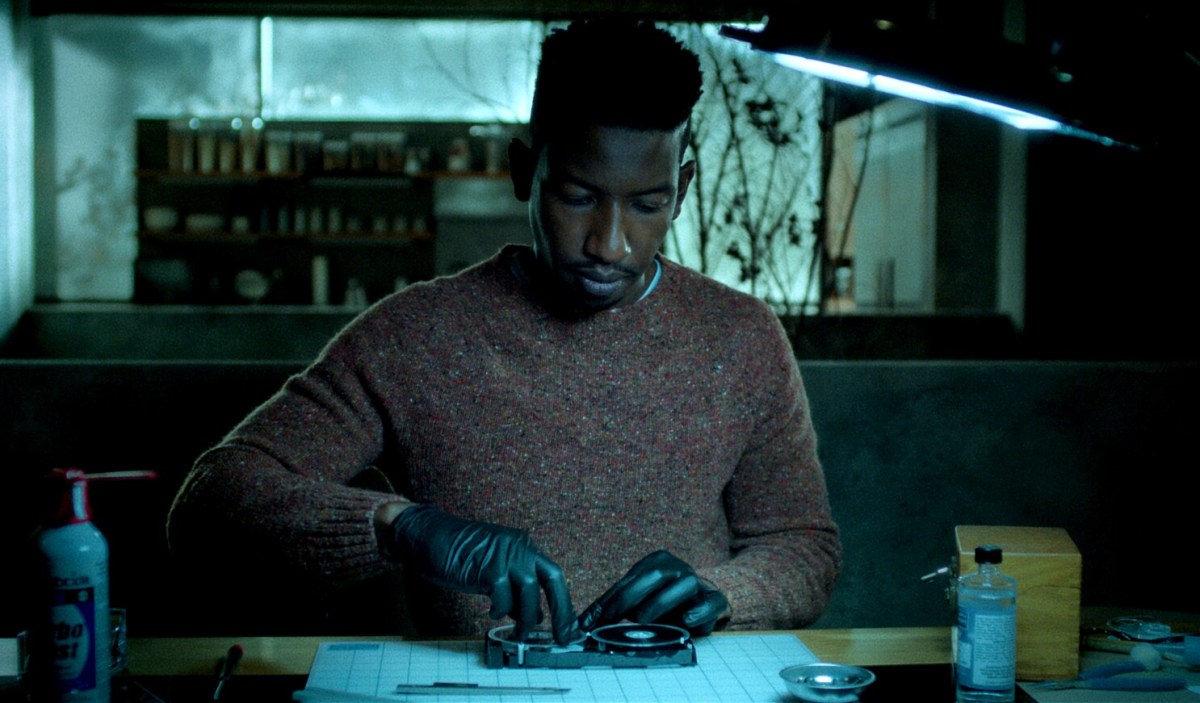
Our protagonist is Dan Turner (Mamoudou Athie), an analog enthusiast who makes a living restoring vintage media (VHS, cassette, Betamax and anything else pre-DVD), and spends his off hours crate-digging for rare recordings.
We meet Dan as he’s looking through recently-acquired VHS tapes at a street vendor’s stall in Manhattan.
“You know last month you sold me 16 hours’ worth of a T-ball tournament, yeah?” Dan asks.
“Yeah. But also, I sold you an uncut version of Phantasmagoria off channel 7,” his street vendor friend says. “That’s unreleased and very rare.”
When Dan balks at buying a box of random tapes, his vendor friend appeals to the hobbyist in him.”Look,” he says, “I know you love the hunt.”
“The hunt” he’s referring to is the obsessive drive that prompts collectors of all types to sift through yard sales, estate auctions and abandoned storage units. It’s the thrill of opening the unknown with the knowledge that most of it will be junk, but every once in a while a nondescript box will hold a rare gem.
It’s the thrill of the hunt that leads Dan to accept an archiving gig from a secretive company despite concerning red flags.
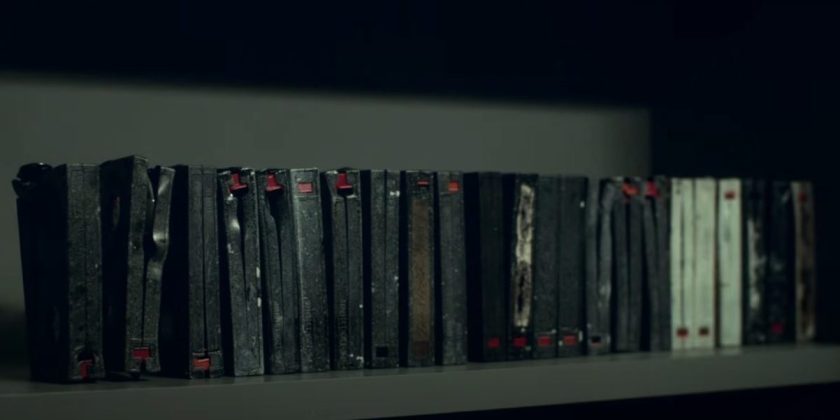
The job is to restore an archive of video cassettes scavenged from the charred ruins of a Manhattan apartment building called the Visser that burned to the ground in 1994. No one survived the building-consuming fire, and Dan’s employers believe the tapes could shed light on how the fire started as well as the people who lost their lives.
Dan finds himself increasingly invested in the story of Melody Pendras, who lived on the Visser’s fourth floor before the building was destroyed by fire. Credit: NetflixDan is hired by a company to restore fire-damaged cassettes that could contain important clues about a 1994 fire that destroyed an apartment building in Manhattan. Credit: Netflix
The company offers Dan a particularly generous fee for restoring and digitizing the footage, with the caveat that for the duration of the project he has to work out of a company-owned compound in the Catskills, a few hours’ drive north of New York City.
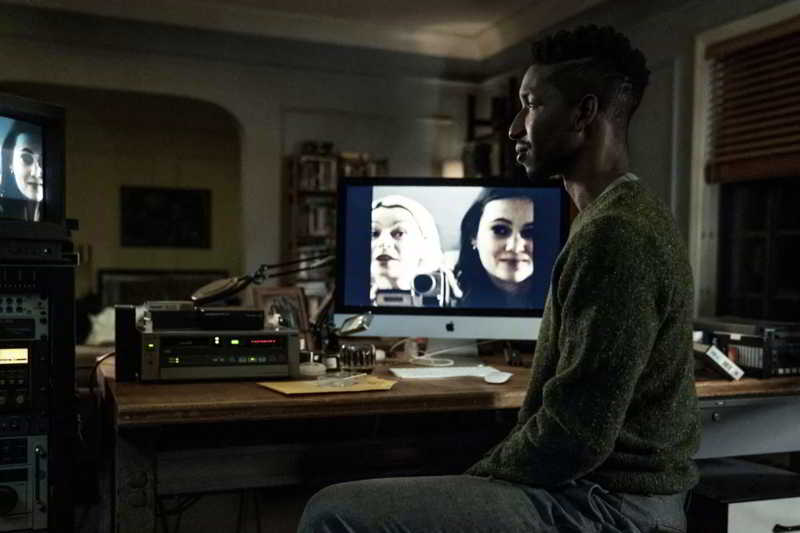
Dan accepts and it doesn’t take long for him to become engrossed in the content of the tapes he’s restoring. The collection of cassettes was shot by a young woman named Melody Pendras who moves into the historic and creepy Visser Building, ostensibly to interview its residents for a dissertation she’s doing on the strange history of the high rise.
With each cassette Dan restores and digitizes, a new chapter of Melody’s time at the Visser is revealed, and it becomes increasingly apparent that something is very wrong with the building and the people who inhabit it.
Think Ghostbusters and 55 Central Park West, also known as “Spook Central.” In the 1984 hit, 55 Central Park West’s bizarre design choices came courtesy of an architect who was heavily into the occult, and he built the high rise to serve as some sort of supernatural antenna for spirits from another dimension. The Visser has similar origins, although the details are best left unspoiled.
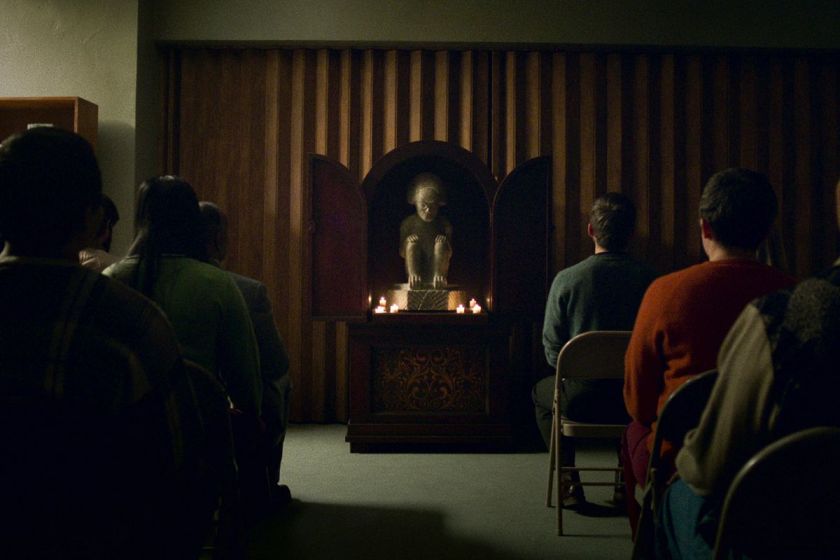
There’s something creepy going on in the Visser’s basement community room. Credit: Netflix
As Dan becomes increasingly invested in Melody’s story he begins to feel the effects of isolation, living in the brutalist compound that houses the repair studio and a cavernous living space. He’s not allowed visitors, as the content of the tapes are supposed to be confidential, he doesn’t get cell service and he begins to suspect the landline is tapped.
With a history of mental illness, Dan isn’t sure if he’s imagining things when he realizes someone else may be in the compound, and his paranoia is stoked by the discovery of journals that indicate he wasn’t the first archivist to work in the isolated building.
To make matters worse, he begins to experience vivid dreams in which he’s speaking directly to Melody — and she’s clearly in trouble, calling for help across almost three decades.
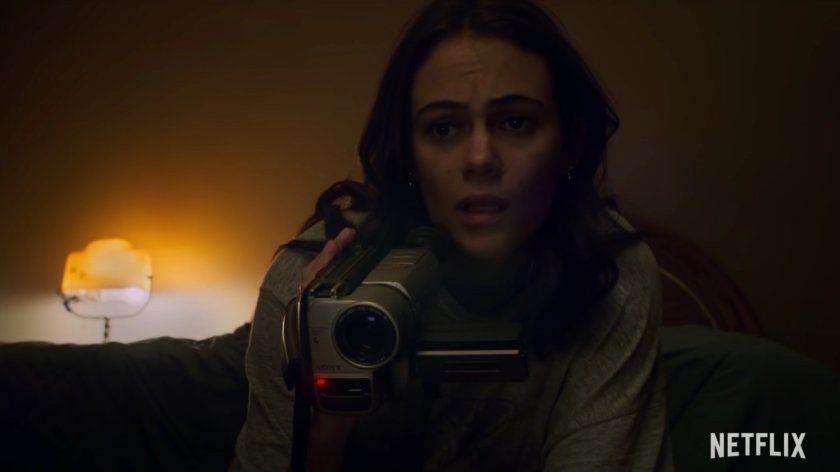
As Dan restores the damaged video tapes, he unravels more of the mystery surrounding the disappearance of Melody Pendras (Dina Shihabi). Credit: Netflix
Archive 81 is guilty of the so-called “mystery box” narrative format popularized by JJ Abrams and Damon Lindelof with Lost. The pair provided a template to string viewers along by unraveling just enough of the central mystery in each episode to keep viewers hooked, but as Lost proved, the mystery box form only succeeds in pissing the audience off if there’s not a solid pay-off at the end.
While Abrams and Lindelof dragged out Lost’s narrative and winged its conclusion to much derision, Archive 81’s Rebecca Sonnenshine clearly mapped out her story from start to finish. Momentum builds over eight roughly hour-long episodes until things escalate quickly toward the end. While I’m still not sure how I feel about the way things concluded, Sonnenshine’s story provides answers to most of the burning questions that pop up over the season’s run, and leaves just enough of a cliffhanger for a potential sequel. (And judging by the show’s several-week run atop Netflix’s charts, we probably will see at least another season.)
You could argue that mystery is baked into the genre: Archive 81 is a drama with elements of horror, but it doesn’t rely on jump scares. It avoids many of the latter genre’s most worn-out tropes while embracing others, layering the narrative with an ever-increasing sense of dread. It’s a clear attempt at high-concept horror.
There’s not much in the show to dissuade the squeamish and the writers are more concerned with exploring their characters than trying to freak viewers out. All the same, whether you enjoy the series or not probably depends heavily on how you feel about the genre. If you’re game for something a little dark, Archive 81 isn’t a bad way to spend a week’s worth of frigid January or February nights.





 Pain In The Bud