When Cute Is Cruel: Breed Beloved By Celebrities Like Taylor Swift Suffers Painful Genetic Mutation

Scottish Folds are cute, but the genetic mutation responsible for their folded ears also causes lifelong pain, joint problems and misshapen bones.

In 1961, a shepherd named William Ross found a barn cat with a curious feature: instead of the upright, swiveling, satellite dish ears of a normal feline, this cat’s ears were floppy and shapeless, resting atop her head like a tiny knitted cap.

Ross took the cat home and named her Susie. Susie gave birth to a litter of kittens with the same floppy ears, and it all gets a bit murky from there, with a dozen variations of the story online claiming it was Ross himself or a neighbor who “created” the breed.

Regardless of who it was, the floppy ears were transformed from an abnormal feature into the unmistakable characteristic of a breed, and the Scottish Fold was born.

The cute cats quickly caught on and were officially recognized in competitions by 1971.

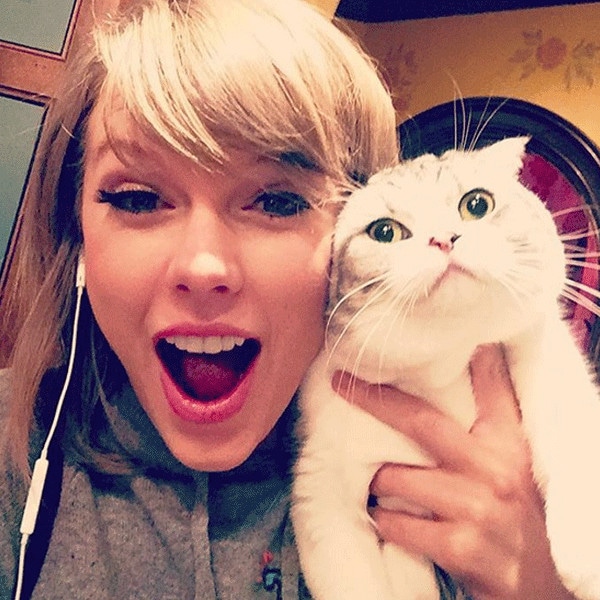
Now they’re more in vogue than ever. They’re the preferred pets of music superstars Taylor Swift and Ed Sheeran, who regularly feature photos and videos of their Scottish Folds in social media posts. People across the world are buying them, and they routinely appear in “best breed” lists online, lauded for being cuddly and docile in addition to adorable.

Ed Sheeran with his Scottish Fold cat
Ed Sheeran with his Scottish Fold cat. Credit: Ed Sheeran/Instagram

But they’ve also been banned by the same cat fancy groups that initially welcomed them, they’re prohibited outright in some countries, and animal welfare groups are begging people to stop emulating celebrities by buying them.

That’s because the same deformity that gives Scottish Folds their distinctive ears is also responsible for weak and brittle cartilage and bones elsewhere in the body, which results in lifelong pain and disability.

According to the RSPCA:

“The disease is evident on x-rays of cats from as young as seven weeks of age. Serious abnormalities in joints and bone growth lead to arthritis (painful, swollen joints), short, abnormally thick, and inflexible tails, spinal abnormalities and short, stiff legs. The welfare impacts of Scottish Fold Osteochondrodysplasia can be severe in terms of pain and inability to perform natural behaviours, as these cats can be lame, walk with an abnormal gait, can be reluctant to engage in normal movements such as walking or jumping, and can even become completely crippled.

There is no cure for this progressive condition.”

Sadly, the deformities and resulting pain may be the reason Scottish Folds are considered docile and cuddly: they may simply be in too much pain to move or protest when their humans hug them or pick them up.

Ross and Turner didn’t know it in 1961, but the folded ears and brittle cartilage were the result of a genetic mutation. It wasn’t until 2016 that a group of American and Australian scientists found a mutation in a single gene, TRPV4, was responsible for weak cartilage and bones, leading to the deformities highlighted by the RSPCA in the passage above, as well as “progressive joint destruction.” The condition is called osteochondrodysplasia.

Taylor Swift and Scottish Fold cat
Swift’s cats have appeared in her music videos, feature prominently in her online posts, and were photographed in her arms for her 2024 post announcing she was supporting Vice President Kamala Harris in November’s presidential election.

Cats Protection, a UK charity, raised the issue in 2024, warning that Scottish Folds were becoming even more popular, with breeders struggling to meet high demand. The group issued a public statement asking cat lovers and Swift fans to avoid buying Scottish Folds. Scottish Folds are equally popular in the US, spurring resistance from stateside animal welfare groups as well.

The Governing Council of Cat Fancy, which registers breeds in the UK — and no longer recognizes Scottish Folds — was even more direct.

“We strongly advise members of the public not to try to acquire cats of this breed,” Steve Crow, chairman of Cat Fancy’s governing board, told The Guardian.

The Cat Whose Voice Is Heard In More Than 300 Movies, Plus: Buddy Didn’t Attack His Sitter!

A 23-second clip of a cat growling and yowling has become one of the most-used sound effects over the past three decades. The Guardian traced the clip back to the man who recorded it and got the full story.

We’ve all heard Cheeta the cat yowling, we just don’t know it.

Cheeta was a house cat who belonged to Wylie Stateman, a sound engineer who lives in LA.

In 1988, Stateman recorded an argument between Cheeta, a “remarkably small” half-Siamese void, and her mate, a tomcat named Sylvester.

The 23-second clip made it onto The Premiere Edition, a 20-CD library of sound effects Stateman produced in 1990.

Stateman, called “one of the great recorders of the time” by a colleague, told The Guardian he brought his sound recorder with him everywhere he went for three decades, recording thousands of sounds that have been used in movies for 35 years.

Buddy is also an accomplished sound effects cat.

Cheeta’s yowls are one of his greatest successes. The cranky cat can be heard in Toy Story, Home Alone 3, Les Miserables, Pet Sematary, 101 Dalmations, Venom: Let There Be Carnage, Babe, End of Days, How The Grinch Stole Christmas, and many more.

Although it’s difficult to get an exact count, it’s believed Cheeta’s distinct voice can be heard in some 330 films over the years. If you’re interested in learning more, check out The Guardian’s deep dive into the sound effect and its origins.

Buddy the Magnanimous

I went to visit my brother and his family in Washington this past week, leaving Buddy in the care of my mom.

Regular readers will recall that Bud has a bad reputation for trying to maul his cat sitters, which obviously complicates things.

The incorrigible little lunatic.

Sue, his regular sitter, has known Bud since he was a kitten. She’s literally one of the first humans he met, yet that has not stopped him from ambushing and attacking her. Incredibly, she still agrees to care for him in my absence despite his belligerence, though she’ll no longer play with him. She feeds him and gets out ASAP. I can’t blame her.

This time my mom cared for the little stinker. He’s also tried to murder her when she’s watched him on previous occasions, including one incident in which his bites and scratches necessitated a trip to urgent care and a round of antibiotics.

So yeah, the happy news is that he didn’t attack her this time, although she told me every time she came back, he’d be waiting right by the door, and when he saw it wasn’t me, he would sniff derisively before turning and padding away.

They have an uneasy truce, but I’ll take it. You know you have small dreams when you celebrate a trip in which your cat doesn’t try to maul anyone in your absence.

On a tangential note, I had a first phone interview with a wild cat conservation organization this week, and for the first time in a long time, Bud didn’t make a peep.

He’s meowed loudly during other phone interviews, he’s put his butt in front of the camera like it’s his job during video calls, and he won’t shut up at any other time, but the one time when having a cat might benefit me, he decides to be silent. Thanks, Bud. You’re the best.

Massachusetts Becomes 3rd State To Ban Declawing

The Massachusetts law is a significant victory in the quest for a national ban on the cruel procedure, which involves amputating cat toes at the first knuckle

There’s good news today from Massachusetts, which just joined New York and Maryland in banning cat declawing.

The bill, signed Friday by Massachusetts Gov. Maura Healey, prohibits all declawing surgery except for rare circumstances when it’s medically necessary, like cancer in the nail bed.

Veterinarians who violate the law face fines up to $2,500 and professional discipline if they continue the practice.

Despite its name, declawing is the partial amputation of cat toes, equivalent to cutting off human fingertips at the last knuckle.

a little cat playing
Photo credit: Alex Ozerov-Meyer/Pexels

Declawing changes a cat’s gait, causing the animal pain when it walks, and usually leads to early arthritis. It causes cats to stop using their litter boxes, because the act of standing on and shoveling litter becomes painful for them.

Last but not least, it has a profound psychological impact on felines, making them vulnerable by taking away their primary form of defense. Consequently, cats who are declawed are much more likely to bite than those with intact claws.

Most of all, declawing is cruel and inflicts a lifetime of pain on innocent animals, punishing them for doing what cats naturally do.

Aside from New York, Maryland and Massachusetts, a few dozen cities and counties have banned the procedure, ranging from places like St. Louis, Missouri, to Austin, Texas, and eight cities in California, including Los Angeles and San Francisco.

‘The Sexiest Beast Of Them All’: Buddy The Cat Joins OnlyFans!

Health authorities said thousands of female cats around the world fainted when they heard the news that Buddy the Cat is launching his very own OnlyFans.

After resisting calls from his admirers for years, Buddy the Cat has finally joined OnlyFans.

“It’s a dream come true,” said Nala, 5, a Burmese who describes herself as “Buddy’s biggest fan.”

Other felines posted celebratory messages online after the news broke, with most expressing an intent to subscribe to Buddy’s OnlyFans “no matter how much he charges.”

“A dollar a month, ten bucks a month, a hundred bucks a month, it doesn’t matter. It’s worth it,” said Penny, a puma who said she has posters of Buddy in her enclosure at a wildlife sanctuary. “Buddy is the sexiest beast of them all.”

Buddy the Cat, a gray tabby cat, being handsome.
A sizzling snap of Buddy being sizzling for his new OnlyFans site.

Buddy’s new OnlyFans site promises “sizzling snaps of Buddy napping,” “hot photos of him yawning and stretching,” and regular videos of the mercurial tabby being handsome.

“Finally, my fans can get more Buddy without having to read that stupid blog my human writes,” Buddy wrote in his announcement. “It’s full of ridiculous slander, vile lies and claims that I’m wimpy when everyone knows I’m, like, brave and stuff.”

buddy_catpeople_edited

1735594107387

As of Friday, the new site featured a handful of clearly photoshopped images of the gray tabby with bulging muscles as he lifted weights, and a poorly produced video depicting the diminutive feline “ambushing” a stuffed alligator, with the sounds of a jaguar dubbed into the footage.

“Just catching me some lunch!” Buddy captioned the clip. “Us apex predators don’t eat from a can, we hunt our own meals.”

A gray tabby cat sits in a cardboard box.
Buddy the Cat poses in a box, striking a handsome pose as he gazes yonder.

There was no sign that questions about the veracity of the images bothered the egotistical feline’s admirers.

“OMG ADORBZ!” commenter princess2017 wrote.

“My handsome little prince!” wrote another poster, LioNeSS, who also added several heart and turkey emojis.

Soon after Buddy’s OnlyFans launch, it was announced that Smudge, his arch-nemesis, signed a deal to create a show about his life for Netflix. Titled “Smudge: New York’s Most Heroic Cat,” the series will “follow Smudge as he fights for truth and justice against the evil Dubby the Cat, a chubby gray tabby with an inflated ego.”

Bird Flu Kills 20 Big Cats At US Sanctuary And Prompts Pet Food Recall

Cats of all kinds are at risk of avian flu infection if they hunt birds outdoors, consume raw meat or drink unpasteurized milk.

In a tragedy that underscores how vulnerable cats of all types are to bird flu, more than half the big cats residing at a sanctuary in Washington were killed by the virus in less than a month.

Twenty cats in total died at the Wild Felid Advocacy Center, including five servals, four bobcats, two Canada lynx and a Bengal tiger.

Only 17 cats are left at the sanctuary, according to its operators.

Mark Matthews, the sanctuary director, called the H5N1 avian influenza a “wicked virus” that killed the cats in his organization’s care within 24 hours of each animal contracting it.

“We’ve never had anything like this,” Matthews said, adding that he and his staff are accustomed to cats in their care dying of old age after living long, happy lives.

In California, Gov. Gavin Newsom declared a state of emergency on Dec. 18 after infected birds were found at more than two thirds of the state’s dairy producers.

cows in barn
California’s dairy industry has been hit hard by the spread of bird flu, with more than half the state’s dairy producers impacted. Credit: Ralf R/Pexels

As of Dec. 26, bird flu had infected 65 Americans, the majority in California.

And the virus has now resulted in its first pet food recall, with Northwest Naturals pulling its turkey recipe “raw diet” food. A cat in Oregon died after consuming the food, according to the Oregon Agriculture Department.

As we noted in our earlier post about the variant of avian influenza, there’s no reason to panic. Even if you live on the west coast, the chances of your cats being infected are small.

But it’s probably a good idea to make sure your cats remain indoors, as health authorities warn cats can contract the virus directly by catching and eating birds. In one case, health officials believe three indoor cats may have caught the virus after killing mice in their home.

In addition, the American Veterinary Medical Association advises caretakers to avoid giving their cats milk, which they should not be drinking anyway, and raw meat. Domestic cats are generally lactose intolerant, and while cats can be infected with bird flu by eating raw poultry, they can also contract the virus by eating raw meat from other animals.