The proposed law would declare cats and dogs have rights, but it doesn’t do much besides that.
Declaring cats and dogs should have fundamental rights, an assemblyman in California has introduced a law that would create a Bill of Rights for the two most popular companion animal species.
The text of the proposed legislation covers the basics including the right to food and water, veterinary care and a life free from abuse, neglect and anxiety. It recognizes felines and canines as sentient animals who need mental stimulation, and says adopting means committing to caring for an animal for its entire life.
But it’s really about pushing for an even greater effort to spay and neuter both species to avoid euthanizing almost a million unwanted cats and dogs every year.
There’s been great progress in the last decade alone: In 2011, kill shelters and animal control departments in the US put down more than 2.6 million cats and dogs. In recent years that number has fallen to 920,000, including 530,000 cats, according to the ASPCA.
That’s still a staggering number of lives taken, and animal advocates think the US can continue the downward trend in euthanizing pets via efforts to educate people and execute trap, neuter, return (TNR) plans.
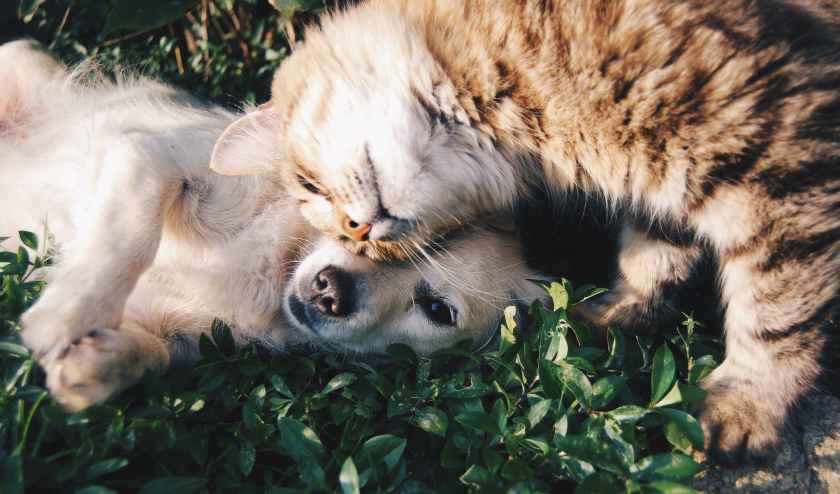
An orange tabby and his puppy friend. Credit: Snapwire/Pexels
It’s already a crime in California to harm an animal as opposed to the majority of states, where pets are considered property and the consequences for hurting or killing someone’s beloved cat or dog don’t go beyond providing monetary compensation. (However, it’s notable that the proposed cat and dog bill of rights would be added to California’s Food and Agriculture Code, not the Criminal Code. The fact that animal welfare legislation continues to exist in agriculture law instead of criminal is a relic of times when the only laws concerning animals were written to regulate their ownership, sale and slaughter.)
Santiago’s bill doesn’t specify a new plan for spaying and neutering more felines and canines. It doesn’t include funds for TNR or fund new enforcement efforts, and it doesn’t provide welfare groups with new tools.
Mostly what it does is require shelters and rescues to display the pet bill of rights in “a conspicuous place” or face a potential $250 fine. It doesn’t even specify how money collected via fines would be used.
“It sounds pretty simple,” Santiago said, “but we need to talk about it.”
Santiago’s proposed legislation has the support of Judie Mancuso, president of the animal advocacy group Social Compassion in Legislation.
“Those rights go beyond just food, water, and shelter. As stated in the bill, dogs and cats have the right to be respected as sentient beings that experience complex feelings that are common among living animals while being unique to each individual. We’re thrilled to be codifying this into law.”
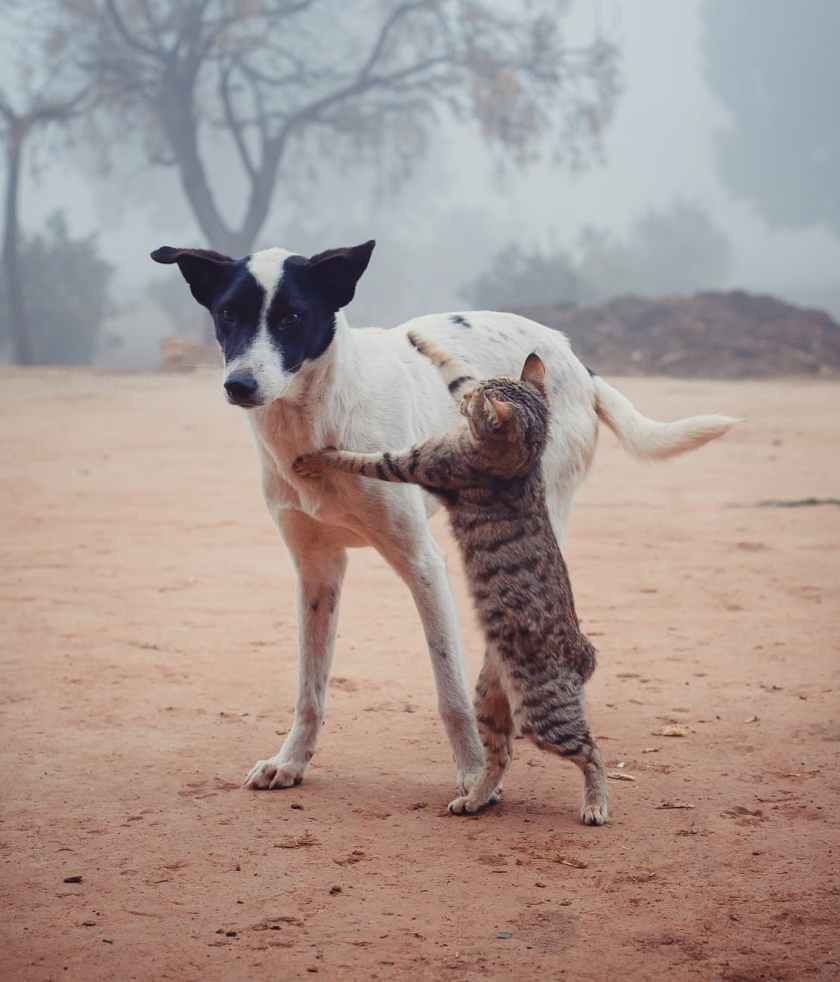
“So did you hear about the new bill of rights for cats and dogs? It says I have a right to ride you like a horse. No, seriously. Crouch down so I can get up there!” Credit: Tehmasip Khan/Pexels
There’s a long way to go yet for the potential law.
The bill doesn’t have any co-sponsors and it’s not clear how much support it has among other lawmakers. Without significant support it might not be put forth for consideration at all. New York’s assembly, for example, declined to put a declawing ban on the floor for a vote for years until it finally garnered enough support among politicians on both sides of the aisle, as well as voters and organizations like the PAW Project. The declawing ban finally passed in October of 2019.
Even if Santiago gets co-sponsors and convinces enough colleagues to proceed, it would have to pass in the state senate as well. As for PITB, we think failing the first time around might not be a bad thing if it forces Santiago to think bigger and smarter so it includes real measures to get more pets spayed and neutered. A bill of rights is a nice sentiment, but it won’t change much the way it’s written.
If Santiago and future allies lay out a competent plan for tackling companion animal overpopulation, perhaps it could be a model for other state to follow.
A couple who rented an Airbnb took a man’s cat, believing she was a neglected stray. The man says the cat is well-loved and desperately wants her back.
Troy Farrell’s cat, Nubbins, has been missing since October.
Neighbors told the Sonoma man that a couple who rented an Airbnb two houses down the street had been asking about the nearly tailless tabby and had seemed fond of her. That was Farrell’s only lead, but the owner of the Airbnb rental wouldn’t tell him who rented the place at the time Nubbins vanished.
When I read about Nubbins my first thought was that she was probably snatched up by people who thought they were doing the right thing by “rescuing” a neglected cat.
It turns out that’s exactly what happened.
First a veterinarian from Long Beach, more than 400 miles away, called Farrell and told him Nubbins had been brought into the vet’s practice for a health checkup. When they scanned the kitty’s microchip, Farrell’s contact information came up.
Farrell says he thought his ordeal was over, but the veterinarian — citing obligation to the client — wouldn’t tell him who brought the cat in. Instead, the vet said she’d pass along Farrell’s contact information and ask the couple to return the cat.
When they didn’t return Nubbins, Farrell filed a police report with the Sonoma County Sheriff’s Office, hired a private investigator and implored the local district attorney to look into the case.
“Those are evil people,” Farrell told an interviewer in late January. “Those are people without a conscience, those are people without a heart.”
He said he’s been lost without Nubbins.
“I don’t have kids. She’s my kid and she’s seen me through so many things. And they took her, and I want her back,” Farrell said. “The second I’d open that door or drive up the driveway or go out back … There’s Nubbins just in my lap.”
Nubbins in Farrell’s home. Originally a stray who escaped California’s wild fires, Nubbins gave birth to a litter before Farrell had her spayed and chipped.
The ‘catnapper’ comes forward
Now there’s a new development in the case: A man has come forward and admitted he took Nubbins, describing her as a neglected street cat who had been left outside to fend for herself in the cold without access to food or water.
The man detailed the allegations in a letter to Sonoma County Sheriff Mark Essick, and he’s not hiding his identity or denying he took the cat without asking Farrell. He identified himself as James R. Wakefield, an attorney in private practice out of Irvine, California.
“[W]e were never going to let that cat get put back in the living condition she was in without a fight,” Wakefield wrote in the letter to the sheriff.
While vacationing at the Airbnb in California wine country, Wakefield encountered Nubbins, saying she was “obviously hungry” and “she scarfed down the food” the vacationing couple gave her. Wakefield said that when he asked the Airbnb’s owner about the cat, the man said she was a local stray who needed a home.
Describing him and his wife as “70-year-old catnappers,” Wakefield said they’d do “everything in our ability to protect” Nubbins.
Farrell disagrees. He said the stumped tail and damage to Nubbins’ lip were from her days as a stray, when she escaped California wildfires several years ago and wandered into Farrell’s neighborhood. He took her in, he said, and she’s been his cat since. Nubbins is allowed in and out of the home as she pleases, he said, and always returns after she’s had her day’s adventures.
Nubbins refuses to be an indoor cat, Farrell said, and is well known to neighbors on the block, who also feed her and look out for her. It’s not uncommon for outdoor cats to make small circuits around their neighborhoods, visiting friendly neighbors for snacks and scritches before heading home for the day.
“That cat lives so large it’s not even funny,” Farrell said. “That cat has so many houses, so many people, so many little girls to play with down the block.”
Nubbins lounging outside. Her human, Troy Farrell, says the former stray likes to visit his neighbors every day.
That appears to be true: Farrell’s neighbors have backed up his story to the press, there are videos of the beloved cat hanging out in yards on the street, and one concerned neighbor even wrote a letter to the local newspaper imploring the police to get the situation sorted and return Nubbins to Sonoma.
The police have told Wakefield to return the cat to Farrell, while a spokesman for the district attorney told the Sonoma Index-Tribune that the DA is still reviewing the case. Like many other states, California considers pets as “property,” and authorities would have to determine if Nubbins is “worth” at least $950 to file criminal charges.
If Farrell can’t get Nubbins back via law enforcement his remaining recourse would be a civil trial, the newspaper noted.
Is it ever okay to steal someone’s pet?
This case raises some thorny questions. Farrell seems lost without his cat and has been clearly emotional in interviews with reporters as the saga of Nubbins has stretched on over the months. Meanwhile, I don’t think there’s any doubt Wakefield and his wife thought they were doing the right thing.
At least part of this standoff can be chalked up to misinformation and a lack of information: Matthew Knudsen, the man who rented the vacation home to the Wakefields, told them Nubbins was a stray who didn’t belong to anyone, according to Wakefield’s letter to the sheriff. Farrell said Knudsen owns and rents the house two doors down but doesn’t actually live in the neighborhood and doesn’t know how well Nubbins is cared for.
So from the Wakefields’ point of view, they thought they were rescuing a neglected cat and doing a good thing. At the same time, any cat servant should be able to empathize with the anguish another cat lover feels if their beloved feline goes missing or is stolen.
It’s easy to read the details and think maybe Farrell wasn’t doing right by his cat, and as readers of this blog know, I’m a strong advocate of keeping cats indoors for a long list of reasons, including myriad dangers to outdoor cats and the damage cats can do to local wildlife like birds, small mammals and lizards.
But I also know how easily people tend to toss out accusations of animal abuse and/or neglect. One reader was very upset with me when I posted a photo of Buddy with his paws stuck in the screen door that opens from the living room to the balcony. She strongly felt I was abusing Bud by allowing him to hang there for a few extra seconds while I snapped a few photos.
Buddy has gotten his claws stuck on the screen more times than I can count.
“Lies! The door attaches itself to my claws, that’s why I get stuck!”
Context is important in that case too. Buddy loves to lounge on the balcony in the summer, and he’s gotten his claws stuck on that damn door more times than I can count. (The many claw marks on the screen attest to that.) When he gets stuck he cries pitifully until I drop whatever I’m doing, lift him gently off the ground so he can unhook his claws without hurting himself, and reassure him in a soothing voice that he’s okay. It’s the cat dad equivalent of putting a band aid on a scraped knee.
No matter how many times Buddy gets stuck, no matter how many times I tell him “No!” and try to discourage him from scratching the door, he won’t stop doing it. He’s even got a four-foot-tall, sturdy scratcher literally a foot away, just a step inside the door! Clearly he has alternatives.
Not only is Buddy incredibly stubborn, but the day I took the above photographs, he’d already gotten stuck twice — including 20 or 30 minutes prior.
So yeah, I took the photos. Does that make me an animal abuser or guilty of neglect?
That woman thought so. If she’d been in a position to take Buddy, maybe she would have.
At the very least, the saga of Nubbins provides another good reason to keep cats indoors, even if they’re former strays who like to go outside. (Easier said than done, I realize.) But I don’t think there are any bad guys here, just people who thought they were doing the right thing without complete information.
An office employee demanded ‘sensitivity training’ after a co-worker joked about an orange cat’s smarts.
Humane Societies in California and Indiana hope people have it in their hearts to welcome new cats into their homes this holiday season after 110 cats were rescued from two different hoarding situations.
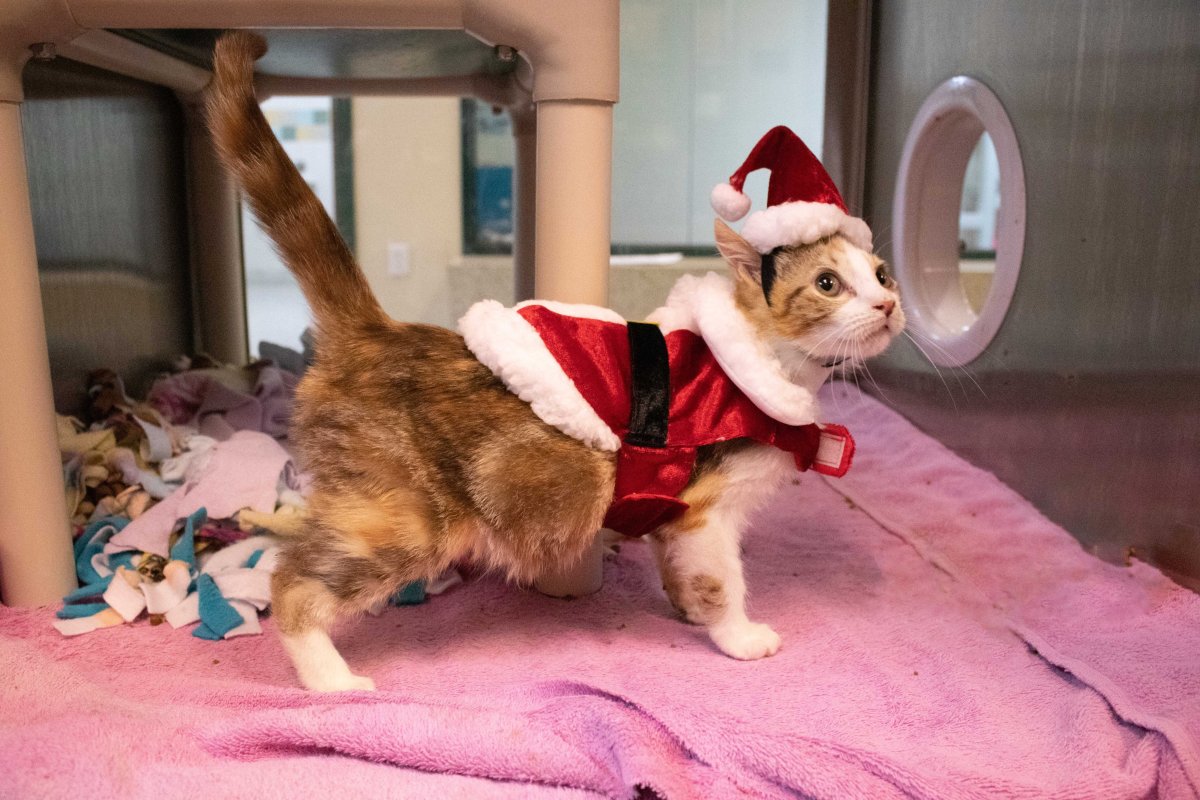
In Pasadena, Calif., the Humane Society rescued 52 cats who were living in a nearby home and in a crawlspace under the house. They’re calling the rescued kitties “Christmas Cats,” have given them names like Jolly, Merry and Jingle, and will offer discounted adoption fees in addition to spaying/neutering and microchipping the kitties before they’re sent to their forever homes.
A ‘Christmas Cat’ rescued from a hoarder in California. Credit: Pasadena Humane Society
A ‘Christmas Cat’ rescued from a hoarder in California. Credit: Pasadena Humane Society
A ‘Christmas Cat’ rescued from a hoarder in California. Credit: Pasadena Humane Society
A ‘Christmas Cat’ rescued from a hoarder in California. Credit: Pasadena Humane Society
Meanwhile, local authorities rescued 58 cats from a hoarding situation in Evansville, Indiana. The kitties were crammed into a single-wide trailer and many of them were in poor health, according to Kendall Paul of the Vanderburgh Humane Society.
“I think it probably started innocently enough, with the person trying to take care of just a couple of cats and then things got out of hand,” Paul said. “Most of these cats are ill with upper respiratory infections, some with more serious issues.”
The organization is calling its holiday cat adoption event “Deck the Paws,” and adopters will be able to choose from “presents” from beneath a Christmas tree, each containing discounts on adoption fees.
“We’re certainly hoping people will step up and help us,” Paul told the Evansville Courier & Press. “If you want to adopt a cat, we have lots here that are ready for new homes.”
Epic Cat Battle: Employee Demands ‘Sensitivity Training’ For Co-Worker Who Joked ‘Orange Cats Are Often Dumb’
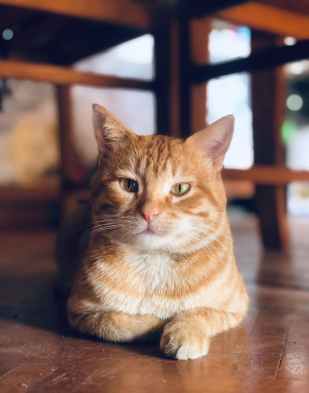
A Redditor sought the sage advice of the always-hilarious “Am I The Asshole?” sub-Reddit, explaining her dire situation. She works in an agency with two office cats: Jean, a tortoiseshell, and Jorts, the new cat on the block who is an orange tabby.
Jorts isn’t the sharpest claw on the paw.
The Redditor explains that Jorts is “kind of a simple guy” who can’t open doors and gets himself locked into rooms and the closet where he and Jean have their food nook. When kitty Jean can’t rescue Jorts (she can open most of the doors in the office, the Redditor wrote), Jorts meows until one of the employees rescues him from his predicament.
A co-worker named Pam decided Jorts should be more independent and “has been spending a lot of time trying to teach Jorts things.”
The Redditor favored a more simple solution and put a doorstop against the closet door so Jorts wouldn’t get himself stuck every time he went for a bite. That angered Pam, who insisted using a doorstop was depriving poor Jorts of a “chance to learn.”
Then Pam went full Karen, drawing up “a series of special learning activities for Jorts, and put the tasks on the whiteboard of daily team tasks.”
“Who you callin’ dumb?” Credit: Nantenaina Andrianjaka/Pexels
The Redditor tried to put the entire thing to rest by installing a cat flap and tried to diffuse the office tension by joking that they couldn’t “expect Jean’s tortoiseshell smarts from orange cat Jorts.”
The joke made Pam “furious”: “She started crying and left the hallway, then sent an email to the group (including volunteers) and went home early. In her email Pam said I was ‘perpetuating ethnic stereotypes by saying orange cats are dumb’ and is demanding a racial sensitivity training before she will return.”
The Redditor followed up with a second post after HR stepped in and — unlike many HR departments — had some level-headed people bring much-needed sanity to the kerfuffle. They told Pam to chill out and to stop assigning “Jorts-related tutoring” tasks to her co-workers. They also told her it was inappropriate to compare a co-worker installing a helpful doorstop to ethnic insensitivity.
During her little chat with HR, Pam also admitted she’d taken the tutoring thing too far:
“Lastly, and this made us both laugh so hard we can’t deal with it in person and will be said via email: Pam admits that she has been putting margarine on Jorts in an attempt to teach him to groom himself better. This may explain the diarrhea problem Jean developed (which required a vet visit).”
Speaking as a fellow redhead, I’m outraged! My people (human and cat alike) have been the butt of jokes for too long, and it’s time we organized a Union of Extraordinary Redheads to promote our shared interests, protect our own, and show the brown- and blonde-headed people of the world that we will not take their ridicule anymore! Jorts will receive his invitation in the mail shortly.
A California woman’s cat is a burglar, a bully and an aggressive napper!
Most of the time when we talk about reasons to keep your cat(s) inside, it’s because the great outdoors pose innumerable risks to the lives of cats.
People make a big deal of cats retaining many of their wild instincts, but the truth is they’ve been domestic animals for 10,000 years, and the only “natural habitat” for them is under the care of kind people in a safe home or a managed colony where they’re protected, fed and given veterinary care.
But cats are predators, technically an invasive species in most places, and they have a jerk streak, so there are plenty of valid reasons to protect others from them.
A cat in Pleasant Hill, California — about 20 miles east of Oakland — illustrates that last point perfectly. Apparently he’s been inviting himself into the neighbor’s house via the cat flap, where he bullies the neighbor’s cat, helps himself to its food and adds a final insouciant insult to injury by taking a nap in the neighbor’s house. Then he strolls back into his own home in the morning, enjoys breakfast and has another nap.
Lisa, the offending cat’s human, said she found out about her cat’s jerktastic behavior via social media, and wrote to The San Jose Mercury News’ pet advice columnist for counsel on how to handle the situation. The neighbors have begun hiding their cat’s food in a closet, but understandably they want Lisa’s aggressively napping cat burglar to stay away.
“Not sure how to curtail his activities. Neighbor is not happy with our cat’s behavior,” Lisa wrote. “Locking our cat inside at night is not a good option; he is very vocal when locked up.”
Columnist Joan Morris offered blunt but perfect advice: Stop letting your cat out.
“I think both of you should keep your cats indoors, and the neighbors should lock the cat door, but as it’s your cat burglar that’s causing the issue, it’s up to you to curtail him,” Morris wrote. “Keeping your cat indoors at night is the simplest solution. The adjustment might be difficult — probably more for you than for him — but in time he’ll get used to it.”
I understand it can be very difficult to curtain feline behavior. If there were an Olympics for being annoying, Buddy would take gold many times over for his relentless meowing when he wants something and isn’t getting it. But the one thing you can never do is give in, or the little stinkers will learn that they get what they want when they yowl incessantly.
Do you agree with Morris, or should the bullying moggie get his way?
“I’m up in your house, eatin’ ur foodz, bro.” Credit: Wikimedia Commons
She’s now called Sadie the Wonder Cat after enduring 46 days trapped without food or water.
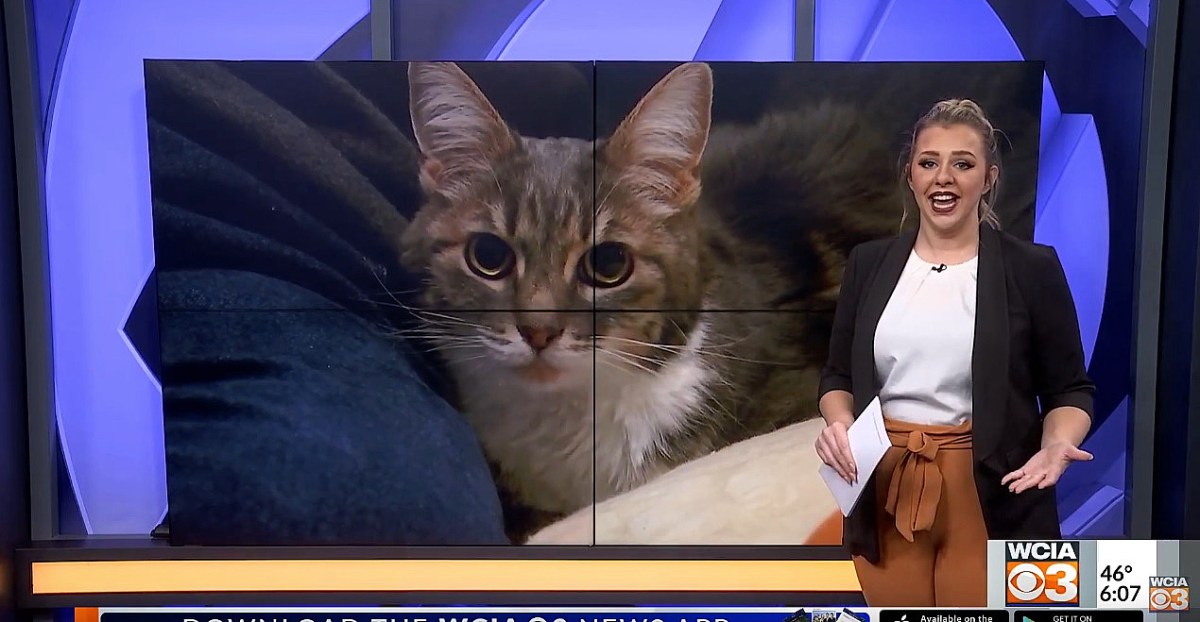
An Illinois family has been reunited with their cat after the resilient feline survived six weeks trapped in a box spring that was wrapped in heavy-duty plastic for shipping.
The Gaines family was moving from Fresno, Calif. to Charleston, Ill. and was packing up, with movers picking up their furniture and belongings on Sept. 22. The family’s cat, Sadie, went missing and the family thought the worst.
“She’s outside a lot during the day. She always comes in the house at night, but she didn’t show up, and it’s common for the coyotes to get the pets,” Mike Gaines told WCIA, a local CBS affiliate. “So, we figured she got taken by a coyote because she always comes home.”
Instead, Sadie was likely spooked by the commotion, the strange people in her home and the stress of seeing her familiar life upended, and found a way to burrow inside the box spring to hide.
In normal times Sadie’s ordeal would have lasted a few days, maybe a week tops, but because transportation companies are hurting for truck drivers, the Gaines’ furniture was put in a storage unit in Sacramento until it could be moved cross country.
“So, it sat there from September 22nd to November 3rd. So, several weeks with Sadie, the wonder cat locked in the box springs,” Mike Gaines said. “No food, no water, no sunlight, no nothing.”
On Nov. 7 the Gaines’ furniture arrived, and after more than 46 days Sadie was freed when Gaines’ daughter found her.
“She hollered dad, there’s something dead in the box springs it stinks,” Gaines said. “So, I came down here, and on my way down the stairs she said there’s a rat in there. She just saw her little ears and thought it was rat, but it wasn’t. I came down and looked in there and it was Sadie. She was sitting there looking up at me.”
The little survivor lost a whopping seven pounds, which is a huge deal for a cat. Most domestic house cats weigh about 10 pounds. Gaines said she went limp in his hands when he lifted her out of the box spring, and endured a vet visit. The veterinarian said the silver tabby was lucky to be alive, and didn’t suffer any injuries or ailments aside from obvious malnutrition and dehydration. It’s not clear if there were any perforations in the plastic around the box spring. Perhaps little Sadie caught herself a mouse or two to tide her over.
I think I’ll show this to Bud the next time he puts on a Shakespearean performance while trying to convince me he’s starving after two hours without a meal, although with the way he shrieks for food and yaps constantly, it’s difficult to imagine he’d get trapped in a piece of furniture without the entire block knowing about it.







 Pain In The Bud