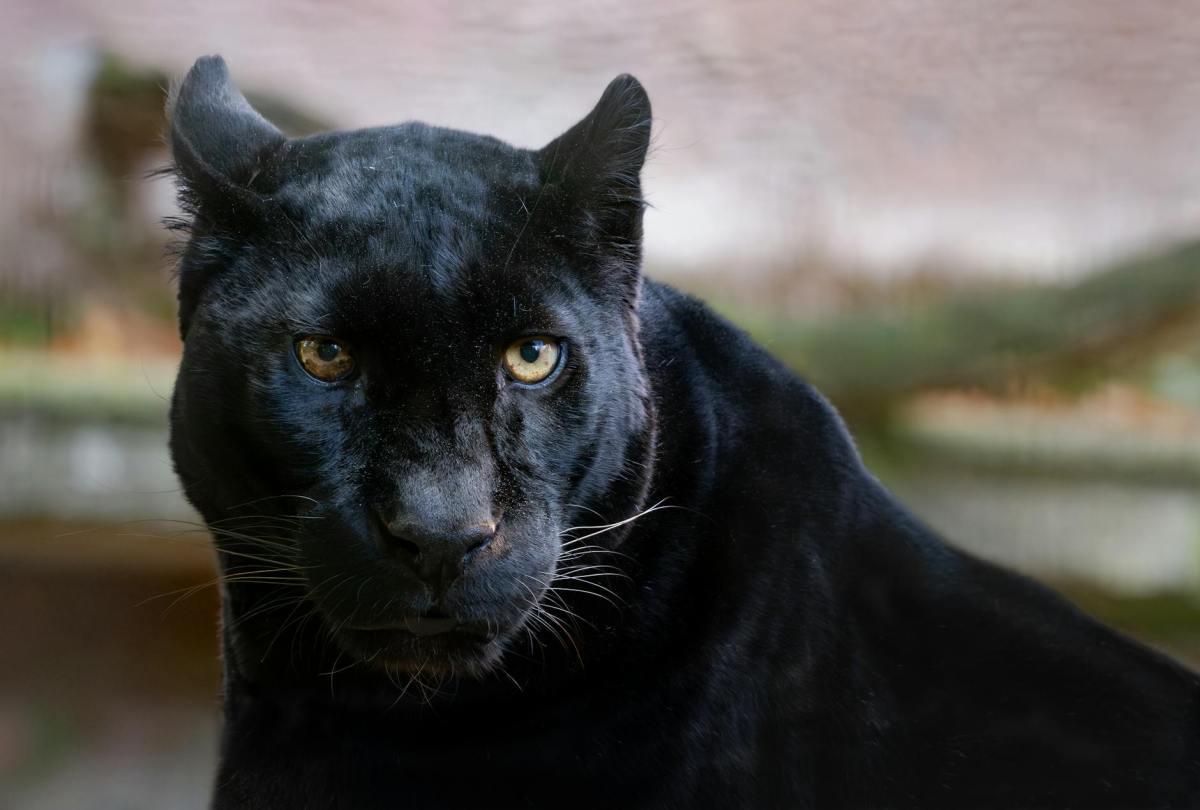
Facebook Is Flooded With Hoax Posts About A Supposed Black Mountain Lion

The purveyors of the deceptive posts want you to click, share and argue with other users about the veracity of the photos.

Not only is he the rarest puma in existence, he’s more well-traveled than most humans.

The mountain lion in question has a black coat, unprecedented for his species, and has been popping up all over Facebook. He’s photographed from the passenger seat of a truck cab, his tail in an unbothered curl, crouched amid the brush near a rural road.

Some posters claim they spotted the formidable feline in Mississippi. Others attribute the image to a sister-in-law who lives near Houston or a daughter in Charleston. A user in Louisiana claimed they took the photograph near the bayou, while another places the cat in Wyoming and claims he’s the first-ever documented “shadow cougar.” (Our friend Leah of Catwoods drew our attention to the images last week after seeing posts placing the cat in the south.)

In case it isn’t obvious, all the claims are full of it.

There is no such thing as a melanistic (black) mountain lion, and the big cat in the photo has the physical characteristics of a leopard, an animal that is not native to this hemisphere, let alone this continent.

The real story here is that Facebook remains a fountain of misinformation and Meta (its parent company) doesn’t care. Unscrupulous users will do anything to get attention and the clicks that come with it, and the average Facebook user is happy to indulge them, driving clicks by resharing the hoax content and juicing its algorithmic value by engaging in endless arguments with fellow users about the veracity and provenance of the photos.

Alleged big cat sightings are perfect for this sort of thing because they pique people’s natural curiosity, there’s a whiff of danger — especially when the poster claims the animal was spotted locally — and most people aren’t aware of telltale differences between cat species.

In many ways, the blurrier and more indeterminate the photo, the better: like Bigfoot and the Loch Ness monster, the idea of phantom cats is most fertile in the imagination.

These days you don’t even need a photo to get in on the click-baiting action. I asked Gemini to create an image of a jaguar-like big cat walking along a rural road at night, and this is what the LLM gave me:

In the image prompt, I asked it to make it look like an amateur photo taken with a midrange smartphone camera, but if we really wanted to get artistic, it’s simple enough to add noise, maybe some motion blur and digital artefacts to the image to make it look more like an authentically crappy, rushed shot of an unexpected animal.

Here’s the result of some simple efforts to en-crapify the “photo” further:

To give the image urgency and encourage people to engage with it, I can make it local and claim it was recent. Errors of grammar, spelling and punctuation add a nice seasoning of authenticity, along for feigned concern for others as the reason for sharing:

“Folks – just wanted to tell ya’ll to mind your pets an make sure of you’re surroundings bc theres a big cat on the lose!! my cousins GF took thus friday nite on Route 9 a few mile’s south of Dennies. a real honest to goodness black panther! BE SAFE!!!”

There’s a dangerous animal on the loose in your area! You know what you have to do: share it so others can bring their pets safely inside and stop their kids from playing outdoors, at least until it looks like the predator has moved on.

It’s your duty as a good American!

Since it doesn’t seem to matter if a quick reverse image search can settle the question of where an image came from, it’ll be interesting to see if anyone lifts the above image and text.

At the very least, maybe a few people who do think to run a search will find their way here, read about the hoax, and save themselves from getting drawn into online debates about the existence of cryptid cats.
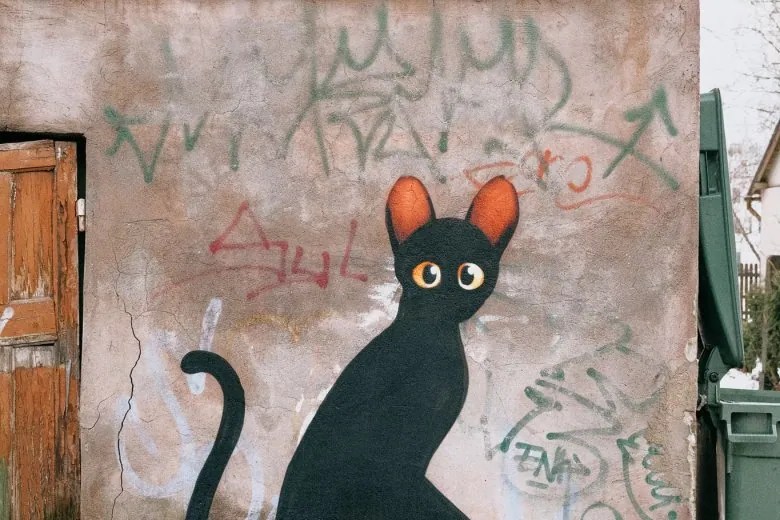
Fearless Cat Forces Bear To Retreat, PLUS: Flow’s Void Sparks Interest In Black Moggies

Flow’s Cat has improved things for his fellow voids, who are drawing more interest from adopters.

This video is bonkers!

A cat who is definitely not Buddy stared down a bear and made the ursine interloper retreat in fear in a confrontation caught on camera.

The stand-off happened in Pike County, Pa., and the cat’s name is T’Challa, after the titular hero of Marvel’s Black Panther franchise.

“I think perhaps this young bear woke this kitty cat up because he was not happy that he was sharing his deck with him when he woke up and he expressed himself,” said the homeowner whose security cameras caught the exchange.

After T’Challa made a series of feints, the bear — who is orders of magnitude larger — beat a hasty (for a bear) retreat.

Well done, T’Challa! Someone get that good boy a treat!

Go with the Flow

Part of what makes Flow so spectacular — aside from the breathtaking visuals, clever narrative and the strange world it portrays — is how endearing its star, Cat, is.

The little guy shows enormous resilience as he survives a biblical flood, gets chased by a flock of angry secretary birds, learns to swim, and finds his confidence in situations that would terrify any feline. He’s incredibly expressive, revealing his emotions with every twitch of his tail and whiskers, as well as his distinctive meow and, most of all, his bright yellow eyes.

He’s also the first feline star to win an Oscar and a Golden Globe, as well as many other film awards for the universally praised film.

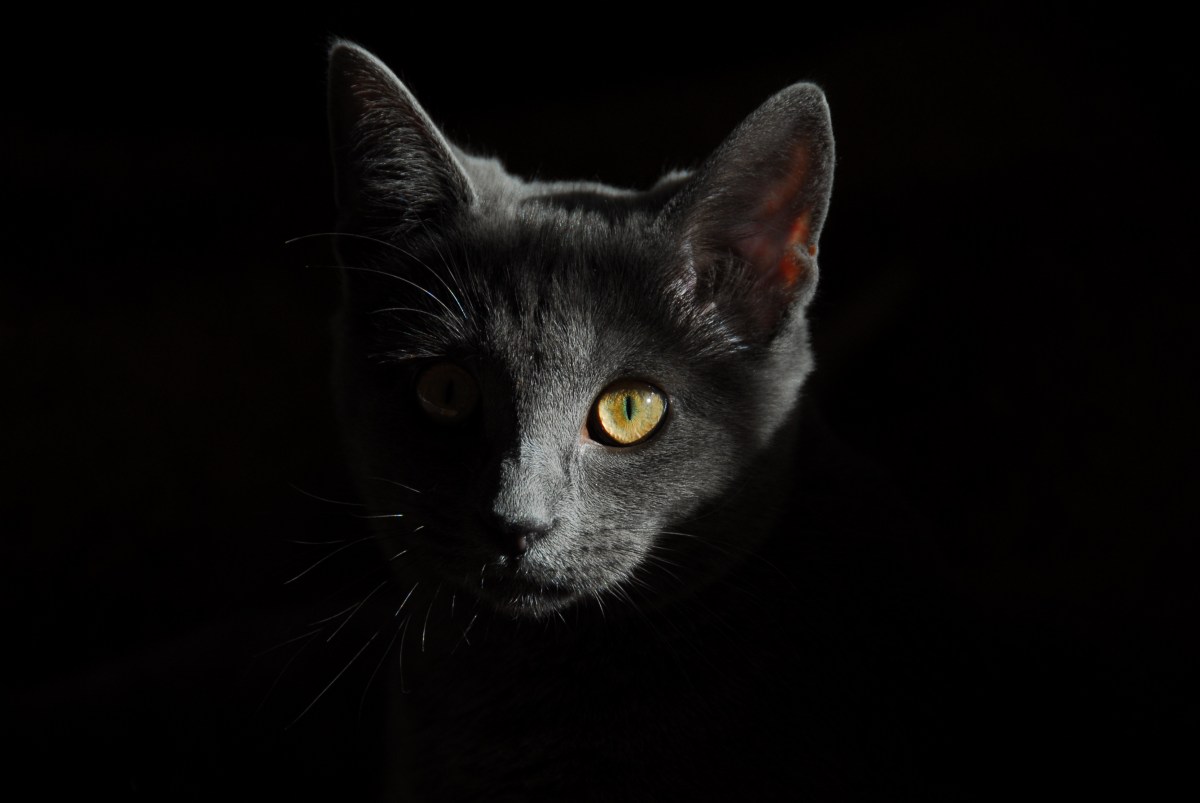
Now he’s got another accomplishment to his name: he’s improved the way people view black cats, who have long been the victims of absurd human superstition and have a hard time finding forever homes because of the stigma.

Credit: Live RIGA

Animal welfare organizations are reporting heightened interest in black cats (good), but not a manic rush to adopt them as has happened when other species and breeds are popularized in films. (Bad, because those pets are often discarded when the novelty wears off.)

In other words, Cat may have inspired something close to parity in adoptions in some places.

Cat is beloved in director Gints Zilbalodis’ home country of Lithuania. The capital, Riga, is now adorned with street art of the little guy, including a statue sitting atop a major monument in the heart of the city.

Credit: Live RIGA

Recent News Stories Claim People Have Spotted A Type Of Cat That Doesn’t Exist

It’s easy to mistake house cats for larger wildcats when photos and videos are blurry and lack familiar items to establish a sense of scale. The same phenomenon is responsible for UFO sightings and cryptid creatures like the Loch Ness Monster.

Recently several reports have been making a big deal about blurry videos of black cats, claiming they’re “black mountain lions” or “black panthers” roaming in places like Missouri and Louisiana.

The footage of the first video was shot in Missouri, where pumas once ranged, were extirpated in the 20th century, and have returned in small numbers in recent decades. Like most photos and videos of cryptid or unidentified animals, this one is blurry, taken from a distance, and lacks any object near the animal to provide a sense of scale. The second video is simply a black house cat with her kitten in rural Louisiana.

Our brains are pattern recognition machines and when the information we’re looking for — be it spatial, detail or contextual data — isn’t present, our minds tend to fill in the gaps. That’s the reason why we see faces in clouds, creatures in shadows, men on the moon and the Virgin Mary on grilled cheese sandwiches. (The technical term for “perception imposing meaningful interpretation on a nebulous stimulus” is “pareidolia,” from the Greek for “instead of” and “image.”)

Compounding the problem is the fact that the word “panther” is one of the most confusing of felid descriptors, a word that vaguely refers to physically large cats but doesn’t refer to any particular species, coat pattern or color.

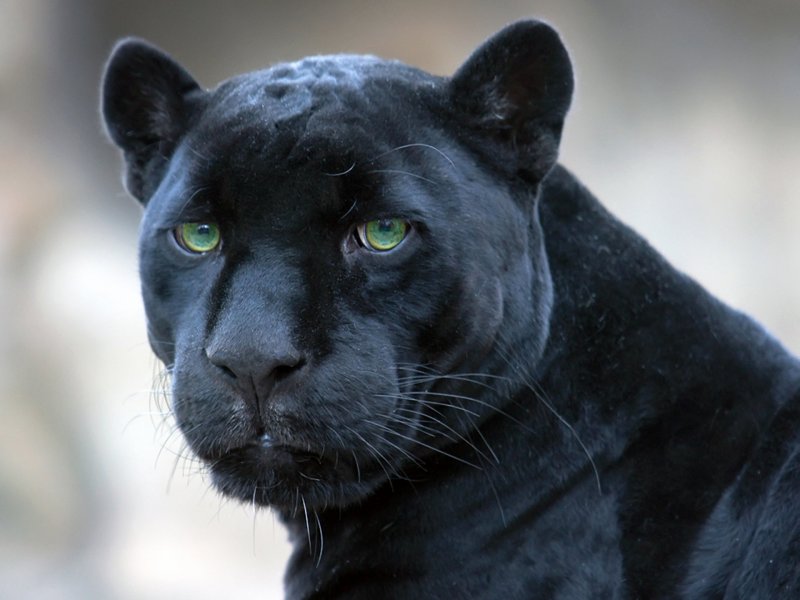
Above: A jaguar, a leopard, a puma (mountain lion) and a melanistic jaguar. Although jaguars and leopards look nearly identical, jaguars are stocker with thicker limbs and have blotches inside their rosettes, while leopards do not.

The word panther can refer to a puma, a jaguar or a leopard, but only the latter two species can have melanistic (black) coats.

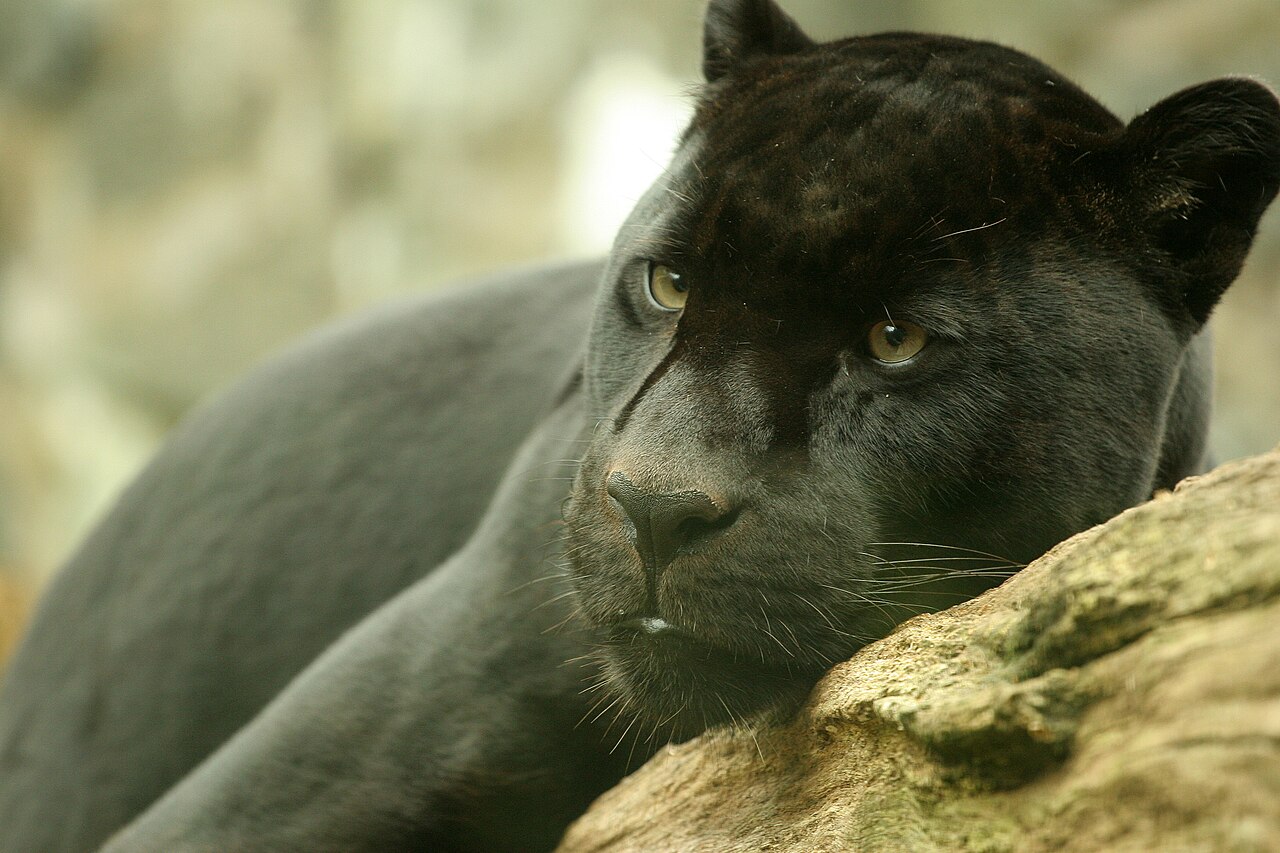
Contrary to popular belief, even a black cat’s fur is not entirely black — you can still see the rosettes and spots of their coat patterns up close and in certain light conditions.

blackjaguar
This jaguar’s rosettes and spots are visible in direct light. Jaguars in the wild are rarely seen so close or in “perfect” conditions, making it difficult to see coat markings of melanistic members of the species. Credit: Wikimedia Commons

However, jaguars don’t range in Missouri, leopards are not native to the Americas, and if someone indeed spotted one of the very rare pumas in Missouri, it could not be black because melanistic pumas do not exist.

Mountain lions (Puma concolor in taxonomic nomenclature) are physically large and are the second-biggest cats by size and weight in the western hemisphere after jaguars, but they are not technically “big cats” because they are not part of the pantherinae subfamily. Pumas cannot roar like big cats, but they’re capable of the classic wildcat “scream,” and they can even meow like small cats.

By process of elimination — and the cat’s physical shape — we can conclude the Missouri video shows a house cat that looks larger because there’s nothing nearby to give us a sense of scale.

Grilled cheese Virgin Mary
This piece of a grilled cheese sandwich sold for $28,000 on eBay in 2004 because bidders believed the Virgin Mary’s face miraculously appeared on it. Credit: eBay

It may seem unlikely that someone confuses a house cat, which weighs an average of 10 pounds, with a puma, which weighs on average more than 100 pounds, with the largest males pushing 220 pounds.

But it happens all the time even in close encounters, like the incident this summer in which a man riding a dirt bike swore he was ambushed by a puma only for DNA to establish beyond doubt that his attacker was a domestic kitty. For what it’s worth, he still swears it was a mountain lion.

If you enjoy reading content from Pain In the Bud, please consider whitelisting us from your browser’s ad blocker. Thanks!

WaPo’s Guide To Taking Better Photos Of Your Cat, PLUS: Snopes Weighs In On Cats And Bubonic Plague

A historian casts doubt on tales of widespread cat purging, tracing the origin of the claims to a novel published in the 1990s.

The Washington Post has a new guide for taking better photos of cats and dogs with some solid advice for people using smartphones as well as more traditional cameras.

The article is in front of the paywall so you don’t need a subscription to view it, and it emphasizes a few major points I’ve often written about when people ask me how I’ve been able to get certain shots of Bud:

  • Always let your cat get used to the camera, whether she sniffs it, head butts it or just wants to see it up close. Let her check it out and lose interest and then it becomes just another thing, allowing you to begin capturing more candid-style photos.
  • Bribe ’em: Your cat’s a model and deserves compensation. A few treats will keep him hanging around and happy as you snap away.
  • Pay attention to the lighting, especially if you’re shooting a black cat or a kitty with a darker coat pattern. Unless you’re going for a silhouette or a sunrise behind your furry friend, keep your cat facing to the right or left of the primary light source so you’re getting light and shadow to put those feline features in relief. It’s also worth taking a close look at how professional photographers shoot melanistic jaguars and leopards, carefully using light to highlight their features. In the right conditions their rosettes are still visible, they’re just slightly different shades of black. While house cats don’t have rosettes, the same attention to light and detail can help pick out the contours of their beautiful coats.

Black jaguar at Edin Zoo
Under the right light conditions, the contours, spots and rosettes of a black jaguar are visible in beautiful detail. Credit: Edin Zoo/Wikimedia Commons

Did People Really Slaughter Cats During The Plague?

It’s often claimed that Europeans murdered felines en masse during the waves of Black Plague that devastated Europe during the Dark Ages, visiting countless cruelties on cats while inadvertently amplifying the spread by nearly wiping out disease-carrying rodents’ most effective predators.

In a new post that closely examines documents and evidence from burial sites of the era, Snopes concludes there was much less cat-killing than claimed, and the claims of widespread purging at the hands of pandemic-weary zealots have their roots in a 90s novel, which was then circulated on the web as fact.

Sites where as many as 79 sets of cat bones from the era were found show clear signs that the animals were slaughtered for their fur, and a singular slaughter in 1730s Paris often cited as proof is not only a few centuries off but was also motivated by class hatred, not fears of the plague.

While the papal bull Vox In Rama was real, and a famously zealous inquisitor really did make the preposterous claim that Satanists had a ritual that involved literally kissing the asses of black cats, the pope never called on anyone to kill felines and there’s no evidence that people took it upon themselves to do so. There was plenty of other unbelievable superstitious idiocy that led to the deaths of animals at the time, including the practice of putting animals on trial for alleged crimes, but Europeans weren’t rampaging through towns and killing cats.

Snopes quotes Welsh historian Mike Dash, who says the modern claims of widespread cat-killing are “almost certainly a modern internet-based fabrication.”

Spectacular Photos Show Big Cats As They’re Meant To Live

These are some of the most stunning images of leopards and tigers you’ll ever see.

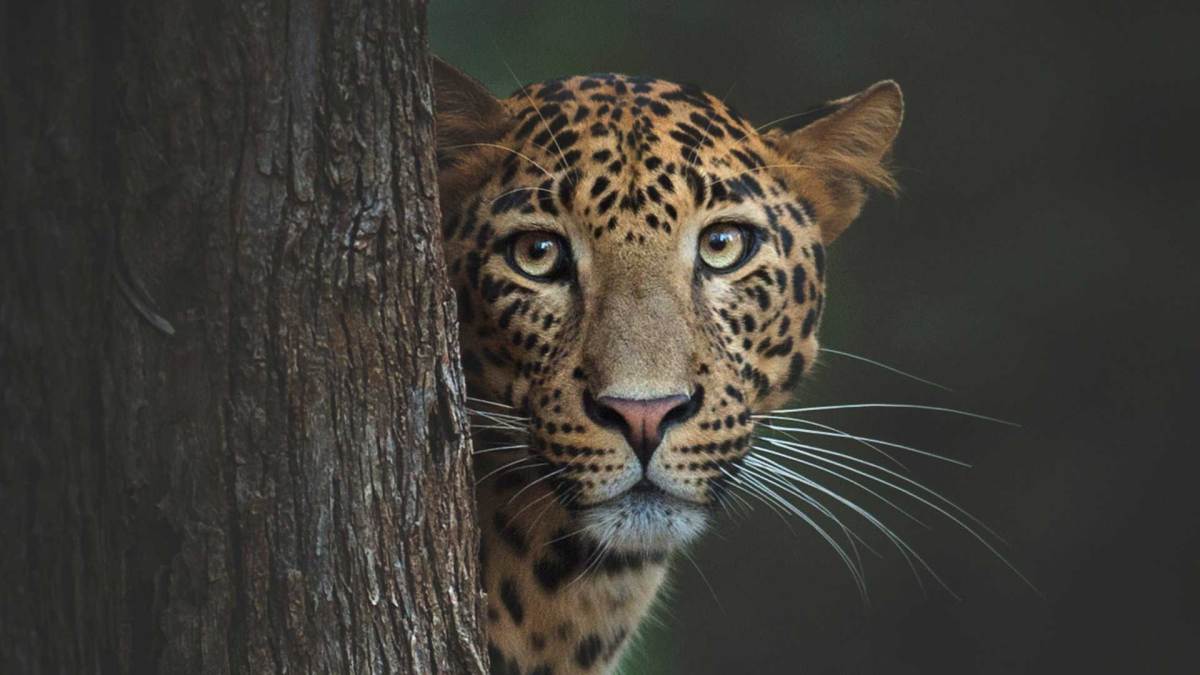
One photo shows a melanistic leopard — better known as a black panther — cautiously but curiously poking its head out from behind a tree. Another shows the same cat, tail raised and ready to spring as it stalks prey in the jungle mists.

The photos went viral this week, accumulating millions of views as people hailed the leopard as the second coming of Rudyard Kipling’s Bagheera, the beloved leopard from The Jungle Book.

Both photos come from the lens of Shaaz Jung, known as the “Leopard Man of India” for his astonishing shots of the majestic cats taken deep in the country’s jungles and forests.

“When people see these pictures, they think there are several leopards, but actually there’s just one black panther where we are — one melanistic leopard in the dense forest of Nagerhole. So it was like finding a needle in a haystack,” Jung told BusinessInsider.

The leopard has been named Saya by local wildlife enthusiasts, and he’s a bit out of his element in the deciduous Kabini forest, which is also home to a tiger preserve. Normally, leopards like Saya live in dense jungle, where the thick canopy and lack of light play to their advantage.

Jung patiently followed Saya, snapping photos of the big cat hunting, fighting and courting potential mates.

“He’s not just surviving, he is thriving,” Jung said.

Jung is a wildlife photographer, NatGeo’s director of photography for films and a big cat specialist in his own right. He also photographs India’s tigers, and his shots reveal a connection to — and a deep appreciation of — these regal apex predators who have been pushed back by human development and the resulting habitat loss.

shaazjung
The man behind the camera: Shaaz Jung.

shaaztiger3
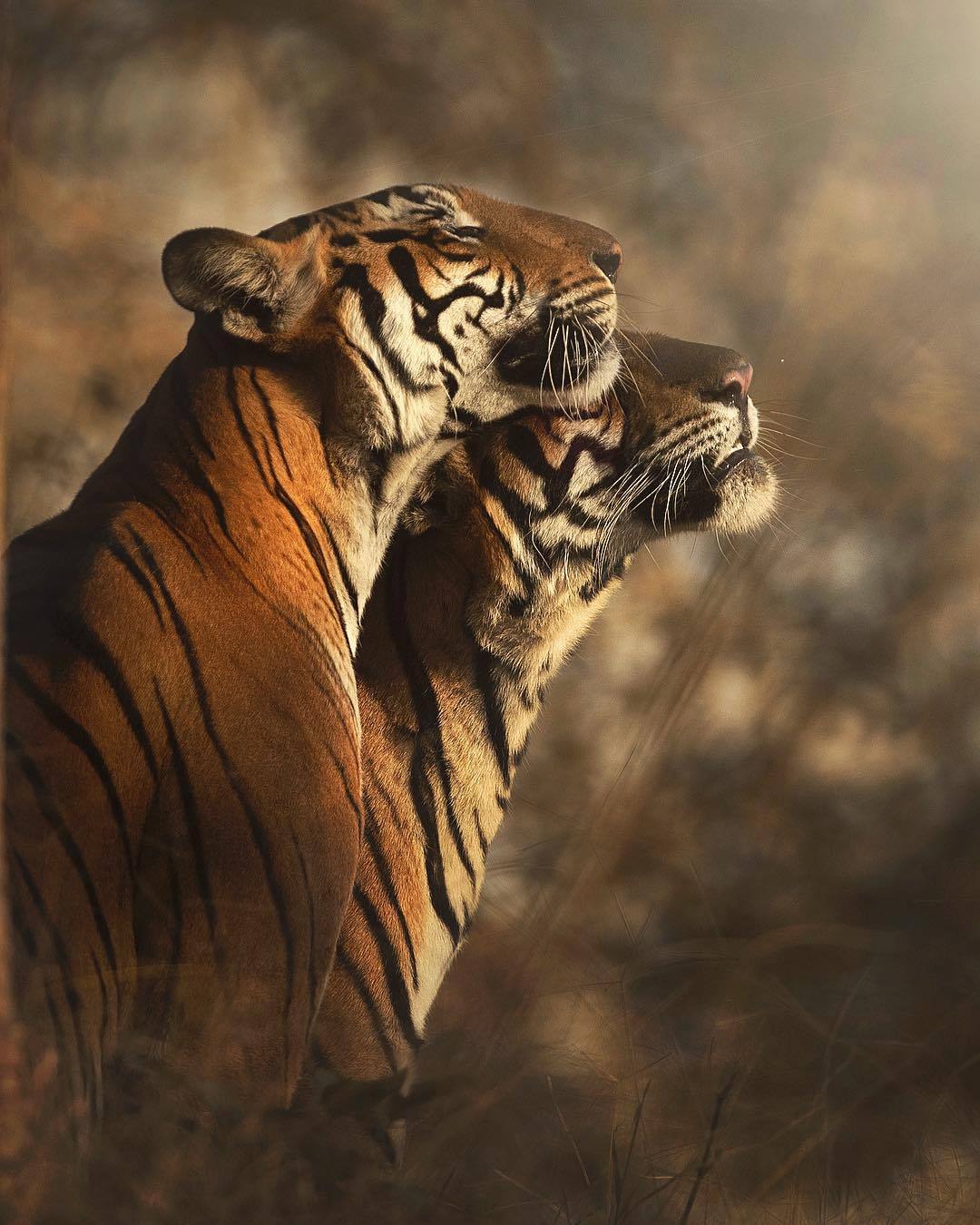
Tigers share a quiet moment as they trade scents. Photo: Shaaz Jung

shaazpanther3
Leopards are known for their exceptional climbing ability as well as their preternatural hunting skills. Photo: Shaaz Jung

shaazpanther4
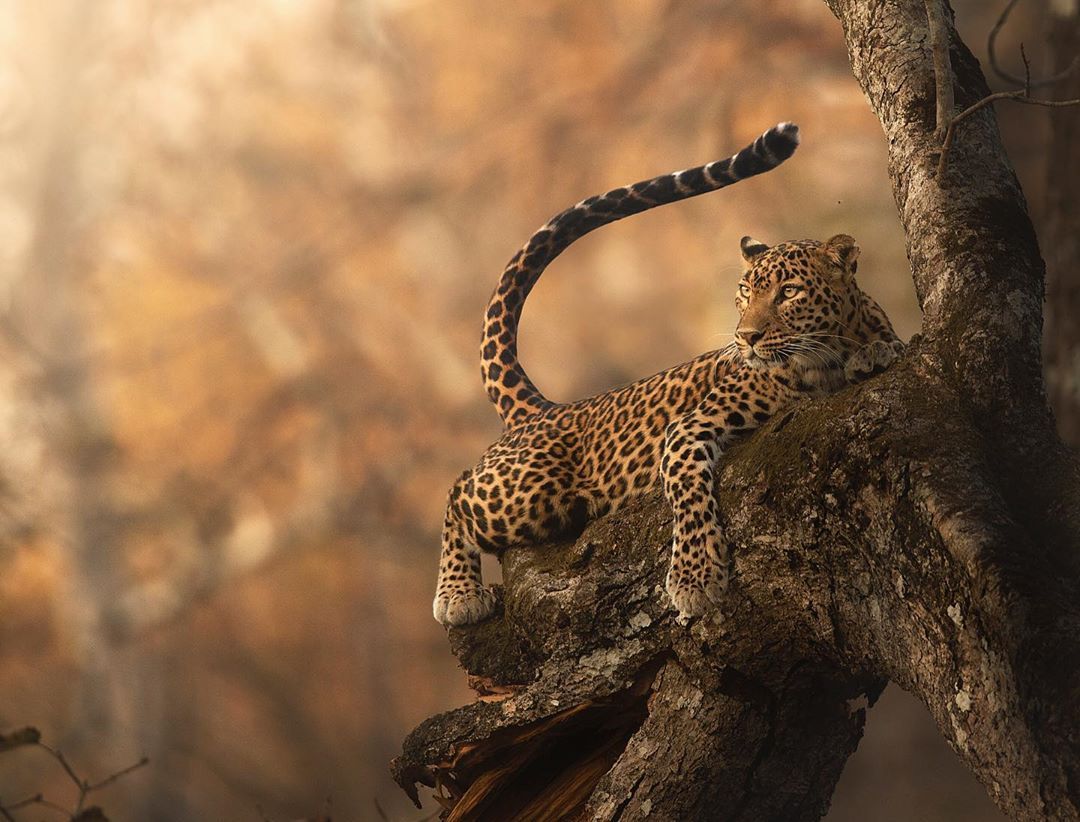
A leopard enjoys a mid-day respite from the sun — and bothersome rivals — on a broad tree branch. Photo: Shaaz Jung

shaaztiger
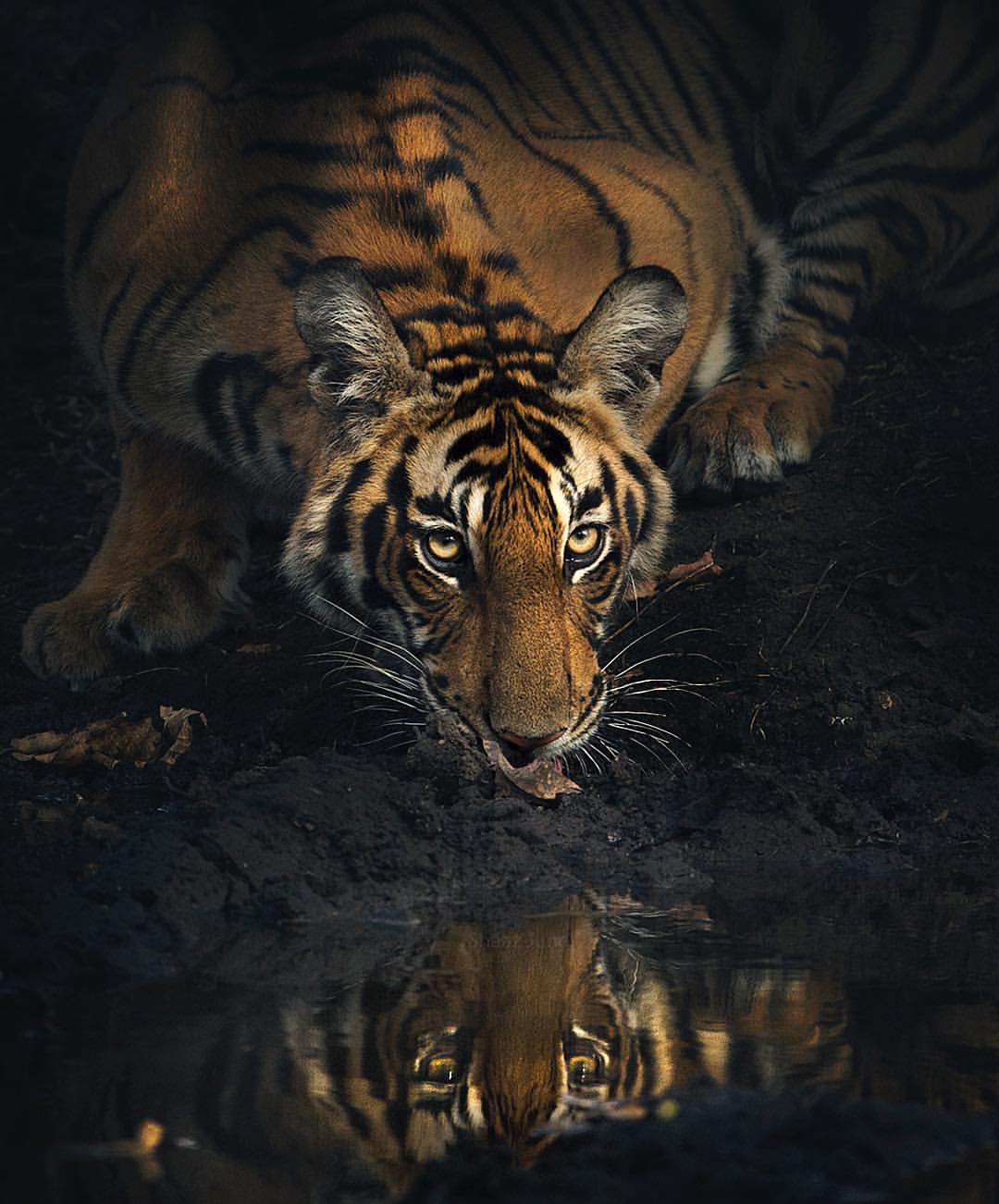
A tiger stops for a drink with the water reflecting its wary gaze. Photo: Shaaz Jung

shaaztiger2
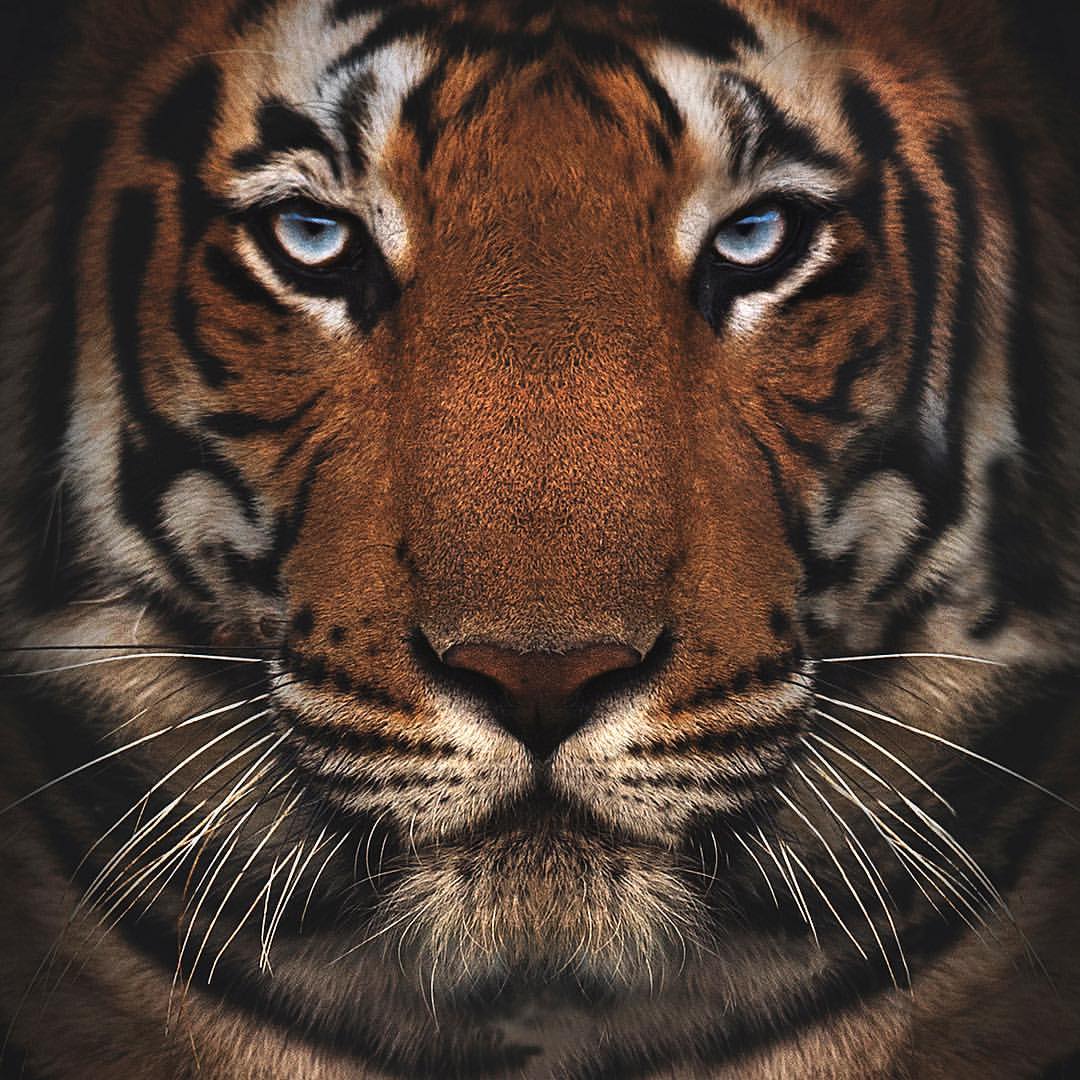
Tigers are the world’s largest, heaviest cats, the apex predators among apex predators. This close-up is a reminder of how beautiful and regal they are. Photo: Shaaz Jung