The Massachusetts law is a significant victory in the quest for a national ban on the cruel procedure, which involves amputating cat toes at the first knuckle
There’s good news today from Massachusetts, which just joined New York and Maryland in banning cat declawing.
The bill, signed Friday by Massachusetts Gov. Maura Healey, prohibits all declawing surgery except for rare circumstances when it’s medically necessary, like cancer in the nail bed.
Veterinarians who violate the law face fines up to $2,500 and professional discipline if they continue the practice.
Despite its name, declawing is the partial amputation of cat toes, equivalent to cutting off human fingertips at the last knuckle.
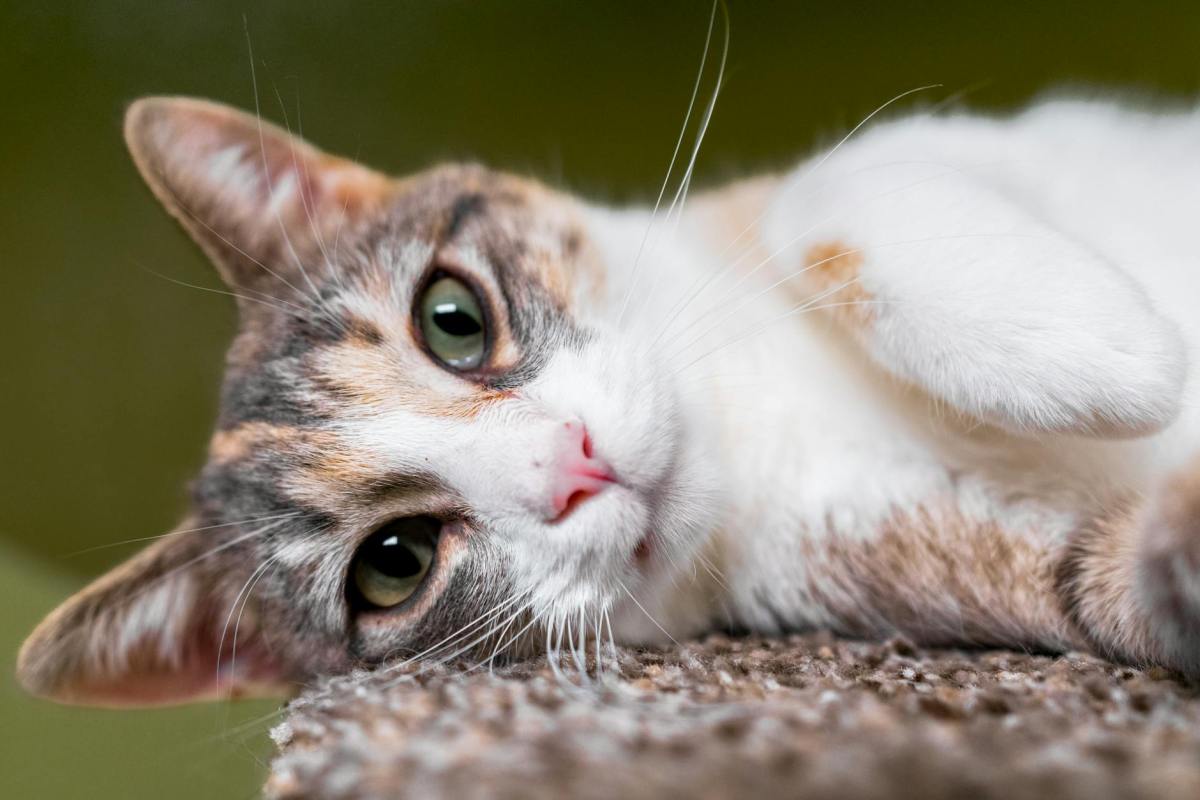
Photo credit: Alex Ozerov-Meyer/Pexels
Declawing changes a cat’s gait, causing the animal pain when it walks, and usually leads to early arthritis. It causes cats to stop using their litter boxes, because the act of standing on and shoveling litter becomes painful for them.
Last but not least, it has a profound psychological impact on felines, making them vulnerable by taking away their primary form of defense. Consequently, cats who are declawed are much more likely to bite than those with intact claws.
Most of all, declawing is cruel and inflicts a lifetime of pain on innocent animals, punishing them for doing what cats naturally do.
Aside from New York, Maryland and Massachusetts, a few dozen cities and counties have banned the procedure, ranging from places like St. Louis, Missouri, to Austin, Texas, and eight cities in California, including Los Angeles and San Francisco.
The felines were found deceased near open tins of tuna, and laboratory tests confirmed they’d been poisoned.
In early October, a woman who helps manage a colony of stray cats in South Carolina’s Lowcountry stopped by to feed them and was distraught by what she saw.
Six cats lay dead not far from several open tins of tuna. After the woman called for help and a larger group searched the area, they found the bodies of seven more cats and three opossums, the Berkeley County Sheriff’s Office said.
The cats were spayed/neutered and managed by volunteers from Lowcountry Trap, Neuter and Release Network, meaning their population was controlled and they were routinely monitored and given veterinary care.
Tests showed the cats were poisoned, according to the Professional Veterinary Pathology Services in Columbia and the Michigan State University Veterinary Diagnostic Laboratory.
While police were looking into the poisoning, they got a tip that a local man had been complaining about the cats and claiming they were a nuisance.
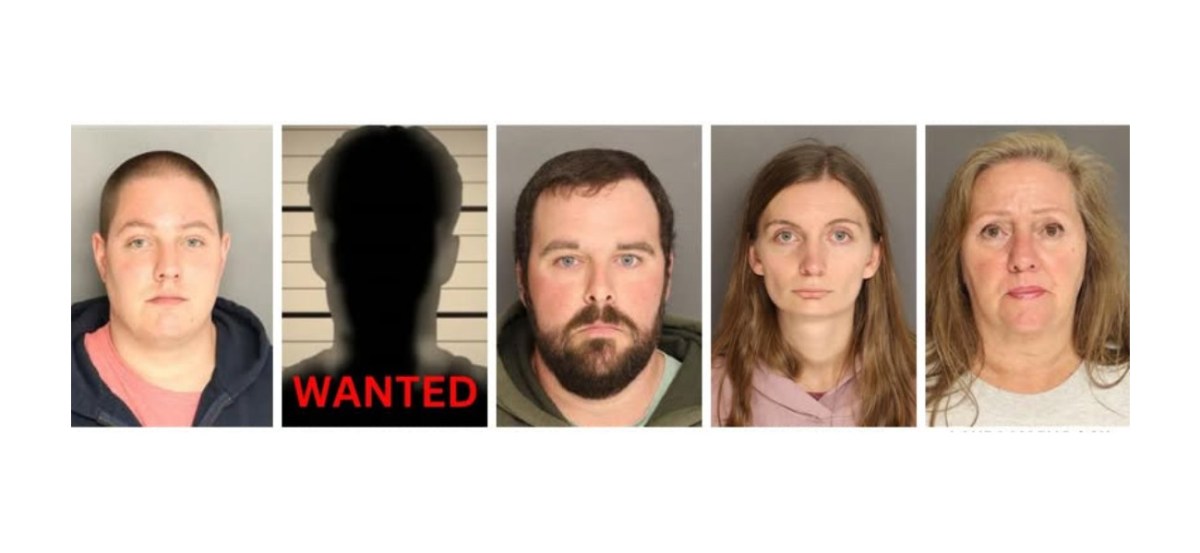
On Thursday, police charged 28-year-old Andrew Dock and 45-year-old Charles Waylon Ulmer with 13 counts of felony ill-treatment to animals with torture and one count of conspiracy. Dock’s wife, Sara Rose Dock, 23, and his mother, Laura Mary Dock, 61, were charged with conspiracy along with Michael Jeffrey Kemmerlin, 30. All five suspects live in or near Summerville, a town about 25 miles northwest of Charleston.
Each felony count is punishable by as many as five years in prison and a $5,000 fine, per South Carolina penal code.
Credit: Berkeley County Sheriff’s Office
Dock was the ringleader of the group, according to police, and enlisted the others to help him poison the cats.
“Anyone that is capable of putting out poison and creating that level of pain and suffering is a concern to me as a human in our community,” Carol Linville, founder of a local nonprofit called Pet Helpers, told Lowcountry news station WCSC. ”That is a dangerous person. If they can do it to a cat, they can do it to a dog or do anything else that they deem they don’t want around.”
Locals involved with colony management and animal rescue praised the Berkeley County Sheriff’s Office for seeing the investigation through and arresting the suspects.
“The fact that the law enforcement took this seriously and really wanted to see justice and really do their due diligence to make sure that justice is really coming for these cats. I am, I’m very grateful,” said Kayte Williams, one of the women who cared for the colony. “Hopefully nothing like this happens again because the public will know if this happens, you will be prosecuted, you will be charged and you are not going to get away with it.”
Andrew and Sara Rose Dock. Credit: Facebook
On his social media accounts, Dock describes himself as a former welding instructor at Horry-Georgetown Technical College originally from Newark, New Jersey.
All five suspects were released after posting bond, according to the Berkeley County Sheriff’s Office. It wasn’t immediately clear if they had retained lawyers, or if they were given return dates for preliminary hearings.
Crumbs was rescued from a bad situation where people fed him without regard for his health. Now he’s got a lot of work ahead of him as his new caretakers help him lose weight so he can walk on his own again.
Crumbs, the morbidly obese tabby who was rescued from the basement of a Russian hospital last week, is already putting in the work to melt pounds.
That means he’s enduring two things most cats hate — exercise and water. You’ll recall from our earlier post that Crumbs weighs 38 pounds and cannot walk under his own power, so his new caretakers at Matroskin animal rescue in Perm, Russia, have him on a special waterproof treadmill where he gets the benefit of buoyancy while he gets his steps in.
The big guy is not a happy camper in the video, but he’s doing his best.
I’ve heard horror stories about the hospitals in Russia and Ukraine, so if it sounds strange that the staff at a hospital would feed cookies, soup and other inappropriate food to a cat, well, let’s just say it’s not the kind of environment most of us picture when we think “hospital.” (Which is another reason to be grateful for living in the west, where we have it much better than most of us generally realize.)
Non-native English speaking staff at the Hindustan Times may have confused Whiskas the cat food brand with whiskey, the alcoholic beverage, or there may have been a translation error.
Interestingly, a Hindustan Times story about Crumbs claims the hospital employees served whiskey to the obese cat in addition to the junk food, a claim repeated in the headline and article.
That would add another wrinkle to an already ridiculous story, but thankfully it’s not true. Your intrepid friends here at PITB checked the original text and with the help of translation software, determined it used the Russian word for “Whiskas,” as in the cat food, not whiskey. (It probably goes without saying, but never give alcohol to your cat. As little as a teaspoon of whiskey could be fatal.)
So if there’s some small comfort here, it’s that the people who fed Crumbs for so long weren’t completely ignorant to his needs, and it appears he got at least some species-appropriate food.
Crumbs shortly after he was rescued. Credit: Matroskin animal shelter
The abandoned cat found his way to the basement of a hospital in Russia, where staff members provided him with inappropriate food — and way too much of it.
Animal rescuers in Russia have their work cut out for them after taking in a mega-chonky cat weighing 38 pounds.
The orange tabby, named Crumbs by his rescuers because he leaves none in his wake, is so overweight he can’t walk and has been placed on a strict diet to meet his first goal of becoming ambulatory.
After that, his rescuers said, the real work begins as they try to get Crumbs down to about 10 pounds, which they believe is a healthy weight for a cat of his original size.
Crumbs with one of his rescuers who is helping the morbidly obese feline shed pounds.
Staff at Matroskin Shelter in Perm told Russian media that Crumbs was abandoned by his owners and was living in the basement of a hospital in the city.
It wasn’t clear if Crumbs was already obese when he was surrendered, but hospital staff were not providing him with the kind of protein-rich meat cats need to stay healthy. Instead, they plied him with cookies and calorie-dense soups, apparently putting no limits on his food consumption.
“Kroshik’s story is an extremely rare case when someone loved a cat so much that they fed him to such a state,” shelter volunteers said.
Crumbs is in for a shock as he adjusts to his new diet, but the more difficult challenge may be the treadmill sessions that await once he’s able to move under his own power.
Barsik suffered the indignity of being labeled “The Fattest Cat In New York” and even made the front cover of the New York Post, but the former chonkster and his new human had the last laugh:
The problem of overweight cats has received more attention in recent years, with veterinarians warning people not to intentionally overfeed their cats. Unfortunately, some people have taken to fattening up their felines for the sake of social media success, looking to copy others whose extraordinarily “chonky” cats have earned equally massive online followings.
In Poland, Gacek the cat was removed from his street-side tiny house and taken indoors because visitors to the city of Szczecin would not stop feeding the overweight celebrity chonkster, despite signs pleading with them to stop. (It also didn’t help that people tried to steal Gacek after he became internationally famous.)
Above: After Gacek went viral for being the top-rated attraction in his home city of Szczecin, Poland, a steady stream of admirers made the pilgrimage to see him in person, offering tribute in the form of snacks.
Here at Casa de Buddy, I had to put His Grace on a diet because he was pushing about 12 1/2 to 13 pounds, up from his natural weight of about 10 or 11 pounds. That might not seem like much, but Bud isn’t a very large cat despite his belief that he’s a hulking tiger. Two pounds is as much as 20 percent of his ideal body weight.
As you might imagine, the little guy was not happy about his significantly reduced snack allotment and made sure to communicate that to me loudly and often.
“I am NOT chubby, I am meowscular!”
There have also been success stories. Barsik, once dubbed “The Fattest Cat In New York” after tipping the scales at an astonishing 41 pounds, made a second round of headlines after he shed a significant portion of his weight. Nowadays he’s looking happy and healthy as he’s able to run and jump like a cat should.
The petition says “an exceptional teacher” has been “unjustly accused.” The petition’s creator blamed “snowflakes” for sharing the video of the incident with police, who arrested the teacher on Aug. 25.
A new petition claims Texas high school teacher Emily Marie Benner has been “unfairly accused” of abusing a cat and demands Benner’s school district reinstate her as a teacher immediately, “no questions asked.”
The petition’s creator blames “soft, slow-minded” “snowflakes” for allegedly manufacturing outrage, claims Benner could sue police for arresting her, and demands authorities drop charges against her.
Benner was arrested on Aug. 25 after police and school administrators were provided with a video showing the 25-year-old teacher allegedly abusing a cat two days earlier. In the video, which was shot in a classroom at Westwood High School of Palestine, Texas, Benner tells her students to hold the screaming feline down as she staples shut an incision on the cat’s abdomen, according to police, who also said the cat was not given anesthesia.
Benner was teaching an animal science class but is not a veterinarian and isn’t licensed to practice veterinary surgery. It’s not clear how she obtained the cat, nor have authorities said who made the initial incision on the cat’s abdomen. Police said the feline is recovering in the care of a veterinarian.
According to the petition, Benner is “a dedicated agricultural teacher in Westwood” who “has been unjustly accused of animal cruelty.”
“Her charge not only questions her professional integrity but also jeopardizes her role as an influential educator in our community. As people who appreciate her significant contributions to education in Palestine, TX, USA, we understand how detrimental this baseless accusation is to our local education system. Considering she has been an exceptional teacher, we call for the immediate dismissal of these charges and the reinstatement of Emily Marie Benner in her role, no questions asked.”
A still image from Benner’s high school classroom on Aug. 23 shows students holding down the thrashing, screaming feline while Benner staples its abdomen.
While Westwood School District Superintendent Wade Stanford said the “procedure amounted to animal cruelty” and promised to take “immediate and decisive action to address this issue” in a letter to parents of Westwood High School students, he did not say Benner was suspended or comment on her current status.
Benner’s arrest and alleged suspension as an educator is a “grave actionable breach to a respected member of our community,” the petition claims, asking signatories to help “right this wrong.” It also claims Benner has not been afforded due process.
“It’s the Christian thing to do and the right thing to do!” one person who signed the petition commented.
The petition’s creator, Jim Hughes of Palestine, made a post in Benner’s defense on Facebook, arguing that people were “spreading hate” by criticizing Benner. The post sparked arguments among locals who said home surgical procedures on animals are common in rural communities, and others who disputed that assertion, insisting it’s cruel not to provide the professional care of a veterinarian.
“Do you think everyone has the money to take their pet to the vet?” Hughes wrote, blaming the criticism on “snowflakes” who live in a “soft, slow-minded world.”
Arguing that animal owners “would be broke” if they sought veterinary help “for every incident,” Hughes said home surgery is just the way it’s done: “Every farmer I know castrates with just a pocket knife and no pain medicine.”