Can an ocean-dwelling invertebrate make music? Mattias Krantz thought so. Proving his point took months of work, creative thinking and perseverance.
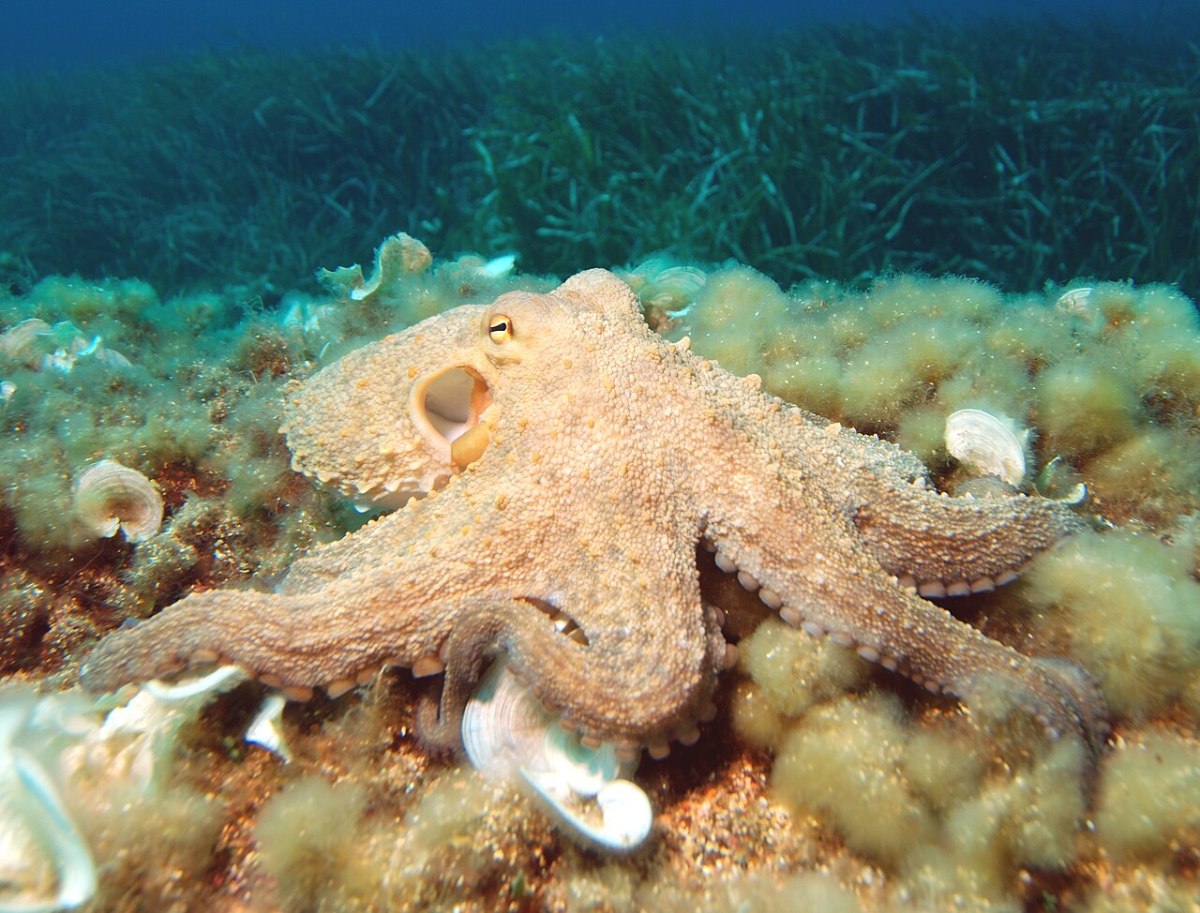
Mattias Krantz got Tako from a Japanese seafood market.
“That guy,” he told the person manning the stall, pointing to a common octopus sitting in shallow water with others of its kind, not even given room to swim before it was to become someone’s meal.
It is the ultimate as far as random interventions of fate go, and I kept thinking about Tako’s almost-end on a plate while watching musician Mattias Krantz teach the clever animal how to play piano.
Octopus are smart. Comparing animal intelligence to human intelligence is always a flawed and imprecise effort, not least because of differences in psychology and evolution, but the eight-armed invertebrates have cognitive abilities on par with humans at three years old. That is to say, some of their cognitive gifts exceed those of small children, some fall short, and some are about equal. It’s always going to be apples to oranges between species.
Octopus learn quickly simply by observing. They remember individual people even if they haven’t seen them for months. They play, explore and even decorate their dens. In the wild, species like the mimic octopus perform nature’s most astonishing acts of imitation, not only changing the hue, texture and patterns of their skin, but also their shape and the way they move. They can imitate dozens of creatures, blend into the sand, and disguise themselves as plants and rocks. When a predator approaches, the mimic octopus takes on the shape, color and behavior of another predator — a highly venomous fish, for example — and scares off the aggressor. That requires serious smarts.
Technically, saying Tako is playing piano may be a stretch. Octopus can’t hear, so Krantz rigged Tako’s tank with a device that turns sound to rhythmic pulses in the water.
Yet there is no denying that Taku took to the piano with enthusiasm, happily played it, even looked forward to it every day when Krantz’ multiple iterations of waterproof keyboards finally reached a point where the animal could reliably manipulate the keys. (Krantz had to create switches Tako could pull, for example, as it’s difficult for the invertebrates to push keys.)
Krantz’ determination is admirable. The Swedish musician, known for his quirky projects, overcame major hurdles that would have stopped most people, and navigating some of those challenges required radical reconsideration of how humans and animals interact with the world.
Yet Krantz and Tako got there in the end, and the piano is only one part of it. Tako is short for takoyaki, a Japanese fried octopus dish. Watching Tako’s interest and enthusiasm as he tackled the piano day after day, you can’t help but think about his less fortunate tankmates, and our collective ambivalence to the overwhelming evidence that we share this planet with billions of other minds, each with their own thoughts and feelings.
Header image of common octopus credit Albert Kok/Wikimedia Commons
A new story from CNN examines how friendship with animals can enhance our spiritual lives.
If you ask Bud, I’m sure he’d agree that merely having the privilege of being friends with him is akin to a transcendental experience.
“Yes, human, by stroking my fur, you are brushing up against the divine!” he’d probably say. “Now make a proper offering, and don’t skimp out on me. I want the good snacks!”
The massive ego of my cat aside, some theologians and spiritualists say we’re in the midst of a “Great Pet Awakening,” with more people than ever welcoming animals into their homes, treating them like family, and coming to profound realizations by bonding with them.
Our pets can help us come to grips with our own mortality, amplify our own spiritual lives and even help us heal, they say. Some of it’s nebulous, including a Pew poll that found most Americans believe pets are imbued with some sort of vague supernatural energy, and some of it’s tangible, like studies that have found cat purring has a calming effect on people as well as cats.
If you’re interested in reading more, CNN’s story on the “awakening” quotes a Canadian theologian and author, a Buddhist, and, tragically, a “psychic medium.” In true grief vampire style, the latter says “pet psychics” can offer people “a chance to hear personalized messages from their pets in the Great Beyond.”
“Now leave the snack, bow, and retreat until I call for you again. That’s a good human.”
I don’t like thinking about a time when Bud will be gone, but when that day comes, if I encounter a “pet psychic” who tells me Bud sends his love and appreciation from the afterlife, it’ll reinforce my dim view of self-proclaimed mediums. If, however, the “psychic” tells me that Bud is still miffed about the times dinner was late, or he’s annoyed that I’ve adopted another cat who has inherited his toys, I’ll change my tune!
In any case, I think there’s one hugely important thing the CNN story does not touch on. It focuses on the way pets benefit people, but perhaps the most profound gift our animals give us — if we’re open to it — is a new appreciation for them, and what a miracle they are.
It’s 2025, but surprisingly, there are lots of people who are still stuck in a pre-cognitive revolution mindset, viewing animals as little more than biological automatons. They deny animal cognition, emotions and agency, as if B.F. Skinner and behaviorism remain the credible model. To do that, you’d have to ignore more than sixty years’ worth of research proving our furry friends have their own rich internal lives, their own thoughts and feelings.
Buddy’s ego may be slightly inflated.
That, to me, is one of the great things about cats. If I was a merely adequate servant, the Budster would take the free meals, the shelter and the warm bed, and ignore me until he wants something. Instead, he’s rarely more than three feet from me, he spends much of his day sitting on me or in direct physical contact, he can’t abide any barrier between us, and he expresses his love by marching up to me, purring up a storm, and rubbing his head against my face.
He chooses to do that, and it tells me that for all the boneheaded mistakes I’ve made, I must be doing a pretty decent job. He’s not my property, he’s my Buddy.
Buddy’s personality is galactic in size, his emotions emblazoned in neon, his opinions shared through a bullhorn.
I used to hate cats.
When I’d hang out at my friend Dave’s house as a teenager, the little shits were everywhere, climbing all over everything with no boundaries and apparently no limit to their numbers.
Dave’s family had between 10 and 12 cats at any particular time, a small army, and as far as I could tell they were little more than inscrutable, uncommunicative tribbles, barely sentient animals who didn’t listen to anyone, could not be told “no,” and were going to stick their little faces in your food or drink no matter how many times you told them to get lost.
Worse, I’d have to dose up on Benadryl just to last a few hours and often left because my eyes were gumming up and my nose was clogged.
There were times when I sat in my car, idling for a half hour with the windows down and heat on blast on frigid nights, waiting for the worst allergic symptoms to subside. I was worried I’d be pulled over and a cop, seeing my half-shut, bloodshot eyes, would decide I was driving stoned or drunk.
Even when another friend adopted a friendly, cuddly tuxedo who became the first cat I truly interacted with, even when I realized I could safely play with one or two cats without getting sick, and even as I was actively looking for a feline of my own, I didn’t think they were intelligent or that it was really possible to meaningfully communicate with them.
At best I’d get a tribble of my own, something to feed and care for in my black depression to take me mentally out of myself.
My little pal, probably around 10 weeks old.
Then Buddy came striding out of his carrier like a furry little Genghis Khan and started conquering shit.
The furry little conqueror
I was prepared for a kitten who might dive under the bed and refuse to emerge except to sneak a bite or take a sip when the coast was clear. Lots of guides for first-time adopters warned the adjustment period for a new cat or kitten could be extensive.
What I got was a boisterous, bold, imperious little dude who was kind enough to allow me to continue sleeping on my bed, which was now his bed. I got a companion who demanded my attention, wanted to be involved in everything, and was going to let me know loudly and unambiguously what he liked and what he didn’t. He took up a regular position on my shoulder, like a parrot with a sea captain. We were — and still are — inseparable.
Buddy’s personality is galactic in size, his emotions emblazoned in neon, his opinions shared through a bullhorn. There’s a vibrant mind in his little head.
If they met Bud, even the most stubborn animal haters, the kind of people who refuse to acknowledge animal intelligence because they think it diminishes our own, would know they’re dealing with a person even if they may not admit it.
That is why this site exists. It’s why I write about cats, why I’m invested in their welfare and why it hurts my soul to hear about so many casual incidents of cruelty committed by humans toward felines.
When I hear about people gunning down cats or pouring lighter fluid on them, I think about what might have happened if Bud ended up with someone else, and I think about the cats who are just like Bud who are killed or seriously injured by cruel humans engaging in senseless violence.
There is no question that those cats suffer, that they feel pain, anxiety and terror as seriously disturbed people inflict pain on them for “lulz,” or because they think hurting cats might earn them Internet Points in the bowels of the web where diseased minds congregate to share shock videos.
“Dude, you can’t be serious.”
The fact that Buddy thinks he’s a hulking tiger is a running joke here, and it’s true. He thinks he’s the baddest boy on the block, and he doesn’t see any dissonance between cosplaying as the Buddinese Tiger one minute, and running behind my legs when he gets scared the next.
Mighty and brave!
It’s been 10 years now, and I’ve pretty much accepted the fact that he can’t be stopped from pawing at the big screen door leading from the living room to the balcony.
But every time he gets his claws caught and he’s left hanging, he starts crying for me. He sounds like a baby, and all he wants in that moment is his Big Buddy to come and pick him up, gently slide his claws out, and rub his head while telling him what a brave and tough little guy he is.
He responds by puffing his chest out and purring. He’s probably thinking “Yes, I am brave, aren’t I? I endured that ghastly ordeal and only cried a little bit!”
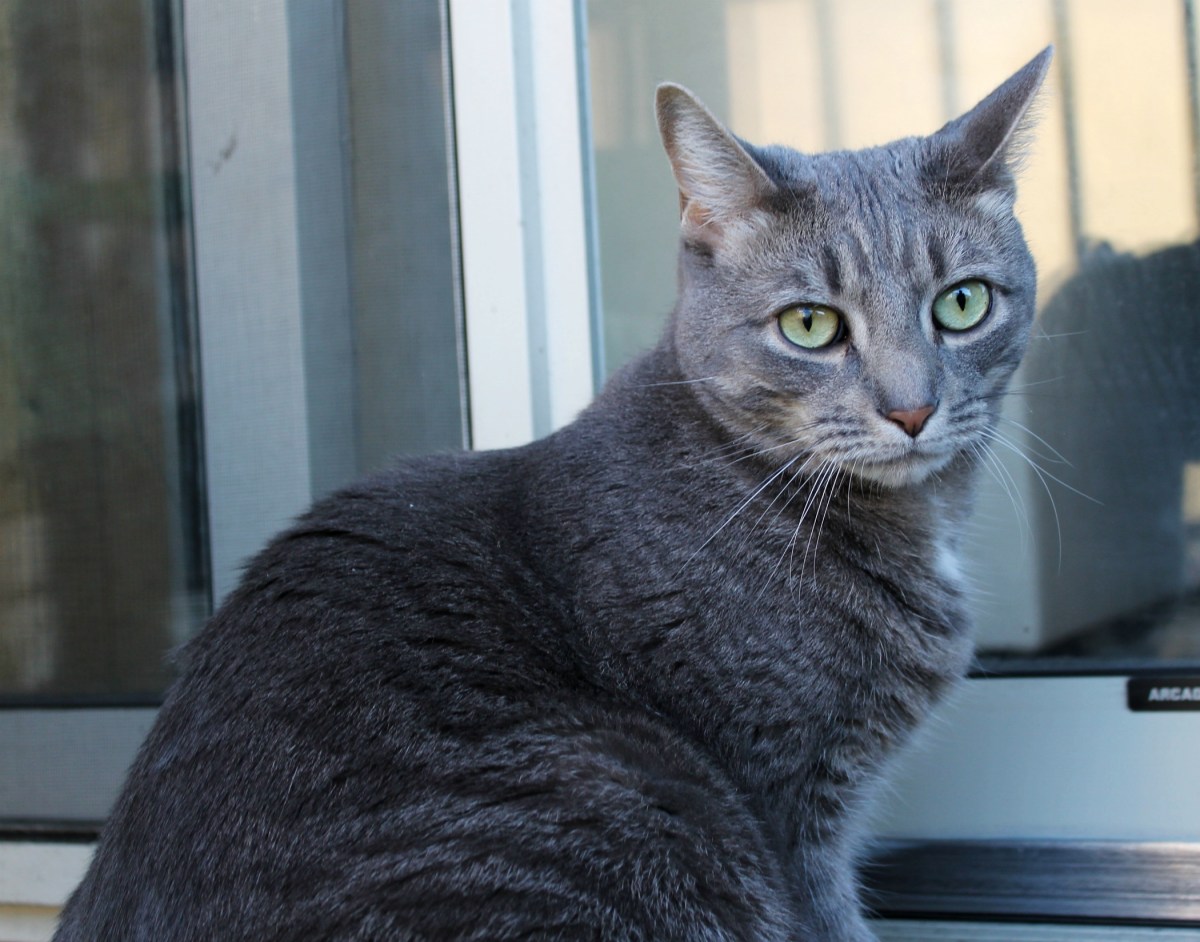
Buddy with a very Buddy look on his face.
It’s not all wonder and awesomeness, of course. I never would have guessed an animal could be so resourceful and clever when it comes to being annoying. Bud graduated from cackling gleefully in the dark as he terrorized my feet at night, to repeatedly punching the flap on his litter box because he knows the squeak drives me crazy. He’s also fond of standing on my head and shrieking at full volume into my ear. Not “fill my bowl” or “I need water,” because those needs are taken care of immediately before bed.
The reason he wakes me up, why I’m ripped out of restful slumber by his high-pitched kitten voice, is because he wants me to wake up and be Buddies with him. He wants to hang out.
So as annoying as he can be, and as much as I really, really hate losing sleep, I can’t be mad at him. If only humans were so pure in their intentions and non-judgmental.
Cats are social animals
A lot of people say their cats ignore them or at best acknowledge them with a twitch of their radar ears. When I call Bud, he responds by happily padding up to me, tail raised straight up or curled like a question mark.
That’s because he knows I’ll never hurt him. He knows I’ll never force him to do anything he doesn’t want to do, nor will I grab him, subject him to unwanted petting and refuse to let him go. Trust goes a long way in human-feline relationships. In some ways, it’s everything.
Schemeowtics for Buddy the Cat. Note the huge meowscles.
Part of earning that trust means understanding my little pal, learning from him and learning about him. I’ve read more about felis catus than I ever imagined I would, and Bud’s smarts sparked a years-long deep dive into animal cognition that still has its hooks in me.
The belle epoque of feline research
For decades, dogs were the only domestic pet scientists bothered with. Cats were legendarily uncooperative, and the general consensus was that trying to wrangle them wasn’t worth it. If a research team managed to get 150 people to bring their cats into the lab, they were fortunate if a third or a fourth of them worked out.
Over the past 10 years or so, that’s changed as a new generation of scientists began to think in feline terms. Now the research teams come to the cats instead of the opposite, in recognition of how important territory and surroundings are to the species. They’ve also taken study formats originally built for children and dogs, and modified them for moggies.
Thanks to their efforts, we’ve learned a great deal.
Studies have found that, contrary to popular belief, cats really are social animals. If they’re bonded to a person, they value affection more than food or toys! They pay close attention to our whereabouts at all times, even though they’re masters at appearing ambivalent.
They know their names, they know the names of other cats they live with, and studies suggest they may be an even quicker study than toddlers when it comes to basic word association with items and concepts.
The meow isn’t a part of their regular communicative repertoire when they’re strays or ferals, and vocal communication doesn’t come naturally to them, but meows are embedded with meanings we’re only just beginning to understand.
Most amusingly, they’re capable of being dishonest with us and modifying their meows to manipulate us. But don’t let that fool you into thinking cats are real liars: it seems the one and only thing they’re dishonest about is food, probably because they realize we’re suckers.
During our time as inseparable pals, Bud and I have developed our own human-feline patois, a way of communicating that involves verbal and non-verbal cues. I pride myself on knowing what he wants the vast majority of the time, but I also realize the majority of the credit goes to little man for meeting me more than half way.
Sometimes Bud is so insistent, his meows apparently so urgent, that I don’t know what he wants. I can rule out food, water, a foul litter box or demands for pets. If he wants to snuggle or lay in my lap, he doesn’t need to ask. If he wants to play, he lets me know.
So what’s he saying? What could possibly be so important? Is he trying to tell me he’s reconciled quantum mechanics with general relativity? Has he gotten word of an anti-Buddesian plot by the devious neighbor cat, Smudge?
I don’t know. But one thing I do know, that I’m absolutely confident about, is that there are real thoughts scrolling through that little head, and a rich, authentic inner existence.
I’m lucky I’ve gotten to be his buddy, and to learn from him that animals are so much more than vacant-brained automatons I used to think they were.
The video is thoroughly amusing, but it also illustrates profound truths about feline intelligence, showing cats understand a lot more than people often give them credit for.
I’m loving this video of a sneaky orange tabby pretending to snooze while helping himself to his human’s food.
Little dude lays down and closes his eyes, then slowly reaches a paw out to the cap of an ice cream container, which has a glob of the good stuff on it. He checks to make sure the coast is clear by opening his eyes just a tiny bit, then slowly moves the cap over incrementally, pausing at intervals to make sure he’s still unobserved. (It looks like his human set her phone to record, then left the room so her little buddy thought no eyes were on him).
Aside from being hilarious and cute, this short clip actually illustrates something profound: Cats are much more intelligent than people usually give them credit for.
Consider the fact that to pull this off, the cat needs to be self-aware, and he needs to possess theory of mind. In other words, this cat understands he and his human have different perspectives, know different things, and that if he can move stealthily and appear to innocently nap, he can get away with eating some ice cream.
That may not seem like a big deal at first, but it means the cat understands humans can be deceived, and he understands how to do it. He cannot possibly know we have technology that can record him while we’re not looking, so that’s not a strike against him. There are plenty of things we don’t understand about animals, and we’re supposed to be the more intelligent species.
To truly appreciate how profound this is, consider that human children do not fully possess theory of mind until they’re four or five years old! That’s when they begin to appreciate the fact that other people have internal thought processes and emotions — even if they can’t articulate that — and, crucially, that what a person thinks she knows may not align with reality.
Footage like this goes well beyond refuting the old, debunked claim that animals like cats are biological automatons without thoughts or feelings. It shows they are in full possession of the cognitive tools that form the basis for higher modes of thinking. Again, while some people might hear that and say “What’s the big deal?”, it destroys all arguments that animals don’t have emotions or don’t understand what’s happening to them when humans mistreat them.
It also shows that cats are at least as intelligent as young children in all the ways that matter. They cannot verbalize their thoughts and feelings, but that has no bearing on their existence. After all, no one would argue that a child doesn’t have feelings simply because he’s unable to speak.
Lastly, there’s one more important lesson here: hide your ice cream from your fluffy pals!
I love my cat, except when he’s standing on my head and screeching into my ear at 80 decibels to make sure sleep is not an option.
Regular readers of this blog know I dote on my cat.
I don’t call him “Your Grace” without reason. He always eats first. He regularly uses me as his pillow. He knows how to manipulate me, he always gets what he wants, and I’ve been told many times how he’s got me “wrapped around his paw.”
He rules the roost, and has done so since the night he arrived as a baby and came striding out of his carrier like a furry little Ghenghis Khan, conquering everything in sight.
No one can doubt that I love the little guy.
But if you were a fly on the wall when I wake up, well, you might think differently. Bud is, to put it bluntly, absolutely relentless when he wants something, which puts us at odds when it comes to that most crucial commodity, sleep.
Some of the most vile things that have ever come out of my mouth have been prompted by the little guy’s snooze-disturbing antics. I’ve called him ALF (Annoying Little F—-er), I’ve threatened to sell him to the local Chinese restaurant, I’ve thrown pillows at him, and when my sleep-deprived brain can’t come up with something more creative, I half-mumble “Shut up, you furry little turdball!”
Buddy the Cat: Never at a loss for meows.
Those are the more tame ones! The worst thing, the bit that makes me feel bad, is that Bud just wants me to wake up so we can hang out and be buddies.
He doesn’t want food. He’s got a bowl of dry food set out for him before bed every night precisely so he doesn’t have to wake me up. Nope. He wants to knead my shoulder, purr up a storm and have me scratch his chin while I tell him what a good boy he is. And instead of that, I’m turtling up beneath the blanket, pillow over my head, telling him he’ll be served as General Tsao’s Buddy if he doesn’t shut his trap.
All this time I’ve told myself that it’s okay because he doesn’t understand what I’m saying, and he knows I wouldn’t harm a hair on his head.
But what if he does understand some of it?
That’s the subject of a new column by Karin Spicer. Writing in the Dayton Daily News, Spicer describes her morning ritual with her cat, Pip, and how she’s encouraged her naturally vocal cat to vocalize even more by talking to him.
“No sleep for you, human! There are foreheads to rub, chins to scratch and ‘good boys’ to be said!”
Like Pip, Bud is a naturally talkative cat, and like Pip, his motor mouth tendencies have been cultivated by plenty of attention, affection and interaction.
“Cats want to bond with their owners,” says Catster’s Michelle Gunter, who is quoted in Spicer’s column about Pip. “If you take the time to communicate with them in soft, calming tones, that bond will strengthen faster. Your tone and the affection you offer during these periods can help show your cat that you love them and want to spend time with them.”
You mean to tell me all this time I’ve been undoing some of that bonding by hurling vile invective at my Buddy when he tries to annoy me out of sleep?
You mean to tell me he can infer by my tone of voice that I’m threatening to sell him to Somali pirates for $15 and a pack of gum?!?
Sheeeeit!
Disclaimer:No Buddies were harmed in the creation of this content, except perhaps for some bruised egos.







 Pain In The Bud