Cat On The Street: Are You Satisfied With Your Human Servants?

We asked six Roman cats if their humans are serving them adequately.

It’s hard out there for a patrician cat.

By the time the newest batch of humans arrives from the provinces, they’re ragged and often useless, but the auctioneers drive a hard bargain anyway. And training them to meet all the needs of a noblecat? Nearly impossible.

We asked six Roman cats whether they’re satisfied with the humans they own:
20231217_204108

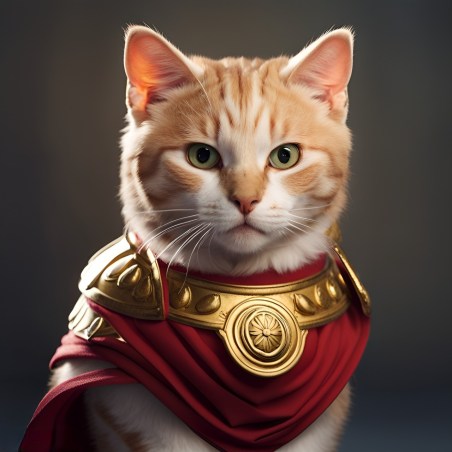
“They do not call me Dominus, they do not show proper deference and they are often unforgivably late with my meals. I am a magnanimous feline, but these slights cannot go unanswered. No more Mr. Nice Gaius!” – Gaius Magnus Pawlinius


20240205_1808203951039049773843886

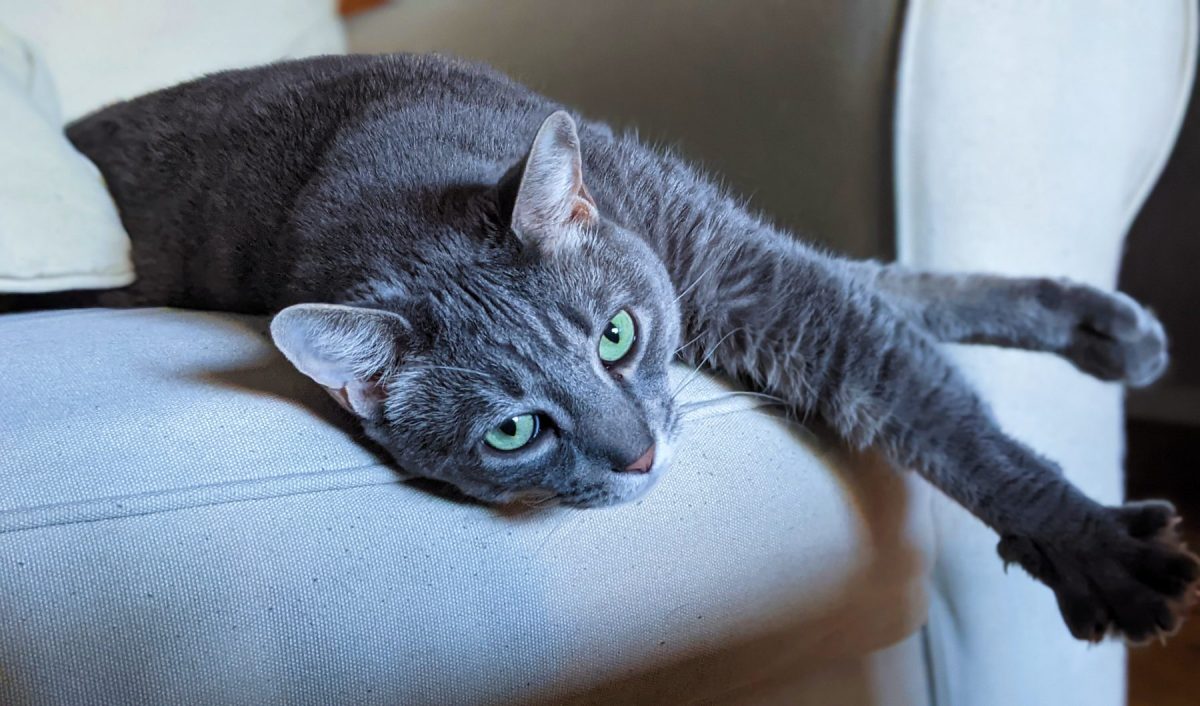
“My human insists on speaking to me in a baby voice. I warned her: ‘Woman, test not the patience of your Dominus, for it is not a quality I possess in great quantity.’ She responded by rubbing salt in my wound, saying ‘Oh you’re just adorable aren’t you? Who’s adorable? You are! You’re my adorbz widdle baby, yes you are!’ I shall have her lashed for her insolence!” – Gingerius Tabbylo Posca


20240205_1807074973929580110852119

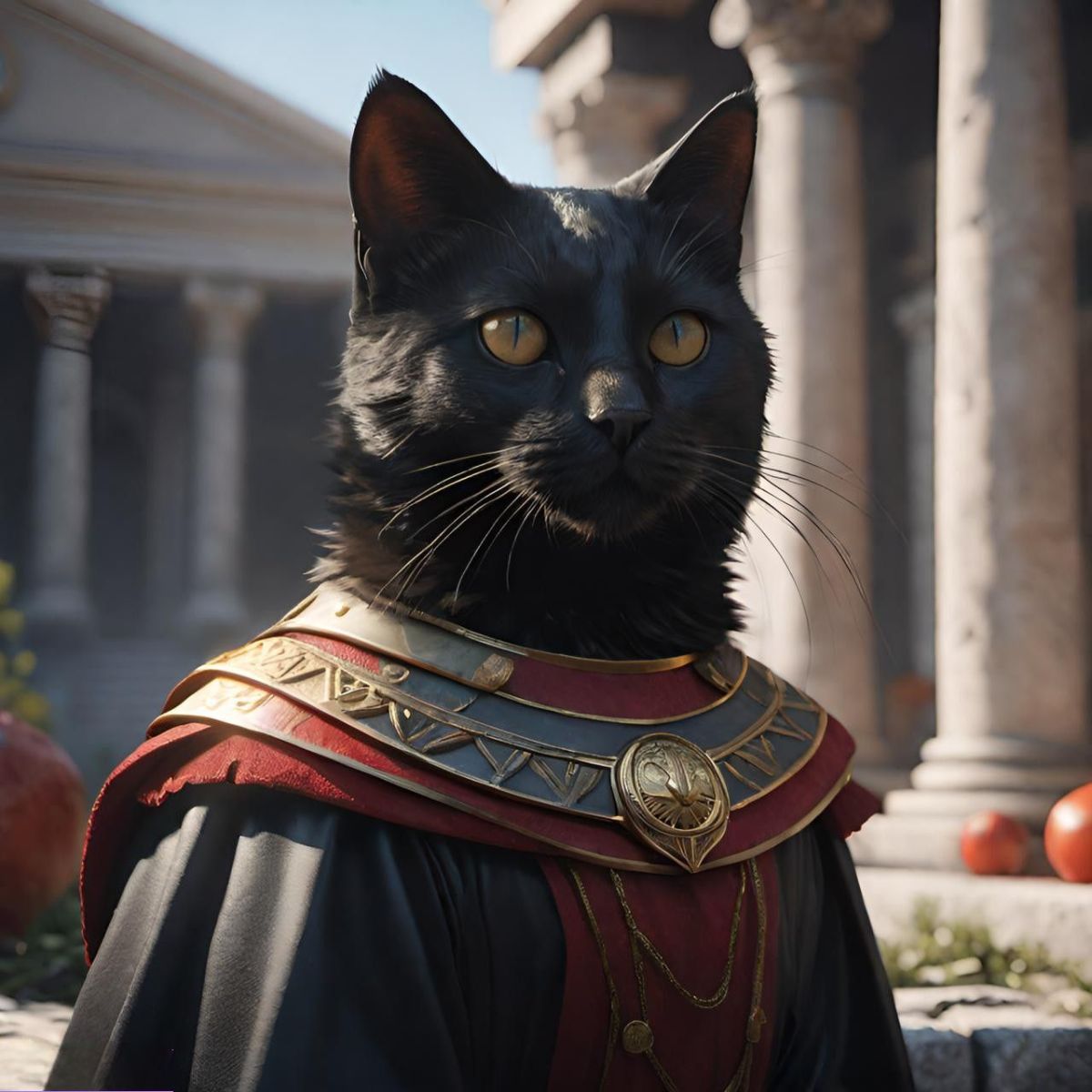
“I enjoy making my humans fight each other for the privilege of my affections. They’re incessantly trying to one-up each other, going to extraordinary lengths to win my favor. What more could a good Roman feline ask for?” – Voidicus Duskus Glaber


17071742968788093351292734887332

“Originally I purchased my humans as an investment for my ludus, to bring me glory and riches in the arena! My name would echo from Capua to Rome! But then I realized that humans are excellent at pulling chariots and unlike horses they don’t incessantly eject foul odors. Also, they eat less.” – Smoothilius Sphynxus Cossutius


1000012787

“When it comes to humans, you must accept the fact that they are dim creatures who are often incapable of following orders. Whilst dispatching my primary servant to the market, I made clear my demands for fresh fish, raw beef and rodent meat. Yet he returned with these ghastly hard balls he calls ‘kibble’ that taste like cardboard. Worse, he is entirely incompetent as a hunter, so I am forced to catch my own food. This no noblecat should have to endure!” – Clawdius Quintus Catrillo
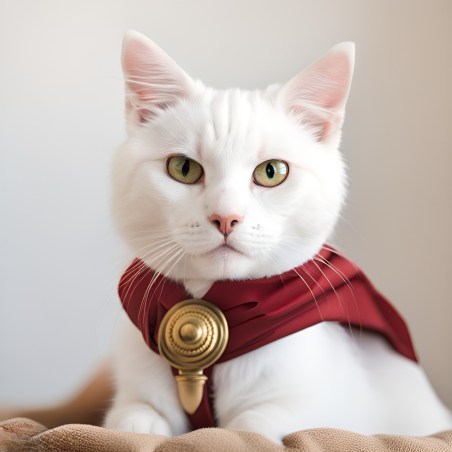

20231217_203905

“They objected to being branded with my cognomen and their insolence shall be punished accordingly. It must be made clear they belong to me! That said, they make pretty good snacks. Flavorful, yet not fattening!” – Marcus Flavius Flufficus

All images and text ©2024 Pain In The Bud/littlebuddythecat.com

Previously:

Cat On The Street: What Do You Think About Humans Identifying As Felines?
Cat On The Street: How Will You Celebrate Labor Day?
Cat On The Street: What Do You Think About Humans Translating Your Meows?
Cat On The Street: What Do You Think About The Spy Balloons?
Cat On The Street: What Do You Think Of Harry And Meghan’s War On The Royal Family?
Cat On The Street: What Do You Think About The New Discovery From Ancient Egypt?
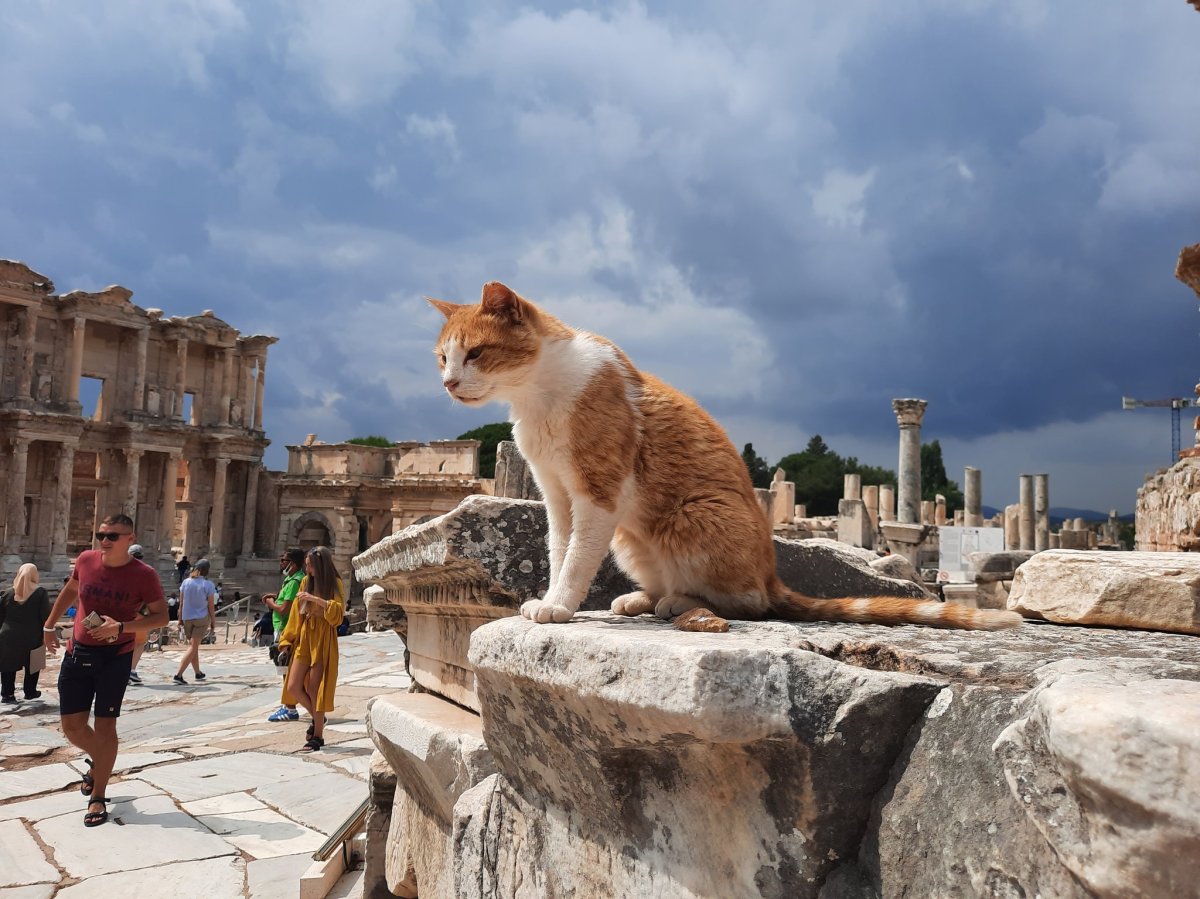
A Tabby Cat Tours Pompeii’s Newly Restored Roman Mansion

Cats were treasured pets in ancient Rome, and strays can be found living in the ruins of the empire today.

This is only tangentially related to cats, but 1) It’s awesome, 2) It represents one of the best surviving examples of Roman home life, and 3) Cats invited themselves to the party.

The AP has a story and an extensive photo gallery of what it calls “newly restored remains of an opulent house in Pompeii that likely belonged to two former slaves who became rich through the wine trade offer visitors an exceptional peek at details of domestic life in the doomed Roman city.”

The House of Vettii was known as Domus Vettiorum in Latin and its owners, Aulus Vettius Conviva and Aulus Vettius Restitutus, were freed slaves who used their knowledge of wine — probably gleaned from their former dominus — to launch a successful business which propelled them to the economic heights of Roman society.

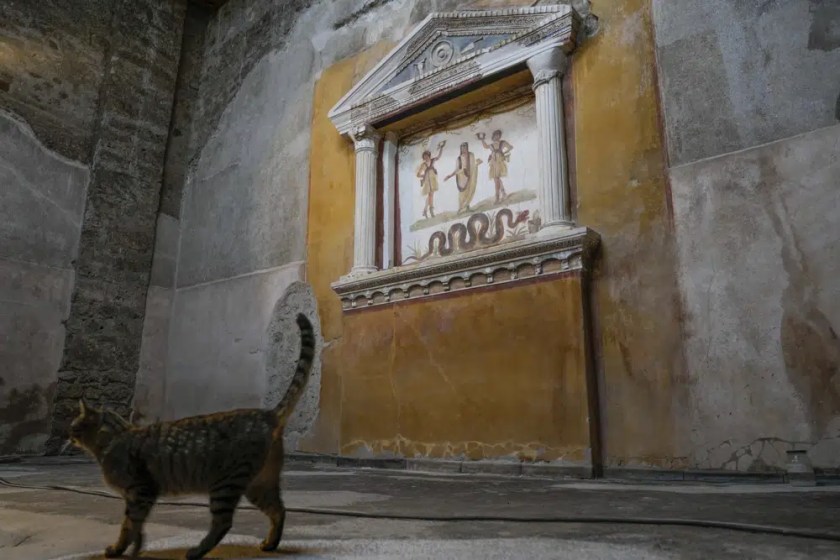
And who do we have there in slide number 16 of the photo gallery? A tabby cat, checking out the restored lararium, a nook where Romans would venerate their “household gods.”

tabbypompeii
A tabby cat prowls the House of the Vettii in Pompei. Credit: AP

The Vettii spared no expense when it came to hiring the best craftsmen and artists to lavishly decorate their home, covering the walls with scenes from Greek and Roman mythology. It took 20 years to restore the domus to much of its former glory

“They evidently tried to show their new status also through culture and through Greek mythological paintings, and it’s all about saying, ‘We’ve made it and so we are part of this elite’” of the Roman world, said Gabriel Zuchtriegel, a German archeologist who is now the director of the Pompeii archaeological park.

Looking at the restored home, it’s clear shows like HBO’s Rome and Starz’ Spartacus did a good job of portraying what Roman houses looked like on the inside, and how individual rooms were used by the people who lived in the homes as well as their servants:

pompeiidomus
Well-preserved walls show meticulously rendered scenes in the House of the Vettii. Credit: AP

We tend to think of ancient Greek and Roman buildings as monochrome since the paint has long worn off most structures, but the unique circumstances of Pompeii allowed some homes and other structures to remain largely preserved under volcanic debris since 79 AD.

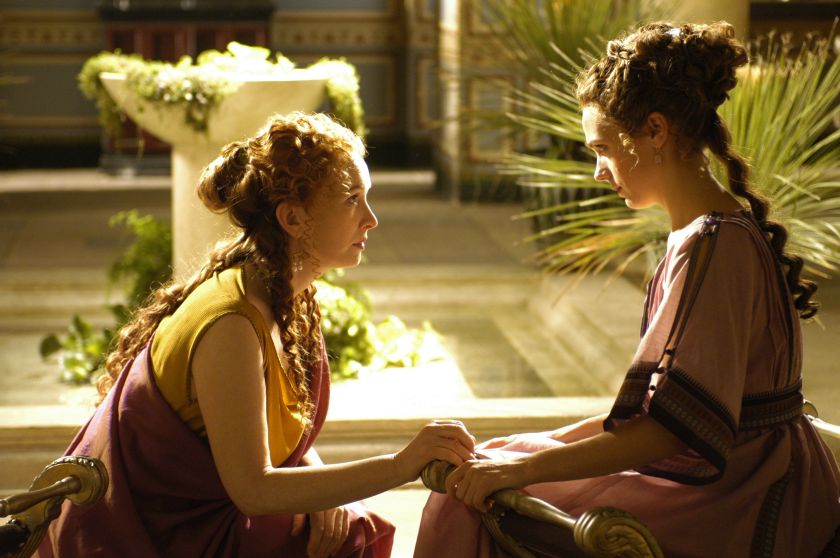
Here’s a scene from Rome showing the interior of Servilia’s home, giving us an idea of how a wealthy Roman’s house would have looked in contemporary times:

Rome
Servilia and Octavia from HBO’s Rome. Credit: HBO

10 Signs From Your Cat You’ve Misinterpreted As Love

Buddy the Cat clears up common misconceptions people have about cats expressing affection for their loyal human servants.

The internet is awash with listicles claiming your cats love you, insisting you’ll know for sure once you’re able to recognize the signs.

Well we’re here to tell you that love is a strong word, and if you’re lucky your cat merely acknowledges your existence, human. Here are the 10 feline behaviors most commonly mistaken for love:

  1. Grooming: “Grooming means one thing, and one thing only: We think you’re gross and you need a bath,” Buddy the Cat says. “You’re disgusting creatures, allowing your dead skin cells to accumulate all over you without washing them off until you take those horrific ‘showers.’ I could take a claw right now, run it down your arm, and come up with enough dead skin cells to season a salad. Now that’s nasty.”
  2. Kneading: “The Feline Propaganda Ministry seeded a story that kneading is some sort of affectionate behavior left over from kittenhood, and that by kneading you, we’re identifying you as our surrogate moms. That’s hilarious,” says Buddy. “We’re simply tenderizing our meat.”
  3. Head boops: “In ancient Rome, slaveowners would mark their property with brands or tattoos saying ‘PROPERTY OF POMPEY MAGNUS’ and that sort of thing. That’s what we’re doing with head boops. We’re using the pheromone glands on our heads and cheeks to mark you as our slaves, so other cats don’t try to lay claim to you.”
  4. Bringing you presents: “You humans eat the most disgusting food, like broccoli, potatoes and oranges, which are particularly revolting. When we bring you presents, we’re trying to fatten you up for later when we eat you.”
  5. Sleeping on you. “You’re warm. End of,” Buddy explains. “By sleeping on top of you, we also ensure you aren’t going anywhere, and will be available to fetch us snacks should we wake up hungry.”
  6. Putting our butts in your face: “You like that? Sniff it, human servant!”
  7. Tails held straight up: “The tips of our tails are actually quite sharp, and we brandish them like weapons. Weapons that say ‘There will be no disobedience or dilly-dallying here. Run along now and fetch us some yums.'”
  8. Meowing: “There is no equivalent for ‘please’ in meowenese. We meow because we know you’re hopelessly obtuse creatures and you can’t read the simplest tail, ear or whisker movements. Meowing is like speaking slowly to a child who’s had too many head injuries. ‘Massage…my…head…human. That’s a good human!'”
  9. Purring: “A purr is just a quiet roar. It means we’re happily thinking of ways to kill you.”
  10. Tolerating you: “Humans often mistake grudging acceptance for love. Just because we tolerate you doesn’t mean we love you. It means you provide useful services, but if that calculus should change — say, by providing subpar treats or not serving wet meals as delicious as the ones served by the neighbor two houses down — then we’ll simply move house.”