If you’re a house cat, your human’s death is just about the worst thing that could happen to you.
Cats are often left to grieve on their own, without any consideration from surviving relatives who may not like animals or cats in particular.
Treated as an afterthought, with no one to comfort or reassure them, those scared cats then endure another trauma when they’re taken from their homes and placed in tiny shelter cages. Depressed and shocked, they’re easily overlooked in shelters.
That’s why it’s heartening to hear about a French woman who drove with her boyfriend from Paris to Cavaillon in southern France to adopt her late grandmother’s beloved cat, Felix. That’s a drive of 708 kilometers — or about 440 miles in the proper ‘Merican measurement of distance — and almost the length of the country.
Adding to the challenge was the fact that Felix had never travelled before, the woman — who posts as @felixthegoateecat — noted.
“My grandmother was the nicest person,” she wrote. “She always fed Felix because she was always afraid he was hungry.”
Felix
It’s pretty clear the late grandmother and Felix had a special bond, and her granddaughter understands that.
She wrote about the process of allowing him to adjust to his new people and surroundings, and documented milestones like the first time he made biscuits in his new home.
So far, it looks like Felix is settling in just fine in his new life as a city cat.
Staff are demoralized, volunteers are spooked and the shelter has been buried in negative reviews after a TikToker picked a fight over an adoption fee and her army of followers went vigilante.
The voicemail is chilling not only for the explicit threat the person on the other end makes, but for her chipper tone as she casually threatens the lives of the people working at a west Michigan animal shelter.
“So anyway,” the caller says at the end of the unhinged message, “I’ll blow this number up and I’ll blow your location up as well. Hope you have a wonderful day!”
It’s one of three bomb threats the shelter has received since TikTok influencer Chloe Mitchell began the saga of what she calls “the $900 cat.”
Mitchell adopted a kitten from Michigan’s Noah Project, a small no-kill shelter, in early March. Staff say she didn’t balk at the adoption fee and they thought she was happy with the sweet kitty she took home, but the next day Noah Project’s phones began ringing incessantly with callers heaping abuse on the shelter’s volunteers and staff.
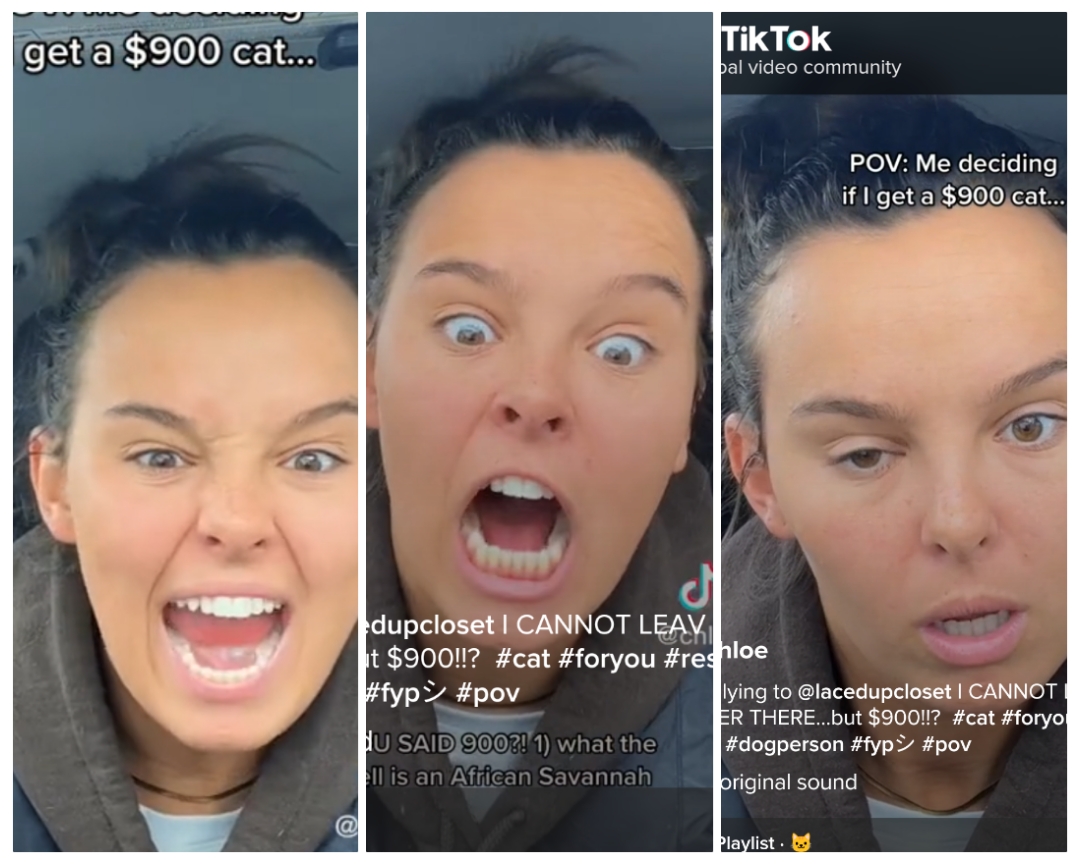
Apparently in the throes of adopter’s remorse, Mitchell uploaded a video to TikTok, the popular Chinese social media app, and raged about the adoption to her three million followers, screaming into the camera as she accused the shelter of identifying her as an easy mark and making a tidy profit off the kitten’s adoption fee.
Sickly kittens and sizable veterinary bills
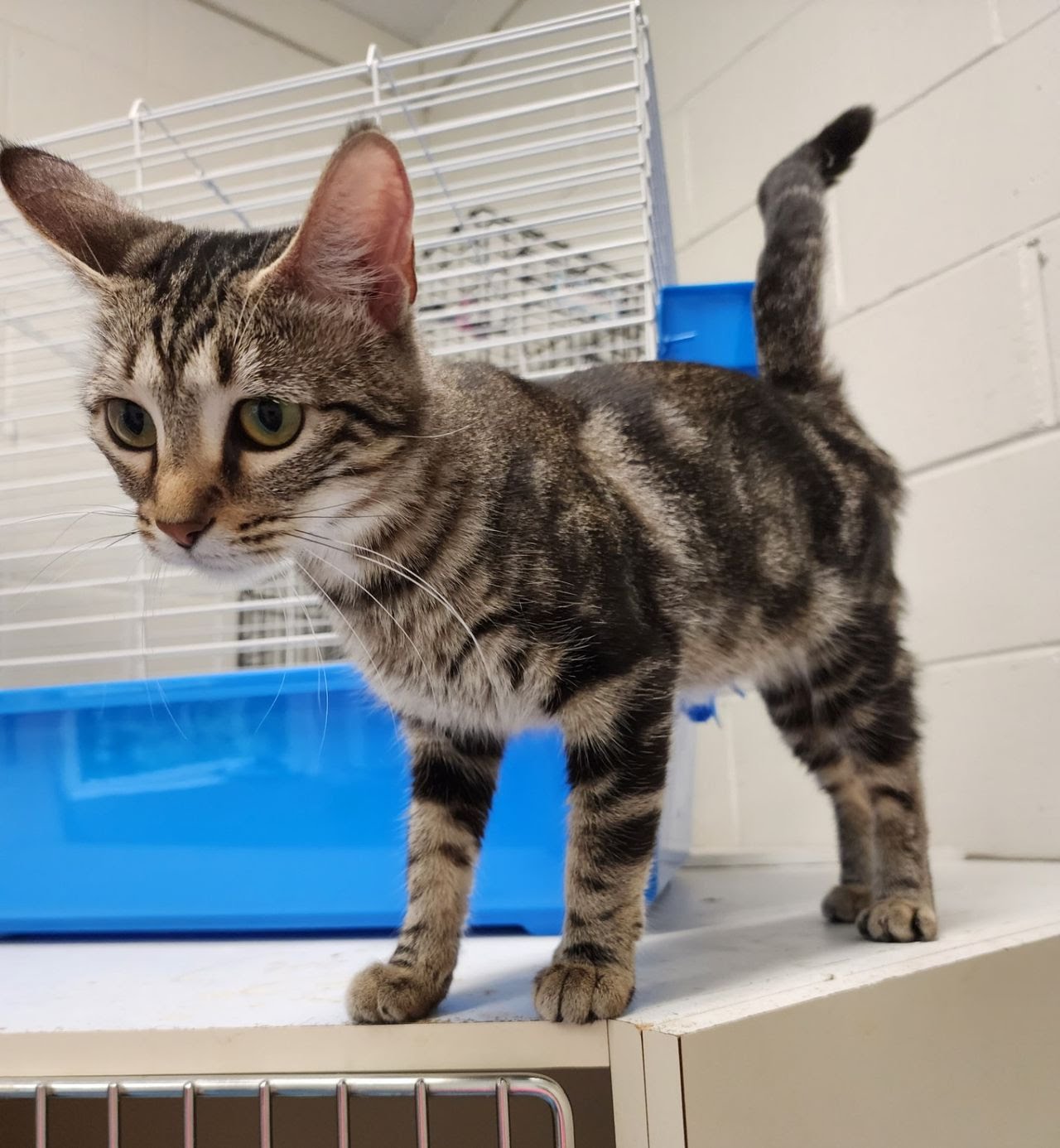
Mitchell originally came to the shelter, camera in tow, asking specifically for a cat named Heart. The influencer filmed her visit and gushed to her viewers that she’d fallen in love with Heart, a mixed-breed kitten with Savannah heritage.
Heart, or as Mitchell calls her, “the $900 cat.” Credit: Noah Project
Shelter staff explained the kitten was from one of two litters that were brought in with serious ailments after a woman purchased a pair of queens from a breeder.
The former breeder cats went into heat and had babies, predictably, and the situation quickly grew out of control. When the woman realized she couldn’t care for the cats and their many ailing babies, she brought them to the Noah Project, which took on the Herculean task of caring for kittens that had problems ranging from anemia to developmental deformities like swimmer’s leg, also known as deformed leg syndrome.
Noah Project staff had to rush three of the kittens to an emergency veterinary hospital. Another required a leg amputation. Two kittens died, and the remaining babies had to be nursed back to health over three months, with special diets, medication and care on top of the normal costs associated with spaying/neutering, micro-chipping and vaccines.
Taking on that many sick kittens would stretch the resources of any animal shelter, let alone a small rescue, and the Noah Project set the adoption fees at $900 per kitten to help recoup the considerable costs.
Whipping an army of followers into a frenzy
Mitchell wasn’t phased by the fee, shelter staff said, but things quickly turned sour when she went home and posted the dramatic video, sparking the ire of her followers.
After that first video racked up almost six million views and almost 28,000 comments, Mitchell turned the experience into her own miniature “season” of online television, making half a dozen monetized videos in which she accuses the non-profit of lying to her about Heart’s breed and scamming her with the adoption fee.
Collectively, the videos have more than 30 million views, and Mitchell’s increasingly pitched rhetoric has whipped her three million followers into a frenzy.
In the video above, Mitchell acts out an alleged conversation with the shelter and confuses coat pattern for breed, saying “Feline experts have approached me online to say that she is in fact not an African Savannah and is more of a tabby-looking animal.”
“And they’ve stayed that I did get wrongfully charged that $900 in your shelter, which isn’t looking to re-home animals [but] make a profit off of them, and that’s not okay… I was taken advantage of, and that really sucks, I gave you my money for a reason that you were being truthful about her breed.”
Prompted by Mitchell’s insistence that the shelter was “scamming” adopters, her followers turned vigilante, review-bombing the Noah Project on Google and harassing its staff by phone. The shelter, which has been named the best rescue in west Michigan by its local newspaper several years in a row among other plaudits, saw its five-star Google review rating evaporate as negative reviews piled up, and the angry calls keep coming in. (“Unethical scammer! …shady, greedy business!” one of Mitchell’s followers wrote, while others dubbed Noah Project a “retail rescue” that “prioritizes profits over placing animals in a loving home.”)
The experience has been bewildering for shelter volunteers who aren’t accustomed to being the target of international ire.
“One woman [who answers phones at the shelter] doesn’t want to come back this week because it was so bad for her,” said Mashele Garrett-Arndt, Noah Project’s director. “It’s hard to explain to someone in their 60s or 70s. They don’t understand how [followers] can be so loyal to a person in a video. They don’t understand how people can be so cruel.”
Volunteers and staffers have taken the brunt of the abuse from Mitchell’s followers. Several don’t feel comfortable returning to the shelter because of the threats, Garrett-Arndt said.
The callers have said “they hope we die. They hope that we suffer and lose our jobs, they hope our families suffer. Horrible, horrible things,” she said.
As a result of the abuse and the threats, the Noah Project went to the local police, who are now keeping watch over the shelter. They’ve also hired private security, installed cameras covering the property, and have taken to scheduling staff to man the building overnight to watch the premises.
In an effort to end the squabble, Garrett-Arndt reached out and offered to refund Mitchell’s adoption fee, but said the influencer will no longer return the shelter’s calls.
Despite that offer, there’s no end in sight to the drama: Mitchell repeated her accusations that the shelter was trying to “profit” from her in an interview last week with MLive, a website that serves readers of a dozen newspapers across the state, and did an interview with the local Fox affiliate, WXMI, for a news segment that aired Monday.
Mitchell claims the shelter never mentioned the medical issues as the reason why the adoption fee was higher than usual, and says shelter staff told her Heart was “a super rare African Savannah” as rationale for the fee. She suggested she’ll continue her campaign to shame Noah Project until the shelter “proves” Heart is a Savannah, a mix of a wild serval and domestic cat.
“All of this will go away if they send me the certified paperwork ensuring she [is] in fact an African Savannah and I was rightfully charged $900,” the TikToker told WXMI.
But in her initial video Mitchell admitted she didn’t know what a Savannah cat was, and in another video she says she doesn’t care if Heart is a particular breed.
“I trusted you and I gave you my money for a reason, believing that you were being truthful with me about her breed, which didn’t matter to me at all, because I just love this animal,” she says in the video.
The constant stream of new videos about the situation and the behavior of Mitchell’s enraged followers has had a dramatic impact on the rescue.
“It has just been consuming our lives for the past four weeks,” one staffer told WXMI.
No one gets into animal rescue to make money, despite Mitchell’s claims that Project Noah’s staff are using animals in some sort of get rich quick scheme, and Garrett-Arndt told MLive she’d gladly open the shelter’s books to Mitchell or anyone else with concerns to show exactly how much was spent on vet bills and the other expenses involved in saving the sickly kittens and their mothers.
Pleading poverty and punching down
In her first video taking issue with Heart’s adoption fee, Mitchell pleads poverty and suggests the shelter saw her as an easy mark.
“I could just not eat,” she says with a theatrical expression, complaining that the fee is “two thirds of a Yorkie” and a quarter the price of a Louis Vuitton bag.
“I spent $900 on a fuzzy scratch ball that’s going to puke all over my furniture,” she says.
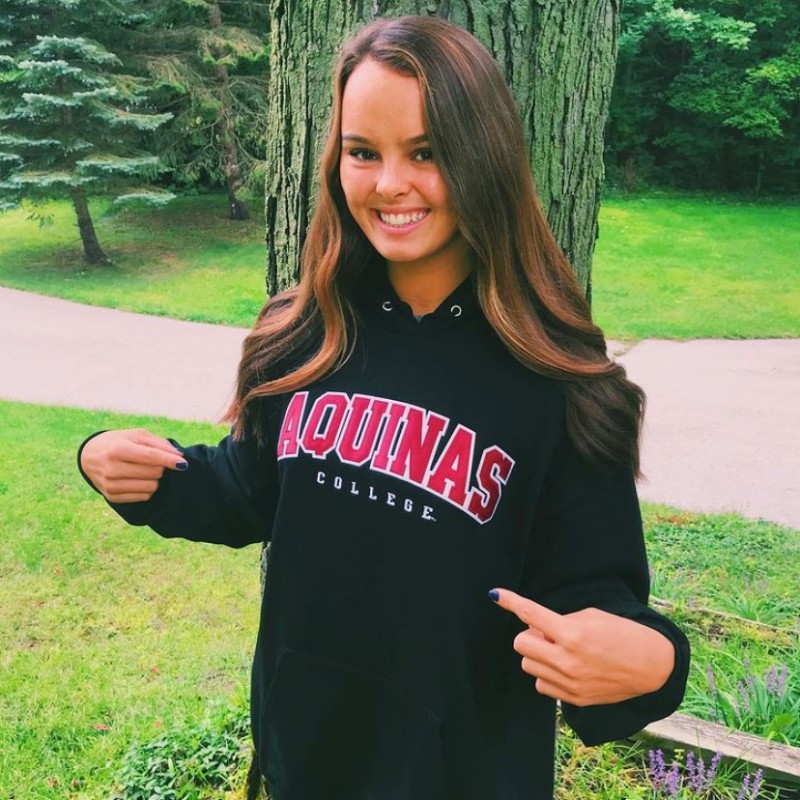
But Mitchell is not the typical college student working a part-time job and eating Ramen noodles to stretch her budget. As a volleyball player at Michigan’s Aquinas College in Grand Rapids, she’s well known as the first collegiate athlete to profit from the NCAA’s new NIL (name and image likeness) deal, which pays college athletes when their names and likenesses are used in broadcasts, promotional materials, video games and other revenue-generating activities tied to their sports.
Mitchell went on to found a company that guides other athletes on NIL deals, and she makes a considerable amount of money on TikTok. Creators on the platform who have three million followers can expect to earn about $15,000 a month from viewership alone, and articles going back to 2021 state Mitchell receives lucrative sponsorships on her videos.
“Five-figure deals are her baseline” for sponsored posts, a story on MLive notes, saying Mitchell was earning up to $20,000 per sponsored post at the time, when she had fewer followers than she does now.
If Mitchell scores a conservative two sponsored posts per month, that could put her earnings at $55,000 a month from TikTok alone, not including money earned from her NIL deal. Very few college students earn that kind of cash, yet Mitchell claimed the $900 adoption fee was “life-changing money.” In addition, she refers to her new pet almost exclusively as “the $900 cat.”
She dismissed the idea that she was creating problems for the Noah Project, telling WXMI that she doesn’t think she’s responsible for what her followers do.
“I never asked for the internet to go call them or to leave Google reviews in my defense whatsoever,” she said. “I’m not asking to be defended, I’m just asking to be heard.”
With 30 million views on her videos about “the $900 cat” saga, she’s been heard. The shelter? Not so much.
“To call people scammers, that’s a huge thing,” Garrett-Arndt told PITB. “You don’t just say someone scammed you. For her to say that about Noah Project, that hit hard for everyone.”
Garrett-Arndt said Noah Project’s social media staffer is hard at work trying to rectify the one-star reviews Mitchell’s followers left on the shelter’s Google listing, and said it’s taken considerable time to combat the damage to the shelter’s reputation.
Time spent dealing with negative reviews, filing police reports and reassuring spooked volunteers means less time dealing with the rescue’s primary mission — saving animals.
Garrett-Arndt said she consulted an attorney about taking to TikTok to tell the shelter’s story, and the attorney warned her that doing so could provoke an even stronger reaction from Mitchell, who has an enormous megaphone.
She said she doesn’t want to anger Mitchell for fear of what the influencer could do in the future, but believes the whole saga was manufactured for the benefit of the influencer’s TikTok account and followers. When the story blew up, she ran with it and wouldn’t return calls from the shelter in an attempt to fix the situation.
“She needed content, so it’s like ‘Let’s go get a cat,’ and then it got out of hand,” Garrett-Arndt said. “She has three million followers, but we have to stand our ground. The truth will come out.”
In the meantime, Mitchell — perhaps with an eye toward creating more viral content — says she’s getting a DNA test for Heart and has threatened to contact the other adopters who took home cats from the same two litters.
“Five other people paid the $900 adoption fee and not one of those people had an issue with it,” Garrett-Arndt said of adopters who took home the other kittens from the sickly litters.
The offer of a refund still stands, and staff at the Noah Project hope there’s an end to the madness.
“Why wouldn’t she come back to us? We’ll refund her,” Garrett-Arndt told PITB. “If you’re that unhappy about the $900, bring the cat back. Adopt another cat so we don’t have to [deal with] this and we don’t get dragged through the mud.”
More people are abandoning their pets, saying they can no longer afford to care for and feed them amid historic inflation.
Unless you’ve been living under a rock you’ve experienced sticker shock in the last six or seven months, especially in grocery stores.
Staples like milk and bread cost two or three times what they did pre-inflation, some retailers are taking the opportunity to arbitrarily hike prices even higher, and a perfect storm of economic uncertainty and a rampaging bird flu caused the price of eggs and poultry to skyrocket.
By late 2022, almost 50 million chickens and turkeys had been killed by avian flu or culled because of it, and almost 10 million more were lost to the virus in the first 12 weeks of 2023, according to the CDC. That breaks the record for most birds lost to avian flu, which was set in 2015 when 51 million died or were culled.
Pet food prices are up too, mirroring grocery inflation, as are veterinary costs and medicine for cats and dogs.
Inflation has squeezed so many people that shelters in the US and UK are reporting unprecedented surrenders from people who believe they can’t afford their pets anymore. In some areas it’s so bad that local shelters have waiting lists — or surrender queues, as they’re called in the UK — for people parting with their pets.
“We get between 10 and 12 surrenders per week, so we’re looking at anywhere between 30 and 50 a month,” Ashley Burling of Montana-based Help For Homeless Pets said. “When you’re talking about inflation, you’re talking about vet bills, pet food, pet supplies and pet rent. I think inflation, I think people going back to work after the pandemic, there’s other reasons that they’re surrendered.”
More than 70 percent of adoptable pets at the Nevada SPCA previous had homes, executive director Lori Heeren told the local NBC affiliate. Her organization is on pace for 2,500 surrenders in 2023.
News outlets tell the same story in local markets across the country, and the Humane Society is seeing the same trend nationally, CEO Kitty Block told CNN. While pet-related costs increased sharply in 2022 — with food and supplies increasing by as much as 30 percent, according to NielsenIQ — statistics show they haven’t relented yet this year. In fact, prices are still edging up, albeit at a slower rate than the previous year.
To cope, more people are leaning on pet food pantries. In Iowa, for example, the Animal Rescue League gave away more than 40,000 pounds of pet food in 2020 and 2021, and a whopping 146,000 pounds in 2022.
Shelter operators say they want people to know there are options so they don’t feel they have to part with cats and dogs who have become family.
“This is bigger than dogs or cats in shelters,” Block said. “It’s about the people who love them.”
PITB readers are the kind of people who dote on their cats and most of us couldn’t imagine abandoning them even in hard times, but chances are we all know someone who’s thought about parting with their fluffy overlords.
They don’t have to give their beloved cats and dogs up. There are resources to help them meet their animal’s needs to prevent them from surrendering:
– Many local chapters of the Humane Society and SPCA, as well as private shelters, offer free spay/neuter clinics and free or low-cost veterinary exams. A guide from the Humane Society notes PetFinder allows users to search for pet-specific food pantries and low cost veterinary services
– There are programs that provide pet food to people who can no longer afford it
– Some shelters will place pets in temporary foster homes to help relieve the burden until their owners can take them back
– Buying food and medicine online is significantly cheaper than in grocery stores. Some offer deep discounts on meds to existing customers and prices from online retailers have remained relatively stable, especially when buying in quantity
– Social services programs may include provisions for pets
It’s in the best interests of shelters and animal welfare programs for cats and dogs to stay with their people, and not only because they don’t have the resources to house hundreds of abandoned pets on top of their usual intake.
Keeping people and pets together benefits both. Cats and dogs obviously don’t understand that their people are tearfully, reluctantly giving them up. All they know is they’ve been abandoned by the people who made them feel safe and loved. For the mental health and overall well-being of humans and their furry companions, they should stay together.
For some people, like Patricia Kelvin of Poland, Ohio, that means scrounging up whatever she can and cutting back on her own expenses before she will allow her cat to go without.
“There’s just no question in my mind. If my diet was going to be more beans than something else, I wouldn’t hesitate,” Kelvin told CNN. “If I had to sell my sterling silver, which I’ve had for 60 years, that would go before my little ‘Whiskers’ would be deprived.”
Happy Super Bowl, a special day when Americans across the country will gather and watch more than 200 commercials, and some team will play some other team in just 11 minutes of actual game time.
No wonder the NFL and its advertising partners try to sell the commercials as entertainment in their own right: If you watch the Super Bowl, you’ll be subjecting yourself to an relentless onslaught of adverts for everything from Budweiser to Booking.com, insurance companies trying to out-zany each other, and gambling commercials. Lots and lots of gambling commercials for sites like DraftKings, Caesars Sportsbook, MGM and FanDuel.
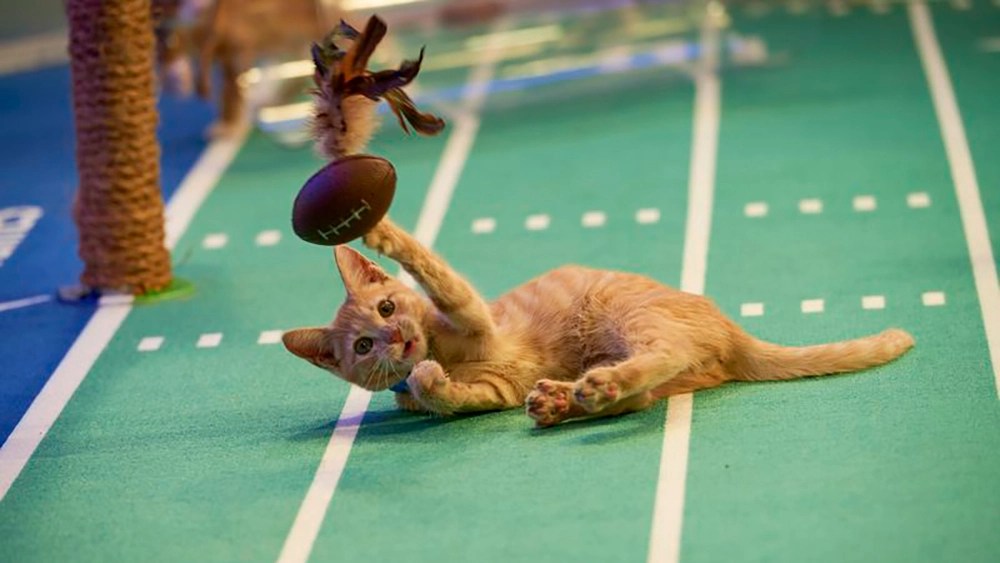
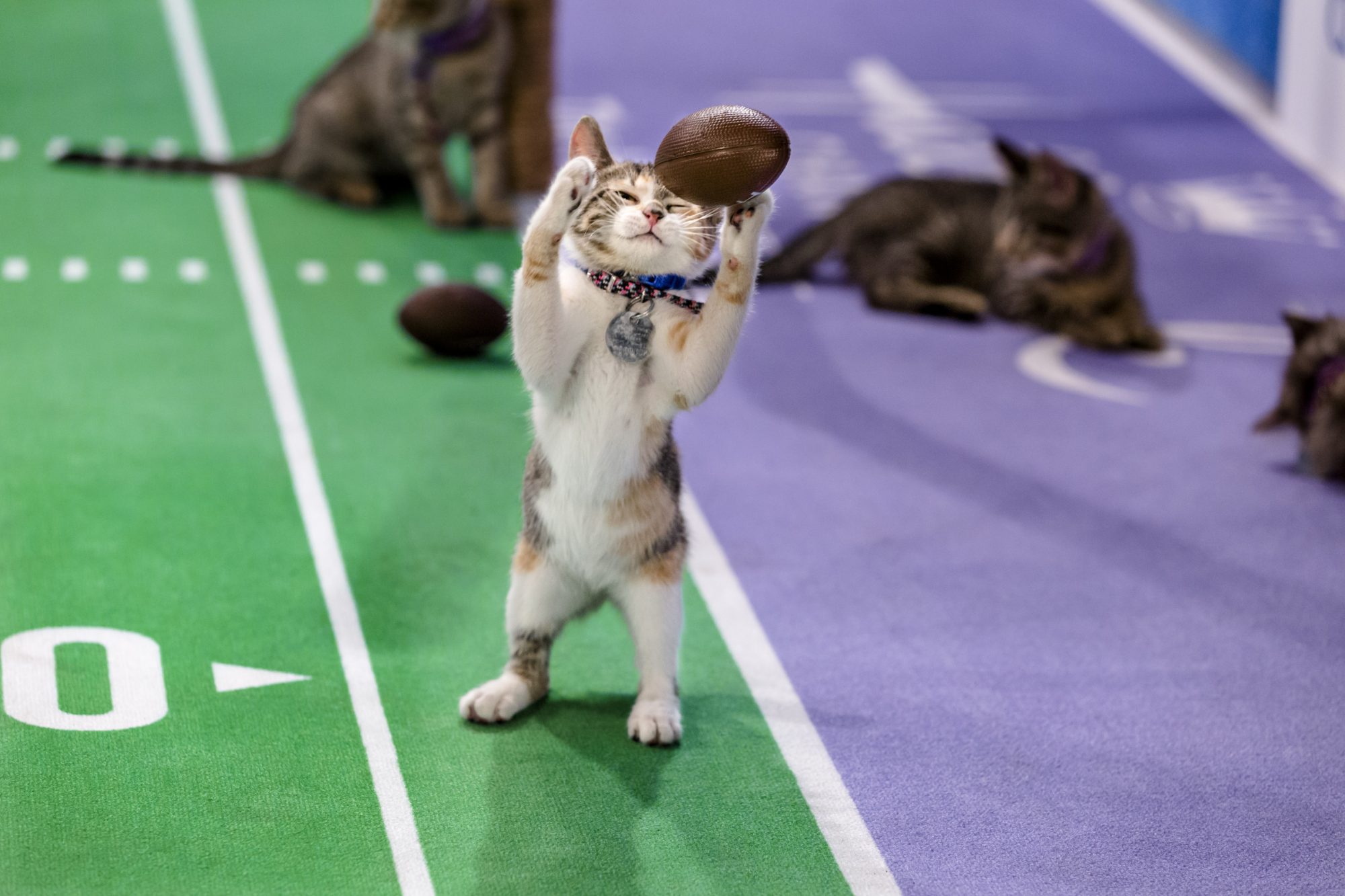
Super Bowl Sunday was previously made brighter by the Kitten Bowl, but Hallmark canceled the cute fan favorite last year, saying only that it’s “not currently developing original animal-centric programming.”
It was inevitable that another network would move in to capitalize on Hallmark dumping its popular annual special, and taking the place of Kitten Bowl is the Great American Rescue Bowl, an event by the Great American Family Channel and the North Shore Animal League which will feature adoptable dogs and cats on a pet-size football field, along with host Beth Stern revisiting the stories of kittens, cats, puppies and dogs who were featured last year and found their forever homes. If you don’t get the Great American Family Channel you can stream the event on Hulu beginning at 10:30 a.m. (See the previous link for other streaming options.)
Viva la Tiger Bowl!
Watch this space in the coming week for a new longform story about the Champawat tiger, the most dangerous animal documented in more than 5,000 years of recorded human history. Little Buddy and I did quite a bit of research for this one, and we hope it’ll make for a good read.
Plus: Bruno, who was surrendered to the shelter twice for being “too affectionate,” has found a new home.
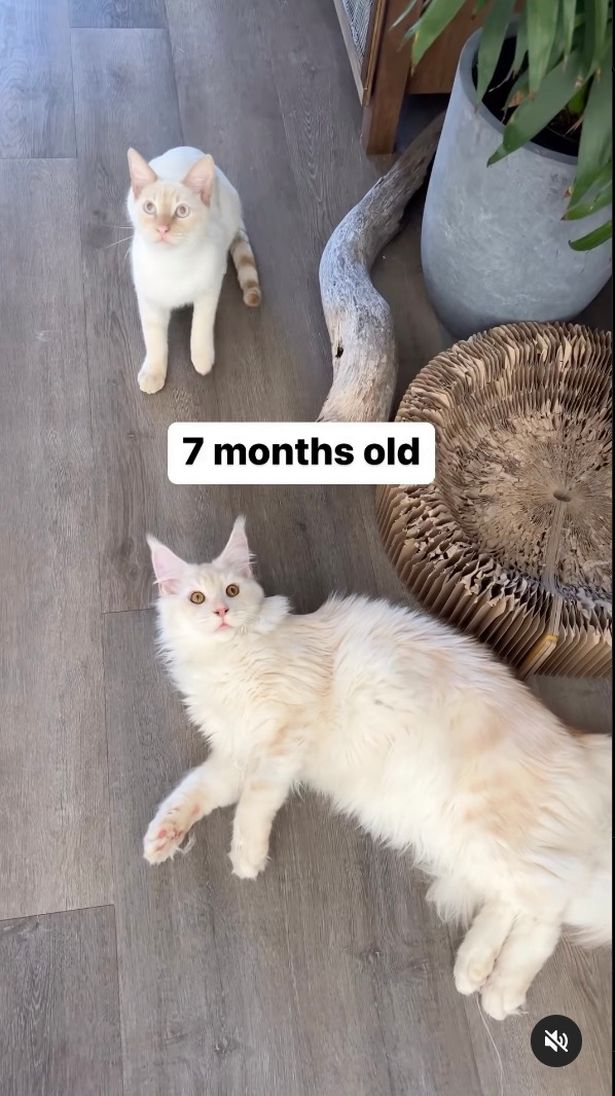
Meet Kusa, an absurdly large Maine Coon.
Of course you’ve seen huge Maine Coons before, so what’s special about Kusa? Aside from being a stunning white-furred beast of a cat, the big guy is still a kitten! At nine months old, Kusa could make a light snack of most felines. And because Maine Coons continue to grow until they’re three years old or even past that age, Kusa could have a legitimate crack at being the biggest domestic cat in the world, in addition to scaring the pants off unsuspecting pedestrians if his people take him out for a stroll.
Here’s Kusa as a baby:
And here’s Kusa now:
Kusa lives with his human, Chastity Hobbs, in Phoenix, Arizona. She says one of the biggest challenges was finding a litter box big enough to accommodate him. She may have to swap it out for an even bigger one before long.
“People are amazed when they see him,” Hobbs said. “They always think that he’s crossed with a bobcat or something.”
Maine Coons are known as gentle giants and tend to be relaxed compared to most cats. Credit: Chastity Hobbs/Instagram
Bruno gets a new home
Bruno the Cat has had a tough run early in life through no fault of his own.
The first time he was adopted all seemed well until one of his family’s children appeared to have a cat allergy, so the little guy was brought back to the shelter. But he was still young and very cute, so it wasn’t long before another family brought him home during the pandemic.
Unbelievably that family returned Bruno because he was “too affectionate.” Their definition of “too affectionate”? Little Bruno liked to head bunt the mother while she was working from home and he liked to sleep in bed with her daughter. The mother didn’t like the fact that her daughter was staying up late to play with Bruno, so back he went to the shelter.
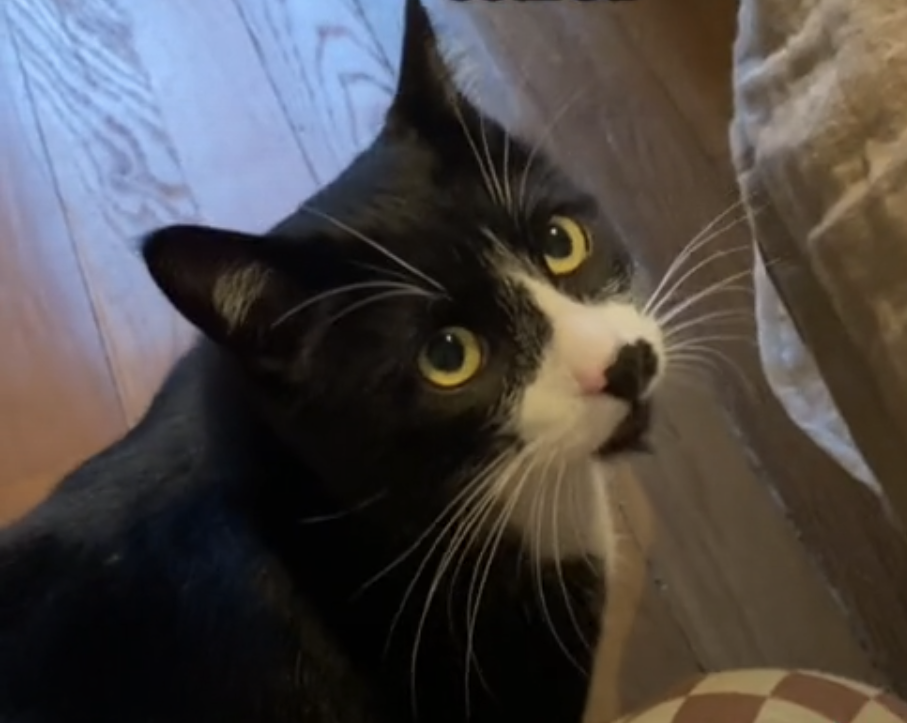
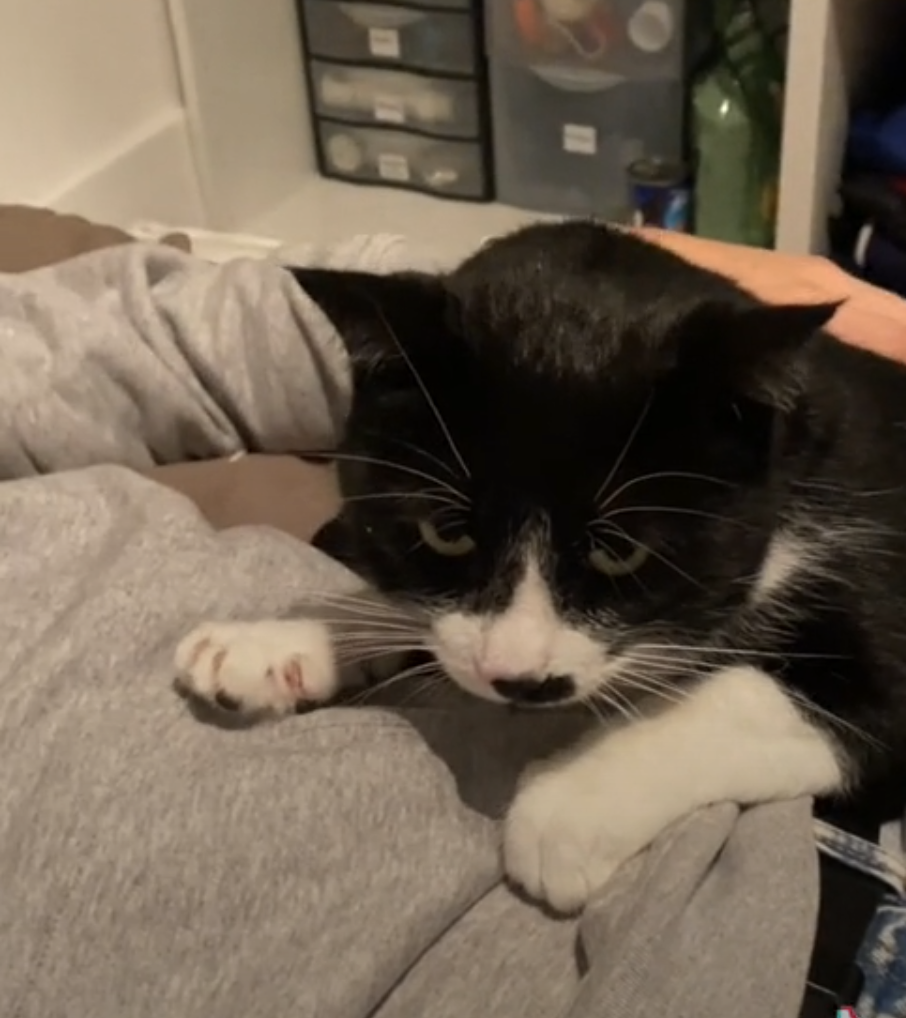
Bruno’s story went viral when Montville Animal Shelter of New Jersey posted about his plight and included a photo of him looking depressed. Who wouldn’t be if they thought they’d found their forever home twice, only to be rejected for being a snugly, happy cat?
The Facebook post amassed more than 200,000 views and hundreds of comments, leading to more than 50 applications to adopt Bruno, Montville Animal Shelter’s Lindsay Persico told USA Today. It was also a boon for the shelter’s other animals.
“People were coming to our door to meet Bruno and we got almost all the cats in the store adopted in the meantime,” Persico said.
Let’s hope the third time’s a charm for dear Bruno and he really has found his forever home. He deserves it.
Bruno was sad after he was surrendered to the shelter for the second time.






 Pain In The Bud