The Era of Tiger Pets Is Over, Plus: Influencer Defends Hitting Cat, Says People Are Upset Over ‘Nothing’

Big Cat Rescue will pivot to conservation efforts across the world. Meanwhile, TikTok “influencer” Hasbulla says people are attacking him for “nothing” over a video showing him abusing his cat.

We start with some great news: Big Cat Rescue is shutting down because its services will no longer be needed.

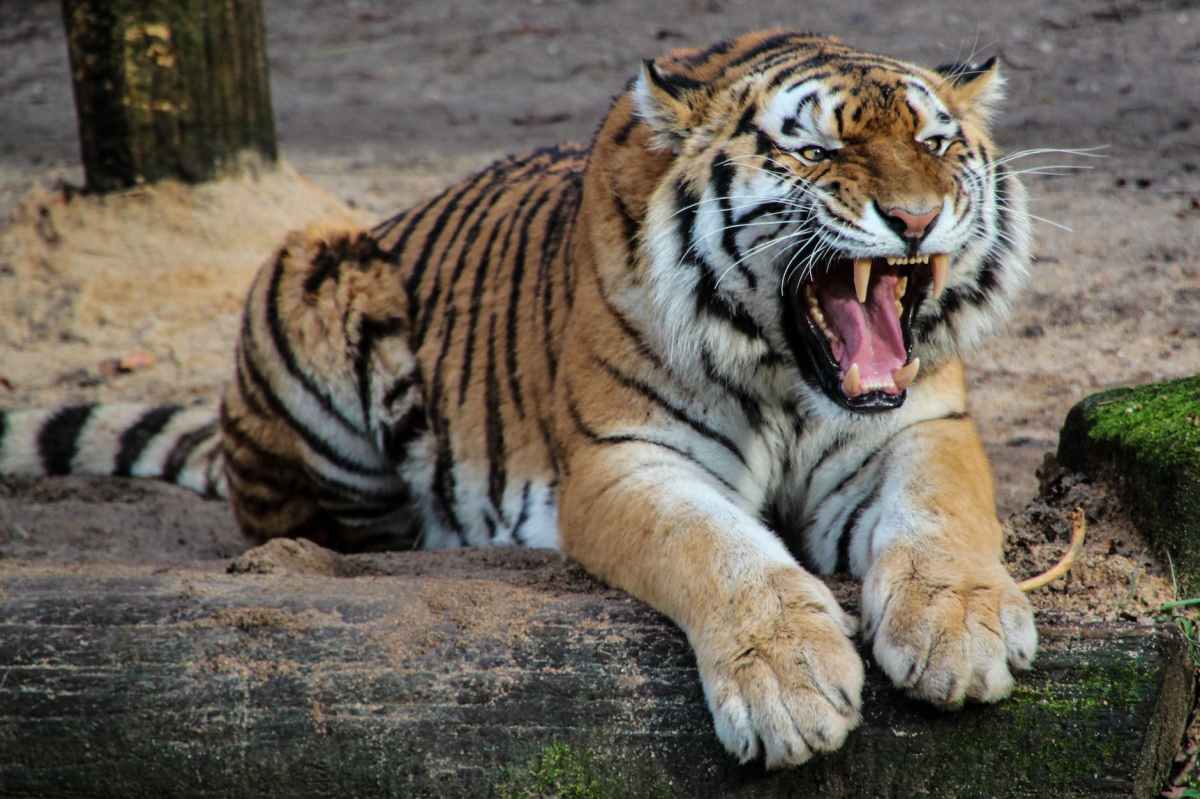
Of course there are still plenty of tigers, lions, jaguars, leopards, pumas, lynx and cheetahs in the non-profit sanctuary’s care, but the passing of the Big Cat Public Safety Act has finally put an end to the cruel, abusive and absurd practice of keeping big cats as pets.

The animals will be moved to Turpentine Creek, an accredited animal sanctuary in Arkansas. Big Cat Rescue will continue to fund their care and will sell its existing land in Florida as it transitions to programs to prevent the extinction of big cat species, almost all of whom are critically endangered.

“We have always said that our goal was to ‘put ourselves out of business,’ meaning that there would be no big cats in need of rescue and no need for the sanctuary to exist,” Big Cat Rescue wrote in a memo released this week. “Supporting our cats in larger enclosures at Turpentine Creek, at much lower cost per cat than we incur by continuing to operate Big Cat Rescue, will free up resources to let us do much more to save big cats in the wild.”
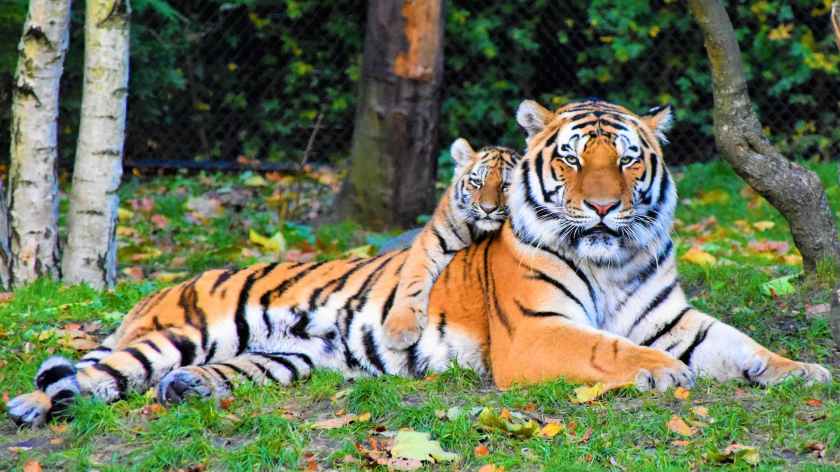
photo of tiger and cub lying down on grass
Credit: Waldemar/Pexels

The Big Cat Public Safety Act has not only made it illegal to own tigers and other wild cats as pets, it also puts an end to the cub-petting business used by roadside zoos, in which cubs are taken from their mothers as infants so the roadside zoos can charge customers to pet the cubs and pose for photographs with them. While big cat “pet owners” are grandfathered in, many have been rescued and there will be no more pets after the current group dies out.

Influencer Hasbulla says people “are attacking me for nothing” over video in which he abuses cat

Hasbulla, the Russian influencer whose videos have been viewed more than 10 billion times on TikTok, says people are making a big deal over “nothing” in response to a video showing him abusing his cat.

Hasbulla 3 169
Hasbulla is 20 years old but has a child-like appearance due to a genetic condition.

The 3’4″ social media “star” is known for frequently talking about “acting like a man” and in addition to being an enthusiastic supporter of Russian President Vladimir Putin and his war in Ukraine (he’s called Putin “a lion” on several occasions), he holds typical Russian views on the way men are “supposed” to act.

Hasbulla said he was merely disciplining his cat for “misbehaving.”

“Those brothers who think that I was beating the cat, pulled the ear, this and that. I pulled the ear gently,” Hasbulla said in a video accompanying a Twitter post. “I know that people are waiting for the moment, if I write something wrong, to just attack me like this. Like, ‘you do this, you do that’. She was misbehaving and I just pulled the ear and that’s it. I love my cat more than you. If I didn’t love the cat, I wouldn’t have it at home. My most lovely animal is a cat. And when she disobeyed, I scolded her a little. And you are attacking me for nothing.”

Of course anyone with common sense knows cats are not capable of “misbehaving” because they have no concept of what behaving means by human standards, and Hasbulla is being dishonest when he claims he was “gently” disciplining the cat.

In the video, which the Russian voluntarily uploaded, he’s seen grabbing the terrified cat by her ear and yanking violently. The cat runs from him and retreats to a cardboard box where she tries to soothe herself, but Hasbulla follows, scolding her in his native language and hitting her several times on her head and body.

Unfortunately there is little concern for animal rights in Hasbulla’s country, so it’s very unlikely he’ll run afoul of any Russian laws, and even less likely that an animal welfare organization will confiscate the abused feline.
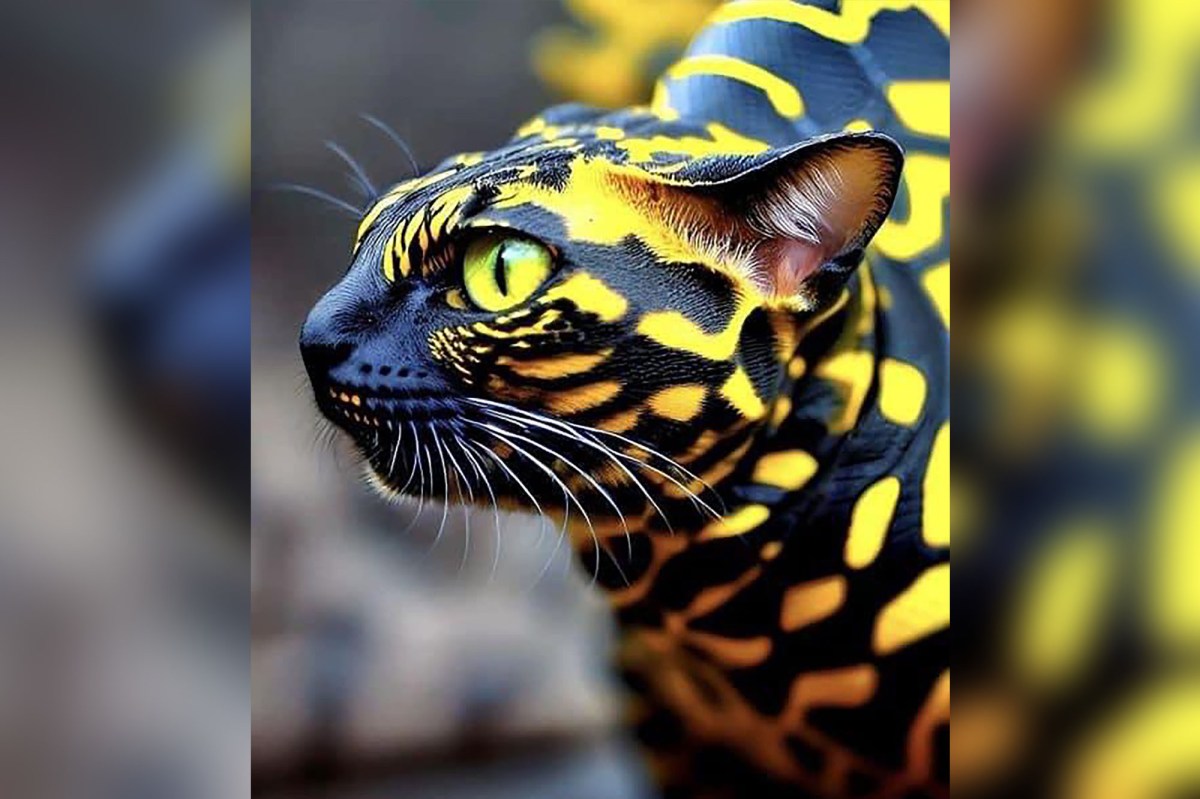
The ‘Snake Cat’ Is A Bad AI Fake

A viral image allegedly depicts a “snake cat,” described as an extremely rare species native to the Amazon rainforest.

Say hello to felis retrowavus, commonly known as the synthwave cat, one of the rarest species of felid on Earth.

Using the same technique GloFish employed to create bioluminescent neon fish for the pet market, scientists engineered felis retrowavus by extracting fluorescent proteins from jellyfish and inserting them into cat embryos, which incorporated the new proteins into their genome.

The result? A new species of cat that glows in fabulous colors like Tigerbrite Orange™, Electro Azure™, RadarGlo Green™, 1984 Pink™ and SithRed™!

Your brand new Neon Feline™ will run, jump and meow just like a regular cat, but unlike a plain old kitty, your Neon Feline™ will snuggle up with you at night and serve as your personal biological night light! Collect them all!

If that sounds like BS, that’s because it is.

Obviously.

Likewise, it should only take a second or two to realize the widely disseminated photo of a “snake cat” is a fake rendered by an AI.

The image has all the hallmarks of an AI generated image fail: Anatomical errors, fuzzy pixels where the AI struggled with the way light hits fur, a misshapen head and a nebulous, blurry background.

Although the media seems to be more obsessed with the snake cat hoax than people are (the snake cat image “mystified the internet,” the New York Post claims), after years of witnessing people take Onion stories seriously and confidently repeat misinformation online, I’m not really surprised when something like this makes the rounds.

The image was accompanied by a clever bit of writing claiming the cat isn’t well known because it’s native to the deep jungle of the Amazon, where scientists have difficulty tracking it. The text even offered a taxonomical name for the cryptid animal.

Enough people apparently fell for it that the staff at Snopes felt the need to debunk the image, even going as far as to check with a biologist who specializes in tropical fauna.

The original author of the snake cat post says he created the image and accompanying text to prove how easy it is for people to be fooled by AI-generated fakes. A noble goal if true, but I’m not sure everyone got the message.

In any case, the “snake cat” proves once again that AI, like all innovations, isn’t inherently good or bad. It’s what we do with the technology that counts.

Now can I interest anyone in a brand new Purple Velvet or Flaming Hot Cheetos SnuggleCat™?

Things Are Looking Up For This Shy Orphaned Puma As He Settles Into A New Home

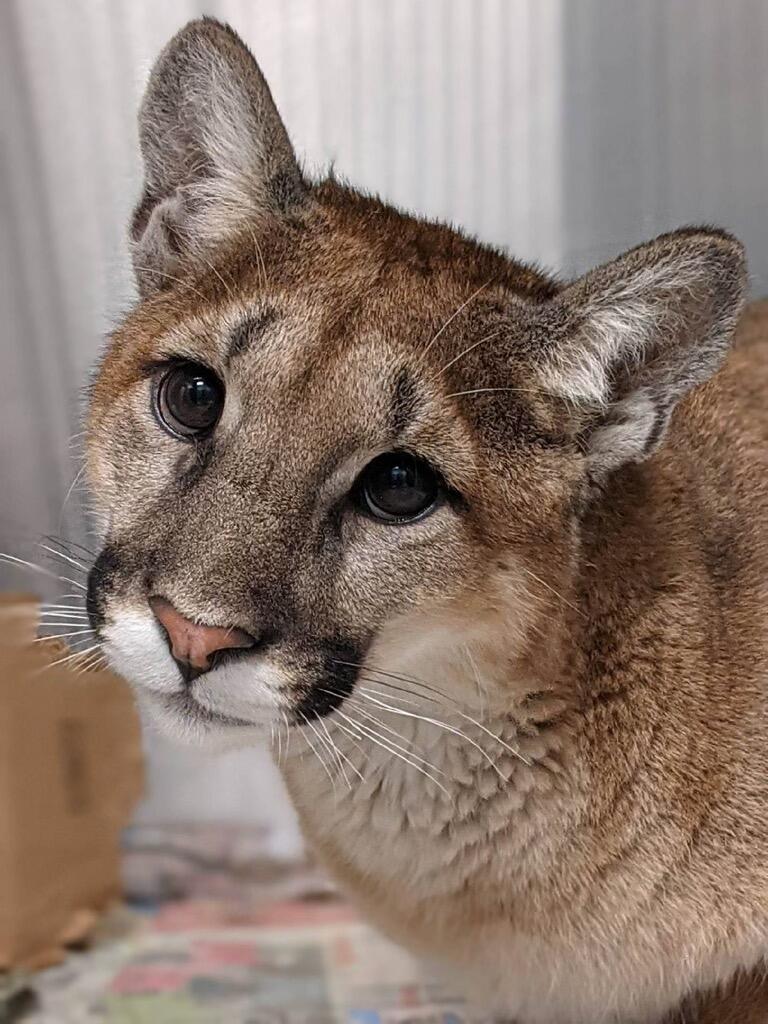
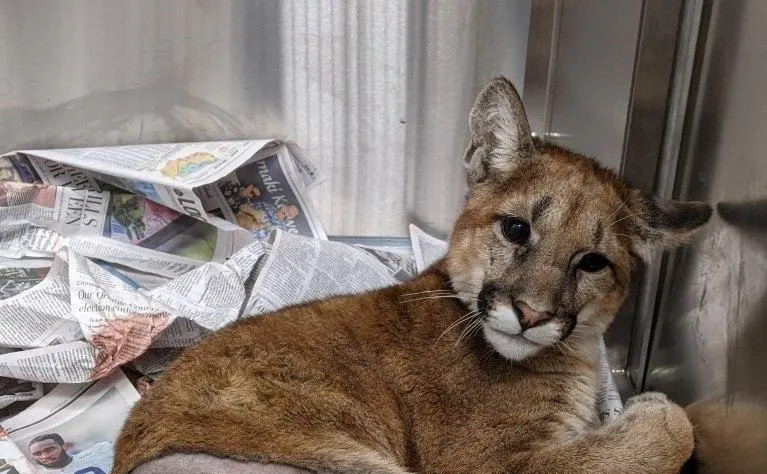
Nicholas was orphaned and severely injured as a cub as he and his mother tried to cross a busy highway. He’s settling into his new home, where he will have his own habitat, den and even his own pond.

Nicholas the mountain lion has a beautiful home waiting for him with his own pond, a rock den, a grassy area where he can run around and several other little hideaways where he can enjoy some privacy and naps.

But first the three-year-old puma will have to clear quarantine and become more comfortable with his new surroundings and new caretakers.

“He’s doing really well but he’s still very scared, he’s a very timid cat, so we’re just taking it really slow, day by day and the keepers are taking some quiet time with him,” said Bobbi Brink, the founder of San Diego County-based Lions, Tigers and Bears, Nicholas’ new home.

Nicholas the Mountain Lion
Nicholas stretches his legs in quarantine as he awaits the move to his own habitat. Credit: Lions, Tigers and Bears

The golden-coated feline with an expressive face has had a tough journey to the 93-acre sanctuary that will be his permanent home.

In 2020 when he was just a cub, Nicholas was following his mother across a busy highway when both were struck by a car. Nicholas was badly injured and his mom was killed in the collision, an unfortunately common fate for members of their species as their longtime habitats are increasingly fragmented by new developments and highways.

Because they require about two years with their mothers to learn how to survive on their own, it’s almost impossible to release orphaned pumas back into the wild. Unlike, say, the orphaned orangutans of Borneo and Sumatra, who can usually be taught to successfully fend for themselves because humans can show them how to physically manipulate their surroundings, there’s no way to teach orphaned pumas how to select prey, stalk, pounce and deliver kill bites.

A sanctuary in northern California provided a home for Nicholas for about three years, but recently went bankrupt, so the staff at Lions, Tigers and Bears secured him, prepared a habitat for him and took on the Herculean task of transporting him to San Diego County.

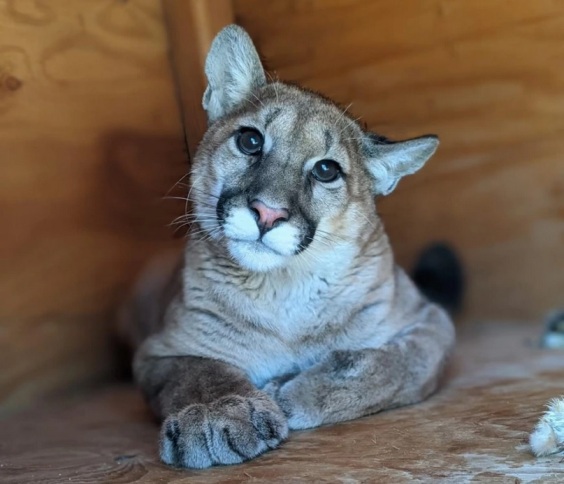
Nicholas’ case is even more complicated because he has lasting neurological damage from the car crash that killed his mother, including a pronounced head tilt that worsens when he’s scared.

Brink told PITB it’s normal for cats like mountain lions to be spooked by the commotion and uncertainty of a move, as well as leaving everything they know behind. Nicholas is simply obeying his wild instincts, which urge him to be guarded. But he’s got a loving team of caretakers who will work with him, as well as veterinary specialists who are well versed in caring for animals with neurological damage.

“Sometimes it can take (animals like Nicholas) a month, sometimes it can take three months to build up that trust,” Brink said. “His biggest need is he’s very afraid, so we’re gonna have to work around his fear so we don’t scare him more.”

Nicholas the Mountain Lion
Despite their impressive size, pumas are more closely related to domestic cats than the big cats of the panthera genus. Like their house cat cousins, pumas enjoy tearing up paper and playing with toys. Credit: Lions, Tigers and Bears

While Nicholas will have his own habitat and can keep to himself as much as he likes, recent observations of his secretive species have shown that pumas have “secret social lives,” and Nicholas will have the opportunity to meet and interact with other mountain lions if he’s comfortable with it.

Pumas — which are known by the scientific name puma concolor and are also called mountain lions, cougars, panthers, catamounts, screamers, painters, gato monte and many other names — are among the most adaptable felids in the world and range from the southernmost edge of South America to just over the Canadian border. They’re able to thrive in mountains, tropical regions, deserts, forests, human-adjacent rural areas and even in urban population centers, as the famed “Hollywood Mountain Lion” P-22 did for more than a decade in Los Angeles.

Their ability to adapt has served them well in a changing world, but they’re not immune to the pressures of human expansion.

In California their habitats have been carved up by the state’s busy and deadly highways, leaving the cats in genetically isolated pockets. Pumas who strike out in search of their own ranges are extremely vulnerable to vehicle traffic. P-22 famously crossed several of the world’s busiest highways to reach his eventual home in LA’s Griffith Park, but others like Nicholas and his mom aren’t so lucky.

Solutions like the $90 million Wallis Annenberg Wildlife Crossing, currently under construction in Los Angeles County, can connect fragmented ranges and give pumas, coyotes, foxes, deer, rabbits and other animals safe passage. But experts point out that they are just one component in a long-term solution that must include more careful zoning, fences to funnel animals toward safe crossings, and options like tunnels that run under highways, since not all animals will use overpasses.

As planners and wildlife experts figure out new ways to ensure the survival of wildlife in an increasingly crowded, human-dominated world, sanctuaries like Lions, Tigers and Bears play a crucial role by caring for the innocent animals who are injured, displaced and rescued from bad circumstances.

To learn more about Lions, Tigers and Bears or support their ongoing efforts to provide safe, stimulating and comfortable homes for wild animals, visit the non-profit’s site. To receive updates on Nicholas and the other animals at the sanctuary, follow Lions, Tigers and Bears on Instagram and Facebook. Readers who live in the California area can book guided educational tours or visit during one of the sanctuary’s special events. Thanks to Bobbi Brink and Olivia Stafford for allowing PITB to tell Nicholas’ story. All images and videos of Nicholas courtesy of Lions, Tigers and Bears.

Cops Captured A Cocaine-Fueled Serval That Escaped From Its Owner’s Car

The spooked serval bolted through an open window and scurried up a tree during a traffic stop in Cincinnati.

We wish we could say this story is a viral marketing stunt for the recently-released movie Cocaine Bear, but authorities say they’re not joking.

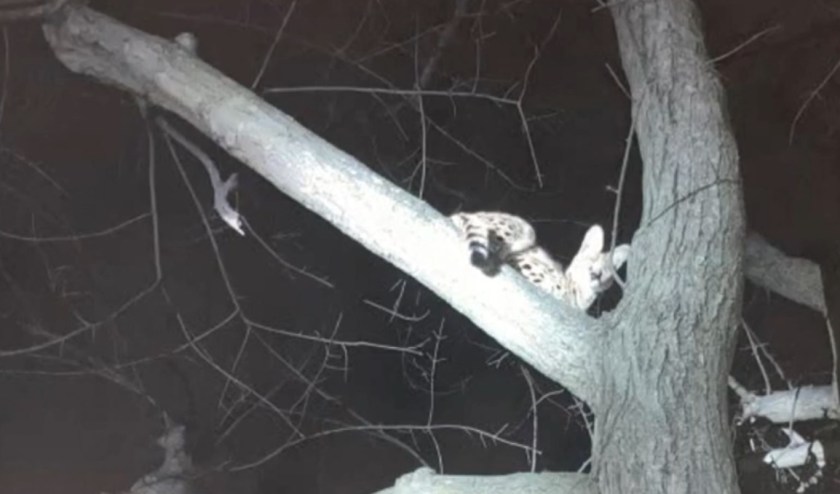
Cincinnati police pulled a car over in what they thought would be a routine traffic stop in late January. But when officers approached the vehicle a large cat inside got spooked, jumped through an open window and took refuge in a tree.

Cops called the city’s animal control staff, initially reporting a “leopard” on the loose.

“[They weren’t] sure what they were dealing with,” Cincinnati Animal Care’s Ray Anderson told WXIX. “Hindsight being 20/20, it probably would have involved a whole lot more people.”

Animal control officers who arrived on scene thought they were dealing with an F1 Savannah, a hybrid between a domestic cat and a serval, and were able to get the cat down from the tree, but not without some difficulty. The exotic wildcat suffered a broken leg in the process. (See video of the cat in the tree here.)

Serval in a tree
The serval took refuge in a tree. Credit: Cincinnati Animal Care

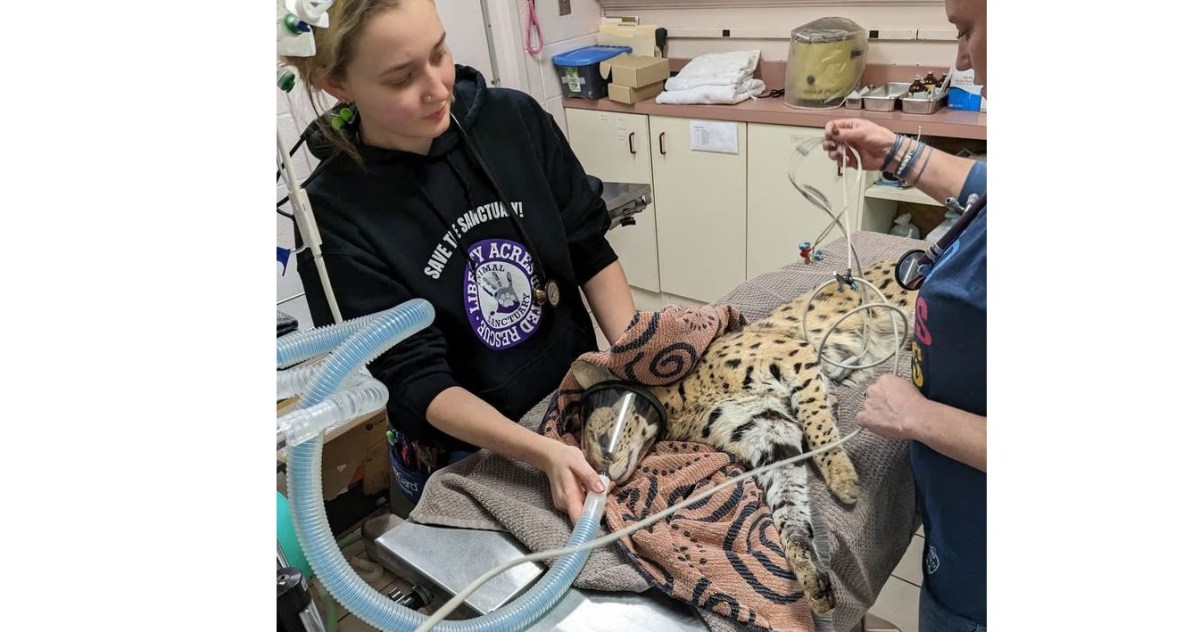
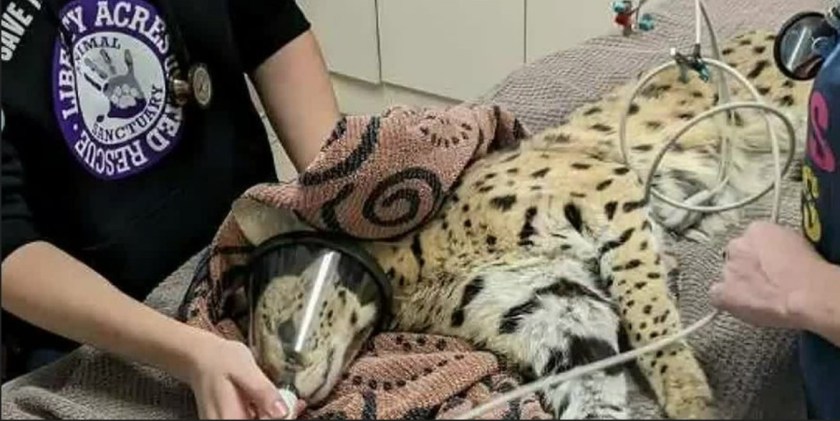
They brought the injured cat to the Cincinnati Zoo, where they were in store for several surprises: The felid was a serval, a medium-size African wildcat, and blood tests showed it had cocaine in its system. A subsequent DNA test confirmed the cat is a serval and not a Savannah hybrid.

The responding animal control officers were “pretty lucky because this cat could’ve shredded us” Chief Troy Taylor of the Hamilton County Dog Warden’s Office told Cincinnati’s WKRC.

servalzoo

The serval, whose name is Amorie, remains in the zoo’s care for now. Taylor said Amorie was given pain meds during treatment and is recovering. It’s not clear what will happen to him, and lots of questions about the incident remain unanswered. Local media reports say the driver was arrested during the traffic stop, but also said the driver is cooperating and has not been charged in relation to the cat or the narcotics.

It’s illegal to own wild cats in Ohio, and unless the serval found himself a bag of cocaine in the fleeting seconds between bolting from the car and scurrying up a tree, it seems the driver has some ‘splainin’ to do.

Disabled Young Mountain Lion Gets A New Home

Nicholas requires regular veterinary care after his mother was killed and he almost lost his life when a driver struck them on a California highway.

Nicholas was just a cub and was following his mother across a busy toll road in Orange County, Calif., in 2020 when a driver hit them, killing his mother and leaving him with life-long disabilities.

Along with the trauma of watching his mother die, the little puma endured months of surgeries to repair his body. Since then, young Nicholas had been living in a sanctuary in northern California, but was about to find himself homeless when the sanctuary’s operators went bankrupt.

With just hours to go before that facility was closed, a sanctuary called Lions, Tigers & Bears of San Diego County swooped in and agreed to take the special-needs puma, who requires regular veterinary care.

“Nicholas has a head tilt and neurological issues, both conditions require ongoing veterinary care,” Lions Tigers & Bears founder Bobbi Brink told KTLA. “We’ve had a few animals with these issues, so our veterinary team is well-versed in providing the specialized care required for Nicholas, and we’re relieved to give him a permanent home with a den, a healthy diet, medical care and enrichment and toys.”

The handsome young puma is currently in quarantine, Brink said, and will be moved into his permanent habitat after 30 days.

Although California is part of their native range and home to a relatively stable population of mountain lions, the species is seriously threatened by habitat destruction, habitat fracturing and vehicle traffic. Some 70 pumas are killed each year on California’s highways, and experts say the survivors are stranded on isolated “islands” of habitat, separated from potential mates by deadly highways. Indeed, scientists who track native wildlife in California have noted signs of inbreeding among pumas, as the animals are cut off from other populations of their species.

nicholasmountainlion
Nicholas in quarantine. Credit: Lions Tigers & Bears sanctuary

The life of the much-celebrated, recently deceased mountain lion P-22 illustrates the problems faced by the unique cats.

P-22 became famous when he migrated from southern California to Los Angeles, crossing the state’s busiest and most dangerous highways to get there. He settled in LA’s Griffith Park, which straddles the hills with the famous Hollywood sign and the outdoor Greek Theatre.

Although he became a local icon, frequently making cameos on the doorbell camera systems of people living nearby and making his rounds through the park and surrounding neighborhoods, P-22’s range was only nine square miles — the smallest range ever recorded for an adult male mountain lion — and he did not have opportunities to mate and produce cubs, as his kingdom was cut off from areas where he might encounter female pumas.

One solution to the problem is to build land bridges connecting areas where mountain lions and other wildlife make their homes. In April of 2022, officials broke ground on the Wallis Annenberg Wildlife Crossing, which when complete will connect Agoura Hills to the nearby Santa Monica Mountains.

But such projects are wildly expensive and take years to complete. The Wallis Annenberg Wildlife Crossing has a $90 million price tag and won’t be finished until 2025. On the bright side, about two thirds of the cost has been covered by private donations, proving Californians and other wildlife lovers are invested in the survival of mountain lions, coyotes, deer and other fauna expected to make use of the bridge.

It’s also an encouraging sign indicating efforts to educate the public about local wildlife have been successful. Along with the other problems they face, pumas — also known as catamounts, cougars and dozens of other names — are often confused with African lions.

nicholasmountainlion1
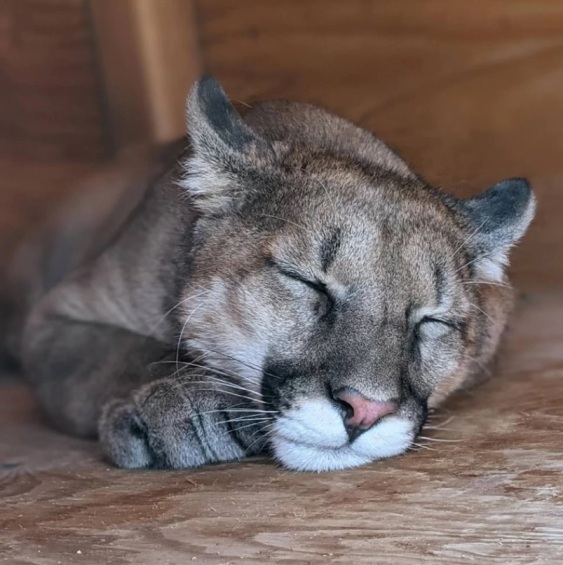
Nicholas enjoys a nap. Credit: Lions Tigers & Bears sanctuary

Because they’re large cats, they’re called lions and they resemble their African counterparts, many people assume mountain lions are dangerous. But not only are mountain lions (puma concolor) an entirely different species than African lions (panthera leo), they are not in the same category of felid.

Pumas are actually felines, meaning they’re more closely related to domestic cats, and like smaller cats they can purr but cannot roar. True big cats, like tigers, lions, jaguars and leopards, are members of the genus panthera and are capable of roaring, but not purring or meowing.

Perhaps most importantly, pumas are not aggressive toward humans. There are only 27 recorded deaths from encounters with mountain lions over the past century compared to more than 50,000 deaths from dogs, for example, and in almost every one of those cases the pumas were either cornered or their cubs were threatened.

Nicholas is not only a reminder that animal life is valuable, his circumstances also remind us that we’re going to have to find creative ways to ensure the survival of many species as humanity expands. The global population is expected to level off at about 11 billion and then slowly contract as third-world countries undergo the same lifestyle changes common to nations that have already made the transition to first world. But until then, it will take a massive and coordinated effort to ensure we don’t end up on a very lonely planet and likely endanger our own survival with the cascade failures that arise from extirpating entire species.

Follow Buddy the Cat on Facebook!