Finally, Wild Cat ‘Ownership’ Could Be Banned Under The Big Cat Public Safety Act

The legislation aims to ban all private big cat ownership throughout the United States.

There are more tigers living in cramped backyards in Texas than there are in the wild.

At roadside zoos, shady people like Joseph Maldonado-Passage, Joe “Exotic” of Tiger King fame, breed big cats like rabbits so they have an endless supply of cubs to steal from their mothers before they’re weaned, pumped full of sedatives, and handed off to tourists who take selfies with them but never stop to consider the welfare of those baby cats or the harm they’re enabling.

And in states like Florida, where “Muh freedoms!” reign supreme over all other values, people can own any wild animals they want, with no real oversight and no mechanisms to ensure they’re doing right by the animals. There’s nothing forcing “exotic” animal “owners” to keep the big cats, monkeys and other mammals in proper enclosures where they have stimulation and — just as importantly — won’t escape and hurt neighbors.

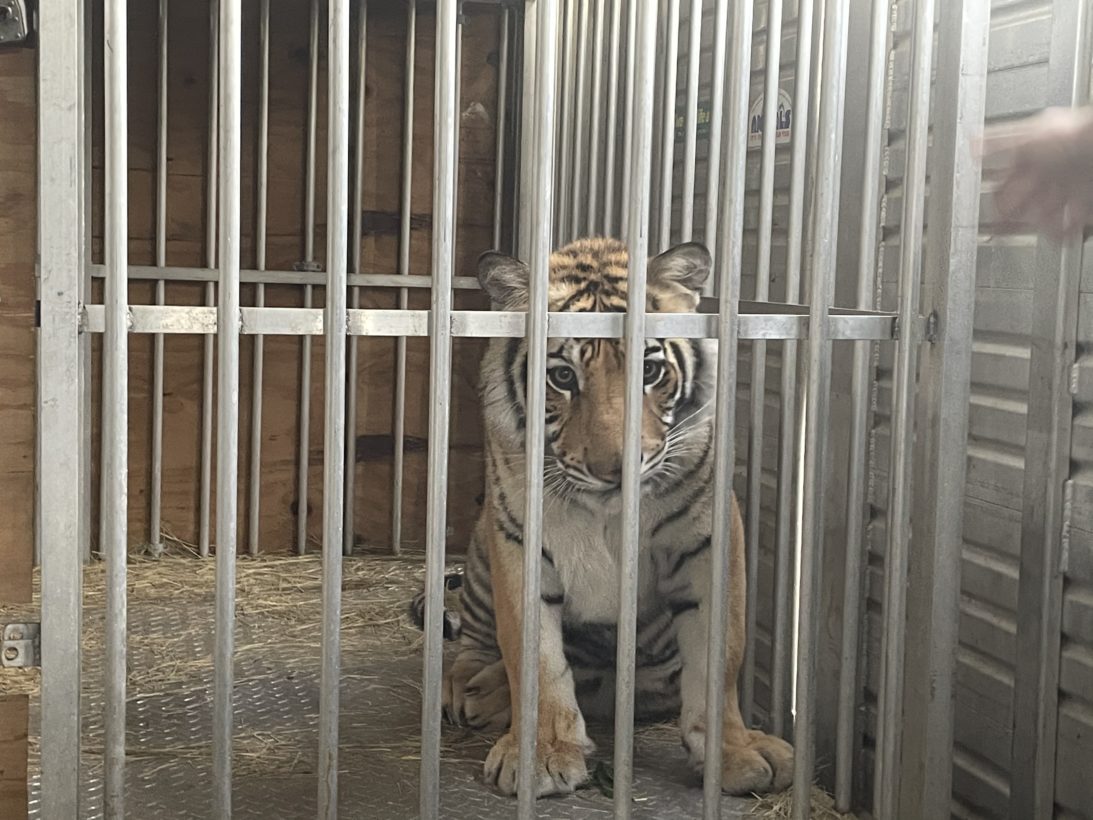
India the tiger Transported to BBR
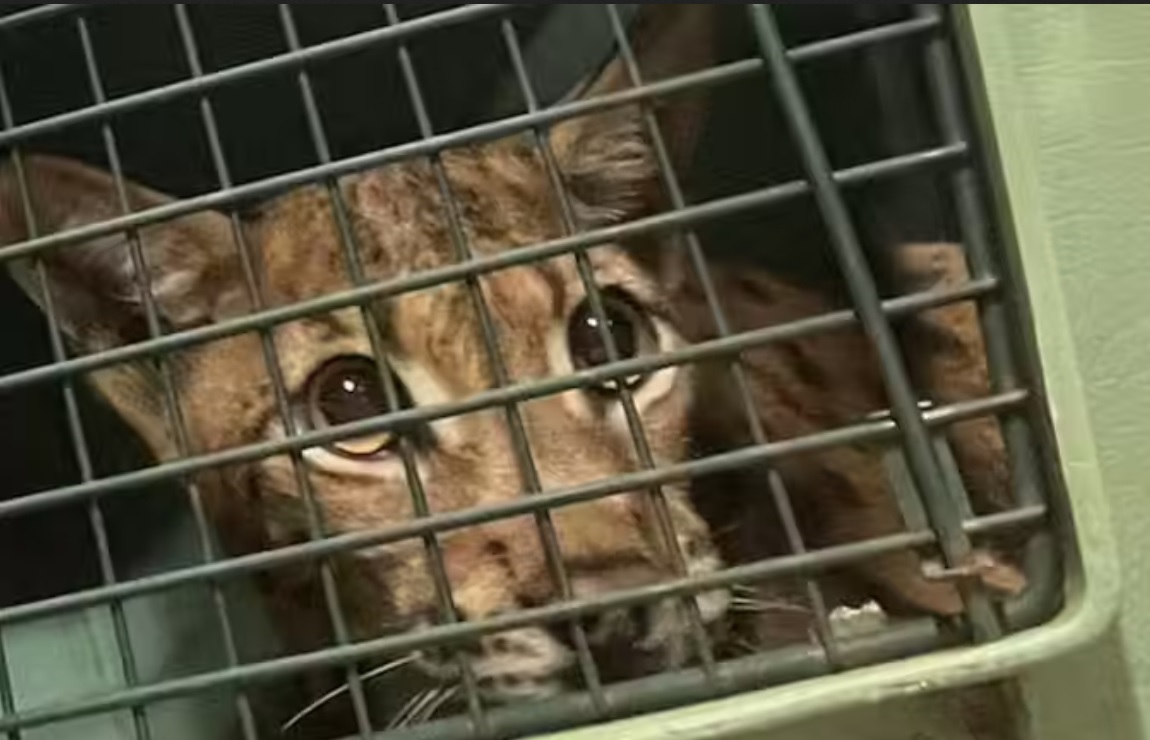
India the tiger was still just a cub when he was spotted wandering through residential neighborhoods in Texas, where he’d been dumped by his former “owner.” Credit: Humane Society

Thankfully, things could change soon as lawmakers are expected to vote on the Big Cat Public Safety Act, a rare bipartisan effort that would finally make it illegal to keep tigers, lions, jaguars, leopards, cheetahs, pumas and other wildcats privately, whether in homes, businesses or non-accredited “zoos.”

Currently keeping big cats is illegal or severely restricted in most states, but like many things in the US, there’s a confusing patchwork of laws and things that would be unthinkable in other states are perfectly acceptable in places like Texas and Florida.

Because, you know, “muh freedoms.”

Now is a good time to point out that this blog has always been, and will remain, politically agnostic. I have my own political beliefs as any other person does, but PITB is a cat humor, news and advocacy blog, and the only politics we discuss here are those that relate to animal welfare. Equally important, Buddy and I want people of all political persuasions to feel comfortable as readers and commenters on PITB. (Although that could change if one or both political parties suddenly makes a move against the nation’s Strategic Turkey Supply. Then Buddy’s gonna have to get biblical.)

The Big Cat Safety Act is co-sponsored in congress by representatives Mike Quickly, D-IL, and Brian Fitzpatrick, R-PA, and in the senate by senators Susan Collins, R-ME, Tom Carpenter, D-DE, Richard Burr, R-NC, and Richard Blumenthal, D-CT.

It’s endorsed by a wide range of groups, from the National Association of Zoos and Aquariums to the Humane Society and various bar associations. The proposed legislation also has the support of the White House, which released a statement this week urging its passage.

If your congressional representative or your senators aren’t publicly on board with the Big Cat Safety Act, you can make your voice heard via the Humane Society’s site, which allows you to draft and send letters to the offices of your lawmakers.

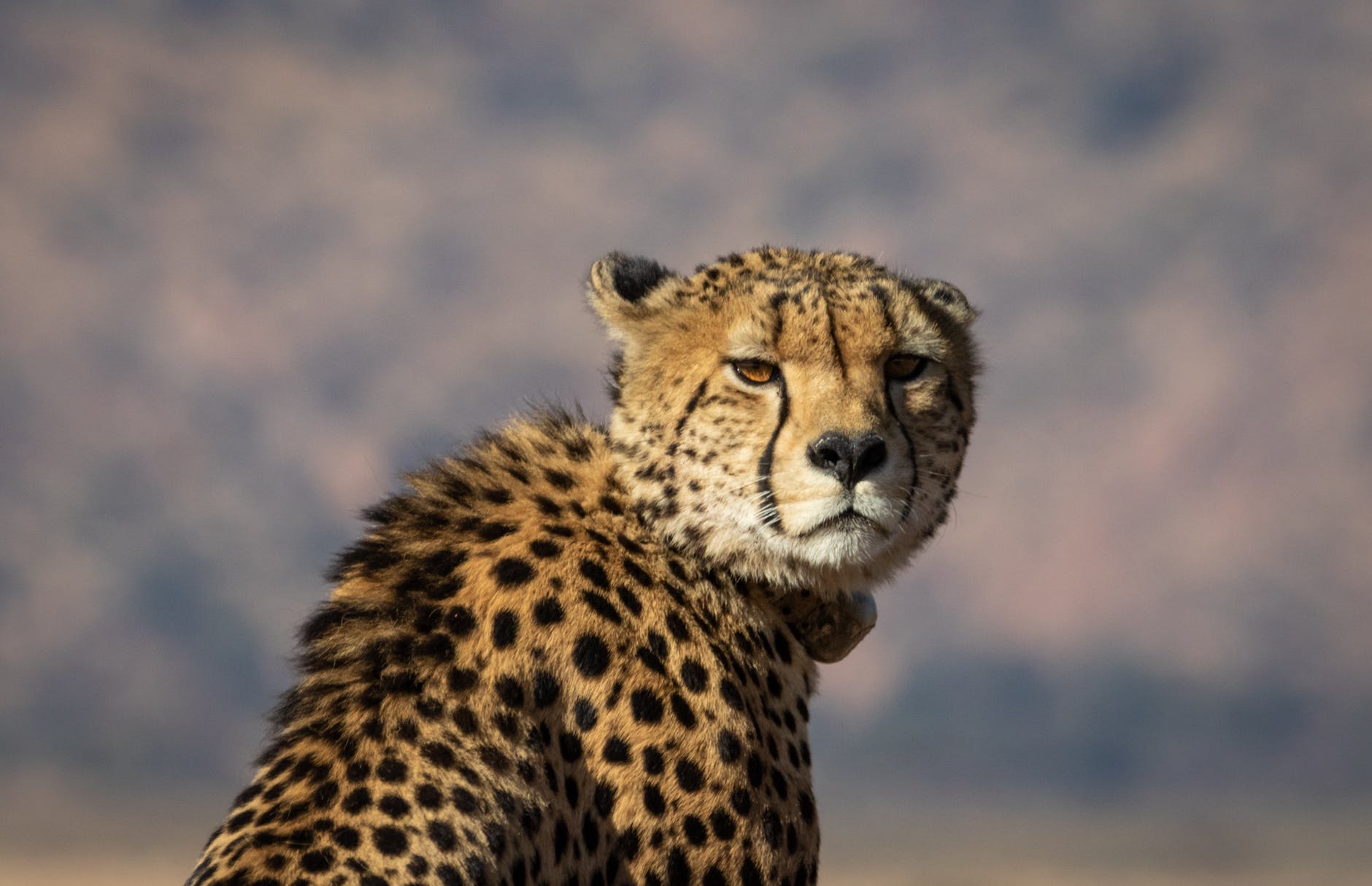
shallow focus photography of cheetah
Cheetahs, already critically endangered, have been almost entirely wiped out by poachers who sell their cubs on the illegal wildlife market. Credit: Magda Ehlers/Pexels

What’s The Difference Between A Puma, Mountain Lion, Cougar, Panther and Catamount?

The puma is known by more names than any other mammal, a fact that reflects its incredible resilience and wide range.

The puma goes by a lot of names. So many, in fact, that it holds the Guinness world record for the mammal with the most names, with more than 40 monikers in English alone.

Add the puma’s various appellations in Spanish and the indigenous tongues of south north America, and the large golden cat has probably had at least 100 names by a conservative estimate.

Cougar, panther, mountain lion, catamount, Florida panther, Carolina panther, ghost cat, gato monte, cuguacuarana, painter, screamer — they’re all names for puma concolor, a felid with the size of big cats in the panthera genus but genetics more closely related to non-roaring “small” cats, including felis catus.

Indeed, although pumas are famously capable of the wild cat “scream,” they’re able to purr just like house cats and their small- to medium-size wild relatives.

Why does the puma have so many monikers?

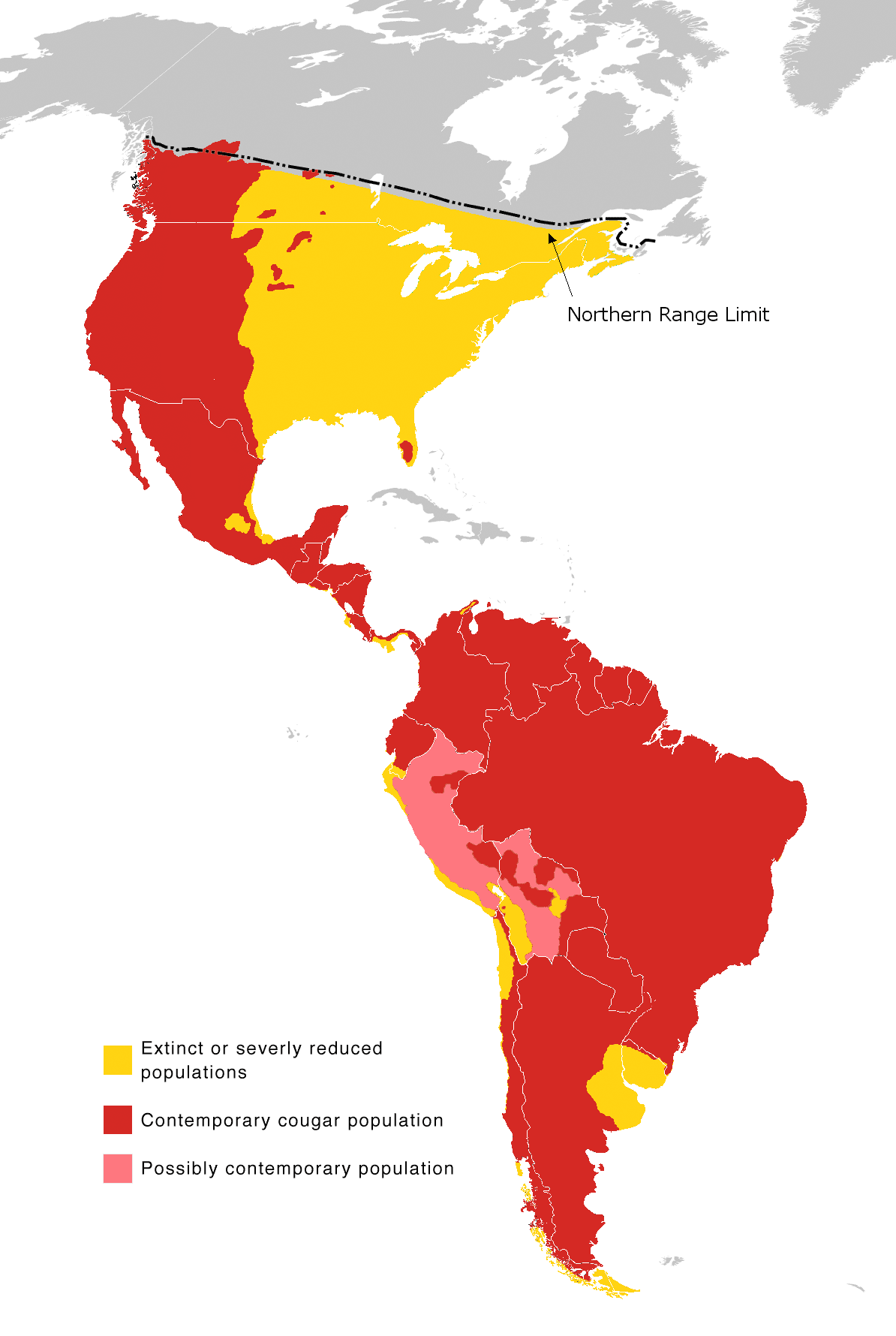
Mostly it’s because the adaptable, elusive feline has a vast range that historically covered almost the entirety of two continents:

Cougar_range_map_2010
Credit: Wikimedia Commons

Even today cougars exist in healthy numbers across most of South America and the western United States. They’re wanderers, with pockets of smaller populations in places like Florida and the midwest, and individual mountain lions have been spotted as far east as New York and Connecticut. (The New York region known as the Catskills, derived from “cat creek” in Dutch, was named after pumas when the area was part of their regular range.)

Throughout their history they’ve been familiar to a diverse group of human civilizations, societies, nations and peoples, from the Aztecs, Inca and Mayans, to the indigenous tribes of North America and the First Nations of Canada, to the inhabitants of modern-day countries like the US, Panama, Brazil, Mexico, Venezuela, Colombia, Ecuador, Paraguay, Bolivia, Chile and Argentina.

Puma
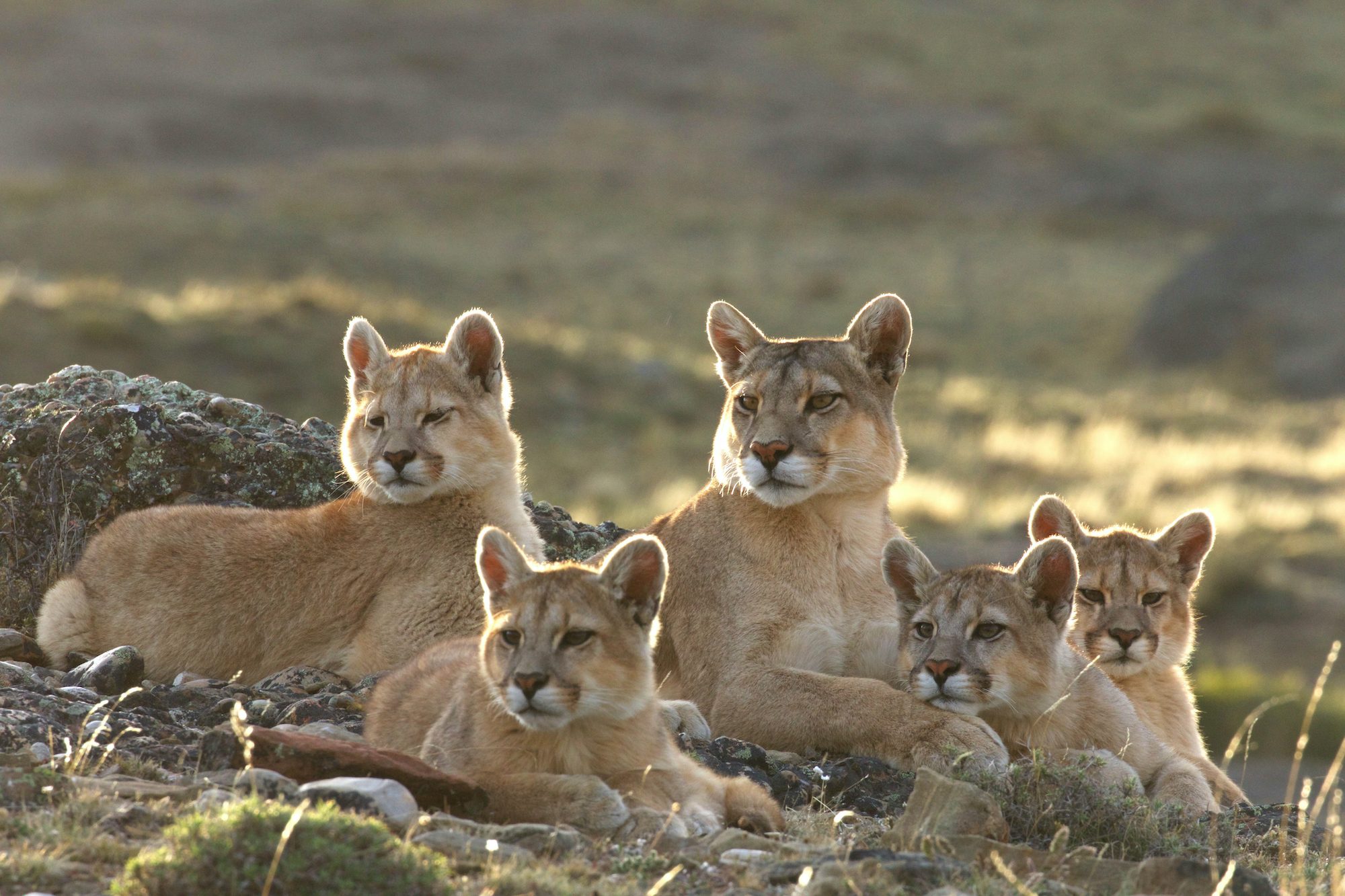
A puma with her cubs. Credit: Nicolas Lagos

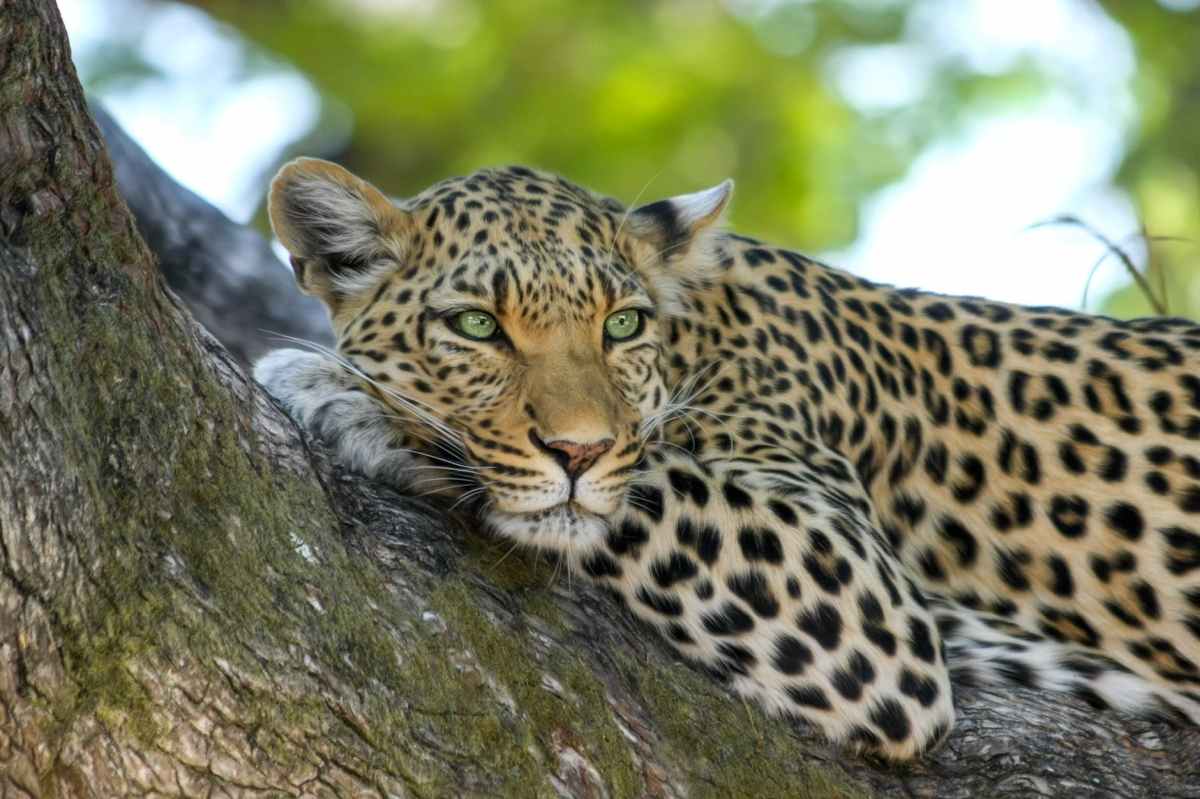
But the name confusion doesn’t just stem from the puma’s many monikers bestowed by people of different cultures across space and time. The puma is also one of three cat species that are regularly called panthers. The other two, jaguars (panthera onca) and leopards (panthera pardus), are true “big cats.” That means they’re members of the genus panthera and they can roar but not purr.

Pumas are easily distinguishable from the other two: They have smooth golden fur without adornments, while jaguars and leopards both have blotches called rosettes.

It’s difficult to tell jaguars from leopards, but the biggest giveaway is the fact that jaguars have solid dot-like markings within their rosettes while leopards do not. In addition, leopards have much longer tails than jaguars or pumas, as they need the counterbalance provided by their tails to help them climb trees and balance themselves on tree limbs.

Jaguars are excellent climbers as well, but they don’t need to be as adept at living off the ground — they are the apex predators in the Americas, while leopards coexist with lions and other large animals like Cape buffalo that present a danger to the big cats even if they’re not predators.

Which brings us to our last point: Our many-named friends, the pumas, may be big and they may look dangerous, but they’re not. There have been 27 humans killed by the elusive cats in more than a century in the U.S., according to the U.S. Fish and Wildlife Service, compared to about 3,000 deaths from dog bites over the same period. Between 30 and 50 people are killed by dogs each year.

Most confrontations between humans and pumas happen when the latter are threatened and cannot escape, or when a female is protecting her cubs.

So if you live in an area where you have a chance to see these beautiful cats, admire them and keep your own kitties indoors, but don’t freak out — the puma you see one second will be gone the next.

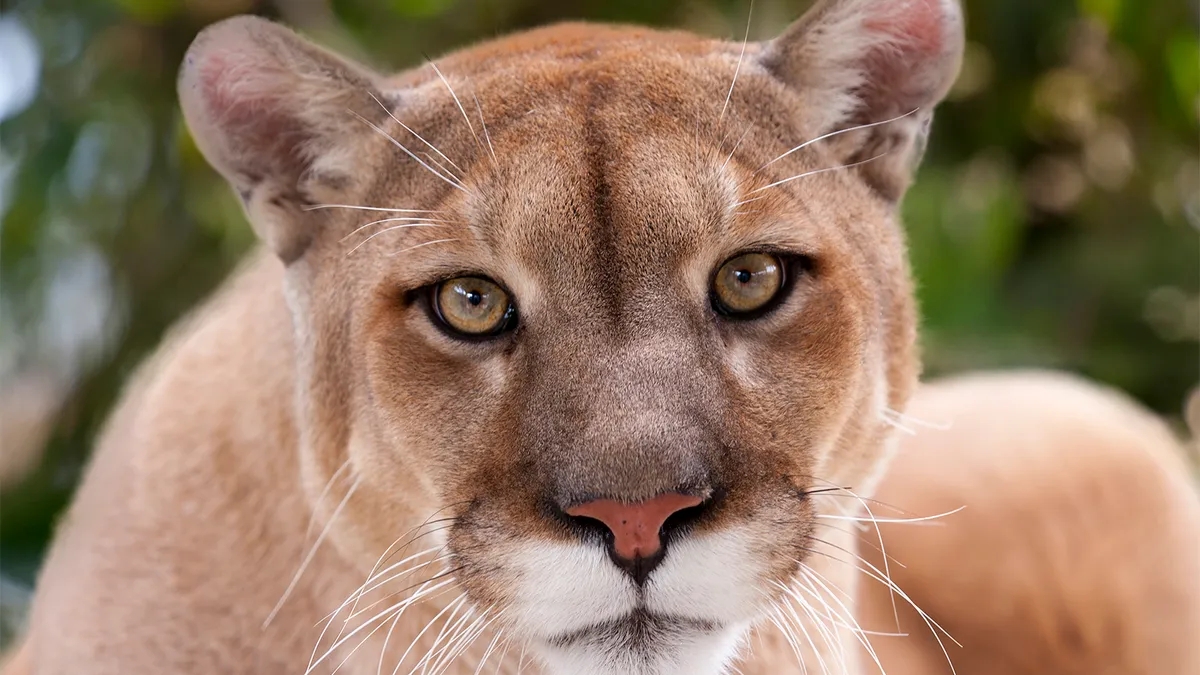
nature animal wilderness head
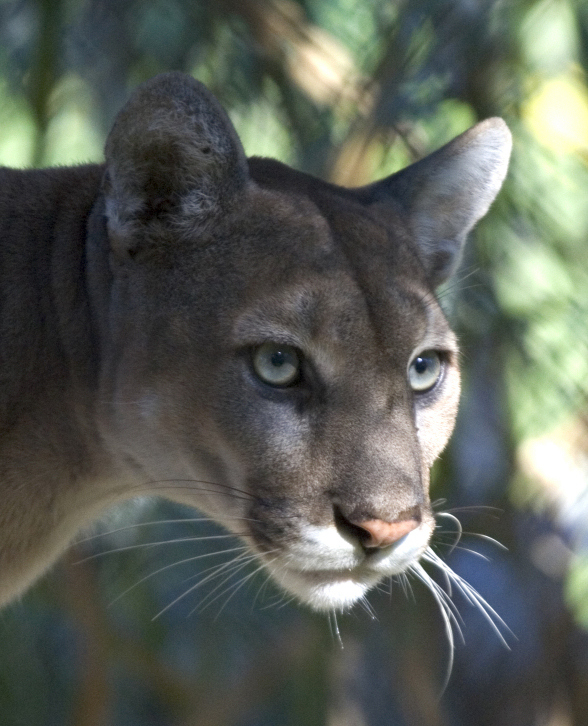
A captive puma. Credit: Pexels.com

Amazing Cats: The Rusty-Spotted Cat

The rusty-spotted cat of Asia shares the title of world’s smallest cat species with the black-footed cat of Africa.

Stalking the jungles, wetlands and forests of India and Sri Lanka are exceptionally skilled hunters, cats who are as swift as they are deadly.

They’re nocturnal, with large eyes that allow them to see motion and detail in almost complete darkness, and spectacularly sure-footed. Their agility, grace and natural climbing ability not only help them get to prey, but also aid them in avoiding predators.

But unless you’re a lizard, bird or small mammal, you have little to fear from the rusty-spotted cat — unless you get in its face.

The striped-and-spotted felines are as fierce as they are tiny, and they are truly diminutive — at two to three-and-a-half pounds fully grown, rusty-spotted cats are rivaled only by the black-footed cat of southern Africa as the world’s smallest felines.

Rusty-spotted cat
A rusty-spotted cat mother stands protectively in front of her kittens in Cornwall

Although the little guys are elusive, cat enthusiasts were treated to rare close-up images of rusty-spotted kittens when a litter was born at Porfell Wildlife Park and Sanctuary in Cornwall in 2020. It was an extremely rare occurrence, as there are only a few dozen rusty-spotted cats in captivity worldwide. Like most other wildlife, the species is threatened by habitat reduction.

For context, the tiny feline is only a third the size of a typical house cat, felis catus, and would be dwarfed by the gentle giant Maine Coon.

Little Buddy’s take: These guys are awesome and I’m seriously considering moving to their territory and living among them. Do you know why? At 10 pounds I would be a giant among them, striding meowscularly through the jungle with my own personal army of felines. They would make me their king, naturally, and sing songs about Buddy the Colossal Cat. I would have their most desirable females bathed and brought to my tent, where we would dine and I would regale them with stories of my adventures in America. Sadly, though, there are no turkeys in India or Sri Lanka. Could I live without turkey?

You might also like:

Amazing Cats: The Jaguar, ‘He Who Kills With One Bound’
Amazing Cats: The Puma
Amazing Cat Breeds: The Buddinese

Dear Buddy: Why Do Some Cats Have Flabby Stomachs?

Buddy explains the primordial pouch, a feature that allows cats to do some really awesome stuff in battle.

Dear Buddy,

Why do some cats (like you) have flabby tummies? Why do those flabby stomachs jiggle when some cats (like you) run around? Like Anna Delvey famously asked Vivian: “Are you pregnant or are you so very, very fat?”

Horrified in Honolulu


Dear Horrified,

FAKE NEWS.

What you’re seeing is my primordial pouch, also known as the Warrior’s Pouch, the Paunch of Feline Heroes and the Champion’s Abdomen. When it’s prominent, as in my case, it indicates the cat in question comes from a line of feline warriors, and that the blood of fierce combatants courses through his veins.

Buddy vs The Dragon
A painting depicting the Battle of Felinar Caverns, when Buddy slew the dragon Ysunvaer in single combat. Original image credit: Johan Grenier

If your primordial pouch is not prominent, it means you’re descended from wimps who probably hid under the stairs when faced with threats, like the angry machine god Vakuum and the Elevator, the Mysterious Room That Eats People.

You see, according to scientists, the primordial pouch offers protection to our vital organs during battle, so an errant slash won’t open our guts.

The pouch serves another critical function, allowing us to fully stretch our bodies, thus making possible the incredibly acrobatic and awesome moves that distinguish us as the graceful combatants we are. The primordial pouch makes it possible for us to jump really high, cover incredible distance in a single bound, and tear up the dance floor.

As you can clearly see from the photos, I’m all rippling muscle aside from the primordial pouch, so I’m totally not chonky.

Your Champion,

Buddy

Singapore_Zoo_White_Tiger-2_(8323953474)
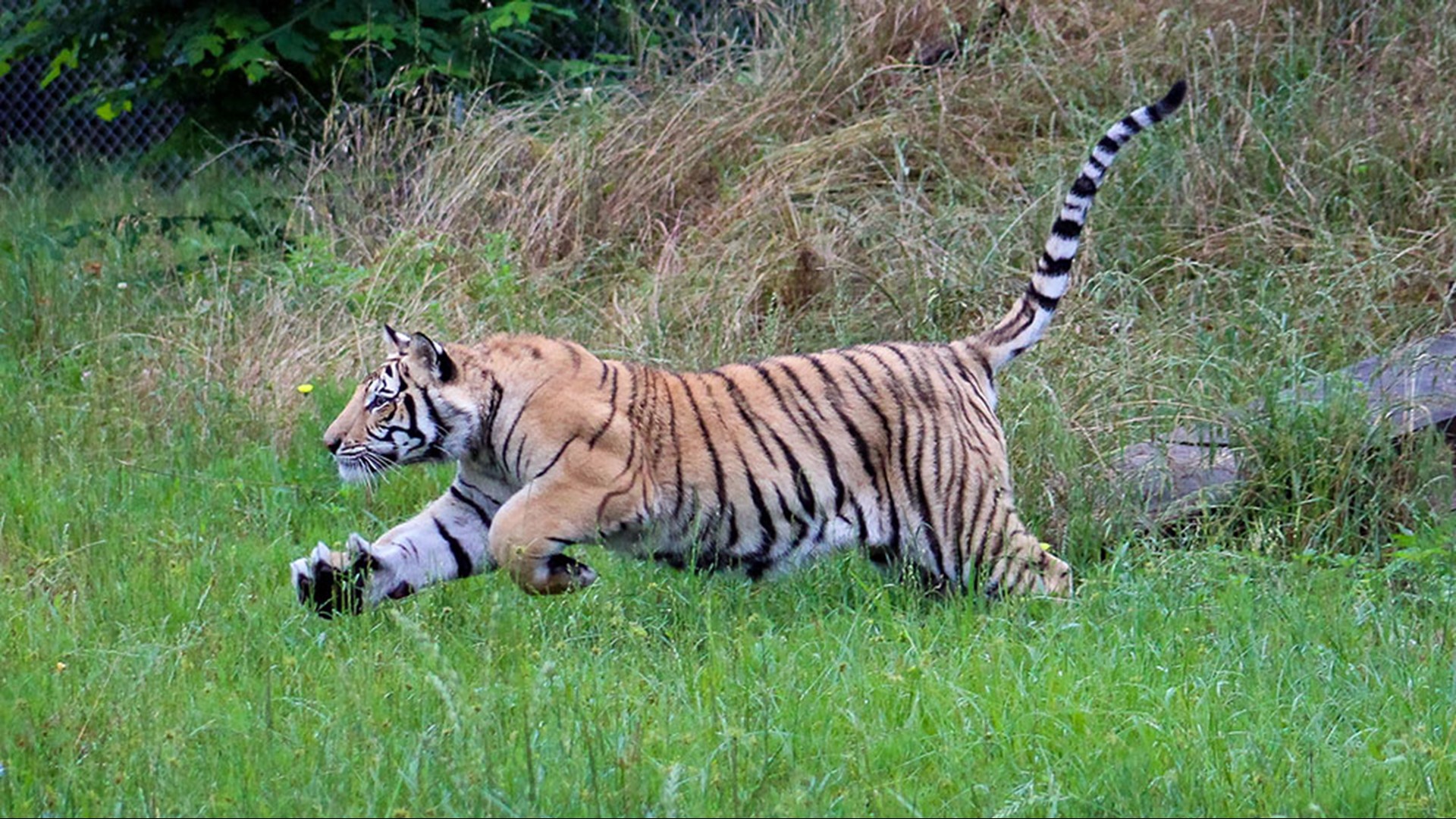
All cats, including tigers, have primordial pouches. Credit: Wikimedia Commons

Study: Cat Brains Have Gotten Smaller

Thankfully for our furry friends, smaller brains don’t necessarily correlate to lower intelligence. It’s more about the complexity of neural connections.

Cats have gotten a good deal out of domestication: They’re safer, warmer and protected from almost all threats. They know where their next meal is coming from, and won’t hesitate to meow our ears off if dinner is late.

But one tradeoff doesn’t immediately appear beneficial: Domestic cats have smaller brains than the species they’ve evolved from, African and Eurasian wildcats.

“[D]omestic cats indeed, have smaller cranial volumes (implying smaller brains) relative to both European wildcats (Felis silvestris) and the wild ancestors of domestic cats, the African wildcats (Felis lybica),” the research team wrote.

Wild cats have the largest brains on average, followed by wild-domestic hybrids and domestic cats with the smallest brains of the three.

That’s another strong indicator that domestication is the determining factor in feline brain size, although the researchers point out that they are comparing domestic cats to current wildcats, and not the ancient population of wildcats from which domestic cats evolved beginning some 10,000 years ago with the dawn of agriculture and permanent human settlements.

Wildcats with friendlier and bolder dispositions were the first to approach human settlements, drawn by the rodents who were themselves feasting on human grain supplies. Humans realized that the cats were taking care of their rodent problems but weren’t interested in eating the grain, and a beautiful partnership was born.

superhandsomebuddy1
“I have a yuge, yuge brain, the best brain. It’s tremendous.”

Smaller brains do not necessarily correlate to lower intelligence, however, and cats aren’t the only species whose brains became smaller after they were domesticated. Dog brains are about 30 percent smaller than the brains of gray wolves, but dogs have adapted spectacularly to living with humans and reading human behavioral cues.

“The dog is successful not because of the size of its whole brain per se, but because domestication has led to subtle brain changes with a stunning result: the ability to live in the world of people,” a Smithsonian Magazine article points out, noting dogs are also adept at getting people to do all sorts of things for them.

If brain size alone resulted in higher levels of intelligence, whales and elephants would rule the Earth.

Instead “the complexity of cellular and molecular organization of neural connections, or synapses, is what truly determines a brain’s computational capacity,” neuroscientist Kendra Lechtenberg wrote.

The researchers weren’t interested in drawing any major conclusions about feline cognition with the study. They’re more interested in the phenomena of “domestication syndrome,” which causes changes both physical (floppy ears, coat color variation, shorter muzzles) and behavioral. (Less aggression, playfulness.)

The jury’s still out on why exactly those traits emerge, but some studies have attributed it to differences in embryonic development. Unlike many other domestic animals, cats don’t look much different than their wild felis lybica and felis sylvestris counterparts.

The cat study was published on Jan. 26 to Royal Science Open Science, a peer-reviewed open-access journal. The research team was comprised of biologists from the University of Vienna and data curators from the National Museum of Scotland.