Jennifer Garner Is A Good Cat Mom

A video of Garner bathing her cat shows she really loves the little guy.

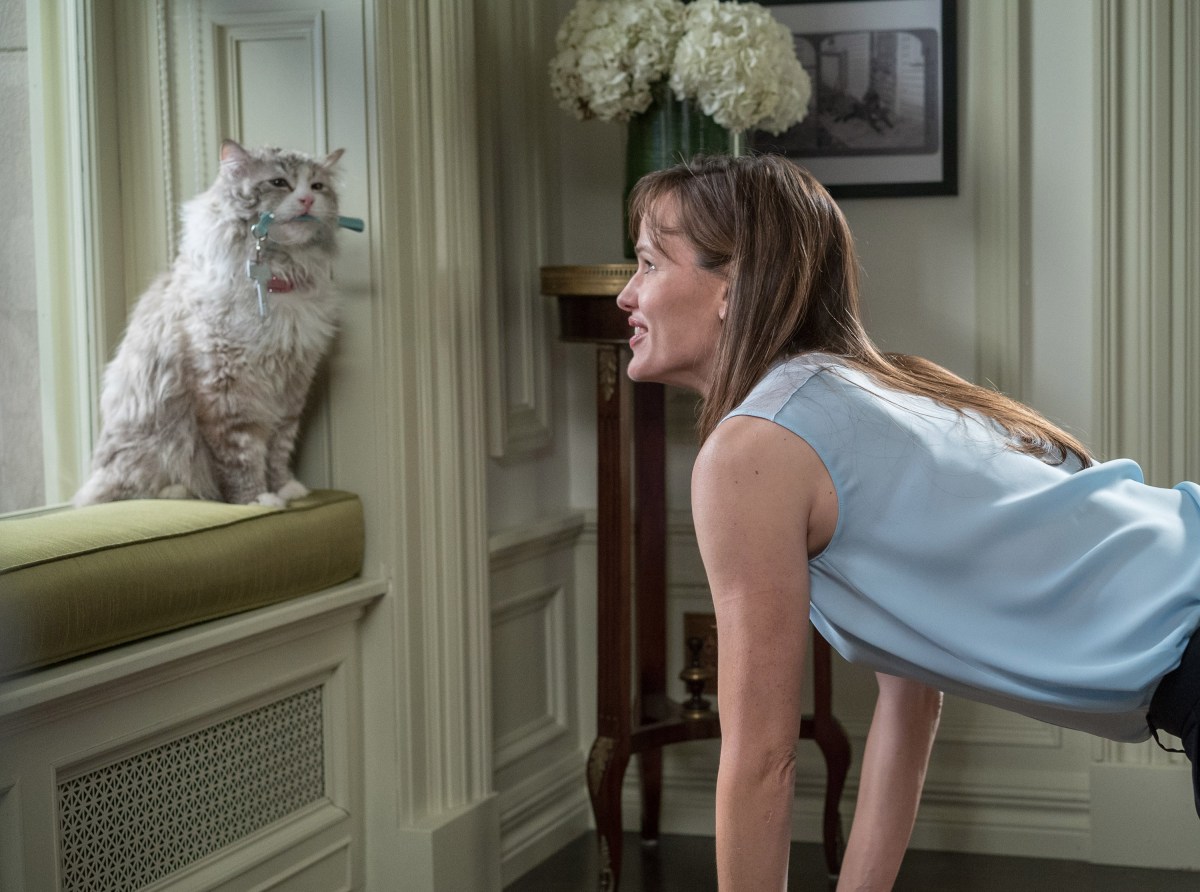
We’re not big on celebrity stuff here on Pain In The Bud, but we’ll make an exception for Jennifer Garner, her cat Moose and The Case of the Relentless Klingon.

The entirely ghastly ordeal unfolds on video (below) as the Alias star takes, uh, matter into her own hands when Moose’s business gets stuck in his fur.

“Something’s gone awry,” Garner says in the beginning of the clip before whispering into the camera. “Moose pooped his pants … He’s befouled!”

Garner proceeds to lift Moose into the kitchen sink, alternately praising him and saying she feels bad giving him a bath because he’s the nicest cat she’s ever had. At first Moose endures it like a champ, seemingly resigned to getting scrubbed and having the offending piece of poop removed from his long coat.

“There’s something caught,” Garner says as she struggles to free the Klingon from a tangle of fur. “I know, Moose. I’m so sorry!”

But it’s all too much for Moose, who doesn’t want to wait for Garner to wash the soap out of his fur and grows increasingly impatient. After Garner tells him to hang in just a little longer and second guesses herself (“What would my mom do?”), Moose has finally had enough and delivers a paw smack to Garner’s cheek, then lets his claws do the talking.

“I don’t blame him,” she says later as she bleeds from claw wounds to her neck.

It’s clear Garner loves the little guy. The actress, a known cat lover, has been photographed walking with Moose in a stroller, and starred in 2016’s Nine Lives, a movie about a cat who was unfortunately voiced by Kevin Spacey less than a year before he became persona non grata in the wake of the Harvey Weinstein scandal and the #MeToo movement.
TikTokers Are Intentionally Traumatizing Their Cats With Christmas Trees

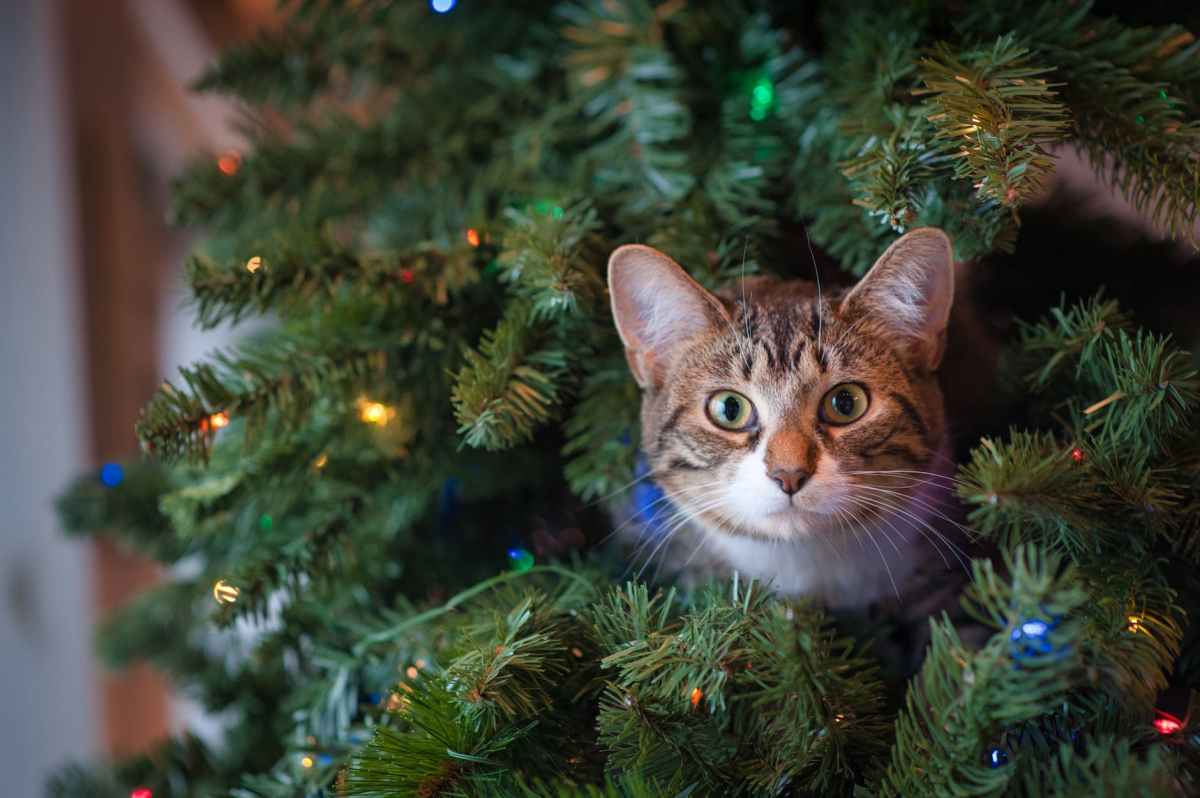
The newest trend on TikTok is terrorizing cats with Christmas trees so they’ll leave the trees alone during the holidays. Not cool.

Proving once again that social media has little or no redeeming value, TikTokers have latched onto a trend that has them using Christmas trees to terrify their cats.

The trend was started by a user who shared a “hack” she’d invented: Chase your chat around your home while wielding your new Christmas tree like a weapon, she said, and the cat won’t mess with the tree or its ornaments the rest of the holiday season.

“If you chase your cat around with the Christmas tree, it’ll be too scared to f**k with it,” said the “hack” originator, @alexisjj_.

User “@becs.richards” racked up more than 25 million views with a video that shows her holding her Christmas tree and thrusting it like a lance toward her confused and scared cat. She wore a big smile as she did so, and set the video to upbeat Christmas music.

Terrorizing your cat is a bad idea, author Anita Kelsey told Newsweek.

“A cat will not have any idea why you are causing them stress or fear and, more than likely, frightening a cat with a Christmas tree can lead to the cat being fearful of the room the tree is in, fearful of the tree, urinating around the home or on the tree and urinating on anything around the tree—like presents,” said Kelsey, author of Let’s Talk About Cats. “It also can cause a breakdown of trust between the cat and the person trying to frighten them.”

Daniel Cummings of the UK’s Cat Protection nonprofit said the method may seem successful, but it “doesn’t take into account how cats learn” and could cause long term problems.

“No cat owner would want to intentionally stress out their cat,” he said, “and part of cat ownership is accepting their natural behaviors.”

Unfortunately this newest trend isn’t surprising, especially coming from a user base of people who happily hand over their user data to the Chinese government, which controls TikTok and makes use of its data just as it does with any other ostensibly “private” company operating in China. There have been more than enough investigative stories illustrating how the Chinese government weaponizes data for any reasonable person to avoid platforms like TikTok.

I’m fortunate that Buddy is a good boy and mostly doesn’t mess with Christmas trees. He’s swiped a handful of ornaments off branches in the past, but so what? He’s a living being with feelings, and ornaments are just things.

Besides, as Cummings notes, curiosity and playfulness are part of the deal when we adopt cats. If people aren’t up for that, they shouldn’t adopt.

Top photo credit Jessica Lynn Lewis/Pexels.

Kiwi Cat Dad Builds Lift For His Aging Buddy

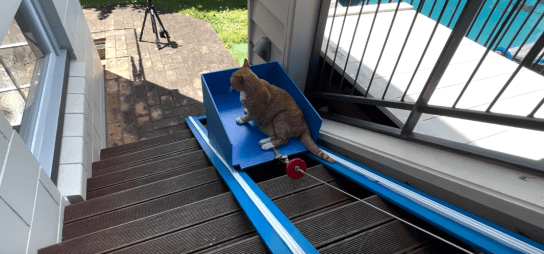
Frodo the Cat is 20 years old and doesn’t get around like he used to, so his handy human put his handy skills to work and built the little guy his own lift.

Liam Thompson is a 21-year-old Youtuber who’s known for building cool stuff.

His cat’s name may be Frodo, but Thompson said he’s in “Gandalf territory” at 20 years old and has been having trouble getting around to his favorite spots, especially a sunny corner of the backyard where he likes to sit poolside and enjoy the New Zealand warmth.

“Despite his ancient-ness, he still insists on hobbling down these stairs every day to sit out in the sun,” Thompson says in a video about his latest project. “That is, until today.”

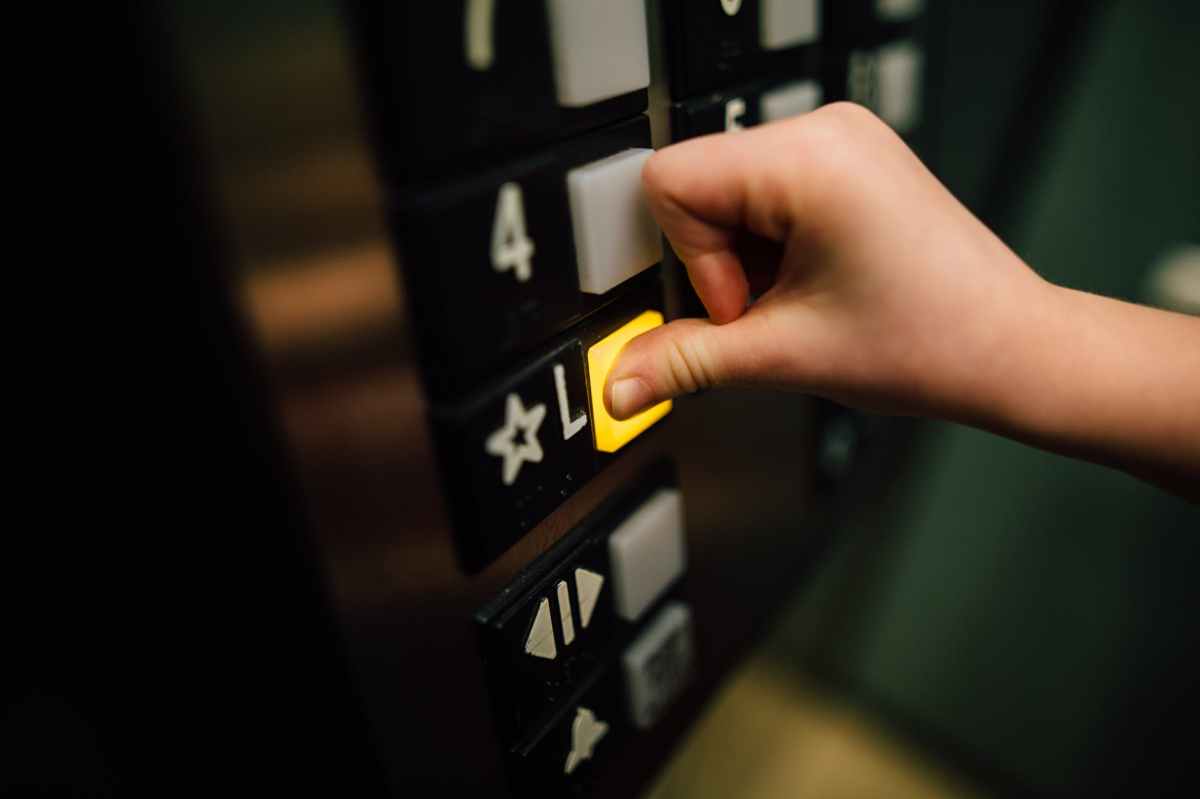
The video shows the handy Kiwi building an “elevator” — more like a stair lift for a cat — out of wood, an electronic hoist and a handful of small hardware pieces. The passenger compartment is a simple cart, and at the press of a button the cart descends or ascends the stairs along a wooden track.

Frodo isn’t bothered in the slightest.

“Are you ready to go downstairs without having to move a muscle?” he asks his cat before the maiden ride. “I hope so, because it took me four days.”

Thompson is delighted as the elevator works perfectly and Frodo rides it without fear or protest, laughing as the orange senior cat makes himself comfortable during the ride. The current setup requires Thompson to push a button, but perhaps in the future he can add a simple button for Frodo directly on the cart.

Speaking of elevators, this cat thinks he’s Leslie Chow from The Hangover:

Jurassic Park With A Cat Instead of A T-Rex

Owl Kitty’s human puts his beloved feline into an iconic scene from 1993’s Jurassic Park.

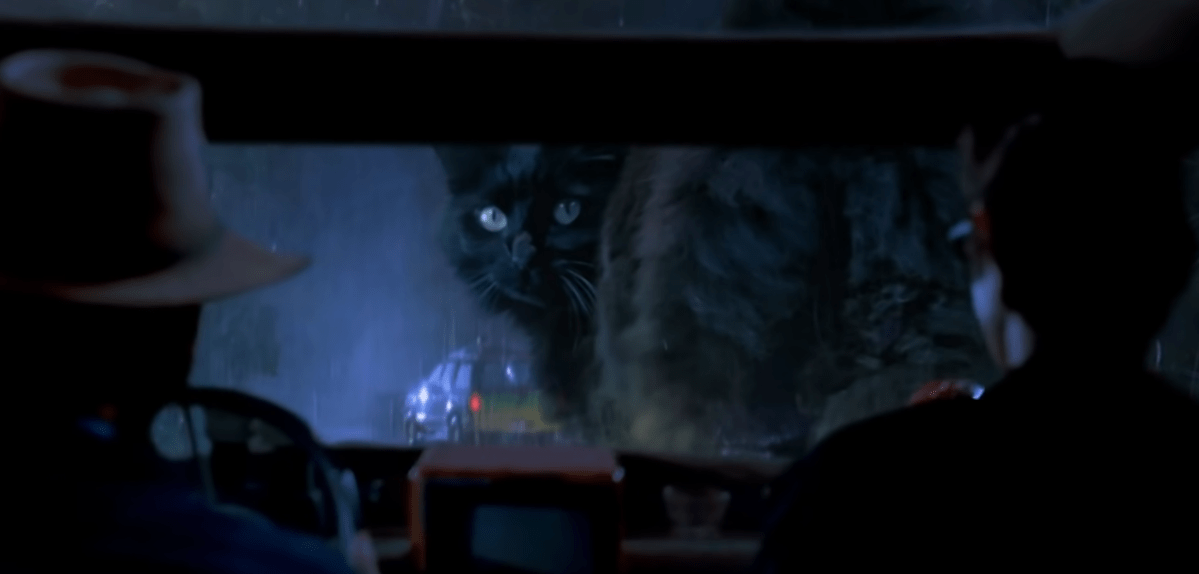
Owl Kitty’s human has put his house panther into The Matrix, John Wick, Home Alone, Titanic — and now the original Jurassic Park as a stand-in for the terrifying tyrannosaurus rex.

Despite standing at least 20 feet tall and weighing several tons, Jurassic Owl Kitty is a kindler, gentler threat to Sam Neill, Jeff Goldblum and the kids. Kitty just wants to rub up against the Jeep and purr, and perhaps score some cat food, not eat people like that evil dinosaur.

Plus we can now confirm that, even if they were twice the size of African elephants, cats would still be cute:

Why Scaring Cats Isn’t Funny

Scaring your cat with cucumbers or animatronic Halloween toys will damage your cat’s trust in you.

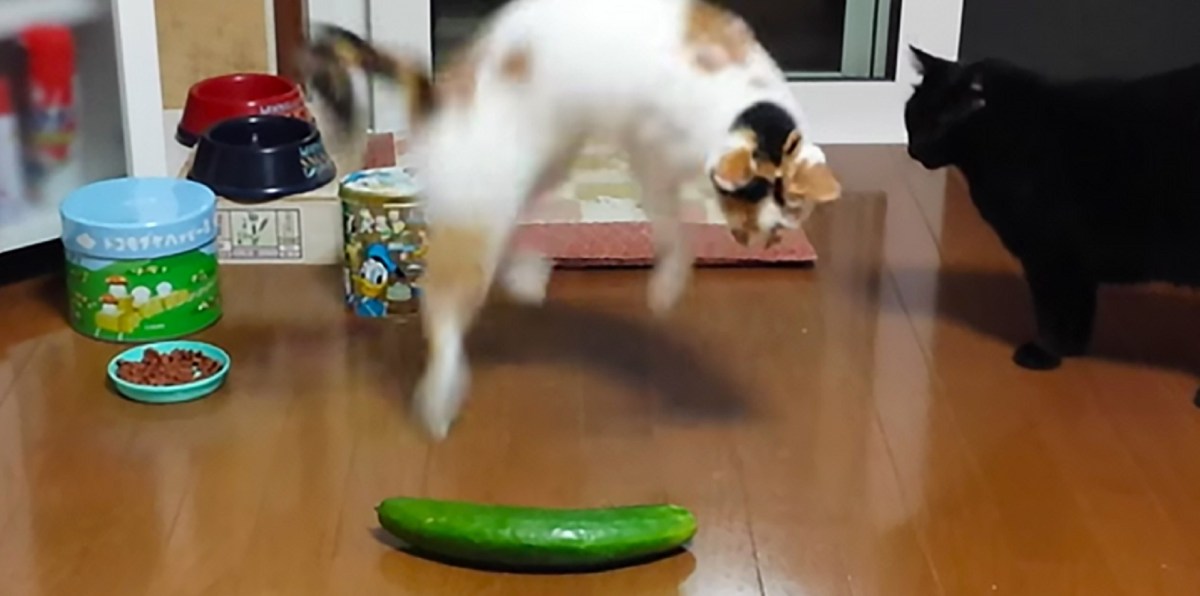
Whether they’re surreptitiously placing cucumbers behind their cats’ backs while the kitties are eating or filming their felines’ terrified reactions to Halloween props, some people apparently love scaring their furry friends.

Since many of the resulting videos go viral, people hungry for online fame have even more incentive to “prank” their cats as they chase clicks. The result is potentially thousands of house cats terrorized by people with ambitions of being the next TikTok or YouTube star.

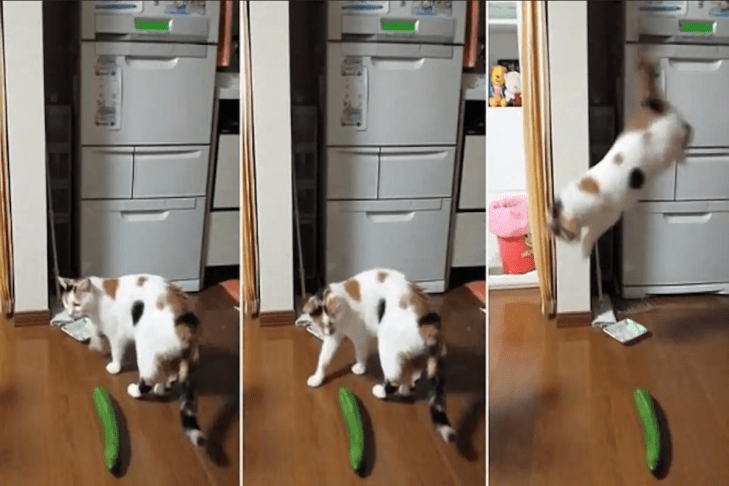
On the surface, the way cats respond to being startled might seem comical. The term “scaredy cat” didn’t manifest out of nothingness, and cats who are truly frightened have a cartoonish way of leaping back and pumping their little legs while they’re still in the air like Looney Tunes characters.

But when you think about it from your cat’s perspective, in the context of feline evolution and psychology, the cruelty of scaring a cat for “lulz” becomes obvious.

Screenshot 2021-11-01 at 08-48-55 245 jpg (WEBP Image, 1200 × 800 pixels)

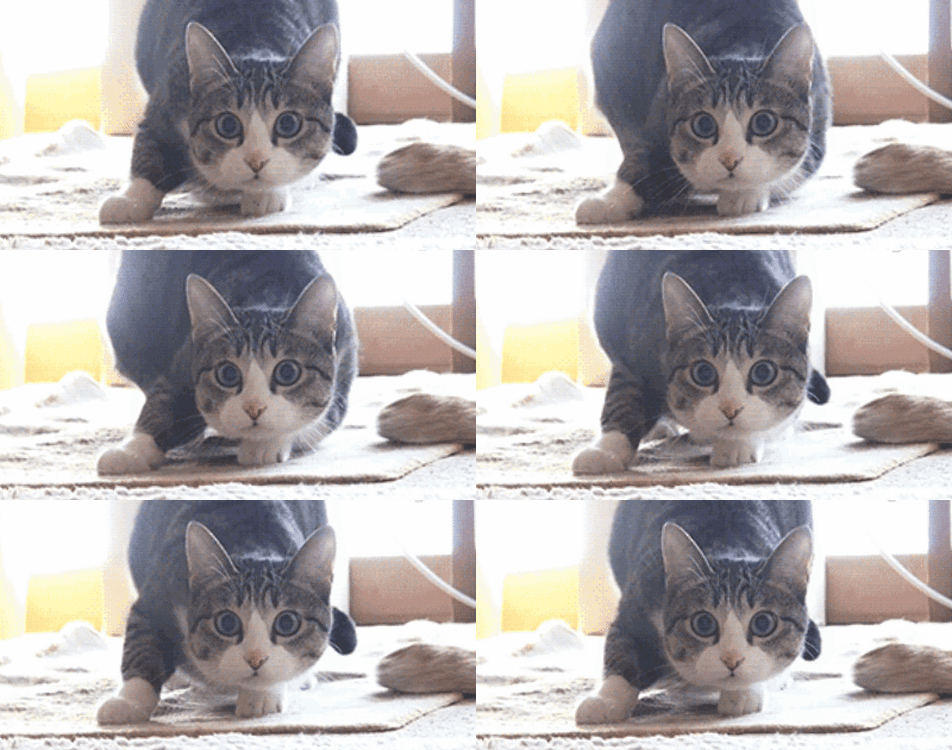
First, cats are ambush predators. It’s why they love boxes, why they do the adorable crouch-and-butt-wiggle routine before pouncing on their toys, and why they like vantage points where they can see but not be seen.

They particularly dislike surprises, which is why they bolt. Cats are supposed to get the jump on other animals, not the other way around. The impulse to flee as quickly as possible — and return unseen — is hardwired into the feline brain, as natural to them as burying their poop or kneading when they feel content. Because domestic cats are small and can be predator and prey, that impulse is even stronger, but it also exists in 500-pound tigers or 200-pound jaguars.

So when you intentionally frighten your cat with an object that will be perceived, however briefly, as a predator, you’re triggering a fight-or-flight response, a rush of adrenaline and fear.

catwiggle

However, scaring a cat in its own territory (your home) or in a place he or she feels especially secure (feeding areas) adds another layer. A cat walking around outside will be naturally wary, but if you’re giving your cat a good home, as well as the love and space she deserves, she’ll feel comfortable. She’s on her home turf, in a closed environment where threats don’t pop up unexpectedly.

When a cat turns around after enjoying some yums and sees a cucumber, her hardwiring takes over, she registers the intrusive vegetable as a snake and goes into flight mode, scrambling to get away as fast as possible. It’s not just that kitty’s shocked or can get hurt scurrying away from a perceived threat, it’s also the inherent cruelty in teaching your cat that the place she thought was absolutely safe from intruders may not be.

We’re not immune to this kind of conditioning ourselves. If you settle down for a nap one day and your spouse, a sibling or a friend thinks it’s funny to wake you by dropping an ice cold bucket of water on your face, will you feel comfortable dozing off on the couch next time?

Trust is implicit in our relationships with our cats. If we abuse that trust, especially for something as meaningless as social media likes, we’re endangering our human-feline friendships and making our cats feel unsafe in their own homes.