Australia announced the plan after a new report called cats the greatest driver of extinction in the country.
While their neighbors in New Zealand called for “woah on feeral kets” earlier this year, Australia is planning its own nationwide effort to wipe out free-roaming cats in an attempt to prevent the extinction of local wildlife.
The “war” announcement, made on Wednesday by Australia’s Environment Minister, Tanya Plibersek, comes on the heels of a report that calls “invasive animals” like cats the primary force behind species extinction in most of the world, including Australia. The report was released by a group of academics from 143 countries who make up the Intergovernmental Platform on Biodiversity and Ecosystem Services (IPBES), which advises the UN and sovereign states on wildlife policy.
“They played a role in Australia’s two latest extinctions … they are one of the main reasons Australia is the mammal extinction capital of the world,” she said.
In addition to targeting felines on the mainland, Plibersek said Australia’s government would attempt to completely purge Christmas and French islands of their cat populations.
I have not had the opportunity to read an advance of the report, which was just released, and it will require careful reading as well as additional research before I’d feel comfortable commenting on the claims. That said, the numbers bandied about in press accounts (which claim cats kill more than 2.6 billion animals a year in Australia) are similar to the claims we’ve heard before, so unless there’s original research here and not a rehash of the same meta-analyses frequently cited in stories about cats and their impact on biodiversity, it doesn’t change the simple fact that it’s bad policy to act without reliable data.
I’m talking about an actual effort to count the feral and stray cat population in defined areas, as the Washington, D.C. Cat Count did using trail cameras, monitors and other methods. Obviously that can’t be applied to an entire country, but it can be done in different locations and provide a baseline to work with. Without that effort, the estimates of feline impact are nothing more than guesswork by professors sitting behind desks often entire continents away from the locales in question, plugging invented numbers into formulas intended to extrapolate totals for birds, mammals, lizards and insects killed by felis catus.
While similar studies estimated the number of cats in the US at between 25 and 125 million, Australia’s federal government says there are between 1.4 and 5.6 million cats in the country. If that’s true, it means each free-roaming cat in Australia kills between 500 and 1,850+ animals a year. It’s also difficult to accept estimates of predatory impact when the corresponding estimates of total cat population are so vague.
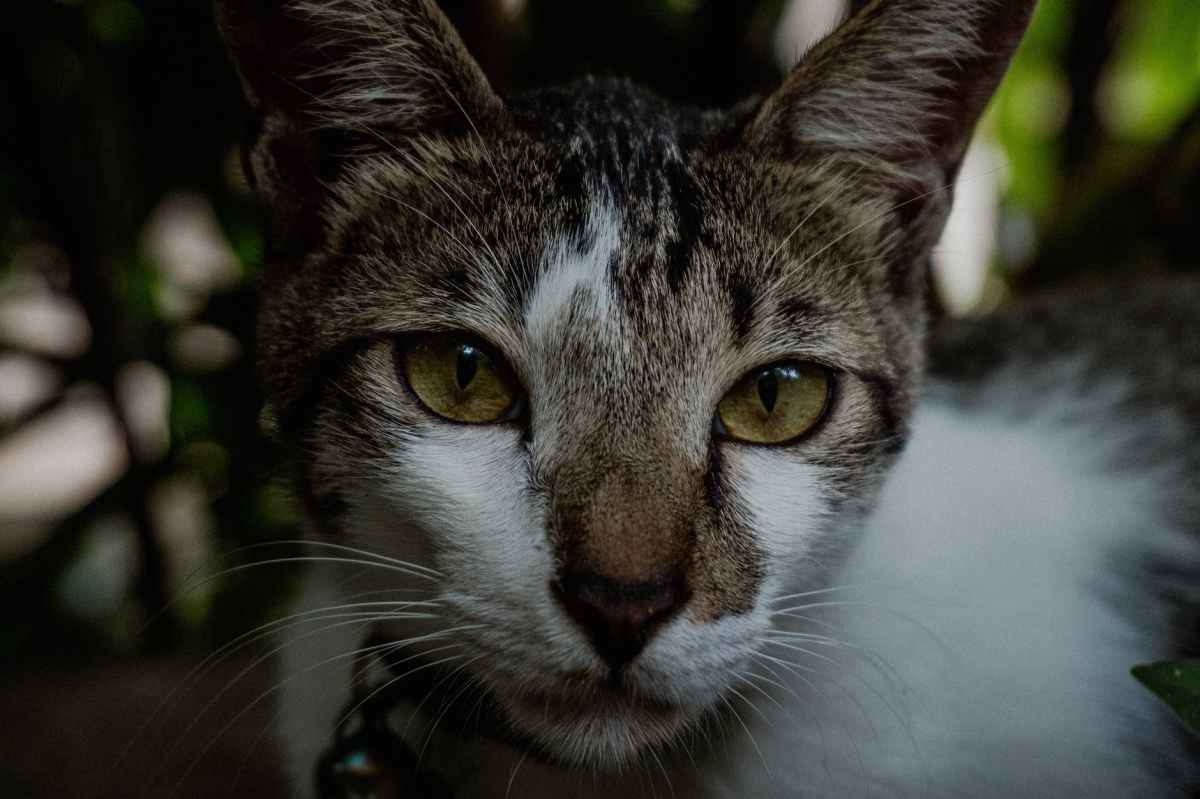
A “feeral ket.” Credit: Ferhan Akgu00fcn/Pexels
Still, as I’ve written in earlier posts, government intervention was inevitable without proactive measures. Australia’s cat lovers and caretakers would do well to voluntarily keep their pets inside, and to double their efforts to catch, spay/neuter and find homes for as many strays as they can.
If you live in Australia, you have until December to provide feedback to the federal government, and it’s probably a good idea to check with your local animal welfare groups, which are undoubtedly composing their own responses to the plan.
There’s not a shred of evidence that shows arbitrarily gunning down cats has any positive impact on the environment, but that hasn’t stopped vigilantes from hunting them.
There’s this bizarre and infuriating idea among people who call themselves conservationists that they can save certain animals by running around and arbitrarily gunning down other animals.
These people will shoot certain species of birds to protect other bird species, extirpate ferrets, pine martens and various other mustelids, and have had a hard-on for cats ever since a series of shockingly dishonest pieces of propaganda masquerading as studies used fabulated data to paint felines as furry demon spawn who feast on birds by the billions in countries like the US, New Zealand and Australia.
They used to be quiet about it because they realized gunning down cats isn’t exactly good PR for their cause, but now they don’t even bother.
Like John McConnell, a 67-year-old New Zealander whose hobby is going out with a rifle to shoot cats at night because he thinks that’s an effective way to protect birds.
“I shoot them,” McConnell told The Guardian. “Seriously. If it’s a cat and I know whose it is, I’ll leave it. But if it’s a stray cat – it’s a goner. Even if it’s domestic and it’s out at night, I’m getting to the point where I’d shoot those as well, because they shouldn’t be out.”
Two things to note here:
McConnell is playing vigilante cat killer, having appointed himself arbiter of which animals get to live and which ones don’t, but he doesn’t understand that stray, feral and pet cats are all the same species. This is a man who thinks the difference between a domesticated and wild animal is whether it has a home.
The article contains no statistics and nothing in the way of numbers other than a wild estimate of New Zealand’s cat population, yet it’s filled with anecdotes: people who claim they see more birds after they’ve bagged a couple of cats, but can offer no evidence. That’s not an effective or smart way to make public policy.
Between the bogus studies and the lack of any data remotely suggesting that arbitrarily shooting domesticated animals has a measurable impact on bird populations, there is nothing to support this kind of ruthless nonsense. You’d think that, if an entire country is going to war with an animal species and has vowed to take potentially millions of lives, there would be something — anything — to back up the claim that inflicting all that misery and suffering on sentient creatures would accomplish a conservation goal.
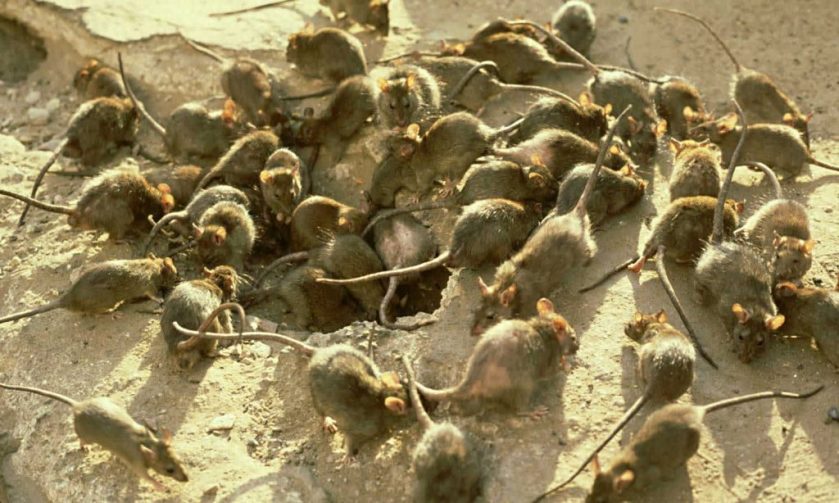
Australia’s reward for culling cats: annual mouse plagues for the past three years since killing millions of cats with air-dropped sausages laced with a chemical that is poisonous only to felids.
Especially after their neighbors, the Australians, killed two million cats with poisoned sausages in a similarly misguided attempt at protecting wildlife and were rewarded for their efforts with three years (and counting) of biblical mouse plagues that destroyed thousands of homes, farms and businesses, and caused billions in damage. Mice, by the way, are a non-native species introduced by settlers from the UK.
Credit another blow to the environment from human behavior as people randomly shoot cats. I suppose blaming cats is easier than admitting we’ve behaved abominably and are the root cause of these problems.
But let’s stop for a moment and imagine if the situation were reversed. Imagine people who want to protect cats decided they’re going to start shooting dogs, foxes, coyotes, owls, eagles and other large birds of prey.
Suppose someone decided that John McConnell’s dog shouldn’t be out for walks and shot it in an act of conservationist vigilantism.
Would anyone tolerate that? Wouldn’t they be labeled lunatics and condemned? What makes the cat culling any different, aside from “justification” in the form of a handful of widely-condemned, heavily-criticized studies that violate just about every elementary rule of scientific research?
Here’s comedian Bill Burr’s take on the absurdity of human efforts to manage wildlife population by shooting animals. Burr, whose everyman facade and humor often mask salient points, also takes the rest of us to task by pointing out it’s humanity, not the behavior of animals, that has the biggest impact on the planet and its wildlife, yet no one’s suggesting we cull our own population.
“I think it’s weird that human beings are trying to control the populations of animals. You know? Like any time the deer population gets out of control, some dude will get on TV like [puts on a redneck accent] ‘Okay, the deer population is up to about 17, 1,800, realistically we need to get that number down to about five or six, alright? So starting tomorrow, if you got a gun, f—ing shoot them in the face!’ I’m just sitting at home like, ‘What are the deer doing that’s so bad for the environment?’ [Slips into a redneck accent again] ‘They eat all the f—in’ grass! They comin’ up to trees, just nibblin’! Just nibblin’!’ Dude, the deer didn’t put a hole in the ozone layer, alright? That’s not a bunch of dogs clogging up the freeway. It’s us, alright?”
Then he lays into people who breed like rabbits, and this is a personal pet peeve of mine whenever I hear someone like Alec Baldwin, a man who has eight children, four massive homes, a fleet of SUVs and an army of nannies, holding court on environmental responsibility and global warming. Baldwin has 12 to 16 people living under his roof at any time, with palatial homes that consume more energy each than entire European villages, yet that doesn’t stop him from adopting a patrician tone and lecturing the “peasants” (his word) on their environmental responsibilities.
A word of caution: while I think Burr is hilarious, this clip is also peppered with obscenities, as his most of his material. If that sort of thing bothers you, skip the clip. If not, well, he’s got a point:
Police say foxes are responsible for killing cats in London, but animal welfare activists insist there is indisputable evidence of human cruelty.
It’s difficult to know what to make of the Croydon cat killer story.
Initially, people from London-area cat rescues said they were looking for a person who had mutilated dozens of cats in the South London area. As the number increased to more than 100 and public outrage became palpable, police opened an investigation.
The story was wild. Newspapers bandied about disturbing figures, claiming hundreds of cats mutilated at the hands of a sick individual or several people. There were reports of feline remains artfully arranged in the driveways and on the front steps of victims’ homes to inflict maximum trauma on the people who discovered them, with allegedly clean cuts indicating a human with a blade was responsible.
Then in 2021, the Metropolitan Police announced they were closing their case after three years and almost $200,000 spent.
Foxes, not cruel humans, were responsible for the cat killings, they said. A study in the journal Veterinary Pathology found fox DNA on the corpses of 32 cats and said puncture wounds on the feline bodies were consistent with fox bites.
London-area animal rescues disputed the findings, saying the study couldn’t account for the mutilation of so many animals. The study’s authors blamed “badly behaved foxes” who were scavenging on the remains of strays and pets killed in traffic or by ingesting antifreeze.
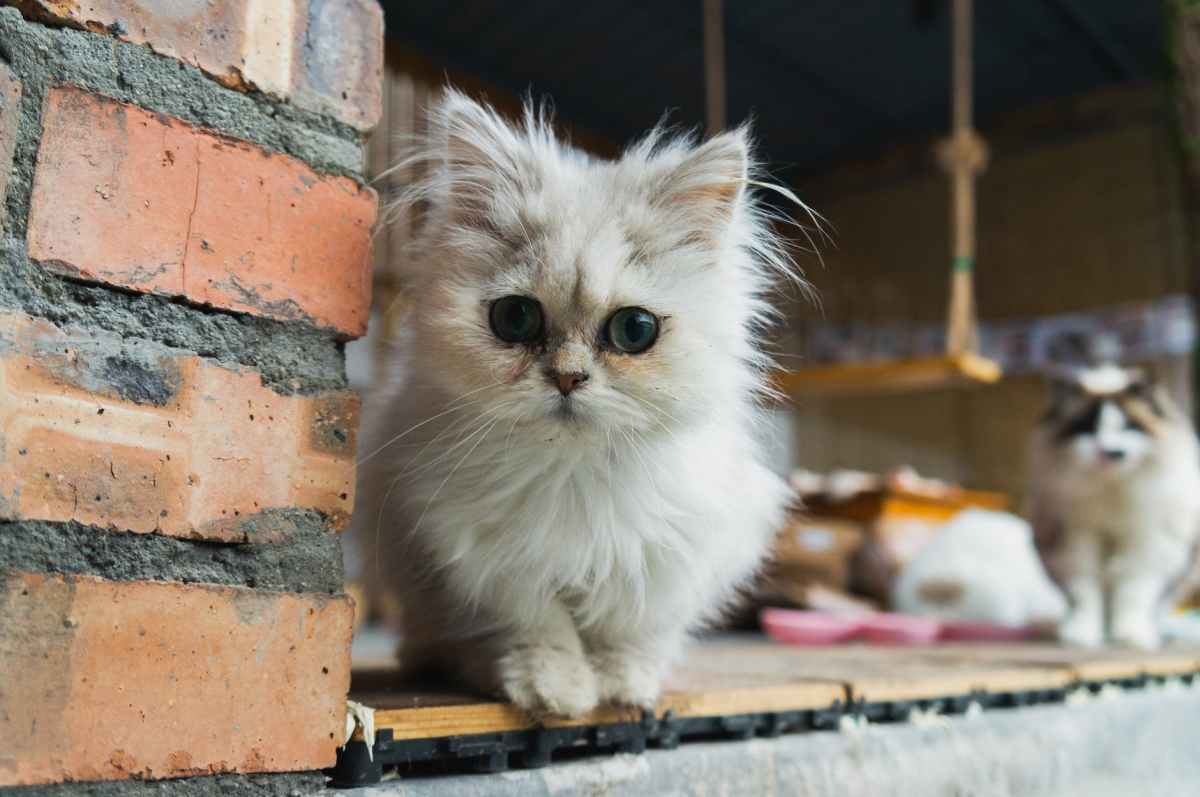
Credit: Fajer u015eehirli/Pexels
Lots of other people refused to accept the Metropolitan Police conclusion, including people whose cats had been victimized. In some of those cases, veterinarians concluded the cats were killed by humans, not animals.
Which brings us to now.
The Mirror has teamed up with the South London Animal Rights Network (SLAIN) to create an interactive map showing the locations where more than 1,000 dead cats were found over the past several years.
“This map shows where incidents have occurred but also and perhaps just as important, where incidents have never happened,” SLAIN’s Boudicca Rising told the paper. “If you know of someone who made journeys to these locations on these dates please do get in touch with us. All information will be treated in the strictest of confidence.”
Documents obtained by journalists in London indicate there was internal tension at the Metropolitan Police over the resources that had been allocated to the cat case, and spokesperson for the force admitted that was a consideration. But the department stands by its assessment and says there’s no evidence a serial cat killer is on the loose.
It’s difficult to believe someone or a group of people could evade capture while allegedly killing more than 1,000 cats since 2015, especially in a city like London where CCTV cameras blanket most neighborhoods.
There are an estimated one million CCTV cameras covering 607 square miles of London, and the commonly-cited statistic claims Londoners are caught on CCTV cameras an average of 300 times per day. Other estimates claim that number is too high, and the average UK citizen is spotted on a municipal surveillance camera 70 times a day.
Notably, those figures do not include private cameras like Ring systems and surveillance operated by private businesses. The point is, it’s very difficult to avoid cameras in London, and if there are human feline killers out there, they must know an awful lot about where the cameras are.
If the phantom cat-killers are real, not only have they been able to avoid appearing on surveillance, they’ve evaded the watchful eyes of neighbors as the story circulated widely in the press. The theory that the killings were the work of animals, mostly under the cover of night and beneath the notice of people, sounded more plausible to many people.
Still, the theory doesn’t neatly fit the evidence.
Not all veterinarians agree that foxes are the culprit. While the veterinary pathologists who authored the study looked at photographs of the mutilated felines, some veterinarians who directly examined the bodies of slain cats concluded they were killed with blades. When experts are at odds over evidence, what can you do but gather more information and hope for the best?
London may have to do what Washington, D.C. did and deploy low-to-the-ground trail cameras and regular surveillance cameras around the city. In Washington, the goal was to get an accurate census on the number of strays and ferals living within city limits. In London, a census could be a bonus as they finally get an answer to the question of who’s been killing all those cats.
Mankind’s achievements in space came at the expense of dogs, cats and non-human primates, who were sent into orbit during the early days of the space race.
I’ve been watching Apple TV’s exceptional show, For All Mankind, which dramatizes the space race of the 1960s and beyond in a sort of alternate history where the Soviets, not Americans, first lay boots on the lunar regolith.
That loss lights a fire underneath the behinds of the people at NASA and convinces American politicians that the space race is the ultimate measure of our civilization. In real life, American ingenuity and the creativity fostered by a free society allowed the US to leap ahead and “win” the space race. Space missions were already becoming routine by the time the drama of Apollo 13 briefly rekindled public interest.
Then the Soviet space program faded, the competition turned one-sided, and without an arch-enemy to show up, American politicians pulled back NASA’s funding to a fraction of what it once was, where it remains today. That’s why the rise of the private space industry — Elon Musks’s Space X, Jeff Bezos’ Blue Origin, etc — will almost certainly be our ticket to Mars.
But in For All Mankind, NASA remains the budgetary behemoth and source of prestige it was in the 60s and 70s, leading to the development of a permanent moon base, lunar mining operations and a planned mission to the red planet.
There’s a quiet moment in the second season when a Soviet cosmonaut, visiting the US as part of a peacekeeping mission, shares a drink in a dive bar with an American astronaut.
“Do you like dog?” the cosmonaut asks.
“Dogs?” the astronaut replies. “Of course. Who doesn’t like dogs?”
The Soviet shakes his head.
“No, dog,” he tells her. “Laika.”
Laika was the first dog in space, or more accurately, the first dog the Soviets acknowledged sending into space. (The Soviets didn’t acknowledge their failures, and we can only guess at the number of lost cosmonauts and animals officially denied by the Russians, drifting in space for eternity or disintegrated in atmospheric re-entry.)
Laika, also nicknamed Muttnick, wanted to please the humans who had taken her in, and didn’t understand that her trip would be one way. (Historical photo)
The moment turns somber as the cosmonaut recalls the Moscow street dog who was selected because she was docile, fearless and could handle the incredible noise and g-forces of a rocket launch.
“I held her in my arms,” the cosmonaut tells his American counterpart, taking a sip of his Jack Daniel’s. “For only one or two minutes on the launchpad.”
Then he leans in and tells her the truth: Laika didn’t triumphantly orbit the Earth for seven days in 1957 as the Soviet Union told the world. She didn’t endure the mission.
She perished, alone and afraid, just hours after launch when her capsule overheated.
The Soviets never designed the Sputnik 2, Laika’s ship, to return to Earth safely. Her death was predetermined.
We laud astronauts and cosmonauts, the brave men and women who willingly strap themselves into tiny capsules attached to cylinders of rocket fuel the size of skyscrapers and depart this Earth via brute force, knowing something could go wrong and their lives could end before they realize what’s happening. We should admire them. Their accomplishments are all the more impressive when you consider the fact that the combined processing power of every computer at NASA’s disposal in the 1960s was but a fraction of what we each hold in our hands these days when we use our smartphones.
Those first astronauts and cosmonauts were extraordinarily brave — but only up to a point.
Unwilling to risk human lives in the early days of space exploration, space programs used dogs, cats and later monkeys and apes, strapping them into confined spaces, wiring their brains with electrodes for telemetry data, poring over the information they gleaned about their heart rates, blood pressure and breathing as they left our home planet.
The sad eyes of a stray dog, separated from everyone she loved, were the first to behold Earth from space. A few years later the eyes of a French street cat took in the same view before humans did.
Felicette couldn’t move when she was placed into the capsule that took her to space and back.
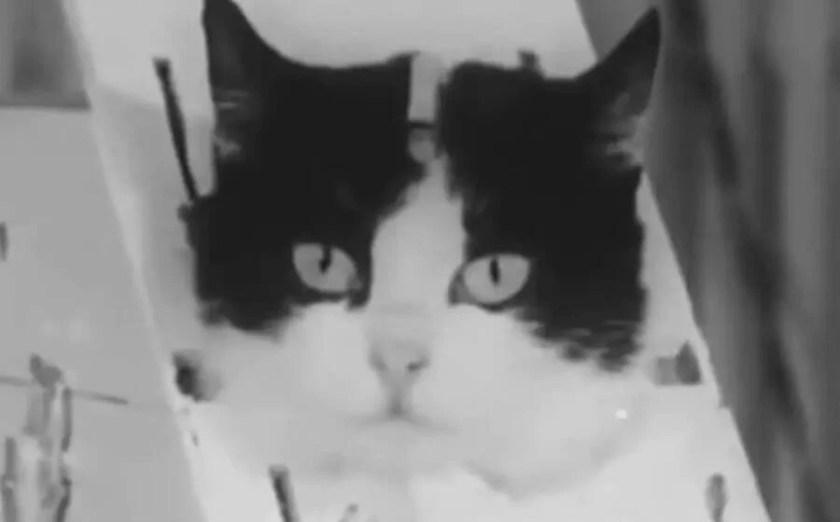
Felicette, the tuxedo cat who was launched into space by the French on Oct. 18, 1963, didn’t even have a name until the French recovered her capsule and took her back for examination.
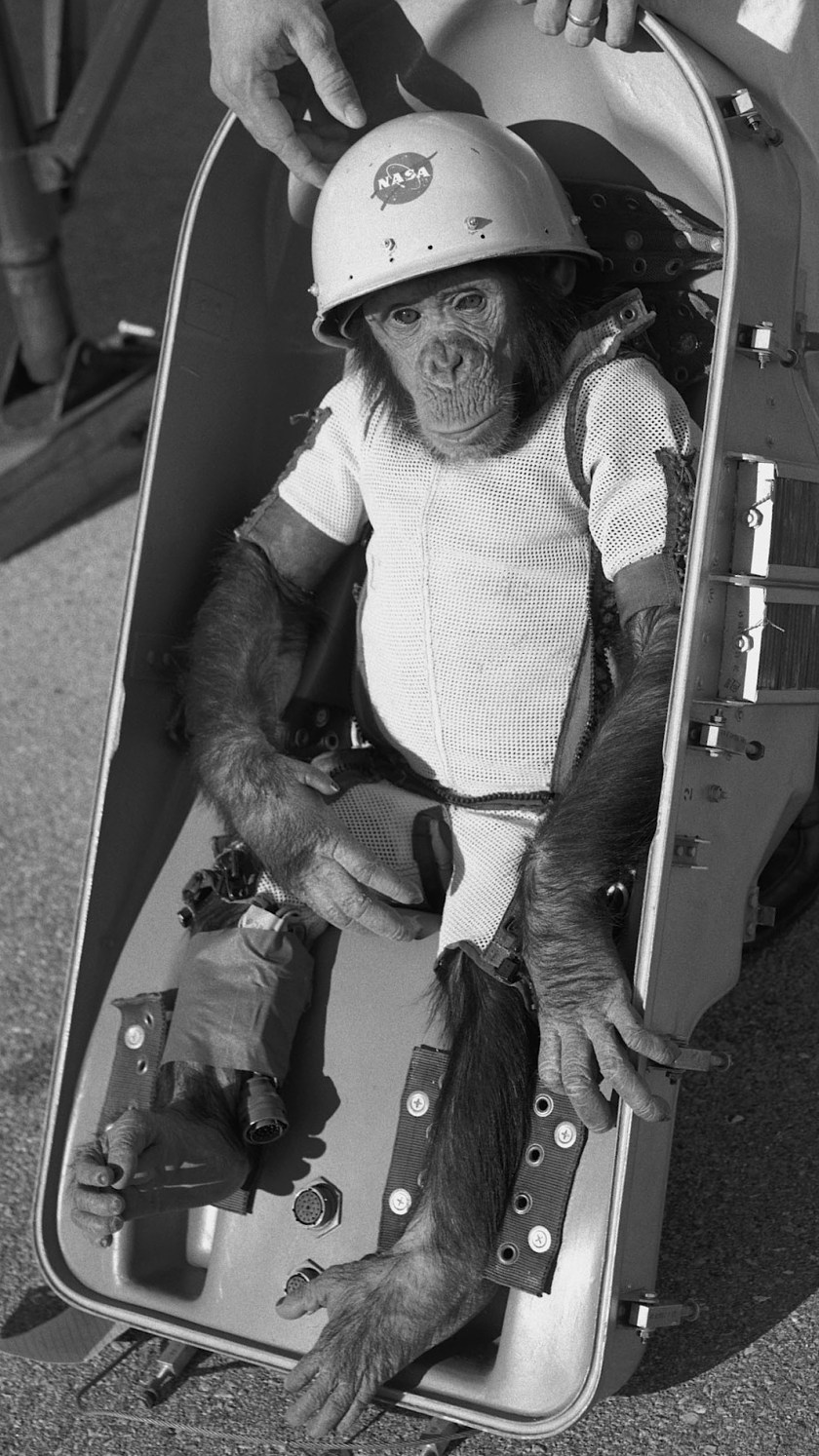
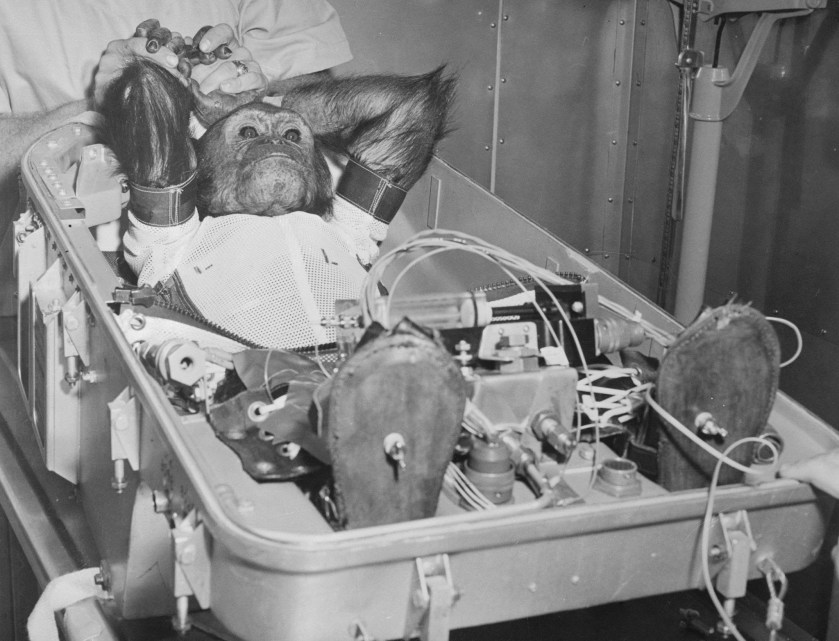
The scientists and engineers in charge of the launch didn’t want to humanize her if she didn’t make it, which was a common practice in space programs. (Ham, the chimpanzee sent into space by NASA in January of 1961, was known as No. 65 until his successful recovery. NASA was worried that a name would make him more sympathetic and lead to bad press if the chimpanzee died during the mission.)
Ham the chimpanzee was little more than a baby. Credit: NASA archives
Despite Felicette’s endurance and successful return, French scientists repaid her bravery by euthanizing her a month later so they could study her brain and learn more about the effects of spaceflight on mammalian biology.
Felicette, like Laika and Ham, was never given a choice. Those animals, with their child-like mental capacity, endured their missions out of a desire to please their human caretakers as much as any natural stoicism they may have possessed.
Would we do the same thing today? Will we repeat those experiments as we set our eyes on Mars?
Consider that the moon is a three day trip, and it’s close enough to Earth’s magnetic field to protect living beings from radiation. Mars is at least a seven month trip if the orbital conditions are right, and there will be no protection from radiation aside from what can be built into the craft. Take that trip without adequate protection and you’re guaranteed to get cancer.
It’s easy to say we wouldn’t make animals our test subjects for a Mars journey, and NASA now has decades of data on the effects of space and zero gravity thanks to the International Space Station.
And yet Neuralink, another company owned by Elon Musk, currently uses monkeys to test its brain interface technology, which allows the primates to operate computers with their thoughts. Those monkeys are forced to endure radical surgery to implant microchips in their brains. The teams working on the technology say suffering by those animals will be worth it as people with paralysis are able to do things with their thoughts and regain a measure of independence, increasing their quality of life.
Likewise, it will probably be an animal, or animals, who will be the test subjects on board craft that first venture beyond the Earth’s protective magnetosphere. Scientists and engineers will do their best to create a vessel that shields its occupants from harmful radiation, but they won’t know how successful they’ve been until the test subjects are returned to Earth and their dosimeters have been examined.
Will an astronaut volunteer for that kind of mission, knowing the “reward” could be a drastically shortened life?
Felicette pictured on commemorative stamps.
Felicette, left, was just one of several cats considered for the launch by French scientists.
To hear Musk and futurists tell it, pushing toward Mars is not just a matter of exploration or aspiration, but is necessary for the survival of our species. Earth becoming uninhabitable, they say, is an eventuality, not an if.
Others point out it’s much easier and wiser to pour our resources into preserving the paradise we do have, and the creatures who live in it, rather than banking on a miserable future existence on Mars where society will have to live underground and gravity, at 0.375 that of Earth, will change the human form in just a few generations.
To put it bluntly, while Musk and futurists look at life on Mars through the rose-colored glasses of science fiction fans, in reality living there is going to thoroughly suck.
If people do live on Mars they’ll never venture outside without a suit, never feel the sun on their skin, never swim in an ocean. They’ll never have another backyard barbecue, watch fireworks light up the sky on the fourth of July, or fall asleep to the gentle rain and crickets of warm summer nights. They’ll never hear birdsong or have the opportunity to see iconic animals like elephants and lions. Every gulp of air will be recycled, every glass of water will have passed through the kidneys of others. There will never be snow. Circadian rhythms will be untethered from the cycle that governed human biology for the 200,000 years our species has existed.
And while there could be a future — if you want to call it that — for people on Mars, there won’t be a future there for the rest of the living creatures on Earth.
As a lifelong fan of science fiction who devours SF novels, counts films like Alien and Bladerunner among my favorites, and is fascinated by shows like For All Mankind, The Peripheral and Star Trek, I understand the appeal of space and the indomitable human spirit that drives us to new frontiers. I just hope we can balance that with respect for the Earth and the animals we share it with. Let’s hope there is never another Laika, Felicette or Ham.
Correction: For All Mankind is the name of the Apple TV series about an alternate history space race. The first reference to the show’s name was incorrect in an earlier version of this story.
A close-up of Felicette’s face. Credit: French government archivesHam the Space Chimp waits for his apple reward. Credit: NASA archives
A young ginger tabby made himself at home at the former Comiskey Park in Chicago, feasting off of ballpark food shared with him by fans.
The Chicago White Sox opened the baseball season on the road, then headed home where they hosted the San Francisco Giants — and a scrappy, hungry stray who helped himself to heaps of stadium food.
The cat appeared in the park for three consecutive nights of the homestand, emerging from a hiding spot in the bowels of the stadium to sidle up to fans eating ballpark grub and meow for them to share. And share they did, according to Block Club Chicago, with fans holding the little guy and feeding him “shredded chicken off the top of their ballpark nachos.”
“He was just super chill and very comfortable roaming the park, like it’s his territory,” White Sox fan Alexis Lopez told Block Club.
The stray, now named Beef, is enjoying his forever home and his doting human servant. Credit: Darren Georgia
The cat, who was “a little scruffy and thin” according to Lopez, took an overly enthusiastic bite of some stadium food and accidentally punctured the skin on her cousin Antonia Denofrio’s finger. Stadium staff treated Denofrio at the park and thought they were in for a thorough search for the kitty, but the night after the White Sox finished their home series against the Giants, the orange tabby “jumped right up onto a security golf cart and was super friendly,” White Sox team photographer Darren Georgia said.
Georgia brought the cat home, got him fixed and examined by a vet and named him Beef. Now they’re best buds.
“He’s outgoing, loves to play and snuggle,” Georgia told The Block. “Just everything you’d hope for in a cat.”
The unicorn of cats
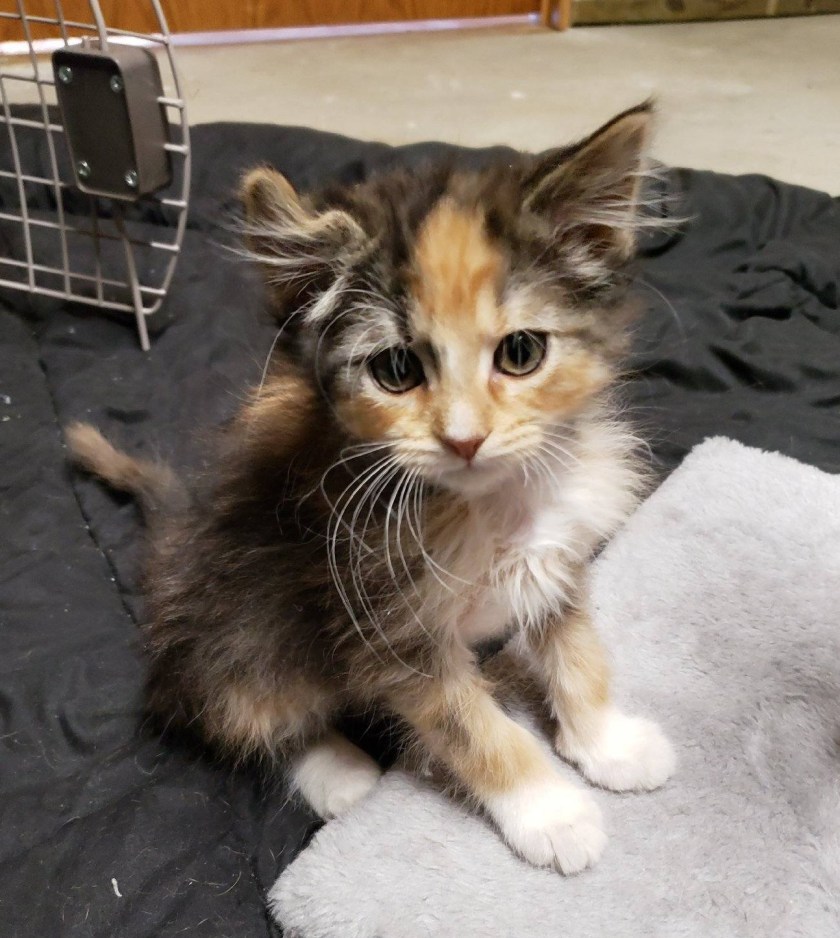
When Alli Magish, a foster for NoCo Kitties in Colorado, took home a mom cat and her five kittens, she realized one of them was incredibly rare: a male calico.
Charlie the male calico kitten is now 11 weeks old. Credit: NoCo Kitties
Magish brought the little guy, now named Charlie, to two veterinarians to confirm, and for all of them Charlie is their first male calico. Only about one in 3,000 calicos are male, the Coloradoan reported, citing statistics from the Cornell College of Veterinary Medicine.
“We will probably get huge adoption fee offers for him, but we want him to go to the best home, and that’s not necessarily the one that could be the highest bidder,” Davida Dupont, founder of NoCo Kitties, told the Coloradoan.
Typical adoption fees for kittens at the rescue are $195, but Dupont says she wants to organize a fundraiser around the little guy before settling on the best place for his forever home. (Shhhh, no one tell Chloe Mitchell.) Since she spoke to the Coloradoan on April 1, NoCo Kitties has received a flood of adoption applications, and in a follow-up Facebook post Dupont says she hopes some of them will consider adopting the many other lovable cats at NoCo who are looking for homes.