The Elephant Queen Is A Love Letter To Some Of The Most Extraordinary Creatures On Earth

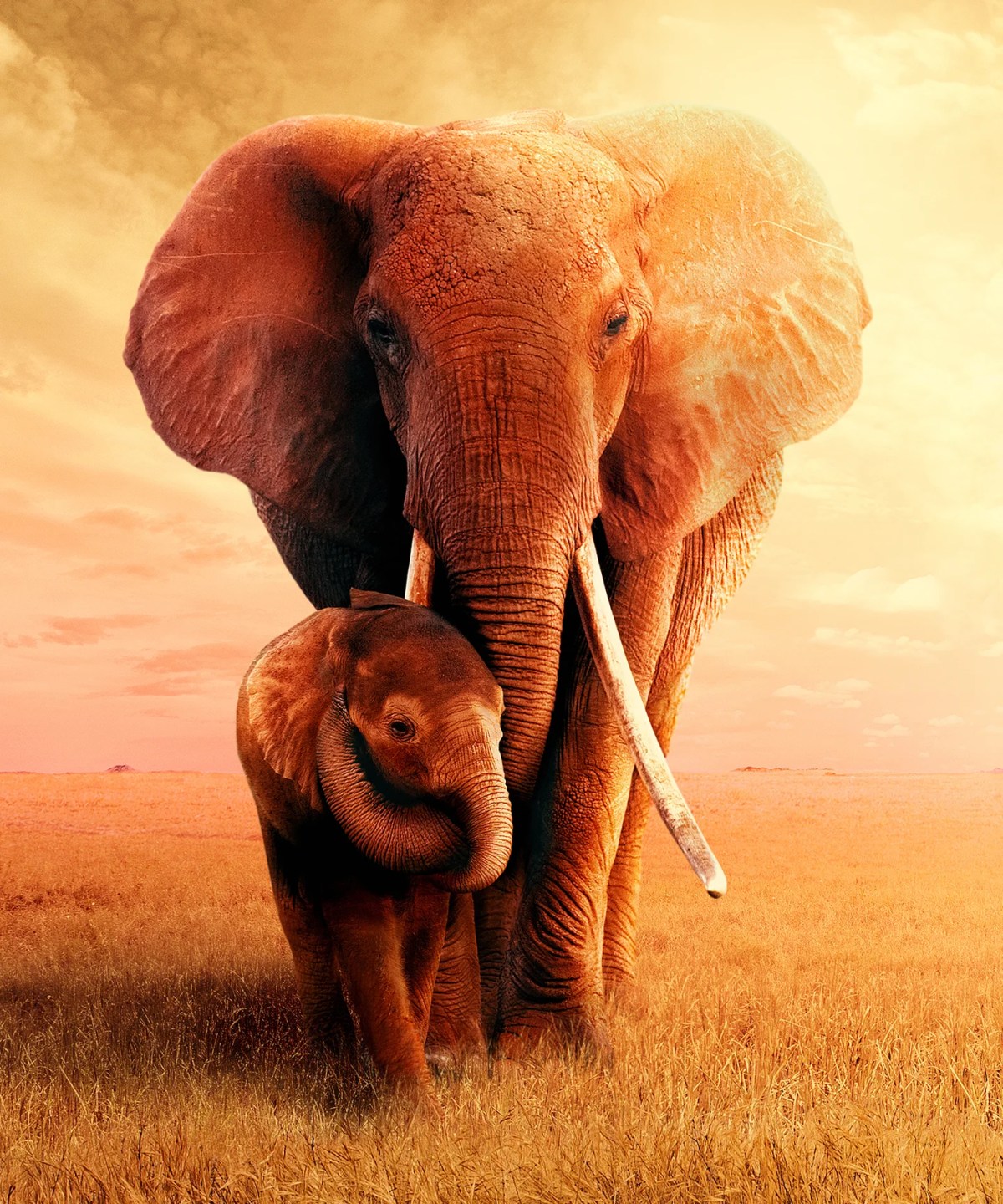
The filmmakers spent four years with matriarch Athena and her herd.

Athena learned the seasonal migratory path from sanctuary to sanctuary from her mother, who in turn learned from her mother, in an unbroken chain that goes back as long as elephants have walked the savanna we call the Maasai Mara.

Every bend, every life-sustaining water hole, every spot where the most nutritious plants grow — and especially the final resting places of her relatives, those who didn’t survive the long journeys to water and shade during drought seasons.

The 50-year-old matriarch, one of the Earth’s last “super tuskers,” has seen her family through so many difficult times that the members of the herd don’t question her even when her decisions could mean life and death for them.

She is their matriarch, and their trust in her is absolute.

During times of drought, all animals converge on the same watering holes. Credit: Apple TV

Athena is also the herd’s protector, which means being wary of humans is her default. It has to be, since humans have poached her kind to the brink of extinction to feed the insatiable Chinese ivory trade.

Filmmakers Victoria Stone and Mark Deeble spent four years with Athena and her herd while filming The Elephant Queen, and earning Athena’s trust was a laborious process.

At first, the wise matriarch wouldn’t let the documentary team anywhere near her family. That slowly began to change as they showed her they meant her no harm.

“But we could see that with her herd, with her family, she was a really calm, beautiful, temperate matriarch,” Deeble explained after a film festival screening of the documentary “And we would just spend time with her.”

Still, the filmmakers had to pass a test before Athena extended her trust:

‘Over the course of several weeks, Athena had allowed the small crew closer and closer, until they were about 40 meters from her. One day, Athena walked away to let her calf stand between her and the crew. That’s a rare occurrence for a mother.

“At that stage two things can happen,” Deeble said. “Either she can realize that it was a mistake, and if we’re in the middle of them we’re going to get trampled, or, and what I like to think happened, she was just testing us. Because after a while, she made a very low rumble and the calf looked up, and she wandered very calmly around the front of the calf. And from that day on, she allowed us amazing access.”’

The Elephant Queen first finds Athena’s herd during a time of plenty, when water and food are abundant, and the herd’s babies — curious Wewe, a boy, and little Mimi, a female and the youngest member of the herd — get to splash around and explore their new world.

Satao, a male “super-tusker,” arrives at the watering hole for hydration and to find a mate. Credit: Apple TV

But every year there comes a time when the water hole starts to dry out and the herd must begin a long march spanning more than 100 miles to reach a more reliable source of water.

The year Stone and Deeble began following the herd, the drought was so severe that Athena made the difficult decision to march for a far-off sanctuary, the closest known permanent water hole fed by an underground spring.

It’s a long, exhausting journey, and newborns can’t make it, so Athena is forced to delay their departure for as long as she can to give Mimi and Wewe enough time to feed and grow stronger.

Elephant calves are dependant on their mothers’ milk for two years. Credit: Wikimedia Commons

The gestation period for African elephants is about two years, and the entire herd is protective of the babies. The adults cooperate to shield them from predators and the sun, using their bodies to do both. They’re also extremely cautious around hazards like rapidly drying mud holes, which can trap young elephants.

The Elephant Queen’s stars are its titular species, but the documentary does an outstanding job not only showing us the other animals who inhabit the elephant kingdom, but also making clear the many ways those animals depend on elephants for their survival.

From geese, frogs and terrapins who rely on elephants to dig water holes, to dung beetles for whom elephant waste is a bounty, to kilifish whose eggs hitch a ride on the massive animals toward the next water source, the entire ecosystem is balanced on the broad backs of the gentle giants.

As narrator Chiwetel Ejiofor (Doctor Strange, The Martian, 12 Years A Slave) notes, elephants are tactile creatures, and when they nudge a terrapin or knock a frog off a tree branch, it’s curiosity, not malice, that motivates them. They’re herbivores, despite their enormous size, and gain nothing from harming other creatures.

Credit: Wikimedia Commons

It’s impossible to watch a documentary like this without looking into the eyes of elephants like Athena and wondering about the intellect behind them, the thoughts and emotions that motivate their actions.

In one scene, as Athena leads her herd through a parched landscape with nothing but dust and dead trees in every direction, she stops. There’s no water or food. There’s only an elephant skull, the remains of a family member who died on one of the treacherous journeys toward refuge during drought season.

The elephants crowd around the skull, gently running their trunks along its tusks the way they do every day to greet one another. Even with the body long since decomposed, with nothing but a skull remaining, they recognize one of their own.

Some will dismiss the idea that the elephants are mourning, claiming that ascribing emotions to animals is anthropomorphizing them. But if they’re not mourning, what are they doing? If they’re not remembering an individual they loved, why would they stop when it’s crucial to find water and food?

Indeed, the only other time Athena calls a halt is when one of her pregnant sisters goes into labor.

Credit: Wikimedia Commons

Documentaries like The Elephant Queen don’t exist solely for entertainment value. Despite intense efforts to protect elephants, poachers still kill an estimated 20,000 each year.

Just 100 years ago, 10 million elephants inhabited almost every corner of Africa. A 2016 study put their number at 415,000, and while there have been successes in conservation efforts, it’s difficult to ascertain whether they balance out the relentless poaching and habitat loss.

The Elephant Queen acknowledges threats to the continued existence of elephants, but doesn’t dwell on them. There’s good and bad to that: in some ways it’s a missed opportunity to galvanize viewers, but it also ensures the film is family friendly, without gore or violence. The film doesn’t sugar coat the fact that nature is unforgiving, but you’re not going to see a poacher raid on a herd.

The Elephant Queen is an Apple TV documentary and premiered on the streaming service after a limited theatrical run. I stumbled upon it as a subscriber after it appeared prominently in the app.

And while it was released in 2019, its message is still as relevant today. Whether you’re fascinated by elephants or appreciate wildlife in general, The Elephant Queen is a great example of how powerful documentaries can be, especially in transporting us to real places that exist in our world, but remain out of reach for the majority of us.

Review: Civil War Is A Warning To America

Alex Garland’s latest film is a road trip through the ruins of America as the nation is engulfed in a modern day civil war. It wasn’t so long ago that such a scenario would be unthinkable. Now we wonder if it’s an inevitability.

There’s a moment in Civil War when Kirsten Dunst’s world-weary photojournalist sits down in the ruins of a US industrial park, with tracer fire lighting up the night a few miles away, and turns to Stephen McKinley’s print scribe.

“Every time I got the photo and survived a war zone,” Dunst’s character tells him, “I thought I was sending a warning home: don’t do this. And yet here we are.”

In a movie that works on every level as a warning to the American public not to throw away what we have, what we take for granted, that one quiet moment feels like director Alex Garland speaking directly to the audience, making sure no one can miss the point. Don’t do this.

civilwar08
Dunst, left, and McKinley share a quiet moment in an industrial park as a battle rages a few miles off. Credit: A24

The sad truth is, the United States now seem more divided than at any other point since the original civil war. We’re dangerously close to the abyss, and the people dragging us there are the most ignorant of us. They’re the people who can’t tell you the name of their own congressman and can’t articulate what the three branches of government do (or even what they are), but insist everyone listen with rapt attention as they screech incoherently about politics and demonize those whose views differ.

They’re the people who return the zealots to congress, who populate the extremes and openly fantasize about purging the country of the ideologically impure.

Civil War: Dunst and Spaeny
Kirsten Dunst, left, and Cailee Spaeny in Civil War. Credit: A24

They’ve sworn fealty to ideology, abdicating their responsibility to think about things for themselves. Because, frankly, it’s easier to pick a pundit and an alignment, construct a filter bubble in which they never have to be confronted with a fact they don’t like, and be constantly reminded how they should feel about everything from petty culture war issues to conflicts happening a comfortable distance away. That way everything remains neatly in the abstract, and the consequences are someone else’s problem.

But not this time.

Civil War’s cast is phenomenal, but much of the film’s power comes from seeing the familiar become the horrific. Garland illustrates the banality of evil by taking his characters on a journey through the war-torn east coast, past shopping plazas cratered by rocket propelled grenades, waterways filled with bodies and playgrounds on fire. One highway overpass is vandalized with a spray-painted “Go Steelers!” while the bodies of two Americans sway on ropes beneath it.

Civil War: Go Steelers

In refugee camps in Pennsylvania and Virginia, people who could be our neighbors talk quietly around fires while their kids play with soccer balls and chase each other. The film’s main characters, a quartet of journalists trying to get to Washington, DC (where we’re told presidential loyalists shoot members of the press on the spot), marvel when they ride through one idyllic small town where people walk their dogs and hang out in coffee shops as if the country isn’t tearing itself apart.

It’s only when they stop to talk to the proprietor of a small shop that they realize the illusion of normalcy is maintained by an army of sharpshooters keeping watch from the rooftops.

Garland wisely stays away from the specific ideological reasons for the civil war in favor of showing us the fallout.

The president is on his third term. He’s authorized airstrikes on fellow Americans, imprisoned dissidents, put a bounty on journalists and hasn’t offered the public anything more than teleprompter-fed remarks in more than a year. But his authoritarian grip on power is finally fractured when two fed-up coalitions of states break away from the union. The more powerful of the two, the so-called WF (Western Forces), is extremely well-equipped: a shot of one of their camps shows F-35 Raptors, mechanized infantry and heavy lift helicopters.

civilwar01
Dunst’s character in a Western Forces camp. Credit: A24

These aren’t people living on the margins of society, armed with civilian versions of AR-15s. They’re US military, entire divisions defected in opposition to Washington with all the firepower and logistics capacity that entails. Separately, another secessionist coalition led by Florida is making its way up the east coast, seeking to turn the Carolinas and other states to their cause.

The noose is tightening around the president’s neck, even as he insists “the greatest military campaign in American history” under his command has defeated the secessionists, like Baghdad Bob in the Oval Office.

Civil War: Nick Offerman
Nick Offerman plays the authoritarian, three-term president who has ordered airstrikes on American citizens and had journalists executed. Credit: A24

As the Western Forces and Florida Alliance push toward D.C., there’s a renewed sense of urgency in symbolism. The president, Wagner Moura’s Joel says early in the movie, will be “dead inside a month.” Both coalitions are intent on reaching Washington and ending the war on July 4th.

“The optics,” Joel tells the other journalists, “are irresistible.”

Thus, the reporters decide to go after “the only story left,” which is to attempt to interview and photograph the president before he’s deposed or killed, despite the very real possibility they’ll be executed on the White House lawn before they can ask a question.

The film’s central characters are Dunst’s Lee Smith, a celebrated photojournalist who has seen it all, Moura’s Joel, the reporter who is partnered with Lee, McKinley’s Sammy, a reporter for “what’s left of the New York Times,” and Cailee Spaeny’s Jessie, a green but fearless 23-year-old who wants to be a war photographer like Lee.

Lee and Jessie meet at the beginning of the film in Manhattan, where both are photographing unrest as people crowd a disaster relief tanker, hoping to fill their containers with water. The fact that one of life’s most essential needs is no longer guaranteed, in New York City of all places, is just the first sign of how bad things have gotten.

Jessie moves in, snapping away as the crowd pushes toward the tanker and NYPD officers try to maintain order. When several people rush the tanker, Jessie gets hit in the face by someone swinging a bat.

Reeling, she stumbles away from the crowd, and Lee immediately mothers her, taking the young woman a safe distance away. She takes off her bright yellow press jacket and gives it to Jessie, then tells her: “If I see you again, you’d better be wearing Kevlar and a helmet.”

Civil War: Cailee Spaeny and Kirsten Dunst
Spaeny, left, and Dunst. Credit: A24

They do meet again, the next morning. Lee is surprised to see the younger woman in the back seat of their truck next to Sammy. Furious, she pulls Joel aside. He explains that Jessie had approached him late the previous evening, asking to tag along with him, Lee and Sammy on their trip to DC.

Joel argues that Lee was Jessie’s age when she began her career, but he’s not acting out of the kindness of his heart. He is a man, Jessie is a beautiful young woman, and he has ulterior motives.

Lee’s mouth twitches in disapproval. She sees this fresh-faced, naive 23-year-old, and sees herself before she’s become jaded from a career of documenting humans doing horrific things to each other.

Civil War would be a road trip movie, if road trip movies illustrated camaraderie by shared trauma. Pockets of violence are everywhere. Some involve presidential loyalists fending off advance elements of the Western Forces, but some are civilians who see an opportunity to kill, torture and pillage with impunity.

Dunst is magnificent as Lee, wearing the war photographer’s trauma like armor, her disgust with humanity apparent in her tired eyes. McKinley is the old-school print scribe who can’t quit, even as his body fails him.

“You’re worried I’m too old and too slow,” he tells Lee and Joel early in the film as they drink in the lounge of a Manhattan hotel, imploring them to let him accompany them south to D.C.

“You aren’t?” Lee answers.

“Of course I am,” he admits. “But are you really going to make me explain why I have to do this?”

Civil War: Wagner Moura
Wagner Moura’s Joel screams in frustration and rage after a particularly traumatic scene. Credit: A24

Here again, so much of the movie’s power is showing America in a state we only see from a distance through the dispatches and footage of war reporters. As the three of them sip their drinks in the hotel bar, waiting for their stories and photos to transmit over glacial wifi, the power drops.

“That’s every night this week,” Lee sighs.

“They’ll switch to the generators,” Sammy says.

They’re not in the shell of a formerly grand hotel in Baghdad or Damascus, relying on juice from old car batteries. They’re in New York, America’s greatest city, the cultural, media and finance capital of the world, a metropolis that operates on 11 billion watt-hours a day. A devastated, eerily quiet New York which resembles the early days of the COVID lockdown, yes, but New York all the same.

Civil War
A sniper is pinned down by a civilian who has taken advantage of the lawlessness and chaos to kill fellow Americans. Credit: A24

After watching Civil War, I was disheartened to see the usual rage and incrimination in discussions about the film. Depending on their political backgrounds, people are sure Garland — a native and citizen of the UK — is “a lib” or “a MAGAtard.” Opportunities for thoughtful discussion are derailed in favor of the usual talking point regurgitation.

But the hope is that the sensible are the silent majority, that we aren’t so fattened by domestic stability, security and a feeling of invincibility that we can’t see what’s right in front of our faces. We would do well to remind ourselves that the scenarios we experience only in the safety of fiction still happen all over the world.

As you read this, people are dying of exhaustion and suffering pointless deaths in North Korean and Russian hard labor camps so brutal that we don’t even have a way to place them in context. The people of Haiti are terrorized nightly by ultra-violent gangs who have filled the power vacuum, raping and executing with impunity. Gaza has been bombed to rubble, and its rubble has been bombed to sand. People hoping to escape abject poverty embark on the hard journey to America only to find themselves sold into sexual slavery. Men and women in Asia, desperate to find jobs, arrive at what they think are interviews only to be kidnapped and spirited away into compounds in lawless Myanmar, where they’re forced to sit in front of screens for 20 hours a day running “pig butchering” romance scams on lonely American retirees. If they try to flee, they’re shot.

And just yesterday, a man walked up to a golf course in Palm Beach county, pointed the muzzle of an AK-47 through the chain link fence and tried to assassinate a major party American presidential candidate — the second assassination attempt in three months.

The people who most need to hear Garland’s message are those least likely to heed it, but we can hope. Reality has a funny way of obliterating fantasy, and it’s better for all of us if our delusional countrymen don’t find out the hard way that war is neither fun nor glorious.

Let’s hope Civil War remains a movie, and not a prescient preview of things to come.

Civil War is currently streaming on HBO Max and is available to rent via Apple, Amazon and other online streaming platforms.

Header image: Western Forces units fire rocket propelled grenades at White House loyalists using the Lincoln Memorial for cover. Credit: A24

buddy_thebuddinesetiger

If you like reading content from PITB, please consider whitelisting us in your browser’s ad block. All proceeds from PITB go toward Buddy’s turkey fund.

This Is The Zoo Of My Dreams!

Have you ever wanted to own or design your own zoo?

Visitors to Buddy’s Tropical Paradise are greeted by friendly staff who man the entrance, a broad vertical garden shaped like an arch that straddles the main path leading inside.

When they walk through the gate a new vista opens up before them: tiered tropical gardens, waterfalls, and wide boulevards lined with palm trees and flowers. They hear the rumble of big cats calling to each other in the distance and monkeys shrieking as they fling themselves from branch to branch.

Buddy's Tropical Paradise
Welcome to Buddy’s Tropical Paradise!

A monorail carries passengers above, its tracks looping over animal enclosures and threading tunnels that emerge amid the terraced jungle, eateries and souvenir shops.

And straight ahead, the first exhibit: a sprawling habitat occupied by jaguars who are enjoying some yums and will probably have a nap in a few minutes.

Buddy’s Tropical Paradise doesn’t exist in the real world, of course. It’s my first attempt at fully functional, guest-attracting park in Planet Zoo, a simulator that allows you to do practically anything you can think of.

You can design your own habitats, enclosures, buildings and scenery. Fancy a monorail that laps the entire zoo? You can do that. Picturing a 1940s style Tarzan-themed jungle boat ride where visitors can see caiman, capuchin monkeys and jaguars up close? Start carving up the river, my friend!

Bengal Tiger
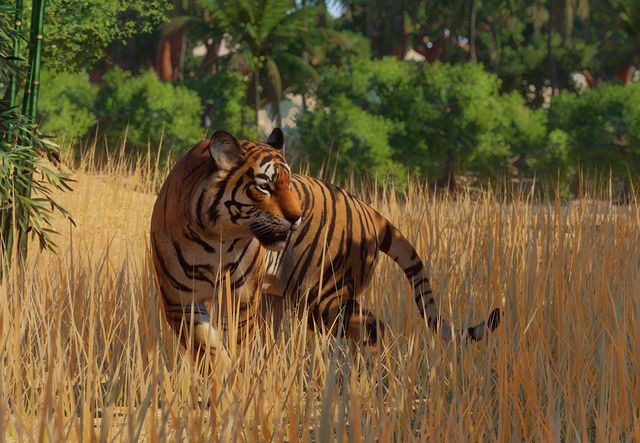
A Bengal tiger stalking the tall grass in Planet Zoo.
Jaguars
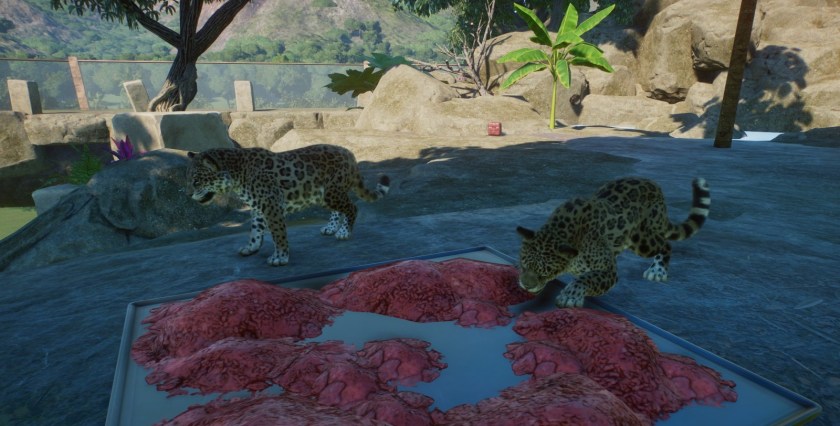
Lunch time in the jaguar habitat, followed by the all-important nap time.

As the zoo’s architect, you’re responsible for everything. You’ll need veterinary facilities, animal quarantine, keeper huts. You’ll need to staff your park with veterinarians, keepers, security officers, maintenance staff and mechanics.

And don’t forget the vendors to run the souvenir shops and man the food stalls, where your guests can grab hot dogs or cool off with slushies on a hot day.

A suitable home for your animals

Designing a habitat is about a lot more than reserving space for your animals. You’re tasked with picking the right barriers, mindful of which species can climb or leap great heights. A good habitat should reflect the animal’s home in the wild with appropriate flora, temperatures the species thrives in and a feeding system that mimics the way they’d naturally obtain food.

Elephant shower
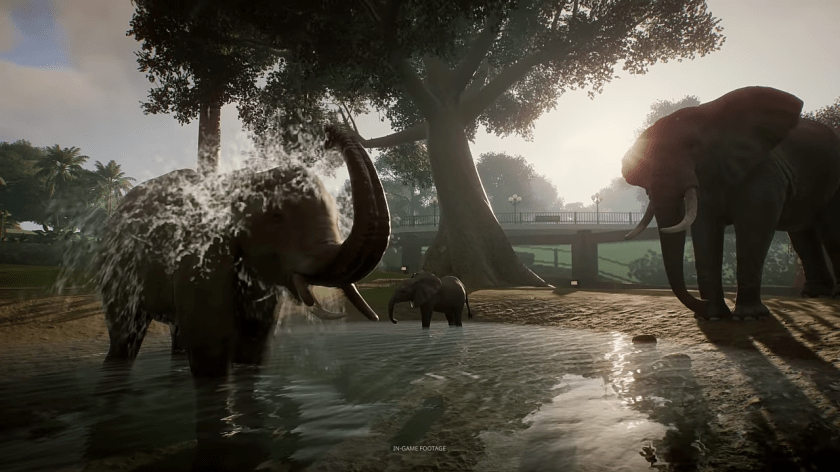
Elephants cool off in their enclosure in Planet Zoo. Every habitat must be designed with the right atmosphere, flora, terrain, shelter and enrichment appropriate for the species it houses.
Orangutan habitat
A wide view of my orangutan habitat. Two orangutans are at the base of the stone steps in the distance.
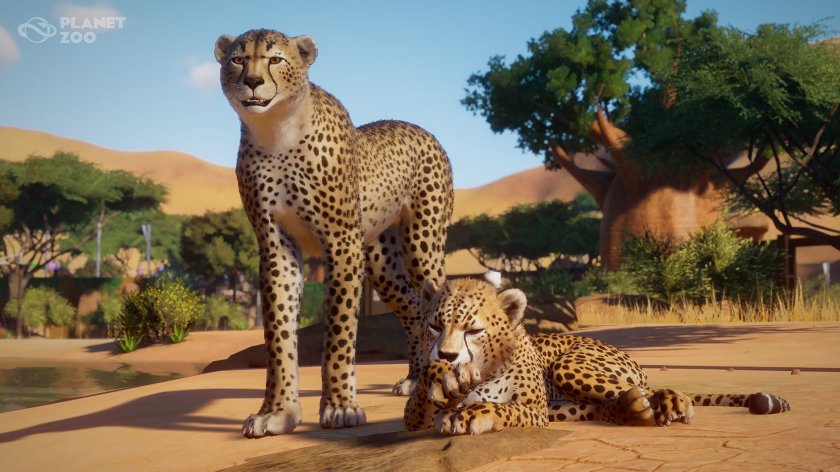
Cheetahs
Cheetah sisters.

Then there’s enrichment. Trees for your monkeys to climb, ponds for your tigers to take a dip, bushes for your elephants to strip. Different species enjoy different toys and challenges. An ice block with meat in the middle would hit the spot for carnivores on a hot summer day, but your pandas will want bamboo.

Designing habitats and getting them just right is not only fun, it’s an intuitive way to learn about the needs of individual species and how they live.

The leopard learning incident

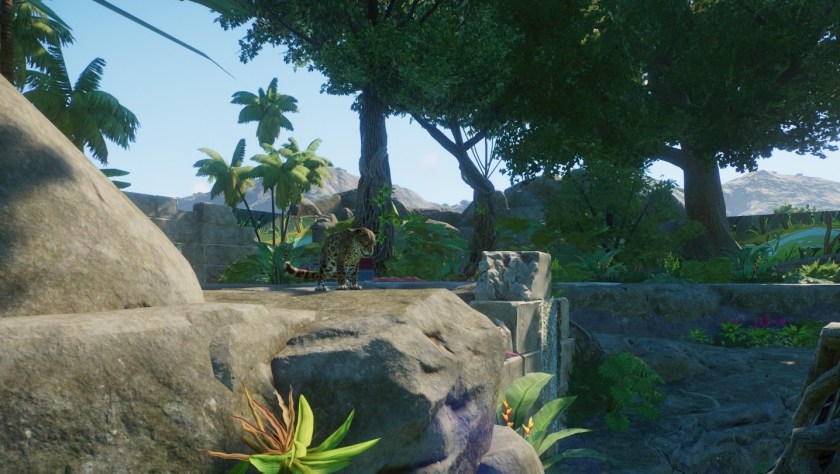
My first stab at building a leopard enclosure was a disaster. It looked pretty enough with its Hindu-inspired temple architecture and pond. There were plenty of scratching posts and trees that could withstand claws.

I installed a sprinkler to help the big cats cool off, designed a series of raised platforms for them to climb, and scattered enrichment items all over the habitat. The leopards had balls to bat around, boxes to sit in, rubbing pads, logs and rocks to climb, and plenty of cover and shade.

But when I had the leopards brought into the zoo, through quarantine and into their exhibit, I realized you can’t just design a home for animals from an aesthetic perspective. I’d used several plant and tree species that weren’t native to leopard habitats, the terrain was wrong and I hadn’t paid any mind to ambient temperature.

Making those mistakes was truly educational. When your animals aren’t happy in Planet Zoo, protesters show up, and it’s up to you to read the alerts about where you went wrong and how to remedy your mistakes. It’s an intuitive and fun way to learn about each species and the environments they thrive in.

The escaped jaguar

I’m still learning the ropes, although I do have a basic knowledge of the way the game is designed thanks to some time playing Frontier’s theme park building game, Planet Coaster. The first time I tried to build a jaguar enclosure, I forgot to wall off a viewing cave with protective glass, which my guests did not appreciate.

Even though jaguars don’t like to confront humans, a big cat is a big cat, and the game sent me urgent warnings as people ran for the exits. When I found the escaped jag, he was lounging not far from his enclosure, watching people freak out.

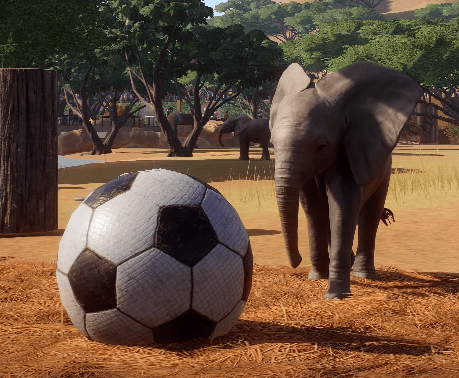
Elephant and ball
Enrichment is a key aspect of habitat design. Toys, puzzles, obstacles, climbing platforms for arboreal species, ponds for animals who like to get wet — they’re all necessary to keep animals healthy and happy.

In real life it’d be a disaster, but I was able to revert to a previous save, make sure the viewing cave was sufficiently protected, and this time around I placed only two jaguars — a male and a female — in the large enclosure.

After a while, while I was tinkering  with an exhibit meant for capuchin monkeys, the game sent me an alert: the female jaguar was pregnant! She gave birth to two energetic, curious cubs who are currently having fun chasing each other around the enclosure and going for dips in their pond.

Night view
Part of the main boulevard in Buddy’s Tropical Paradise, viewed at night. Players are responsible for everything you see here — lighting, shops, flowers and plants, benches, waste baskets and more.
Asian section
Shops and a monorail station in an unfinished Asia-themed area of the zoo.

As in real life, the game has you source animals from an international pool, with information on breeding and genetics so you can contribute to conservation. When you adopt animals, their first stop is the veterinary facilities for examination, then quarantine. When they pass quarantine, you can have your staff release them into their enclosures.

It took me several hours to familiarize myself with the basics, design an entrance and a main boulevard for the guests, create some tiered gardens with eateries and shops, and get my jaguar and orangutan exhibits up and running.

My monorail currently runs out of track a quarter of the way through the park, and my river boat ride looks pretty cool, with dense jungle, towering trees and the ruins of Mayan temples not far from shore, but completing it will require appropriate barriers to keep the animals in as well as building out more scenery.

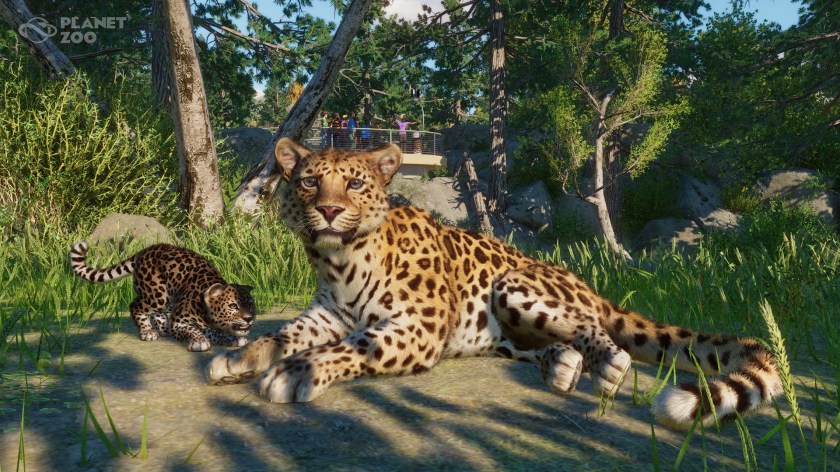
Jaguar habitat
A jaguar in her habitat.

I’ve got my sights set on an elephant exhibit next. It will be necessarily huge, so it’s good to reserve the land early and plan smaller exhibits and facilities around it. I’d also like to put the elephants, lions, zebra, giraffes etc into one Africa-themed section of the park, while the tigers, giant pandas and snow monkeys will be housed in an Asia-themed section, with buildings that reflect the architectural styles of countries like Japan and China.

There are also aquatic exhibits, animals for your own reptile house and aviaries. Those enclosures are more complex than the relatively straightforward orangutan exhibit, for example, so I’ll have to spend some time figuring out what makes a good home for peacocks, sharks and komodo dragons.

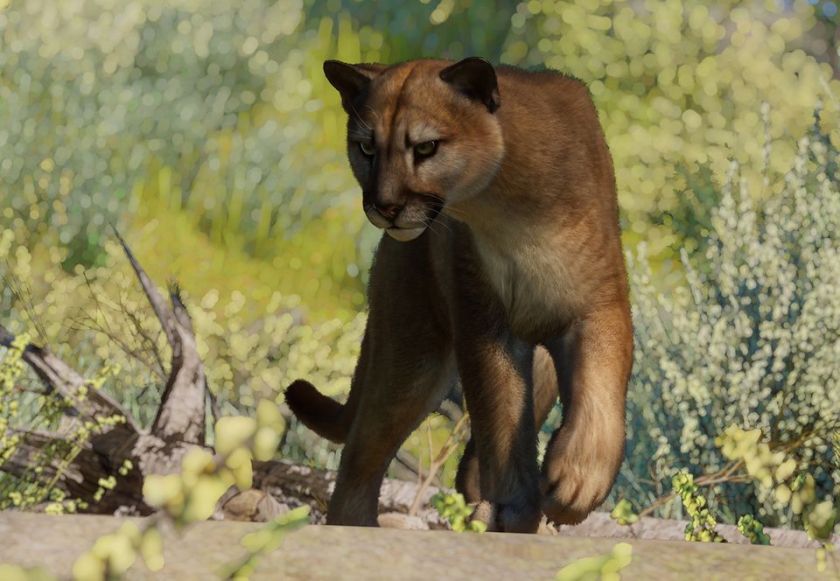
So far I’ve resisted the temptation to make one giant felid park, with snow leopards, pumas and cheetahs joining the tigers, lions, jaguars and others. Of course I did name it Buddy’s Tropical Paradise, so I may be forced down the all-cat road if Bud gets his say.

Cougar

Planet Zoo is not a traditional video game. There are no winners or losers, and there’s no “end state” unless you intentionally include one.

It’s more relaxing and much slower-paced than your typical game, and it’s a great feeling when you’ve managed to take something from your imagination and perfect the design. When you want to check your progress or just admire your own work, you can set the camera to follow guests and watch as people stroll through your zoo, taking in the sights and sounds.

In that sense it’s more like a virtual model train set or living diorama. You can load up the game and tinker with your zoo when you’ve got a spare 15 minutes, or spend a few hours getting absorbed in the finer details of how to keep pangolin and red pandas happy.

Planet Zoo is appropriate for all ages, although its depth and complexity would probably be a lot for younger kids. In that case, it’s probably best to have an adult guide them so they understand the game is built on interlocking systems: exhibits need power and water, shops need staff, veterinary surgeries need veterinarians and so on.

It’ll have enormous appeal to kids who enjoy Lego, Minecraft and other building games, so if you’ve got a little builder in your life, this could be a good fit. But make no mistake, there’s a lot here for adults to enjoy too.

PITB verdict: Four out of five paws!

Paw Rating

The only thing keeping Planet Zoo back from a five-paw rating is the DLC (downloadable content) scheme, which requires users to pay extra for certain “packs” containing extra animals, scenery pieces and scenarios. That’s a problem plaguing the larger video game industry, but if you wait for a sale, the normally $44.95 game can be had for as low as $11.24 on Steam. DLC is likewise discounted. Steam’s summer sale is a great opportunity to get games like this for a fraction of their normal price. This year’s summer sale is scheduled for June 27, though it’s possible Planet Zoo could be put on sale before then as well.

PITB Reviews: Kingdom of the Gods

Netflix’s Korean period drama is soaked in political intrigue, action and lots of blood. It also holds a mirror up to today’s pandemic and how our leaders are handling it.

Just when it seems like the zombie genre has run its course, a handful of visionary Korean storytellers come along to remind us there’s still life left in the undead genre.

First there was 2016’s record-setting, multiple award-winning Train to Busan, a film about an overworked father taking his young daughter to her mother’s house in the titular city just as a zombie plague tears human civilization apart.

Together with a core cast of affable characters — including a pregnant woman and her overprotective husband, and members of a youth baseball team — dad and daughter try to survive in a uniquely claustrophobic setting where simply running from the undead isn’t an option. Train to Busan wasn’t just a hit for its horror and action elements — the film packs a surprising amount of social criticism into its one hour and 58 minute run time, turning its lens onto modern Korean society and, by extension, modern life around the globe.

The movie has a 94 percent fresh rating on Rotten Tomatoes and sparked a bidding war for its US rights. A remake set in the US is currently in production by New Line.

Then there’s Kingdom, a Netflix series also called Kingdom of the Gods in Korean, that takes a zombie plague and drops it over a story about political intrigue and power struggles in the Joseun feudal era.

The series picks up at the beginning of the 17th century, when the kingdom of Joseon is three years removed from the second of two brutal Japanese invasions. Poverty is rampant, the common people are starving and the queen consort’s Haewon Cho clan has consolidated power, effectively insulating the king from his closest advisers, friends and family.

The country is desperate for leadership, but the king has disappeared after falling ill with smallpox.

His son, Crown Prince Lee Chang, tries to intervene and find out what’s happened to his father, but he’s repeatedly stopped by the pregnant Queen Consort Cho, who refuses to allow Chang into the royal palace.

jeoha
Jeoha: Crown Prince Lee Chang, wearing the distinct dragon robes of Joseon kings and crown princes, tries to gain access to the royal palace to see his ailing father, the king.

Chang is in an extremely precarious situation: Although he’s the Crown Prince and the king’s beloved only son, his mother was a concubine. If Queen Consort Cho gives birth to a son, the boy will be considered the true heir and Chang will be hunted down and executed so there can be no competing claims to the throne.

With the king missing, Crown Prince Chang knows his time is limited and if he doesn’t act, he could be arrested and put to death by the queen’s orders at any moment.

So Chang and his bodyguard/friend Mu-yeong devise a plan to steal the king’s patient journal from the royal palace at great risk to themselves. When they find bizarre entries about doctors administering a “resurrection plant” — and no subsequent entries about the king’s health — they set off south in search of the king’s physician, the one man who can tell them what really happened to the king.

What follows is a spectacular adventure fueled by gorgeous cinematography, an energetic cast of actors who go all-in on the premise, and a historically accurate look at Korea as it existed under a dynasty that lasted for half a millennia.

kingdom01
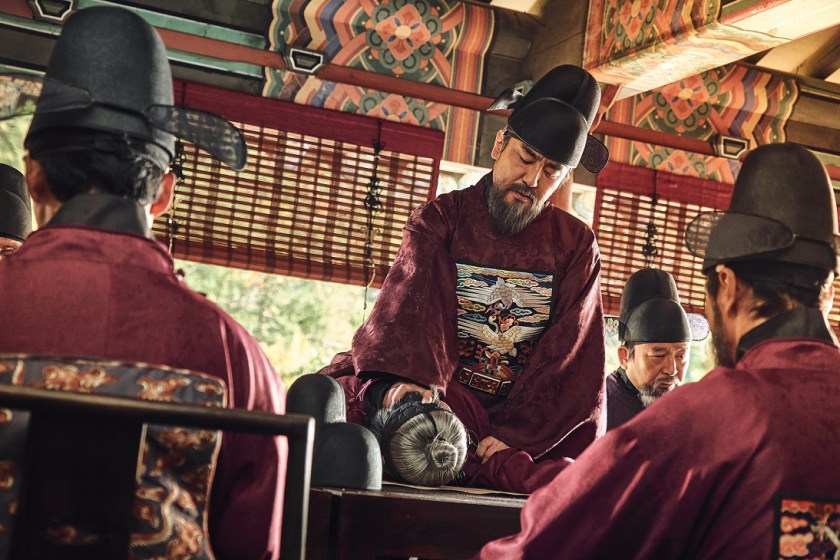
Ryu Seung-ryong plays the scheming top minister Cho Hak-ju, father of the queen consort. The double-swan embroidery on his robe indicates his status as a powerful government official. Credit: Netflix

The zombie plague itself may be the stuff of George A. Romero’s nightmares, but the attention to historical detail in Kingdom is second to none, from the costumes to the historic palaces and the strict adherence to tradition among Joseon’s bureaucrats.

It turns out the real leaders of Joseon did have many of the same dilemmas their counterparts on the show do: Kingdom’s author was inspired by historical accounts of an unprecedented deadly plague that swept through the Korean peninsula after the second Japanese invasion, piling fresh misery onto a population already reeling from Japanese invasions and hunger.

The social order compounded the misery for those at the bottom. The Joseon dynasty was marked by strict divisions between social classes, making traditionally aristocratic societies in the west look almost like pleasant meritocracies by comparison.

Everything a person wore — robes, hats, embroidered designs on their chests and backs — were indicators of class, rank and occupation. Government ministers, who were nobles, dressed in fine silks with intricately embroidered rank badges in animal motifs.

Peasants wore rags and straw hats, while the more fortunate among them wore modest clothes.

Nepotism and corruption were rampant, and the nobles, ministers and administrators who held power saw their positions as conferring privilege, not responsibility.

When a group of aristocrats and government ministers of one region take the last barge out of a doomed city, leaving thousands of vulnerable commoners behind to be eaten and turned by the tidal wave of undead, it seems unspeakably cruel and cowardly until you realize that this is a feature of the society, not a bug.

b855c2653317f7948c8744edc4495433
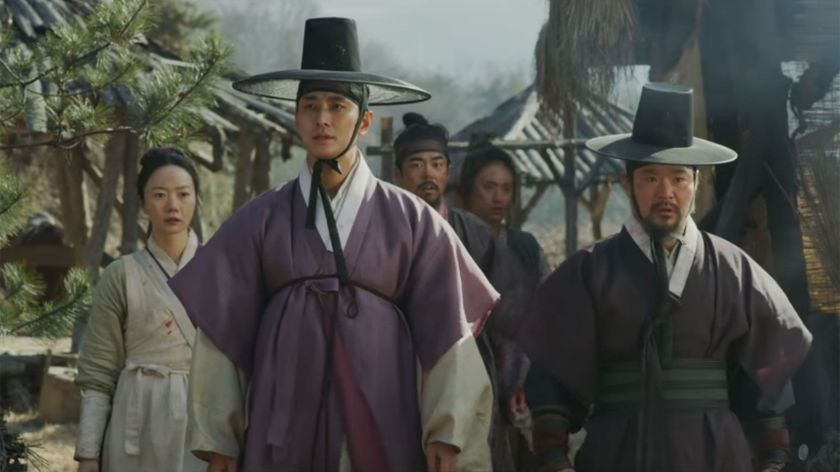
Ju Ji-hoon, center, as Crown Prince Lee Chang, with Bae Doona, left, as the physician Seo-bi and Kim Sang-ho, right, as Chang’s trusted bodyguard Mu-yeong.

When the aristocrats abandon peasants to the zombies, Crown Prince Chang and Mu-yeong risk their lives gathering a small force to protect the people and usher them to the safety of a walled stronghold.

Later, when a group of villagers bury a group of undead, unaware that they’ll rise at sunset and trample the nearest towns, the Crown Prince and his followers head out just before dusk to stop them, knowing they’ll be outnumbered and may not return.

The Crown Prince’s many kindnesses to peasants and children, and his willingness to risk his own life to protect them, draw the notice of characters who become key allies — including a member of the legendary Chakho tiger hunters, and Lord Ahn, a military hero and governor credited with expelling the Japanese during the invasion three years prior.

Crown Prince Chang set off initially to solve the mystery of the king’s disappearance and to protect himself from the scheming Haweon Cho clan, but as he sees the poverty, desperation and vulnerability of his people first-hand, he dedicates himself to a more pressing and noble cause in protecting the people of Joseon from the seemingly unstoppable plague and starvation.

In that effort, he unites people of different classes and backgrounds who fight fiercely and loyally for him, seeing hope for a brighter future if he survives and becomes king.

MV5BOTEwODg0NjU2OF5BMl5BanBnXkFtZTgwNzc4ODYwNzM@._V1_
The physician Seo-bi, played by Bae Doona, attends to a man’s wounds.

The show never misses a chance to show social disparities: The upper classes do everything they can to protect themselves, everyone else be damned. They hide behind walls and ignore thousands of commoners — including women and crying children — who pound on the gates, begging to be let in. They abandon the peasants, and in many cases count on the lower classes serving as a human shield to allow the upper classes to escape danger.

“Are you sure this is okay?” one minister asks his sycophantic assistant as they take the last barge out of a doomed city, leaving throngs of peasants on the docks.

“You and the other nobles are the backbone of the city!” his assistant assures him. “You must survive so you can rebuild.”

As a result, the first waves of undead are the people on the lowest rungs of society. As the virus spreads to another city, a group of confused aristocrats can’t believe what they’re seeing.

“Those peasants are attacking nobles!” one incredulous man in ornate clothing says as undead in rags storm through Dongnae (modern day Busan).

Peasants attacking the upper class was unthinkable in Joseon, and by the time the aristocrats in that scene realize there’s something very wrong, it’s too late.

Kingdom
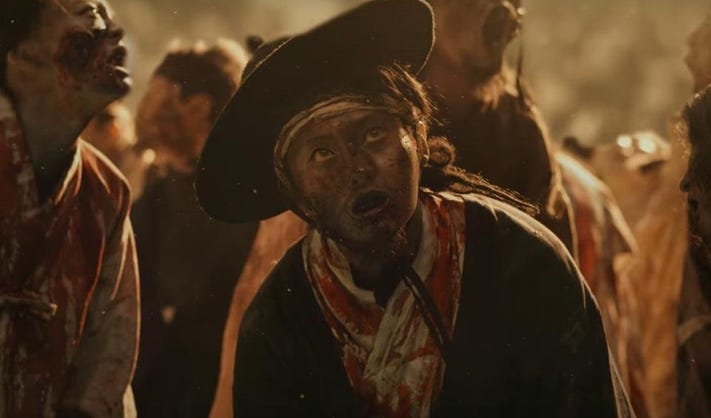
As the plague spreads, the ranks of the undead grow to include aristocrats in fine robes as well as peasants in rags.

Before long, the legions of undead include just as many people in fine silks and ornate embroidery, finally uniting the classes of Korea in a state of undead purgatory, their reanimated corpses hungering for the flesh of the still-living.

Eventually, though, Chang must confront the Haewon Cho clan and its patriarch, the powerful minister Cho Hak-ju.

Of course the show wouldn’t be a hit if it didn’t provide something for action and horror fans, and it more than delivers on its promises.

The action sequences in Kingdom are spectacular, and the show gives viewers lots of them, from outnumbered warriors holding a narrow pass from the undead, to zombie hordes laying siege to citadels, to close-quarters sword fighting.

The beautifully-shot sequences put shows like The Walking Dead to shame. Whereas the latter show often gives the impression that the money men behind the franchise are counting pennies, Kingdom‘s lavish sets, epic set pieces and impeccable special effects are the kind of thing viewers would expect from a summer blockbuster, not a television show.

Kingdom isn’t all action, and it takes time to breathe with quiet character moments between the narrow escapes and thrilling battles. The series is a period drama just as much as it falls within the action and horror genres. We see the inner workings of a society markedly different than anything most Westerners are familiar with, but driven by the same human ambitions.

The story is also effective thanks to actors Hye-jun Kim and Seung-Ryong Ryu, who play the Queen and her father, high minister Cho Hak-ju. They’re villainous and power hungry without seeming one-dimensional, and both succeed in becoming focal points of the audience’s anger as they commit one despicable act after another.

Cho Hak-ju manipulates the court with the savvy of Game of Thrones’ Littlefinger and the brutality of Joaquin Phoenix’s Commodus in Gladiator. The other government ministers are terrified of him, and as the man who ostensibly speaks for the king, his word is effectively law.

The Queen, meanwhile, puts in motions schemes that would make Thrones’ Cersei look amateurish in comparison.

Kingdom’s got two seasons under its belt and a stand-alone special episode, Kingdom: Ashin of the North. Fans are eagerly awaiting the third season. It stands out as one of the best historical epics in recent memory.

Buddy’s verdict: Five paws out of five!
paws55

Big Buddy’s verdict: Highly recommended

PITB Reviews: Lost In Space (Netflix)

Lost In Space is a rare reboot with heart that updates the classic story with gorgeous visuals and a compelling narrative for kids and adults.

I wasn’t quite sure what to expect from Netflix’s reboot of Lost In Space.

Would it hew closely to the brightly-colored 1960s original in all its cheesy glory? Would it aim for a darker tone, as so many television series do these days? Would it be a low-effort nostalgia cash-in like so many ill-advised reboots of the past decade? And would the series, which was slated to keep things PG, have enough going on to appeal to adults as well as kids?

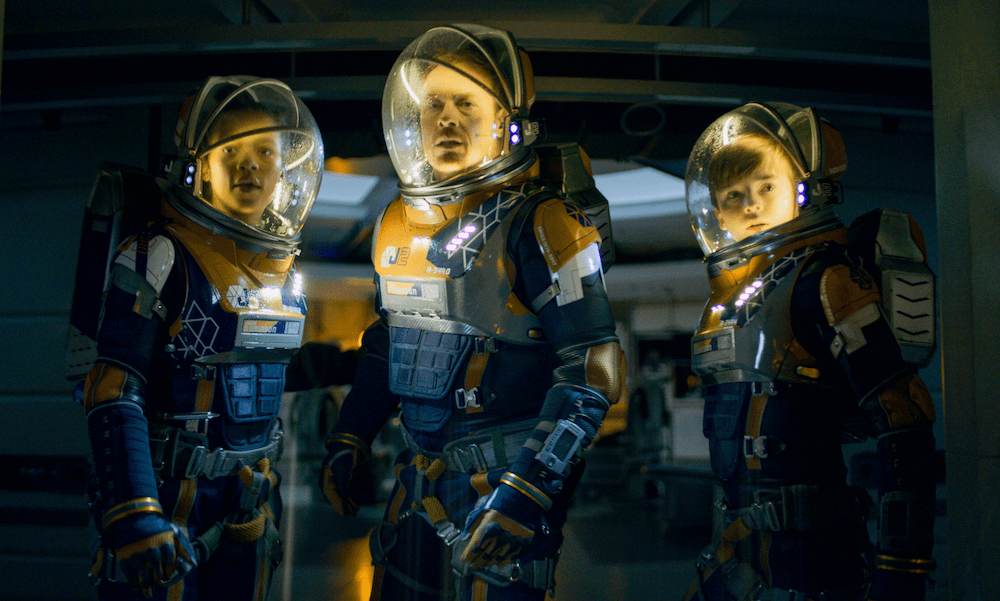
With Netflix delivering the third and final season last month, my verdict is in: Lost In Space is the rare worthy reboot, a visually spectacular retelling of the original that tweaks and modernizes the details in all the right places. There’s a generous amount of adventure, quiet character moments, and an overarching theme about the importance of family. Over the course of the story, the latter group that widens to include not only the Robinsons but also their closest friends who brave the cosmic dangers alongside them.

Speaking of danger, the original show’s most-used catchphrase — the robot’s “Danger, Will Robinson!” — will be familiar to almost anyone, even those of us who were born in the decades after the show went off the air. It’s become part of the pop cultural fabric.

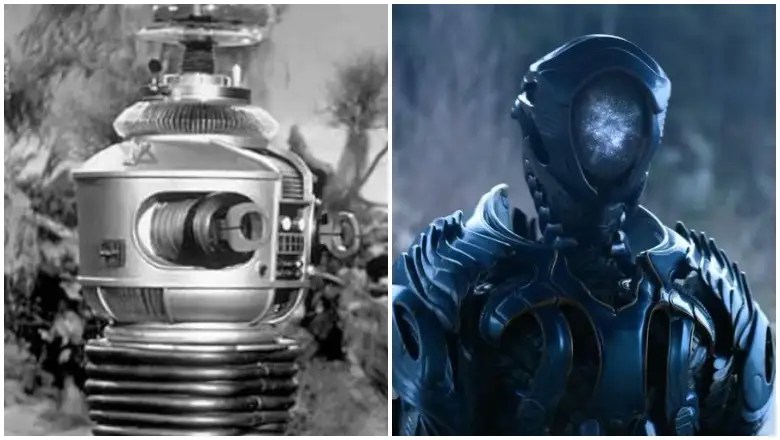
In the original Lost In Space the Robot is a human-engineered tin can, a 1960s retrofuturistic vision of what sentient machines might look like that was dreamed up at a time when servers occupied entire rooms and a computer’s output came in the form of punch cards.

Lost In Space: Original and reboot Robot

In the reboot, the Robot is an alien intelligence: a towering, six-limbed, digitigrade machine with an inscrutable face and serrated claws. Where the 1960s Robot was risible, the reboot Robot is terrifying in its default form — until a brave Will Robinson, who encounters it after crash landing on an unnamed planet, helps the dying machine repair itself.

He does so as a raging fire engulfs the forest around them, reasoning that he can’t escape, but perhaps the robot can.

The curious Robot, awash with gratitude, immediately rescues Will and, on safe ground, studies the boy for a moment before rearranging itself into an androform shape to mirror Will. From that point on, boy and Robot become inseparable.

Lost In Space: Will Robinson and the Robot
The Robot and Will Robinson form a mysterious bond, with the machine becoming fiercely protective of the boy.

It’s Robot who gets the Robinson family out of trouble in the first episode and many times over subsequent installments, earning the trust and eventually the love of the Robinson family, their friend, mechanic Don West (Ignacio Serricchio), and the mercurial Dr. Smith (Parker Posey).

It’s a credit to the writers and visual effects team that the series appeals to kids as well as adults. I watched the first episode with my eight-year-old niece, who’s younger than the target audience. She was absorbed in the story, her attention beginning to wane only during moments of expository dialogue.

The series is probably better suited for kids at 11 or 12 years old, as there are some relatively heady science fiction concepts and subsequent episodes range from PG to PG-13ish.

There’s no sex, the relatively little violence happens off camera, and the narrative regularly stresses the importance of family. Will, his sisters Penny and Judy, and the Robinson parents all rely on each other to meet challenges. There are, however, adult themes like divorce and near-death experiences, and occasional bad language which never gets more profane than Dr. Smith derisively calling Don West out on his “bullshit” in one episode.

penny
Judy (Taylor Russell) and Penny (Mina Sundwall) play important parts in the narrative and bring different skills to the table.

The show takes off right away and delivers excitement and mystery, but it takes a little while to find its rhythm, with early episodes following a “crisis of the hour” format more suited to episodic television. The writers were clearly trying to convey the power of the united Robinson family, and how each member brings different skills and ways of thinking to the table, but the show is at its best when storylines work in service to the overarching narrative.

Mom Maureen is a brilliant engineer who designed the colony starship Resolute and its Jupiter landers. Dad John Robinson is a former Navy SEAL, a man of action who encourages his children to make bold choices. Eldest daughter Judy Robinson is a young medical doctor who, despite her obvious talent, often feels she has something to prove. Her younger sister, Penny, is the least scientifically-minded member of the family. Penny’s better with people, serving as a peacemaker and scribe who documents the Robinson family’s adventures.

Last but not least, young Will Robinson is a dreamer who marvels at alien worlds and distant stars, and takes after his mom in scientific aptitude. He becomes something of a legend among the colonists for his inexplicable bond with Robot, who is extremely protective of the boy.

Lost In Space: The Resolute
The Resolute is attacked en route to Alpha Centauri, forcing its passengers to flee to their Jupiter “lifeboats” and make emergency landings on a nearby planet.

Of course there wouldn’t be much of a story to tell if the Robinsons and the other colonists simply made it to the idyllic colony at Alpha Centauri without incident. It turns out the colonists fled the Resolute — and crash landed on an inhospitable planet — because Robot’s brethren attacked the ship.

Although the viewers are shown the act of kindness that sparks the bond between Will and Robot, the other colonists aren’t as trusting once they realize Will’s seven-foot-tall protector came from the same place as the murderous machines that attacked the Resolute. Dr. Smith also has her own designs on the mysterious Robot, and the Resolute’s crew has been hiding a secret from its passengers that will come back to haunt them.

Can the colonists survive on a dangerous world without the resources they need? Will they ever reach Alpha Centauri?

Why did the robots attack the colony ship? What do they want from humans? And who made them?

Those are the questions at the heart of the mystery, but the characters can’t hope to answer them if they’re stranded on a hostile alien world.

Netflix spared no expense with Lost In Space and the writers clearly had a complete vision for the story, wrapping it up in just three seasons over the course of 28 roughly hour-long episodes. (The first two seasons had 10 episodes each, while the final season had only eight.)

In a sea of Netflix content, Lost In Space stands out as one of the streaming giant’s best original shows, especially for fans of science fiction and parents looking for a show they can watch with their kids.

Buddy’s Verdict: Four Paws out of Five paws45

Big Buddy’s Verdict: Recommended

Lost In Space: The Robinsons
Will Robinson, front, with Dr. Smith, Judy, Robot, Penny and Maureen Robinson.