If You Could Make Your Pet Understand One Thing, What Would It Be?

For the first time, PITB is participating in Wordpress’s daily writing prompt!

Bloganuary writing prompt
If you could make your pet understand one thing, what would it be?

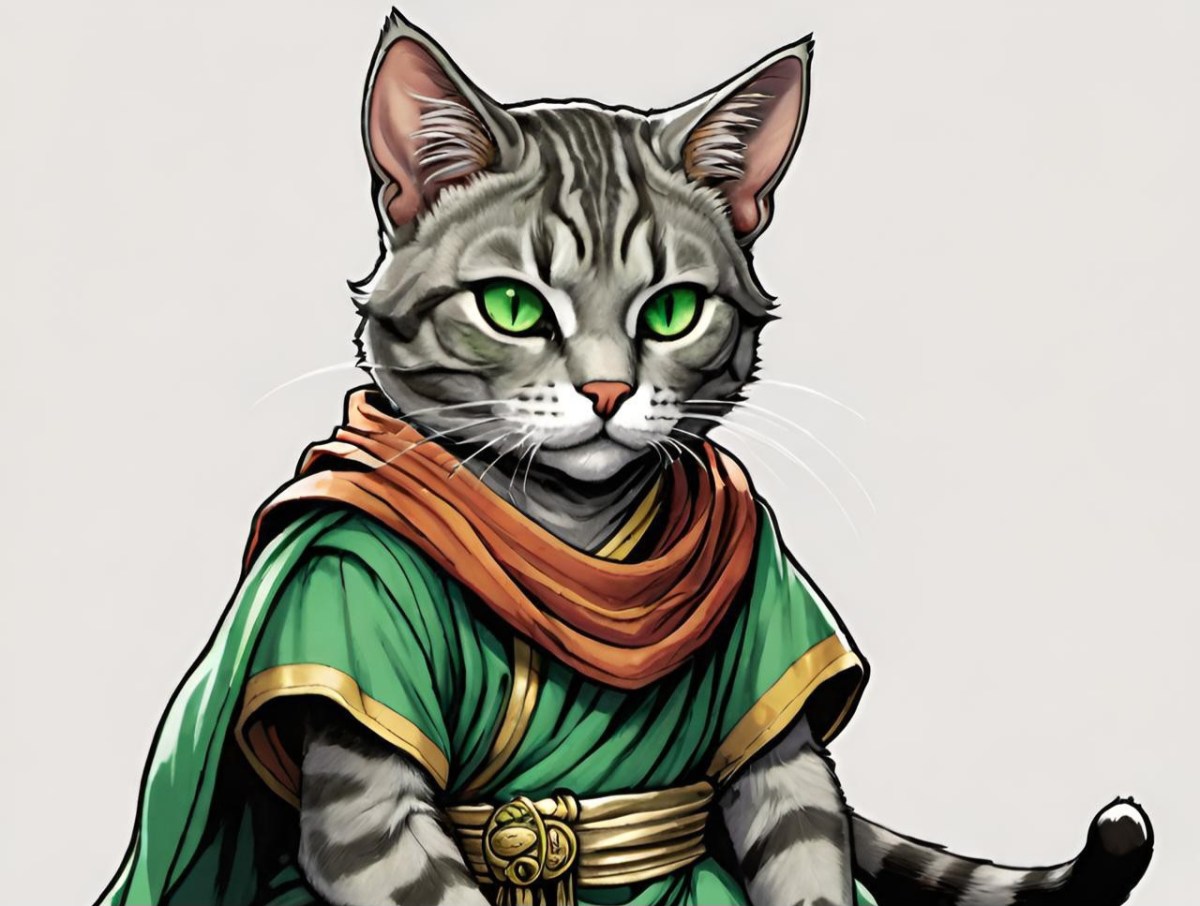
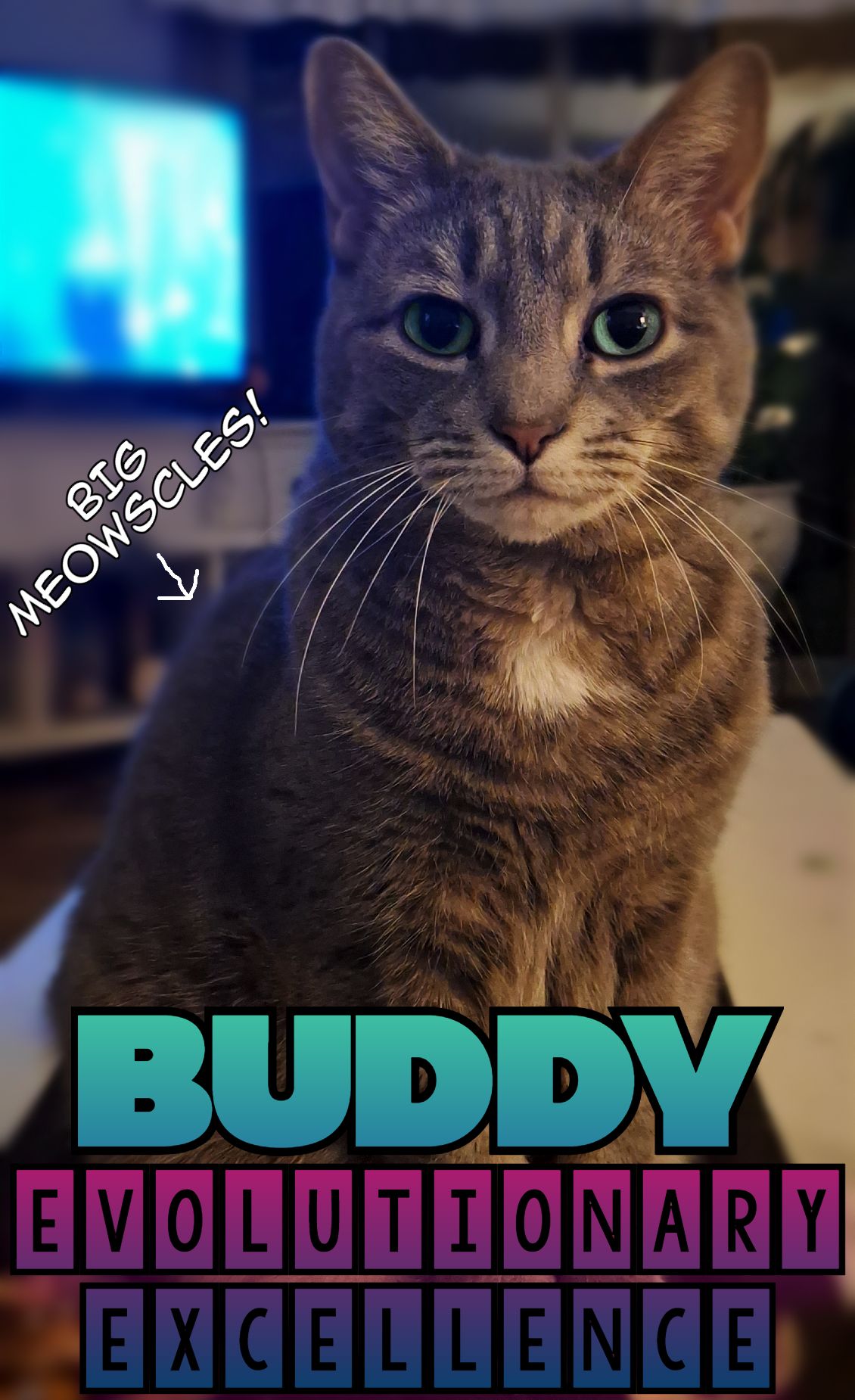
If I could make my cat understand one thing, it’s that he is a chubby 11-lb house cat, NOT a hulking 600-lb tiger with “huge meowscles” who strikes fear into the hearts of every creature to walk the Earth.

Just kidding. I’m perfectly happy going along with his delusions.

The one thing I really would communicate is that we are buddies for life and I’ll never abandon him.

Buddy’s an awesome cat. He’s super friendly, curious, lively, intelligent and vocal. His antics are hilarious. He’s a good boy.

He also knows I love him. That much is abundantly clear.
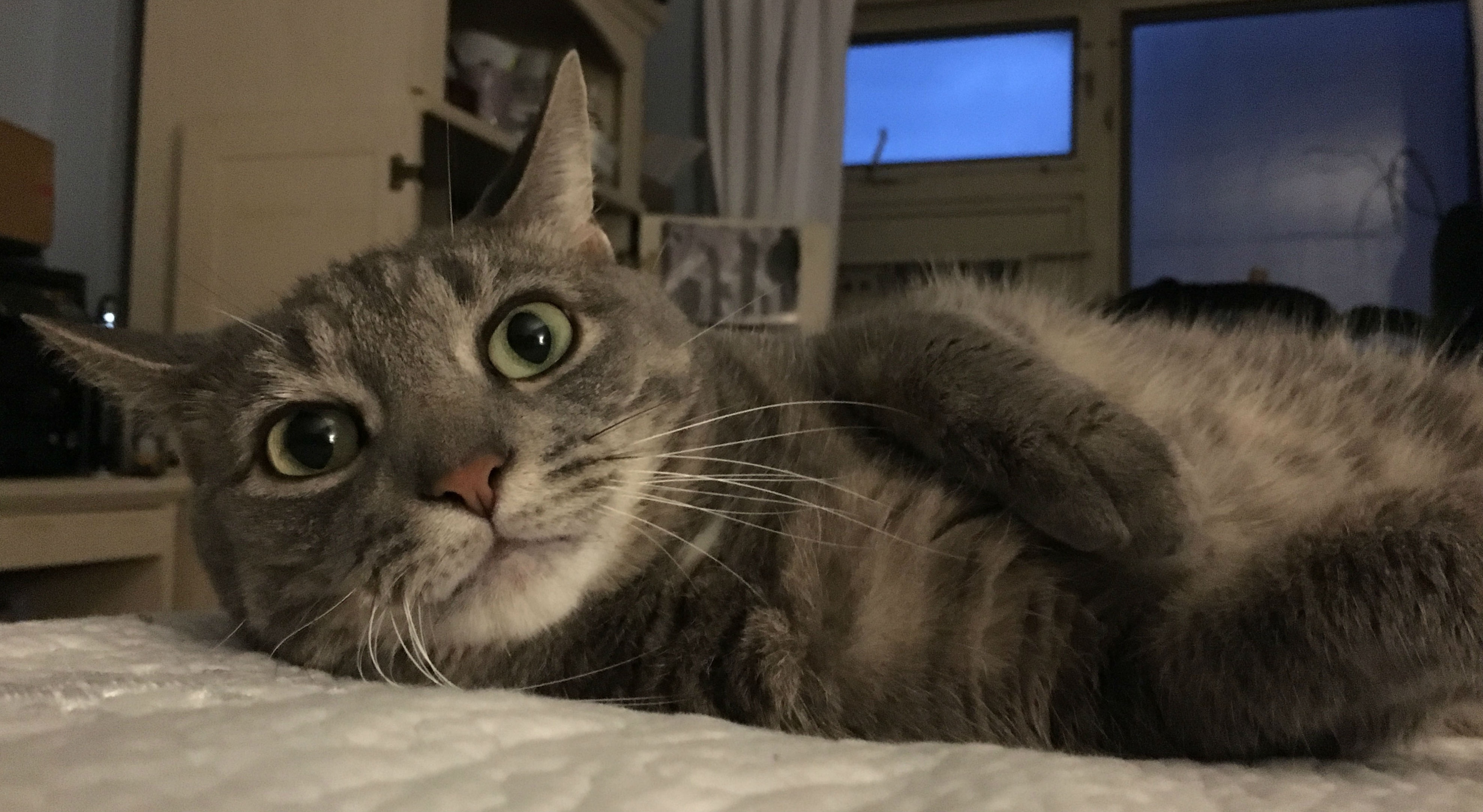
Buddy the Handsome Cat
Buddy the Cat, pictured, says he’s “totally ripped” under his fur.

Unfortunately he suffers from separation anxiety, which has manifested in unfortunate ways, including a track record of attacking every person who has ever been kind enough to cat sit for him.

Aside from the fact that it’s getting more difficult to arrange care for him (his usual cat sitter now sneaks in, feeds him and gets out as fast as possible since he’s attacked her twice), it sucks to know that he suffers anxiety and sadness when I’m gone.

I see his accusatory stare when I start to pack a suitcase and set food aside for the sitter to give him. And I see his little act when I come home, the way he sniffs and feigns nonchalance. The act lasts a few minutes tops before he forgets he’s supposed to be mad at me. Then he glues himself to me for the next few days, never letting me out of sight for fear of losing me.

buddy_catpeople_edited

The truth is that I feel separation anxiety from my little pal when I’m away too, but I know precisely when I’m coming home. He doesn’t have that luxury.

So Buddy, if you ever learn to read, know that you aren’t going anywhere and neither am I. The only way we’ll be separated is if someone pries you from my cold, dead fingers.

And don’t let anyone tell you you’re not a fierce tiger!

Buddy
All photos credit: PITB/littlebuddythecat.com

Dear Buddy: ‘Do Cats Really Hate Us?’

A new article claims that cats don’t love people the way dogs do and may not love people at all! A reader asks Buddy to weigh in.

Dear Buddy,

I have an urgent matter here that requires your sage input and your keen understanding of all things feline and human.

This article from LiveScience, titled “Do Cats Really Hate Us?”, contains several distressing allegations. Among them: that cats mostly tolerate us humans, that we must bribe them with snacks and other gifts to earn their affection, and perhaps most disturbing of all, that cats can never love humans the way dogs do.

When confronted with particularly disturbing information we must turn to our greatest minds to guide us, and you may be the only one, cat or human, who can cut to the heart of the matter and reveal the truth.

Please, Buddy, tell us it ain’t true!

Sad In Saskatchewan


Dear Sad,

Normally I’d chastise you for writing from Canada, as I’ve made it clear many times that my column is for AMERICATS and their servants. Furthermore, everyone knows I despise Canada, that barren, frozen wasteland filled with floppy-headed Canadians!

However you were very gracious in your appeal to me and you employed an appropriate number of superlatives to describe my considerable intellect and wit, so we’ll pretend you’re an American for the purposes of this reply, shall we?

Now to the grave matter before us!

It is true that the bond between feline and human is different than the bond between human and canine, just like a boss-employee relationship differs from friendships with co-workers.

We cats are the bosses, in case the analogy wasn’t clear.

Buddicles the Wise
Buddicles the Wise is a scholar and gentlecat who is often sought out for his sage advice on thorny issues.

Humans, dogs, lizards and other lesser animals occupy one sphere and felines occupy another, higher sphere. You would have learned all this in science class had you paid attention, but you’re Canadian so we can only expect so much.

Now it is true, our affections are limited. A dog will slobber all over his owner for no reason at all whereas humans have to toil to earn a pat on the head from their feline superiors.

But that doesn’t mean we don’t love you! You guys are good at acquiring and dispensing food, you build nice shelters (except for your insistence on those infernal “doors”) and you are loyal.

I can always count on my Big Buddy to put off the call of nature until his bladder is ready to burst when I am using him as my pillow. I also know that Big Buddy will get up to open the door a hundred times when I’m indecisive about whether I want to be on one side or another. Sometimes I pretend to be indecisive just to mess with him LOL!

So you see, cats do love humans, but we require humans to earn our love. We are not the aloof, uncaring, unfeeling little furry masters that some slander us as.

Beware fake news, my friend, especially anything you read about me as I seek to regain my rightful post as president of the Americats. Now go and earn the love of your feline overlord by providing excellent service!

Your friend and resident genius,

Buddy

Dear Buddy: Why Do Humans Watch Horror Movies?

Dear Buddy,

What’s with these horror movies? My human likes to curl up on the couch under a blanket, with me protectively in her lap of course, and watch these ghastly movies about serial killers, ghost infestations and lurking monsters.

Why would anyone want to scare themselves? You don’t see us creating an entire film genre dedicated to horrors like empty food bowls or late dinners, so why do humans make these movies?

Your fan,
Mildly Curious in Manhattan


Dear Mildly Curious,

This is a question I’ve pondered for some time, inasmuch as I care about anything human-related to ponder. My human also watches those movies and he also does so with me sitting protectively in his lap.

Then I realized something. None of the people in these horror movies have cats!

The family from The Conjuring? They have a dog. Stanley Tucci’s family in that crappy movie about flying monsters that kill everyone? Dog! The family in that other crappy movie about giant axolotl-type things that terrorize people living in a coastal community?

You guessed it! They have a dog too.

You see where I’m going with this, right? Humans who serve us cats literally have no fear because no monster or crazy cereal killer would ever risk attacking a home with a cat in it.

Suppose a hungry evil monster is let loose in my neighborhood and is making its way through the street at night, then sees me in all my meowscular, intimidating, tigeresque glory sitting at the window, keeping watch over the nocturnal world.

That monster is going to skip right over The Buddy Domicile and go in search of easier pickings because it sure as heck doesn’t want to tangle with me and my claws. I have that effect on monsters.

They may be monsters, but they’re not stupid. Breaking into a home with a cat is like breaking into a t-rex enclosure. You’re asking to get mauled by a huge, meowscular apex predator who will eviscerate you and look handsome and badass while doing it.

People who serve us cats know this. They know no monster or killer or robber would be stupid enough to go near a house with a cat. They can probably sense my meowscularity two miles away!

So sometimes our humans may want to know what it feels like to be vulnerable, what it would be like if they didn’t have tigers like us guaranteeing that no intruder approaches. THAT is why they watch horror movies. Take it to the bank!

Your genius friend,

Buddy the Cat

Cat: ‘No Study Time For You, Human!’

When cats demand attention they can be relentless!

I’m sure the behavior in this video, of a cat absolutely determined not to let her human get a second of studying in, is familiar to everyone who has the privilege of serving a feline:

The cat grabs at the pen, tries to chew on it, covers the book with her body, nibbles on the pages and plays pretty much every trick in the feline book to get her human to stop what she’s doing and engage in some good old Cat Time.

Or more bluntly, she’s saying: “NO STUDY, HUMAN! PAY ATTENTION TO ME!”

I never gave much thought to how students fare with cats but I know writing by hand is pretty much out of the question for me. Bud just won’t let me do it. Either he’s trying to bite the pen or he’s swatting at it with his paws, making my normally neat handwriting look like that of a deranged person demanding ransom or the work of someone stupidly drunk.

I’ve got a tradition of sketching scenes on birthday cards and other things I send to my nieces by snail mail, and Bud must be secured in another room before I can even attempt it.

Same deal with music, unfortunately. If I’ve got a guitar in my hands, little dude tries to cut in with a blazing, discordant solo of his own. Cat claws and guitar strings do not mix. If I’m using my synthesizer, Bud decides we’re going to do a duet by walking across the keyboard and yowling.

I’ve actually sat hunched at my computer for hours trying to stitch together guitar solos from several different takes because they were going swimmingly until Mr. Bud cut in with a paw and a claw, and trying to fix rhythm tracks that were perfect until Buddy the Destroyer decided 4/4 should become 5/8 or a particular chord progression should be interrupted with an accidental bit of guitar dubstep. Thank God for non-destructive digital editing in modern music production! Musicians in the days of analog multitracks must have had to put their felines under lock and key before attempting to record anything.

Do your cats stop you from doing stuff? What are their methods?

Cat Domestication Was The Start Of A Beautiful Friendship

Domestication’s real goal: to make cats cuddly as well as great mousers.

Cats have been doing things their way since the very beginning.

Unlike literally every other domesticated animal, cats were not domesticated by humans. They did it to themselves.

As if that didn’t make them unique enough, they lay claim to another major distinction: they’re the only species of obligate carnivores to undergo domestication in the entire history of human existence.

That explains why cats, more than any other animal that depends on humans, so closely resemble the wild animals they were before signing up for the good life of naps, warmth, endless rodents to hunt and free food from their new human friends.

In a new essay for The Conversation, evolutionary biologist Jonathan Losos, author of The Age of Cats: From the Savanna to Your Sofa, notes new DNA analysis settles the question of where cats came from once and for all.

Domestic cats are descended from North African wildcats, specifically the species felis sylvestris lybica. Unlike dogs, who underwent telltale physical transformations when they evolved from wolves, house cats “appear basically indistinguishable from wildcats.”

“In fact,” Losos writes, “only 13 genes have been changed by natural selection during the domestication process. By contrast, almost three times as many genes changed during the descent of dogs from wolves.”

While the change in genetics that happen with domestication left cats pretty much as they were physically, the process made dramatic changes in the feline brain, reducing regions governing fear and expanding those related to social behavior. The result? The major difference between house cats and their wildcat ancestors is disposition.

In other words, domestication made cats cuddly.

buddyevolution
Housecat evolved.

Notably, felis sylvestris lybica had to be pretty friendly in the first place, as well as bold and driven by the now-legendary feline curiosity to risk padding into human settlements with their bright lights, strange smells, open flames and the two-legged giants striding around them.

They didn’t have a way of negotiating or signaling their intent. They couldn’t say: “Hey guys, we’re here to kill and eat the tasty rodents who have been giving you problems by chowing down on your yums, but we don’t want your yums for ourselves. Plants are disgusting!”

So they had to demonstrate their usefulness, prove their worth, and enjoy the fruits of it by curling up in front of warm fires or on human laps.

That explains why it was the African wildcat that became a human companion species and not European wildcats, whom Losos notes are often “hellaciously mean” in interactions with people, even if they’re raised around humans when they’re young. It was also a matter of being in the right place at the right time, as nascent human civilization took root in the Fertile Crescent.

But ultimately, just like cats decided to domesticate themselves and didn’t really bother to consult us about it, so too do they bend us to their will with an entire repertoire of manipulative behavior, from solicitation purrs to incessant meowing and having a talent for looking their cutest when they want something.

While we may think we set the rules and parameters of our relationship with the furry little ones, as Losos notes, “cats usually train us more than we train them.”

Read the whole thing here:

Feline evolution: How house cats and humans domesticated each other