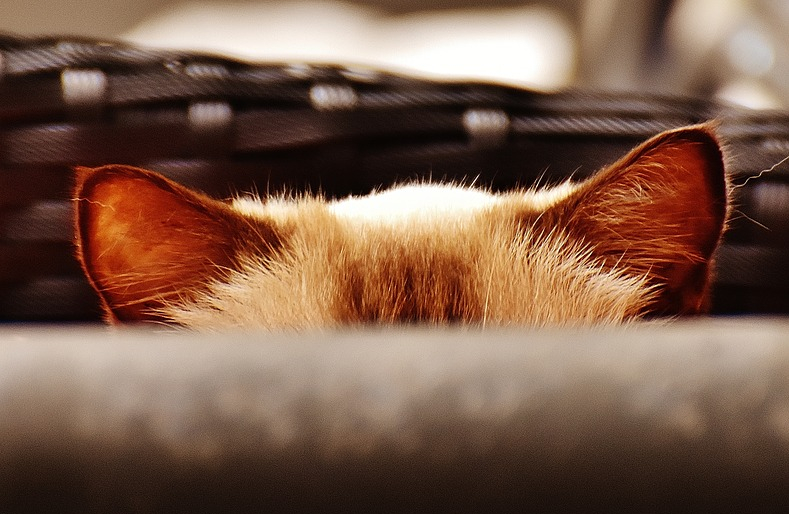
It seems our readers love these “Can You Spot The Cat” posts, so here’s another one featuring a cat using its natural camouflage:

Can’t find the cat? Click here to see where kitty is hiding.
This cat uses its natural camouflage to blend into the scenery.
It seems our readers love these “Can You Spot The Cat” posts, so here’s another one featuring a cat using its natural camouflage:
Can’t find the cat? Click here to see where kitty is hiding.
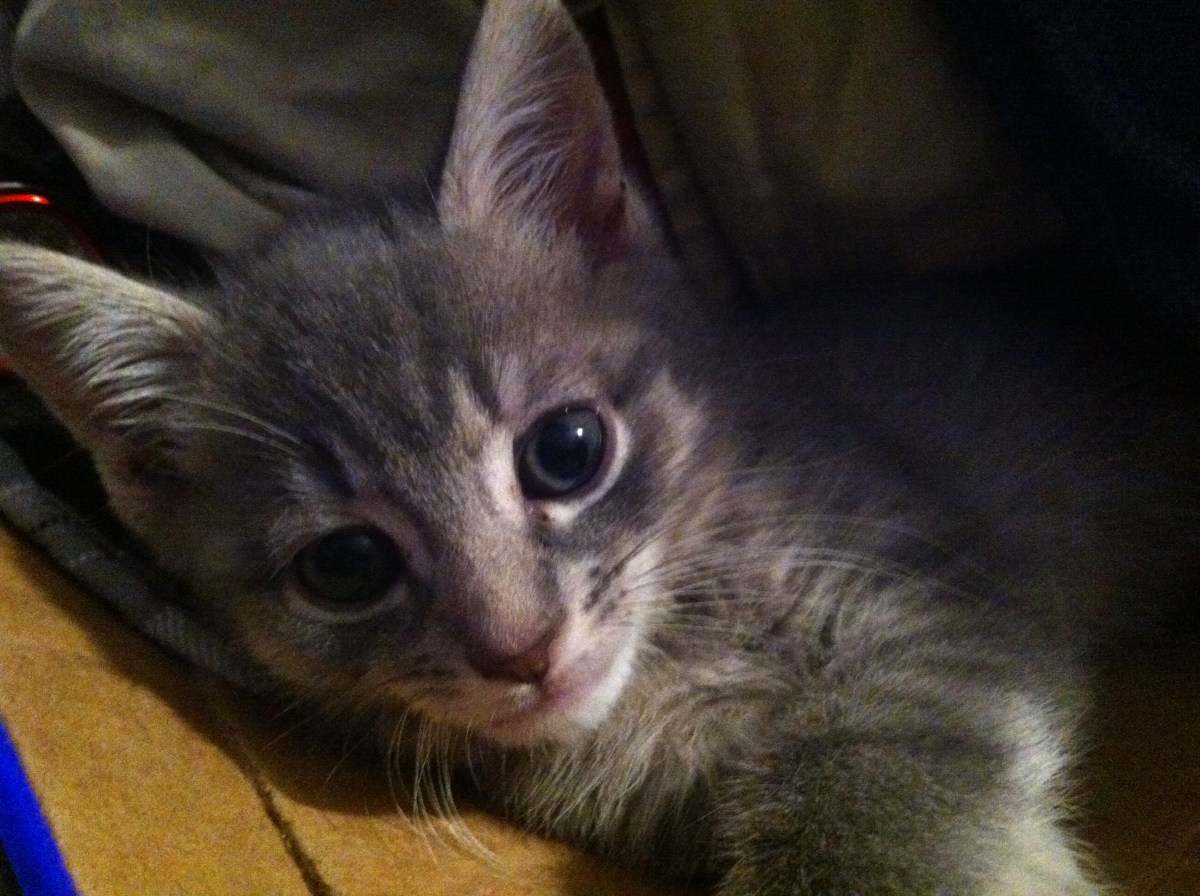
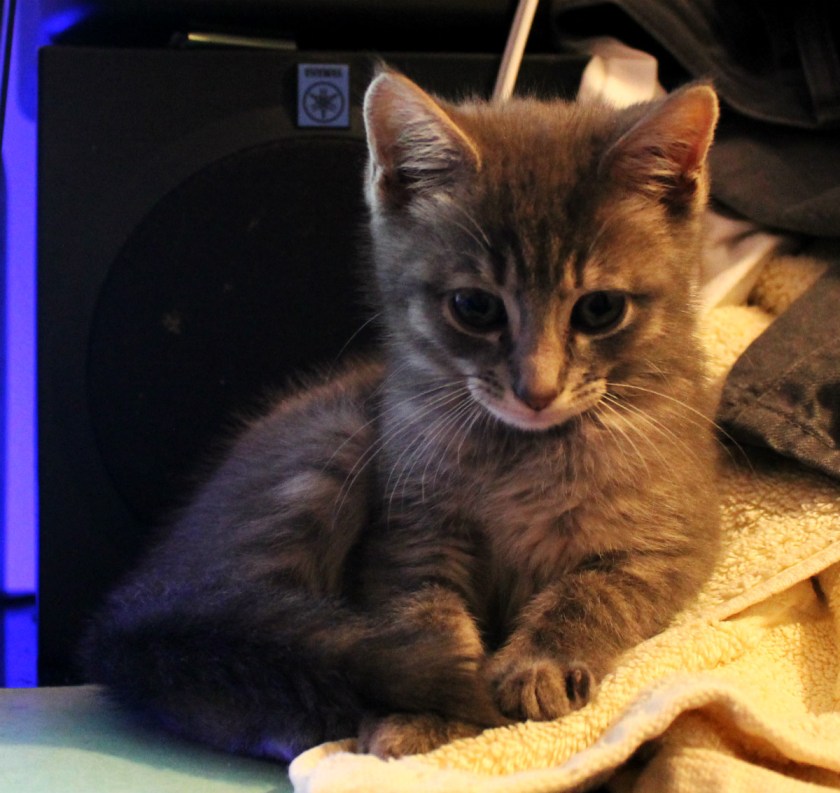
A look back at a 2014 article from our archives when Buddy was just an innocent little kitten.
From the archives: June 17, 2014
NEW YORK — Buddy the Kitten celebrated another successful ambush on Tuesday after violently rousing his human from sleep, sources said.
The 14-week-old gray tabby howled with delight after climbing up onto the bed and launching himself at his human’s face, landing belly-first with a delightful THWAP! as the big stupid human screamed and bolted upright.
Buddy the Kitten promptly retreated to a dark corner of the bedroom, shaking his butt and trilling with joyful anticipation until he heard his human, Big Buddy, begin to snore again.
With a battle cry of “Rrrrrrrrrrr!” the 4.5-lb kitten chomped down on the human’s exposed foot, which was fortuitously left uncovered by the protective blanket when Big Buddy shifted during his sleep.
“Shit!” the human howled, recoiling from the kitten’s shark teeth and claws. “Let me sleep, you little jerk, or I’m selling you to Szechuan Garden II!”
At press time Buddy the Kitten was planning an elaborate new attack involving a makeshift trebuchet and a water balloon, and said he was unconcerned about his human’s threats to sell him to the local Chinese restaurant: “I am a good boy!”
He would likely leave that attack for the following night, the playful kitten said.
“I has to purr in the morning so my human thinks I’m just a sweet little kitten and feeds me turkeys,” Buddy the Kitten said. “Then I make war again! Muahahaha!”
Insisting that cats are the true rulers of planet Earth, emissaries of a new alien species spurned human leaders during first contact.
WASHINGTON — First contact between humanity and an alien race known as the Zxorxax faced a hiccup on Thursday after the alien delegation demanded a meeting with Earth’s felines.
US and UN leaders were left momentarily confused when one of the Zxorxax leaders interrupted a welcoming ceremony on the White House lawn to issue the demand.
“On this momentous day, the human race extends a warm welcome and rejoices in the knowledge that we are not alone in the univ…”
“Human stop talking!” the Zxorxax Supreme Chancellor, Xoralundra, said while interrupting UN Secretary-General António Guterres. “We demand to speak to the superior race on this planet.”
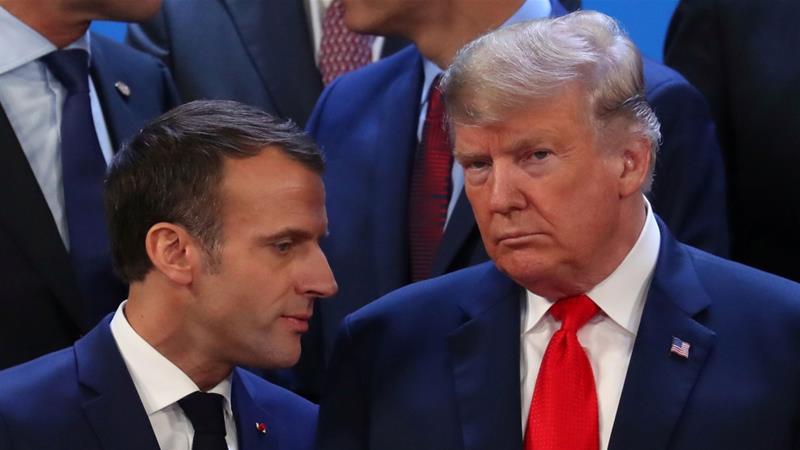
With the entire world watching via television and satellite feeds, Guterres, American President Donald Trump and French President Emmanuel Jean-Michel Frédéric Jean-Jacques Claude Louis Macron exchanged pained glances.
“Uh, Supreme Chancellor, you are speaking to the leaders of the human…” Macron began.
“You will be silent, or perish in the purifying blaze of our parametric space-time weaponry!” said an aid to the Supreme Chancellor who identified himself only as the Herald of Xora. “We did not ask to speak to a frog.”
“We will treat only with the great warrior species of your planet,” Xoralundra proclaimed in a booming voice after a long moment of pained silence. “Bring forth the felines.”
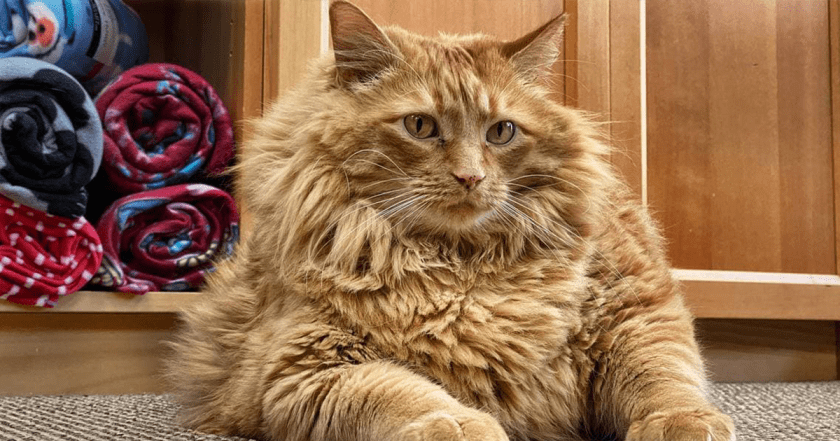
By late afternoon White House officials had cleared a conference room for the Zxorxax, where they met with a feline delegation headed by a house cat named Chonkmatic the Magnificent. The world’s most powerful human leaders were left in the hallway outside as the aliens conducted negotiations with the felines.
New York Times reporter Bat Segundo, who was among a handful of media observers permitted inside the negotiation room, said the Zxorxax were delighted when they presented Chonkmatic and his delegation with a priceless artifact from the Zxorxaxian home world as a gift of good will, and the overweight tabby responded by swiping the offering off the table.
“You see?” Xoralundra called out, addressing his fellow Zxorxax. “These felines are great warriors who care not for baubles and riches, unlike the inferior humans of this planet who are besotted with shiny objects.”
Asked later why his delegation demanded to meet with house cats, the Supreme Chancellor said it was purely a matter of practicality.
“We knew upon approaching this system that real power lies in the paws of these impressive creatures,” Xoralundra said, addressing reporters. “Our long-range instrumentation revealed images of humans diligently serving these ‘cats,’ as you call them, and it became quickly apparent that while the humans rule in name, ‘cats’ are the true power on your world.”
The Zxorxax themselves refer to felines as “Sxarxion Hrath’gar,” an alien name that translates roughly to “Legendary Warriors of Great Renown and Prowess.”
A second round of negotiations between the aliens and felines has been scheduled for Friday. The Zxorxax seek perpetual rights to Earth’s supply of greenhouse gases, which they consider a delicacy, while the cats have indicated they are willing to make a deal in exchange for a considerable number of alien boxes.
Allison Foley, Chonkmatic’s caretaker, said she would be staying in the White House with her cat as a special guest of the administration for the duration of the talks.
Chonkmatic would be taken back to his suite, fed his favorite brand of chicken wet food, and given the night off to rest before meeting with the aliens again the following day, she said.
“Who’s a good widdle boy? Who just negotiated with an alien race? That’s right, you did!” Foley told the obese cat, scratching behind his ears as he purred and nuzzled her. “Good boy wants yum yums? Okay, mommy’s taking you back to our suite now. Come on, my widdle baby cakes!”
Trump insisted it was always the plan to have the aliens negotiate with felines, and boasted of his “beautiful relationship” with the alien High Chancellor.
“High Chancellor Xoralundra wrote me a big, beautiful letter,” Trump tweeted at 3:22 am on Friday morning. “A tremendous letter, really terrific. The High Chancellor realizes that American cats are the number one cats in the world, they really are. We’re gonna make a deal with the aliens and benefit bigly!”
The Los Gatos Catnip Cartel muscles in on Buddy’s territory.
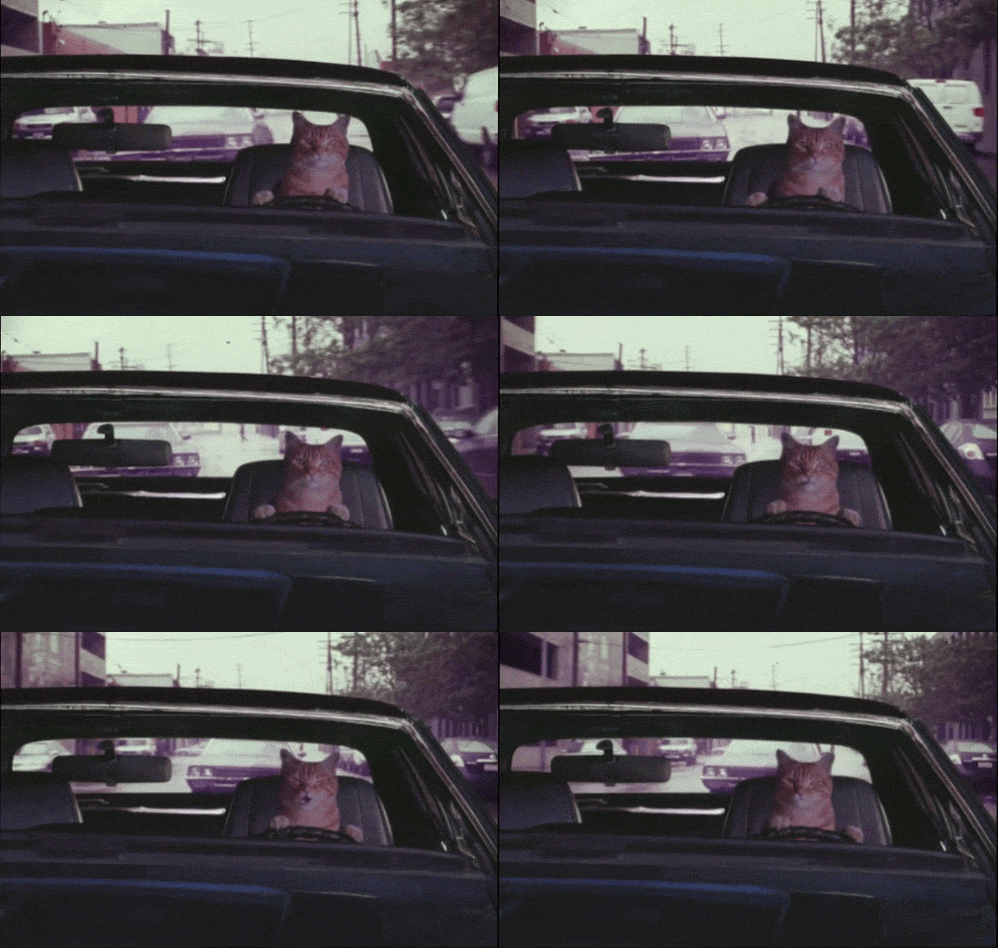
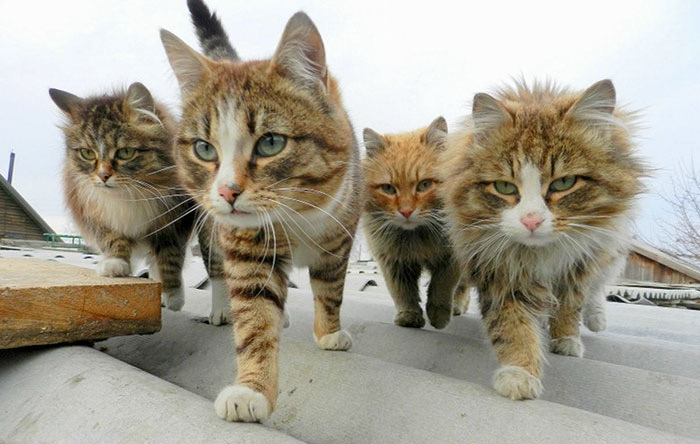
NEW YORK — At least five cats — including two kittens — were caught in the cross-spray of a drive-by urinating on Tuesday night, the latest innocent victims of an ongoing war between niplords vying for territorial control to push their product.
Lil Tubbie, a local tabby, said he was out for an after-kibble walk when he found himself in the middle of full-fledged gang warfare.
“The usual lowlifes were hawking their can-bags of nip on the street when a minivan came to a screeching halt and a half dozen Los Gatos just poured out from the back seat, screeching like bats out of hell,” Lil Tubbie said. “They were ruthless, pissing everywhere to mark their territory. I saw one poor kitten get sprayed in the face. It was chaos.”
There was no warning an attack was imminent, and authorities said they were taken aback by the strike’s brutality, potentially marking an escalation in a catnip war that has been raging for months.
“This is not the first time the Los Gatos have strong-pawed their way to acquiring new territory,” Pawlice Chief Mr. Snuggles said. “But in the past, gangs and cartels observed a code. Now any innocent cat just going about their business in public runs the risk of getting blasted in the face or drenched by marauding gang members.”
Like their wild forebears, cat cartel members usurp new territory by urinating on it, marking the boundaries of their domains with the acidic, ammonia-like scent of kitty pee.
Buddy the Niplord, who runs the area’s most powerful catnip cartel, is expected to retaliate against Los Gatos’ latest power play, analysts said.
“If Buddy doesn’t retaliate, he looks weak,” said Claws Furson, a feline criminologist at John Jay College of Criminal Justice in Meownhattan. “Police are on high alert, warning kittens to stay inside while they brace for the next violent outburst. The catnip wars take a real toll on our communities.”
Avon Meowsdale, a powerful niplord who was taken down by Buddy’s cartel in 2011, was subjected to “kibble boarding,” a form of torture in which the feline victim is strapped to a table underneath a sieve and slowly driven insane by a steady drip of kibble.
The Los Gatos are known for their own brand of torture, famously subjecting cartel boss Pawblo Escobar to “El Gruñido” (The Growling), a form of torture in which the victim is placed in a cage and forced to watch as cats around him dine on delicious wet food.
Both kibble-boarding and The Growling were condemned by the UN High Commission on Feline Warfare, categorizing both methods as war crimes prosecutable by The Hague.
In the meantime, neighborhood cats have taken to wearing rain coats to protect themselves against random scent-marking drive-by sprayings. Meowmoud Mohammad, a Persian cat who owns Feline Fashions in Manhattan, said he can’t keep them stocked.
“I suggest pre-ordering to reserve a rain coat when the next batch arrives,” Meowmoud said. “With all these gangs trading urine salvos, it’s the innocent who suffer. Don’t let yourself get caught in the cross-stream without protection.”
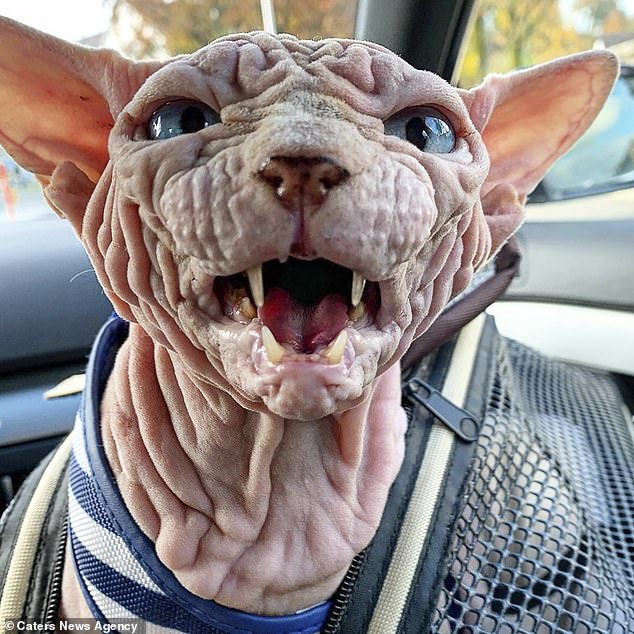
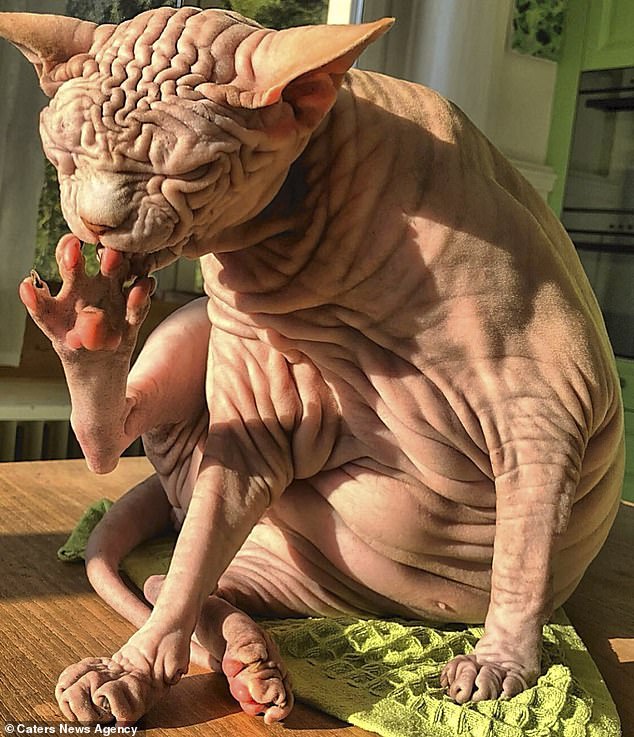
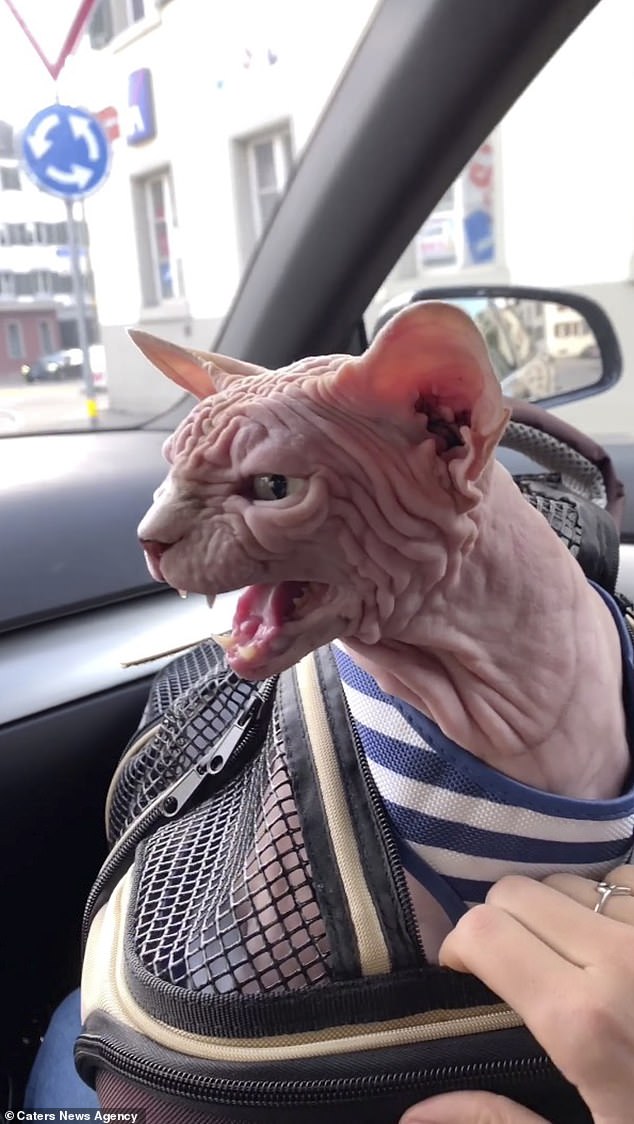
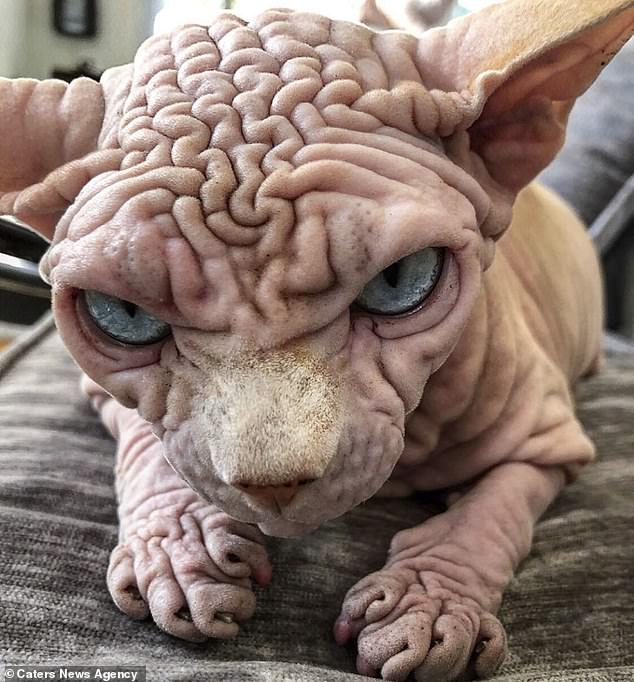
Feline or Lovecraftian horror? You decide.
Meet Xherdan.
Also, we assume, known as Xherdan the Sun Eater, Xherdan the Bane of Hope, He Who Sups on Souls, and Xherdan the Earthcrusher.
The incredibly wrinkly Sphinx cat is served by a Swiss woman named Sandra Filippi, who insists the feline, despite looking like the brain of a malevolent alien, is just a big softy who enjoys cuddling and napping when he’s not talking. We’ll give Filippi the benefit of the doubt and won’t allege those talks include nefarious plans for the subjugation of the human race, but only until we get solid evidence.
Where some of us see a Lovecraftian horror from the deepest Cthulian depths, Filippi sees an adorable kitty.
“When I first saw him, he immediately stole my heart,” Filippi told the Daily Mail. “His wrinkled pink skin, as fine as a peach, and his turquoise eyes, I was in love.”
Although she doesn’t explicitly say so, it appears her cat is named after footballer Xherdan Shaqiri, a Swiss midfielder who plays for Liverpool.
We’ve taken the liberty of making some very small adjustments (barely noticeable, really) to one of Xherdan’s photos in Pixlr, just to show our readers what an excellent Evil Overlord this cat would make:
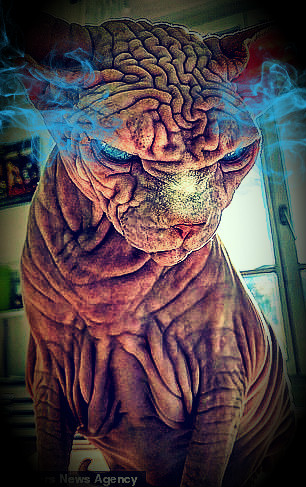
But the truth is, he doesn’t need glowing smoke coming from his eyes or dramatic lighting. He looks terrifying enough as it is: