Some Cat Advocates Claim Kitten Season Is Getting Longer Due To Climate Change

Is there any evidence to support claims of a longer kitten season?

Is kitten season getting longer because of climate change?

Some rescuers in California think so, according to a story in Santa Rosa’s Press-Democrat.

“Heat and warmth is what it’s all about,” said Mary Pulcheon, trapping coordinator for Forgotten Felines of Sonoma County.

Pulcheon and the executive director of Forgotten Felines, Pip Marquez de la Plata, told the Press-Democrat that strays in their care had given birth as late as December in 2023 when kitten season generally runs from late March through October.

They say the typical kitten season has shifted and is now longer due to rising temperatures caused by climate change.

It’s an unverifiable claim for several reasons.

First, we don’t have reliable estimates for how many cats there are in the US, let alone stray and feral cats. Any estimates are guesses, and they vary wildly from 20 million on the low end to 120 million, which seems an excessive and unrealistic number.

To date there’s been a single comprehensive feline census in the US, the D.C. Cat Count. It took three years, several million dollars, hundreds of trail and trap cameras, and the efforts of an army of volunteers and staff.

The final tally: 203,595, with only 6,533 unowned cats fending for themselves and drifting between managed colonies.

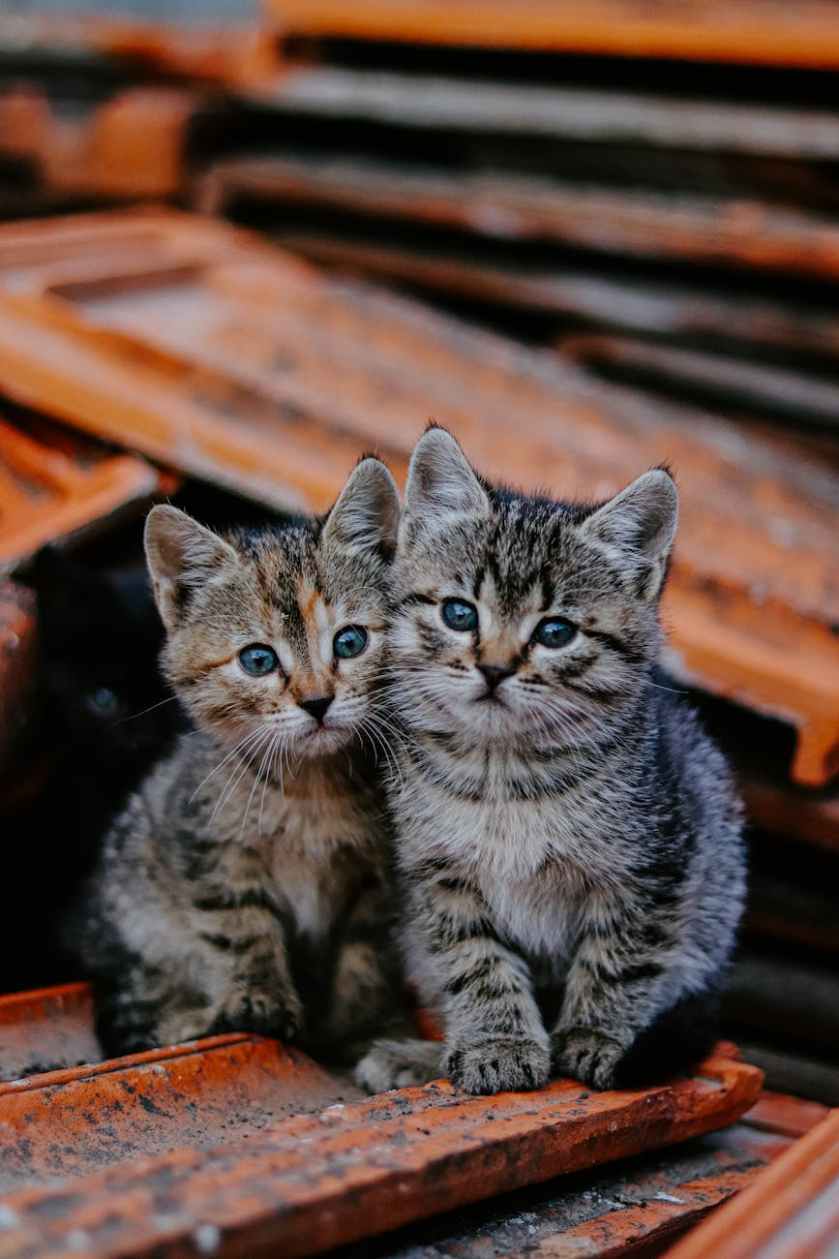
adorable tabby kittens
Credit: Ejov Igor/Pexels.com

The DC Cat Count is historic and has already proven its value by facilitating informed debate, showing rescuers/TNR volunteers where to direct their efforts, and yielding valuable data on local ecological impact.

Alas it’s a one-off, so we don’t know anything about how the population has changed over time.

Secondly, while there absolutely is scientific consensus that human activity is driving global temperatures up, there’s debate about how much temperature flux is directly attributable to modern civilization. We’re also looking at planetary timescales here, tracking changes that happen not just over decades, but centuries and millennia.

Attributing shifts in kitten season to climate change is a bit like attributing single storms to climate change. These are single data points from which we can’t draw conclusions.

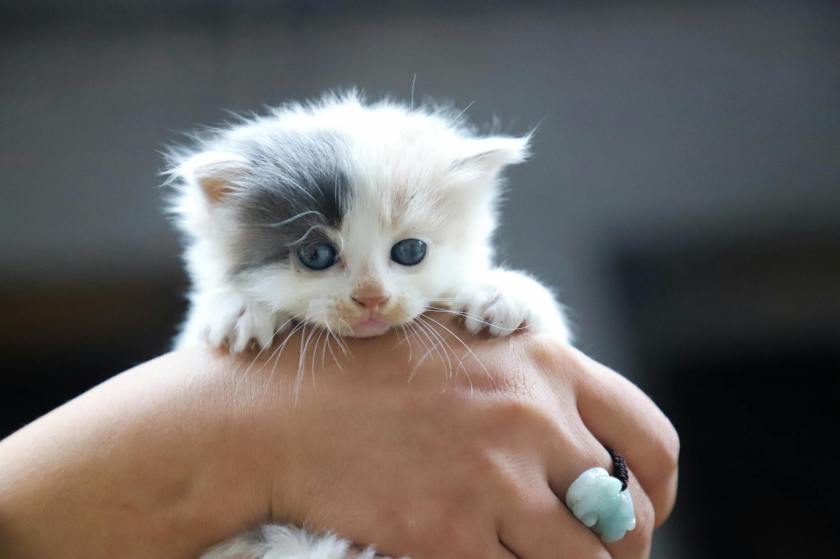
close up photo of person holding white kitten
Credit:Cats Coming/Pexels

Lastly, there could be dozens of factors skewing “normal” kitten season, and that’s assuming the March through October season is normal by historical measurements. We don’t know that for sure, and we can’t know it without data.

I’m limited by a lack of imagination here, but changes in kitten season could be regional, reflect non-climate weather patterns, or adjust according to cyclical patterns. Things as seemingly unimportant as ambient light pollution can have a profound effect on animal behavior, and it always helps to remember that felines are sensitive to stimuli that we literally cannot detect. Cats can pick up high frequency sounds we can’t hear and smell things beneath the notice of our own weak noses. They even have a second form of olfactory input, a literal sixth sense that is unmatched by anything in human biology.

We understand very little about how those things impact feline behavior.

With all things considered there could be hundreds of reasons for changes in kitten season, and that’s assuming the changes are real and people aren’t mistaking outliers for trends.

Ultimately we don’t need to draw conclusions about whether there are more kittens born each season. We know TNR, while imperfect, is the best way to humanely reduce stray and feral populations, and we still have a way to go before cats are no longer euthanized because we can’t find homes for them.

The Result Of Birder Fearmongering: 50 Cats Likely Poisoned, 26 Dead In Texas

The kittens died “foaming at the mouth, throwing up bright green.” Acts of vigilantism against cats are happening more frequently as junk science about their hunting habits spreads via news reports.

Cat rescuer Erica Messina was trapping stray kittens to get them out of the cold and into homes before winter, hoping the young cats would have better lives.

Instead, they died horribly shortly after she successfully trapped them from a lakeside colony in October.

“All of the 13 kittens that I had all passed the same way,” Messina told KBTV, a Fox affiliate in Beaumont, Texas. “They were foaming at the mouth, they were throwing up bright green and peeing bright green.”

Two weeks later, per KBTV, a dozen adult cats from the same colony died the same way the kittens did, “some with chemical burns on their noses.”

“I was upset. I was at work when I found out and I came out here and started asking people, you know, what the problem was,” Messina told the station. “I got no answers.”

Like others who have cared for large colonies of strays who were killed by overzealous birders, Messina says she now has PTSD as she’s trying to save the lives of the remaining cats. She’s managed to catch all but four of them with the help of other local cat lovers and rescue organizations.

They’re getting no help from the authorities. Police referred Messina to Beaumont Animal Care, who told her they can’t help unless she can prove the cats were intentionally harmed. Not only are they putting the burden of proof on the victims in this case, but the victims can’t speak for themselves.

‘A bird-watcher’s paradise’

The colony lived in Collier’s Ferry Park, a lakeside park that also borders marshes where migratory birds spend time alongside native species. Indeed, Beaumont, a coastal Texas city of 115,000, markets itself, and Collier’s Ferry Park in particular, as a prime bird-watching spot.

Colliers Ferry Park
Collier’s Ferry Park in Beaumont, Texas, where 25 cats were killed in an alleged poisoning. Credit: National Parks Service

A 2013 story in the local newspaper, the Beaumont Enterprise, detailed how local officials and business owners were promoting the park as a bird-watching paradise, noting that “[b]irders in particular are a lucrative market” driving tourism in the city. The story explains how the park is ideal for birds and those who like to watch them, details prized species found there — including herons, the least grebe and cinnamon teal — and includes input from a zoologist with a focus on birds, along with a local businessman who leads guided bird tours on the lake.

Collier’s Ferry Park is also listed on a site for “birding hotspots” while Texas Monthly calls it “one of the country’s best bird-watching spots.”

It is precisely the sort of place misguided bird watchers, driven to rage by widespread junk science blaming cats for declines in bird population, tend to dispense what they believe is vigilante justice. It stretches credulity to imagine anyone but a self-styled conservationist who blames cats for bird extinctions would risk a criminal conviction to poison a colony of cats, especially in a well-known hotspot for bird watchers.

Junk science blames cats for declining bird populations

We’ve written our share about the disingenuous and agenda-driven activism that passes for research, most of it published by Peter Marra, a Georgetown avian ecologist who also authored the book Cat Wars: The Devastating Consequences Of A Cuddly Killer. The book advocates a “war” on cats and says they must be extirpated “by any means necessary” to protect birds and small mammals.

It does not, notably, put the blame on human activity, including but not limited to habitat destruction, the widespread use of harmful pesticides, wind farms, sky scrapers and all the other man-made structures, chemicals and machines that have contributed to a 70 percent decline in wildlife in the last 50 years.

catwars2

But don’t take our word for it. Vox Felina calls Marra “a post-truth pioneer” who has claimed cats “kill more birds than actually exist,” while Alley Cat Allies echoes our own criticism by pointing out that Marra’s studies are composites of “a variety of unrelated, older studies” which his team uses to concoct “a highly speculative conclusion that suits the researchers’ seemingly desperate anti-cat agenda.”

“This speculative research is highly dangerous—it is being used by opponents of outdoor cats and Trap-Neuter-Return (including the authors) to further an agenda to kill more cats and roll back
decades of progress on TNR. And it is being spread unchecked by the media.”

In an NPR piece criticizing the studies blaming cats, Barbara J. King shares many of our own criticisms, chiefly that Marra and company have done no original research, relying instead on older studies, most of which have nothing to do with feline predatory habits, and none of which actually measure bird deaths from cats. King also notes, as we have, that it’s impossible to arrive at anything resembling a precise figure for feline ecological impact when Marra et al admit they don’t know how many free-ranging cats there are in the US, offering a uselessly wide estimated of between 20 and 120 million.

She also points out that the research team conducted “statistical perturbations” to massage the data into something fitting their agenda, which is activism, not science.

The researchers are guilty of “violating basic tenets of scientific reasoning when making their claims about outdoor cats,” bioethicist and research scientist William Lynn wrote.

“Advocates of a war against cats have carved out a predetermined conclusion,” Lynn noted, “then backfilled their assertions by cherry picking an accumulation of case studies.”

The war on cats

Across the world, people are using these studies and those of Marra’s acolytes to justify cruel cat-culling programs, like the recently-canceled cat hunt that would have rewarded children for shooting felines in New Zealand, and Australia’s widely-condemned mass culling that used poisoned sausages to kill millions of cats.

Stories of stray and feral cat poisonings in the US abound. Here at PITB we wrote a series of stories exposing how a government biologist in California took it upon himself to hunt cats under the cover of night, killing them with a shotgun and later celebrating in emails to colleagues, calling the dead cats’ bodies “party favors.”

Indeed, one of Marra’s own proteges, Nico Arcilla — formerly Nico Dauphine — went vigilante. Arcilla, who shares author credits with Marra on studies claiming free-ranging cats kill billions of birds, was a working for the Smithsonian National Zoo in Washington, D.C., when she was convicted in 2011 of attempted animal cruelty. The managers of a local colony, suspicious after strange substances began appearing in the feeders they’d set up for the strays, set up cameras which caught Arcilla placing poison on the food left out for the cats.

Back in Beaumont, Texas, a familiar story plays out: people who manage cat colonies out of love for the animals are working with local rescues, pooling together limited resources to save the remaining strays and hoping for justice.

“It’s terrible, you know? There are some people that just hate cats,” said Vyki Derrick, president of local rescue Friends of Ferals. “The rescuers have been trying to pull them out of the colony and it’s just sad that people want to interfere with that when the problem, ‘problem’ is being taken care of.”

Header image credit: Pexels

Is That A Mountain Lion Or A House Cat?

“The camera never lies,” the old saying goes, but it turns out that’s not quite true.

During my crime reporting days I wrote an unusual story about a guy who’d been picked up on armed robbery charges. The suspect’s face was visible, the security camera footage was unusually sharp, and the suspect himself had a previous armed robbery conviction from years earlier.

It looked like an open and shut case.

There was just one problem: The man had an airtight alibi. He had half a dozen people willing to go on record saying he was at a party 70 miles away when the robbery happened, as well as ATM receipts showing he’d withdrawn cash that night far from the site of the robbery. When he retained a lawyer, the attorney was able to show his cell phone records placed him at the party, and forensic videography showed the man in the armed robbery footage, despite bearing a striking resemblance to the suspect, was taller and moved differently.

In the end the police dropped their case and found the real robber, but I never forgot the story, nor my conversations with forensics experts who explained how something as simple as taking measurements at a crime scene, from the same angle and using the same cameras, could prove a case of mistaken identity. Things like gait, observing the dominant hand and other body language also factor heavily.

One forensics expert told me it’s like watching the replay in a baseball game: You can be absolutely sure a runner is out by watching footage from one angle, but footage of the same slide from another angle can clearly prove the runner’s foot made contact with the base before the fielder’s glove tagged him.

That kind of attention to detail is what helped Thomas Keller rule out the possibility that a mountain lion was roaming the fields of Lower Macungie Township in Pennsylvania. On Sunday, Pennsylvania state police issued a warning to people in the area that “a large feline was seen in the fields” near a residential road.

Keller, a furbearer biologist with the Pennsylvania Game Commission, headed down to the area earlier today and found the exact spot where a local homeowner had photographed the supposedly wild cat. Using a life-size cut-out of a puma, which he placed carefully where the cat was standing, and a camera placed at the same height and angle used in the original photograph, Keller proved the cat in the photo was much smaller than a puma.

“It’s just a house cat,” Keller said flatly after producing his own photos of the spot.

House Cat Or Mountain Lion?
The original photo, left, and Keller with his scale cut-out of a mountain lion, right. Keller says the cat in the photo is probably a large, well-fed stray.

Like the forensic videographer who helped clear a man of a robbery charge, Keller was able to disprove the immediate conclusions of people who saw the image. He says the work is important because “there’s a lot of fear and panic that can spread.”

“We will generally go out and try to talk with who reported it and get perspective on where the photo was taken,” Keller told the Lehigh Valley News. “We look at original picture and measure what we can … We look at things in the picture that we can get scale from. It might look like a mountain lion, but we need to know what those measurements are to get the scale.”

Confusion over what the camera shows is compounded by the optical effects of zoom, which can throw off the observer’s sense of scale, he told The Morning Call, a local newspaper. He said people who aren’t sure what they’re looking at should call their state game commissions, or comparable offices, to get help from experts.

As for Pennsylvania, while there have been historical reports of mountain lions, most were decades ago and the handful that panned out were cases in which the large felines escaped from private captivity or traveling circuses.

Although it’s not unheard of for pumas to migrate east, they’re no longer extant in the region and sightings of the elusive cats are almost always cases of mistaken identity when people see bobcats or large housecats.

“There’s none,” Keller said. “We get hundreds of these reports every year and we haven’t been able to substantiate one yet.”

Header image credit Cindy Lou Photos/Wikimedia Commons

New Zealanders Make No Excuses For Shooting Cats, Calling Them ‘Bird-Killing Machines’

There’s not a shred of evidence that shows arbitrarily gunning down cats has any positive impact on the environment, but that hasn’t stopped vigilantes from hunting them.

There’s this bizarre and infuriating idea among people who call themselves conservationists that they can save certain animals by running around and arbitrarily gunning down other animals.

These people will shoot certain species of birds to protect other bird species, extirpate ferrets, pine martens and various other mustelids, and have had a hard-on for cats ever since a series of shockingly dishonest pieces of propaganda masquerading as studies used fabulated data to paint felines as furry demon spawn who feast on birds by the billions in countries like the US, New Zealand and Australia.

They used to be quiet about it because they realized gunning down cats isn’t exactly good PR for their cause, but now they don’t even bother.

Like John McConnell, a 67-year-old New Zealander whose hobby is going out with a rifle to shoot cats at night because he thinks that’s an effective way to protect birds.

“I shoot them,” McConnell told The Guardian. “Seriously. If it’s a cat and I know whose it is, I’ll leave it. But if it’s a stray cat – it’s a goner. Even if it’s domestic and it’s out at night, I’m getting to the point where I’d shoot those as well, because they shouldn’t be out.”

Two things to note here:

  • McConnell is playing vigilante cat killer, having appointed himself arbiter of which animals get to live and which ones don’t, but he doesn’t understand that stray, feral and pet cats are all the same species. This is a man who thinks the difference between a domesticated and wild animal is whether it has a home.
  • The article contains no statistics and nothing in the way of numbers other than a wild estimate of New Zealand’s cat population, yet it’s filled with anecdotes: people who claim they see more birds after they’ve bagged a couple of cats, but can offer no evidence. That’s not an effective or smart way to make public policy.

Between the bogus studies and the lack of any data remotely suggesting that arbitrarily shooting domesticated animals has a measurable impact on bird populations, there is nothing to support this kind of ruthless nonsense. You’d think that, if an entire country is going to war with an animal species and has vowed to take potentially millions of lives, there would be something — anything — to back up the claim that inflicting all that misery and suffering on sentient creatures would accomplish a conservation goal.

mouseplagueaustralia
Australia’s reward for culling cats: annual mouse plagues for the past three years since killing millions of cats with air-dropped sausages laced with a chemical that is poisonous only to felids.

Especially after their neighbors, the Australians, killed two million cats with poisoned sausages in a similarly misguided attempt at protecting wildlife and were rewarded for their efforts with three years (and counting) of biblical mouse plagues that destroyed thousands of homes, farms and businesses, and caused billions in damage. Mice, by the way, are a non-native species introduced by settlers from the UK.

Credit another blow to the environment from human behavior as people randomly shoot cats. I suppose blaming cats is easier than admitting we’ve behaved abominably and are the root cause of these problems.

But let’s stop for a moment and imagine if the situation were reversed. Imagine people who want to protect cats decided they’re going to start shooting dogs, foxes, coyotes, owls, eagles and other large birds of prey.

Suppose someone decided that John McConnell’s dog shouldn’t be out for walks and shot it in an act of conservationist vigilantism.

Would anyone tolerate that? Wouldn’t they be labeled lunatics and condemned? What makes the cat culling any different, aside from “justification” in the form of a handful of widely-condemned, heavily-criticized studies that violate just about every elementary rule of scientific research?

Here’s comedian Bill Burr’s take on the absurdity of human efforts to manage wildlife population by shooting animals. Burr, whose everyman facade and humor often mask salient points, also takes the rest of us to task by pointing out it’s humanity, not the behavior of animals, that has the biggest impact on the planet and its wildlife, yet no one’s suggesting we cull our own population.

“I think it’s weird that human beings are trying to control the populations of animals. You know? Like any time the deer population gets out of control, some dude will get on TV like [puts on a redneck accent] ‘Okay, the deer population is up to about 17, 1,800, realistically we need to get that number down to about five or six, alright? So starting tomorrow, if you got a gun, f—ing shoot them in the face!’ I’m just sitting at home like, ‘What are the deer doing that’s so bad for the environment?’ [Slips into a redneck accent again] ‘They eat all the f—in’ grass! They comin’ up to trees, just nibblin’! Just nibblin’!’ Dude, the deer didn’t put a hole in the ozone layer, alright? That’s not a bunch of dogs clogging up the freeway. It’s us, alright?”

Then he lays into people who breed like rabbits, and this is a personal pet peeve of mine whenever I hear someone like Alec Baldwin, a man who has eight children, four massive homes, a fleet of SUVs and an army of nannies, holding court on environmental responsibility and global warming. Baldwin has 12 to 16 people living under his roof at any time, with palatial homes that consume more energy each than entire European villages, yet that doesn’t stop him from adopting a patrician tone and lecturing the “peasants” (his word) on their environmental responsibilities.

A word of caution: while I think Burr is hilarious, this clip is also peppered with obscenities, as his most of his material. If that sort of thing bothers you, skip the clip. If not, well, he’s got a point:

Bogus Science And Unverifiable Claims Drive Cat Hatred In New Zealand

Cat hatred is driven in large part by bunk science authored by researchers who approach their work with predetermined conclusions.

After news of a now-canceled children’s cat hunting contest made international headlines this week, the usual suspects came out of the woodwork with wild, unsupported claims that cats — not humans, not human industrial processes, not human-driven habitat loss, wind farms or agricultural pesticides — are singlehandedly responsible for wiping out New Zealand’s native birds and the extinction of an arbitrary number of avian species.

One of the people leading the charge is Helen Blackie, a “biosecurity expert” who told the BBC that cats are responsible for the extinction of six native bird species in New Zealand.

Blackie doesn’t say where she got that information, but noted cat-hating Kiwi Gareth Morgan’s site claims that cats have killed nine native bird species, and attributes the information to a study, “A global review of the impacts of invasive cats on island endangered vertebrates.”

The “study” was published by academics in Spain and California without boots on the ground in New Zealand and is not actually a study at all. It’s a meta-analysis of prior studies, none of which count the number of feral, stray and pet cats in New Zealand, nor do they offer anything resembling a measure of how many birds are actually killed by cats.

Notably, the study does not say cats are responsible for the extinction of nine bird species.

close up shot of a stray cat
Credit: Mehmet Turgut Kirkgoz/Pexels

Much like their US bird-conservationist counterparts, the authors of the study cannot say how many cats actually live in New Zealand and have no observational data about feline predatory habits.

They rely on the same methods the US studies do, which is to say they collect data from unrelated research — including a paper measuring the impact of all predators on wildlife in the aftermath of wild fires in urban environments, a report on the way pet cat personalities impact how their owners view them, and a study on cat behavior in Culver City, California — stir the data into a pot of numbers, and massage the numbers until they get the desired results.

In this case, the “desired results” are any suitably impressive-sounding figure for the total number of native birds killed by cats in New Zealand. The authors aren’t conducting a scientific investigation to find out how those native birds died, they’ve already decided that cats are the reason and they’re misrepresenting data from unrelated studies to support that conclusion. That is not science.

Of course their conclusion has no basis in reality. How is it possible that a bunch of researchers on entirely different continents are able to come up with accurate figures on cat predation in New Zealand without any actual data about cats in New Zealand, without a population count of cats in New Zealand, and without a single observational study to draw information from?

How does a study of coyote and cat interactions in Culver City, California have any bearing on cats killing birds in New Zealand, an island country 6,700 miles away with habitats that bear little or no resemblance to California? Coyotes don’t even exist in New Zealand!

How does a self-reported questionnaire about the personalities of pet cats by American cat owners tell researchers anything about the behavior of feral cats in rural New Zealand?

How does a study about the Persian squirrel on Greek island ecosystems tell a research team anything about the impact of cats on flightless birds in a completely different environment, in a different part of the world, with different types of trees and cover, different native fauna and weather systems?

How does a study of alpine ecosystems inform estimates of cat predation in the temperate and subtropical ecosystems of Aotearoa?

view of a stray cat on a city street
Credit: Boys in Bristol Photography/Pexels

This is not science

This sort of buffet-style, cherry-picking nonsense wouldn’t pass muster in an undergraduate class in the hard sciences, yet somehow it’s not only published in peer-reviewed conservation journals, it’s reported breathlessly and credulously by reporters at outlets like NPR, the BBC and the Guardian, who don’t even bother to read beyond the abstract.

The claims are further undermined by their inexplicable assertion that feral cats and domestic cats are not the same thing, when in fact they are the same species: felis catus. Advocates of cat hunting in New Zealand fret that it’s impossible to tell if cats are feral or pets, not understanding that they are indistinguishable because they are the same. The only difference is that house cats have homes and ferals do not.

No one is claiming that cats don’t have an impact on the environment. It would be foolish to think they don’t.

But if anyone — especially journalists with influential platforms and researchers cloaked in authority thanks to the veneer of real science — wants to make the case that cats are the primary force leading to declining numbers of native bird populations, then the burden of proof is on them, and it’s a high one.

We’re talking about life here, the lives of fully sentient animals with their own rich internal thoughts and feelings. You don’t just casually call for their extirpation or send children off with rifles to arbitrarily shoot them like little serial killers in training.

If you want to make the case, do the work. Get the grants. Hire the personnel. Do it right. The Washington, D.C. Cat Count even has a free toolkit for other communities to conduct their own feline census, so they can make informed decisions. But if you’re unwilling or unable to do the work, then stop spreading misinformation, because it has tragic consequences for real-world animals, and their blood is on your hands.

Top image credit Aleksandr Nadyojin/Pexels