Cartel Prison Cat Gets A Real Home In Texas, Another Feline Found In Airport Luggage

Drug cartel members are infamous for keeping animals as status pets.

Buddy is now on Facebook! Follow him to receive automatic updates, learn exciting new turkey recipes and view exclusive photos of Bud flexing his impressive meowscles!

A cat who until recently belonged to a notorious cartel boss now has a perfectly normal home in Texas after spending the first three years of his life in the notorious CERESO 3 prison in Juarez, Mexico.

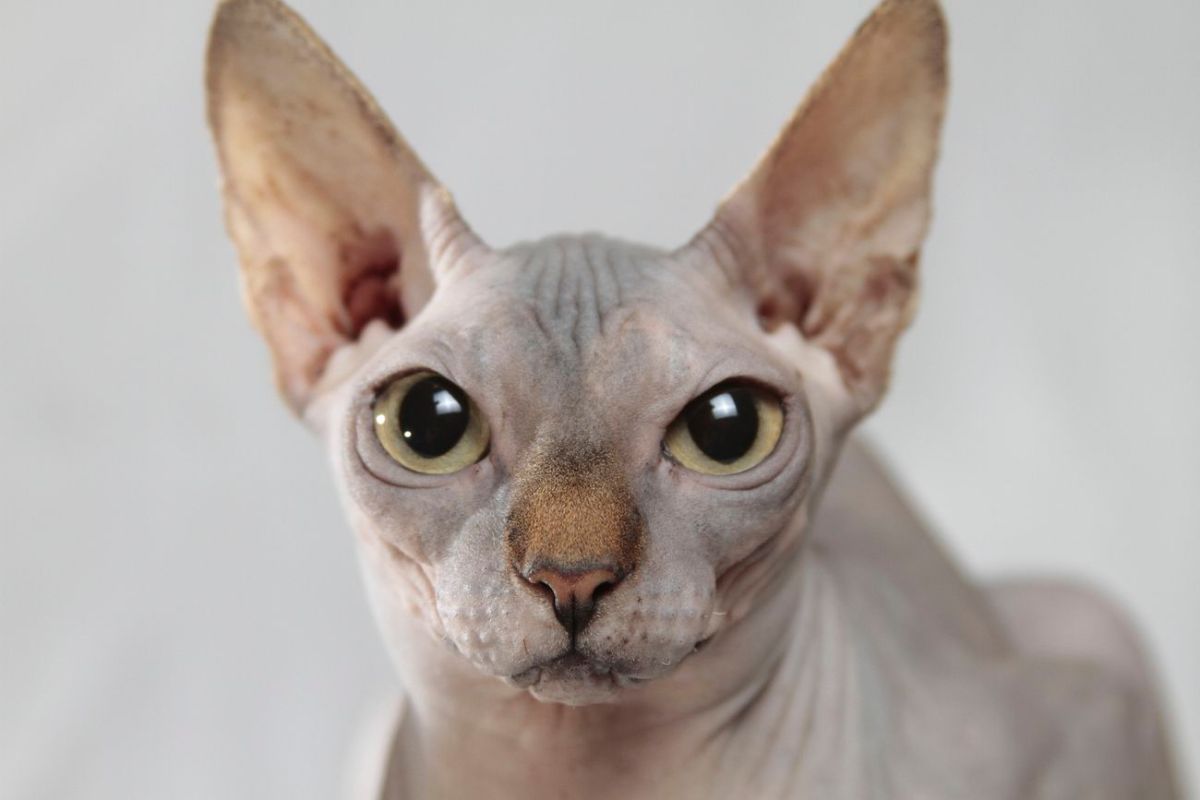
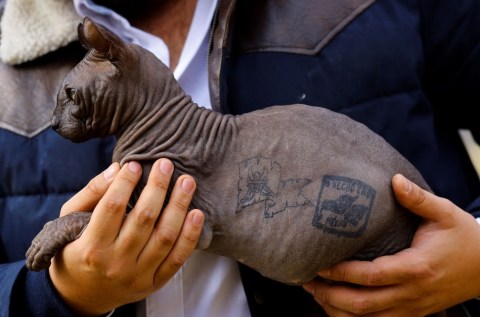
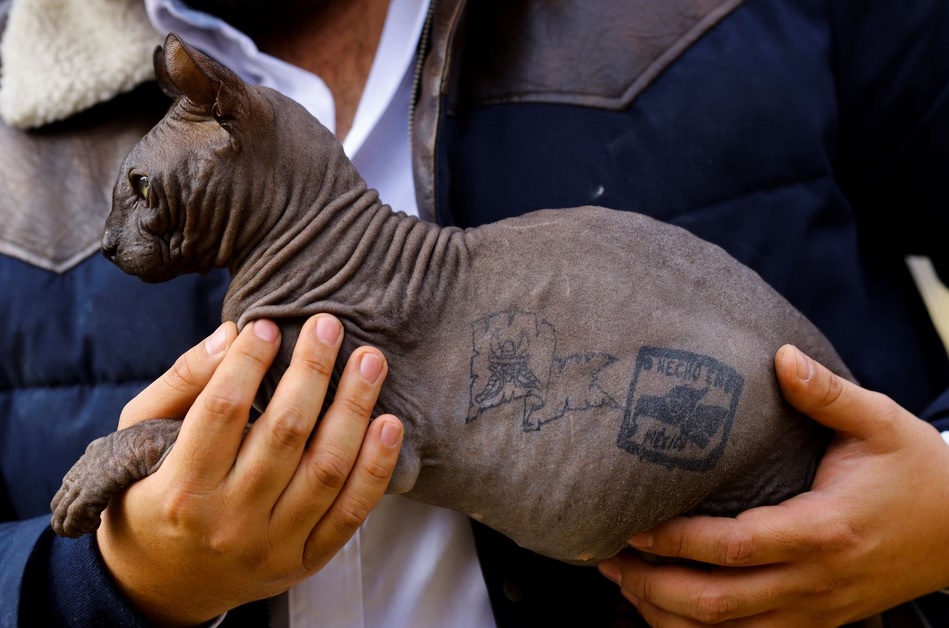
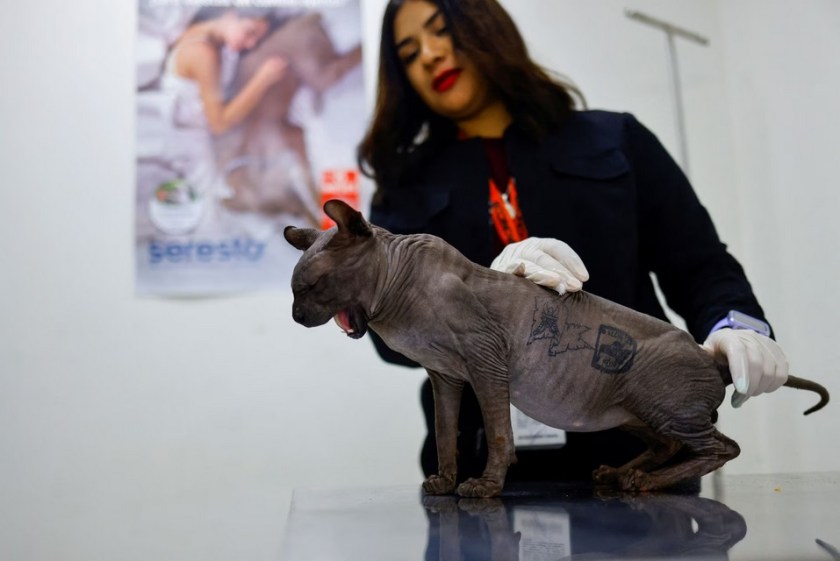
The unnamed feline is a hairless Egyptian who was the personal pet of Ernesto Alfredo Piñon de la Cruz, aka “El Nato,” the former leader of the Sinaloa cartel-aligned Los Mexicles gang. Cruz, who lived in a “luxury cell” at CERESO like other drug lords incarcerated there, had the kitty tattooed with a skull flag and the phrase “Hecho en Mexico,” or “Made in Mexico,” a slogan of Los Mexicles.

Cruz and dozens of fellow inmates instigated a riot at CERESO 3 on Jan. 1, leading to the death of 10 prison guards and seven inmates, and the escape of 30 more. He died along with several others in a shoot-out with Mexican authorities three days later and the rest were apprehended.

When Juarez’s governor ordered a thorough sweep of the prison — in which the inmates had become the de facto wardens and guards had lost control of the cell blocks — armed police squads found the forgotten feline, along with thousands of illegal amenities like couches, plasma TVs, video game consoles, air conditioners, heaters, personal laundry machines and even a mechanical bull.

tatcat1

A council of authorities and animal welfare officials from Juarez whittled applications to adopt the cat down to 10 finalists and decided to go with an American adopter in Texas who already has one Egyptian, is well versed in their care, and can offer the tattooed cat a stable environment.

They haven’t identified the adopter, which is probably for the best in a situation where even the police often wear masks to conceal their identities when conducting operations against cartel targets, for fear of retribution if they’re identified.

sicariomonkey
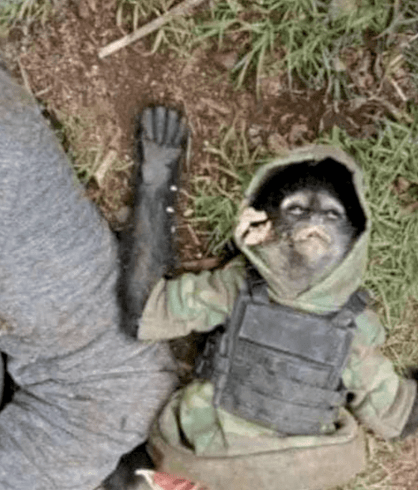
A so-called “sicario monkey” was incidentally shot in a shoot-out with his cartel member “owner” in June of 2022. Credit: Texcaltitlan police

As the Washington Post notes, stories of “status” animals are common with cartels. In Colombia, hippos acquired decades ago by notorious drug lord Pablo Escobar for his private zoo were allowed to roam free, multiplying to more than 130 today and causing problems in the areas they frequent. And in the summer of 2022, police in a shootout with gangsters killed a member of the notorious La Familia Michoacana cartel along with his pet spider monkey, who wore a tactical vest and a custom camouflage jacket. A Bengal tiger, also illegally acquired by the cartel, was unintentionally set loose in the chaos during the same raid, but was not killed.

Cat in the bag

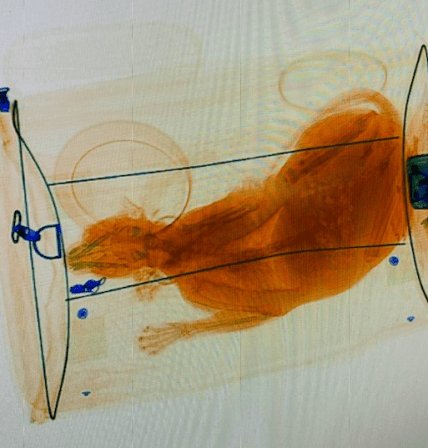
TSA found another pet cat in the luggage of a traveler, this time at Norfolk Airport in Virginia on the morning of Friday, March 3.

This time the cat’s caretaker did intend to travel with their pet but forgot to take the little one out before putting luggage through an X-ray machine. TSA spokeswoman Lisa Farbstein, who regularly works puns into her announcements about cats found in luggage, had fun with the discovery while also reminding people it’s not a good idea to send pets through X-ray scanners.

“Attention pet owners: Please do not send your pet through the X-ray unit. Cat-astrophic mistake!” Farbstein tweeted Friday.

FqUgceQXgAYU3lC
An image of the cat as it passed through a security scan at Norfolk Airport in Virginia on March 3, 2023. Credit: TSA

Although the cat seems unharmed and the TSA said there’s likely no damage caused by a single trip through the machine, Farbstein said passengers should still be careful.

“The passenger needs to remove the pet from a carry case and carry it through the walk-through metal detector or walk the pet through the metal detector on a leash,” she told CNN. “This is typical of how people travel with small dogs. In the case of a cat, if there is no leash, we strongly recommend that the passenger requests screening in a private screening room” to prevent the cat from freaking out and getting loose in the airport.

What’s your favorite thing about your cat(s)?

Buddy has free reign when it comes to 95 percent of the home and the only times I stop him from doing something are when he might hurt himself, such as trying to steal a piece of food that’ll make him sick or chewing electrical wires.

Thankfully he gives himself away when he’s about to do something he knows he shouldn’t do, making a hilarious vocalization — a trill that sounds like “Hmmm I know I’m not supposed to be doing this, but…” He’s done it since he was a kitten, when he still didn’t get the concept of a litter box and would crap under my bed. (It took almost two weeks, an adjustment in the placement of the litter box, and finally a switch to Dr. Elsey’s Kitten Attract litter before the lightbulb went off in his little head and he got it.)

Years later he still makes the same sound, but when I move to intervene, he immediately flops onto his side and splays his limbs out, a move that says “Hah! I wasn’t gonna do what you thought I was gonna do, and you can’t pick me up!”

He did it to me three times last night and my attempt to dissuade him in a Serious Voice failed spectacularly when I saw Bud flash his “I’m Just An Innocent Widdle Kitty” face at me and broke down laughing.

One of my favorite things about Bud is how he makes me laugh with his antics. The little dude is clever.

What are your favorite things about your cats?

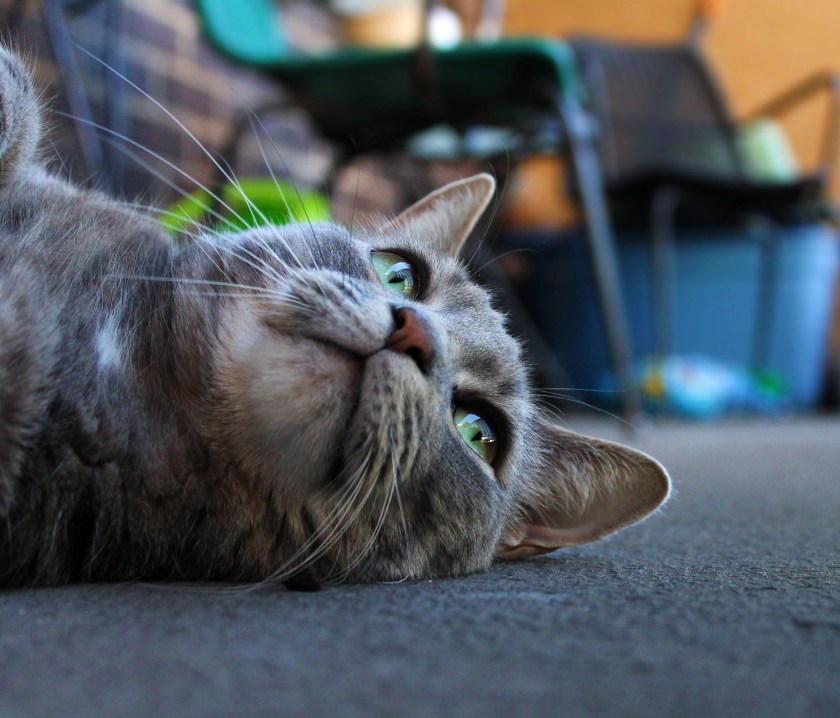
buddy_layingdownclose
“I’m just a widdle kitty. Totally innocent. Totally didn’t knock a bag of chips all over the floor and pretend I had nothing to do with it.”

Cat With Gang Tattoos Rescued From Mexican Prison, Up For Adoption

Authorities found the cat in a sweep after a New Years Day riot resulted in 17 deaths and the escape of thirty inmates.

On Jan. 1, the inmates in one of Mexico’s most notorious prisons celebrated the New Year by starting a riot.

Ten prison guards and seven inmates lost their lives in the violent chaos, and thirty inmates escaped the CERESO 3 prison, according to press reports from Mexico.

When authorities finally regained control — an effort that required the military, national guard and local cops — they conducted a sweep of the facility for contraband and weapons, and that’s when a police K9 unit found a cat wandering the dangerous grounds by himself.

Dubbed “the gangster gato” by the local press — he doesn’t yet have a real name — the feline was taken into the care of Juarez’s Department of Animal Welfare for the Rescue and Adoption of Pets while police complete their investigation.

tatcat3
The cat, who reportedly belonged to the late Los Mexicles gang leader, is in good health. Credit: Juarez Animal Control

He’s an Egyptian, a breed that commands up to $2,000, and reportedly belonged to Ernesto Alfredo Piñon de la Cruz, aka “El Nato,” the former leader of the Sinaloa cartel-aligned Los Mexicles gang. Cruz was the alleged “mastermind” of the escape who died on Jan. 5 when police caught up to him. He didn’t go quietly and died in the resulting shootout.

Although it may be difficult for Americans and others to imagine how prisoners could keep pets, stories about the subsequent raid and sweep say authorities found “VIP cells” stocked with amenities like space heaters, air conditioners, personal washing machines and various other electronics. The Chihuahua State Human Rights Commission and other NGOs had previously warned that the inmates were “practically running the prison,” and that guards there didn’t have the manpower or will to crack down on illegal activity in the cell blocks.

Gang leaders and others who had power were able to set up their cells like lounges, with couches, plasma TVs, video game consoles, stereos and card tables. One had a pet snake in a terrarium, and several kept safes full of cash they’d use to pay for items smuggled in through a secret entrance. There was even a mechanical bull to amuse the inmates and help them kill time.

In all, authorities seized more than 2,800 pieces of contraband, according to reports.

“The privileges are over,” Chihuahua Gov. Maru Campos said earlier this month as authorities showed some of the contraband and weapons they’d seized to reporters.

The cat is in good health, staff at the Juarez Department of Animal Welfare say. He’ll always carry scars from his time in CERESO 3, unfortunately, because the Mexicles tattooed him with the gang’s logo and an associated slogan, “Hecho en Mexico,” or “Made in Mexico.”

Despite living in such chaotic and dangerous conditions, “the cat is very sociable, and is in great shape, with no infections,” said Cesar Rene Diaz, a Juarez official.

The city is taking applications for adoption and a committee of Juarez officials will make the final decision on who gets to give the kitty a forever home. Government officials and their relatives are barred from applying to adopt the cat.

Help ID This Woman Who Dumped A Cat In A Garbage Can

If a bystander hadn’t witnessed the event and rescued the cat, it’s likely the little guy would have starved or died of dehydration.

Authorities in a Texas town near Houston need help identifying a woman who tossed a cat, carrier and all, into a garbage can.

The woman parked her car in a nature preserve in Rosenberg, Texas, at about 11 am on Jan. 12, opened the backseat to retrieve a cat carrier and unceremoniously dumped it in a garbage can.

A bystander happened to witness — and film — the entire sequence of events, and after checking the trash it turned out there was a scared two-year-old cat inside the carrier. The bystander brought the cat to Rosenberg’s animal control department.

“If no one would have seen this happening, that cat would have been in that container in that trash can with no access to food, (or) water,” said Omar Polio, the town’s director of animal control. “Not acceptable.”

The cat is a beautiful, affectionate white and brown male the shelter has dubbed King Triton. He’s in their care for the time being. King Triton is healthy, Polio said, and it’s not clear why the woman would have dumped him instead of surrendering him to a shelter.

While shelters are crowded, “we can always find resources that can better suit these animals,” Polio said, imploring people not to abandon or toss animals away like trash.

Polio said his agency would like the public’s help identifying the woman. It’s not clear what kind of charges she might face. Anyone with information can call Rosenberg Animal Control and Shelter at 832-595-3490.

Video of the incident provides a clear look at the woman, but the resolution isn’t high enough to make out the license plate on her car.

Here’s a news segment of the incident with footage of the woman getting out of her car, dumping the cat, casually returning to her vehicle and driving off. She has dark hair that was in a ponytail at the time and was wearing shorts and sunglasses:

Alabama Cat Ladies Raise $85k For Legal Appeal, Plan To File Civil Suit

Mary Alston and Beverly Roberts will return to court for an appeal on February 23 after they were convicted in December of charges associated with managing a cat colony.

Two women who managed a cat colony in their Alabama hometown — and were rewarded with an infamously tone-deaf arrest and criminal conviction for their efforts — have raised $85,000 for their appeal.

This time, their fate won’t be decided by a small-time judge appointed by the same mayor who ordered police to arrest the women in the first place.

Mary Alston and Beverly Roberts of Wetumpka, Ala., were arrested on June 25 after three police cars pulled up and four officers surrounded them on public land, demanding they stop their efforts to trap feral cats and leave the area immediately.

Alston and Roberts, who were in disbelief that four officers had been dispatched and were treating them like hardened criminals, didn’t move fast enough for the cops, who berated them and placed them both in handcuffs before charging them with a pair of misdemeanors each.

Their attorneys fought for months to obtain a copy of the police body camera videos of the arrest, and when they finally obtained that copy, it became apparent why the Wetumpka Police Department fought to keep it out of their hands.

The footage shows officers warning the women the confrontation was “going to get ugly,” insulting them and joking that they were “a bunch of cops beatin’ up on some old ladies.” It showed the police escalated the situation and had little regard for two women who were doing their hometown a service by managing a stray cat colony and conducting TNR — trap, neuter, return — to prevent the cats from breeding and multiplying.

They were convicted in a December trial that was followed by local and national media.

Now Roberts, 85, and Alston, 61, have raised $85,195 for their appeal via GoFundMe, with more than 3,000 donors across the US contributing to the fund.

After filing an appeal on Dec. 19, the women have been notified that their first hearing is set for Feb. 23 in front of 19th Judicial Circuit Court Judge Amanda Baxley, said Mary King, Roberts’ daughter. Baxley was sworn in earlier this month and begins her tenure on Jan. 17 after she was elected to the post in November.

bravecop
A Wetumpka police officer wags a finger at Roberts, who was 84 years old at the time, before handcuffing her hands behind her back and rifling through her personal possessions.

In a December trial, attorneys for Alston and Roberts revealed it was Wetumpka Mayor Jerry Willis who personally dispatched the officers by calling the assistant chief after spotting Alston’s car parked near a wooded area owned by the county. The lawyers also questioned Willis on his history of feuding with the pair on animal-related issues.

Although Willis testified that he did not tell police to arrest the women, Officer Jason Crumpton testified that he was indeed instructed to make the arrests before he arrived and determined what the women were doing.

Despite the fact that Wetumpka does not have laws against feeding or trapping cats, municipal Judge Jeff Courtney, who is directly employed by the town instead of being answerable to voters, found Alston and Roberts guilty of two misdemeanors each, sparking an outcry in local and national media. Courtney found Roberts guilty of trespassing and disorderly conduct, while he found Alston guilty of trespassing and interfering with governmental operations, an analogue for resisting arrest.

“I thought that they surely had more pressing issues to attend to,” Roberts told PITB in December. “I really thought the judge would dismiss it and tell the city to work it out.”

The arrest and conviction were widely panned by observers, including Alabama Political Reporter’s Josh Moon, who called the drama an “utterly absurd” spectacle that “reeks of small town politics.”

Roberts and Alston hope Baxley will give them a fair trial, which they believe they did not receive under Courtney in Wetumpka.

In the meantime, the colony cats in Wetumpka remain on their own. Willis, who has not responded to requests for comment by PITB, allegedly rejected offers by animal welfare groups in neighboring towns to care for the cats.

“We are very worried about them,” Roberts told PITB last month. “A few animal lovers have said they would help, but we are not sure this will happen. I’m not sure there is enough food available to hunt. The weather is getting colder, and they need protein.”

‘We Never Broke Any Laws’: In Disbelief Over Their Conviction, Alabama Cat Ladies Vow To Appeal

After a judge barred them from caring for a cat colony, Mary Alston and Beverly Roberts say they’re worried about the strays, who have been left to fend for themselves as winter sets in.

They’d been treated like hardened criminals and insulted by the same police officers who were supposed to protect them, but Beverly Roberts and Mary Alston didn’t think they’d be convicted.

Not for taking care of cats.

“I felt it was very unlikely that we would be found guilty,” Alston told PITB, “with all of the evidence that we had on our side with the body camera footage, and we never broke any laws.”

Roberts and Alston were arrested on June 25, when a trio of police cars pulled up and officers from the Wetumpka, Alabama, police department confronted them. Police body camera footage shows the women, who had been caring for a colony of stray cats, were surprised by the tone and impatience of the officers.

What they didn’t know was that Wetumpka Mayor Jerry Willis was the one who’d in effect dispatched the officers to the small wooded lot owned by Elmore County, grounds that are open to the public. They didn’t know that the officers — who warned the confrontation was “going to get ugly,” told the women they’re “too old to be acting this way” and later joked that they were “a bunch of cops beatin’ up on some old ladies” — were told by the assistant chief of police to arrest them after Willis spotted Alston’s parked car and called the assistant chief directly.

On Tuesday, despite the fact that Willis’ role was revealed during a trial, and despite the fact that Wetumpka has no laws against managing cat colonies or conducting “trap, neuter, return” activities, Alston and Roberts were convicted of a pair of misdemeanors each. Lacking laws to charge them directly, the authorities instead accused the women of trespassing on public land and being uncooperative with the officers.

“That’s what I kept going back to – that feeding and trapping cats is not illegal,” Roberts told PITB. “I was not in the location I was [accused of trespassing], and I was sitting in my car talking to my friend. I was not feeding cats.”

During the trial, Willis and the police argued that they’d already told Alston and Roberts to stop interacting with the cats, and said the pair chose to ignore earlier warnings to stay away from the stray colony. They reiterated their view that the colony is a nuisance.

Roberts said she’s had her disagreements with Willis in the past about the way the town handles animal-related issues, but says Wetumpka’s animal control officer gave her and Alston his blessing to manage the cat colony at their own expense. The animal control officer confirmed that during the Tuesday trial. Public-private partnerships to care for stray cats are common in towns and cities across the US, with many elected leaders welcoming the opportunity to work with local rescues and volunteers.

Roberts and Alston say they plan to appeal their conviction, hoping a county judge will see the charges as “politically motivated” accusations. They pointed out that Wetumpka municipal Judge Jeff Courtney is employed directly by the town, not elected to the post by voters, and they believe they’re more likely to get a fair shake when the people deciding their fate aren’t serving at the pleasure of the people making the accusations.

In the meantime, the cat colony remains in Wetumpka, and the cats haven’t been cared for since late June.

“We are very worried about them,” Roberts told PITB. “A few animal lovers have said they would help, but we are not sure this will happen. I’m not sure there is enough food available to hunt. The weather is getting colder, and they need protein.”

Since the terms of the sentencing include two years’ probation, Alston and Roberts are prohibited from caring for the strays. Alston noted the irony of local authorities claiming TNR was exacerbating a “nuisance” while, in the absence of care and neutering, the free felines “are left to go hungry and continue to multiply and branch out searching for food.”

Roberts says she still finds it hard to believe Wetumpka officials refused to compromise or find a way to establish cooperative care for a community problem.

“I thought that they surely had more pressing issues to attend to,” she said. “I really thought the judge would dismiss it and tell the city to work it out.”

Top image credit Wikimedia Commons