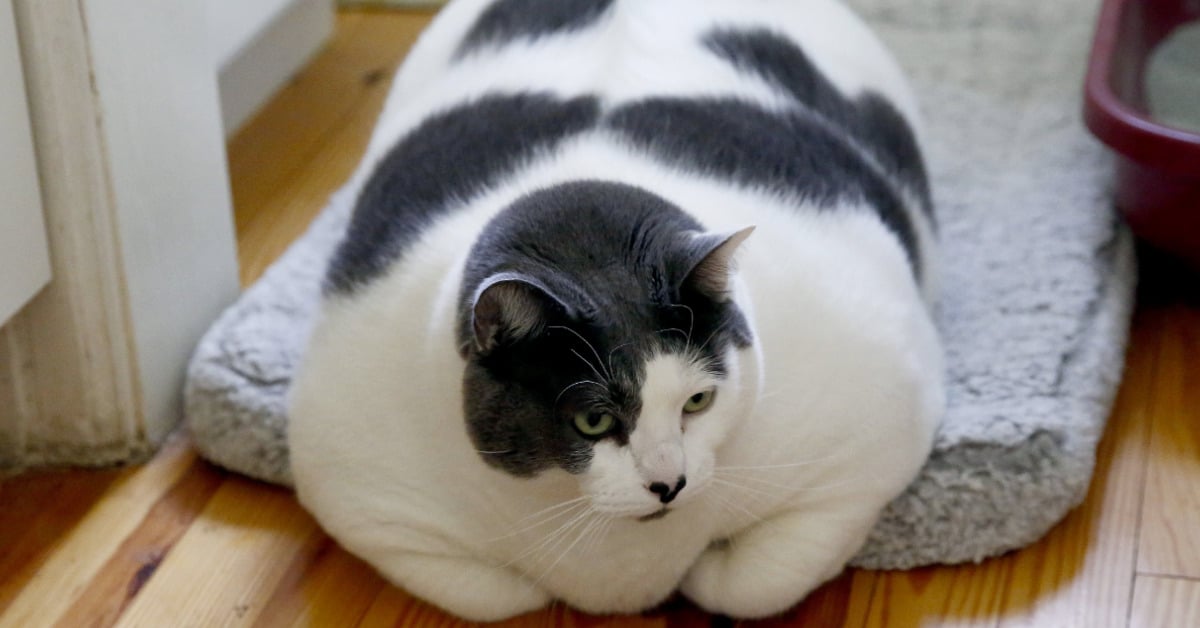
Patches was the biggest cat the staff at a Virginia animal shelter had ever seen, and was within snacking distance of the all-time record.
When Patches was surrendered to a Virginia animal shelter in mid-April of 2023, the staff — including longtime veterans of cat rescue — were taken aback.
The six-year-old feline weighed in at a staggering 40-plus pounds and was so big, the shelter staff had to keep him in an office because the largest crates they had were barely large enough for Patches to turn around.
“We thought we had seen big cats before, but he was definitely the biggest that we’ve ever seen,” Richmond Animal Care and Control’s Robin Young told the Washington Post at the time.
Patches was in dangerous territory for his personal health, and if allowed to continue gaining weight, he’d threaten the world record for a domestic cat, which is more than 46 pounds. (Guiness World Records stopped recognizing the heaviest cats decades ago because the organization didn’t want to encourage people to overfeed their cats in pursuit of the record.)
Top row: Patches in the early days shortly after his adoption. Bottom row: Patches after losing a significant amount of weight.
Last week, Patches reached a new milestone, weighing in at 18.94 pounds after more than two years of eating healthy and getting exercise with the help of Kay Ford, a retired businesswoman who adopted him.
It’s an incredible achievement, and one that was hard-fought, as anyone familiar with cats will know. Many well-fed cats can convince almost anyone they’re starving.
Ford’s pitch to the shelter made it easy for them as they fielded a flood of adoption applications for the chonkster, who had attracted plenty of attention as soon as the shelter posted about him online.
Ford told the shelter she was experienced, committed to helping Patches get down to a healthy weight, and would look forward to the challenge. She’d put on a few pounds during the pandemic, she added, and would lose weight alongside her new pal.
“I’ve had cats all my life,” Ford told the Post at the time. “It just seemed like the right thing.”
Ford with Patches shortly after meeting him. Credit: Richmond Animal Care and Control
She agreed to meetings at the shelter to review a weight loss plan and began documenting Patches’ progress on a Facebook page, Patches’ Journey, which now has more than 53,000 people following the feline’s transformation.
His diet isn’t over, and it’s a lifestyle change meant to be permanent, but there are a lot of people who are proud of the (much less) big guy, who now looks like a completely different cat.
Three states have banned declawing so far in 2025.
Six down, forty four to go.
California became the sixth and latest state to ban cat declawing this week when Gov. Gavin Newsom signed Assembly Bill 867, which makes it illegal to remove a feline’s claws unless it’s medically necessary for the health and survival of the cat.
Declawing may sound like a sort of kitty manicure, but the neutral name disguises a cruel form of elective mutilation that involves amputating a cat’s toes at the first knuckle.
It’s the equivalent of chopping off a third of each finger, all to prevent potential damage to inanimate objects like furniture. The procedure has been condemned by every major animal welfare group including the Humane Society and the SPCA.
Credit: Tamba Budiarsana/Pexels
Declawing inflicts a lifetime of pain on cats, changes feline gait and posture, leads to early arthritis and causes a long list of secondary problems. For example, declawed cats are much more likely to bite because they have no other form of defense when they feel threatened, and they’re also much more likely to stop using litter boxes because it hurts to walk on the sand-like and granule texture of the litter with half-amputated toes.
Lawmakers haven’t worked out the details on how the new law will be enforced or what the penalties will be if veterinarians illegally perform the procedure. Other states have implemented a system of increasingly harsh fines and the suspension of veterinary licenses for repeat offenders.
New York became the first state to ban declawing in 2019. Maryland and Virginia followed in 2022 and 2023, respectively, and in 2025 Massachusetts, Rhode Island and now California have all passed similar laws.
Rhode Island’s law has some teeth: veterinarians who violate it will have their licenses suspended or revoked.
Five down, forty five to go.
With a new law going into effect in the fall, Rhode Island joins New York, Maryland, Virginia and Massachusetts in banning the declawing of cats.
Declawing may sound like a sort of kitty manicure, but the neutral name disguises a cruel form of elective mutilation that involves amputating a cat’s toes at the first knuckle.
It’s the equivalent of chopping off 1/3 of each finger, all to prevent potential damage to inanimate objects like furniture.
“Declawing is painful, unnecessary and inhumane. It’s no way to treat any pet,” said Rhode Island state Sen. Melissa Murray, one of the bill’s co-sponsors. “Fortunately, there has been growing awareness of the risks and cruelty of declawing. Our state must recognize that declawing is animal abuse and prohibit it altogether.”
Rhode Island’s new law is more prohibitive than some of the others: veterinarians who declaw cats once the law goes into effect on Sept. 1 will have their licenses suspended or revoked entirely.
Declawing doesn’t “just” cause short term pain from the procedure. It forces cats to change the way they walk and move in general, altering their gaits. As a result, declawing leads to early onset arthritis among a host of other medical problems.
Declawing also results in psychological and behavioral problems. Cats who are declawed often become depressed, and they’re more likely to avoid the litter box since standing on litter is painful for them.
Since the procedure also takes away their primary defensive mechanism, declawed cats are much more likely to bite, which along with litter box avoidance means they’re more likely to end up abandoned in shelters.
Bud’s got this one, which is sold as the Ultimate Scratcher, which is about 3 feet tall and sturdy, offering an optimal place for cats to literally scratch their itch.
Cats should never be declawed!
There are several viable options for keeping them from scratching furniture, including nail caps and redirecting them to scratchers. The latter are a bare necessity if you have a cat, as scratching is a natural feline behavior and our little friends will find something to scratch if we don’t provide them with appropriate scratching surfaces.
Since cats like to stretch while they scratch, I highly recommend getting a large tower scratcher with a secure base. Bud has one, he uses it constantly, and he does not touch the couch or the chair in the living room, nor does he touch any other furniture. It can be done, it just requires patience and consistent redirecting, with positive encouragement.
Negative reinforcement, such as yelling at your cat, will not achieve results. The only thing it will accomplish is damaging your relationship and trust with your cat.
Since New York became the first state to ban declawing in 2019, more states have considered similar legislation. Although routinely opposed by state Veterinary Medical Associations — special interest groups that represent a portion of veterinarians who see declawing as a reliable money-maker — lawmakers have allied with veterinarians in support of bans, as well as groups like the Humane Society, the SPCA, the Animal Legal Defense Fund and the Paw Project to overcome opposition and get bills passed.
Bird flu is killing cats domestic and wild, in captivity and in nature. Experts are sounding the alarm, warning people not to feed their cats raw food, allow them to drink milk, or let them roam outside where they can easily catch the virus by going after small prey.
Highly Pathogenic Avian Influenza, the clinical name for bird flu, is a danger to all animals, but for cats it’s a virtual death sentence.
Only a handful have survived infection thanks primarily to early diagnosis, intervention and round-the-clock veterinary care. In the vast majority of cases, the virus burns through its feline victims in three or four days.
Bird flu has become even more deadly for felines of late. Of the 126 domestic cats killed by H5N1 since 2022, according to the US Department of Agriculture, half of them have have died in 2025 — and it’s only been three months.
To appreciate the true scope of the problem, the more illuminating statistic may be 82 million, which is the number of chickens “culled” — killed — in the US since 2022 because they were infected or raised at facilities where other birds tested positive for the virus.
Factory farming compounds the matter: more than 1.6 million egg-laying hens and 337,000 “pullets” — chickens less than a year old — were “depopulated” at a single facility in Texas last year. As staggering as those numbers are, Texas’s Department of Agriculture noted the figure merely “accounts for approximately 3.6% of the company’s total flock.”
“To provide context on the overall size of the U.S. poultry flock, there are more than 378.5 million egg-laying chickens in the United States. In 2023, more than 9.4 billion broiler chickens and 218 million turkeys were processed in the United States.”
If there ever was an example of putting too many eggs in one basket, this is it. American food supplies are vulnerable with so much concentrated in the hands of so few companies, a lesson the general public is learning the hard way now after eggs peaked at record prices last month. Things have cooled off a bit since then, but shoppers aren’t getting any benefit as grocery chains continue to charge a premium: the nationwide average for a dozen eggs was $5.90 in February, but stores in some states are still charging $10 or more.
It also raises questions about the sustainability and ethics of eating animals. Humans slaughter more than 75 billion chickens every year, and projections indicate there will be three billion more of us by the mid-2080s.
Meat from infected chickens can still end up in your cat’s bowl
Media reports about culling give the impression that those birds are removed from the food chain, but that’s not entirely true. The pet food industry has always cut corners by harvesting meat not fit for human consumption, a category that includes everything from the carcasses of sick animals, to “meat by-products” that can include beaks, hooves, eyes, hearts and other organs.
So while the culled chickens won’t show up in shrink wrap at the grocery store, they are making it into the pet food supply chain. Most pet food is “rendered,” cooked at such high temperatures that potential pathogens have been destroyed.
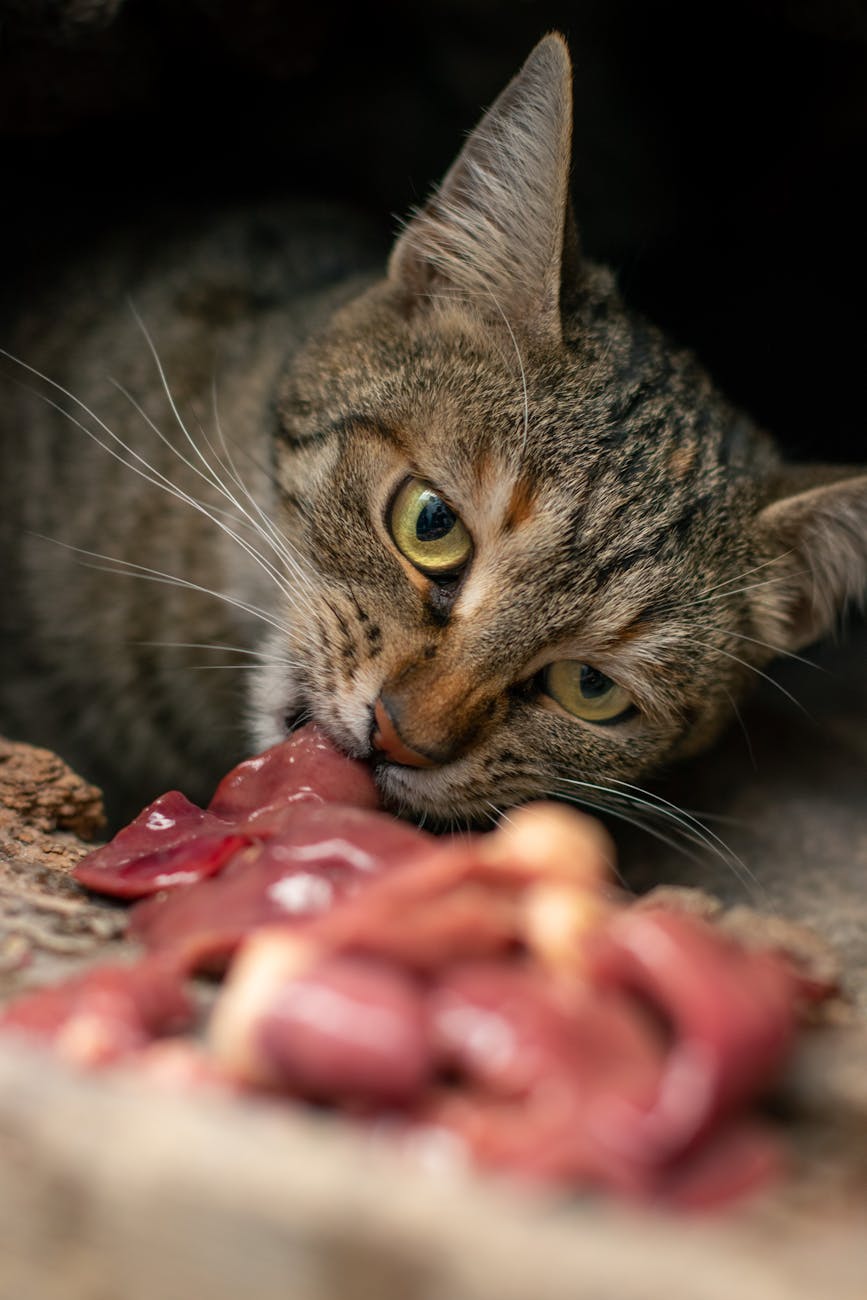
But an increasingly bigger slice of the market has been claimed by companies selling “premium” raw food — and that’s been the primary infection vector for domestic cats, particularly indoor cats who otherwise would have little or no exposure to the virus. (Cats who spend time outdoors can catch bird flu by preying on infected animals, just as wild cats do, and barn cats have caught it by drinking the milk of infected cattle.)
Cats are mostly lactose intolerant, and should not be given cow’s milk, despite the common misconception that it’s healthy for them.
“The animals that were depopulated could potentially have ended up in the food chain for pets,” Laura Goodman, an assistant professor at Cornell University’s Baker Institute for Animal Health, told NBC News. “It’s not uncommon for substandard meat to end up in the pet food chain.”
That’s what happened to Tim Hanson’s beloved cat, Kira, who died in February after eating raw food from a company called Wild Coast. The company has recalled the product, Boneless Free Range Chicken Recipe. It’s one of four recalls in the last month alone.
Hudson is suing Wild Coast for the veterinary bills — about $8,000 — and said he was devastated that Kira, whom he called “the happiest cat,” is gone. He said he thought he was doing right by her by feeding her the expensive raw food, but now urges people to avoid feeding their cats raw food at all costs.
“I don’t want any more cats dying,” he said. “Hopefully people can learn from Kira’s passing.”
Top image via Pexels. All other images via Wikimedia Commons
Scottish Folds are cute, but the genetic mutation responsible for their folded ears also causes lifelong pain, joint problems and misshapen bones.
In 1961, a shepherd named William Ross found a barn cat with a curious feature: instead of the upright, swiveling, satellite dish ears of a normal feline, this cat’s ears were floppy and shapeless, resting atop her head like a tiny knitted cap.
Ross took the cat home and named her Susie. Susie gave birth to a litter of kittens with the same floppy ears, and it all gets a bit murky from there, with a dozen variations of the story online claiming it was Ross himself or a neighbor who “created” the breed.
Regardless of who it was, the floppy ears were transformed from an abnormal feature into the unmistakable characteristic of a breed, and the Scottish Fold was born.
The cute cats quickly caught on and were officially recognized in competitions by 1971.
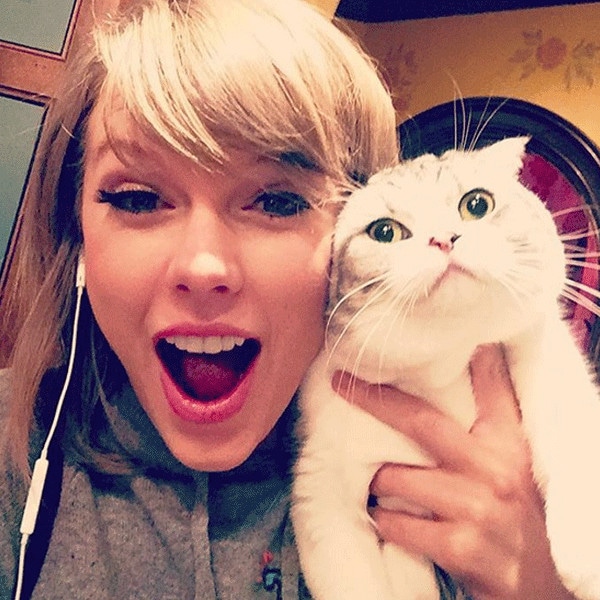
Now they’re more in vogue than ever. They’re the preferred pets of music superstars Taylor Swift and Ed Sheeran, who regularly feature photos and videos of their Scottish Folds in social media posts. People across the world are buying them, and they routinely appear in “best breed” lists online, lauded for being cuddly and docile in addition to adorable.
Ed Sheeran with his Scottish Fold cat. Credit: Ed Sheeran/Instagram
But they’ve also been banned by the same cat fancy groups that initially welcomed them, they’re prohibited outright in some countries, and animal welfare groups are begging people to stop emulating celebrities by buying them.
That’s because the same deformity that gives Scottish Folds their distinctive ears is also responsible for weak and brittle cartilage and bones elsewhere in the body, which results in lifelong pain and disability.
“The disease is evident on x-rays of cats from as young as seven weeks of age. Serious abnormalities in joints and bone growth lead to arthritis (painful, swollen joints), short, abnormally thick, and inflexible tails, spinal abnormalities and short, stiff legs. The welfare impacts of Scottish Fold Osteochondrodysplasia can be severe in terms of pain and inability to perform natural behaviours, as these cats can be lame, walk with an abnormal gait, can be reluctant to engage in normal movements such as walking or jumping, and can even become completely crippled.
There is no cure for this progressive condition.”
Sadly, the deformities and resulting pain may be the reason Scottish Folds are considered docile and cuddly: they may simply be in too much pain to move or protest when their humans hug them or pick them up.
Ross and Turner didn’t know it in 1961, but the folded ears and brittle cartilage were the result of a genetic mutation. It wasn’t until 2016 that a group of American and Australian scientists found a mutation in a single gene, TRPV4, was responsible for weak cartilage and bones, leading to the deformities highlighted by the RSPCA in the passage above, as well as “progressive joint destruction.” The condition is called osteochondrodysplasia.
Swift’s cats have appeared in her music videos, feature prominently in her online posts, and were photographed in her arms for her 2024 post announcing she was supporting Vice President Kamala Harris in November’s presidential election.
Cats Protection, a UK charity, raised the issue in 2024, warning that Scottish Folds were becoming even more popular, with breeders struggling to meet high demand. The group issued a public statement asking cat lovers and Swift fans to avoid buying Scottish Folds. Scottish Folds are equally popular in the US, spurring resistance from stateside animal welfare groups as well.
The Governing Council of Cat Fancy, which registers breeds in the UK — and no longer recognizes Scottish Folds — was even more direct.
“We strongly advise members of the public not to try to acquire cats of this breed,” Steve Crow, chairman of Cat Fancy’s governing board, told The Guardian.








 Pain In The Bud