Some Cat Advocates Claim Kitten Season Is Getting Longer Due To Climate Change

Is there any evidence to support claims of a longer kitten season?

Is kitten season getting longer because of climate change?

Some rescuers in California think so, according to a story in Santa Rosa’s Press-Democrat.

“Heat and warmth is what it’s all about,” said Mary Pulcheon, trapping coordinator for Forgotten Felines of Sonoma County.

Pulcheon and the executive director of Forgotten Felines, Pip Marquez de la Plata, told the Press-Democrat that strays in their care had given birth as late as December in 2023 when kitten season generally runs from late March through October.

They say the typical kitten season has shifted and is now longer due to rising temperatures caused by climate change.

It’s an unverifiable claim for several reasons.

First, we don’t have reliable estimates for how many cats there are in the US, let alone stray and feral cats. Any estimates are guesses, and they vary wildly from 20 million on the low end to 120 million, which seems an excessive and unrealistic number.

To date there’s been a single comprehensive feline census in the US, the D.C. Cat Count. It took three years, several million dollars, hundreds of trail and trap cameras, and the efforts of an army of volunteers and staff.

The final tally: 203,595, with only 6,533 unowned cats fending for themselves and drifting between managed colonies.
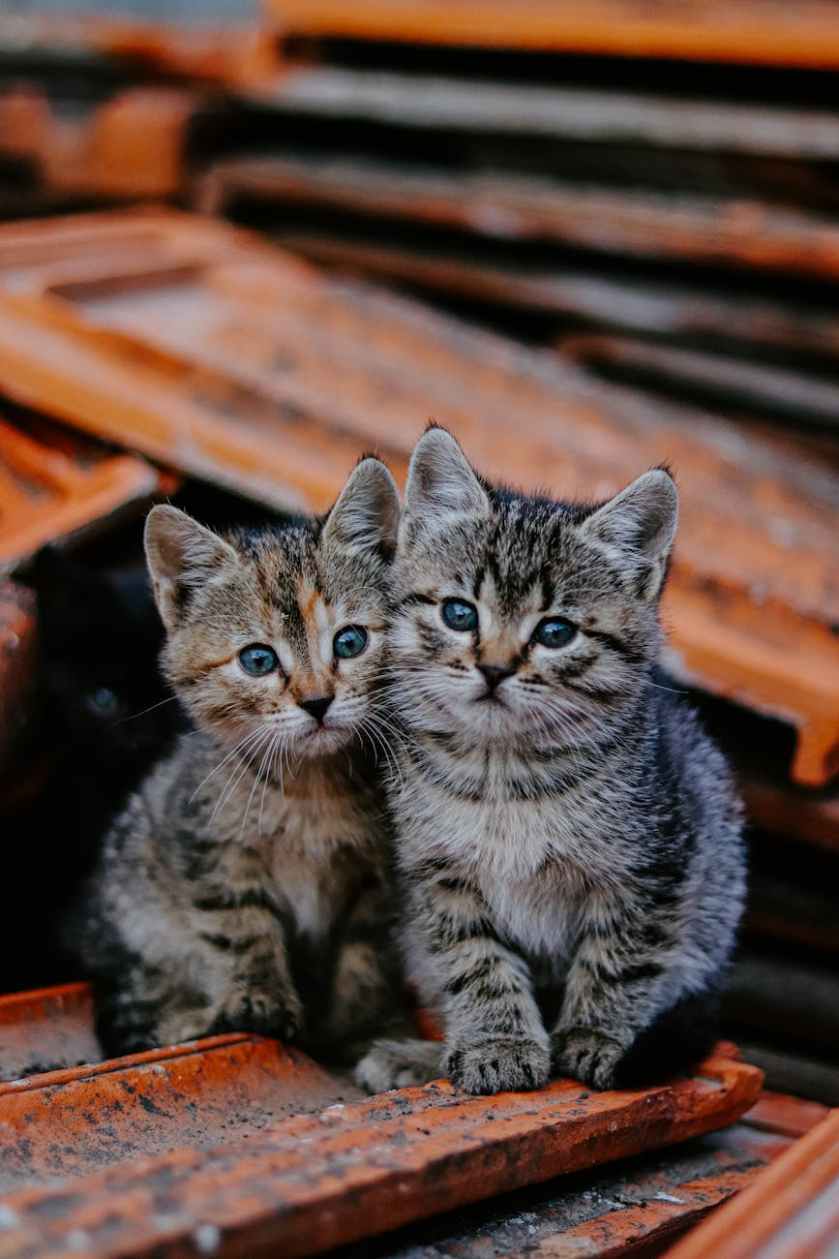
adorable tabby kittens
Credit: Ejov Igor/Pexels.com

The DC Cat Count is historic and has already proven its value by facilitating informed debate, showing rescuers/TNR volunteers where to direct their efforts, and yielding valuable data on local ecological impact.

Alas it’s a one-off, so we don’t know anything about how the population has changed over time.

Secondly, while there absolutely is scientific consensus that human activity is driving global temperatures up, there’s debate about how much temperature flux is directly attributable to modern civilization. We’re also looking at planetary timescales here, tracking changes that happen not just over decades, but centuries and millennia.

Attributing shifts in kitten season to climate change is a bit like attributing single storms to climate change. These are single data points from which we can’t draw conclusions.
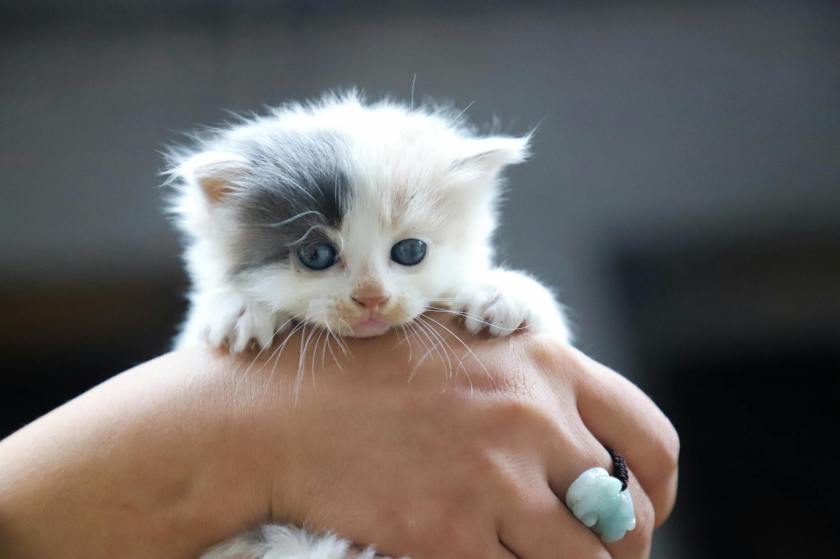
close up photo of person holding white kitten
Credit:Cats Coming/Pexels

Lastly, there could be dozens of factors skewing “normal” kitten season, and that’s assuming the March through October season is normal by historical measurements. We don’t know that for sure, and we can’t know it without data.

I’m limited by a lack of imagination here, but changes in kitten season could be regional, reflect non-climate weather patterns, or adjust according to cyclical patterns. Things as seemingly unimportant as ambient light pollution can have a profound effect on animal behavior, and it always helps to remember that felines are sensitive to stimuli that we literally cannot detect. Cats can pick up high frequency sounds we can’t hear and smell things beneath the notice of our own weak noses. They even have a second form of olfactory input, a literal sixth sense that is unmatched by anything in human biology.

We understand very little about how those things impact feline behavior.

With all things considered there could be hundreds of reasons for changes in kitten season, and that’s assuming the changes are real and people aren’t mistaking outliers for trends.

Ultimately we don’t need to draw conclusions about whether there are more kittens born each season. We know TNR, while imperfect, is the best way to humanely reduce stray and feral populations, and we still have a way to go before cats are no longer euthanized because we can’t find homes for them.
Study: Humans Aren’t Great At Judging Feline Moods, But We Can Improve

People who were asked to identify feline moods based only on audio of meows fared the worst in the study.

A new study suggests people misinterpret their cats’ moods often, but offers an easy fix.

A group of researchers from Paris Nanterre University split participants into three groups: one that was shown soundless video and images of cats, a second group that heard audio-only recordings of feline vocalizations, and a third group that had the benefit of video and sound.

Participants from the first two groups misinterpreted feline moods as much as 28 percent of the time, the study found, but people who had the benefit of seeing and hearing cats correctly identified their mental state almost 92 percent of the time.

The study also yielded another insight: people are much better at accurately assessing positive moods than they are at spotting an upset or antagonistic cat.

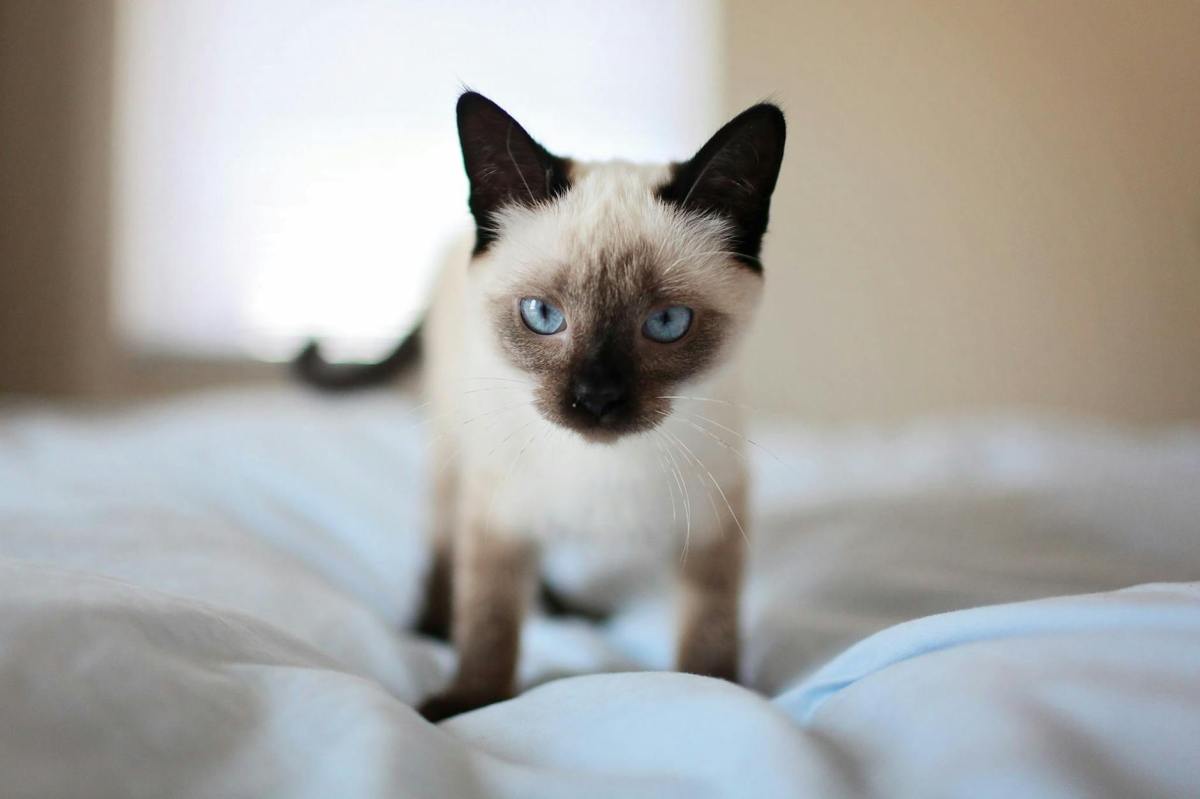
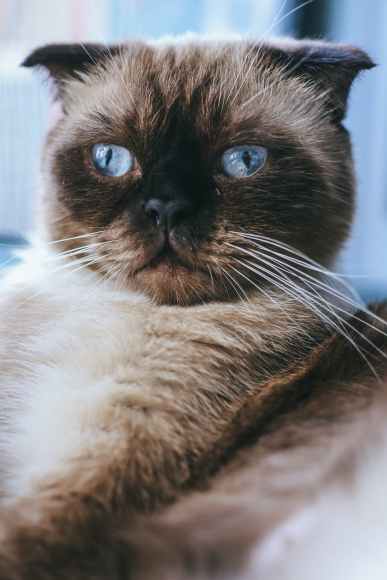
cute cat with blue eyes
Credit: Sami Aksu/Pexels

The findings indicate we’re better off giving our cats our full attention than, say, jumping to conclusions about what they want based solely on their vocalizations or the position of their tails. It seems obvious, but how many of us have our eyes on a screen or we’re multitasking when our cats want our attention?

Of 630 people who participated in the research, 166 were professionals in animal-related fields like veterinary medicine and animal behaviorism, while the rest were lay people. There was a major gender imbalance among participants, with 574 women, 51 men and five people who didn’t identify with either gender.

It’s not clear how such an imbalance might skew the results, and it would be nice to see follow-up research evenly split between women and men.

Why Do Some Cats Do The ‘Begging Paws’/’Praying’ Motion?

The begging/praying motion is one of the most unusual feline behaviors, but what does it mean, and why do some cats do it?

Readers of this blog know I love my cat dearly, but he’s also very weird.

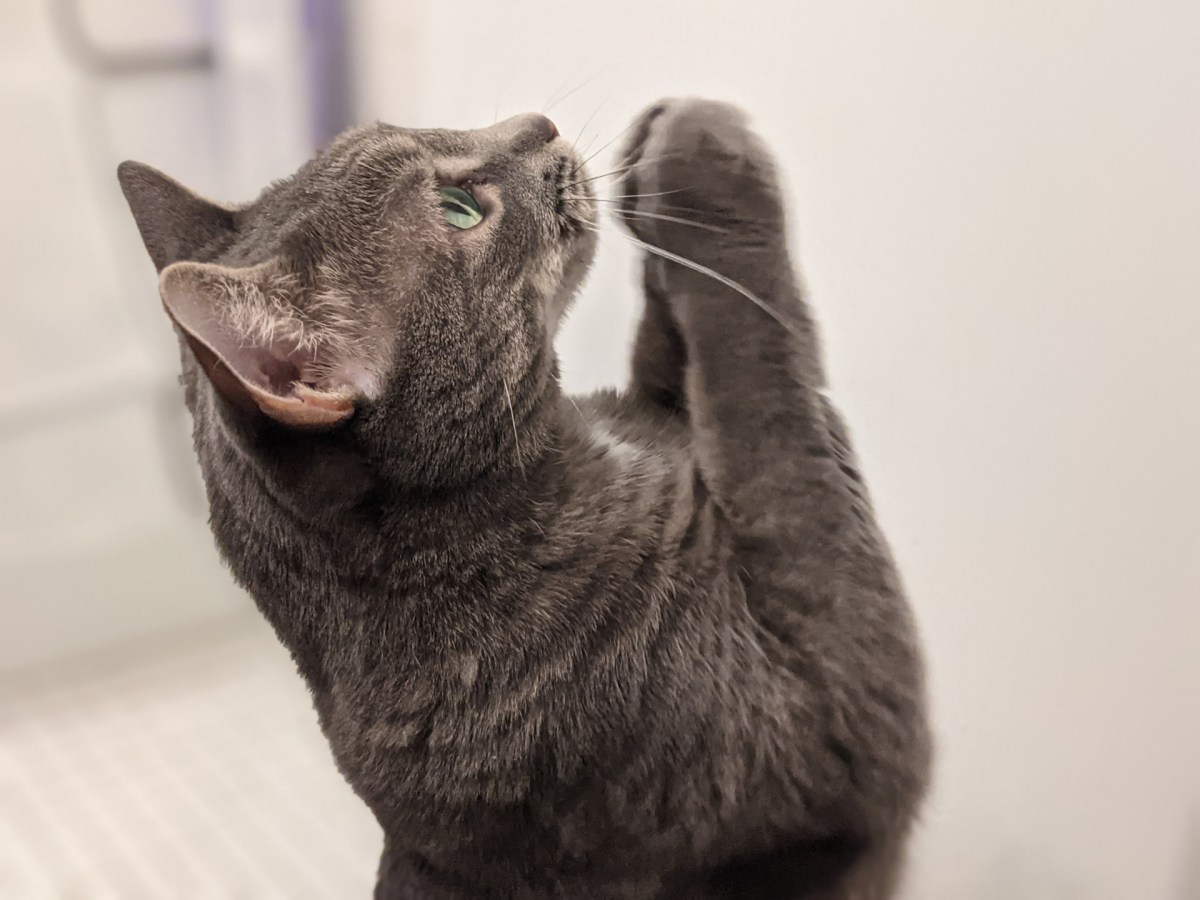
Perhaps his strangest, most mysterious behavior is what I call his “praying” gesture: Buddy sits up on his hind legs, puts his front paws together and raises them up and down as if in fervent  prayer.

The behavior is extremely rare. Out of many millions of cat videos hosted on the internet, only a handful show cats engaging in it.

Here’s Buddy demonstrating his “prayer” form, set to De La Soul’s 1989 track, “Buddy”:

It’s seemingly random and impossible to predict, which is why it’s been so difficult for me to get a decent clip of Bud doing it. The above video is the third time I’ve managed to capture it, and only the second time I’ve been able to get a clear shot following an earlier capture:

ezgif-2-3cfbfed99a30

Some cats do it much more frequently, like the ginger tabby below whose humans have decided it’s an expression of gratitude toward them for giving him a forever home:

I’m confident in saying that, for my cat at least, it’s not an expression of gratitude or a form of begging. First, Bud doesn’t do gratitude, and he doesn’t beg so much as he demands. If he feels I’m not responding quickly enough to one of his directives, he goes right to screeching at me: “Snack now, human!” and so on.

Likewise in the video above, Charlie’s humans say the orange tabby does it “randomly.” They’ve even caught him making the motion on camera when no one else was around, which tracks with my own observations of my cat.

So why do cats do it?

“I’ve seen the ‘begging paws’ online and I wish I had a nice, clear explanation for you,” cat behaviorist Mikel Delgado told us.

Some cats, she noted, learn quickly that it elicits a response from their humans.

“My best guess at why cats continue to do this behavior is that it gets them attention,” Delgado said. “That however, does not explain why they do it in the first place.”

Nancy Meyer, a feline behavior consultant who volunteers for Tabby’s Place in New Jersey, said she believes cats in some of the videos are indeed signaling to their humans that they want something. For example, one clip shows a cat “begging” in front of a refrigerator — which his humans say he often does — while another shows a cat facing its reflection in a mirror while pressing its paws together and moving them up and down.

Some of those cats would be well aware that their behavior is a good way to get their humans’ attention, which could indeed lead to them getting what they want.

“It’s like a meow or gaze alteration; it’s a way of communicating that a cat wants to get something that’s currently out of reach,” Meyer told PITB. “The owners reward the cat for this behavior so the behavior perpetuates.”

In my own anecdotal experience I have witnessed Buddy engage in the behavior when he doesn’t realize he’s being observed, and he’s just as likely to break out in “prayer” while facing away from me. I suspect that because he does it so infrequently, he doesn’t realize it results in attention.

It’s unlikely we’ll get definitive answers unless the behavior becomes the focus of research, but that seems unlikely because of its rarity and its unpredictable nature.

Most of the time it appears benign, but Delgado says caretakers should pay close attention if their cats are engaging in it constantly.

“My only concern is that in some of these cats, the behavior appears almost compulsive – like they can’t/won’t stop,” she told PITB. “I also would recommend chatting with a veterinarian to see if they have any thoughts about whether this might indicate any physiological issue.”

Otherwise it appears benign, so if your kitty occasionally breaks out in “prayer,” enjoy the quirk — and good luck trying to get that elusive footage!

Cat Shows Are Ridiculous, And So Is Cat Fancy

More cats should slap the judges at cat shows.

The short clip shows just about everything wrong with cat shows.

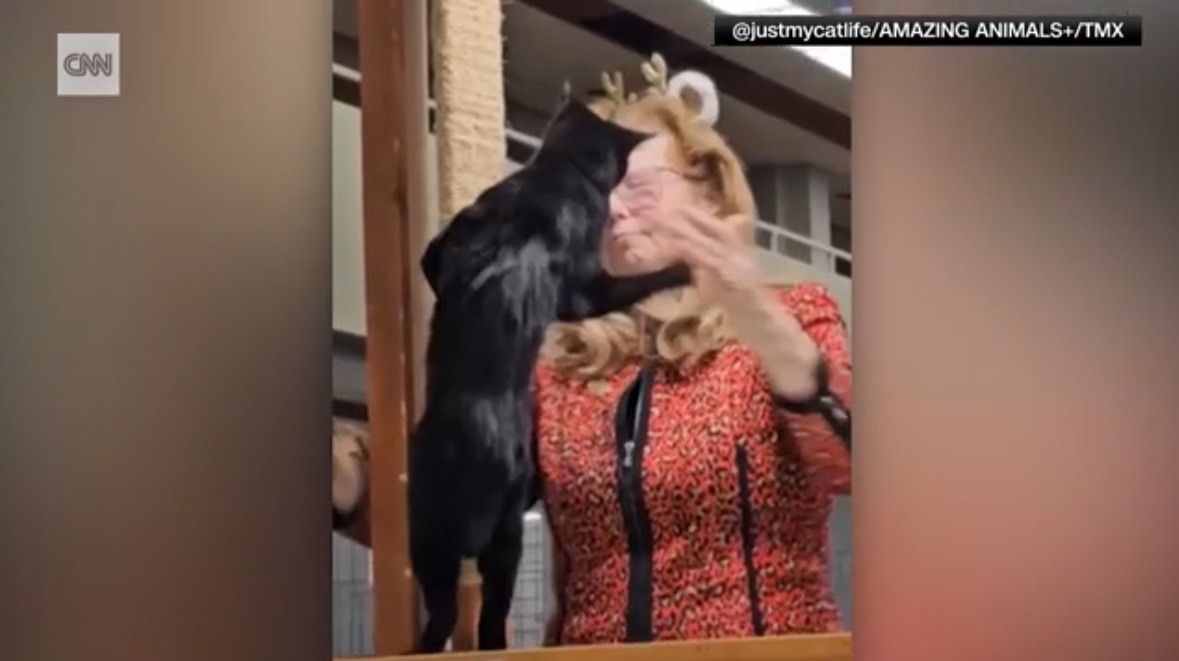
Amid the subdued noise of the show, in which hundreds of people collectively try not to freak out the felines who definitely don’t want to be there, Beethoven — number 176 — was called up.

Anyone who knows anything about cats could tell little dude was not gonna do well.

“Beautiful coat, shiny, nice green eyes,” said a judge, a woman wearing cat ears.

Having exhausted her supply of superlatives, she ran a hand down Beethoven’s tail, then grabbed both his front legs from behind in a way I’ve never seen anyone try to move a cat and tried to spin him around.

Beethoven wasn’t having it.

The void unleashed a symphony of hisses, feints and dodges while trying to get away, but the judge — seriously, has she ever dealt with a cat before? — shoved him, then tried to grab him again as if the pointless evaluation could be saved.

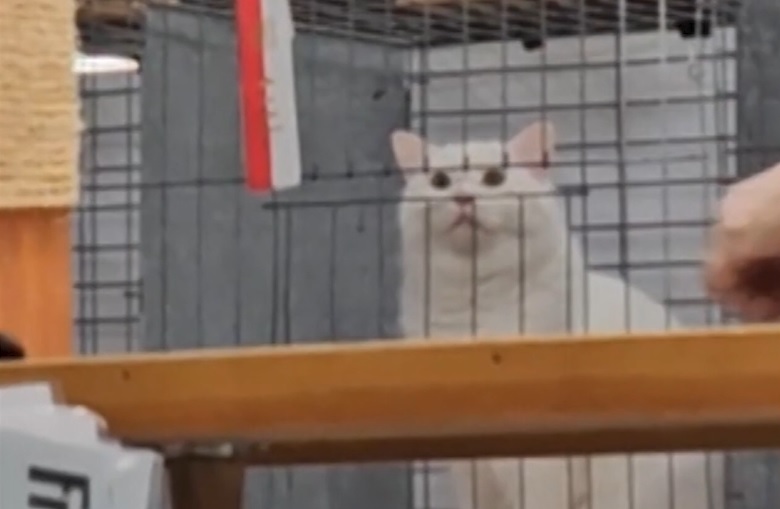
That’s when The Conductor lunged in for a hard right paw-slap, leaving #177– a white chonkster on deck — with a look that said “Oh no he didn’t!”

catcontestant177
Contestant 177 needs popcorn. Someone get this cat some popcorn!

“I need the owner here now,” the judge said, like a doctor snapping at a nurse for a scalpel as a patient’s blood pressure plummets on an operating table.

Beethoven was disqualified, but he should have gotten points. He should have gotten all the points.

Oh, people who participate in “cat fancy” will tell you their ridiculous soirees are really just social events for the feline-inclined, as if they don’t privately rage when their cats lose like Patrick Bateman stewing over the fact that Bryce prefers Van Patten’s business card to his own.

But seriously, what the hell is going on at these shows?

Most of them are celebrations of the cat world’s worst excesses, with people lugging their terrified $10,000 Savannahs, $4,000 Bengals, currently out-of-fashion Persians and other breed cats to gymnasiums or hotel ballrooms where they’re mishandled, judged like collector’s items and measured against absurd arbitrary standards written by God-knows-who.

The breed standards read like wine descriptions in obnoxious catalogues: “The tail should be long and sturdy, powerful yet restrained like a rhinoceros in a steel cage. The coat should be of moderate length and silky, yet not so shiny as to invite comparisons to the Arkenstone of Thráin, that wondrous jewel. The head should be angular, recalling the good old days of colonial occupation in Siam when elegant men and women would lounge in opulent royal palaces enjoying stiff cocktails as the locals fanned them. The paws should leave tigerian pug marks, but the toes should not be arranged so close together as to appear inartful…”

The insanity of it makes me want to pose as a judge, grabbing a cat and taking a deep huff from its behind as horrified cat fanciers look on.

“I get notes of summer in New York, rotting garbage and the perpetual smell of urine on the 6 line. Hints of jasmine, cinnamon and Temptations Seafood Medley filtered through the miraculous feline intestinal system! The flavor profile is ecstatic. Oh! The aftertaste! Bitter yet triumphant!”

Except for the non-breed portion of the show, which you get the impression is treated like a non-televised undercard fight at a UFC event, the participants are basically big-upping cats who come from breeders, holding them up as the feline ideal while allowing a few scraps to fall off the table for those dirty little moggies who were the result of two cats voluntarily copulating, not some breeder putting Big Tom and Queen #7 in a cage together until BT puts one in the bun.

Ew, a shelter cat!

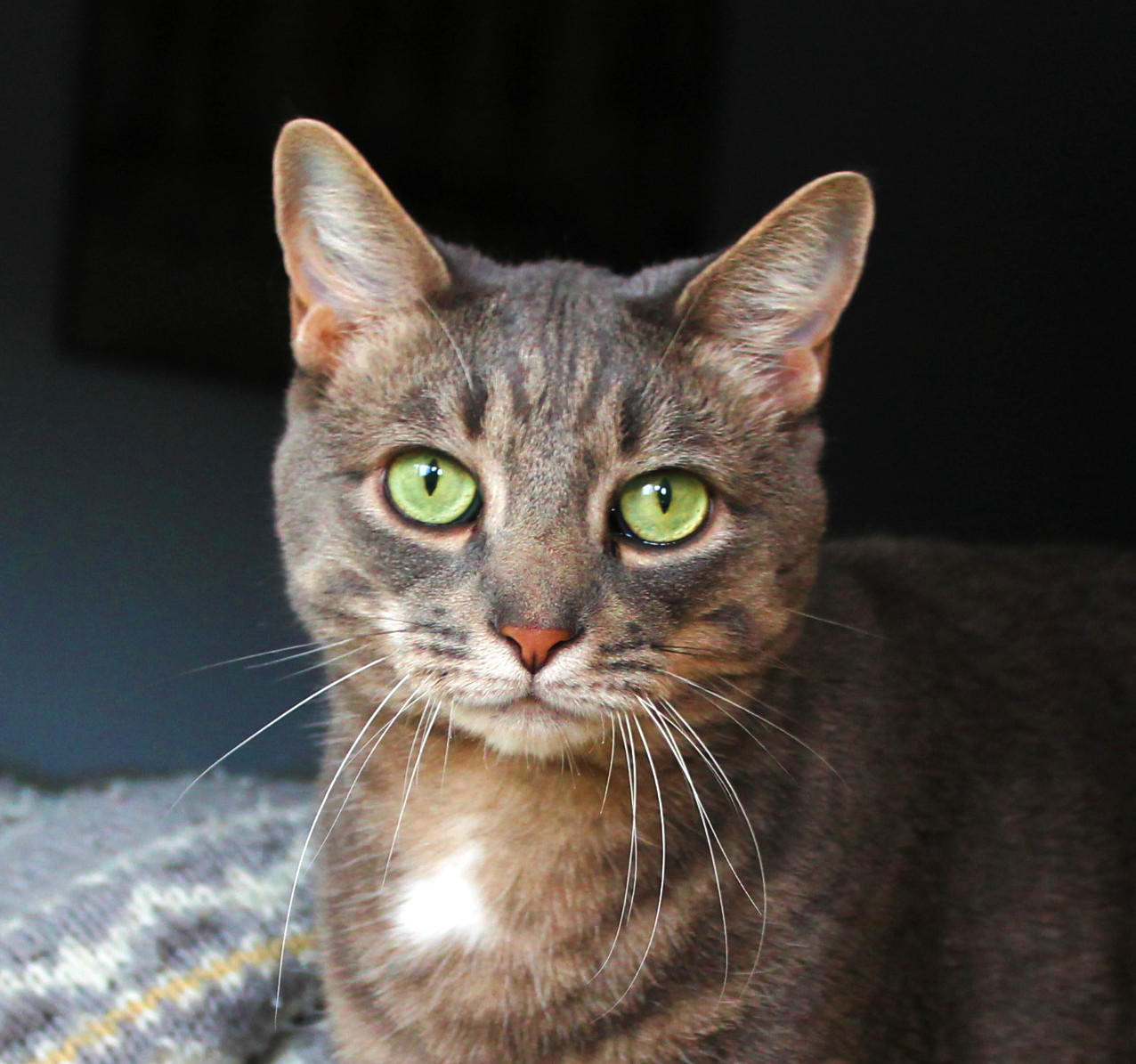
You know what I say to these cat shows and their judges? Look at this dude! Look at him! Behold his handsomeness:

buddy_eyes

Not only is he charming and ridiculously good looking, his office has many leather-bound books and smells of rich mahogany. Cat judges, eat your hearts out!

If You Could Make Your Pet Understand One Thing, What Would It Be?

For the first time, PITB is participating in Wordpress’s daily writing prompt!

Bloganuary writing prompt
If you could make your pet understand one thing, what would it be?

If I could make my cat understand one thing, it’s that he is a chubby 11-lb house cat, NOT a hulking 600-lb tiger with “huge meowscles” who strikes fear into the hearts of every creature to walk the Earth.

Just kidding. I’m perfectly happy going along with his delusions.

The one thing I really would communicate is that we are buddies for life and I’ll never abandon him.

Buddy’s an awesome cat. He’s super friendly, curious, lively, intelligent and vocal. His antics are hilarious. He’s a good boy.

He also knows I love him. That much is abundantly clear.

Buddy the Handsome Cat
Buddy the Cat, pictured, says he’s “totally ripped” under his fur.

Unfortunately he suffers from separation anxiety, which has manifested in unfortunate ways, including a track record of attacking every person who has ever been kind enough to cat sit for him.

Aside from the fact that it’s getting more difficult to arrange care for him (his usual cat sitter now sneaks in, feeds him and gets out as fast as possible since he’s attacked her twice), it sucks to know that he suffers anxiety and sadness when I’m gone.

I see his accusatory stare when I start to pack a suitcase and set food aside for the sitter to give him. And I see his little act when I come home, the way he sniffs and feigns nonchalance. The act lasts a few minutes tops before he forgets he’s supposed to be mad at me. Then he glues himself to me for the next few days, never letting me out of sight for fear of losing me.

buddy_catpeople_edited

The truth is that I feel separation anxiety from my little pal when I’m away too, but I know precisely when I’m coming home. He doesn’t have that luxury.

So Buddy, if you ever learn to read, know that you aren’t going anywhere and neither am I. The only way we’ll be separated is if someone pries you from my cold, dead fingers.

And don’t let anyone tell you you’re not a fierce tiger!

Buddy
All photos credit: PITB/littlebuddythecat.com