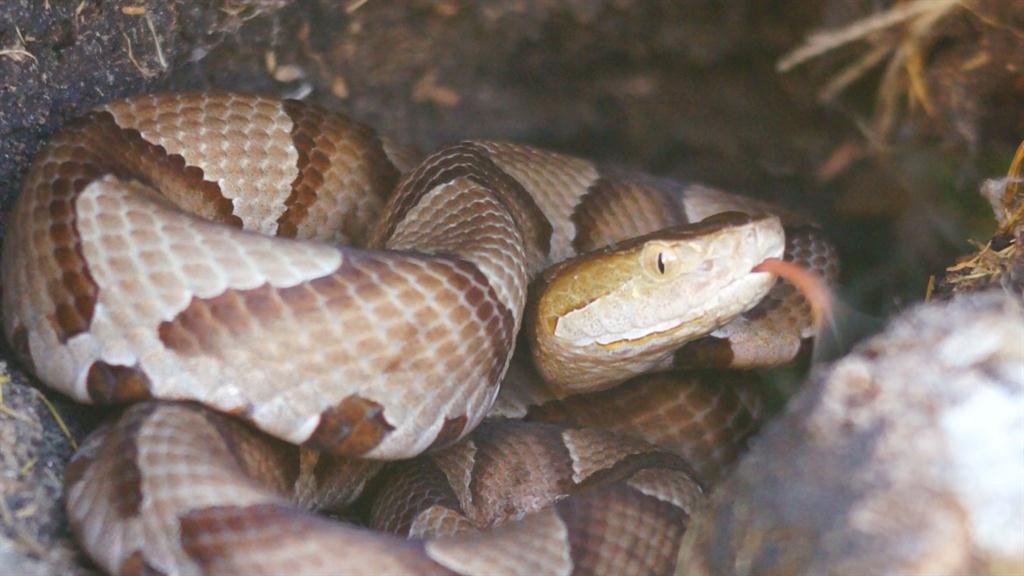
Shelly the cat showed Mr. Snake the business end of her claws.
His Grace Buddy, King of All Cats, First of His Name, the Most Handsome and Totally Not Scared of Anything, is pleased to issue a Commendation of Bravery to Shelly, a rescue cat who saved her human from a venomous snake.
Shelly’s human, Jimmie Nelson, heard strange noises one night last week and chalked it up to Shelly burning off some energy with a late play session. Nelson went to sleep, oblivious to the danger he was in until the next day when he saw a dead copperhead under his kitchen table.
“On the side of the snake’s neck and head there were claw marks and one big slash, so we knew right then that the cat had definitely killed the snake and then brought it out a few days later to show it to her little dad,” Nelson’s daughter, Teresa Seals, told NBC affiliate WBIR in Tennessee.
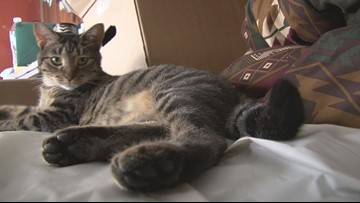
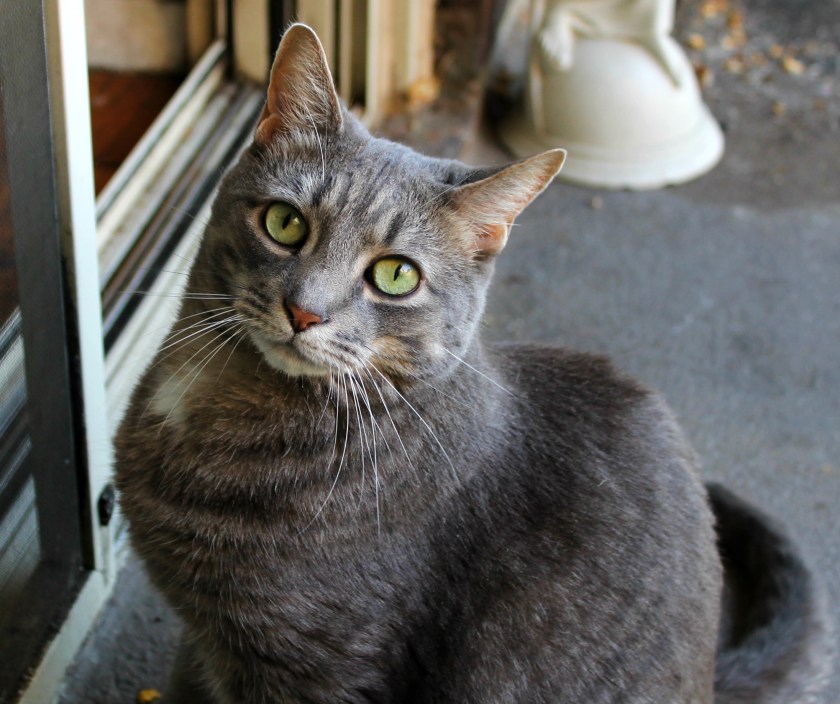
Like all great cats, Shelly is a grey tabby.
Copperhead snakes are pit vipers, ambush predators that rely on hemotoxic venom to paralyze and injure their prey. They’re common in the southeastern U.S., though it’s unusual for the snakes to seek out humans or enter homes.
Copperheads don’t provide warnings before they bite and “strike almost immediately when they feel threatened,” according to LiveScience. Although their venom is not as potent as their deadlier cousins in the pit viper family, children and the elderly are particularly vulnerable. Copperhead bite victims are usually treated with antivenin and painkillers, and recovery can take months.
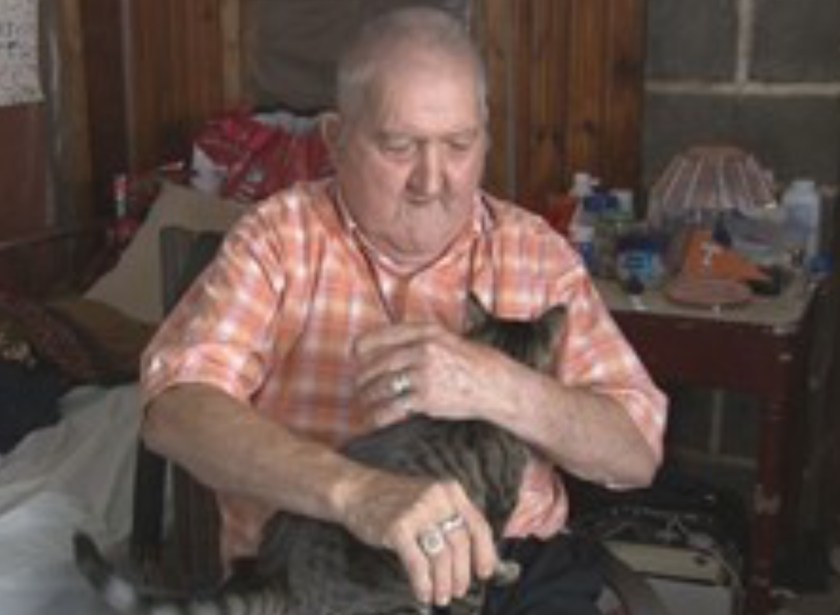
Nelson, who is 81 and a stroke victim, doesn’t like admitting his affection for his feline master, but Seals knows it’s just an act.
“He loves her, he doesn’t wanna act like he pays attention but I’ve caught him actually petting and loving on her,” she said.
She doesn’t think it’s an accident that Shelly ended up with her father.
“I think the Lord sent the cat to us to save my dad,” she told WBIR.
His Grace King Buddy said he’s honored to award Shelly with the King Buddy Commendation for Feline Bravery, an honor created in 2014 after His Grace defeated a vicious mosquito in single combat. The award itself is a bronze statue of Buddy striking a heroic pose at the moment of victory, paw raised after slaying the insect, muscles rippling from the effort of delivering the death blow.
Shelly with her servant, Jimmie Nelson of Tennessee.
Buddy’s in for a rude awakening. Do Temptations cause withdrawal?
The people who know us best instinctively know how to push our buttons. So naturally my brother knows one of the easiest ways to get me riled up is to tell me my cat is a porker.
“Buddy’s looking like he’s put on the pounds,” he’ll say casually. “How much are you feeding this cat?”
“Buddy is NOT fat!” I’ll reply indignantly. “It just looks that way because he’s meatloafing.”
“No, I’m pretty sure he’s just fat.”
Well now he may be right. Buddy isn’t exactly fat, but he’s on the wrong side of skinny and a few bags of Temptations away from being kinda chubby. Now is the time to nip this in the Bud and bring his weight back down before it, uh, balloons.
This is by far the fattest-looking photo of Buddy I could find. He’s in a super-meatloaf pose here, looking like a chonkmaster.
This photo was taken a few days later.
(Above: Buddy in super-chonk meatloaf pose, left, and Buddy in a photo taken a few days later. The way a cat sits or stands can dramatically change the way his or her body looks.)
The problem is, Buddy has mastered the art of the guilt trip.
When he’s legitimately hungry he isn’t shy about meowing for his meals, but what he does in between meals is much worse. When I head into the kitchen for a beverage or a snack, Buddy will pad right up to the doorway and stop, looking at me with his big, expectant eyes. His gaze will follow me as he sits there all hopeful.
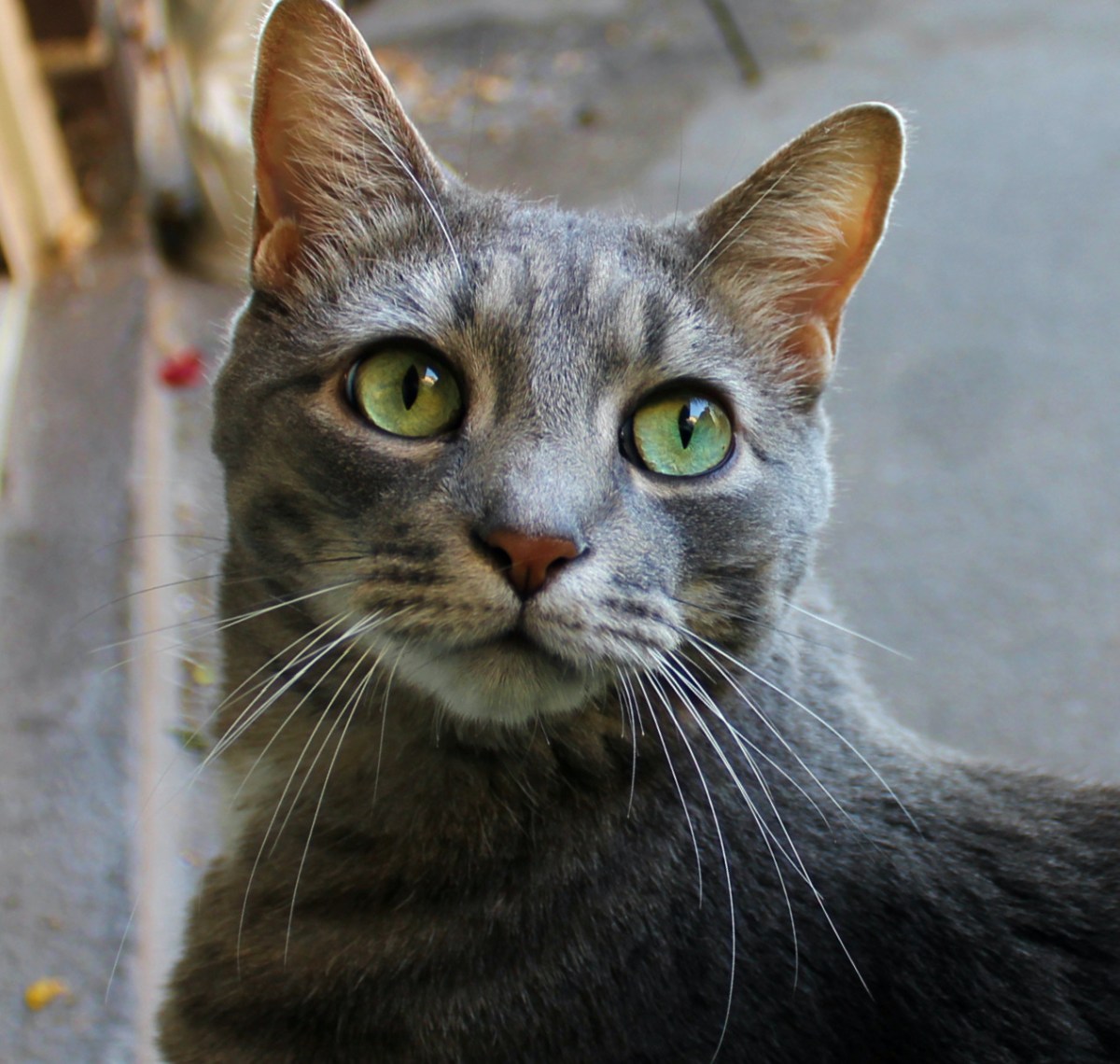
And if I leave the kitchen without opening his treat cabinet, those big green eyes become accusatory, as if I’ve committed a profound betrayal of his trust by not giving him the ultra-processed kitty crack he loves.
It’s the complete silence that gets me. No meows, no complaints, just dead silence and those big eyes.
“That’s a tasty looking snack you’ve got there. Where’s Buddy’s treats? You thought of Buddy, right? You would never forget about me…”
Worse yet, he’ll park himself right next to me and watch me eat a bowl of cereal or a cookie, continuing the silent act. What kind of horrible Big Buddy gets a snack for himself but not his Little Buddy?
So yeah. It’s diet time.
Buddy doesn’t know the dreaded D-word. He’s about to learn. But his diet may be harder on me than it is on him.
I didn’t know about this until reading about it on the interwebs, where people seem to be bewildered at the practice:
“[M]y eight-year-old female cat finds a great place to sleep – pet bed, closet, blanket – and sleeps there for two to six months, then finds a new spot and never returns to the old. The deserted spots aren’t soiled. Why, besides because she’s a cat, does she do that?”
Some say it’s a behavioral throwback to cats’ wild ancestry, when sleeping in predictable locations could have lethal consequences. Others think cats are like furry Sheldon Coopers, looking for the perfect spot — comfortable and warm, with a good angle to keep watch over everything.
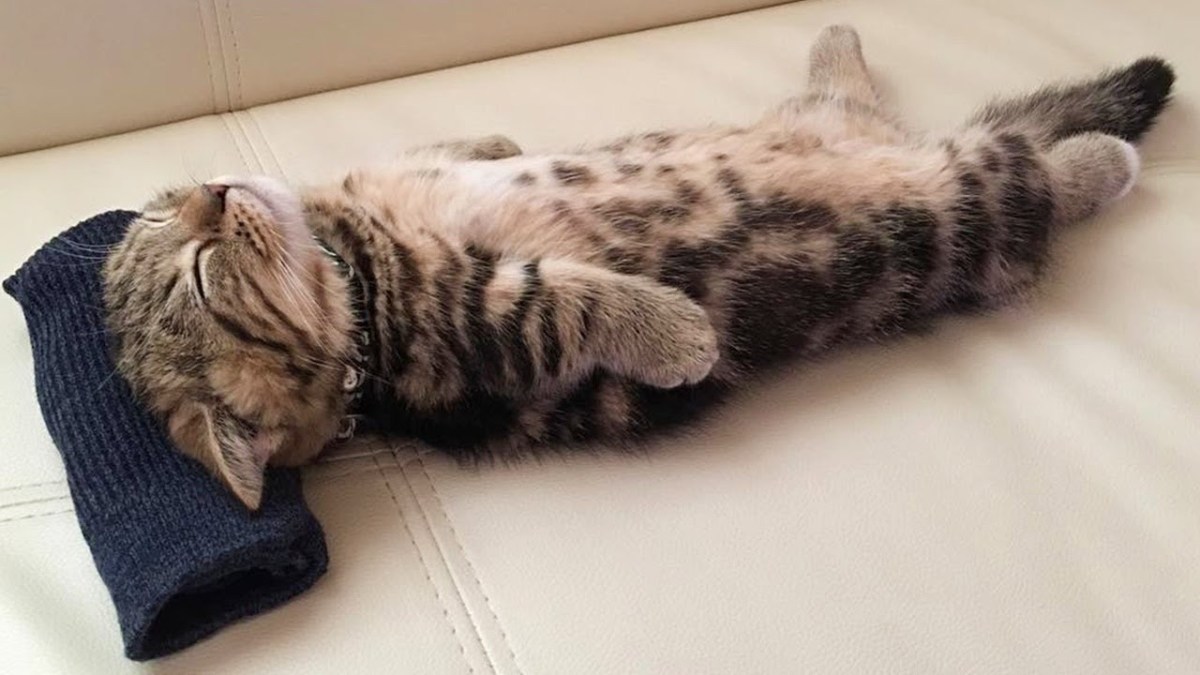
Oddly enough, the King doesn’t seem to have this particular feline quirk. He’s got four spots — my bed, the couch, under the table and chairs, and my still-warm desk chair immediately after I vacate it. He seems to use them at random, and rarely deviates.
He isn’t so much a rotator as he is a napper of opportunity, prioritizing warm laps when available and falling back on comfortable spots the rest of the time.
Does your cat rotate sleeping spots? Where’s the strangest place you’ve found kitty catching some Z’s?
“What? Is this not a perfectly reasonable place to take a nap?”
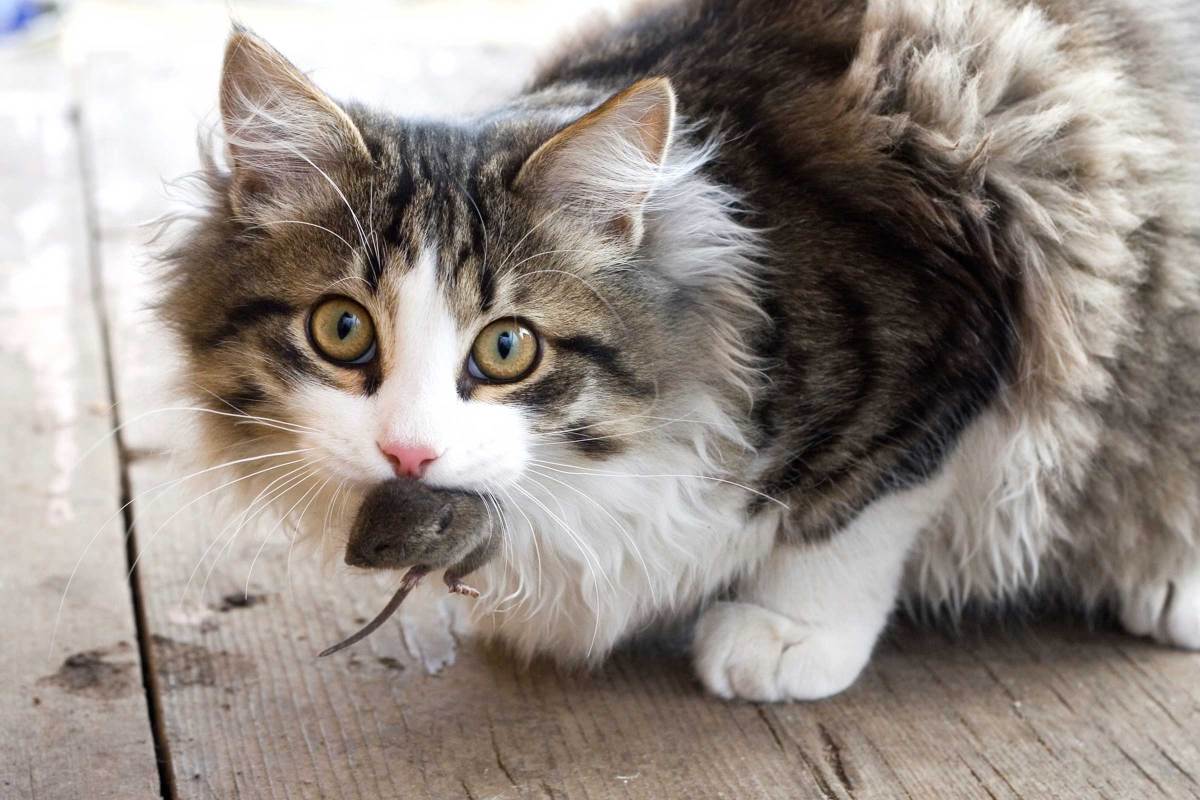
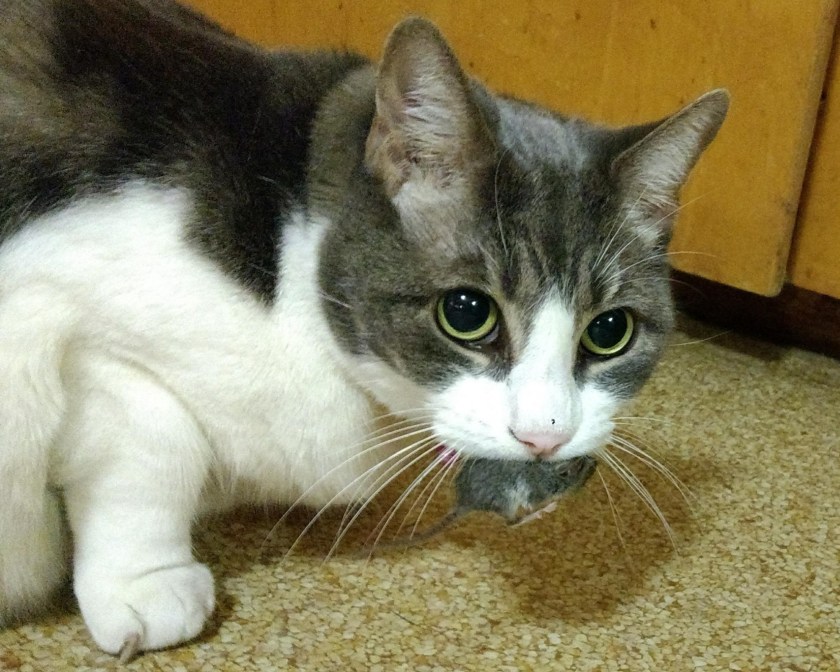
“What a cute kitty,” I thought, then squinted. “Wait… Is that a dead mouse clamped between her teeth?”
After zooming in and verifying that, yes, that is a poor rodent meeting its unfortunate end, I came to a profound realization: Cats are cute even when they’re committing murder.
Like this little guy below: Totally cute. Totally thinking about murder.
“My hobbies include eating, sleeping, knocking items off flat surfaces, and murder. I’m really passionate about murder.”
Think about that for a second. We love cats because they’re great companions. They’re loving despite all the myths that claim they’re not, they’re cute, and they’re endlessly amusing.
We welcome them into our homes, adjust our schedules to their needs, and fret about how they might not like a new brand of litter or a newly-arranged living room.
We laugh when they shred paper and enthusiastically tear into plush toys.
We trim their razor-sharp claws, kiss their little heads and give them names like Buddy, Gizmo and Puddin’ Head.
And yet cats aren’t just murderers, they’re serial killers. They’re the bane of birds, rodents and lizards on six of the seven continents. They’re so ruthlessly efficient at killing, in some countries it’s illegal just to let them outside.
A serial killer in training.
Thankfully I haven’t had to deal with my cat bringing me “presents” of dead rodents or lizards. We live in an apartment, Buddy doesn’t want anything to do with the outside unless I’m with him, and if our games are any indication, he’s a hilariously inept hunter who probably couldn’t catch a rodent even if I slow-tossed one to him like a pitcher serving up meatballs in a home run derby.
Yet I’ve heard many stories from friends and acquaintances whose cats are little terrors. Murderous cats are even the subject of this week’s pet advice column on Slate, where a reader complains that her cat proudly presents her with dead mice, frogs and rabbits.
So what sort of powerful magic is at work here? Why do we disregard the murderous side of our little friends? Or is this the work of toxoplasma gondii, that infamous cat-carried parasite that is rumored to take over human brains?
In truth, it’s just who cats are. They’ve been companion animals for so long, it’s easy to forget the reason cats and humans came together in the first place was to kill rodents who were eating their way through stored grain in the very first human agricultural settlements.
So instead of fretting about their murderous ways, maybe we should just be thankful they’re not large enough to eat us too. Isn’t that right, Mr. Fluffy?
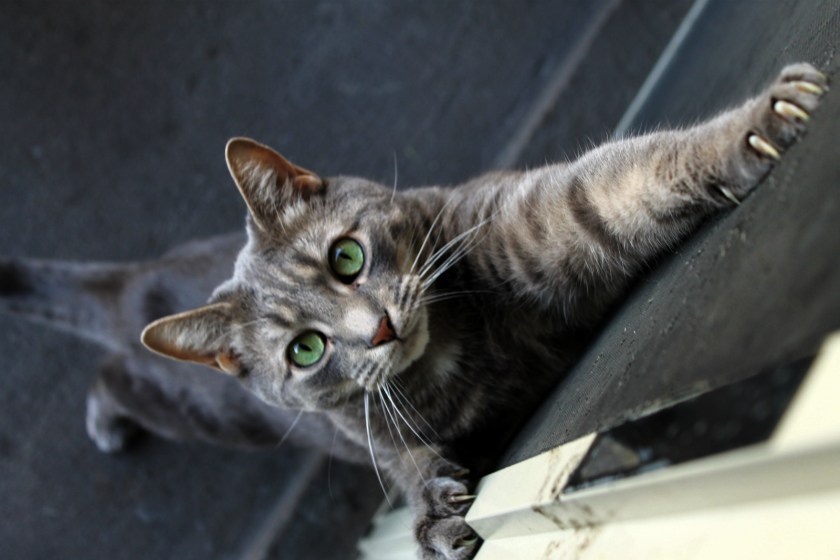
“What? Am I not cute even whilst committing murder?”“I am NOT an inept hunter! You don’t want to tangle with these talons, bro.”
In a discovery that won’t surprise most feline servants, scientists have concluded cats really do get attached to us even if they have a funny way of not showing it.
The internet is abuzz this week with news of a study that indicates a cat’s bond with his human is much like a child’s bond with a parent.
The research, conducted by a team at Oregon State University, sought to gauge how attached cats are to their owners by putting them in a strange situation and seeing how they react with their humans present and without.
In the study a cat is led into a strange room accompanied by his or her human. After two minutes the human exits and the cat is left alone in the unfamiliar room. Another two minutes later, the cat’s servant returns.
It’s the way the cat acts when its human is away — and how it adjusts when the owner returns — that interests researchers. And sure enough, domestic feline behavior followed a familiar pattern:
With owner/servant in the room: “What is this strange place? What are we doing here?”
Human exits: “Oh no! Don’t leave me in here! I don’t know what this place is! Come back! Hey, come back here! This place looks, smells and feels funny. I’m scared!”
Human returns: “Ah! Okay, much better. I’m just gonna rub up against you so I feel better. You know, this room isn’t so bad after all, is it? You look pretty calm. That means I should be calm, right?”
Although it might seem strange that scientists can learn so much from such a simple experiment, the result is important because the way cats react is precisely the way small kids and dogs react to strange situations.
“I love you, furless human, and I’m not just saying that ’cause you feed me!”
It’s all about what psychologists call secure attachment: When a child is bonded with her parent, the mere presence of that parent lends calm and comfort in a strange situation.
Without mom or dad present, the kid is unsure, cautious and maybe even frightened. But with mom or dad in the room, the child feels comfortable and safe enough to go exploring and isn’t intimidated by the new environment. Psychologists call it a “secure base test” because it means kids use their parents as a safe “base” from which to explore.
Two decades ago, researchers broke new ground when experiments showed dogs behave the same way, drawing comfort and feeling more secure with their owners nearby.
“Like dogs, cats display social flexibility in regard to their attachments with humans,” study author Kristyn Vitale said. “The majority of cats are securely attached to their owner and use them as a source of security in a novel environment.”
That is, cats don’t always feel like playing nice and participating in a study because, well, they’re cats.
This latest study isn’t the first time researchers have tried to gauge feline attachment to their humans, but it’s the most expansive study of the phenomenon to date: The Oregon State University team conducted the test with some 80 kittens younger than eight months, then repeated the same experiment with adult cats.
The idea was to determine if cats grow out of their emotional attachment. The results suggest they don’t, which lends credence to the theory that domestic cats under the care of humans are, in some respects, kittens for life.
“Once an attachment style has been established between the cat and its caregiver, it appears to remain relatively stable over time, even after a training and socialization intervention,” Vitale said. “Cats that are insecure can be likely to run and hide or seem to act aloof. There’s long been a biased way of thinking that all cats behave this way. But the majority of cats use their owner as a source of security. Your cat is depending on you to feel secure when they are stressed out.”
For those of us currently employed as cat servants, that last bit is important: Cats most definitely do pick up on our moods even when it seems like they don’t.
To read more, check out a 2015 study by Italian scientists that found cats look to their owners for emotional cues about how to respond to new situations, and a 2017 by the same Oregon State University team that found cats value human interaction just as much as they value food.
“Buddy doesn’t do hugs, okay? Buddy speaks in the third person, Buddy meows insistently for dinner, but Buddy does not do hugs. Deal with it, human.”



 Pain In The Bud