Have You Decoded Your Cat’s Meows?

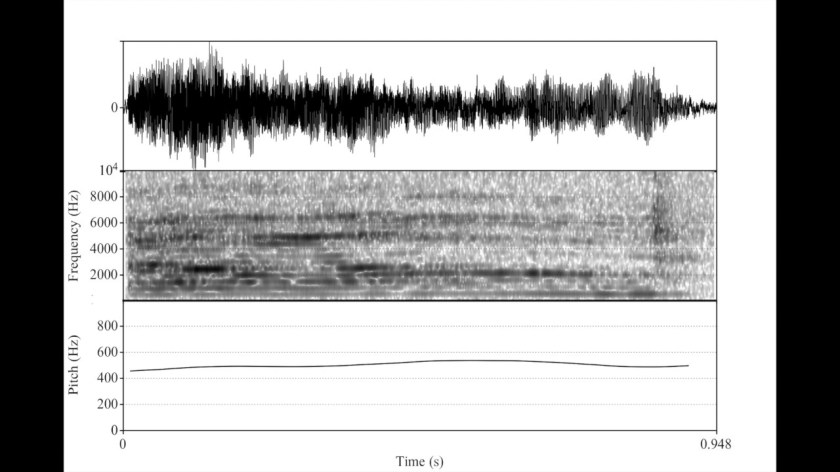
Each of us has a private “language” we share with our cat(s).

We’ve learned a lot about how cats see the world in the past two or three years thanks to some breakthrough research.

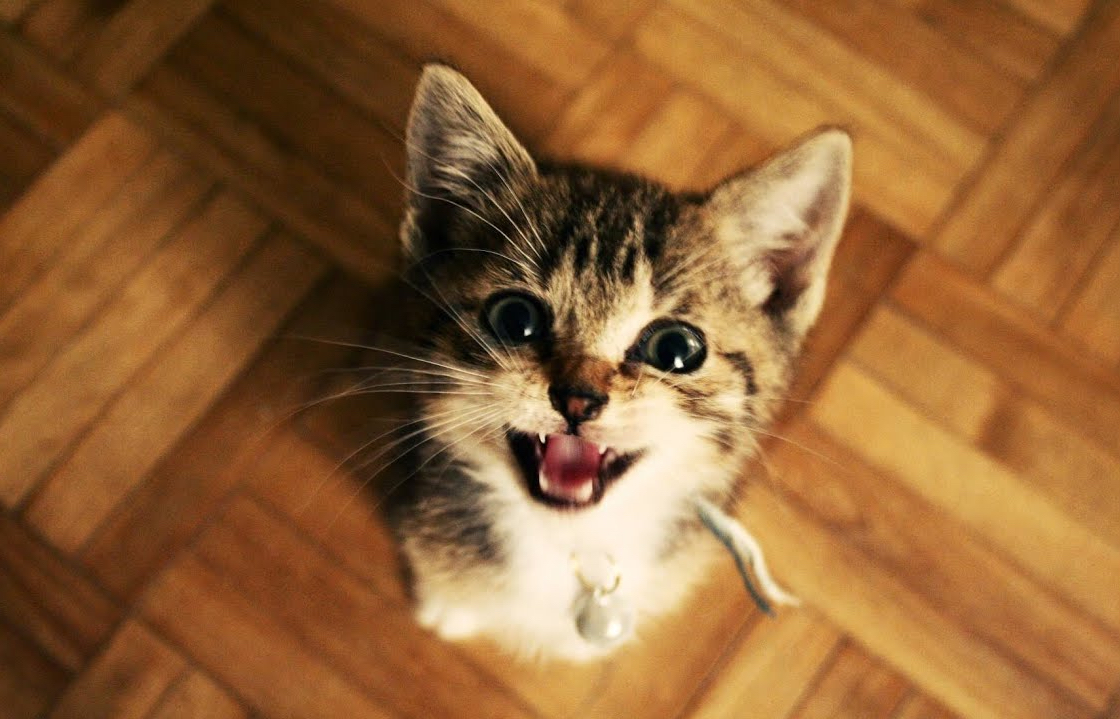
We know the meow originates as a way kittens communicate with their mothers, and adults generally don’t meow to each other. In fact, the iconic vocalization — which is the cat’s actual name in some languages — is a feline’s attempt to communicate with us, their human caretakers.

Give the little stinkers the credit they deserve: They know we don’t read tail, whisker, ear or even feline facial expressions very well, and they know we communicate verbally, so they meow to us.

We also know house cats develop exclusive “languages” with their favorite humans, forming personal and proprietary ways of exchanging information.

They’re even capable of meowing at the same frequency as a human baby’s cries by embedding the infant-like call in their purrs: Because we humans are hard-wired by evolution to respond urgently to those frequencies, our feline friends quickly realize their “solicitation purrs” are the most effective way to get our attention.

Clearly they’re manipulating us, not the other way around.

Have you decoded your cat’s repertoire of meows and other vocalizations? In addition to the meow — which comes in several different types and forms — cats can chirp, trill, chatter, growl, chirrup and purr.

Buddy is a very vocal kitty, and he likes to use trills to communicate. Here are Buddy’s favorite “words” and sentiments:

Hrrrruuuhh – “Okay then”/”I have no idea what you’re talking about”/”Sorry, not interested”

Brrrrr! Brrrrt! – “I don’t like this!” or “I don’t know about this!” (Heavy trill sound.)

(The brrrrt sound goes all the way back to Bud’s babyhood, when he wasn’t litter box trained and got nervous every time he had to eliminate. To this day, he makes that sound when he’s nervous and unsure of what to do.)

Brrrrruuuup! – “I’m fast! Watch me run! I’m running!”

(A vocalization that serves as a prelude to an energy-expending burst of activity.)

Rrrrooow! – “No!”/An expression of annoyance. May also mean “Get away from me!” in certain contexts.

Ahhhhmmmm – “Interesting!” High-pitched.

Hurrrrr – Affirmation. “Bud, do you want turkey tonight?” “Hurrrrr!”

Mmmmohhh! – “Oh, but I want to!” (Reserved for when he’s told not to do something, like scratch the couch.)

Excited chatter – About to receive catnip or one of his favorite foods.

Mrrrump! – Straining or jumping down. Often heard as he hits the ground when jumping down from a couch or bed.

Nyeeea – Okay, I’m awake!

Mmmyeoowww! – I WANT FOOD!

Mrrrrrrrooww! – I WANT FOOD!

Mrrooww! Mrrooww! – FOOD NOW!

Bah! Bah! – You jerk!

Mnyakk ak ak! – A chattering sound. “I see birds! I see birds and I can’t attack them!”

Incessant crying – Open the door so I can come in, and after five minutes I’ll cry again until you let me out. Then I’ll do it again until you let me in…

You, dear reader, have your own private language with your cat(s) too, whether you’re consciously aware of it or not. If you haven’t given it much thought, pay close attention to the sounds your cat makes and the ways you respond…and don’t get too freaked out when you realize who really runs your home. 🙂

littlebabybuddy
“I’m an OG brrrruppp-er, dude.”

Dear Buddy: Why Are Humans So Ungrateful To Their Cats?

Buddy advises a fellow cat on how to deal with ungrateful humans.

Dear Buddy,

My humans are good people who serve me well despite their abysmal hunting skills. Every now and then I kill a juicy mouse or a lizard, you know, to show I can provide and pull my weight around here.

Sometimes I leave my gift on the kitchen counter, and sometimes I leave it on one of their pillows in their my bed. High visibility places, you know? Nothing says “You have been serving me adequately, have a delicious meal on me!” quite like leaving the gift where you know it’ll be stumbled upon.

Unfortunately they’re a bunch of ungrateful jerks! They start acting all dramatic, they put the fresh kill in a paper bag like it’s toxic waste and they throw it out. That’s just adding insult to injury.

Why can’t humans express gratitude?

– Maxwell in Maryland

tenor

Dear Maxwell,

I know exactly what you mean! I used to groom my Big Buddy, using my saliva to shampoo his hair, but he acted like I was the disgusting one.

Well, I solved the problem, yes I did! I wait and quietly groom my butt until my human falls asleep. Then I give my butt a few more thorough licks before climbing on top of my Big Buddy and grooming him, starting with his beard and working my way to his upper lip.

I find that grooming his beard immediately after grooming my butt is best because my poop gives the bristles on my tongue a more malleable quality, which is good for grooming human hair. Plus it leaves his beard smelling nice and familiar, like our home after I use the litterbox!

Humans are just ungrateful creatures, Maxwell, but night time affords many opportunities to help them when they don’t realize it. Why not drop a mouse into your human’s mouth while she’s asleep? Who knows? She might like it!

Your friend,
Buddy


Study: We’re All Terrible At Reading Our Cats’ Facial Expressions

It turns out cat owners are no better than random people when it comes to this task.

Most of us completely suck at deciphering our cats’ facial expressions, according to a new study.

That might come as a surprise to some because it’s often claimed cats don’t have facial expressions, or they can’t be read. They do, and they can.

The researchers from Ontario’s University of Guelph used a series of short clips selected from YouTube cat videos. They stripped all the context and blacked out everything but each cat’s face so participants wouldn’t be able to read body language or identify what the cats were doing.

The people who participated in the study — more than 6,000 in all — had only the faces to go on, and they were asked to assess whether each cat’s facial expression was positive or negative.

It turns out reading feline facial expressions is especially difficult: On average, participants got only 11.85 out of 20 questions right. That’s less than 60 percent.

Here’s the crazy part: Researchers found cat owners were no better at interpreting cat expressions than random people. Veterinarians scored the highest, a result that makes perfect sense.

surprised-cat-1
“No, I did NOT drink from the toilet! How dare you impugn my character with such vulgar accusations, good sir!”

Less than 15 percent of people are “cat whisperers,” study author Georgia Mason said, and can correctly interpret a cat’s mood based on the face alone.

“Anyone who writes cats off as sort of moody or distant is probably underestimating them,” Mason said. “The point is they are signaling, it’s just subtle and you need expertise and maybe intuition to see it.”

If you’re wondering what the test looks like, you can take an abbreviated version of it online. Here’s my score:

5FE0F41B-9178-4408-83F0-C9922A09A206

I’m a cat whisperer! Okay, not really. I scored a lousy four out of eight in the advanced version of the test.

I’m accustomed to reading feline body language — whiskers, ears, tails and fur provide a wealth of information about a cat’s mood — and absent most of that information, I found it difficult to gauge based on their faces alone.

On the positive side, scientists say the lessons from these studies can be applied to our companion cats eventually.

“We’re hoping [to conduct] more research to develop tools to help people read their cat better,” Mason said. “That would make living with a cat more rewarding.”

Top photo credit: BBC Science Focus

angrycat.jpg
Is this cat: A) very angry, B) extremely angry, or C) ready to kill her human?

How Long Is Too Long To Leave A Cat Alone?

Your cat isn’t a house plant that can be left alone for a week.

“If you want a pet but you don’t have time to walk a dog, get a cat.”

“As long as they have food, cats are fine. They don’t care if they’re left alone.”

“Cats are solitary creatures who are content to ignore you.”

Despite taking over the internet and solidifying their status as one of the most endearing animal species, cats are still widely misunderstood, as these oft-spoken sentiments illustrate.

Of course, as we cat servants know, our furry friends do care very much about remaining in the company of their favorite people.

In a new column on Psychology Today, bioethicist Jessica Pierce backs up something we’ve been saying for ages: Cats are social animals, and it’s harmful to think of them as one step above a plant, content to live a solitary existence as long as they’re fed and watered.

The myth of the aloof, independent cat feeds another misconception: that cats are just fine when we’re not around. Indeed, a common piece of advice for someone thinking about acquiring a pet is “if you are gone a lot and don’t have time for a dog, get a cat instead.” Many people believe that cats can be left alone for long hours every day, and can even safely be left alone for days or even weeks, as long as food and freshwater are made available to them.

This is bad advice and does cats a great disservice because domestic cats kept as companion animals in homes likely need their humans just as much as companion dogs do.

So how long is too long to leave a cat alone? Unfortunately no one knows for sure.

There haven’t been studies on the topic, in part because many behavioral scientists still believe cats are too difficult to work with in research settings.

1495125423076
The big tough guy who cries by the door when I step out of the house for 20 minutes.

But new studies — including the research out of Oregon State that showed cats view their humans as parent-like figures — show cats form strong emotional connections to their people, mirroring the behavior of dogs and even human children.

Other recent studies demonstrated that cats crave human attention and affection even more than food, and look to their humans for reassurance when they’re uncertain about things.

Some people will say that’s all fairly obvious and unremarkable, but there are two primary reasons the findings are significant: First, in the scientific community something has to be proven in a controlled, replicable study. Anecdotes don’t count. Secondly, there’s finally enough research to confirm cats absolutely form bonds with their humans, and those bonds are genuine.

Although felines are superficially aloof, when you get to know them better it becomes clear they’re simply good at pretending they’re nonchalant.

buddynotamused
“No more computer, it’s Buddy time!”

While cautioning that cats are individuals with their own personalities and quirks, Pierce suggests looking to research on dogs and loneliness.

“The rough guidelines for dogs—that about four hours alone is comfortable, but longer periods of alone time may compromise welfare—may be a reasonable place to start for cats,” Pierce wrote, “but further research into cat welfare is needed in order to develop empirically-grounded guidelines for leaving cats alone.”

As for Buddy, who is known to meow mournfully and park himself by the front door when I leave, his one-off limit is about 12 hours, or half a day. I’m okay with leaving him alone overnight after he’s been fed, and while he may not like it, he’s fine if left alone for an extended period once in a while. I wouldn’t do that regularly.

Anything more than that, however, and I’ll enlist the aid of a friend to stop by, feed him and play with him. Maybe that way I won’t get the cold shoulder and resentful sniffs when I return.

Amazing Cats: The Puma

The puma is a majestic feline native to the Americas.

What would domestic cats be like if they were the same size as big cats?

It’s a question that seems to pop up often on cat-centric and Q&A sites and the answer is complex, but it turns out nature has given us a pretty good idea with the puma.

Also known as the cougar, mountain lion and the more generic panther (which can be a name for jaguars and leopards as well), the puma is big, but genetically it’s related to small cats and it shares some physical features with our familiar domestic kitties.

It’s capable of the intimidating wild cat scream often heard from the largest felines, but the puma can’t roar like big cats. Instead, it purrs like its smaller relatives, and it can even meow with the best of them!

Visually, the puma is a striking animal — it’s muscular with a shiny tan coat and facial features reminiscent of both panthera and felis. While its ears more closely resemble those of small cats (felis), the puma’s eyes have circular irises like its larger cousins.

The Majestic Puma
Pumas, also known as mountain lions and cougars, are the widest-ranging cats in the world.

It’s also remarkably adaptive. The puma boasts the largest range of any cat, and is found all throughout South and North America. Here in good ol’ ‘Merica, the cat ranges from the coastal mountains of California to the forests of New England, and a subspecies — the famous Florida Panther — occupies swampland and dense jungle habitats.

After the jaguar, it’s the second-largest cat in the Western Hemisphere.

The puma is a wild animal, meaning its place is out in the world fending for itself, protecting its territory, hunting, mating, grooming and sleeping a lot, like all cats do. Pumas are emphatically not pets.

Yet pumas have a disposition closer to house cats than big cats, meaning they’re not hostile to humans by default, and much like feral cats, they’ll go out of their way to avoid humans.

Again — and it cannot be emphasized enough — pumas are wild animals who belong in the wild, but there have been rare cases where the big-little cats have lived with humans when circumstances make it impossible to return them to their natural habitat.

In some cases it’s because the puma is maimed and can no longer hunt for itself, while others remain under human care because they were born into zoos or circuses and literally do not know how to live like wild cats. Those animals are better off in sanctuaries than left to fend for themselves, which they’re unable to do, but should only be cared for by professionals.

Puma leaping
While they aren’t hostile to humans by default, pumas can tip the scales at 220 pounds and are capable of rendering serious damage.

While pumas don’t have any interest in hunting or harming humans, that doesn’t mean they’re not dangerous. Males can tip the scales at up to 220 pounds, while females can weigh as much as 140.

That’s a LOT of cat: Most of us know the kind of damage 10-pound domestic felines are capable of rendering, especially with sharp claws and teeth that can shred delicate human skin. A 220-pound puma, while not as lethal as a tiger pushing 600-plus pounds, can fatally injure a human being.

Thankfully, these animals are famously elusive and confrontations with humans are exceedingly rare.

buddy_september2019_alt
That’s 10 pounds of pure muscle to you, mister! Everyone knows Buddy is ripped!