Mistaking her for a stranger, Buddy ambushed his cat sitter while his human, Big Buddy, was away.
I’m up in the Catskills this weekend, which means a friend has been looking in on Buddy and feeding him while I’m away.
He knows her and she’s helped me out by cat-sitting in the past, but it didn’t occur to me that it’s been quite a while since the little guy saw her.
Most cats would run and hide if their humans were away and a “stranger” suddenly entered the house. Not Buddy, apparently.
My friend unlocked the door, stepped inside and was greeted by all 10 pounds of the Budster in attack mode. Little man calmed down when he recognized her and realized she was there to feed him.
I’m sure he also gave her an earful, including “Where’s my servant?! This is unacceptable!”
For all our progress in communicating with our pets, learning body language and other non-verbal cues, we humans still don’t have a way to help them understand what a weekend getaway is, or ease their anxiety by reassuring them we will be home in a few days.
I expect I’ll get the cold shoulder when I walk through the door. It’ll last a minute or two until Bud’s resolve breaks down and he celebrates my return by meowing happily and getting his scent all over me.
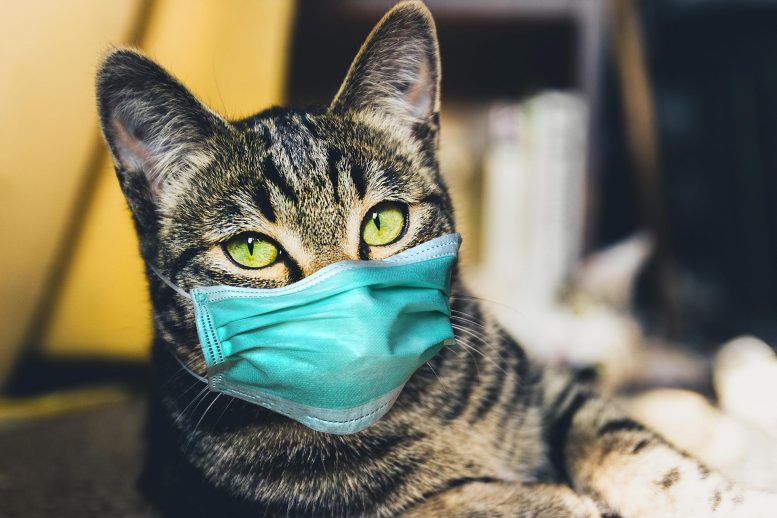
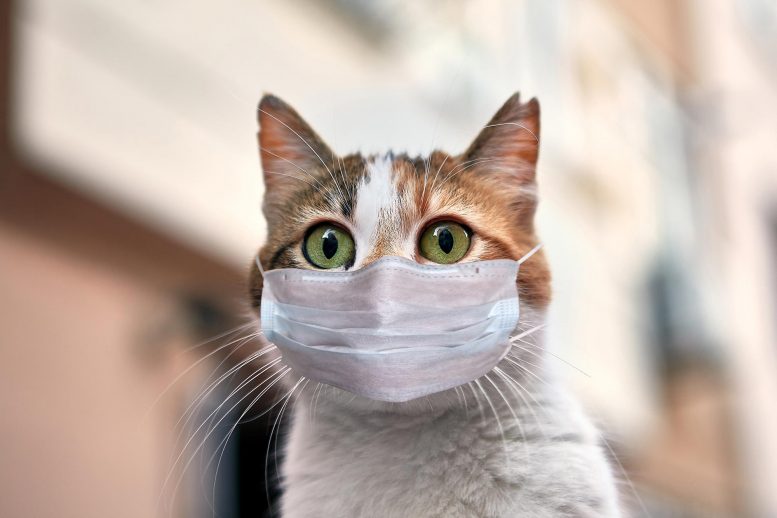
Because we never miss an opportunity to do spectacularly stupid things here in good old ‘Merica, we’ve politicized the act of wearing a mask, the simplest and most effective way to prevent the spread of the Coronavirus.
Since mask-wearing has become a meme as well, a historical photo that apparently shows a cat wearing a mask has been making the rounds. It shows a California family — mom, dad, two boys, two girls and a cat — standing together for a group photo, with each of them wearing a facial covering.
It’s become something of a go-to on social media, used in response to those who believe the virus is a hoax, a minor threat overblown by the US media, or an invention of evil Big Pharma who infected the world — while cackling evilly, presumably — in order to rake in enormous profits from selling the vaccine. (How “Big Pharma” is making billions off a vaccine that doesn’t exist is never explained by the conspiracy theorists.)
The photo was archived by the Dublin (CA) Heritage Park and Museum, and it’s dated from 1920, the third and last year the Spanish Flu spread to every corner of the globe. Between 50 and 100 million people lost their lives to that virus, historians estimate, and it wasn’t until several decades later that scientists understood what they were dealing with.
Snopes spoke to Tyler Phillips, who coordinates the archival material for the Dublin Heritage Park and Museum. Unfortunately, Phillips said, not much is known about the photograph other than that it was taken around 1920.
“The fun thing about this photo is that it does appear that even the cat is wearing a mask, but unfortunately we cannot prove that. The staff here at our museum go back and forth on that same question,” Phillips said. “My personal belief is that it is an optical illusion. I cant imagine any cat staying that calm with a tight fitting mask on their face. Also if you zoom in real close you can start to see the faint features of the cats face (nose and mouth). Since the original photo is pretty small and very old its not much easier to tell looking at it.”
So Snopes says the claim that the cat is wearing a mask is “unproven,” and Phillips thinks it’s an optical illusion.
We here at PITB think it’s a legit mask: We don’t see whiskers or even visual artifacts that would result from pixelated or blurred whiskers at the low resolution of the photo. In addition, it’s perfectly normal for a mask to follow the contours of a face, so that doesn’t rule out a mask. A coat pattern that happens to look exactly like a cloth mask, however, isn’t common.
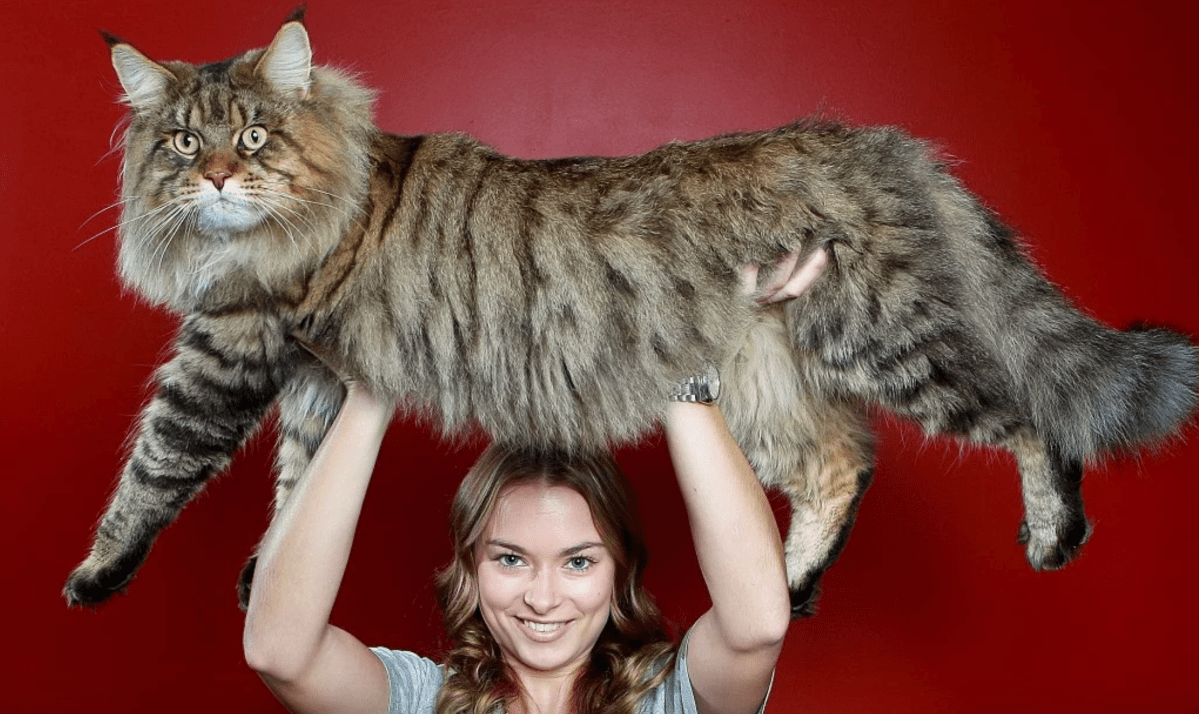
Lastly, cats are individuals. Some will tolerate masks, some won’t. Buddy would probably try to claw me to death if I made him wear a mask, but your average Maine Coon would probably think, “Yeah whatever is cool, bro!”
One thing’s for sure, though: You won’t see any cats confusing the small inconvenience of wearing a mask with “tyranny” or “oppression,” and you won’t see Kitty Karens pulling the snowflake card in grocery stores, insisting the rules don’t apply to them. Those are uniquely human behaviors.
The treats cause worrying behavioral changes and they’re made of junk ingredients.
Little Buddy, I’m happy to announce, has been weaned off the kitty crack.
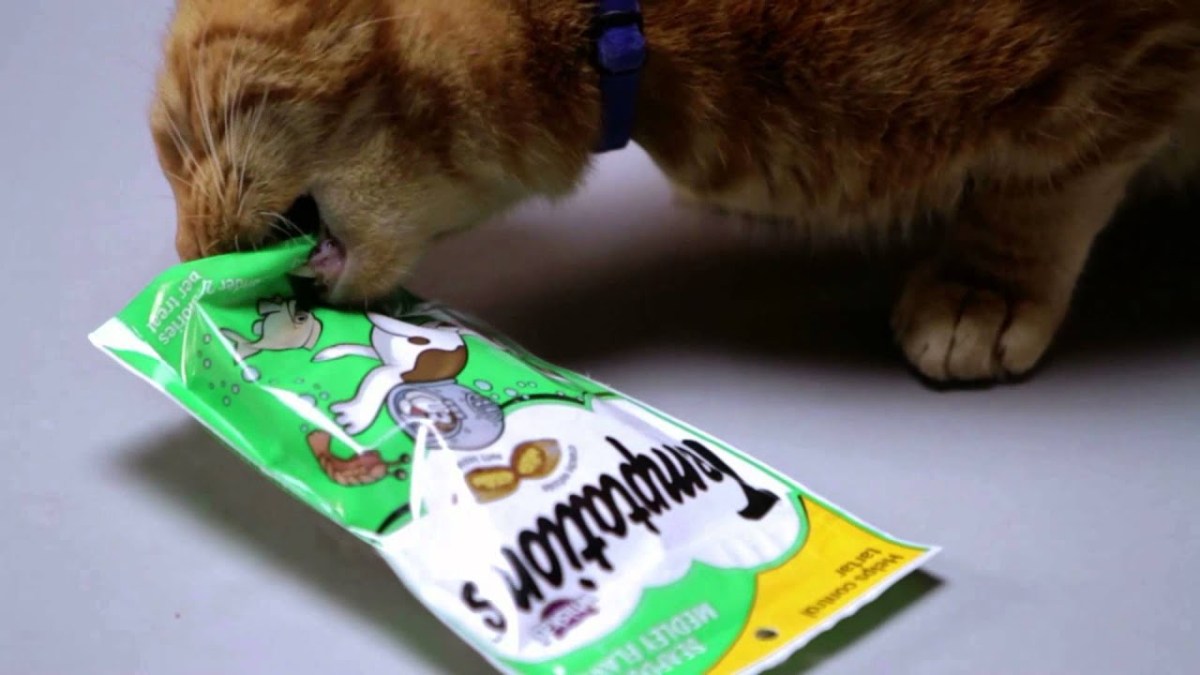
And no, I’m not talking about catnip, which he enjoys once a week or two without yowling mournfully for more. I’m talking about Temptations, those crunchy cat treats that turn our furry little friends into fiends with one-track minds.
This is the second time I’ve stopped giving him those treats. One is never enough. Two, three, six? Not enough. More. More! More Temptations!!!
It got to the point where Buddy would meow insistently in front of the treat cabinet first thing in the morning, then get up to follow me every time I went in the general direction of the kitchen, trilling in anticipation.
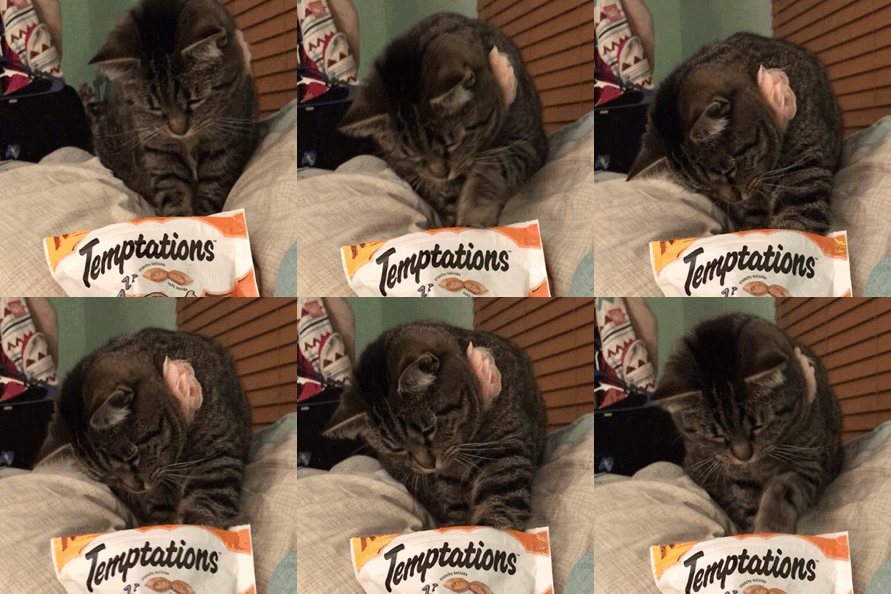
If I made the mistake of leaving the bag out, he’d paw at it and meow insistently.
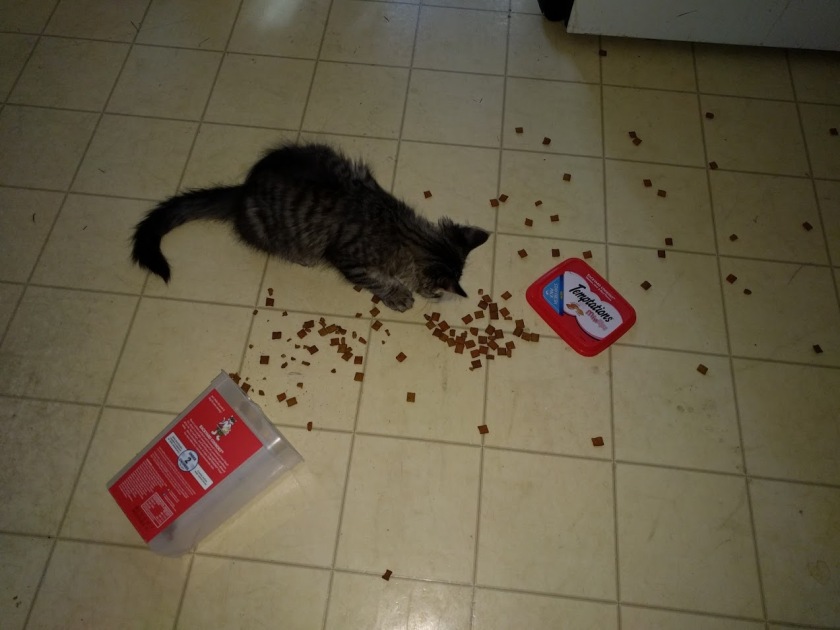
And one time I got an economy size tub of the stuff from Costco, fed him one or two pieces, then got distracted by a phone call. I was only away for a minute at most, but during that time Buddy swiped the tub off the coffee table, causing the lid to pop as it hit the hardwood floor and spilling hundreds of the kittycrack biscuits everywhere.
When I returned I found Bud gorging himself, vacuuming up his precious Temps like a high end Hoover. I shooed him away and carefully swept up every remaining piece, but it was too late — the little guy started throwing up everything he’d just eaten.
Astonishingly, when he’d gotten the last of it up and I was on hands and knees cleaning the mess, he began to meow for more Temptations.
That is hard core, epic crack fiend behavior.
It’s “Houston, we have a serious problem” level.
Not the only one: Lots of people have reported instances where cats helped themselves to the kitty crack. Credit: theknowmad/reddit
Temptations are cat junk food. They’re packed with filler, animal by-products, things cats can’t properly digest (corn, rice, corn gluten meal), and the added nutrients cited by Whiskas are of dubious nutritional value at best.
Cats aren’t drawn to them for any natural reason: Whatever chemicals they’re coated with are designed to manipulate the feline brain, and in the human world we’d call them drugs. The behavioral changes alone are enough to warrant a change.
I was doing a disservice to my little guy by feeding him that crap, so now we’re going to find something better. If you’d care to offer any suggestions, we’re all ears. Please leave them in the comments.
News sites are exploiting another tragedy for clicks.
If you’d just skimmed headlines like “Kiss of Death: Elderly Woman Killed By Cat” and “Tragedy as woman is killed by her CAT, as doctors issue a dire warning to pet owners” you’d think a woman was somehow violently killed by an enraged 10-pound cat.
The reality is much less dramatic: A woman’s cat scratched her, then licked the wound.
Through her saliva, the cat named Minty infected the victim with bacterial meningitis, doctors told the New Zealand Herald.
The woman fell into a coma, was found by relatives and brought to Melbourne’s Box Hill Hospital, where medical staff kept her sedated as they tried to treat her. With few options, the family in consultation with the doctors decided to wake her to say goodbye, then placed her back in a coma and withdrew life support.
“Infections related to cat bites and scratches like this person, we’d get at least one a week where somebody comes into the hospital,” Lindsay Grayson, director of infectious diseases at Melbourne’s Austin Health, told the newspaper. “It is very important that if a cat is biting or scratching you, you mention it to your GP.”
The woman was 80 years old, and the story suggests she had a compromised immune system. It didn’t provide any other details about her overall health, existing co-morbidities or whether her cat was allowed outdoors. Outside cats have a greater chance of picking up bacteria that can harm humans, experts say. A separate article mentioned the victim took blood thinners.
Grayson’s warning is simple and spot-on: Take bites and scratches from cats and dogs seriously, get the wounds treated and call your doctor. Something that looks like an inconsequential scratch could prove deadly or cause major health problems.
Cats and dogs live in more than 100 million homes in the US alone and infections are exceedingly rare. Grayson is aware of that, and he’s giving solid preventative health advice to people in the pet-owning demographic.
Unfortunately calm and reasoned doesn’t draw clicks, so the story is propagating via headlines that conjure images of a cat literally murdering its owner.
It should go without saying that the cat didn’t intend to cause any harm and is incapable of understanding what happened. All she knows is that her human is dead, which she’s certainly distraught about, and it sounds like she’s not getting sympathy or affection from her new humans.
“I was in shock for a good couple of weeks,” the woman’s daughter said. “I’ve tried not to hate the cat … but then I was sitting with it trying to be nice and it lashed out at me as well for no reason.”
With all respect to the grieving, there most certainly is a reason. The cat is grieving too, she’s living with new people in a new situation, and she’s almost certainly scared. It’s an unfortunate situation for all involved.
When I was looking to adopt a cat I spent hours on the web reading about cat care, kitten proofing, behavior and, of course, breed.
Run a Google search about looking for the right cat and you’ll get several pages of nearly identical results about different cat breeds, what their personalities are like and what to expect from them.
Yet it turned out advice from a friend — who grew up with cats and has two of his own — was more accurate than anything I’d read online.
“When it comes to cats it’s a crapshoot, man,” my friend told me. “You never know what you’re gonna get.”
I wanted an engaged, friendly pet, and all the breed guides suggested Siamese are the best choice. But what I heard from shelter staffers echoed my friend’s observation: Don’t depend on a breed description because every cat is unique.
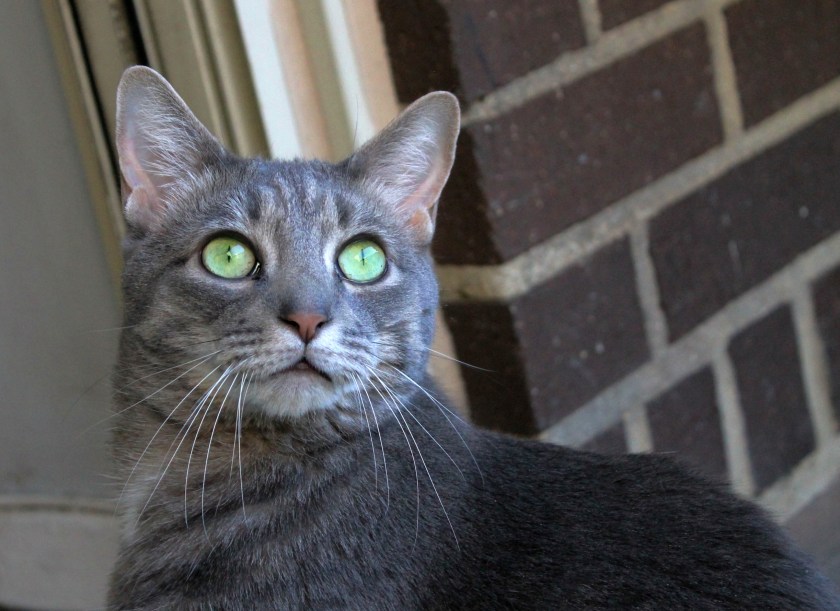
In the end I adopted Buddy, a gray tabby domestic shorthair. No particular breed, in other words. (Though he thinks he’s his own special kind of cat, and he’s not wrong.)
Buddy the Buddesian.
Buddy, it turns out, is vocal, bold and friendly. He’s constantly by my side. He’s got a vibrant language of trills, meows and chirps with which he shares his opinion on everything. Where other cats hide when guests are over or a delivery guy knocks on the door, Buddy runs up, curious to see who’s on the other side and if they’re going to be his newest friends.
So why is it so difficult to pin down a cat’s personality, and why don’t cats fit the behavioral profiles of their breeds the way dogs do?
The answer lies in how both animals were domesticated, and their respective paths to becoming companion animals.
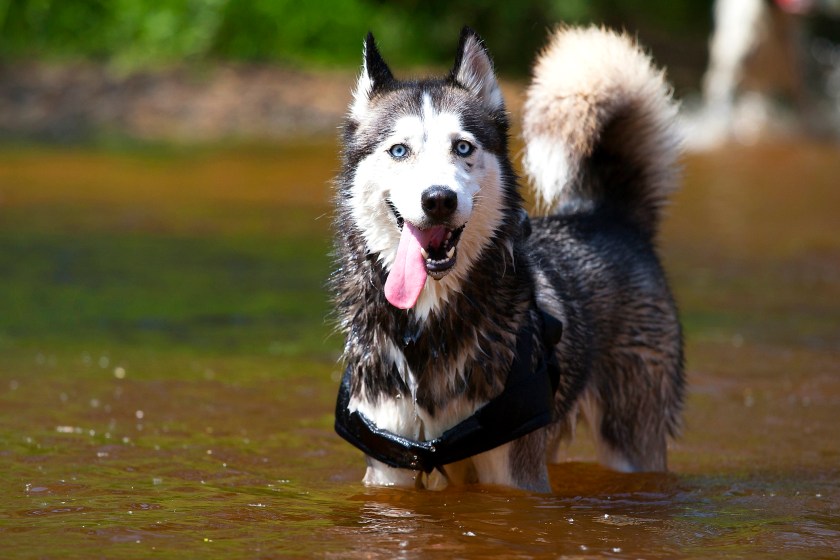
Dogs have been working animals for 30,000 years. The earliest dogs helped their humans hunt and guarded their camps at night, alerting them to dangerous situations or intruders. Later, when humans domesticated livestock and developed agriculture, dogs were bred for different purposes: Some herded sheep, some scared off wolves and coyotes, others pulled sleds.
Siberian Huskies were originally sled dogs and require lots of play and stimulation. Credit: Hans Surfer
Today we’ve got dogs who sniff out explosives, drugs and diseases. Police dogs catch a scent and help officers track down suspects. Therapy dogs bring joy to the elderly, sick and injured, while guide dogs make it possible for people with disabilities to live independently.
The point is, human hands have indelibly shaped canis familiaris since long before recorded history. These days dogs are valued primarily for their companionship, but virtually every breed has a lineage that began with practicality, meaning humans shaped them for disposition and ability. A dog’s breed is a good indication of its temperament.
Cats? Not so much.
Cats are famously self-domesticated: When humans developed agriculture and began storing grain, rodents flocked to the abundant new food sources, to the dismay of early human societies.
That’s when cats just showed up, exterminating rodents while showing no interest in grain. Humans didn’t need to breed felines to hunt mice and rats — it’s as natural to cats as grooming and burying their business.
Cats didn’t take on many other jobs in addition to their mousing duties, mostly because they’re famously resistant to following orders, but their hunting skills were so valuable to early societies that they didn’t need to do anything else to earn their keep.
Because of that, no one bothered breeding cats until fairly recently, and the vast majority of cat breeding focuses on changing the way cats look, not how they behave.
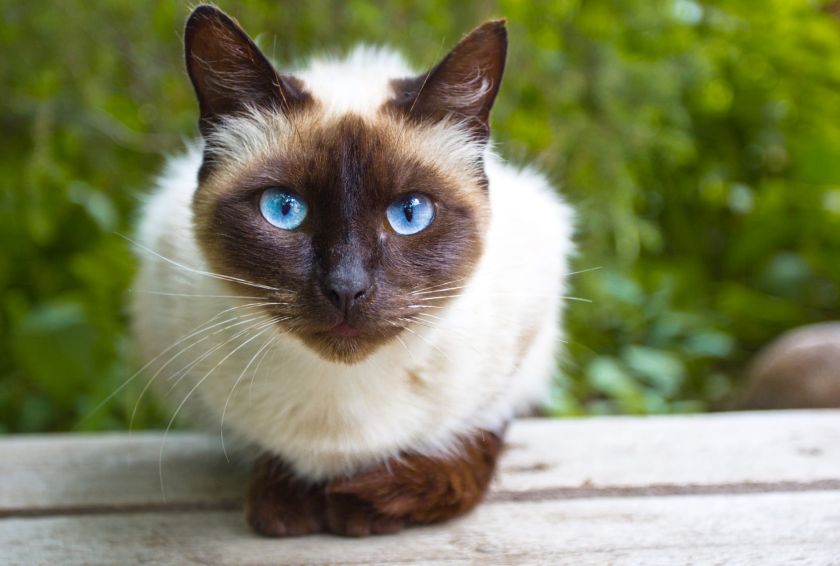
Siamese cats originated in Siam, now known as Thailand. The breed is known for being vocal, but not all Siamese are talkative. Credit: iStock/Chromatos
We like to attribute qualities to cat breeds, and some of them are based in truth. Siamese do tend to talk more than other cats, ragdolls really do go limp when they’re picked up, and Maine Coons are famously chill despite dwarfing most other domestic cats.
But without the behaviorally-specific lineage common to dogs, cat breed behavioral attributes are more like broad stereotypes.
Beyond that, a cat’s personality is primarily determined by genetics and how they were raised in kittenhood. That’s why it’s crucial to handle and socialize kittens when they’re just weeks old, and why ferals will always fear humans.
It’s also why you should take stereotypes about cat breeds with a grain of salt when looking to adopt. If you’re adopting an adult, any good rescue will have information on the cat’s personality, likes and dislikes. If you’re adopting a kitten, you’re pulling the lever on a slot machine.
My advice is to put aside preconceptions about breeds, keep an open mind about looks, and find a cat who connects with you. Like people, no two cats are the same, and a cat’s personality is much more important than the color of its fur when it comes to bonding with an animal who will be in your life for the next 15 to 20 years.
Featured image: Natalie Chettle holds Rupert, a Maine Coone.