Do You Use ‘Baby Talk’ With Your Cat?

Buddy does not tolerate baby talk.

A few years ago when Bud was a bit more of a daredevil than he is now, I was sitting on my balcony on a warm summer night when the little dumbass squeezed through the railing bars and did a circuit of the balcony outside the rail — with only three or four inches of ledge between him and a potentially brutal fall onto the concrete below.

“Bud!” I said, feeling my own fear of heights bubble up as I watched him take his precarious stroll.

He ignored me.

“Bud!” I said again, loud enough to make sure he heard me but not so loud as to startle him and cause him to fall. “Bud! I’m talking to you! Get back over here right now!”

He paid me no mind. I stood up, put my hands on the railing and looked down at him.

“Buddy, get back here now! I’m not gonna say it again!”

At that point I realized there was a couple about my age, probably returning from the bars, drunk-walking toward the back door of the building and watching me have a furious one-sided discussion with my cat. They seemed to think it was hilarious, not only because I was speaking to my cat, but also because I was talking to the little stinker like he was a person.

I don’t baby talk with Buddy, and I’ve noticed my brother doesn’t baby talk his dog, Cosmo.

Sure I’ll speak to Bud warmly and encourage him when he’s clearly frightened of something. (Which is very rare, of course, because he’s such a fearless and brave tiger!) But it isn’t baby talk, and 95 percent of the time I speak to little man as if he’s, well, a little man.

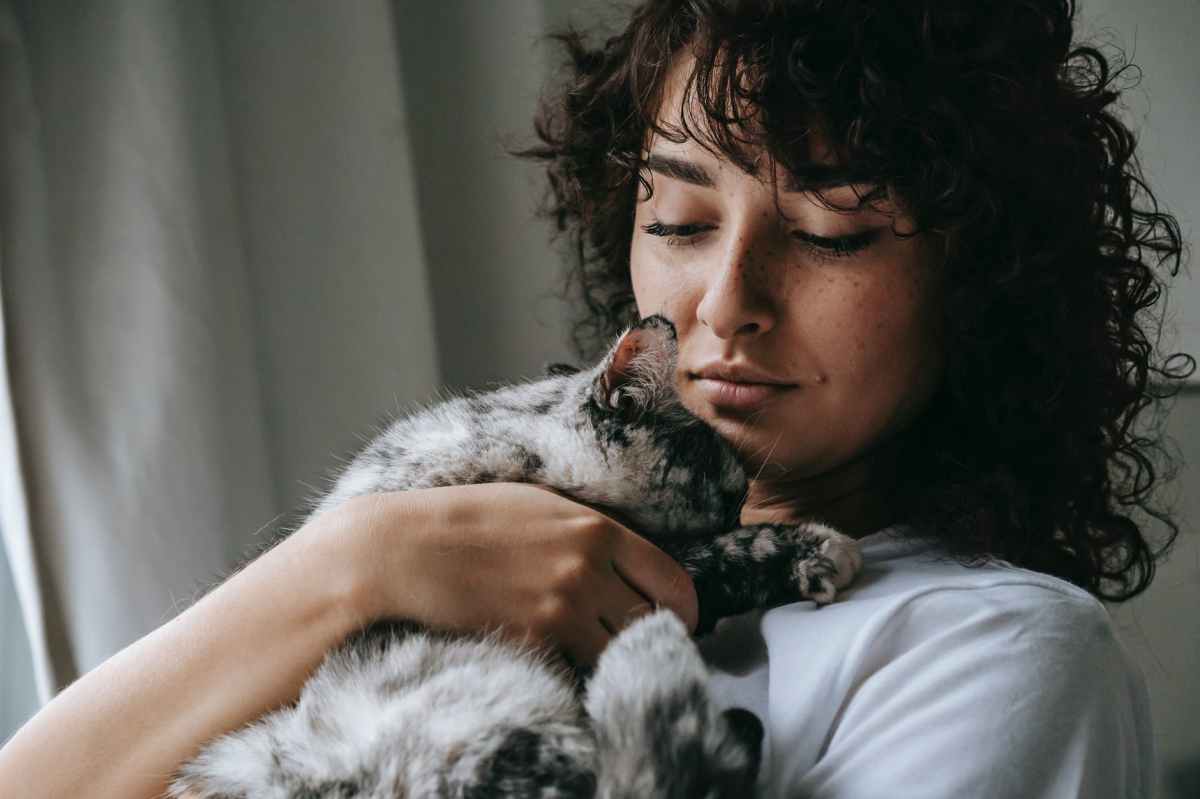
It turns out I may be “doing it wrong,” at least according to some veterinarians and animal behaviorists who say baby talk is a good way to communicate with pets. Animal behaviorists call it “pet-directed speech,” and although the studies so far have been limited, they seem to suggest cats (and dogs) are more likely to respond to it than typical speech in normal registers and cadences. (A study published in the journal Animal Cognition earlier this year found horses respond well to “baby talk” too.)

Despite that, I just can’t bring myself to do it. There are certain standards we must uphold in this home, and besides, I’m pretty sure Bud would paw-smack me if one day I scratched his head and started saying “Who’s a good widdle boy? Is that you? Are you the good widdle boy? Yes you are! Yes you — OUCH! What the hell, dude? Why’d you do that?”

Do you “baby talk” to your pets?

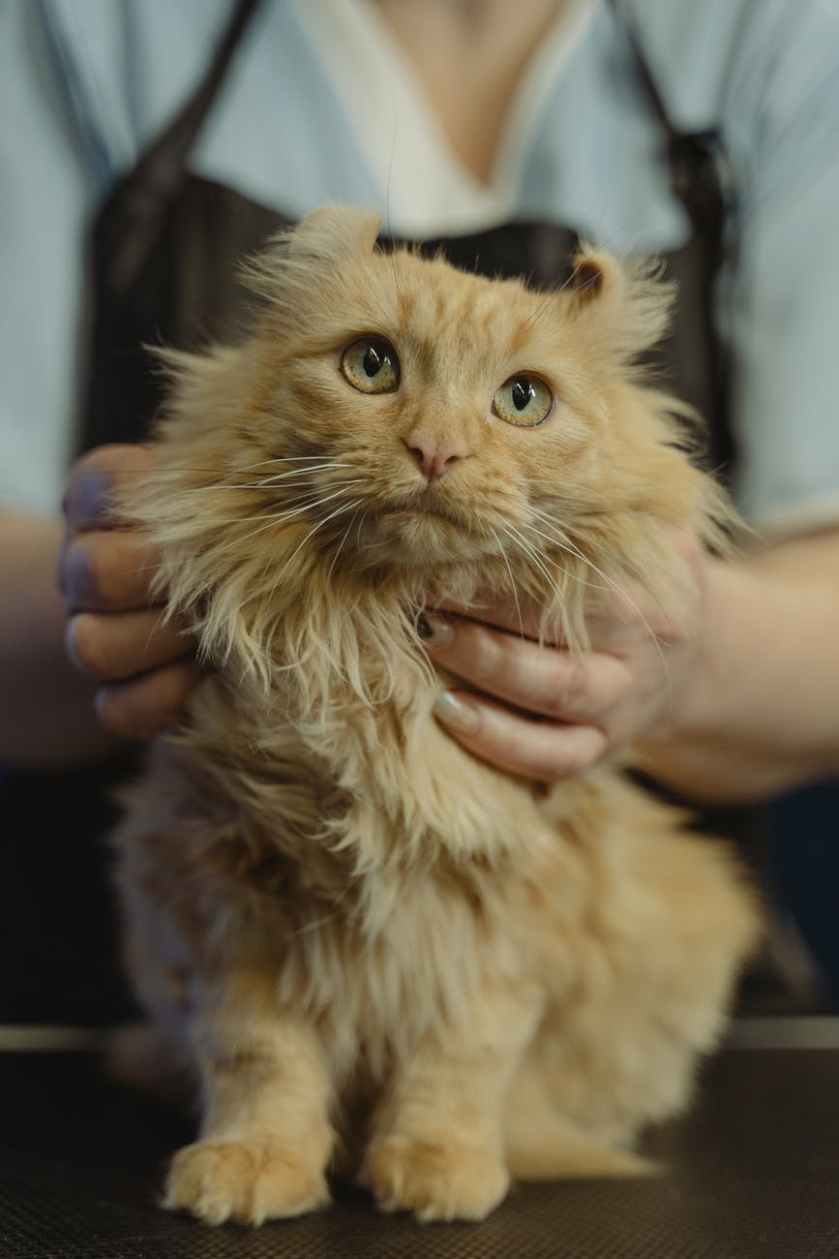
person wearing apron holding orange tabby cat
“Who’s a cute widdle fluffy wuffy?” Credit: Tima Miroshnichenko/Pexels

TikTokers Are Intentionally Traumatizing Their Cats With Christmas Trees

The newest trend on TikTok is terrorizing cats with Christmas trees so they’ll leave the trees alone during the holidays. Not cool.

Proving once again that social media has little or no redeeming value, TikTokers have latched onto a trend that has them using Christmas trees to terrify their cats.

The trend was started by a user who shared a “hack” she’d invented: Chase your chat around your home while wielding your new Christmas tree like a weapon, she said, and the cat won’t mess with the tree or its ornaments the rest of the holiday season.

“If you chase your cat around with the Christmas tree, it’ll be too scared to f**k with it,” said the “hack” originator, @alexisjj_.

User “@becs.richards” racked up more than 25 million views with a video that shows her holding her Christmas tree and thrusting it like a lance toward her confused and scared cat. She wore a big smile as she did so, and set the video to upbeat Christmas music.

Terrorizing your cat is a bad idea, author Anita Kelsey told Newsweek.

“A cat will not have any idea why you are causing them stress or fear and, more than likely, frightening a cat with a Christmas tree can lead to the cat being fearful of the room the tree is in, fearful of the tree, urinating around the home or on the tree and urinating on anything around the tree—like presents,” said Kelsey, author of Let’s Talk About Cats. “It also can cause a breakdown of trust between the cat and the person trying to frighten them.”

Daniel Cummings of the UK’s Cat Protection nonprofit said the method may seem successful, but it “doesn’t take into account how cats learn” and could cause long term problems.

“No cat owner would want to intentionally stress out their cat,” he said, “and part of cat ownership is accepting their natural behaviors.”

Unfortunately this newest trend isn’t surprising, especially coming from a user base of people who happily hand over their user data to the Chinese government, which controls TikTok and makes use of its data just as it does with any other ostensibly “private” company operating in China. There have been more than enough investigative stories illustrating how the Chinese government weaponizes data for any reasonable person to avoid platforms like TikTok.

I’m fortunate that Buddy is a good boy and mostly doesn’t mess with Christmas trees. He’s swiped a handful of ornaments off branches in the past, but so what? He’s a living being with feelings, and ornaments are just things.

Besides, as Cummings notes, curiosity and playfulness are part of the deal when we adopt cats. If people aren’t up for that, they shouldn’t adopt.

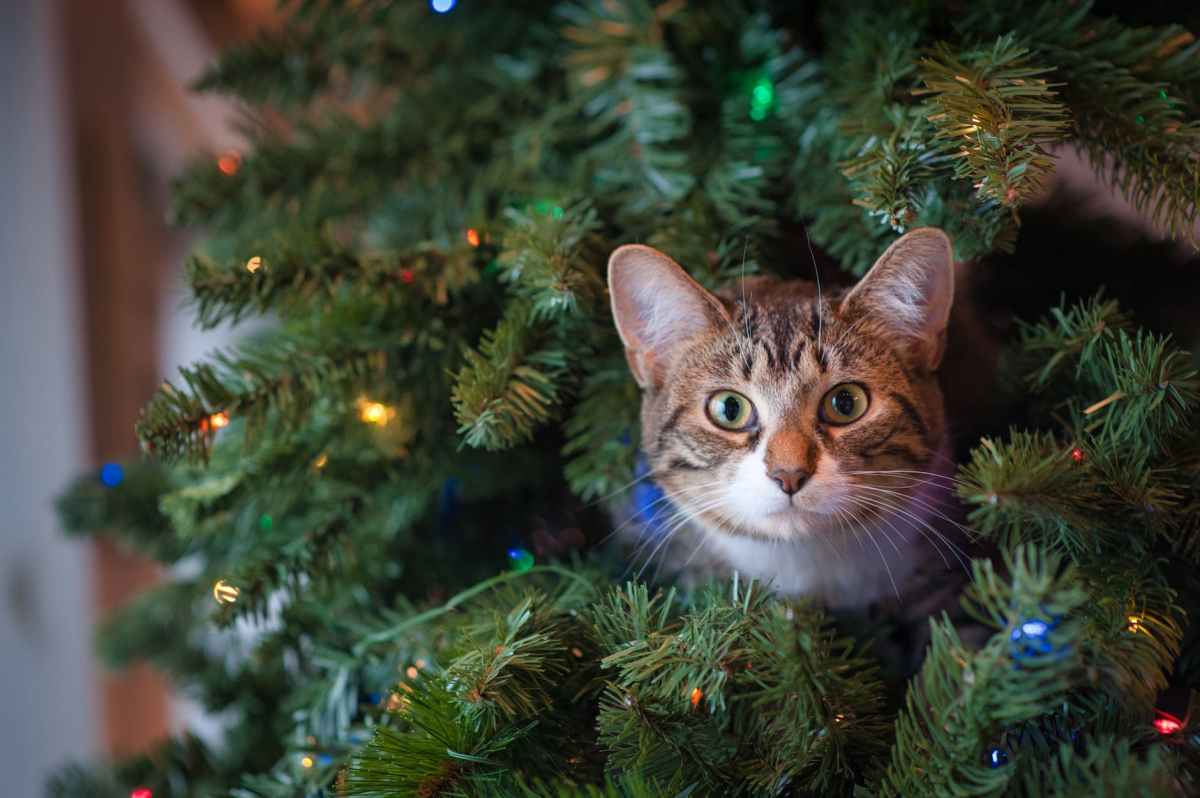
Top photo credit Jessica Lynn Lewis/Pexels.

Reason #94 To Keep Your Cat Indoors: He’s A Bully

A California woman’s cat is a burglar, a bully and an aggressive napper!

Most of the time when we talk about reasons to keep your cat(s) inside, it’s because the great outdoors pose innumerable risks to the lives of cats.

People make a big deal of cats retaining many of their wild instincts, but the truth is they’ve been domestic animals for 10,000 years, and the only “natural habitat” for them is under the care of kind people in a safe home or a managed colony where they’re protected, fed and given veterinary care.

But cats are predators, technically an invasive species in most places, and they have a jerk streak, so there are plenty of valid reasons to protect others from them.

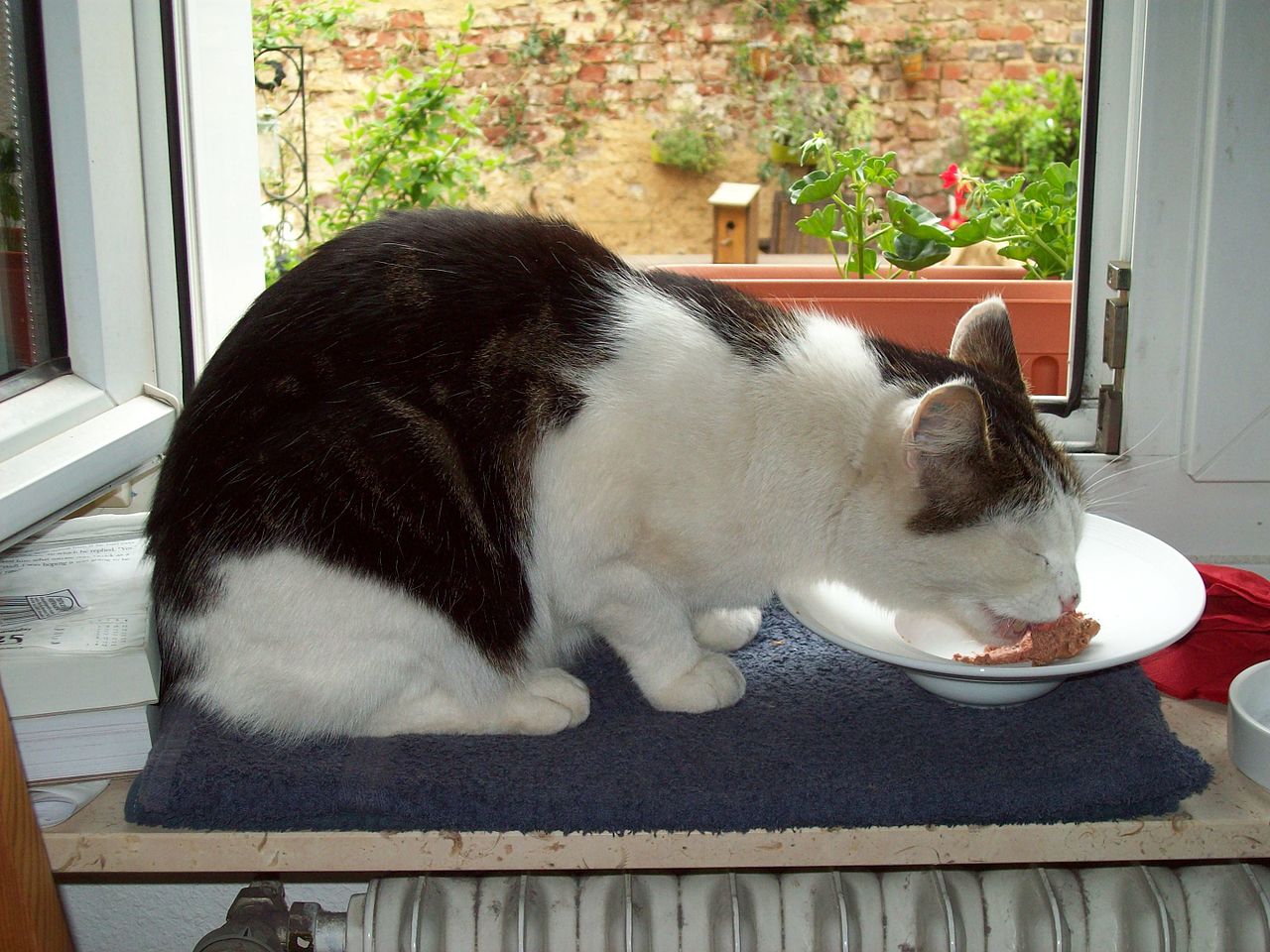
A cat in Pleasant Hill, California — about 20 miles east of Oakland — illustrates that last point perfectly. Apparently he’s been inviting himself into the neighbor’s house via the cat flap, where he bullies the neighbor’s cat, helps himself to its food and adds a final insouciant insult to injury by taking a nap in the neighbor’s house. Then he strolls back into his own home in the morning, enjoys breakfast and has another nap.

Lisa, the offending cat’s human, said she found out about her cat’s jerktastic behavior via social media, and wrote to The San Jose Mercury News’ pet advice columnist for counsel on how to handle the situation. The neighbors have begun hiding their cat’s food in a closet, but understandably they want Lisa’s aggressively napping cat burglar to stay away.

“Not sure how to curtail his activities. Neighbor is not happy with our cat’s behavior,” Lisa wrote. “Locking our cat inside at night is not a good option; he is very vocal when locked up.”

Columnist Joan Morris offered blunt but perfect advice: Stop letting your cat out.

“I think both of you should keep your cats indoors, and the neighbors should lock the cat door, but as it’s your cat burglar that’s causing the issue, it’s up to you to curtail him,” Morris wrote. “Keeping your cat indoors at night is the simplest solution. The adjustment might be difficult — probably more for you than for him — but in time he’ll get used to it.”

I understand it can be very difficult to curtain feline behavior. If there were an Olympics for being annoying, Buddy would take gold many times over for his relentless meowing when he wants something and isn’t getting it. But the one thing you can never do is give in, or the little stinkers will learn that they get what they want when they yowl incessantly.

Do you agree with Morris, or should the bullying moggie get his way?

A_cat_eating_a_meal
“I’m up in your house, eatin’ ur foodz, bro.” Credit: Wikimedia Commons

Cats Know Where We Are Even If It Seems Like They’re Not Paying Attention

New research offers more evidence that despite their poker faces, cats do care about where their humans are and what they’re doing.

A new study from Japan found cats keep track of their humans even when they’re not looking at them.

A research team from the University of Kyoto conducted the experiments in a cat cafe and in individual cats’ homes. Each cat was placed in a room without their humans. Then the researchers tested the way felines reacted to hearing their people calling their names from outside the room, followed by their reactions to hearing them inside via speakers.

When the cats heard their humans calling them from inside the room the furballs were surprised, expressing their confusion with ear twitches, whisker movement and uncertain body language.

On the other hand, when cats heard “non-social stimuli” — scientist-speak for sounds other than familiar people calling to them — they didn’t react to changes in the location and direction.

Some people might shrug and wonder what the fuss is about, but the experiment actually confirms a great deal about feline intelligence. It’s a test of what scientists call “socio-spatial cognition,” meaning cats form a mental map of things that are important to them, and nothing’s more important to a house cat than the person who provides food, security and affection.

That’s significant because it’s confirmation that cats understand object permanence, and that they are more than capable of abstract thought. Abstract thought — the ability to picture and think about something mentally, without having to see it — is hugely important in intelligence, allowing everything from creativity to understanding that other animals and people have their own points of view. For context, it takes about two years for human children to develop rudimentary abstract thinking skills.

Cats “may be thinking about many things,” Saho Takagi, the study’s lead author, told CNN.

“This study shows that cats can mentally map their location based on their owner’s voice,” Takagi said, per The Guardian. “[It suggests] that cats have the ability to picture the invisible in their minds. Cats have a more profound mind than is thought.”

Things like object permanence and spatial awareness were necessary for cats to thrive as hunters for the millions of years they’ve existed on Earth.

The results aren’t surprising from an evolutionary perspective, biologist Roger Tabor said.

“That awareness of movement – tracking things they cannot see – is critical to a cat’s survival,” Tabor told The Guardian.

“A lot of what a cat has to interpret in its territory is an awareness of where other cats are. It is also important for hunting: how could a cat catch a field vole moving around beneath the grass if it couldn’t use clues, such as the occasional rustle, to see in its mind’s eye, where they are? A cat’s owner is extremely significant in its life as a source of food and security, so where we are is very important.”

The study is also another piece of evidence showing cats are just as aware of — and concerned about — their people as dogs are, even though the conventional wisdom says they don’t care most of the time. That has implications for the way people bond with their cats, and the decisions we make about caring for them — like, for instance, how long we’re willing to leave them on their own while planning a trip.

“This is a great example of elevating our expectation of the cat a little bit,” cat behavior consultant Ingrid Johnson told CNN, “and realizing that they do have the capability of having that bond in that relationship where they actually will take comfort in their people.”

Does Your Cat Have A Doppleganger?

A man ends up with two identical cats after “reuniting” with what he thought was his lost cat, only to have his original cat come home the following week.

I may be late to the party on this one, but I’m fascinated by this story about a guy who lost his cat and recovered what he thought was his little guy three weeks later, only for his actual cat to come home the following week.

94e5e16b6f87dd2d2089ee202767fe6b

Some people commenting on the photo claim there are obvious differences, but in my opinion the differences are very small and probably indistinguishable unless the moggies are side by side. The markings are virtually identical on both cats, and the deviations look mostly like they’re attributable to angle, position and shadows.

People who aren’t familiar with cats might wonder how someone can “reunite” with a cat who doesn’t know them, but that can also be explained away by feline quirks: It’s not unusual for cats to behave differently, even to people and other kitties they know well, after a period of separation.

If the cat was acting a bit off, it would be easy to chalk it up to readjustment and re-acclimating to the sights, sounds and smells of home.

The most unbelievable aspect, for me at least, is how both cats in the photo seem to be cool with having a doppleganger and sharing territory.

Maybe the photo’s not representative of their interactions, but if somehow I found Bud’s doppleganger on the street and brought him home, the consequences would include an epic shitstorm of proportions I probably cannot even imagine.

“WTF is THIS?!?” I can imagine Bud thinking, expressing his incredulity with annoyed chirps and meows. “This is a joke, right? Right? Speak before I murder you!”

“I’m Little Buddy, yes I’m the real Buddy, all you other Little Buddies are acting all funny, so will the real Little Buddy please stand up? Please stand up, please stand up!”

The truth is I’ve never seen a Bud doppleganger, or a Buddyganger, if you will. Over the years I’ve done more than a few image searches for gray tabbies while looking for funny photos of cats who look like Bud, and none of them bear more than a superficial resemblance to His Grace.

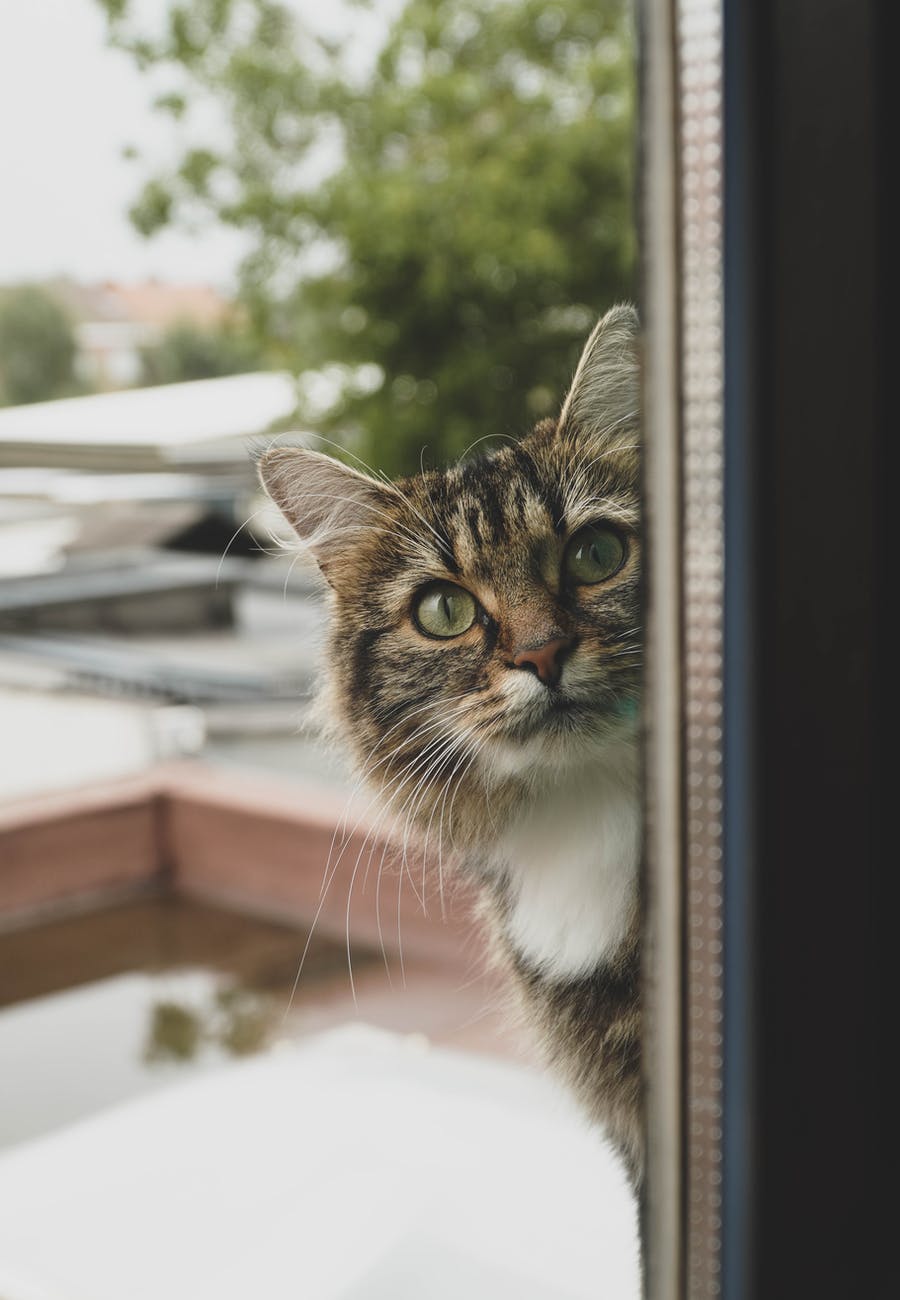
Bud has three major characteristics setting him apart from other cats with the same coat pattern and coloring:

main-qimg-71545019fd341552e20753a1743f261f

  • His bright green eyes complemented by “guyliner,” which itself is ringed by neat white lines.
  • The unique white patch on his chest. It’s just a tuft of white fur, but I’ve never seen a gray tabby with a marking that matches its size, shape and position.
  • Most of all, his pronounced mouth and nose area, alternately called a muzzle, snout or rostrum on various species, terms which are sometimes used for cats as well.

The latter was one of the first things I really noticed after meeting him for the first time and taking him home. Even as a baby it was pronounced in a way that very few cat mouths are.

Finally, while it doesn’t have any bearing on the strictly visual comparison with similar-looking kitties, I can’t imagine another cat acting like Buddy. He’s such a weirdo, so unique in his voice, vocalizations and habits, so opinionated and willing to express those opinions as loudly and often as possible, that I just can’t picture another cat fooling me.

Does your cat have a doppleganger?