What If Cats Had Opposable Thumbs?

If cats can open their own cans, what use do they have for humans?

Three robots on a sightseeing tour of post-apocalyptic, post-human Earth sit on a filthy couch in a decaying home and marvel at what’s in front of them.

“What’s the point of this thing?” one of the robots asks, leaning forward intently.

“Apparently there’s no point,” his tiny red droid friend says. “[Humans] just had them.”

“Well that’s understating their influence,” the third robot chimes in. “They had an entire network that was devoted to the dissemination of pictures of these things.”

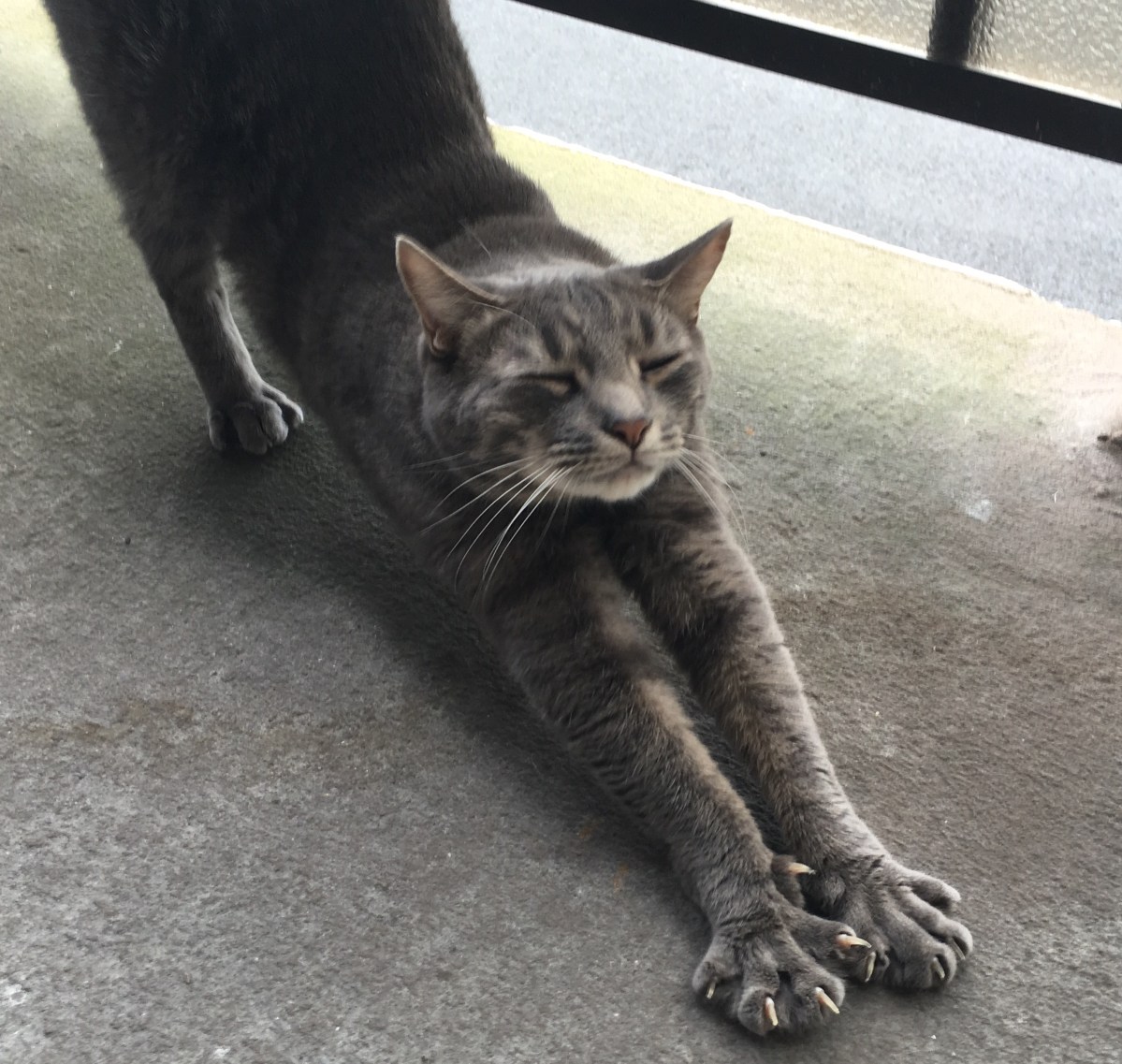
The camera pulls back and we see what the robots are looking at — a cat, digging his claws into an old ottoman and stretching his back with a yawn.

The scene is from Love, Death and Robots, a new science fiction anthology series from Netflix. Each episode is an adaptation of a different short story from some of the best SF novelists working today.

Given the ubiquity of cats on the Internet, it’s probably not far-fetched to imagine archaeologists in the distant future — whether alien, machine or some sort of post-singularity humans come to see their primordial birthplace — would draw the conclusion that humanity built an instantaneous global communication network for the sole purpose of sharing cat images.

“All the evidence suggests primitive humans worshiped these quadrupedal, furry little beasts,” some expert on 21st century humanity might say.

In the Netflix episode [SPOILER ALERT!] the robots complete their tour at a nuclear silo, reflecting on humanity’s demise by its own hand.

But it wasn’t just nuclear winter that spelled doom for humans, the little red robot says: The nail in mankind’s coffin was bio-engineering cats to give them opposable thumbs.

The tomcat from earlier, who’d been tagging along with the robots and demanding they pet him, finally breaks his silence and speaks to the stunned robots.

“Yes,” the cat says, casually wiping a paw against his fur. “Once we could open up our own tuna cans, that was pretty much it for the human race.”

The episode ends with the cat conscripting the robots as his new servants, using a clever bit of leverage explained in an earlier scene.

So what would cats do if they had opposable thumbs?

7E8AF508-C51E-4627-BED8-74FD5A70E0A4

Mine would be into the treat bag like a crack addict, shoveling junk food in his mouth until he can’t eat anymore. He’d open up his own cans as well, no doubt, eating his way through all the delicious turkey.

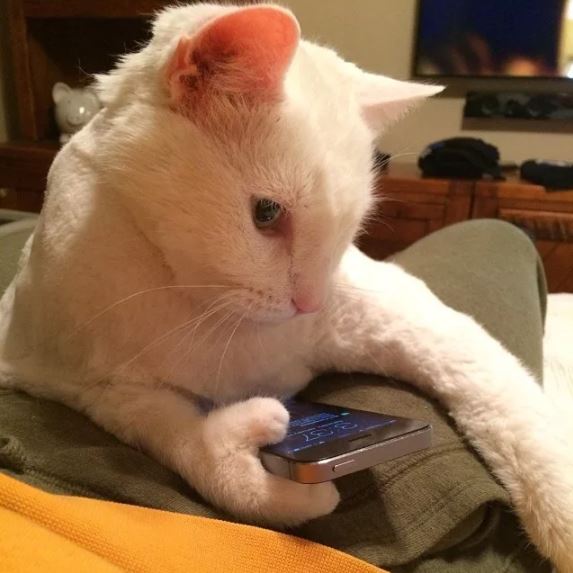
He’d probably steal my phone not because he has any interest in using it, but because anything that takes my attention away from him Must Be Destroyed!

And he’d gain the ability to open every door, not just those with handles instead of knobs. A Buddy with opposable thumbs is a Buddy who’d never allow me to use the bathroom in peace.

As for Love, Death and Robots, the “3 Robots” story isn’t the only one in which cats play an important role. In another episode a team on an archaeological dig accidentally unleashes an ancient vampire. Bullets and explosives don’t even phase the undead, but cats — regular meowing house cats — cause it to recoil and flee in terror.

So remember: If you ever come face to face with a vampire, hide behind your kitty!

Cat TV Is Legit

Birds, fish and rodents are the stars of cat TV.

This is not music for cats.

I tried that a few years ago after reading a story about composer David Teie, who’d designed tracks especially for felines, incorporating tones and rhythms that supposedly have a calming influence on cats.

Here I was thinking it would be something nice for my cat, so I queued up one of the tracks — and Buddy lost his shit!

Bud’s reaction didn’t leave any room for ambiguity: Ears flattened to his head, whiskers pulled back, crouched in a defensive position and hissing at the TV. It was a full-fledged freak-out.

As anyone who’s read this blog knows, Buddy’s a weirdo even among cats, so I don’t doubt Mr. Teie’s music does calm some kitties. Just not this one.

After that experience you can understand how I was hesitant to give “cat TV” a go. Turns out I was worried over nothing.

Buddy usually ignores the TV, but when the video started and the first bird flittered on screen, pecking at some seeds scattered on a tree stump, little man got really interested.

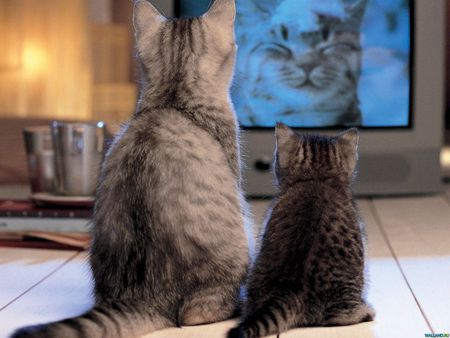
After a few seconds he settled in like a kid watching Saturday morning cartoons, mesmerized as he stared up at the screen.

There were a few times when he looked back at me over his shoulder, seeking a bit of social reassurance as if to say “Can I watch the birdies, Big Bud?” Then he started chirping!

Cat TV isn’t all about the visuals. Sound plays a key element and Paul Dinning, the Youtuber who produces the videos, captures an omnidirectional array of flutters, birdsong and the background hum of nature.

Buddy bounced on the balls of his feet once or twice as if he was ready to pounce on the screen, but he never did. He didn’t look for birds behind the TV either, which is apparently a common reaction. Maybe he understands what he’s seeing isn’t real, but he’s entertained nonetheless.

So it’s with Buddy’s ringing endorsement I can report cat TV is legitimate kitty entertainment. If you ever need to buy yourself an hour or two to get something done without a furry personal assistant getting in the way, cat TV can provide a nice distraction.