What’s Good About Having A Pet? Everything!

Animals are a real source of joy in this world, and few things are better than cozying up on a couch with a book and a purring cat in your lap.

Daily writing prompt
What is good about having a pet?

For more than two weeks after adopting him, I still didn’t have a name for my cat.

I imagined something badass, something funny, something better than all those boring pet names. But the playful, energetic, bold little kitten in front of me was no Brasidas (my favorite Spartan), Mo (my favorite pitcher) or Timothy Cavendish. (My favorite character from David Mitchell’s Cloud Atlas.)

So I kept calling him buddy while I waited for something to come to me, and then it became obvious: He is Buddy.

Original? Nah. But it describes him perfectly, and to me that’s the best part about adopting him, my first-ever pet.

We’re pals. Amigos. Chums. Accomplices. Buddies.

Buddy as he exists in his mind!

I don’t consider myself his “dad” even though I have parental, protective feelings for him. He’s my buddy who wants to be involved in everything I do, whether it’s helping me greet trick-or-treaters at the door like he did last night, batting a paw at my guitar strings to add his special touch to my recording takes, or just hanging out while I’m reading.

I knew it intuitively, but the best advice I ever got was to always remember your little friend, be it a cat or dog, has his or her own feelings.

There’s a lot of confusion around the word sentience and people often confuse it with the concept of sapience, but there is no doubt about it: mammals like cats and dogs, avian species like corvids (ravens, jays, crows and magpies), and even cephalopods like octopus are sentient.

They think. They feel. They experience emotions like joy, sadness, excitement, anxiety, love, loneliness and more, just as intensely as we do. They may not be able to articulate those feelings in words, but they’re real.

More than half a century’s worth of science has confirmed that fact at every step, and we continue to learn more about animal cognition with every advance in technology that allows us to peer deeper into their minds.

Awww, he tolerates me!

When you treat your pet with respect and keep their feelings in mind, you’ll have a friend for life.

A loyal friend whose love comes without condition.

A friend who won’t lie to you…except maybe when it comes to food. After all, Bud could win an Oscar for his role as a starving cat, even though a single glance at him confirms he’s never missed a meal.

If you’re where I was years ago and considering bringing a pet into your life, ask yourself if you’re ready for a commitment that could last two decades, if you’re ready and motivated to give an animal not just a forever home, but the best life the little one can live.

Remember that kittens and puppies grow up fast, and think about whether you’d rather have a whirlwind of energy who will wreck your sleeping habits for months, or an adult furball who is much more chill. Remember that you will have to do things you don’t like, whether it’s scooping a litter box or bagging poop on a walk. There will be expenses, scares, the occasional puked-on rug.

But the joy you’ll get, and the friendship you’ll have, will make it all worth it.

And if you’re sure, find yourself a buddy at your local shelter. Your life will be better for it.

P.S. If you’re a fool like me, you can also have fun imagining your cat or dog in absurd scenarios based on their personalities.

His Mission: Save Cats, And Prove Men Can Love Them Too

Abdul Raheem found peace when he adopted his beloved cat, Bambi. Now he wants other men to know felines are awesome.

There’s something to the idea that people who aren’t fond of felines just haven’t met the right cat.

For me, it was the experience of interacting with a friend’s affable tuxedo — just one, since all my experiences up to that point had been with people who kept an unreasonable number of cats.

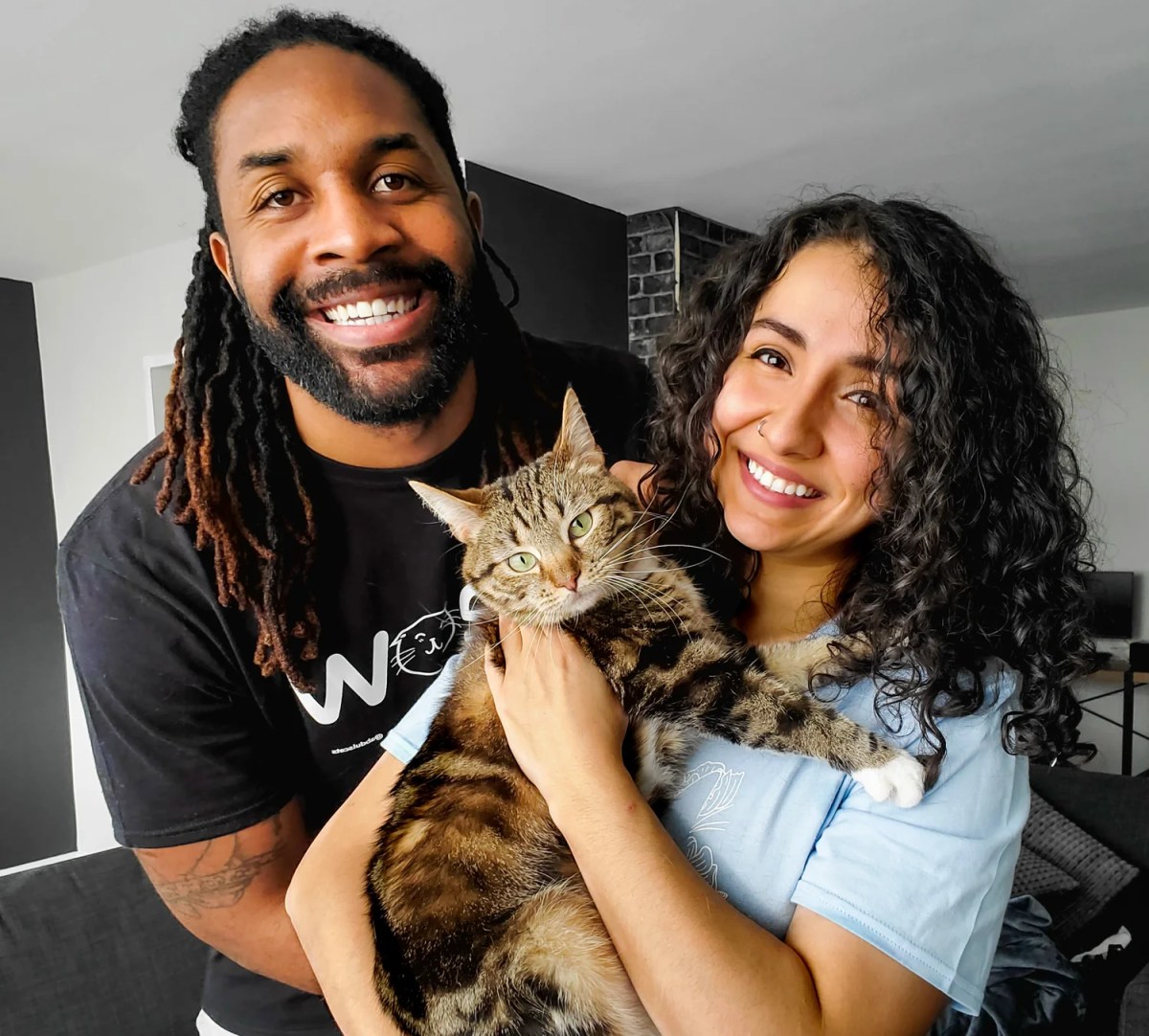
For Abdul Raheem, it was adopting a cat named Bambi after he and his wife fostered and fell in love with her.

“She brought me so much just happiness, and she made my mental health better,” Raheem told the Washington Post. “My anxiety was better when I was around her. So I just want to give other people that feeling.”

Raheem and his wife, Shamiyan Hawramani, became regular fosters for a shelter near their home, and Hawramani began filming her husband’s doting interactions with the baby felines.

Raheem with one of his bottle babies. He and his wife have fostered about 200 kittens and cats since the COVID pandemic.

Their friends found the videos amusing, and lots of people online have too. Abdul’s Cats, an Instagram account documenting Raheem caring for fosters, has a large following — including young men, many of whom are thinking about adopting a cat for the first time because Raheem is showing them something that challenges stereotypes.

My favorite anecdote is about Raheem’s enthusiasm for cats spreading to his friends. At first, they got accustomed to the idea of baby cats jumping in their laps and taking curious swipes at controllers on nights when they’d hang out and play video games.

Then they came to the same conclusion Raheem had: hanging out with cats is relaxing. Several of those friends have since adopted their own feline overlords, and Raheem says one friend now has four cats running around his house.

As for stereotypes, I think cat ladies get a bad rep. They’re the ones who do all the hard work of managing colonies, trapping, fostering, volunteering in shelters and placing cats in good homes.

When you think of the sheer volume of work, and the things they’ve accomplished — including a dramatic reduction in euthanized cats thanks to TNR efforts — they are the unsung heroes. They do it because they love cats.

Jordan Poole is one of several NBA players who have professed their love of felines. In the off-season Poole volunteers with his local shelter.

But it’s also good to toss aside labels and outdated attitudes, like the insistence that cats are companions for women only, and that adopting and caring for a feline friend is somehow unmanly.

Like Jordan Poole, the NBA guard who evangelizes the awesomeness of cats to his fellow players, men like Raheem show guys that they can adopt too.

Now if you’ll excuse me, Bud and I have a busy day of lifting weights, watching football, working on the hot rod we’re restoring in the garage, and drinking beer. Then we’re gonna chant Viking drinking songs until we pass out.

Header image credit Abdul’s Cats

Happy Tuesday Blog Hop

https://www.linkytools.com/basic_linky_include.aspx?id=317817

People Like This Should Be Banned From Having Pets

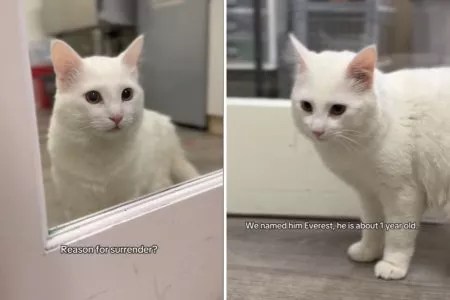
A woman surrendered a cat she’s had since kittenhood. Her reason? He sheds.

The moment Everest the cat was unceremoniously dumped at an Atlanta animal shelter, he freaked out.

The little guy had just lost the only home he’d ever known, his home since kittenhood, and the woman who agreed to be his caretaker for life simply ditched him with a curt “I don’t want this cat.”

No sentiment. No apologies. Just annoyance that Everest, a white cat, was apparently shedding too much for her liking.

Everest the Cat. Credit: FurKids Midtown Atlanta

Shelter employees realized a short time later that the woman had never taken Everest to a veterinarian, had never gotten him shots or had him neutered. Now they’re tasked with rehabilitating a very scared, confused little guy who doesn’t understand why he’s been abandoned.

“We also think he may be deaf but need to conduct tests,” the manager of Furkids Midtown Atlanta Center said in a post on TikTok. “If he is deaf, it’s even more heartbreaking. We don’t think his original owner knew he was deaf, she didn’t seem to care when she surrendered him – she walked in saying, ‘I don’t want this cat.'”

“Karen With A Cat Demanding To See The Manager,” oil on canvas by Buddy the Cat, aka an AI image of what I imagine Everest’s negligent owner looks like. And yes, I used Theresa Caputo in the prompt!

The upside is that the shelter is taking Everest’s health seriously, and they’ll have him neutered and nursed back to health before adopting him out. They’ll also make sure he goes to a home where he gets the love and respect he deserves as a sentient animal with feelings.

Staff at the shelter said they’re determined “to find him the best home. He deserves so much more than the life he’s lived so far.”

“He’s still a little scared,” the shelter manager said. “He is processing what’s happened since now he’s in a shelter where there’s a lot of noises and people.”

This incident, and many others like it, are precisely the reason we need databases listing people who are abusive or negligent to their pets, so they can’t ruin more innocent lives by abandoning cats and dogs when they simply tire of them, or decide they don’t like the fact that they behave precisely the way they’re supposed to as members of their respective species.

It should be done in a way that shelters and rescues in every state can access the database, and contributions should be limited to them as well, with shelters signing their names to the entries. That would prevent people from abusing the list for malicious purposes and ensure that abusive and negligent pet owners can’t simply go to another county or state to evade bans.

“I don’t like Karens.” – Buddy the Cat, The Book of Buddesian Wisdom

Every time I read about a case of cat abuse or an incident like this, I think of Bud and what his life could have been like if he was adopted by someone who didn’t appreciate him. His curiosity, boldness and fire would have been snuffed out, and he would not have been given the love he deserves. Likewise, he would have been deprived of giving back love, and he has a lot to give.

All cats are little buddies, and they all deserve people who love and care for them.

When I ran this by Buddy himself, he agreed.

“That’s right, human,” he said. “Now fetch me a snack!”

Today We Celebrate The House Panthers And The Voids

A Virginia man created National Black Cat Appreciation Day, a celebration of melanistic house panthers, in honor of his late sister, who loved her 20-year-old black cat named Sinbad.

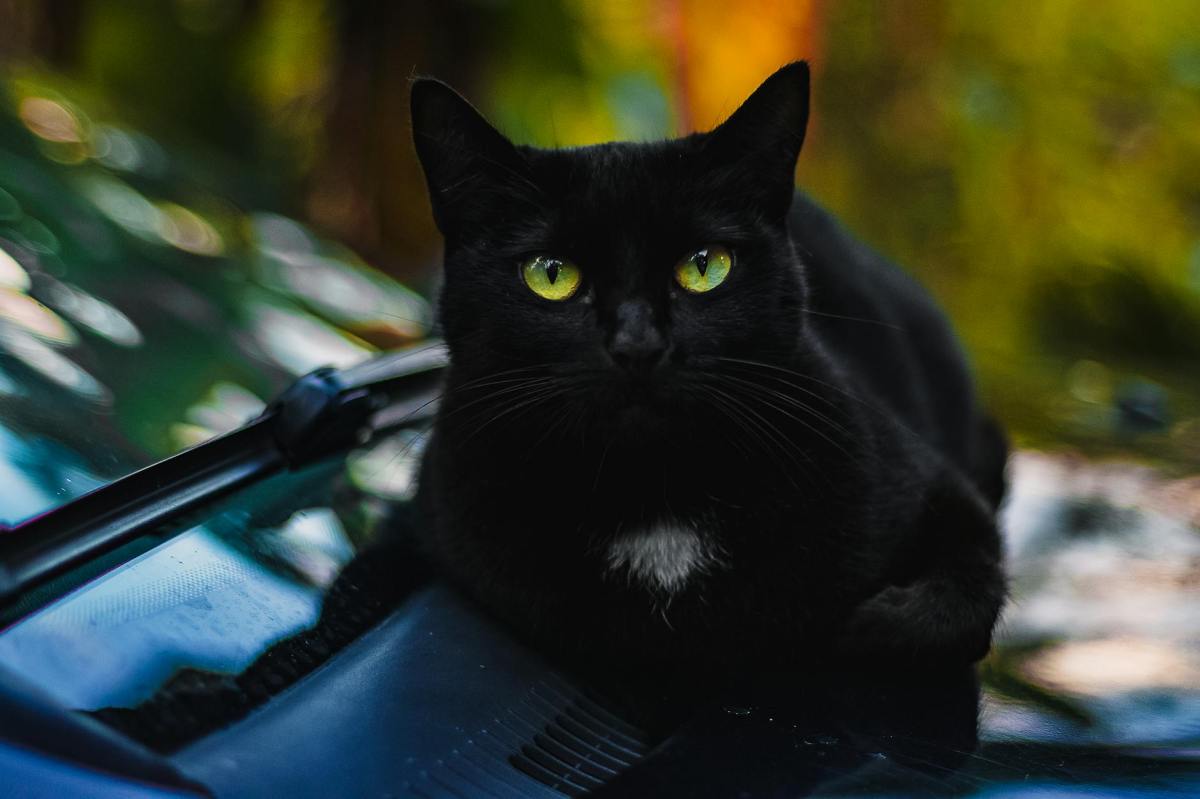
Happy National Black Cat Appreciation Day!

A few years after the death of his 33-year-old sister, June, Wayne Morris wanted to do something in her honor. June adored her black cat, Sinbad, who died at 20 years old, just two months after she passed.

So the Virginia man teamed up with Rikki’s Refuge, a sanctuary where he volunteered, and created National Black Cat Appreciation Day in 2011. Morris chose the day of June’s passing, August 17, in her memory, and that first year marked it by holding a fundraiser for Rikki’s Refuge.

Morris was delighted by black cats as well. He often posted about Norman and Batman, his own melanistic miniature panthers, advocated for the adoption of black felines, and painted whimsical scenes of cats, which were auctioned to raise money for Rikki’s.

(Above, clockwise from top left: Batman, Wayne Morris, Norman, Batman again, and one of Morris’s paintings.)

Wayne Morris died in 2022, but the day he founded has continued to grow in popularity. In the 14 years since its inaugural celebration, National Black Cat Appreciation Day has spread via fundraisers for shelters across the country, as well as sites within the online catosphere, like this one.

Morris was motivated beyond honoring his sister and raising money for his favorite rescue. Black cats — also affectionately known as voids — have suffered unfortunate reputational damage over the centuries.

Melanistic felines are actually considered good luck in Japan, China and most of Asia, where they can be found in temples and their likenesses are used as maneki neko, the ubiquitous “lucky cats” in homes and businesses. (Black maneki neko are said to ward off evil spirits, diseases and people with bad intentions, while the golden cat statues are associated with wealth and the white neko are thought to bring good health.)

But in much of the western world they’re associated with bad luck, “evil” forces in folklore, and they’ve been invoked in outbursts of moral panic over things like witchcraft.

Black_jaguar_edin_zoo
Big cats can be voids too, like this stunning black jaguar in Scotland’s Edinburgh Zoo. Credit: Wikimedia Commons

A black cat — or a statue of one — was said to be involved in Satanic rituals in Spain by Konrad van Marburg, an inquisitor known for his brutal zealotry. While the effect of that accusation has been exaggerated for years in internet discussions and posts (Pope Gregory IX’s papal bull dealt with a small area of Germany and did not declare that black cats were Satanic), it naturally comes up in superstitions about the animals.

A 2020 study of 8,000 adoptions found black cats were less likely to be adopted and more likely to be euthanized. That study and others found there was “scant evidence” for the dramatic margins suggested by anecdotal accounts circulating online and in some publications, but confirmed the problem is real. Research also suggests that negative perceptions of black cats isn’t correlated to religious preferences, but is tied to general belief in the supernatural.

Interestingly, additional research has hinted at a decidedly more modern and petty reason people may hesitate to adopt black cats: they think voids are more difficult to photograph, which is an issue for people who want to show their pets off online. (We’ve written about that particular hang-up before, and noted it’s possible to take beautiful photographs of voids by being mindful of factors like lighting and contrast between fur color and the background.)

Regardless, the combined effect of the superstitions and negative associations has harmed black-coated felines, and National Black Cat Appreciation Day is also an attempt to push back and show people that black cats are just, well, cats.

Matt Damon’s Cat Is One Tough Little Dude

Matt Damon rescued a stray living on the periphery of a Costa Rican jungle.

Matt Damon stopped by the Late Show With Stephen Colbert this week, and somehow they got on the topic of Damon’s cat.

The Oppenheimer actor described how he and his wife gained the feline’s trust while staying at an AirBnB in Costa Rica. The cat, who was living on the edge of the nearby jungle and “fighting for his life every night,” gratefully accepted food from the Damons and grew to trust them over the month they spent at the rental.

“By the end we were like, ‘We have to take this cat. This guy’s gonna die. Now he’s relying on us.'”

It turns out the little brawler was done with living rough and enthusiastically took to the life of a pampered house cat.

“He moves into our house, and I’m thinking ‘I have a little yard out in LA, it’ll be great out there [for him],'” Damon told Colbert. “He never went outside ever again.”

Damon’s cat had a serious health scare, but the story has a happy ending and it’s better to hear Damon tell it, so turn up your speakers/headphones:

@colbertlateshow

Matt Damon shares an incredible story about the cat he adopted from Costa Rica. #Colbert

♬ original sound – colbertlateshow – colbertlateshow

Yes, Damon’s cat may be “jacked,” and he may even be the Arnold Schwarzenegger of felines, but surely he doesn’t compare to the OG of ripped and meowscular cats.

20240404_075919