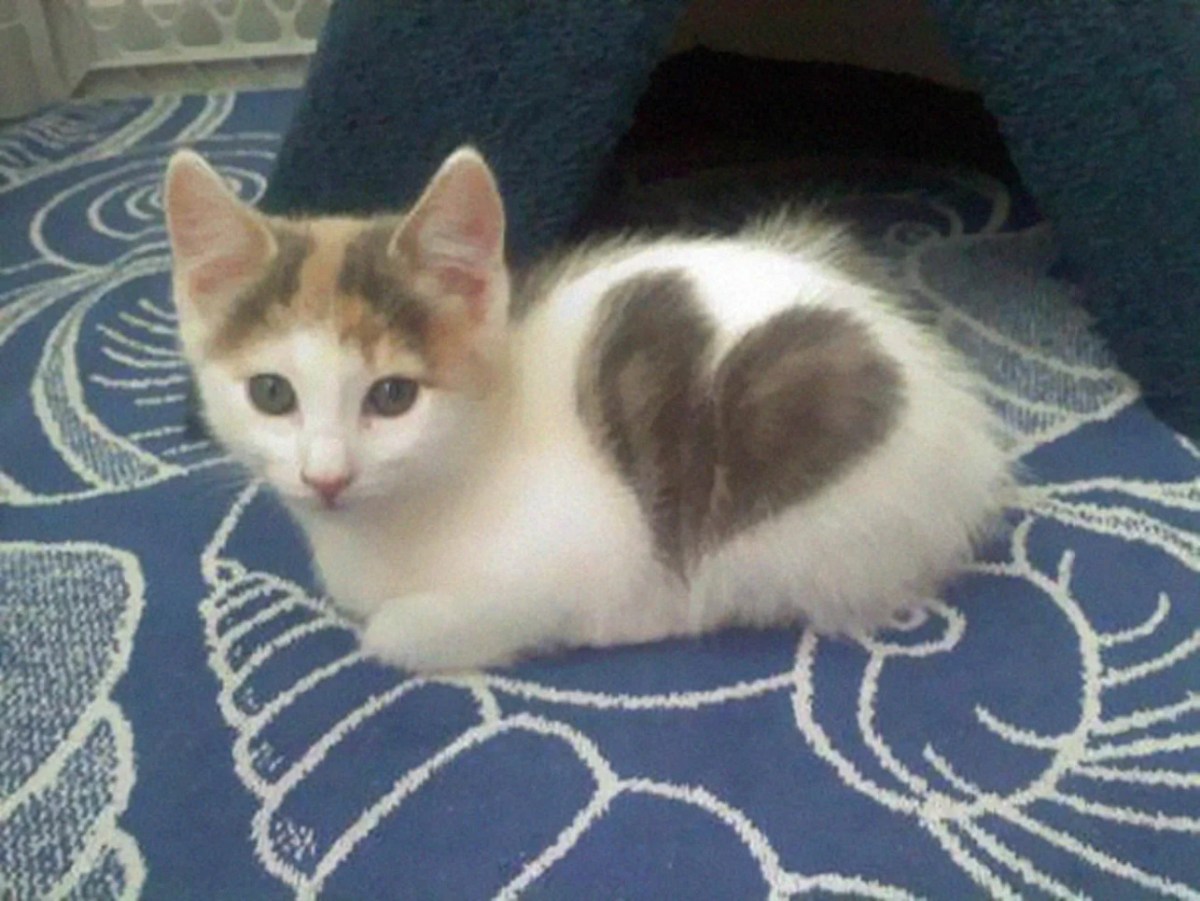
Happy Valentine’s Day from Buddy!
We would like to take this opportunity to remind female cats to please stop sending your harnesses, clippings of your fur, lipstick paw print cards and selfies of your tails to Buddy.
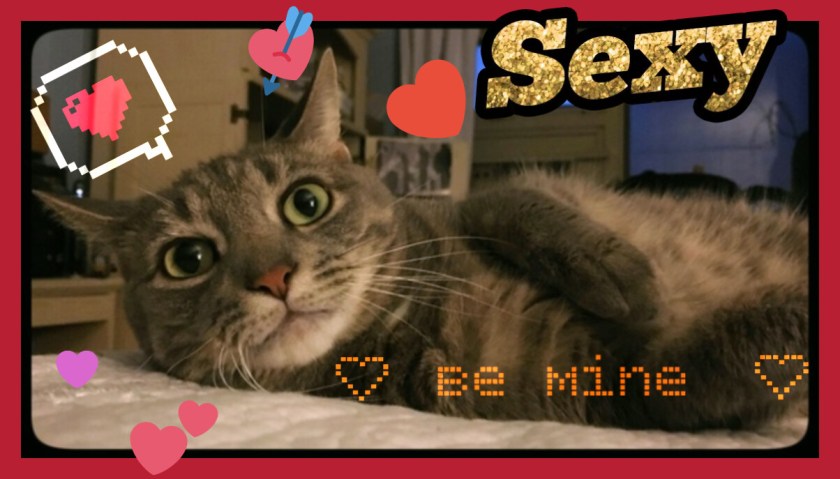
Happy Valentine’s Day from Bud!
Happy Valentine’s Day from Buddy!
We would like to take this opportunity to remind female cats to please stop sending your harnesses, clippings of your fur, lipstick paw print cards and selfies of your tails to Buddy.
Data from Match.com suggests being photographed with cats hurts single straight men’s chances of connecting with female users.
Remember the study from this past summer that claimed single men with cats are perceived as “less masculine” and are less likely to score dates than their cat-less counterparts?
Now Match.com has some bad news for us as well, saying their internal data shows men who have cats are less attractive to women on the popular online dating platform. From the Wall Street Journal:
‘If you’re a heterosexual man looking for love this Valentine’s Day, here’s something you probably don’t want to do: include a cat in your online dating profile.
“Chicks don’t want a guy with a cat,” said Rachel DeAlto, chief dating expert for Match, an online service that promises to connect compatible romantic partners.’
The Match.com data mirrors the data from the earlier Colorado State University study, which showed women photos of men with and without cats. When the authors asked women whether they’d consider dating those men, the female participants said they were less likely to date the cat servants by a margin of about five percent. Match.com’s data says men with cats are five percent less likely to receive “likes” than men without cats.
“Men holding cats were viewed as less masculine; more neurotic, agreeable, and open; and less dateable,” said study authors Lori Kogan and Shelly Vosche, who titled their paper “Not the Cat’s Meow? The Impact of Posing With Cats on Female Perceptions of Male Dateability.”

That study was limited: The authors worked with about 700 female participants who were all between the ages of 18 and 24. At the time, we speculated that the anti-cat bias would probably be negligible among women in older age brackets, but there were worrying signs, including the idea that men who care for cats aren’t as manly as men who haven’t discovered the joys of hanging with a miniature tiger.
“Women prefer men with ‘good genes,’ often defined as more masculine traits,” they wrote. “Clearly, the presence of a cat diminishes that perception.”
The results, they said, indicate “women are more likely to seek masculinity first, then consider other components of the potential mate.”
The findings were “influenced by” whether the women self-identified “as a dog or a cat person,” although it wasn’t clear just how much that impacted their responses.
Vosche and Kogan speculate “that American culture has distinguished ‘cat men’ as less masculine, perhaps creating a cultural preference for ‘dog men’ among most heterosexual women in the studied age group.”
That study also prompted us to write a fake news post headlined: “Study: Male Actors, Models Are 96% More Handsome When Pictured With Buddy,” alongside the “proof”: A photograph of actor Chris Hemsworth in a fat suit, sans Buddy, and a photo of Hemsworth playing Thor the god of thunder, pictured with Buddy and looking heroic. Haha!

It’s worth pointing out the difference is in perception. There’s nothing to indicate men who care for cats don’t have “good genes” any more than there’s evidence that men without cats have supposedly superior genes. Rather, as the study authors note, the perception is reinforced by cultural biases, at least here in the US.
Likewise, both the Colorado State University study and the Match.com data are looking at first impressions based on photographs, which means women are evaluating the men in question based only on limited visual information, to the exclusion of everything else that factors into whether one person views another as attractive.
We don’t know if the same biases hold true in other situations. For example, how would women respond to men who are out and about walking their cats on harnesses? How would they respond to a man who casually mentions he’s got a cat back home?
The Match data also cuts both ways, to the detriment of women. While straight men with cats receive five percent fewer “likes” than other men, straight women with cats suffer an even larger perception penalty, receiving seven percent fewer “likes,” probably due to the “crazy cat lady” stereotype.
Some people think that makes perfect sense:

“[T]his goes for both men and women – having a cat often means you’re addicted to caffeine, on SSRI’s [sic], love to binge-watch netflix, zero libido, cry a lot, late night ben and jerry’s pint, etc.,” Mahbod Moghadam wrote in a Feb. 12 Facebook post in response to the WSJ story.
Mahbod Moghadam. I know that name. Where do I know that name from?
Oh, right. He’s the Rap Genius (Genius.com lyric site) co-founder who was thoroughly clowned by Sacha Baron Cohen on his Showtime series, Who Is America?
I say “clowned.” Esquire says “humiliated.” In reality, neither word captures Moghadam’s so-cringeworthy-it’s-hard-to-watch appearance on the show. Believing he’s there to be photographed and interviewed by an Italian fashion photographer named Gio Monaldo (Baron-Cohen in disguise), Moghadam is legendarily awful in the segment:
In the middle of the photoshoot, Gio compliments Moghadam repeatedly, calling him cool. He then asks he to “do something like a black guy.” Seemingly without missing a beat, Moghadam makes the Blood sign and mimes shooting a gun at the camera while saying “pop, pop.” Of course a lot of editing goes into Who Is America?‘s segments, but there’s really no excuse for that.
Much like with the Olympios interview, Cohen then persuaded Moghadam to pose with a green screen so he can photoshop the founder feeding starving children. In the middle of the shoot, Gio stops, convincing his muse that he needs to make his penis look bigger. Naturally the only solution to this is to stuff the arm of a babydoll down his pants. Moghadam never seems to protest any of this, not even when an intentionally racist Gio swaps out the white babydoll arm for an African-American one.
I’d link the footage, because there’s no way I can do justice to how awful it is, but miraculously it looks like it’s disappeared. Indeed, Moghadam comes off looking so bad in the segment that it looks like he’s gone to incredible lengths to get every clip of it removed from sites like Youtube and DailyMotion. If that guy is the kind of person who thinks men with cats are less masculine, then we’ve got nothing to worry about.


Why is Buddy so obsessed with turkey?
You may have noticed that turkey is a frequent topic of conversation on this blog, and since we’ve had new readers join us it’s a good time to explain just what the hell is going on with my cat’s fowl obsession.
It’s simple: Buddy really loves turkey.
I first noticed it when he was about 10 weeks old. Like most cats he enjoys all kinds of food, but when I fed him turkey one day, he scarfed every last bit of it down, licking his bowl clean.
When he was finished he looked like the happiest kitten in the world, sitting there licking his lips enthusiastically, sopping up every stray morsel before letting loose a tiny, satisfied belch.
Before adopting Bud, I’d read enough cautionary stories about finicky cats who’ll only eat a certain kind of meat, in only one texture, from a particular cat food company.
Not only does food become perfunctory for those cats, but if the cat food company discontinues the product, both cat and owner are in for frustration that could stretch for weeks of trial and error. Finding an acceptable alternative is usually an expensive, wasteful process as kitty repeatedly turns his or her nose up at substitutes.
Heeding the cautionary advice of those devoted cat servants, I fed as much variety as was possible from the very beginning. Bud eats salmon, chicken, beef, tuna, shrimp and duck, among other varieties when available.
He genuinely enjoys his meals thanks to the variety, and I’d recommend the same strategy for anyone else bringing a new kitten home. Get ’em started early and you won’t have a picky cat.
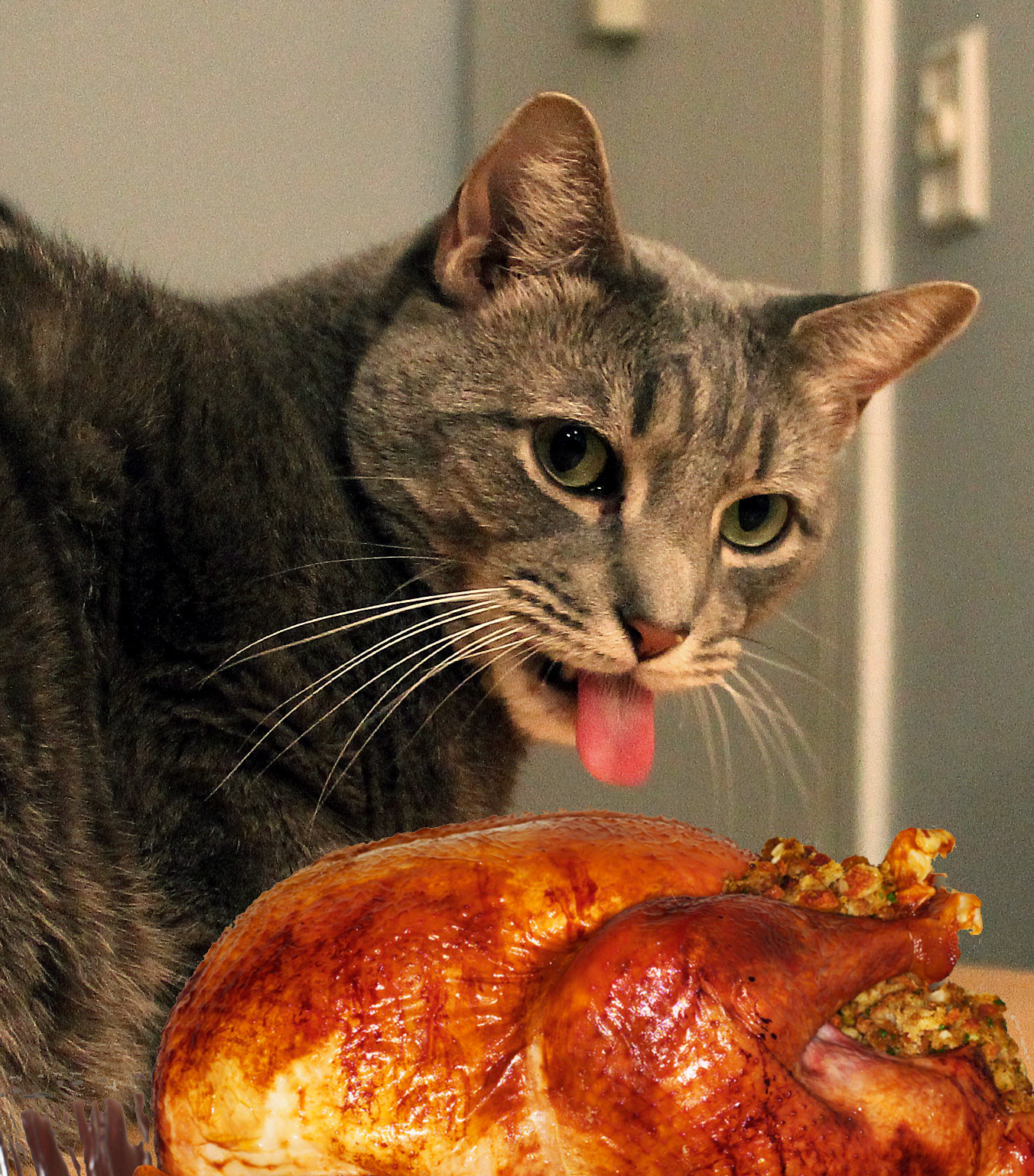
But for Bud, nothing compares to turkey. No other food prompts such meows of pure joy, or the urgency with which he leads me to his dining nook when he knows his bowl is filled with yummy turkey goodness, frequently looking over his shoulder to make sure I’m just a step behind him with his beloved turkey.
It’s been that way since he was a baby, and in more than six years it hasn’t changed.
So for Buddy, life’s finest things are turkey, catnip, napping, napping on top of his Big Buddy, and turkey.
“I’m not a cat!”
Your Honor, I make a meowtion to dismiss!
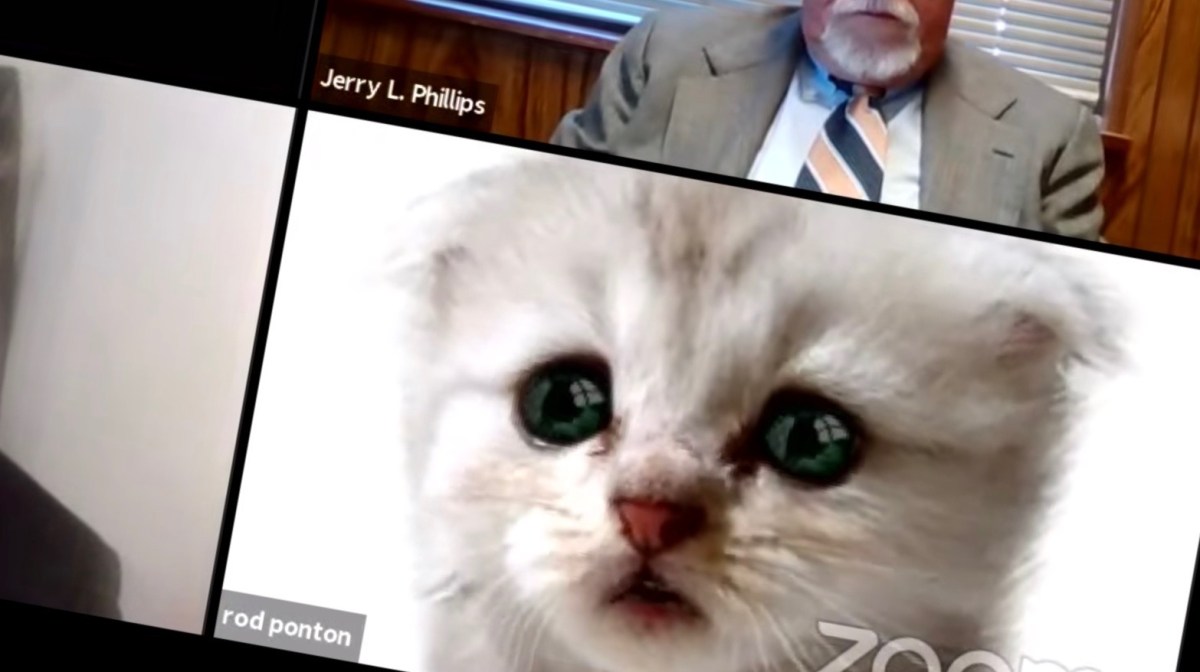
Americans have denied pretty much everything in courts of law over the years, but this one may be a first. After a Texas lawyer connected to a Zoom virtual civil forfeiture hearing and couldn’t figure out how to remove a filter that turned his on-screen image into that of an anthropomorphic kitten, the lawyer stated the obvious.
“I’m here live,” the attorney told the presiding judge. “I’m not a cat.”

The lawyer is Rod Ponton of Presidio, Texas, and he’s become a viral sensation.
“When I got on Zoom everything seemed fine – my picture popped up, I was in the waiting room with the judge. But when the judge called the case, I disappeared and a cat appeared instead of me to my great surprise of course,” Ponton told the BBC.
Ponton’s misadventure is relatable at a time when almost everything that doesn’t require physical presence has been moved online due to the Coronavirus, and it’s perhaps most relatable to adults who can’t figure out what their kids have done to their computers.
Ponton, it turns out, was using his secretary’s computer after her kid had been using it. Thus the kitten filter.
He told the BBC he’s trying to “roll with it” as the video racks up millions of views.
“In Texas we have a phrase that you can’t put toothpaste back in the tube,” Ponton said. “If this was going to become an internet sensation I just had to laugh at myself along with everybody else doing so.”
Our hero leads his crew through a perilous alien jungle to find the raw materials necessary to repair the USS Delicious.
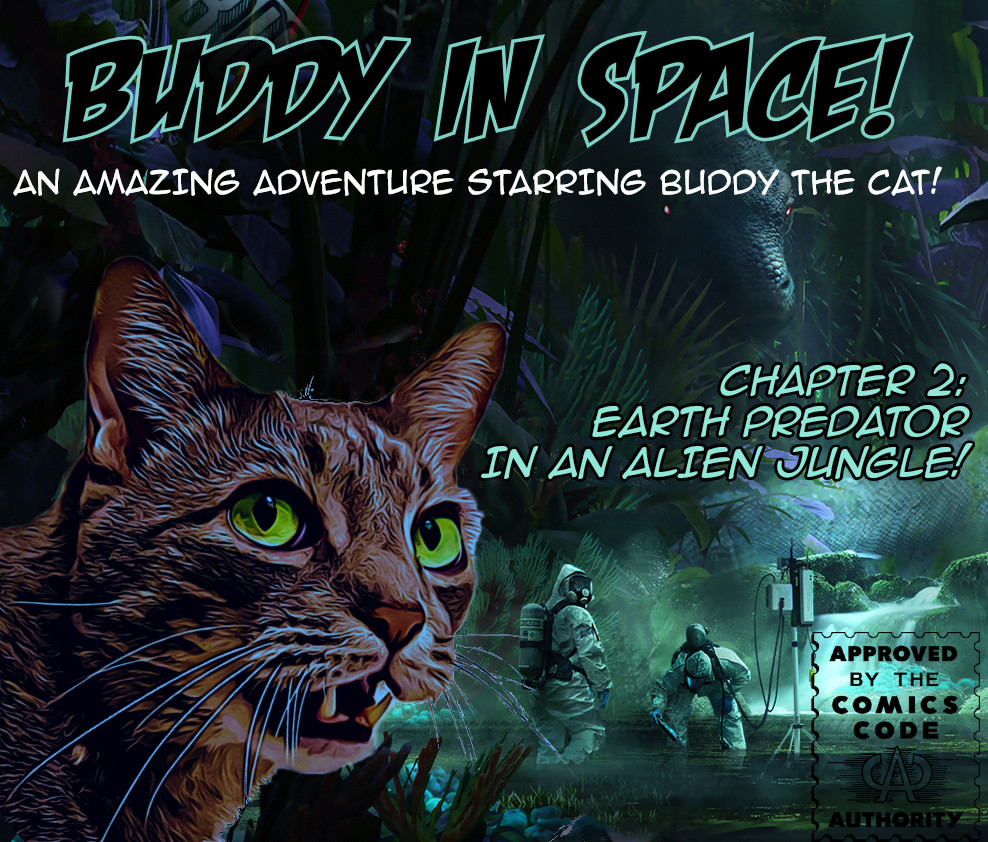
Following the cowardly attack by the Evil Time-Lord on Capt. Buddy’s starship, the USS Delicious, our brave captain escaped by the fur of his teeth and courageously landed his trusty vessel on a mysterious planet in an uncharted star system.
Now our beloved captain must navigate the myriad hidden dangers of a dark, alien jungle as he leads his crew to locate the raw materials they’ll need to repair the USS Delicious and obtain enough reactor fuel to lift the ship into orbit once again.
But not everything is as it seems, and unseen eyes watch our hero from the murky shadows of the alien flora.
To make matters worse, the crew must ration their yums as their supplies of turkey dwindle.
Despite the considerable challenges they face, Capt. Buddy’s loyal cats endeavor to keep their spirits high as they navigate this virgin world bereft of feline scent-marking and tree-clawing. In a rousing speech, Capt. Buddy reminds his cats that all they need to do is spray a few trees and bury some poops to make this alien planet feel like home.
In Chapter 2: Earth Predator In An Alien Jungle, readers will accompany Buddy on a perilous journey that pits cats — Earth’s mightiest creatures — against the unknown horrors of this nameless, mysterious planet.
Will Capt. Buddy save his crew? Will they survive the perils of an unknown world? Will the USS Delicious reach the stars again so Capt. Buddy can replenish his supply of turkey and confront the Evil Time-Lord?
Read Chapter 2 of Buddy In Space: Earth Predator In An Alien Jungle, on newsstands May 1953 for only 5 cents! This title has been approved by the Comics Code Authority!