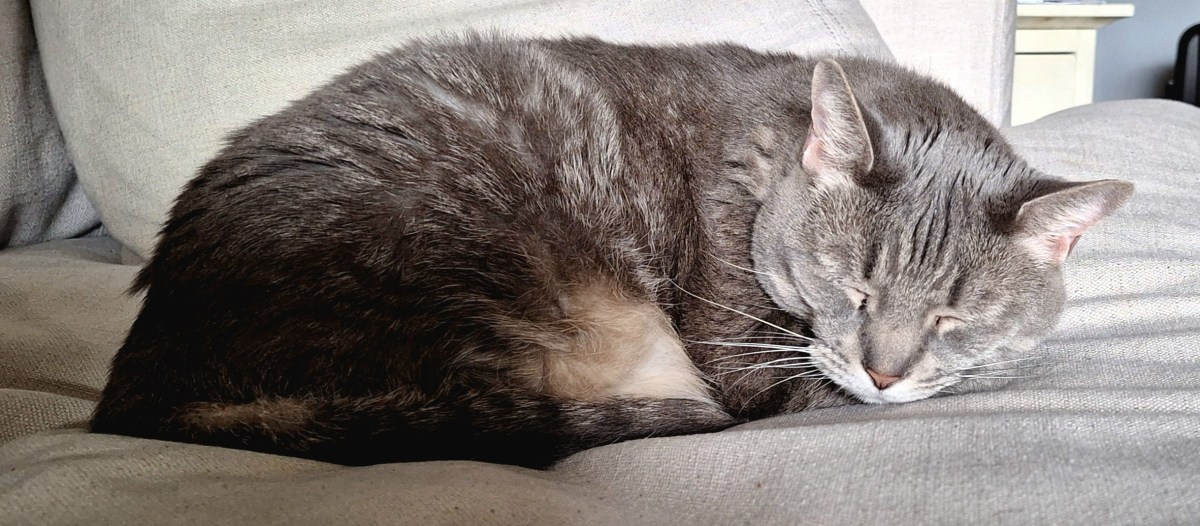
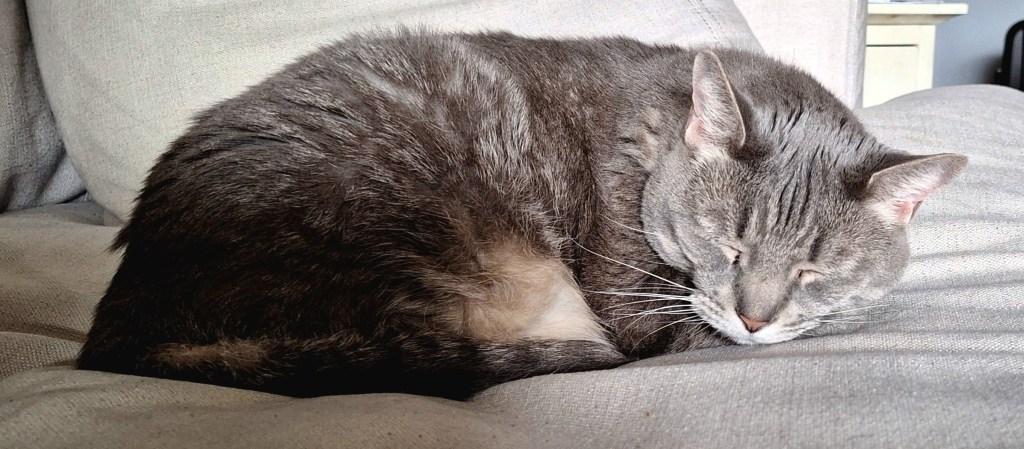
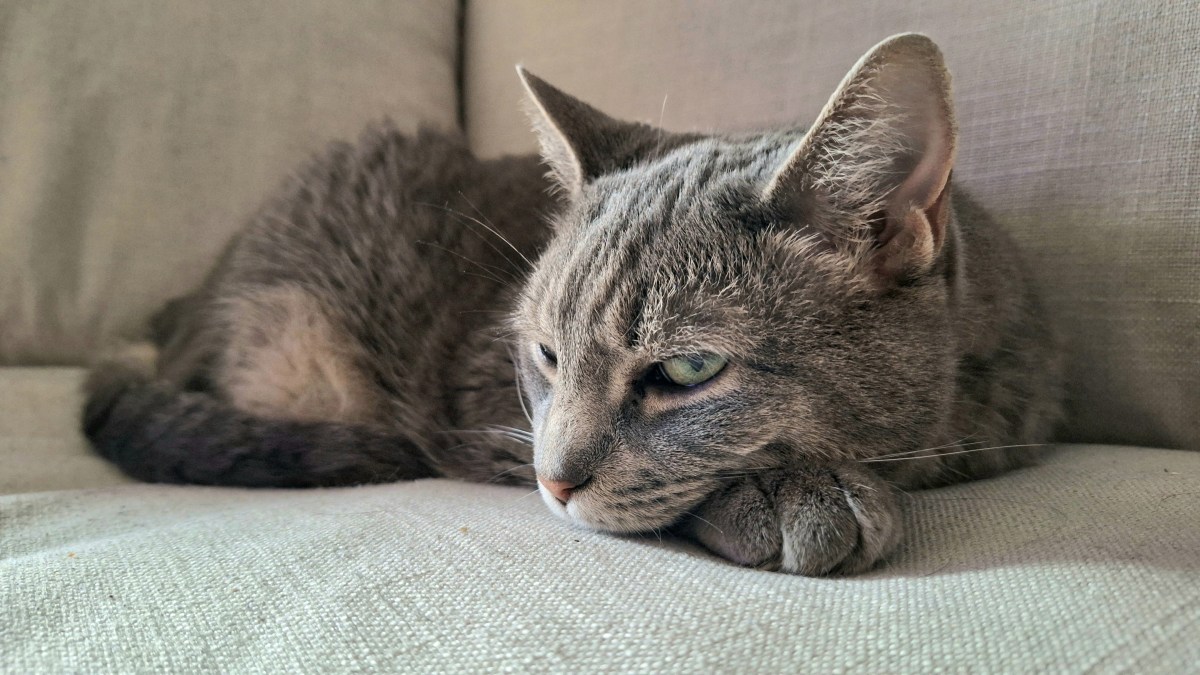
Looking to recuperate after a long morning of eating and lounging in the suddenly warm weather, the little guy settled down for some shut-eye.
What’s better than a Sunday afternoon nap?
It’s been a glorious day here in Buddyland! The forecast had us breaking the 50-degree mark for the first time in at least four months, so imagine our surprise when the temperature topped out in the low 60s!
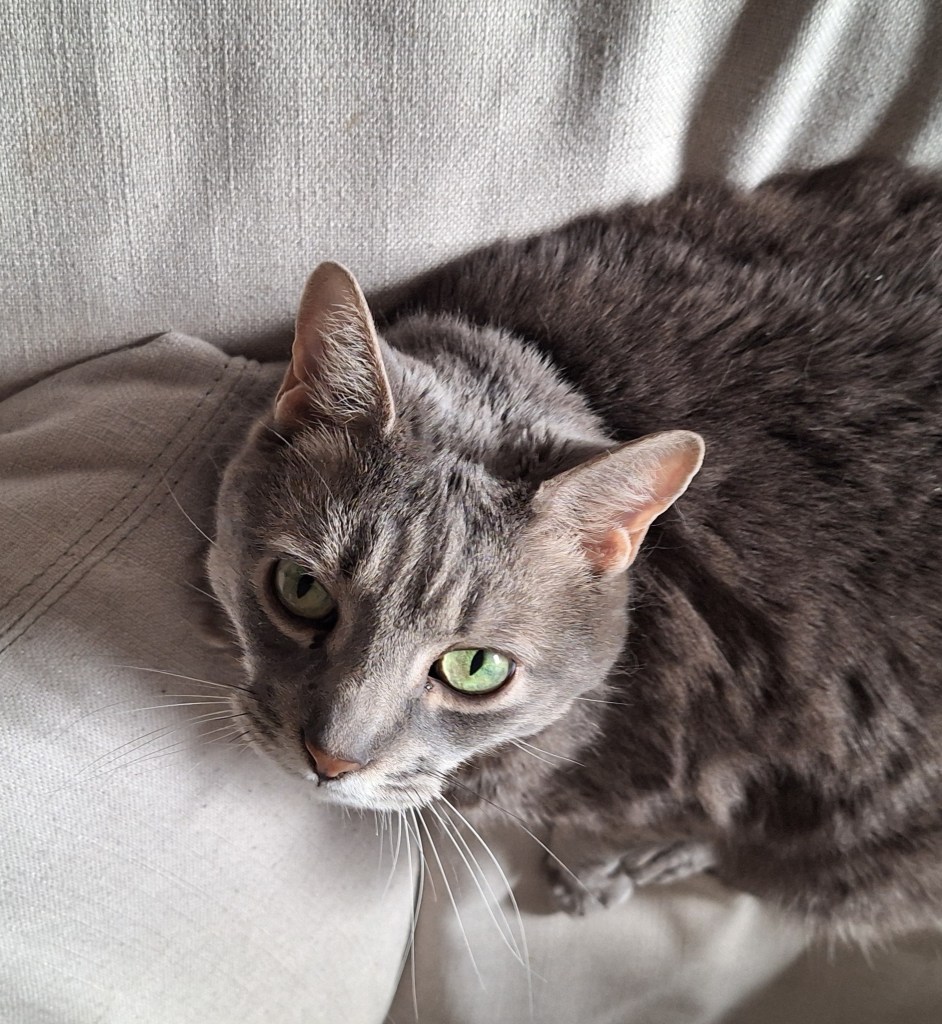
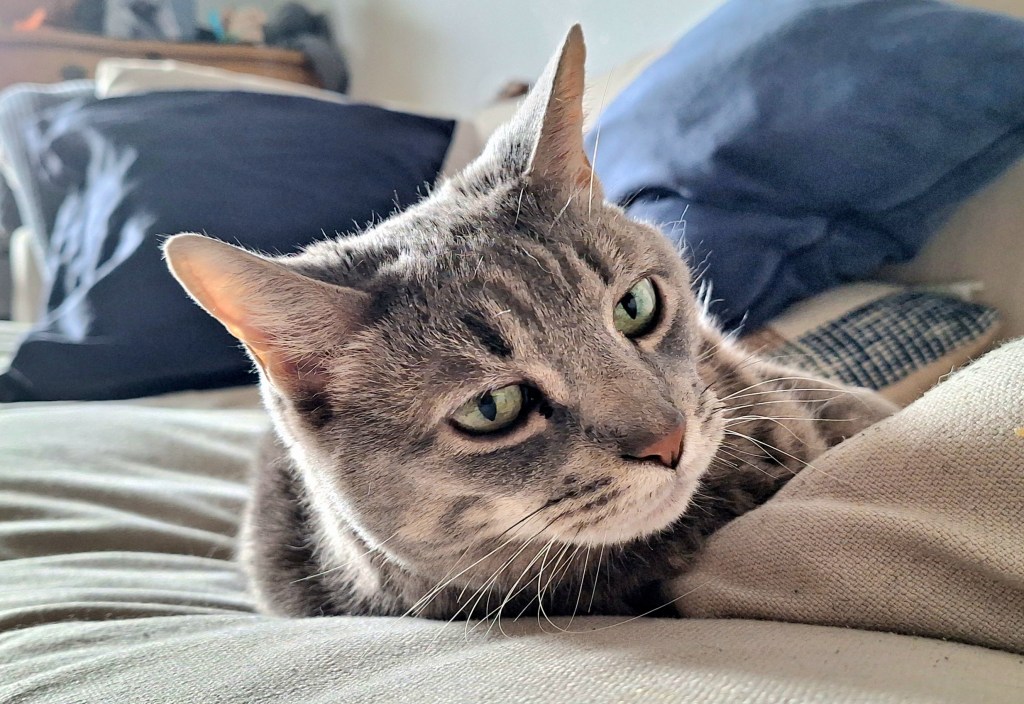
Bud decided to celebrate the balmy weather by stretching out and drifting off for a nice nap, and I couldn’t resist taking a few photos of my pal looking relaxed after a hard day of eating and lounging.
To be fair, I was out earlier and when I came home, Bud was right by the door to greet me as always, so he probably had a very demanding nap in the proximity of the front door while I was gone, then opted for a more relaxed nap after expending all that energy on his earlier nap. I had also topped off his dry food before his lunch, in case he got hungry while he was eating.
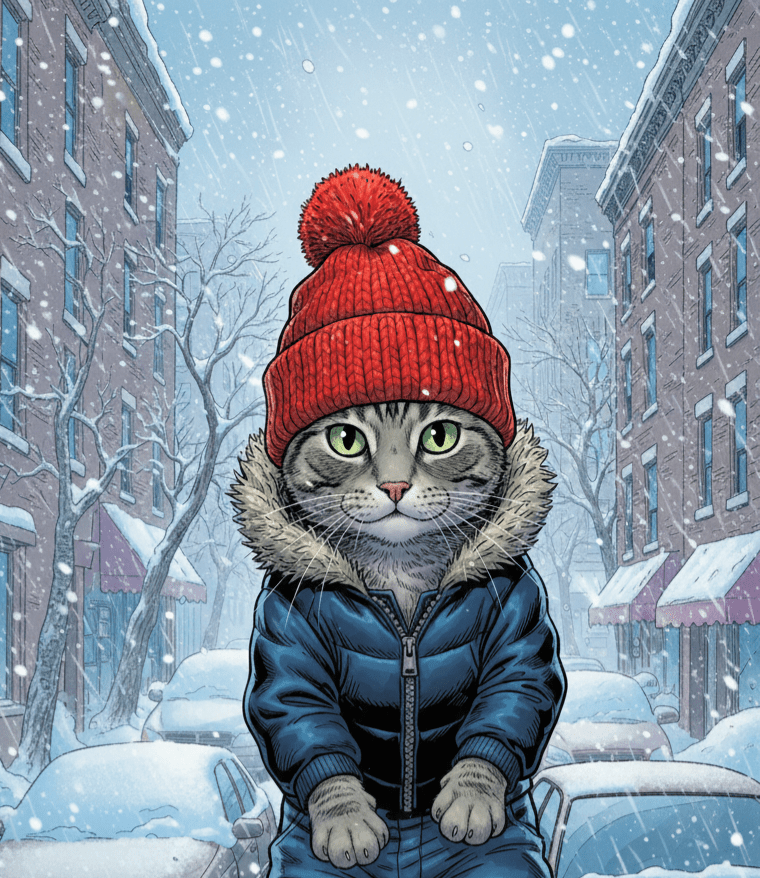
“Turn the snow off, human! What do you mean you don’t control the weather? I want the warm!”
It’s a frigid nine degrees out right now — down to one degree with wind chill — the storm arrived earlier than expected, and we’re already getting buried.
The exact numbers change depending on the forecaster, but the National Weather Service predicts eight to 14 inches for the New York City area.
That’s actually not bad compared to some places that will be in the heart of the storm when it passes, and it’s actually warmer than yesterday, if you can believe it.
Buddy, however, is having none of it.
He’s alternating between sitting on the radiator to soak up heat and staring at the accumulating snow through the sliding glass doors, occasionally turning to meow at me in protest as if I control the weather.
“I don’t like this, human!” he seems to be telling me. “Fix it! I want lots of warm, sunshine, leaves on the trees, and crickets!”
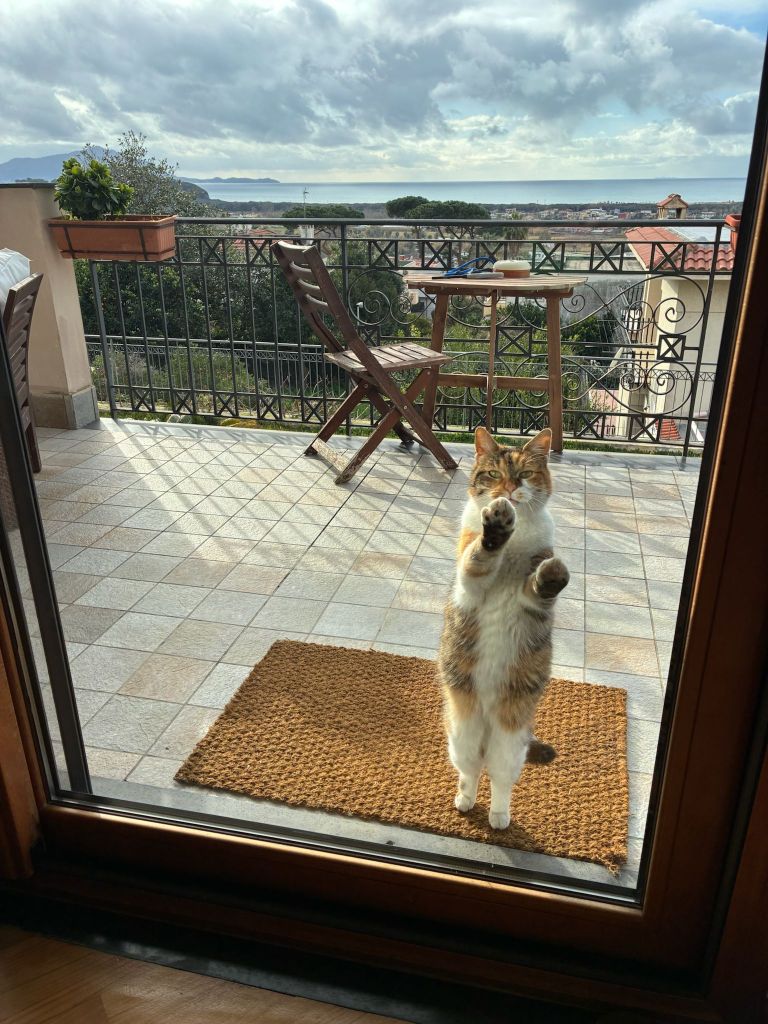
Meanwhile, my brother and his cat, Twix, are kickin’ it in 80 degree weather in Italy.
We hope our fellow ‘Mericans are safe at home with plenty of supplies for the next two days, that your feline masters are inside and warm, and that you avoid power outages. This storm is supposed to touch 40 states, which is remarkable, and it’s expected to dump snow on places that rarely see it.
If you’re looking for something to read, here’s a story about the recent string of movies that have featured cats as protagonists or significant characters. It notes that while CGI makes it easier to digitally include felines — and the surprise hit Flow famously featured a digitally animated cat — directors like Michael Sarnoski (A Quiet Place: Day One) have opted for real kitties, favoring their expressiveness and cuteness.
It mentions Bring Her Back, which was an exceptional and disturbing horror film in its own right. It’s also the only one on the list in which the cat doesn’t survive, so heads up on that. (Horror fans will note Bring Her Back was made by the same writer/director team that debuted with the exceptional Talk To Me. Those guys know horror.)
If you ever wondered what happened to Ser Pounce from Game of Thrones, the story also details how the showrunners cut the kitty’s role for being a “diva” on set. Poor King Tommen.
While you’re snowed in and bored, check out this short video of a “red Burmese,” which is a ginger cat without stripes except for faint lines on the back of his front legs. Maybe cats like this aren’t as rare as they seem, but I can’t recall seeing an orange cat who wasn’t a tabby:
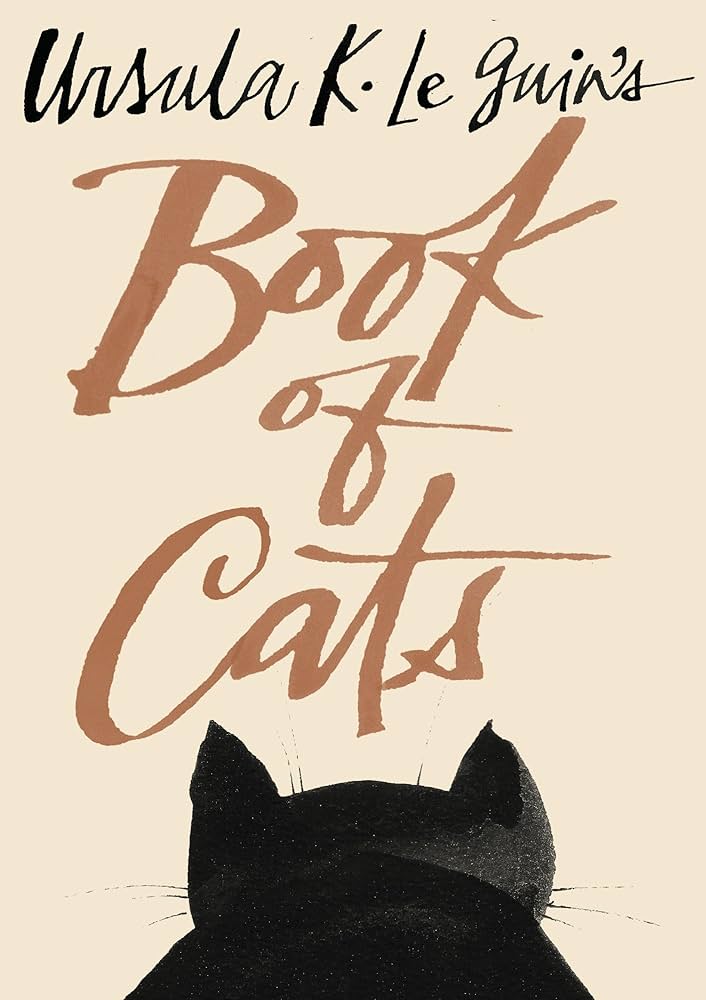
And finally, Ursula K. Le Guin is best known as a prolific science fiction writer who published for more than half a century, winning Hugos, Nebulas and every other award in the genre, but you don’t need to be a science fiction fan to appreciate Ursula K. Le Guin’s Book of Cats.
The posthumous collection includes Le Guin’s observations about our feline friends, meditations on what human society can learn from them, and lots of stories about the cats in her life.
You can check out a review here if you’d like to know more, and read community reviews on Goodreads here.
That’s all for now. I may blog intermittently throughout the storm if we really get buried here. We’re prepared to hunker down, with a full cupboard of yums for Bud and the excellent Clair Obscur: Expedition 33 beckoning me with its strange adventures. Bud is also more attached to me than usual as he tries to soak up as much heat as he can.
Buddy, convinced that his human can control the weather, would like more moderate temperatures. Is that too much to ask?
A big chunk of ‘Merica has been sweltering this week, and New York has been no exception.
Tuesday was supposed to be the most brutal of the brief heat wave, but Wednesday felt the most oppressive to me, like walking through a hot soup and having no choice but to “drink” it until you can escape to the air conditioned indoors again.
The temperature was in the high 90s with a heat index of 104 thanks to the humidity. That’s the real killer: while I don’t envy parts of the southwest that see temperatures of 100+ more frequently, summers here are marked by disgustingly sweaty weather. Humidity reached 99 percent on June 2, and this week we’ve had spikes of 80 percent and higher.
As bad as it is for us, it’s worse for our furry little pals. For them it’s like wearing a jacket you can’t take off.
Poor Buddy! Is it too much to ask to have a human who can control the weather?
The Budster has been shedding like crazy the past few weeks, and I’ve been brushing him to help him get rid of that excess fur — and prevent it from “decorating” the place.
On Tuesday I decided to open the door to the balcony, mostly to see how he’d react. He loves the balcony, which offers cat TV, the opportunity to soak up the sun and take in new scents and sounds.
But with the sweltering temperature, Buddy approached the door to his beloved balcony with caution. He stepped outside, paused for a second or two, gave me a disgusted look, then turned right back around and padded inside, where he recovered from his ordeal by lounging.
Life’s tough for a cat.
Buddy in his heroic Mega-Buddy (Megaru Badi) form, in the style of Bikkuriman.
The little dude may be following Marjorie Taylor Greene on Twitter, because the look he gave me strongly suggests he thinks I can control the weather.
“It’s unacceptably brutal out there!” I imagine he’s thinking. “Fix it, human! Do I have to verbalize everything, or can you be a proper servant and anticipate my needs ahead of time?”
Of course we’re talking about a cat who refuses to set paw outside unless it’s a balmy 65 degree minimum, preferably between 73.5 and 76 degrees. No rain, no cold, definitely no snow, and no excessive heat!
Thankfully the heat broke, and today we’re forecast for a balmy 75. Cue the Sir David Attenborough voice: “But there’s a problem! A tomato plant has appeared on the balcony, and even though Buddy’s a meowscular tiger who shows no fear*, tomatoes and their vines are poisonous to him.
On the off chance that we’ve got some readers who don’t have cats, would anyone like a tomato plant?
* Buddy exhibits no fear except when it comes to rustling paper bags,vacuums, Swiffers, brooms, music intended for cats, sudden movements, floppy fish toys, loud vehicles including but not limited to trucks, outdoor animals who make scary noises, and certain kinds of cheese. But other than that, he’s totally fearless.
With much of the US already sweltering under a summer heat dome, architectural engineers warn most American buildings aren’t designed for extreme temperatures, while energy experts warn of more rolling blackouts.
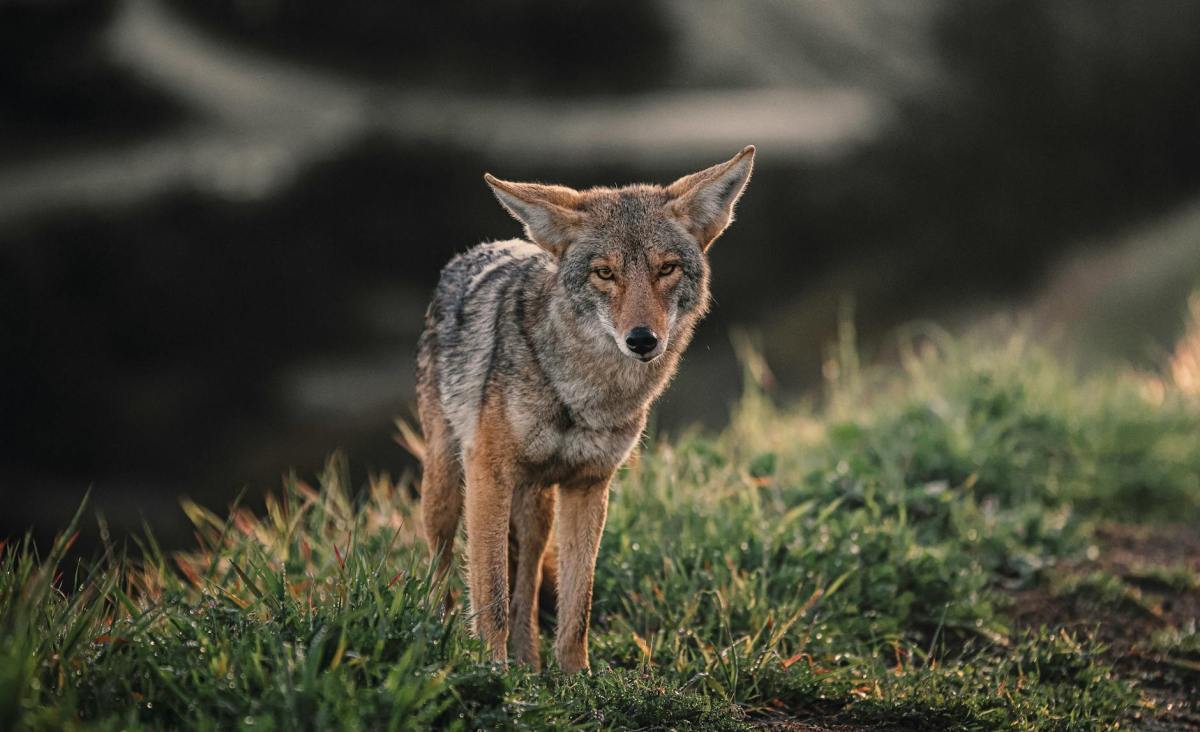
A family in Mission Viejo, Calif., heard a series of loud crashes at their back door, then reviewed their doorbell camera footage to find a determined coyote had been trying to attack their cat.
The footage shows the coyote repeatedly throwing itself at the screen door, which might have buckled if there hadn’t been a baby gate reinforcing it.
“We ended up putting a baby gate up to keep the cats inside,” homeowner Cindy Stalnaker told KABC. “That ended up being what prevented the coyote from getting inside the house because that’s what he was banging into repeatedly.”
Coyotes weigh about 30 to 35 pounds and will attack potential prey smaller than they are, which includes pets as well as young children.
The canids aren’t usually keen on approaching human homes, but in many places they’ve run out of room to roam as towns and cities clear more wild land for new developments. Less habitat means less prey, which can also lead the animals to scavenge and hunt on the fringes of residential and urban neighborhoods.
Stalnaker said she was grateful the baby gate held, but she’s looking into a more stable and permanent solution to keep her cats safe from coyotes.
What if air conditioning isn’t enough?
Human activity isn’t just driving wild animals to extinction, it’s killing them off with temperature extremes, and a Tuesday story from The Guardian provides a bleak look at how our present situation threatens human life as well: Buildings in most US cities aren’t built to mitigate excess heat, air conditioners weren’t designed to keep on chugging indefinitely with temperatures around 100 degrees, and power grids can’t keep up with the demand when millions of AC units are drawing power simultaneously.
At the same time, summers keep getting hotter and there’s no reprieve in sight.
Legal or not, New Yorkers turn to fire hydrants to get relief during heat waves. Credit: NYC Office of Emergency Management
While the heat has major ramifications for animals and sea life, it’s also directly endangering human life now:
“Some experts have begun to warn of the looming threat of a “Heat Katrina” – a mass-casualty heat event. A study published last year that modeled heatwave-related blackouts in different cities showed that a two-day blackout in Phoenix could lead to the deaths of more than 12,000 people.”
An architectural engineer tells the newspaper that temperatures have spiked so much in recent summers that cooling “systems that we sold 10 years ago are not able to keep up with the weather we have.”
The result for people in America’s hottest cities is that even AC doesn’t provide relief.
In the meantime we’re likely to see more headlines about rolling blackouts, punishing energy bills and people dying in their homes, scientists say. Fusion power and significant leaps in battery technology can’t come soon enough.




 Pain In The Bud