When we open our homes to furry overlords, we make a promise to give them good homes and care for them for life. Unfortunately not everyone sees it that way.
Stories about people abandoning perfectly healthy cats for inane reasons abound, but this week two particularly egregious cases from the same shelter caught my eye.
In the first case, Biscuit the cat was living comfortably in a home with “her cat best friend” when the latter feline died. Instead of realizing his surviving cat was distraught and taking special care of her, Biscuit’s former “owner” brought her to a shelter, saying he was surrendering her for euthanasia because his family “wanted a kitten” instead.
At 12 years old, Biscuit is “as sweet as a 12-week-old kitten,” staff at the Chesapeake Feline Association in Maryland wrote in a caption accompanying a video explaining her situation.
Thankfully the shelter did not honor the man’s wishes for Biscuit to be put down, and the video is starting to accumulate views and comments. Let’s hope Biscuit’s future loving human is among them, and I’d like to think the CFA told her former human to beat it and sent him home without the kitten he wanted.
If they give in, that poor kitten’s going to come back to them a few years down the line as the guy keeps trading ’em in for younger ones like Leonardo DiCaprio.
Ignoramus Surrenders Cat For Scratching A Carpet
Cats have claws. Cats scratch. They don’t do it to piss us off and they don’t do it to ruin furniture. They do it because they’re genetically hardwired to, because it served multiple functions when their ancestors were in the wild — including marking territory — and because it still has practical purposes, like wearing down claws that have grown too long.
Anyone who knows the most basic facts about cats knows this. Anyone who has done at least minimal research before bringing a feline home knows you need to provide kitty with scratchers and redirect him to them when he goes for another object.
And if you have furniture you really want to protect, you make arrangements before bringing your new friend home, whether that means up-armoring a couch with scratch guards, putting soft nail caps on kitty’s claws, keeping her out of a certain room or one of many other potential solutions.
What you don’t do is adopt a cat, give him a home for six months, then take him back because he scratched your carpet.
Doing that makes you a jerk.
I’m not sure if general ignorance is the problem here, or if people see cute felines on Instagram et al, imagine unicorns and rainbows and bright-eyed kittens poking out of baskets, and never even think about the fact that felis catus is an animal, not a Pokemon or a stuffed toy.
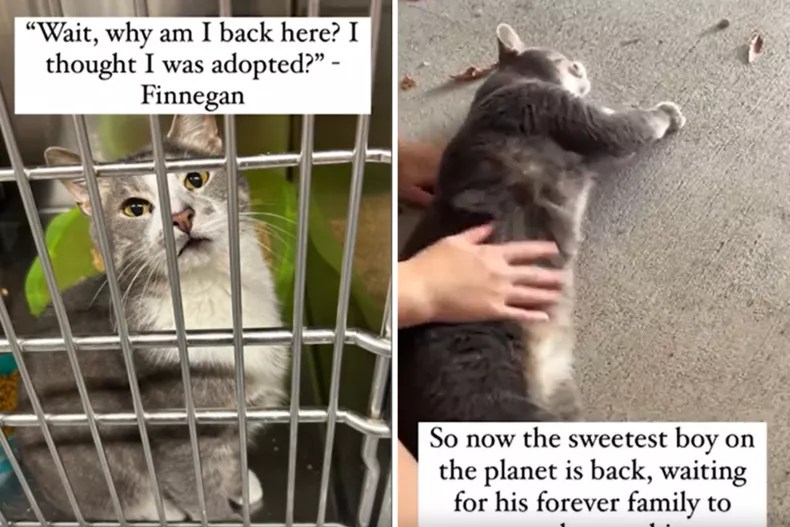
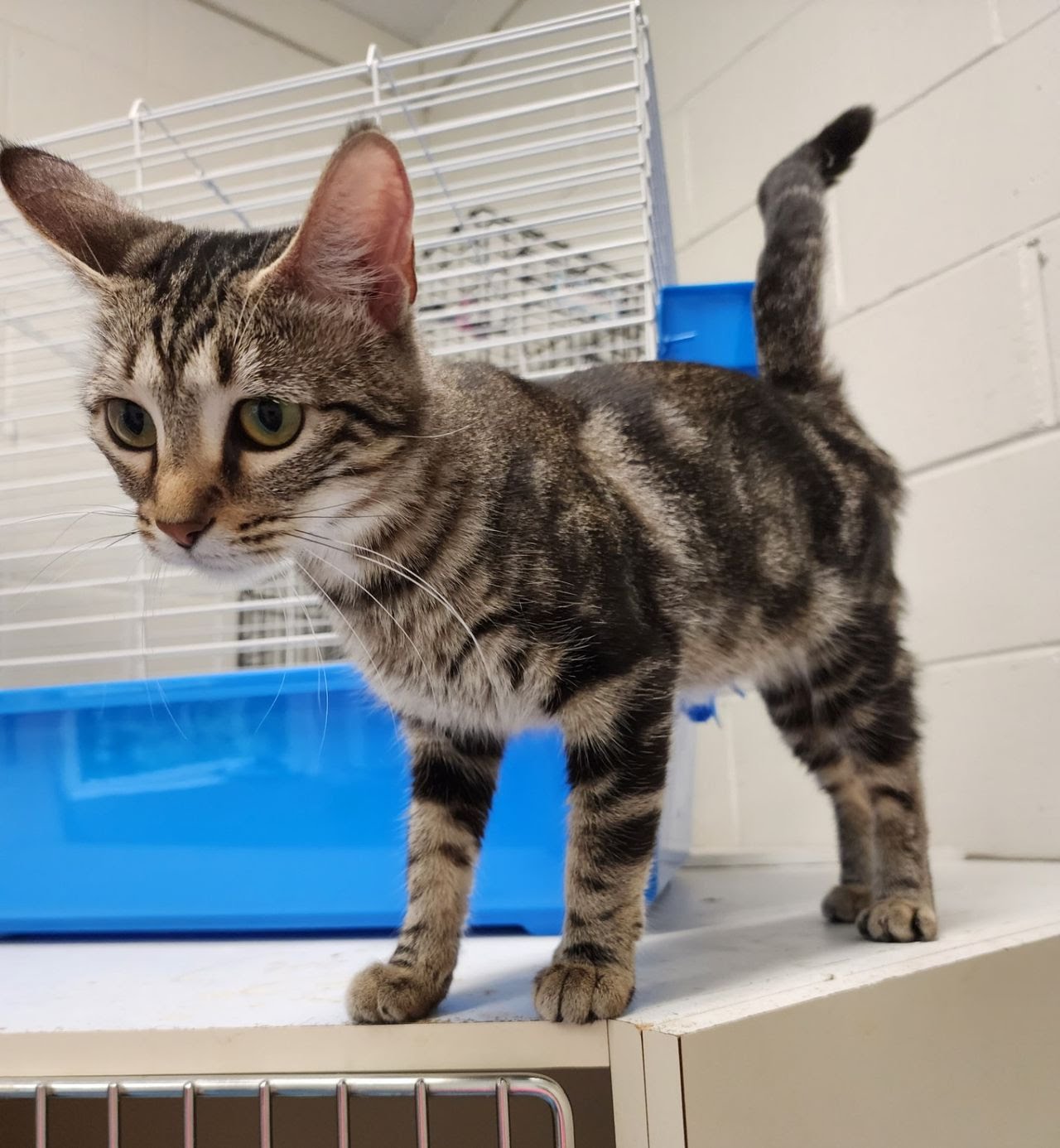
In any case, surrender for acting like a cat is exactly what happened to Finnegan, a gray and white tabby who “melt[s] in your arm and give[s] you all the love,” shelter staff wrote.
The little guy’s offense? Scratching a carpet. Shelter staff really tried to make it work: They offered to put nail caps on Finnegan every month at no charge and his humans still said no.
His ordeal has not soured him on people, thankfully. A video from the shelter shows him loving massages from volunteers at the shelter, and he looks like an incredibly chill little dude. He deserves a home where people love him.
You can find Biscuit, Finnegan and lots of other adoptable cats on the shelter’s Petfinder page and website.
Finnegan, seen here in stills from a video, was surrendered by his people for the crime of behaving like a cat.
TikTok is a major security risk to the country, a danger to the people using it, and a platform that encourages animal abuse. It’s time for the US government to take action.
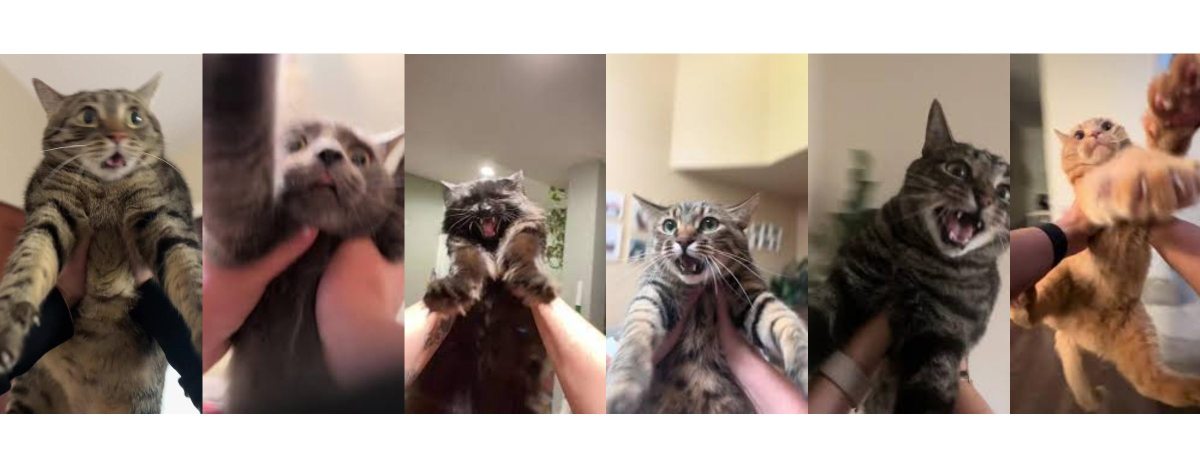
The cat is wide-eyed with terror, his mouth moving in protest as his human picks him up.
“Spock already hates me so why not torture him more?” reads the caption on the TikTok video as the woman spins him around to Taylor Swift’s saccharine ballad August.
In another, a man in his 40s stares into the camera, snatches his cat up in one quick motion and then cackles gleefully as he spins his cat, who squirms in his grip and meows plaintively. One woman admitted her cat “hated every second of this” as she twirled her to the Swift track.
Cats subjected to the Taylor Swift “cat spinning” trend on TikTok.
There are hundreds, perhaps even thousands of these videos on TikTok, the Chinese government-controlled social media platform. Inexplicable as the trend is, it’s far from the first time people have abused and terrorized their cats for “lulz” and the approval of strangers on TikTok.
Previous trends had TikTok users picking their cats up upside-down and one-handed, then “answering” them as if they were telephones while reciting a line from the movie The Princess Diaries.
The 2021 holiday season saw the invention and propagation of a “hack” by someone who claimed that if you chase your cat around and brandish your Christmas tree like a weapon so the cat thinks you’re going to hit her with it, “it’ll be too scared to f**k with” the tree. Classy. The video of the woman terrorizing her cat piled up more than 25 million views and spawned innumerable imitators.
Then there was the “influencer” who smacked his cat around and uploaded footage of it, not by accident but because he says that’s how people properly “discipline” their pets. There are one-off abuse videos, and then there are trends that just won’t die, like the “prank” in which people frighten their cats half to death by placing cucumbers behind them while they’re eating.
TikTok is legitimately evil
More than any other platform, aided by an insidious algorithm that expertly keeps its users glued to the screen and scrolling, TikTok is a vehicle for social contagion, elevating the crass, the outrageous and the destructive as it lavishes clicks and revenue on people who behave abominably.
Just look at the case of Chloe Mitchell, the popular TikToker who nearly destroyed a non-profit animal shelter single-handedly when she threw a tantrum earlier this year. Mitchell enjoyed in excess of 50 million views on videos in which she invented wild stories painting the shelter as some sort of criminal operation run by “scammers” who, she claimed, enrich themselves by adopting out animals.
It would almost be funny for its absurdity if not for the fact that the shelter’s operations were crippled for two months as Mitchell’s followers called in death threats, review-bombed the shelter to ruin its reputation online and made its volunteers fear for their safety.
A major security risk
It baffles me why anyone would continue to use TikTok — or sign up to use it in the first place — when its operators admitted under oath that sensitive data belonging to American users is routinely accessed by the company’s headquarters in Beijing, despite many public assurances that the data was compartmentalized and available only to software engineers in TikTok’s US offices.
And if that isn’t reason enough for some people to uninstall the app, consider the fact that TikTok’s Beijing-based parent company, ByteDance, added code that makes the app an extremely malicious piece of spyware software capable of capturing every tap or keystroke by its users.
🔥 New Post: Announcing InAppBrowser – see what JavaScript commands get injected through an in-app browser
For those who aren’t well-versed in technical matters, this means having the app on any of your devices is tantamount to handing China’s government the keys to all of your online accounts, including banking and credit, as well as all your text, email and in-app correspondence. ByteDance can read the private texts you exchange with family members, see precisely what you’re doing on sites like Facebook and Youtube, and help itself to users’ most private information.
Some people might not understand the scope of the security risk because they may not know that every organization in China is subservient and ultimately accountable to the Chinese government and the communist party. The communist government can access data from Chinese companies at any time, force them to hand over their proprietary technology and research, and compel them to cooperate with cyber attacks on US citizens and infrastructure. In fact, it’s written into Chinese law. The government has total control over every Chinese corporation and, under President Xi Jinping, has tightened its grip on every layer of society.
It’s not difficult to imagine the Chinese government using the wealth of data collected by TikTok to compromise the devices of people who work on critical US infrastructure, like the power grid or defense systems, and use that access to retrieve their employee login credentials, providing access to the systems they work on.
Imagine cyberattacks that shut down power plants in Texas and across the southern US during severe weather like the deadly heat dome the country experienced this summer. Or Chinese government-sponsored hackers crippling US banking systems, leaving Americans without access to currency for days or weeks.
Then there are the “smaller” risks that are devastating on an individual level: A hacker compromises your devices and locks photographs of deceased loved ones that are priceless to you, or threatens to blast details about your private life to everyone in your contact list if you don’t pay them $10,000 in cryptocurrency.
All that to use an app that promotes videos of people abusing their pets? No thanks. I hope the US government comes to its senses and bans the app from the US entirely before something catastrophic happens because if they don’t, it’s not a matter of if something disastrous will happen, but when.
Kylo Ren, named after actor Adam Driver’s most notable role, changed the lives of a woman and her young son.
Remember the Adam Driver Cat?
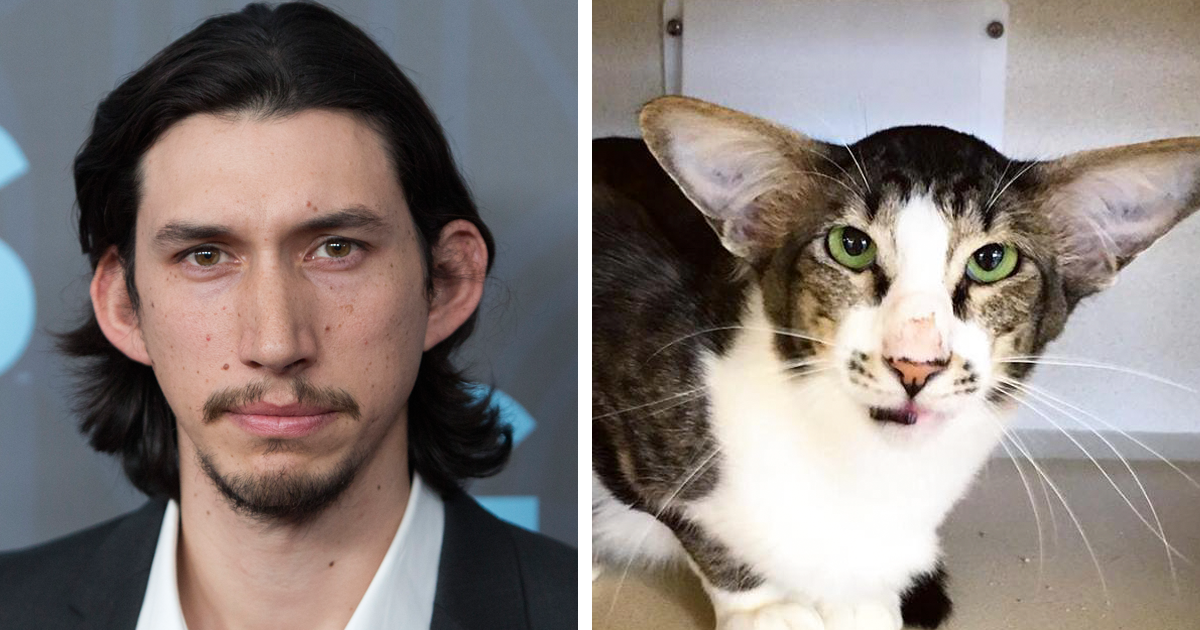
The little guy made a big splash for a while back in 2016 when images of his unusual mug went viral and the internet decided he looked like the 39-year-old actor.
In an essay, Emily McCombs describes feeling “something deep in my soul” when she saw photos of the cat she’d name Kylo, in honor of Driver’s best-known role as the conflicted Sith lord in the third Star Wars trilogy. Against all odds, and despite intense interest in the Oriental Shorthair, McCombs was able to adopt Kylo after begging a friend for a ride from Brooklyn to the Monmouth County SPCA in New Jersey.
McCombs with Kylo Ren. Credit: Emily McCombs
Adam Driver, top left, Kylo at the bottom, and Kylo with McCombs at right. Credit: Monmouth County SPCA
But it’s what happened after that impacted McCombs and her young son the most. Kylo was gentle with McCombs’ son, had a habit of staring adoringly at her and “wasn’t truly happy if he wasn’t smooshed against my face.” Aside from the shoulder bit, Kylo sounds a lot like Bud:
“Rather than just being a lap cat, Kylo was more likely to perch on my shoulder, or plop down directly on my face,” McCombs wrote. “He preferred positions that made it impossible to do anything but pay attention to to him, and would regularly headbutt my phone when he wanted my undivided attention.”
Actually, he’s more polite than Bud, who has no qualms about slapping my smartphone out of my hands and loves to send it flying if I make the mistake of leaving it unattended on a flat surface. “Stoopid little glowing rectangle!” I imagine him yelling in the meowenese language.
Kylo became part of McCombs’ family, helping her tuck her son in every night after story time, and while McCombs said a few love interests came and went, Kylo endured.
McCombs got to spend seven wonderful years with Kylo before she made the difficult decision to euthanize him after he was diagnosed with kidney failure and his struggle became more desperate. The story’s worth reading for her take on grief, Kylo’s sweet relationship with her son, and her insistence that no amount of internet fame compared to the love Kylo gave the family.
It’s also validation of the way people feel when they lose their four-legged companions, and a reminder that grief doesn’t need to be justified, regardless of whether some people insist “it’s just a cat.”
The microchip company called to ask her to confirm a change of ownership for her missing cat
A British woman was thrilled when the microchip company contacted her to say her missing cat had been found, but was confused and dismayed when the representative on the line asked her to confirm a change of ownership.
Now she’s trying to get her kitty back, but her efforts have been frustrated by the other person who wants to keep him, as well as data protection laws that prevent the microchip company from identifying the person.
Beryl Edwards of Shropshire, a rural area bordering Wales, adopted her cat Fred and his brother Geno in 2021. Fred went missing over the summer in 2022, and Edwards said she was initially ecstatic when she was told he’d been found.
“And then out of the blue last week I get an email saying we’ve had a request – somebody wants a transfer of ownership,” Edwards told the BBC. “Can you imagine the range of emotions from, ‘Fred! He’s alive, he’s OK’ to ‘transfer of ownership? What’s this all about?’”
The company, Identibase, told Edwards that while they could not give her the person’s information, they would ask the person to contact Edwards and return the cat.
Edwards never heard back, and now it’s a criminal matter.
“We are following up on a number of enquiries and at this stage are treating the matter as a potential theft,” the West Mercia Police said, per the BBC.
It’s not clear if police believe the person who has Fred stole him from Edwards, or whether they found him and want to keep him, but we hope Edwards and Fred are reunited, and Fred gets to live with his bonded littermate Geno again.
I can understand why the company would hesitate to provide the other person’s information, even if no law existed. You don’t want people physically confronting each other and potentially taking pets by force in disagreements over ownership. It’s also possible that the person who wants to keep Fred never intended to “trip” the microchip, and Edwards’ information may have been discovered by a veterinarian during a routine exam. But perhaps the unusual case can inform a future change to the law so it’s easier for people to retrieve their pets in cases like this, and for law enforcement to return pets when there’s clear documentation showing one party is indeed the caretaker.
This is not funny
A woman opens her front door to find a distressed cat crying for her help. Instead of taking him in, feeding him, checking on his welfare or even calling a local shelter, the woman proceeds to film herself performatively yelling at the stray and telling him to “get on off my porch!”
The TikTok video went viral this past week and people think it’s hilarious.
File this under “Social Media Is A Sign Of Humanity’s Decline.” Maybe the woman would have been cold-hearted even if she wasn’t hamming it up for an internet audience, but the prospect of clicks and likes almost certainly played a part in the way she dismissively yelled at an animal who was obviously in distress. Even if she didn’t want another pet and couldn’t adopt the cat, it costs nothing to show kindness and make sure he gets to people who will do right by him.
I won’t link to the woman’s TikTok, but if you want to read Newsweek’s take about how her performance “delighted the internet,” click here. I hope the cat found a more sympathetic person and has either been returned home if he was lost, or found his way into a forever home if he was a stray.
Hasbulla filmed himself pulling his cat by its ear and repeatedly smacking it.
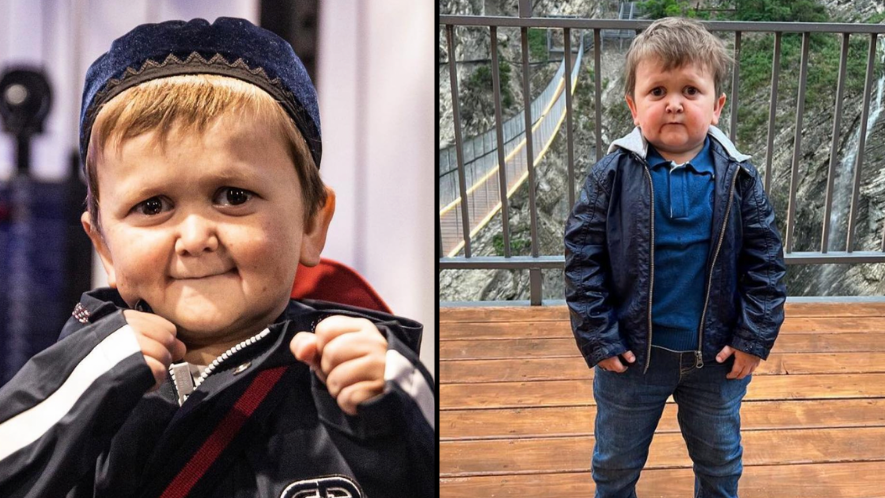
Even if you haven’t heard the name Hasbulla Magomedov, chances are you’ve seen images of the Russian’s cherubic face, which exists in the pantheon of internet memes with the likes of Cash Me Outside Girl, Kermit and Condescending Wonka.
Magomedov is not a child, despite his 3’4″ stature and toddler-like appearance. He’s an adult man who suffers from a form of dwarfism, although he’s never publicly spoken about his condition in detail.
Normally known simply by the mononym Hasbulla, beyond his status as a meme the diminutive Russian is mostly known for hawking garbage (cryptocurrency, self-branded merchandise, supplements) and for his nebulous association with mixed martial arts, existing as a sort of barnacle on the UFC where he appears at weigh-ins, uploads video of himself providing commentary and is carried around as a kind of good luck totem by Russian fighters.
Now Hasbulla is famous for something else — horrifically abusing his cat.
In a new video — which Habsulla was apparently proud of and voluntarily shared publicly — the 20-year-old speaks in his native Russian while pulling violently on his cat’s ear. The feline — which is terrified of Hasbulla and flinches when he approaches — escapes to the safety of a shoe box, but his tiny tormentor follows, smacking the poor cat on its body and head while barking in the gutteral nonsense that passes for a language in his gas station of a country:
Hasbulla boasts six million followers on Instagram, 1.5 million on Twitter, and his videos on TikTok have amassed an astounding 10.3 billion views.
The video is disturbing enough on its own, though I can’t help but wonder if Hasbulla is willing to share this kind of behavior, what’s going on when the cameras are off?
And if people are willing to physically abuse their cats to feed the content beast and keep their viewers “entertained,” how will they lower the bar in the future when their clicks slow down and they feel they need to do something even more shocking to reignite interest?
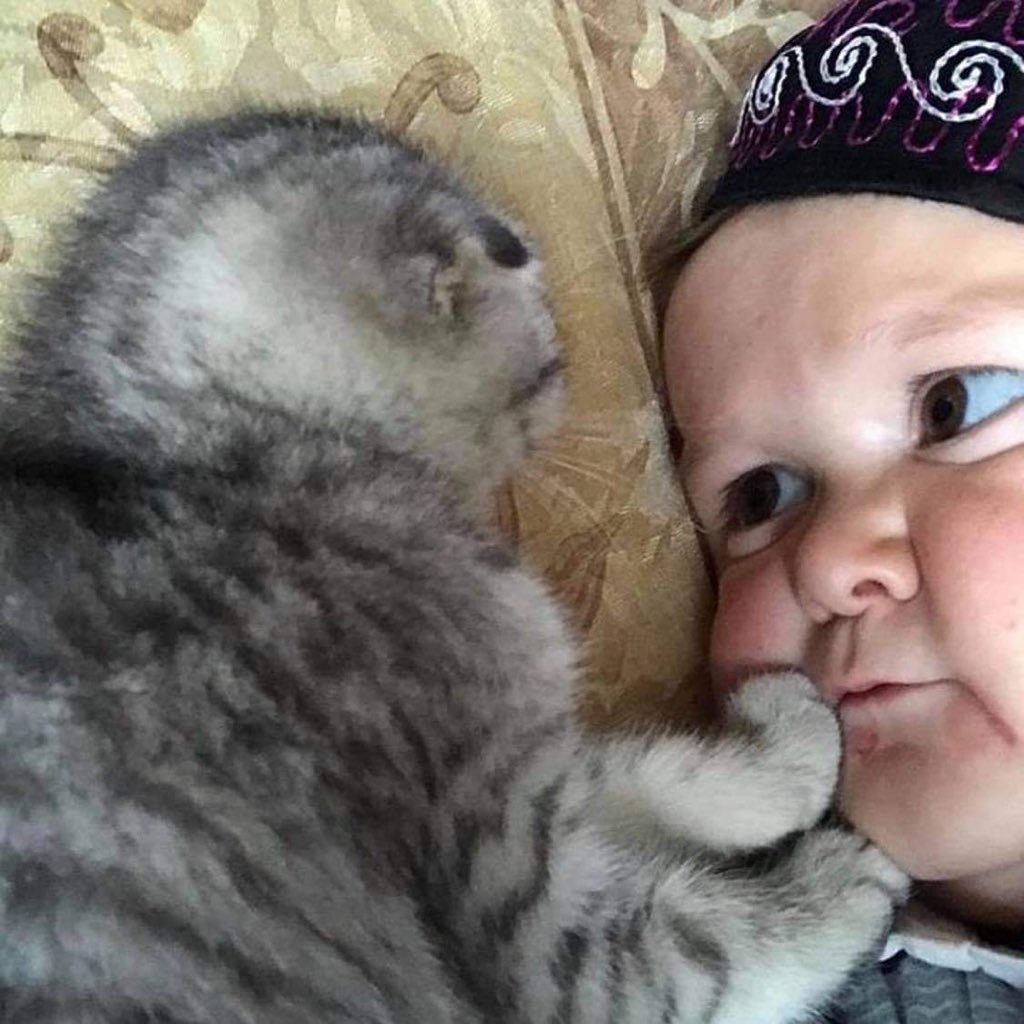
An older photo of the same cat in kittenhood, when Hasbulla introduced the kitty to his followers. The sweet cat
Staff are demoralized, volunteers are spooked and the shelter has been buried in negative reviews after a TikToker picked a fight over an adoption fee and her army of followers went vigilante.
The voicemail is chilling not only for the explicit threat the person on the other end makes, but for her chipper tone as she casually threatens the lives of the people working at a west Michigan animal shelter.
“So anyway,” the caller says at the end of the unhinged message, “I’ll blow this number up and I’ll blow your location up as well. Hope you have a wonderful day!”
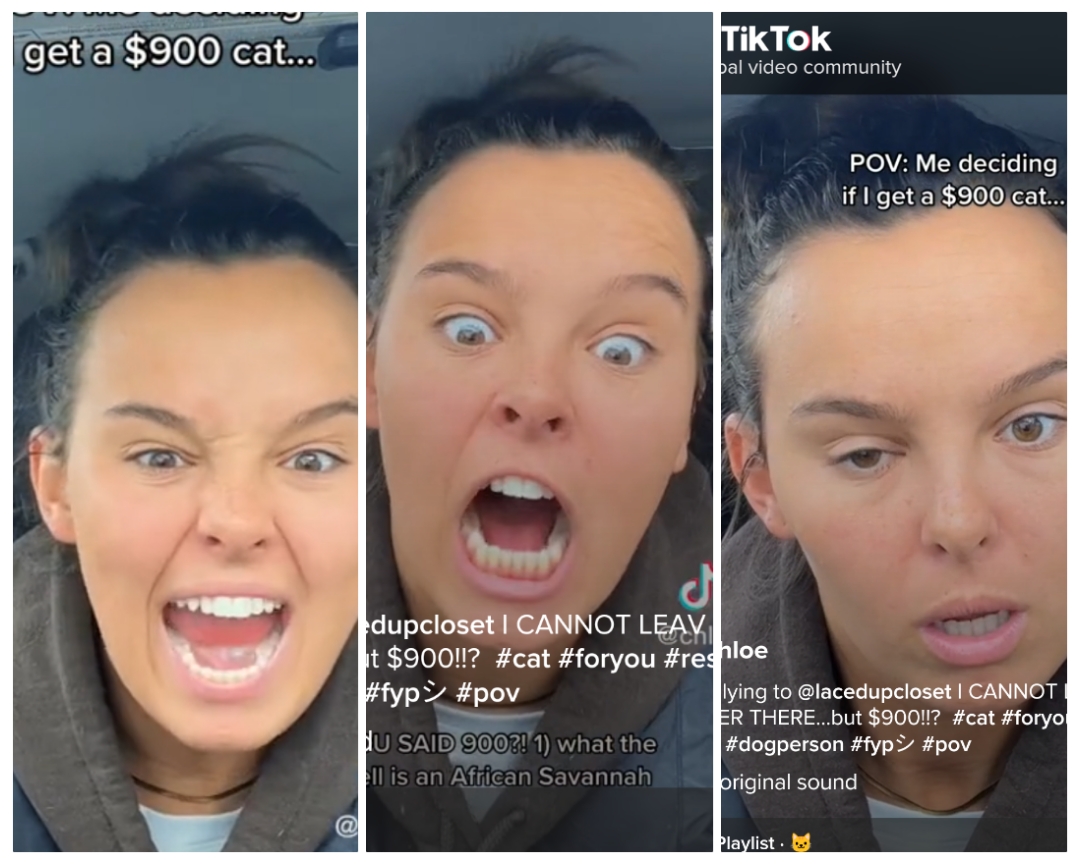
It’s one of three bomb threats the shelter has received since TikTok influencer Chloe Mitchell began the saga of what she calls “the $900 cat.”
Mitchell adopted a kitten from Michigan’s Noah Project, a small no-kill shelter, in early March. Staff say she didn’t balk at the adoption fee and they thought she was happy with the sweet kitty she took home, but the next day Noah Project’s phones began ringing incessantly with callers heaping abuse on the shelter’s volunteers and staff.
Apparently in the throes of adopter’s remorse, Mitchell uploaded a video to TikTok, the popular Chinese social media app, and raged about the adoption to her three million followers, screaming into the camera as she accused the shelter of identifying her as an easy mark and making a tidy profit off the kitten’s adoption fee.
Sickly kittens and sizable veterinary bills
Mitchell originally came to the shelter, camera in tow, asking specifically for a cat named Heart. The influencer filmed her visit and gushed to her viewers that she’d fallen in love with Heart, a mixed-breed kitten with Savannah heritage.
Heart, or as Mitchell calls her, “the $900 cat.” Credit: Noah Project
Shelter staff explained the kitten was from one of two litters that were brought in with serious ailments after a woman purchased a pair of queens from a breeder.
The former breeder cats went into heat and had babies, predictably, and the situation quickly grew out of control. When the woman realized she couldn’t care for the cats and their many ailing babies, she brought them to the Noah Project, which took on the Herculean task of caring for kittens that had problems ranging from anemia to developmental deformities like swimmer’s leg, also known as deformed leg syndrome.
Noah Project staff had to rush three of the kittens to an emergency veterinary hospital. Another required a leg amputation. Two kittens died, and the remaining babies had to be nursed back to health over three months, with special diets, medication and care on top of the normal costs associated with spaying/neutering, micro-chipping and vaccines.
Taking on that many sick kittens would stretch the resources of any animal shelter, let alone a small rescue, and the Noah Project set the adoption fees at $900 per kitten to help recoup the considerable costs.
Whipping an army of followers into a frenzy
Mitchell wasn’t phased by the fee, shelter staff said, but things quickly turned sour when she went home and posted the dramatic video, sparking the ire of her followers.
After that first video racked up almost six million views and almost 28,000 comments, Mitchell turned the experience into her own miniature “season” of online television, making half a dozen monetized videos in which she accuses the non-profit of lying to her about Heart’s breed and scamming her with the adoption fee.
Collectively, the videos have more than 30 million views, and Mitchell’s increasingly pitched rhetoric has whipped her three million followers into a frenzy.
In the video above, Mitchell acts out an alleged conversation with the shelter and confuses coat pattern for breed, saying “Feline experts have approached me online to say that she is in fact not an African Savannah and is more of a tabby-looking animal.”
“And they’ve stayed that I did get wrongfully charged that $900 in your shelter, which isn’t looking to re-home animals [but] make a profit off of them, and that’s not okay… I was taken advantage of, and that really sucks, I gave you my money for a reason that you were being truthful about her breed.”
Prompted by Mitchell’s insistence that the shelter was “scamming” adopters, her followers turned vigilante, review-bombing the Noah Project on Google and harassing its staff by phone. The shelter, which has been named the best rescue in west Michigan by its local newspaper several years in a row among other plaudits, saw its five-star Google review rating evaporate as negative reviews piled up, and the angry calls keep coming in. (“Unethical scammer! …shady, greedy business!” one of Mitchell’s followers wrote, while others dubbed Noah Project a “retail rescue” that “prioritizes profits over placing animals in a loving home.”)
The experience has been bewildering for shelter volunteers who aren’t accustomed to being the target of international ire.
“One woman [who answers phones at the shelter] doesn’t want to come back this week because it was so bad for her,” said Mashele Garrett-Arndt, Noah Project’s director. “It’s hard to explain to someone in their 60s or 70s. They don’t understand how [followers] can be so loyal to a person in a video. They don’t understand how people can be so cruel.”
Volunteers and staffers have taken the brunt of the abuse from Mitchell’s followers. Several don’t feel comfortable returning to the shelter because of the threats, Garrett-Arndt said.
The callers have said “they hope we die. They hope that we suffer and lose our jobs, they hope our families suffer. Horrible, horrible things,” she said.
As a result of the abuse and the threats, the Noah Project went to the local police, who are now keeping watch over the shelter. They’ve also hired private security, installed cameras covering the property, and have taken to scheduling staff to man the building overnight to watch the premises.
In an effort to end the squabble, Garrett-Arndt reached out and offered to refund Mitchell’s adoption fee, but said the influencer will no longer return the shelter’s calls.
Despite that offer, there’s no end in sight to the drama: Mitchell repeated her accusations that the shelter was trying to “profit” from her in an interview last week with MLive, a website that serves readers of a dozen newspapers across the state, and did an interview with the local Fox affiliate, WXMI, for a news segment that aired Monday.
Mitchell claims the shelter never mentioned the medical issues as the reason why the adoption fee was higher than usual, and says shelter staff told her Heart was “a super rare African Savannah” as rationale for the fee. She suggested she’ll continue her campaign to shame Noah Project until the shelter “proves” Heart is a Savannah, a mix of a wild serval and domestic cat.
“All of this will go away if they send me the certified paperwork ensuring she [is] in fact an African Savannah and I was rightfully charged $900,” the TikToker told WXMI.
But in her initial video Mitchell admitted she didn’t know what a Savannah cat was, and in another video she says she doesn’t care if Heart is a particular breed.
“I trusted you and I gave you my money for a reason, believing that you were being truthful with me about her breed, which didn’t matter to me at all, because I just love this animal,” she says in the video.
The constant stream of new videos about the situation and the behavior of Mitchell’s enraged followers has had a dramatic impact on the rescue.
“It has just been consuming our lives for the past four weeks,” one staffer told WXMI.
No one gets into animal rescue to make money, despite Mitchell’s claims that Project Noah’s staff are using animals in some sort of get rich quick scheme, and Garrett-Arndt told MLive she’d gladly open the shelter’s books to Mitchell or anyone else with concerns to show exactly how much was spent on vet bills and the other expenses involved in saving the sickly kittens and their mothers.
Pleading poverty and punching down
In her first video taking issue with Heart’s adoption fee, Mitchell pleads poverty and suggests the shelter saw her as an easy mark.
“I could just not eat,” she says with a theatrical expression, complaining that the fee is “two thirds of a Yorkie” and a quarter the price of a Louis Vuitton bag.
“I spent $900 on a fuzzy scratch ball that’s going to puke all over my furniture,” she says.
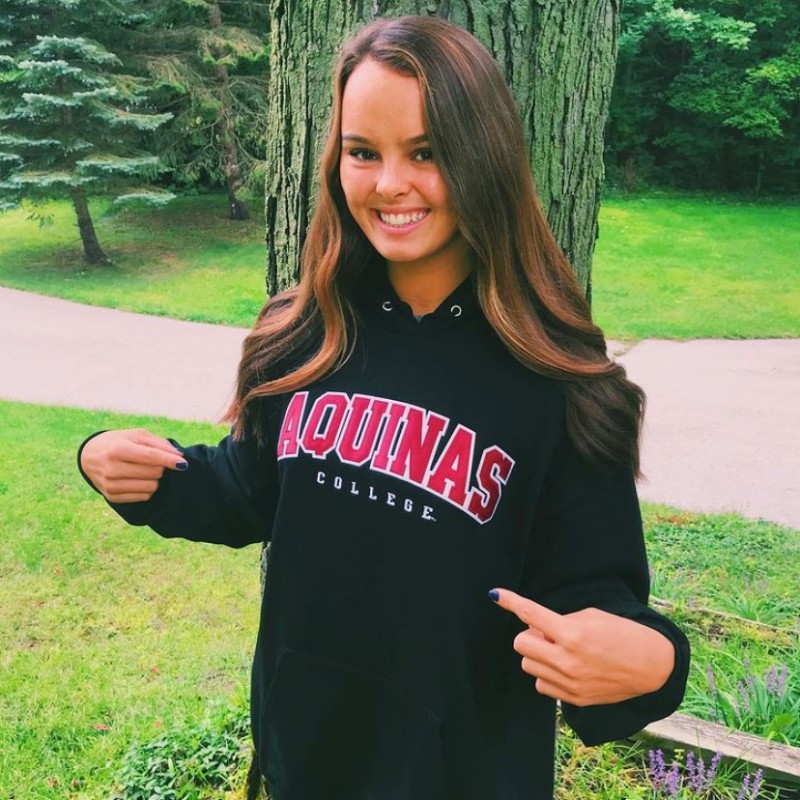
But Mitchell is not the typical college student working a part-time job and eating Ramen noodles to stretch her budget. As a volleyball player at Michigan’s Aquinas College in Grand Rapids, she’s well known as the first collegiate athlete to profit from the NCAA’s new NIL (name and image likeness) deal, which pays college athletes when their names and likenesses are used in broadcasts, promotional materials, video games and other revenue-generating activities tied to their sports.
Mitchell went on to found a company that guides other athletes on NIL deals, and she makes a considerable amount of money on TikTok. Creators on the platform who have three million followers can expect to earn about $15,000 a month from viewership alone, and articles going back to 2021 state Mitchell receives lucrative sponsorships on her videos.
“Five-figure deals are her baseline” for sponsored posts, a story on MLive notes, saying Mitchell was earning up to $20,000 per sponsored post at the time, when she had fewer followers than she does now.
If Mitchell scores a conservative two sponsored posts per month, that could put her earnings at $55,000 a month from TikTok alone, not including money earned from her NIL deal. Very few college students earn that kind of cash, yet Mitchell claimed the $900 adoption fee was “life-changing money.” In addition, she refers to her new pet almost exclusively as “the $900 cat.”
She dismissed the idea that she was creating problems for the Noah Project, telling WXMI that she doesn’t think she’s responsible for what her followers do.
“I never asked for the internet to go call them or to leave Google reviews in my defense whatsoever,” she said. “I’m not asking to be defended, I’m just asking to be heard.”
With 30 million views on her videos about “the $900 cat” saga, she’s been heard. The shelter? Not so much.
“To call people scammers, that’s a huge thing,” Garrett-Arndt told PITB. “You don’t just say someone scammed you. For her to say that about Noah Project, that hit hard for everyone.”
Garrett-Arndt said Noah Project’s social media staffer is hard at work trying to rectify the one-star reviews Mitchell’s followers left on the shelter’s Google listing, and said it’s taken considerable time to combat the damage to the shelter’s reputation.
Time spent dealing with negative reviews, filing police reports and reassuring spooked volunteers means less time dealing with the rescue’s primary mission — saving animals.
Garrett-Arndt said she consulted an attorney about taking to TikTok to tell the shelter’s story, and the attorney warned her that doing so could provoke an even stronger reaction from Mitchell, who has an enormous megaphone.
She said she doesn’t want to anger Mitchell for fear of what the influencer could do in the future, but believes the whole saga was manufactured for the benefit of the influencer’s TikTok account and followers. When the story blew up, she ran with it and wouldn’t return calls from the shelter in an attempt to fix the situation.
“She needed content, so it’s like ‘Let’s go get a cat,’ and then it got out of hand,” Garrett-Arndt said. “She has three million followers, but we have to stand our ground. The truth will come out.”
In the meantime, Mitchell — perhaps with an eye toward creating more viral content — says she’s getting a DNA test for Heart and has threatened to contact the other adopters who took home cats from the same two litters.
“Five other people paid the $900 adoption fee and not one of those people had an issue with it,” Garrett-Arndt said of adopters who took home the other kittens from the sickly litters.
The offer of a refund still stands, and staff at the Noah Project hope there’s an end to the madness.
“Why wouldn’t she come back to us? We’ll refund her,” Garrett-Arndt told PITB. “If you’re that unhappy about the $900, bring the cat back. Adopt another cat so we don’t have to [deal with] this and we don’t get dragged through the mud.”





 Pain In The Bud