Archaeologists Uncover Ancient Mayan Jungle City Where Buddy Was Once Worshiped As A Feline Deity

The city, which was abandoned after a natural disaster, was an important hub of civics, trade, napping and indigenous dishes such as the cheeseburger.

XQOCHOATL, Yucatán — Archaeologists announced the discovery of a vast and prosperous ancient Mayan jungle city whose inhabitants once worshiped an unusually handsome gray tabby as a feline god.

X’Budiso was an important center of trade, religious life, architecture and art, according to Ferdinand Lyle, an archaeologist with the British Museum of London and lead researcher on the project.

His team located the long-lost city using LiDAR — light detection and ranging — a technology that allowed them to peer beneath the cover of heavy jungle and detect the ruins beneath.

Previously, there was only one indication that humans had once inhabited the area — a feline paw holding a cheeseburger, rendered in stone and poking out of a thick tangle of jungle flora. When archaeologists cleared the brush and trees, they revealed the rest of the statue which depicted a regal-looking cat on a plinth, holding the cheeseburger aloft in triumph.

Budacoatl with offerings
An artist’s impression of the Mayan deity Budacoatl surrounded by offerings of cheeseburgers, dipping sauces and artisanal cheeses inside the Temple of a Thousand Snacks. A cult devoted to Budacoatl, the Ancient Order of Yums, was responsible for taste-testing the snackly offerings.

The city was a bustling metropolis for hundreds of years before its abrupt abandonment, which researchers said was likely caused by a natural disaster such as a flood or pestilence.

“The Budiso people worshiped a pantheon, and at the top of that pantheon was Budacoatl, the tabby jaguar god of snacks, handsomeness and war,” Lyle explained. “Our research indicates that doom fell over the city, likely in the form of a plague, and that its inhabitants believe they may have angered Budacoatl by skimping on their offerings of snacks.”

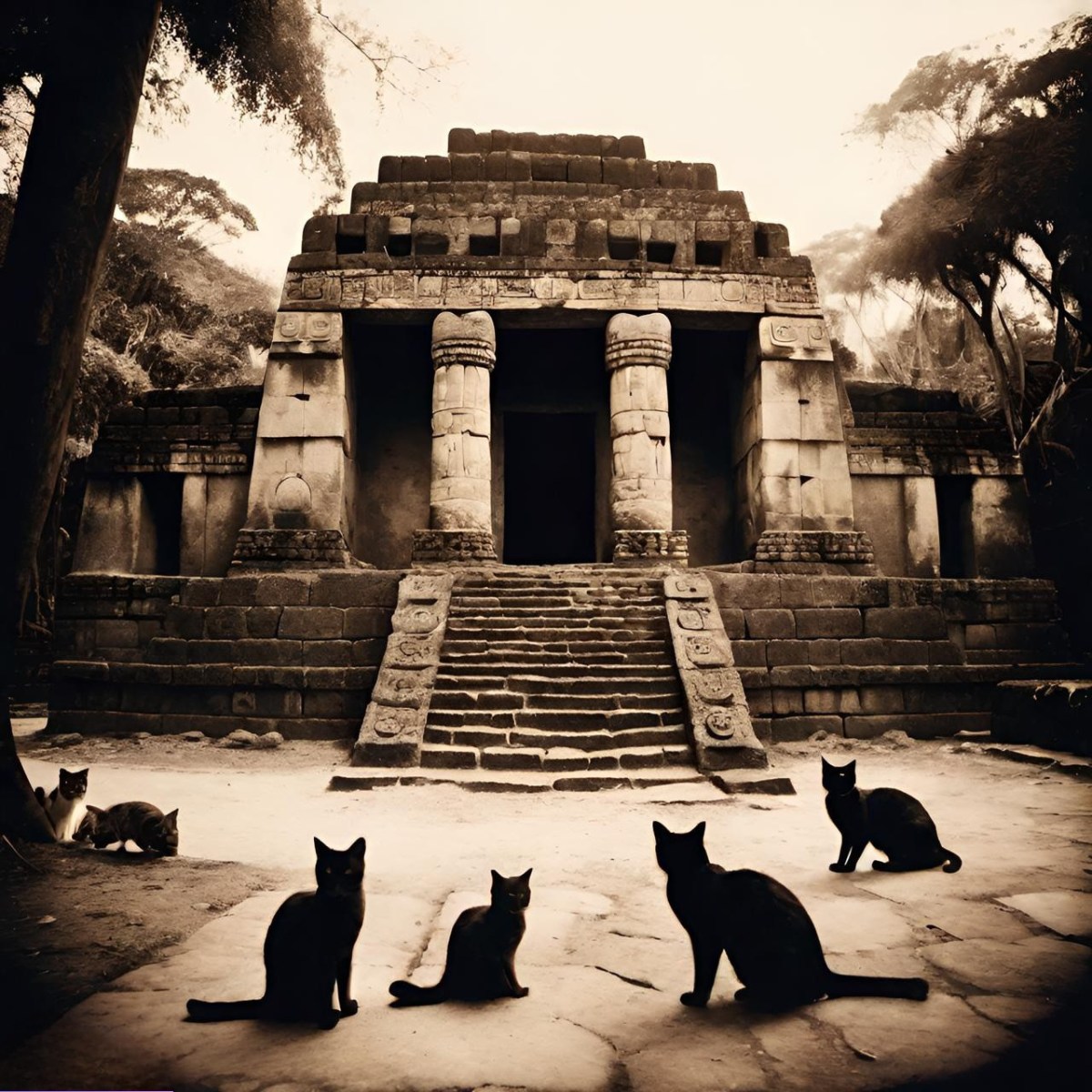
Cats in front of the Temple of Turkey
Feral felines, like the pair pictured here in front of the Temple of Turkey, still live on the grounds of the long-lost city. Source: Buddesian University Archaeological Department

Partially translated glyphs tell of unprecedented growth for the once-prosperous city, which the people believed stemmed from the favor they enjoyed from Budacoatl. Employing a force of more than 100,000 laborers, they built a magnificent temple to the feline deity in the very center of their city.

An architectural wonder, the Temple of Budacoatl featured more than 500 depictions of the feline in statues and relief carvings. The structure was comprised of tiered gardens with artificial waterfalls and tribute chambers, while gilded food and water bowls were placed at regular intervals for the hundreds of mortal cats who lived on the temple grounds.

A nearby structure, the enigmatic Grand Napitorium, was possibly the first sound-proof building in history and affirmed the X’Budiso people’s communal commitment to satisfying siestas.

The city gained a reputation for culinary innovation, and is considered the birthplace of aji sauce, deep fried turkey, huevos rancheros and Temptaciones, the ancient precedessor to Temptations.

The Artisanal Guild of Nectarean Condiments and the Sacred Order of Saucemasters were two particularly prosperous factions in the ancient city, which developed a reputation in the pre-Conquistadorial world for producing  the tastiest guacamole.

“It was said that Budacoatl was particularly fond of sandwiches, and the people sang hymns about his power, influence and ripped physique,” Lyle said. “An epic poem, chiseled into the edifice of the temple, told of battle in the heavens between Budacoatl and the mighty Vakuum, scourge of the Maya. Budacoatl prevailed over Vakuum, banishing him to the underworld where his screeching could not be heard by the inhabitants of the Earth.”

Relief carvings
Richly detailed relief carvings from the Palace of Pâté depict figures from the feline pantheon. Source: Buddesian University Archaeological Department

At the foot of the wall where the poem is inscribed stands a statue of Budacoatl, one paw holding a pastrami sandwich and the other raised in a sign of peace.

“Budacoatl was a big deal among the Maya,” Lyle said. “At one point he was bigger than Gozer and Zuul, ruling atop the pantheon. As a result, cats enjoyed enormous favor in the city.”

Ferdinand Lyle
Professor Ferdinand Lyle, foreground, stands in front of the Napitorium, where the Budiso people would take siestas. Napping was an important part of the culture. Source: Buddesian University Archaeological Department

Asakusa: The Market Temple

Some 30 million visitors a year come to see Tokyo’s oldest Buddhist temple, which has been a religious site for more than 1,000 years.

And making a whip of cords, he drove them all out of the temple, with the sheep and oxen. And he poured out the coins of the money-changers and overturned their tables. And he told those who sold the pigeons, “Take these things away; do not make my Father’s house a house of trade.” – John 2:13-16

Growing up Catholic, I heard the story of Jesus furiously expelling the money-changers and merchants from the temple at least a few times a year in church gospels.

CC273C9C-1A9B-40C7-A3B6-2860C8961DE0
“Christ casts out the money-changers” by Danish painter Carl Heinrich Bloch.

The message was clear: Houses of worship are supposedly to be solemn and hushed places where people can speak to God in peace.

Sensō-ji temple is quite the opposite.

7786CCAF-ED20-4F0C-8C70-916B7B70390A
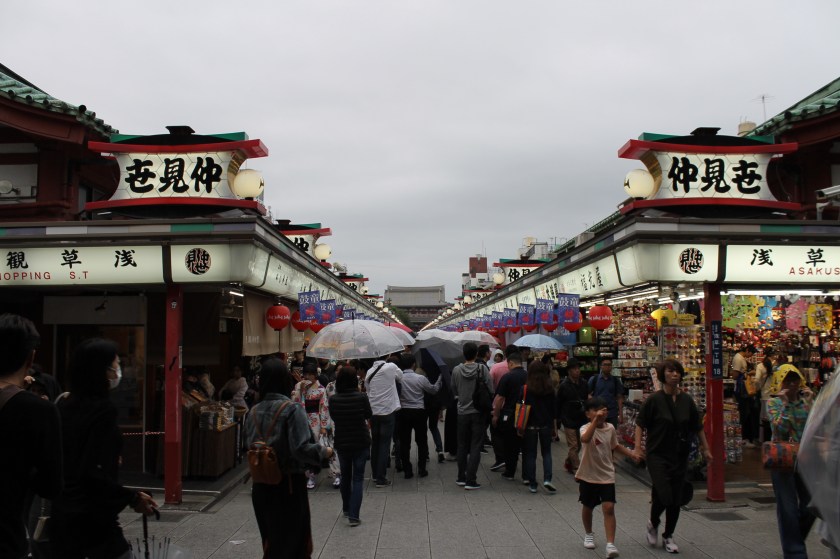
Sellers hawk overpriced gifts for tourists en route to Sensō-ji temple.

Sensō-ji is not only Japan’s oldest temple, it’s one of the most-visited spiritual sites in the world, with an estimated 30 million annual visitors.

It’s also one of Tokyo’s most-accessible shrines, just a short walk from a subway stop in Asakusa. All that foot traffic makes it irresistible for local merchants, who sell everything from traditional lanterns to t-shirts, stuffed animals, shoes, bags and hats.

On the day I visited a steady rain hadn’t put a dent in the mixed crowd of locals and tourists.

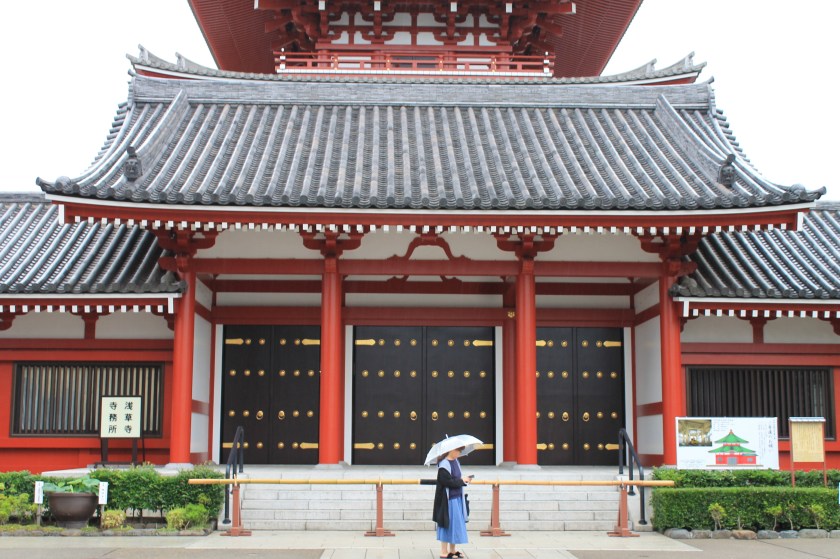
A giant lantern hangs beneath the temple gate, which was rebuilt in 1960 after a fire destroyed its predecessor. While most of the structures at Sensō-ji are reproductions, the area has been a religious site for more than 1,000 years.

4BBDE128-3159-45A6-B78C-30EA1EAC333C
The temple grounds are a popular spot for tourists and locals alike.


39A813FA-D5DA-4722-9342-FD015A7CB55F
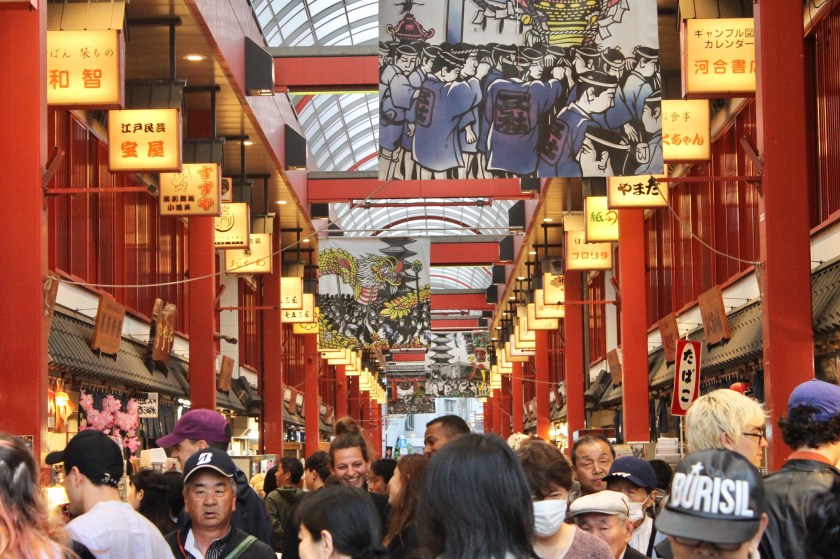
A shopping mall featuring eateries, gift shops and a sword smith.

Setagaya: The Magnificent Cat Shrine

A quiet Tokyo burb is home to Gōtokuji Temple, the famous cat shrine and birthplace of maneki neko, aka the beckoning cat.

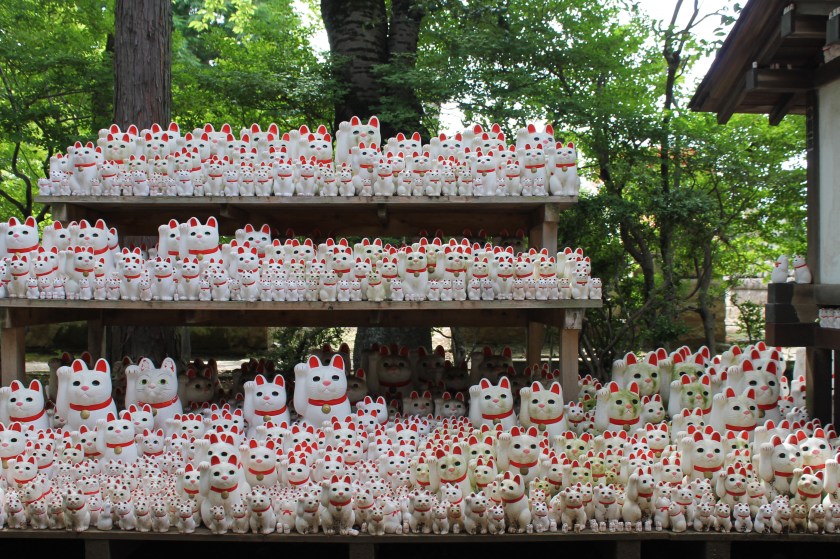
Look at all the buddies!

No trip to Japan would be complete for me without a visit to Gōtokuji Temple, home of the famous cat shrine.

Legend has it that a feudal lord and a few of his samurai were road-weary and looking for a spot to rest when they saw a cat by the road, beckoning them with a waving paw.

Gōtokuji Temple in Setagaya, Tokyo
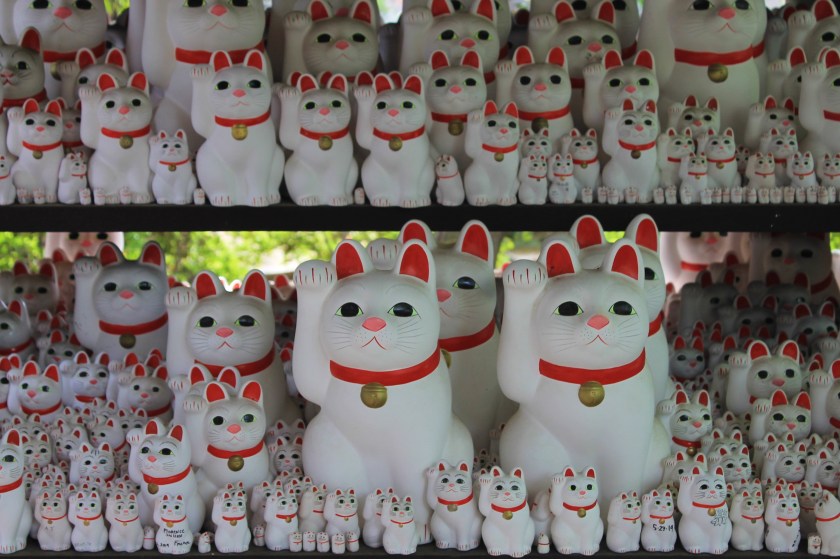
Thousands of maneki-neko (“beckoning cat”) statues are placed at Gōtokuji Temple.

The lord and his men followed the cat, who led them to a humble temple. The group reached the shelter of the temple just in time to avoid a thunderstorm and resultant downpour.

Thankful that he was dry and warm — and inspired by the temple monk’s sermon — the feudal lord vowed to become the temple’s benefactor, providing the funds for the extensive grounds that exist at Gōtokuji Temple today.

Because it was the cat who led the lord to the shelter of the temple, the “beckoning cat” — maneki neko — became associated with good luck across Japan. Today maneki neko can be seen in shops, restaurants and homes throughout the country.

Even by the immaculate standards of Japanese temple complexes, Gōtokuji Temple is remarkably well-manicured.
Situated in the “suburbs” of Setagaya, Gōtokuji is also more quiet and peaceful than some of the other temples that are wedged between skyscrapers and commercial plazas.
Gōtokuji Temple
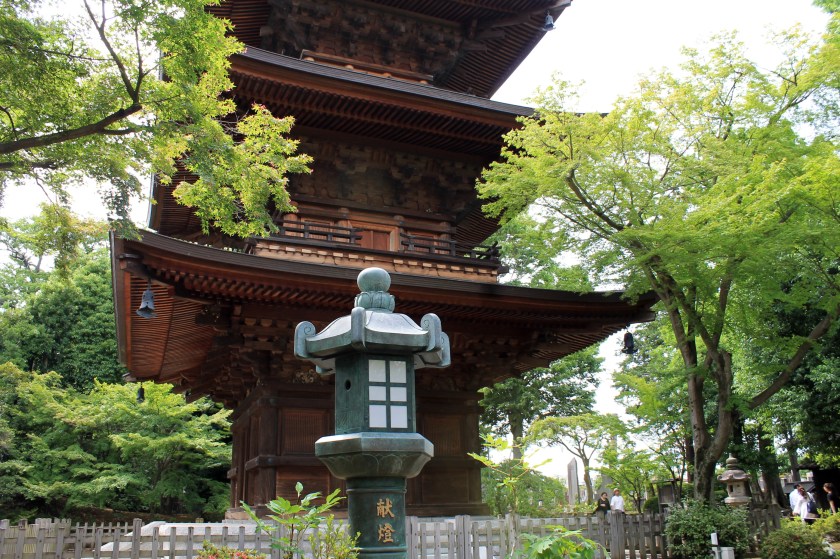
The Gōtokuji Temple grounds are well-manicured even by Japanese standards.
Gōtokuji Temple
According to a local docent — a kindly elderly man toting a photo album of the shrine — the temple structure above is inhabited by a brown-coated cat, who calls the second floor home.
Cat Shrine Temple
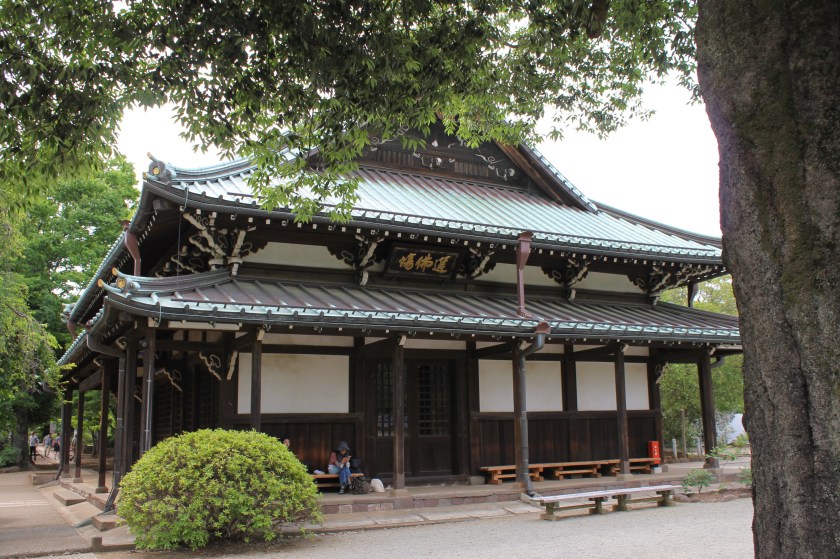
The shrine grounds include several temples and other structures.
Gōtokuji Temple
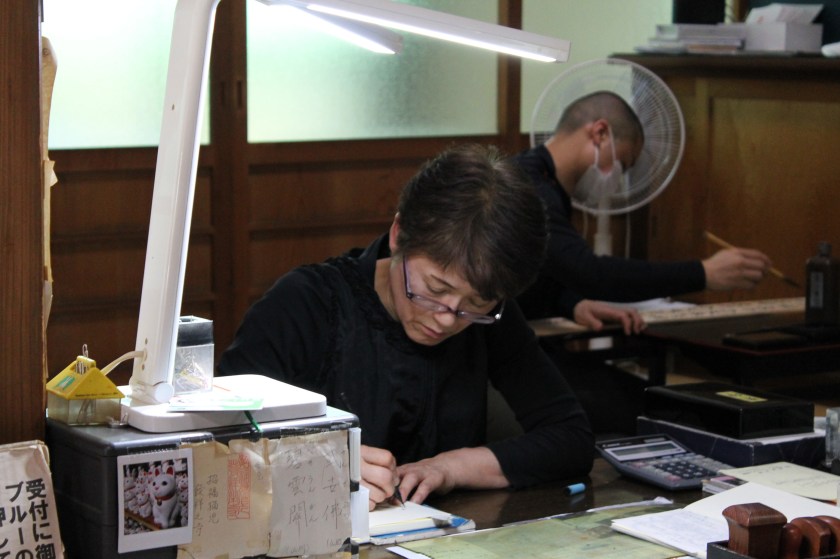
Staff at Gōtokuji Temple paint calligraphy with the temple’s symbols and stamp them.
Japanese calligraphy
Like other shrines throughout Japan, the temple has its own calligraphic symbols and stamps.
Gōtokuji Temple
That’s a lot of cats!
Gōtokuji Temple
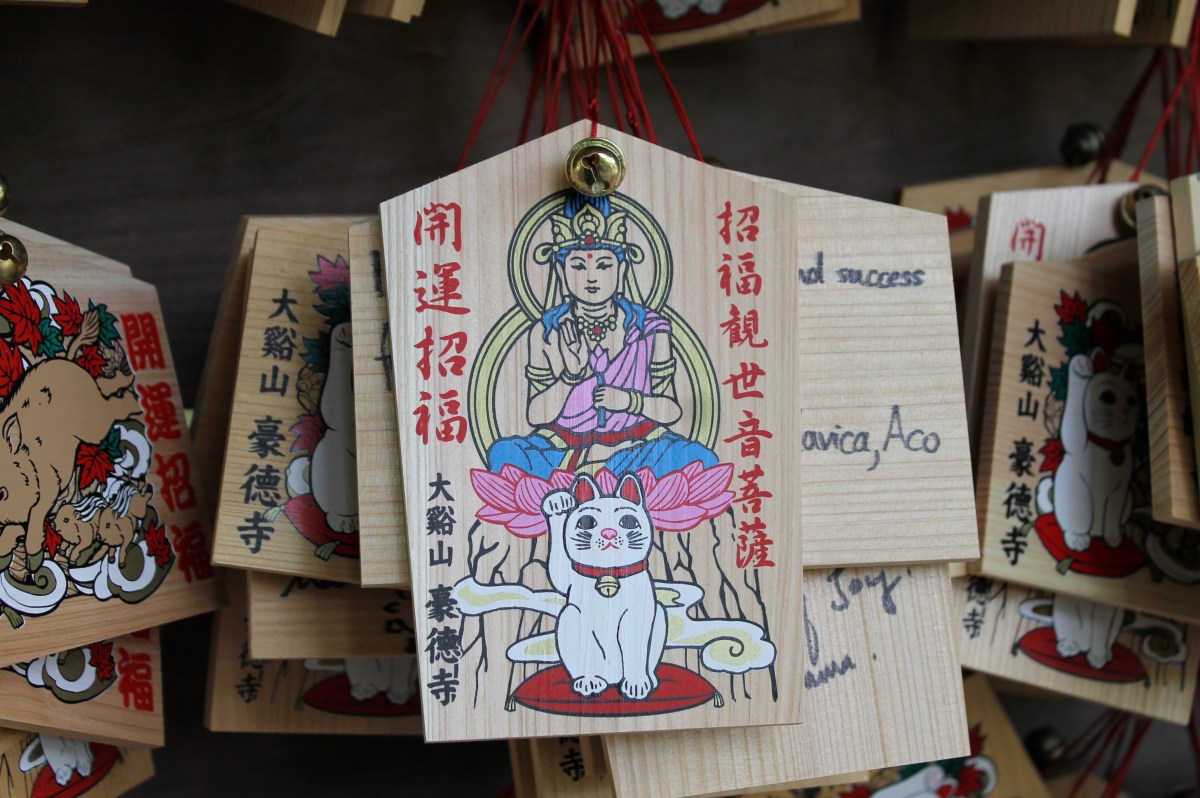
Visitors leave statues of the beckoning cat as they pray for personal success or prosperity in business.