Beloved Bodega Cat Killed By Autonomous Taxi In San Francisco

In disrupting another industry, AI has moved into a realm where its use has physical consequences.

I’d planned on taking a break and easing up on posts after the glut of cat-related news the past few days, but this story is disturbing, timely, and sadly we’ll almost certainly hear about more of these incidents in the near future.

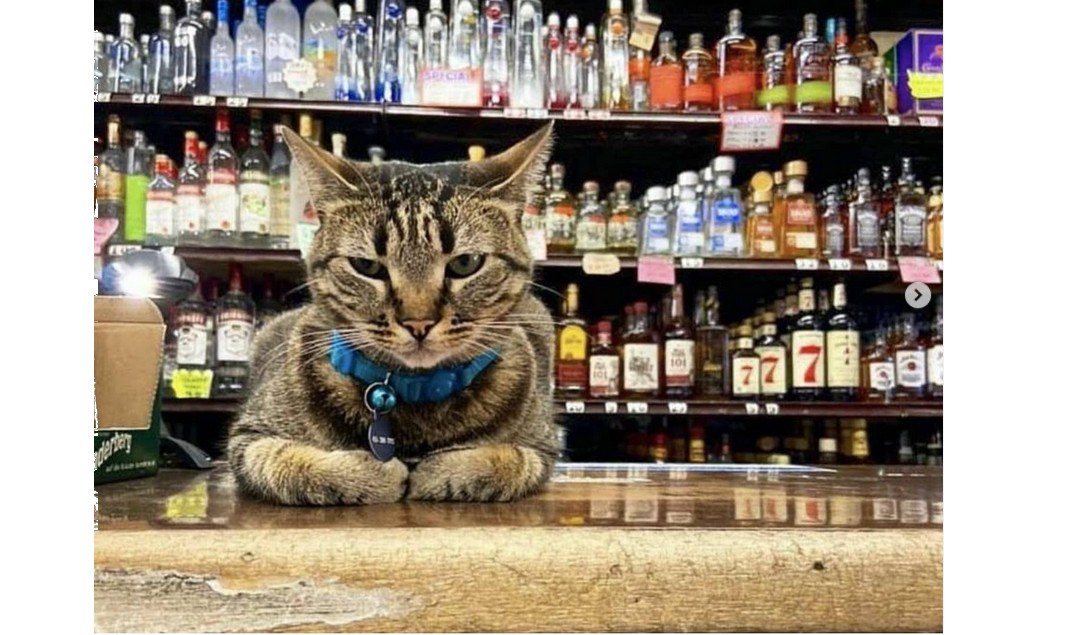
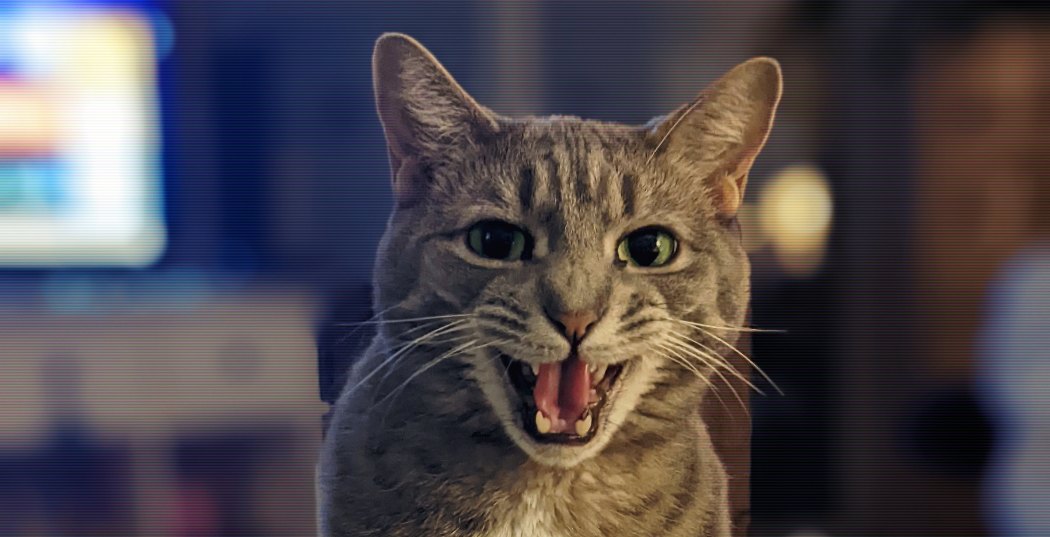
KitKat, a nine-year-old tabby who called Randa’s Liquor Store in San Francisco’s Mission District home, was killed late Monday night by a vehicle owned by Waymo, an autonomous ride-hailing service.

Witnesses said they saw the Waymo hit the cat and pulled him out from under the self-driving car. They say KitKat was sitting on the sidewalk at the time. It’s not clear if the Waymo vehicle drove up onto the sidewalk or if its bumper was the impact point.

A witness who filed a report with 311 via smartphone said the Waymo vehicle “did not even try to stop.” The car continued on to its next pickup.

Several people rushed the injured tabby to a 24-hour emergency veterinary clinic, but his injuries were too severe and he died five minutes before his human arrived.

KitKat outside Randa’s Market. Credit: Randa’s Market Instagram

KitKat was extremely popular with people in the neighborhood, patrons of the neighboring bar and sandwich shop, and passersby. They described him as a feline who liked to patrol the sidewalk and pop into the bar and sandwich shop to “supervise,” making sure all was well in his little realm.

“Everyone’s heartbroken,” Jessica Chapdelaine, who tends bar next door and lives in an apartment above the liquor store, told Mission Local. “He’s the baby. He was everyone’s best friend and he was just the sweetest boy.”

Waymo didn’t respond to requests for comment by Mission Local, TheSFist and other media. The Google-owned company had not addressed the incident on its website’s press page, nor on its X account despite several users bringing it up, as of Thursday morning.

“You can’t even drive in the dark in normal weather without killing a cat,” one user wrote, while others weren’t nearly as diplomatic.

The San Francisco Standard provides a bit of context on the autonomous vehicle issue in California:

“The state had logged 884 autonomous vehicle collision reports as of Friday, according to the Department of Motor Vehicles (opens in new tab). A dog was struck and killed by a Waymo in Bernal Heights in 2023. A week later, a Labrador survived getting hit by a Cruise self-driving car; the company no longer tests its cars in San Francisco.”

On the other hand, there have been several dramatic incidents involving autonomous vehicles that have successfully avoided collisions with other cars, people and animals, even when given a fraction of a second to respond. In an incident in LA from earlier this year, a home security camera caught footage of a Waymo stopping instantly to avoid a dog that ran out into the street directly in the car’s path:

A human driver almost certainly could not make a safe decision in that time interval, but a machine can confirm there is no car immediately behind it and execute the stop within a few milliseconds.

Still, as more ride hailing services roll out autonomous fleets and expand into more cities — as the major players in the still-developing industry are already doing — this will become more of an issue. Waymo operates fleets in San Francisco, Los Angeles, Phoenix, Austin (TX) and Atlanta, and plans to roll out its service in Miami and Washington, D.C., in the near future.

The obvious question is whether AI-driven vehicles are safer than cars with people behind the wheel, for drivers and pedestrians. The answer seems to be yes, especially as the technology improves. Machines don’t text while driving, don’t get distracted fiddling with radios and don’t get behind the wheel after drinking. Sensors and software have improved dramatically in just a few years.

But that won’t be enough. There’s a psychological hurdle in giving up control. It’s the same reason why so many people are terrified of flying even though we’re statistically much more likely to die in car collisions. When you’re behind the wheel, you have control over your fate — or the illusion of control, anyway.

A close-up shot of hardware and some of the sensors on the Jaguar I-PACE Waymo autonomous vehicle. Credit: Waymo

Parallel to the questions about safety are concerns about whether any corporation should be permitted to put driverless cars on the road, especially when the companies with the resources to commit to a major venture like this are the familiar Big Tech conglomerates run by the same handful of tech oligarchs.

Should they be allowed to wipe out yet another industry, taking away work from people who drive taxis or for rideshare companies? Do we need the government to step in and place some guiderails on tech that has developed at an unprecedented pace and threatens to upend huge swaths of society? Should we demand a much more robust regulatory process and risk falling behind other countries in the AI race?

These are questions we’ll all have to grapple with, and there are no easy answers.

RIP KitKat.

All images of KitKat credit: Randa’s Market/Instagram


Man Wilts Under Cat’s Disapproving Gaze In Humorous New Apple Ad

Every cat lover’s camera roll is dominated by photos of our fluffy little overlords. It’s the natural order of things.

I’ve always said Bud’s silent treatment can be worse than his vocal protests when it comes to gauging the intensity of his disapproval.

Howling at me to fetch him a snack? That’s normal. Sitting down two feet away and fixing me with his wide-eyed, accusatory stare as I eat a snack without getting one for him? Now that’s serious.

Andreas Nilsson, the director of a new ad highlighting a recently-introduced Apple feature, clearly understands the hierarchy of feline displeasure:

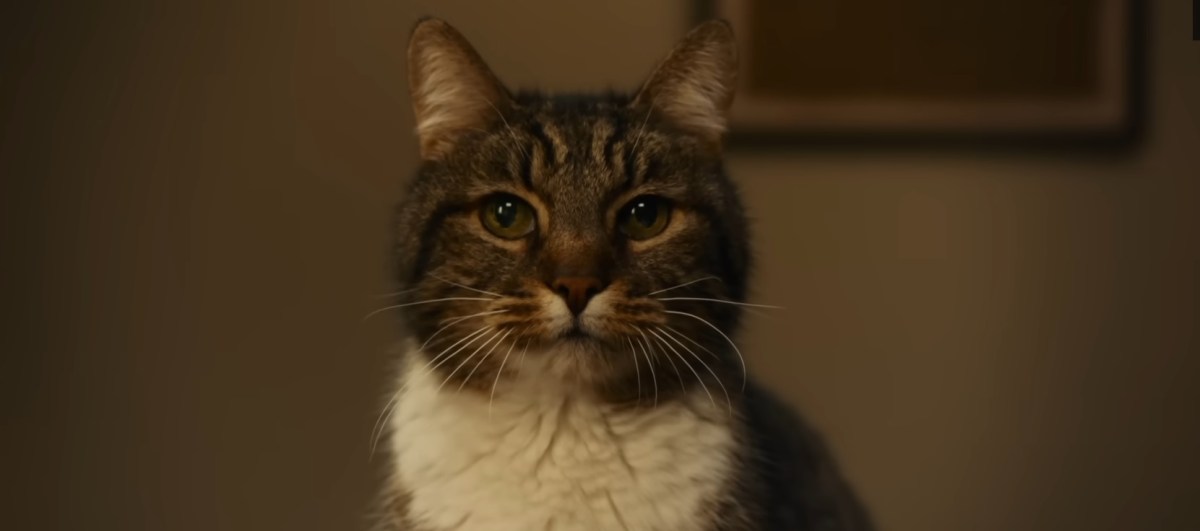
In the spot, a man uses Apple Intelligence to remove his cat, Garrett, from a photo he just snapped of his wife relaxing and reading a book.

“Look, I deleted Garrett,” he says, holding up the photo and clearly expecting something along the lines of “Wow, that’s a pretty cool feature!”

Instead, she gives him a dry “I always knew you hated Garrett” and goes back to her book.

But Garrett himself doesn’t have to utter a single meow. His reproachful gaze is all the prompting the man needs to undo his mistake with the tap of his screen.

The commercial ends with a slow close-in on Garrett’s face, which has “You’re on thin ice, human!” written all over it.

I like this spot. The creative team took a risk in showing off a new feature in a way that made the characters react negatively, but cat people will love it, and viewers aren’t likely to forget what they saw.

Android users have had something very much like it for quite a while now. Sometimes it really does work the way it does in the commercials, with seamless results, but other images are a bit more difficult to clean up and require some manual tinkering. If Apple’s figured out a way to measurably improve this sort of thing, that’s a pretty big positive for the future of smartphone photography and editing.

In any case, cheers to Nilsson for knowing who holds real power in human-feline households. Now if you’ll excuse me, the king is demanding my attention, no doubt to have me scratch his chin, open a door for him, or serve him second breakfast…

A Missing Genetic Sequence Leads To Orange Fur In Cats. Could It Be Responsible For Behavioral Differences Too?

Scientists have uncovered the elusive mechanisms behind coat color expression, opening the door to a new question: is fur pigment connected to personality?

When Professor Hiroyuki Sasaki retired, he wasn’t done with science. He just wanted to use it to better understand his cats.

The Japanese geneticist raised more than $73,000 from Japanese and international cat lovers and put together a team, including partners from the US. Then he began the hard work of scrutinizing feline DNA to find out why some cats are orange, and why most all-orange cats are male while virtually all calico and tortoiseshell cats, whose coats have splotches of orange, are female.

It turns out there’s no genetic instruction telling the fur to take on an orange pigment — it’s the absence of a segment of DNA, which governs pigment production, that does it.

In other words, ginger cats are mutants.

Most fully-orange cats are male because the mutation removes the DNA segment in the X chromosome. As males have X and Y chromosomes, they only need the mutation in the single X chromosome for their coats to express in that shade.

Lots of cat lovers swear that coat color and temperament are connected.

Females have an XX chromosomal arrangement, so they need the mutation in both chromosomes to turn tangerine. If the mutation only shows up in one chromosome, you get patches of the color instead of a consistent coat.

That explains why 80 percent of ginger cats are male, and why only one in 3,000 calicos and tortoiseshells are male. A male cat would need an extra X chromosome, XXY, to be born with a calico or tortoiseshell coat. One of the side effects, however, is sterility.

Scientists estimate only one in a thousand male calicos/tortoiseshells can reproduce and pass their unique mutations on.

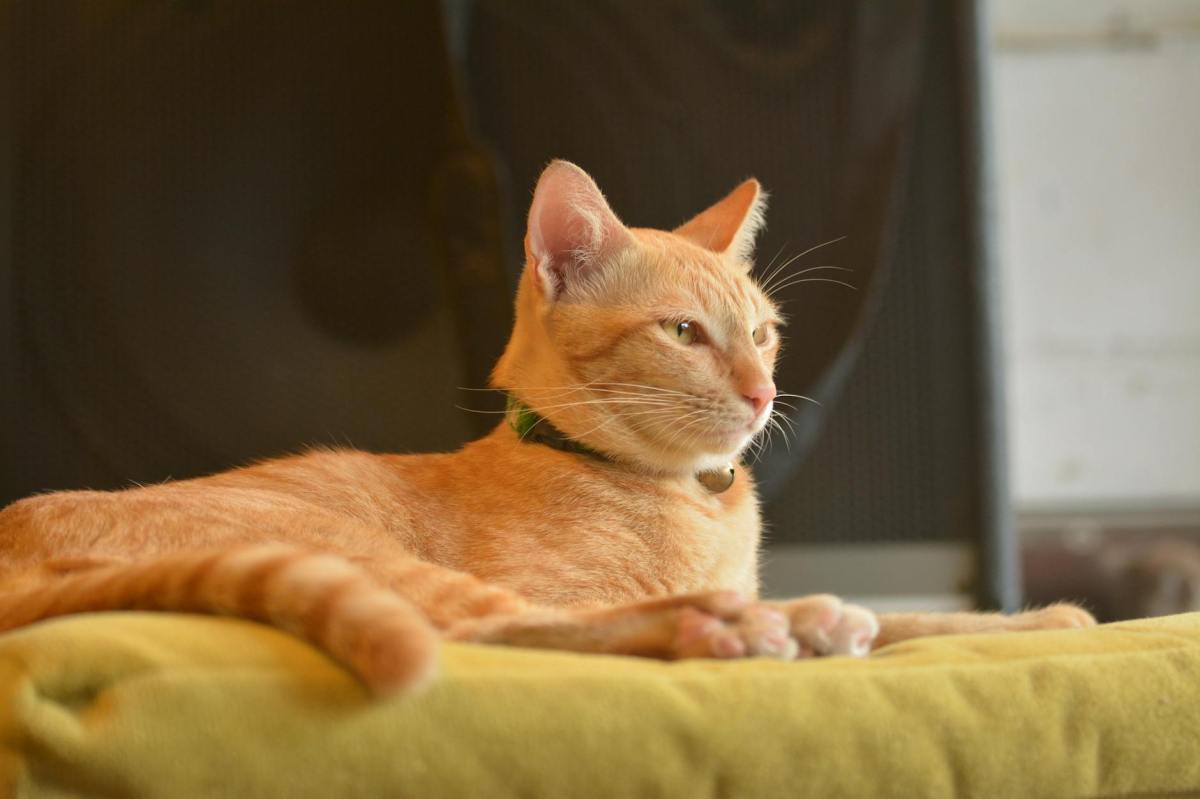
It’s not just coat color either. The mutation impacts skin and eye color, which is why a ginger cat might have a pink nose compared to the terracotta shade of a void cat or a silver tabby.

Are orange cats really more friendly and silly?

So how does this relate to temperament, and the many people who attest to a particular personality associated with orange cats? Some people say ginger tabbies are more loyal, affectionate and social than cats of other coat colors, but they’re also more prone to doing boneheaded things.

The stereotypes have picked up steam online, where people often share memes depicting orange felines as earnestly derpy, but they may be on to something — or at least, it can’t be ruled out until we know more.

Ginger cats are not the sharpest claw on the paw, according to popular memes.

Because of the missing piece of genetic code, a specific gene, ARHGAP36, isn’t “expressed.” Like so many genes, scientists don’t fully understand everything ARHGAP36 impacts, or how alterations can lead to unexpected changes elsewhere.

“Many cat owners swear by the idea that different coat colours and patterns are linked with different personalities,” Sasaki told the BBC. “There’s no scientific evidence for this yet, but it’s an intriguing idea and one I’d love to explore further.”

Header image via Pexels

Another Tech Company Wants To Translate Meows And Barks Using AI: Can It Work?

Cats and dogs communicate primarily by scent, touch and body language, but human efforts to understand them have focused exclusively on meows and barks. If we want to truly understand our non-human friends, we need to take an approach that considers the other ways animals “talk” to each other.

A few years ago when MeowTalk made a minor splash in the startup world, I was pretty bullish on its potential to help us understand our cats better.

Sure, the app had an unhelpful habit of attributing improbably loving declarations to Buddy, but I thought it would follow the trajectory of other machine learning models and drastically improve as it accumulated more data.

More users meant the app would record and analyze more meows, chirps and trills, meaning it was just a matter of time before the AI would be able to distinguish between an “I want attention!” meow and a “My bowl is dangerously close to empty!” meow.

Obviously that didn’t happen, and what I personally didn’t take into account back then — and should have, given how obvious it is in retrospect — is that cats don’t just communicate via vocalizations.

In fact, cats don’t normally incorporate vocalizations into communication at all. Pet kitties do it entirely for our benefit because they know we’re generally awful at interpreting body language and we are completely useless when it comes to olfactory information.

It’s actually amazing when you really think about how much of the heavy lifting cats do in our efforts to communicate with each other. They recognize we can’t communicate the way they do naturally, so they try to relate to us on our terms. In return, we meet them less than halfway.

No wonder Buddy sometimes looks frustrated as he meows at me, as if I’m the biggest moron in the world for not understanding the very obvious thing he’s trying to tell me.

“Human, how can you not understand the simple feeling of innerer schweinehund I’m trying to convey here? The cringe is killing me!”

Now the Chinese tech giant Baidu is throwing its hat into the ring after filing a patent in China for an AI system that uses machine learning to decode animal communication and “translate” it to human language.

Machines are designed to process things from a human viewpoint according to human logic, so if Baidu wants to succeed where MeowTalk has not, its engineers will need to take a thoughtful approach with the help of animal behavior experts.

This is a hard problem that encompasses animal cognition, neuroscience, linguistics, biology, biochemistry and even philosophy. If they approach this strictly as a tech challenge, they’ll set themselves up for failure.

Without the information and context clues provided by tails, whiskers, facial expressions, posture, eye dilation, heart rate, pheromones and even fur, an AI system is only getting a fraction of the information cats are trying to convey.

Trying to glean meaning from that is like trying to read a book in which only every fourth or fifth letter is legible. There’s just too much missing information.

Even if we can train machines to analyze sound visual, tactile and olfactory information, it may not be possible to truly translate what our cats are saying to us. We may have to settle for approximations. We’ve only begun to guess at how the world is interpreted differently among human beings thanks to things like qualia and neurodivergence, and the way cats and dogs see the world is undoubtedly more strange to us than the way a neurodivergent person might make sense of reality.

“He grimaced. He had drawn a greedy old character, a tough old male whose mind was full of slobbering thoughts of food, veritable oceans full of half-spoiled fish. Father Moontree had once said that he burped cod liver oil for weeks after drawing that particular glutton, so strongly had the telepathic image of fish impressed itself upon his mind. Yet the glutton was a glutton for danger as well as for fish. He had killed sixty-three Dragons, more than any other Partner in the service, and was quite literally worth his weight in gold.” – Cordwainer Smith, The Game of Rat and Dragon

An animal’s interpretation of reality may be so psychologically alien that most of its communication may be apples to oranges at best. Which is why I always loved Cordwainer Smith’s description of the feline mind as experienced via a technology that allows humans with special talents to share thoughts with cats in his classic short story, The Game of Rat and Dragon.

In the story, humans are a starfaring civilization and encounter a threat in the void between stars that people don’t have the reaction speed to deal with. Cats, however, are fast and swift enough, and with a neural bridge device, teams of humans paired with cats are able to keep passengers safe on interstellar journeys.

The narrator, who is one of the few people with an affinity for teaming up with felines, hopes he’ll be paired with one of his two favorite cats for his latest mission, but instead he’s assigned to partner with an old glutton of a tomcat whose mind was dominated by “slobbering thoughts of food, veritable oceans of half-spoiled fish.”

The narrator wryly notes that the last time one of his colleagues was paired with that particular cat, his burps tasted of fish for weeks afterward. But the cat in question, despite being obsessed with fish, is a badass at killing “dragons,” the human nickname for the bizarre entities that attack human ships in space. (The software that allows felines and humans to link thoughts also portrays the “dragons” as rodents in the minds of the cats, stimulating their ancient predatory drive so they’ll attack instantly when they see the enemy.)

We can’t know for sure if Smith’s interpretation of the feline mind is accurate, but another part rang true when he wrote that cat thoughts were all about the moment, filled with sentiments of warmth and affection, while they rapidly lost interest in thoughts about human concerns, dismissing them “as so much rubbish.”

If the mind of a cat is that relatable, we’ll be incredibly lucky. But in reality we’re dealing with animals who evolved in drastically different ecological niches, with different priorities, motivations, and ways of looking at the world — literally and figuratively.

That doesn’t mean we shouldn’t try to understand our furry friends. Research has yielded interesting information about the way animals like whales and elephants communicate, and AI is at its best when it augments human creativity and curiosity instead of trying to replace it.

Even if we don’t end up with a way to glean 1:1 translations, the prospect of improving our understanding of animal minds is tantalizing enough. We just need to make sure we’re listening to everything they’re saying, not just the meows.

Buddy Rages At Klingons For Interrupting Nap Time

Can Captain Buddy of the USS Fowl Play outsmart the Klingons once again to save his crew and salvage his nap?

USS FOWL PLAY, NCC-2014A — Captain Buddy emerged from the turbolift, batting at the wrinkles in his uniform with his paws in a fruitless attempt to look more presentable.

“Not that it matters with these nap-interrupting brutes,” he sighed. “On screen!”

The helm officer tapped a sequence into his console and an image of a scowling Klingon materialized on the ship’s view screen, replacing the view of space and the sleek Klingon Warbird that had decloaked in front of the USS Fowl Play.

“Gruthnok vupar! This is the warship Dra’akkthar of the mighty Klingon empire!” the face on the view screen snarled. “Power down your pitiful excuse for a ship and prepare to be boarded!”

Captain Buddy smiled.

“Good to see you too, Captain Hrakhuul,” he said. “How are the wife and the kids?”

Hrakhuul snorted derisively.

“Only a fool jests during the hour of his doom!” the Klingon spat. “Have you no honor?”

Captain Buddy scratched his chin fur, pretending to consider the question.

“None,” he said, “but I do have a bone to pick with you. You woke me up during nap time. Again. Not cool, Hrakhuul. Not cool.”

Captain Buddy, commanding officer of the Federation starship USS Fowl Play, Galaxy class registration NCC-2014A

Hrakhuul growled.

“Your species is insolent, lazy and takes ten naps a day!”

“Why, thank you, Captain Hrakhuul! And may I say, you’re looking particularly savage today.”

“This is your last warning, Federation cat! Power down your shields and weapons or be destroyed!”

Captain Buddy yawned.

“I think I’ll have my crew serve me turkey sandwiches instead. Yeah. Turkey over obliteration, no brainer.”

This enraged the Klingon. “Prepare to taste your own blood at the tip of my ancestral bat’leth, feline fool!”

Buddy collapsed into his captain’s chair and kicked his feet up.

“Can we just skip this and get to the part where I outsmart you and go back to my nap?”

Hrakhuul cackled maniacally.

“So your fate is sealed, then. You shall fall before the might of the Klingon Emp…”

Captain Buddy cut him off.

“I wouldn’t be so confident if I were you. This is a..an, uh…” He turned to Lieutenant Pawson, the tactical officer, whispering: “What kind of ship is this again?”

“A Galaxy class, sir. Same as the flagship.”

“A Galactic class starship!” Buddy said confidently, projecting the calm of a seasoned captain. “And we have, like, uh…”

“Sixteen phaser banks and two photon torpedo launchers, sir,” Pawson whispered helpfully.

“Lasers! Like 27 of them! And torp…er, missiles and stuff! Very powerful missiles. They make yuge explosions!”

Behind him, operations Lt. Commander Cleo hid her face in her paws.

Schemeowtics for the USS Fowl Play, Captain Buddy’s awesome starship.

“Enough of your meaningless babble,” Captain Hrakhuul barked. “Prepare to die!”

Captain Buddy’s eyes went wide with shock.

“Oh no! We have a warp core breach! Abandon all decks and get to your escape pods!”

Captain Hrakhuul snarled, fear in his eyes.

“What?!?” If you think I will fall for this again, you tribble with a tail…”

“Fine, but don’t say I didn’t warn you, Hrakkie,” he said. “You’re in the blast radius.”

Captain Buddy made a cut-off motion to the helmsman and the screen returned to its default view of a placid star field.

The bridge crew erupted into applause.

“The Klingon ship is backing up, full reverse thrusters, sir!”

Buddy cleared his throat.

“Fire a few of those proton missile things to create an explosion, then hit the gas, warp nine!”

The Captain yawned into the back of his paw as he walked toward the turbolift.

“I am returning to my nap,” he told his crew before the lift doors closed, “and anyone who interrupts me will be thrown out of an airlock!”