Pa. Politician Resigns After Running Over Stray Cats With His Truck

“We don’t need his idea of animal control,” says one neighbor, who has been caring for the local cat colony for years.

Neighbors who live on a quiet street in rural Pennsylvania were horrified when a man in a white pickup truck intentionally tried to run over stray cats last week, hitting at least one.

Now, thanks to one neighbor who captured part of the attack on video, they’ve identified the man at the wheel, and he’s a local politician.

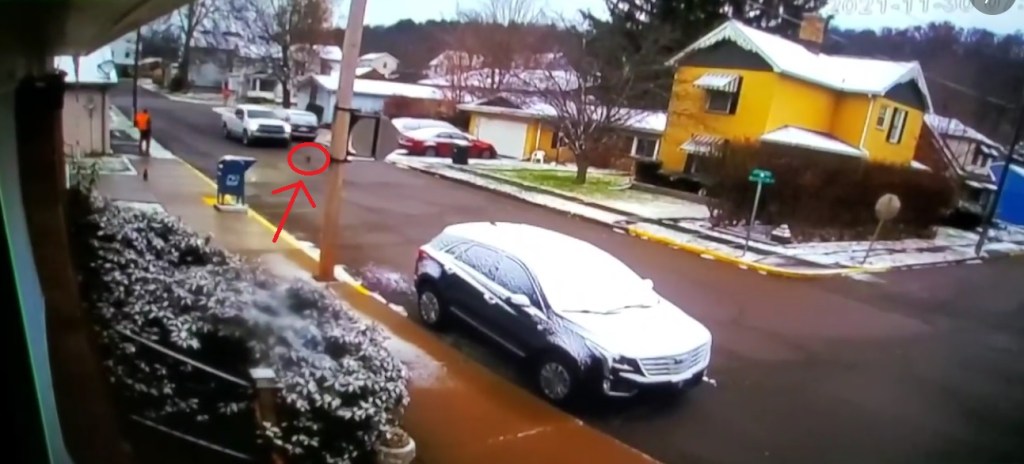
Frank Pagani Jr. resigned from his seat on the municipal council of Galilee, a rural Pennsylvania town with a population of 379. Video shows Pagani Jr. speeding up and swerving to hit one of two cats who were in the road at the time. He was going so fast he blew through the stop sign at the end of the street.

The brazen politician then made a left turn and casually pulled into his own driveway on a side street.

William Bittner, who captured part of the Dec. 1 hit-and-run on video, said Pagani called him afterward, admitted what he’d done, and said he would resign his council seat.

“He thinks that’s the end of it,” said Bittner, who takes care of the cats along with other neighbors on the street. “You just can’t let an act like that go on without someone being charged.”

The Beaver County Humane Society said its humane officers were investigating the incident, but Pagani Jr. hadn’t been charged as of Dec. 6. Neighbors told the Beaver County Times that police officers were going door to door on Dec. 3 to speak to witnesses. Pagani has not returned calls from at least two local media outlets.

Pagani works with his father in their family business, Pagani and Son Trucking LLC, which contracts with the United States Postal Service to shuttle mail in bulk to and from a processing facility to individual post offices in the area. The company has had three USDOT violations in 2020 and 2021, records show.

As for the cats, their fate remains unknown. The video appears to show Pagani’s truck hitting or running over the tail of one cat, who immediately bolted along with the other cat who was in the street at the time. Those two cats took off with a larger group that was on the nearby sidewalk. The injured cat hasn’t been seen since.

“He could have hit the undercarriage of the front, he could have had his tail run over, he could have been bruised,” Bittner told KDKA, the local CBS affiliate. “We’ve been searching and searching and we can’t find him.”

”And when I feed him in the morning and night, he’s not showing up. So we don’t know whether [he] ran off to die or…” Bittner said, trailing off.

In a follow-up post on Facebook, Bittner explained that the strays are part of a managed TNR colony, with neighbors pitching in to help feed the cats and adopt out kittens. So far, 28 cats have been trapped and fixed.

People in the neighborhood believe Pagani was taking matters into his own hands, which follows a disturbing trend of vigilantism toward cats by people who either hate them or think they’re protecting local wildlife by killing cats.

“We don’t need his idea of animal control,” Bittner wrote.

The Cat Houses of Istanbul: ‘Everybody Accepts Cats Must Have Their Own Life Spaces In The City’

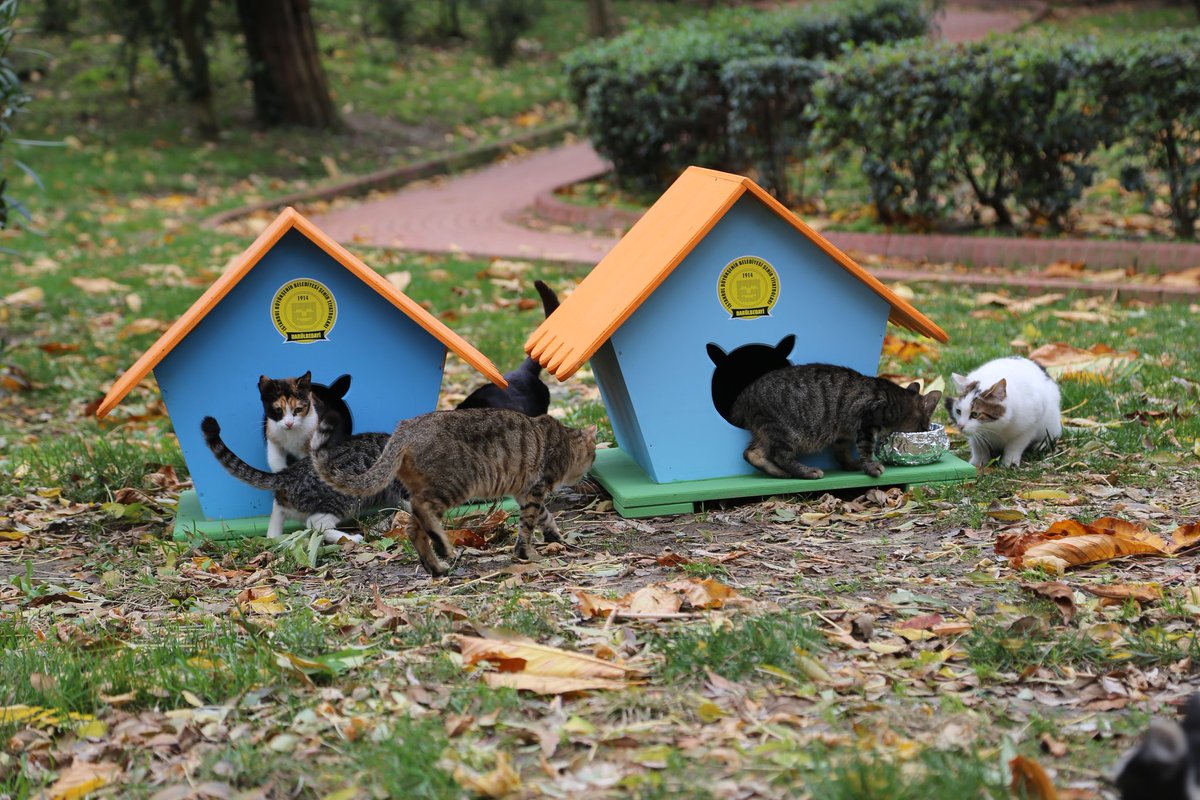
Thanks to a young architect’s impulse, cat houses — miniature shelters for strays and ferals — are now common all throughout Turkey.

We’ve written quite a bit about Turkey and how it serves as a model for co-existence and fondness between humans and cats, as well as other animals.

In Turkey — and especially in ancient Istanbul, the most populous city in Europe — cats are fed, welcomed into homes and shops, and taken care of by the entire community. Pets are still a thing there, but Istanbul’s stray population is the best cared-for in the world. They have their own parks, they’re protected by the people, and they’re even given miniature shelters which famously dot the city of 15 million.

“The whimsical structures — more like miniature apartment buildings than single-kitty houses — can be found in parks, outside shops and cafes, abutting private homes, and on university campuses, providing shelter for the city’s estimated 125,000 strays,” Reason to Be Cheerful’s staff wrote.

Cat house Turkey
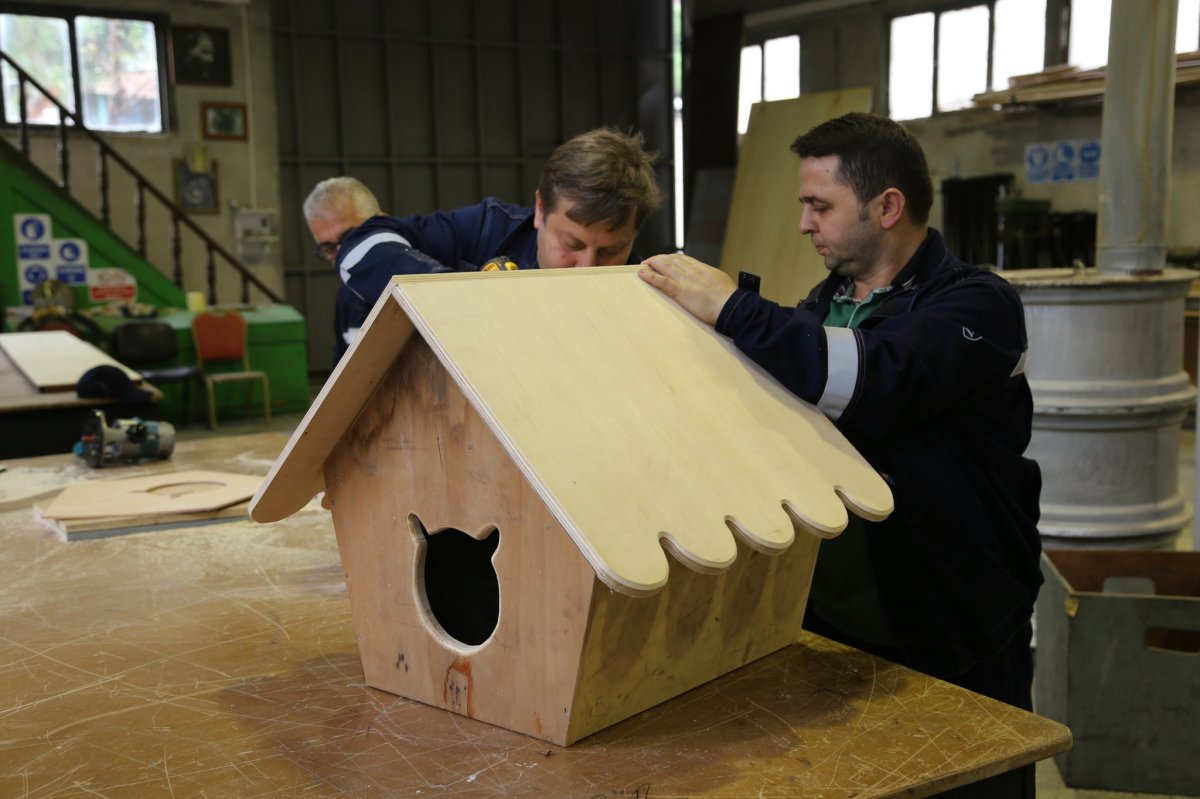
A custom-built wooden cat house in Turkey.

The practice of creating shelters for strays and ferals began in 2008, when a young architect named Didem Gokgoz would pass strays in Istanbul’s Mistik Park as she walked to and from work every day.

“Every day I passed the park and saw them looking for a place to get some warmth during the winter, and I felt desperate,” Gokgoz said.

At first she began making small shelters from recyclable materials, but the compact structures weren’t always tolerated in parks and other places where people felt they were an eyesore, so after meeting with the city’s mayor, Gokgoz engaged in an experiment: She built larger, more aesthetically acceptable permanent structures in the park, including one that looks like a large catio with a sloping, house-like roof, draped in greenery and nondescript among the park’s other features.

Mistik Park cat house
The Mistik Park cat houses are protected by a catio-like structure. Only volunteers can use the human-size door, while small cat-size openings allow felines access. Credit: Transitions.

The project was a success, and soon she found herself with requests to build more. But they aren’t just built and installed: Each cat house is run by about a dozen volunteers who keep track of the local cats, feed them, get them spayed/neutered and see to their other needs.

Almost 14 years later, cat houses have become a permanent fixture not only in Istanbul, but in other Turkish cities as well.

“It became something normal; individuals make requests for cat houses,” Gokgoz told the Turkish journalism site Transitions. “That was our main goal, and we’ve reached it. Today, everybody accepts that cats must have their own life spaces in the city.”

Istanbul cat houses
Credit: Istanbul Metropolitan Municipality

The Most Important Cat Study Ever Has Been Completed, And The Results Are In

For the first time ever, a US city has conducted a true cat census using scientifically proven methods, including doing it the hard way — by counting. The project’s authors hope other cities follow their lead.

The last decade has seen something of a renaissance in cat-related research, with insightful studies about feline behavior coming from researchers in the US and Japan.

On the other hand there’s been a glut of research into feline predatory impact and public policy, and the majority of those studies have been deeply flawed. They’re based on suspect data and tainted by the interests of people who are more interested in blaming cats for killing birds than they are in learning about the real impact of domestic felines on local wildlife.

Those studies have all taken extreme shortcuts — using data that was collected for entirely different studies, for example, or handing out questionnaires that at best lead to highly subjective and speculative “data” on how cats affect the environment.

Several widely-cited studies that put the blame on cats for the extirpation of bird species have relied on wild guesses about the cat population in the US, estimating there are between 20 million and 120 million free-roaming domestic cats in the country. If you’re wondering how scientists can offer meaningful conclusions about the impact of cats when even they admit they could be off by 100 million, you’re not alone.

No one had ever actually counted the number of cats in a location, much less come close to a real figure — until now.

When leaders in Washington, D.C., set out to tackle the feral cat problem in their city, they knew they couldn’t effectively deal with the problem unless they knew its scope. They turned to the University of Maryland for help, which led to the D.C. Cat Count, a three-year undertaking to get an accurate census with the help of interested groups like the Humane Society and the Smithsonian.

DC Cat Count
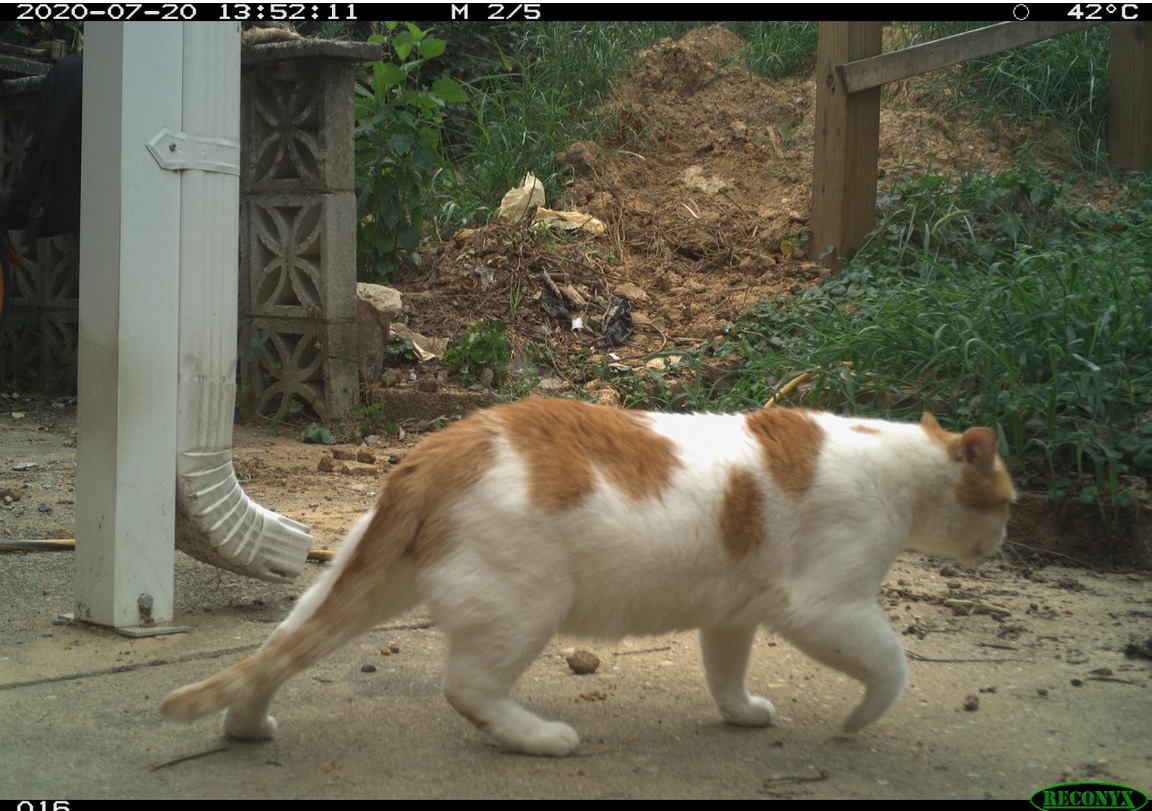
An image from one of 1,530 motion-activated cameras deployed for the D.C. Cat Count. Credit: D.C. Cat Count

The researchers approached each of their local shelters and rescues for data, then assembled a meticulous household survey to get a handle on how many pet cats live in the city, and how many have access to the outdoors.

Finally — and most critically — they used 1,530 motion-activated cameras, which took a combined 6 million photos in parks, alleys, public spaces, streets and outdoor areas of private residences. They also developed methods for filtering out multiple images of individual cats, as well as other wildlife. And to supplement the data, team members patrolled 337 miles of paths and roads in a “transect count” to verify camera-derived data and collect additional information, like changes in the way local cats move through neighborhoods.

DC Cat Count
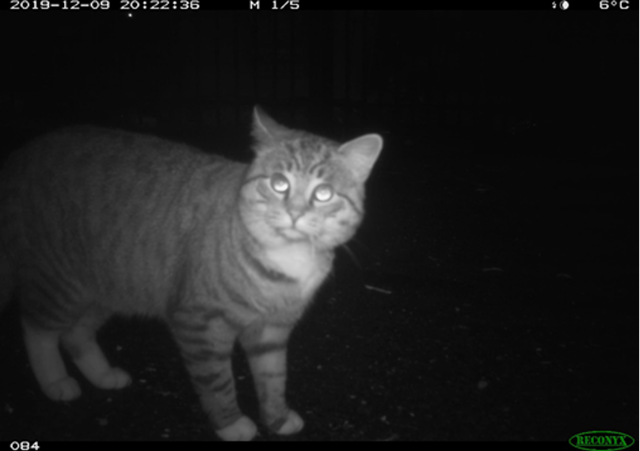
A cat who looks a lot like the Budster was captured in this 2019 photo from a motion-activated camera with night vision. Credit: DC Cat Count

Now that all the data’s been collected and analyzed, the D.C. Cat Count finally has a figure: There are about 200,000 cats in the city, according to the study.

Of those, 98.5 percent — or some 197,000 kitties — are either pets or are under some form of human care and protection, whether they’re just fed by people or they’re given food, outdoor shelter and TNR.

“Some people may look at our estimate and say, oh, well, you know, you’re not 100% certain that it’s exactly 200,000 cats,” Tyler Flockhart, a population ecologist who worked on the count, told DCist. “But what we can say is that we are very confident that the number of cats is about 200,000 in Washington, D.C.”

The study represents the most complete and accurate census of the local cat population in any US city to date, and the team behind it is sharing its methods so other cities can conduct their own accurate counts. (They’ll also need money: While the D.C. Cat Count relied on help from volunteers and local non-profits it was still a huge project involving a large team of pros, and it cost the city $1.5 million.)

By doing things the hard way — and the right way — D.C. is also the first American city to make truly informed choices on how to manage its feline population. No matter what happens from here, one thing’s certain — the city’s leaders will be guided by accurate data and not creating policy based on ignorance and hysteria painting cats as furry little boogeymen.

DC Cat Count
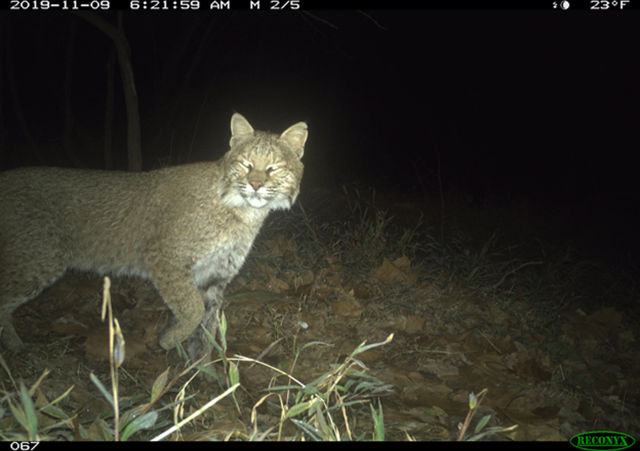
Not all the photos captured images of cats, and not all the felines were little: In this 2019 night image, a bobcat wanders in front of a trail camera. Credit: DC Cat Count

Day One: Leaping Away From Love

Buddy inadvertently leaves the comforts and love of his home and quickly finds himself in deep trouble.

Buddy licked his lips, belched and rolled over, sighing as he felt the afternoon sun’s warmth on his belly.

It was his favorite time of day and he was enjoying fresh air on the balcony, sitting in his favorite chair and surveying the world below like a little king. If he’d had a belt, he’d loosen it after scarfing down every last morsel of turkey and licking his bowl clean.

He waved his tail, thinking of how he’d pass the time later. Perhaps he would have a nap, then demand that Big Buddy take out the laser pointer. With a little luck, he might be given catnip as well, otherwise he’d have to meow relentlessly for it. Failing that, there was a new plastic bottle ring he’d stashed away for later play, and if Big Buddy were to fall asleep while watching baseball, Buddy could entertain himself by repeatedly waking his human via ambush. That was always delightful.

A squeak interrupted his thoughts, too high for humans to pick up but still well within his own hearing range. He sat up and cocked his head forward as his ears swiveled, trying to pinpoint where the noise had come from.

Sudden movement on his peripheral vision snapped his eyes to the target: Down below, among the cars and trees, a tiny animal scurried from beneath the cover of one car to another.

Buddy wasn’t sure what it was, exactly, but he knew he wanted to catch it.

He hopped off his throne and crouched low, poking his head through the balcony railing as he tracked the rodent.

The light box inside pumped out its usual weekday sounds: The crack of a ball against wood, the cheers of tens of thousands of humans, and Big Buddy alternately celebrating or sighing in frustration.

For all their supposed seriousness, humans were strangely invested in watching other humans play with toys.

Buddy caught movement beneath the rear bumper of a squat SUV. Two rodential faces peaked out from cover, chittering in human-inaudible frequencies.

His tail thrashed against the floor as he watched the diminutive trespassers brazenly moving about on the edge of his territory. They were mocking him, he was sure of it! He would have his revenge by ruthlessly hunting each of them down and jumping around joyfully on his hind legs, which he always did after he won at hunting games with Buddy the Larger.

The rodential duo took off, abandoning the cover of the SUV for the lower-hanging body and bumper of an old Nissan Skyline.

Bud’s tail thumped furiously. The twitchy little interlopers were getting ready to run again.

Buddy leapt from the balcony before he was consciously aware of what he was doing, meowing an “Oh poop!” as he dropped the 14 feet to the ground. He hit the ground hard but shared the impact on all four limbs. He’d be sore later, but the thought was gone as fast as it came, replaced by the primal instinct that had caused him to jump in the first place: The hunt.

His targets were now well aware of his presence, chittering furiously at each other between cars. Bud stalked the more plump of the two, crouching low so he could track its movement.

A distant subwoofer thumped the air, sending vibrations through the ground to his paw pads. The pudgy rodent took off, gunning for the fence at the far end of the lot and the safety of the trees beyond.

Driven entirely by instinct, Bud gave chase without realizing a car had turned the corner and was pulling into the lot, fast.

“Mrrrrrrooowww!” Buddy exclaimed, dashing away from the vehicle.

It was still moving, still coming toward him with that awful, furious thump from its speakers. Buddy ran and ran until he could run no more: out of the lot, away from his building, up the street, past strange houses emanating strange smells and into a park, where he hoped the car couldn’t chase him.

He collapsed on the grass and sprawled out, chest heaving. That was too close, he thought.

Now he had another problem, one he’d failed to consider when he jumped from the balcony: How would he get back inside? He couldn’t just walk into the apartment building. You needed a human to open the front door, then get past a second door that only opened via some sort of human sorcery that involved waving a little piece of plastic in front of the handle. He knew that much from his night walks with Big Buddy, when the stimulation was almost too much to bear — the smell-taste of flowers at nose level, the spiral cascade of water from the sprinklers, the far-off hum of the deathway, where thousands of cars rumbled down endless lanes of hard human-made ground.

If by luck he was able to slip inside as a human was entering his building, he’d have to cross the lobby, walk down the hallway and finally reach the door to his realm and domicile. Could he reach the door bell? If he meowed loud enough, would Big Bud hear him?

Buddy the Cat

“What do we have here?” Buddy had been so lost in his thoughts and worries that he hadn’t noticed the human walk right up to him. He suddenly felt very vulnerable and rolled onto his stomach.

It was a human boy. He wore a dark baseball cap and a wide grin that didn’t reach his eyes.

“Easy,” he said, reaching out.

Buddy hissed, arching his back. The boy took another step forward, hand still extended. Buddy retreated a few steps, cautiously keeping his eyes on the boy as the fur on his tail spiked outward.

“Here, kitty kitty,” the boy said mockingly.

Buddy took another step away, then felt a pair of human hands clamp around his belly.

“Gotcha!” said another human boy, who had approached from behind as his friend served as a distraction.

Buddy squirmed, lashing out with his claws.

“Hey!” the second boy said. “The little fucker scratched me!”

“Bad kitty!” the first boy said, slapping Buddy on the top of his head. “Ohohoho! He’s pissed!”

The boys laughed as Buddy struggled.

“Come on,” the first boy said. “There’s a pair of gloves and some beach towels in my mom’s car. We can wrap the little shit up in the towel.”

“Where we going, Spencer?” the second boy said, holding the still-struggling Buddy tight as they walked toward the car.

“We could take him beneath the railroad bridge,” Spencer said as he opened the trunk. “I’ve got half a bottle of lighter fluid. We could have ourselves a little barbecue.”

The boys wrapped Buddy in a towel, muffling their laughter. He heard car doors closing and a crystalline human voice singing through speakers. Vibrations felt through his captor’s hands told him they were moving.

“Careful,” Spencer said after they had parked. “Just hold him, don’t be such a little bitch, dude. He’s not gonna hurt you.”

Buddy didn’t understand what they were planning to do with him, but he instinctively knew his life was in danger. He went slack.

“S’okay,” Spencer’s friend said. “He’s not struggling anymore. I don’t think he has any fight left.”

“Oh, he will,” Spencer said. He pushed back the towel, uncovering Buddy’s face.

“We’re gonna have some fun with you, you little shit,” Spencer said, leaning in close. “We’re gonna…”

Spencer howled as Buddy chomped on his lip with all his might.

Spencer’s shocked friend loosened his grip, and for a second or two Buddy swung from the shrieking teenager’s face, the latter’s panicked breath radiating in hyperventilating blasts. His smirk had evaporated, replaced by flush cheeks and a mask of pain.

Buddy released Spencer’s lip, tasting blood, and ran for his life. As he disappeared into the trees he could hear Spencer sobbing hysterically.

When he was sure the boys weren’t following him, he crossed a human yard in a blur and scurried beneath a short wooden staircase leading to a porch. A lawnmower droned in a yard nearby. In a neighboring basement, someone pounded out the opening kicks and snares of a song about a prince buying flowers.

“And if you want to call me baby…” a male human crooned over the drums and guitar, “just go ahead now!”

As Bud’s breathing slowed and the fear chemicals subsided, a new kind of dread filled the vacuum. Neither his eyes nor his ears nor his nose could tell him where he was.

How One Cat Changed The Fortunes Of Two Baseball Teams

The Yankees are 18-3 and the Orioles have lost 19 straight since a cat interrupted play during their Aug. 2 game at Yankee Stadium.

The Yankees were getting drubbed.

It was the eighth inning of a humid night in the Bronx, and the Bombers were facing yet another loss, this time in humiliating fashion — they were down 7 to 1 against the last-place Baltimore Orioles, who smacked four home runs off of recently-acquired starting pitcher Andrew Heaney.

Fans cried out to the Baseball Gods for intervention, and their prayers were heard: With Yankee slugger Aaron Judge at the plate, a tiny shape streaked across the left side of the infield, just behind the foul line.

“The one and two,” Yankees TV play-by-play man Michael Kay said as the Orioles’ pitcher delivered. “Uh oh…”

The shape moved, and the gait gave it away: It was definitely a cat.

“How in the world did he get out here?” color commentator Paul O’Neill asked.

For a moment it looked like play would continue. Then the stadium’s cameras zoomed in on the little interloper, a brownish tabby. The kitty took off toward left field and the crowd went wild.

Orioles left fielder Ryan McKenna stood and watched as the little guy streaked past him, heading for the outfield wall where a door — which remains closed during play — leads to the bullpen.

Seeing no way out, the cat paused, then jumped on the padding that lines the walls, drawing more cheers from the crowd, who encouraged him as he tried to leap the rest of the way over the fence.

By the time a quartet of Yankees security guards tried to corner kitty and he dodged them — not once, not twice but three times! — the crowd was pumped, shouting “MVP! MVP! MVP!”

Almost four minutes elapsed from the time the cat appeared on the field to the moment when a Yankees employee with some brains opened a side door, allowing kitty to escape from what was undoubtedly a stressful situation. Quite an adventure for the little guy.

The Orioles won that game and the troubled Yankees looked like they were headed for a bitterly disappointing season.

The cat changed both narratives, at least for the kind of people who put stock in sports superstition — a group that includes the players themselves.

Rally Cat
Rally Cat, as he’s become affectionately known, on the field at Yankee Stadium. Credit: Bronx Times

Since that Aug. 2 game, the Orioles have suffered through a historically brutal stretch, losing 19 games in a row before finally earning a win last night. That epic losing streak represents the worst run of futility in Major League Baseball in 16 years and stopped just two losses shy of a 21-game losing streak set in 1900. (For British and international readers, you read that right: No other sport is as meticulous as baseball when it comes to continuity and keeping stats. Those statistics go all the way back to the first professional games in 1869. While seasons have been interrupted — most recently last year when the schedule was reduced from 162 to 60 games due to the pandemic — only World Wars I and II have scratched entire seasons from the history books.)

Fearing a curse, the Orioles’ players tried all sorts of things to change their luck, most noticeably growing mustaches. (Note to the Orioles: Playing like a major league team tends to work better than growing facial hair.)

The Yankees, meanwhile, have experienced a renaissance that has them looking like the perennial championship contenders they’re supposed to be, vaulting over five other teams in the standings and breathing down the necks of the first-place Tampa Bay Rays.

With their win over the Braves on Tuesday night, the Yankees are 18-3 since Rally Cat (as he’s now known) appeared in Yankee Stadium, and they’re riding an 11-game winning streak, their longest stretch of wins since 1985. It’s a stunning turnaround for a team that had been disappointing all year, looking lifeless for long stretches.

As for the cat, it’s not clear what happened to him. Local shelter operators and animal rescue organizations haven’t heard anything.

One thing was clear to anyone who is familiar with felines: The kitty’s body language clearly conveyed fear and confusion, and he was desperate to find a way out. Any cat would be, with 35,000 humans making a ton of noise, lights and huge advertising screens everywhere, and additional humans standing on the grass in what must look to cats like some bizarre ritual.

Yankees security didn’t do themselves any favors by the way they were trying to remove the cat, Elyise Hallenbeck, director of Strategy for Bideawee Animal Rescue’s Leadership Giving & Feral Cat Initiative, told the Bronx Times.

“They should be grateful that they weren’t able to lay hands on it, because the cat would have won that,” Hallenbeck said. “The cat was severely and terribly, terribly, frightened.”

Rally Cat, wherever you are, we hope you’re in the care of a loving human and you’re enjoying some delicious yums. You deserve it.