Scarlett The Cat Walked Through Flames Five Times To Save Her Kittens

When the abandoned garage she was sheltering in caught fire on a cold day in 1996, Scarlett the cat was determined to get all five of her babies to safety.

The night of March 30, 1996, was unseasonably cold, and as temperatures dipped below freezing, a young cat and her litter of five found shelter in an abandoned garage in Brooklyn.

Unfortunately for them a few humans had the same idea, huddling for warmth in the garage as they smoked crack.

Prodigy’s “Firestarter” was at the top of the charts at the time, an apt soundtrack for what would happen next — the crack-addled humans started a fire that spread quickly and took the young feline mother by surprise.

That momma, who would later be named Scarlett, scooped up one of her kittens and brought it to safety before immediately heading for the flames again.
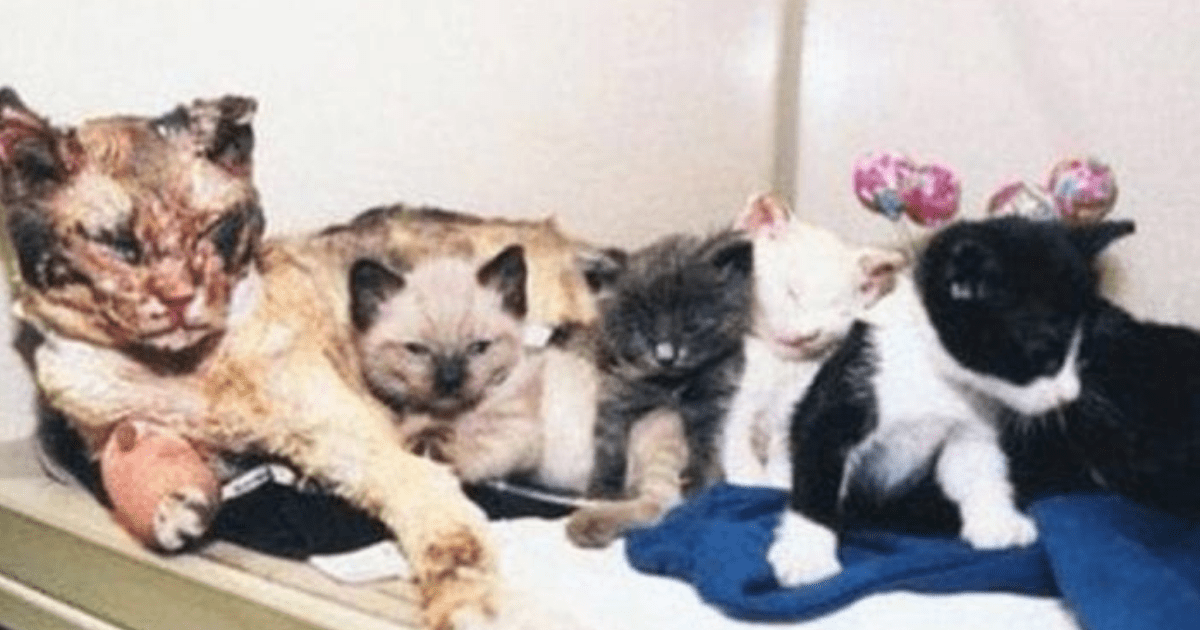
Scarlett and her babies
Scarlett, badly burned and bandaged, with her kittens at the North Shore Animal League. Credit: North Shore Animal League

FDNY firefighter David Giannelli was among the first responders at the engulfed garage and realized the small calico was rescuing her babies, running back into the flames to carry them out one by one.

When Scarlett had retrieved the last kitten, Giannelli watched her as she nuzzled all five of them to count them because she could no longer see — her eyes were sealed with burns and blisters.

Satisfied that her kittens were out of harm’s way, Scarlett collapsed.

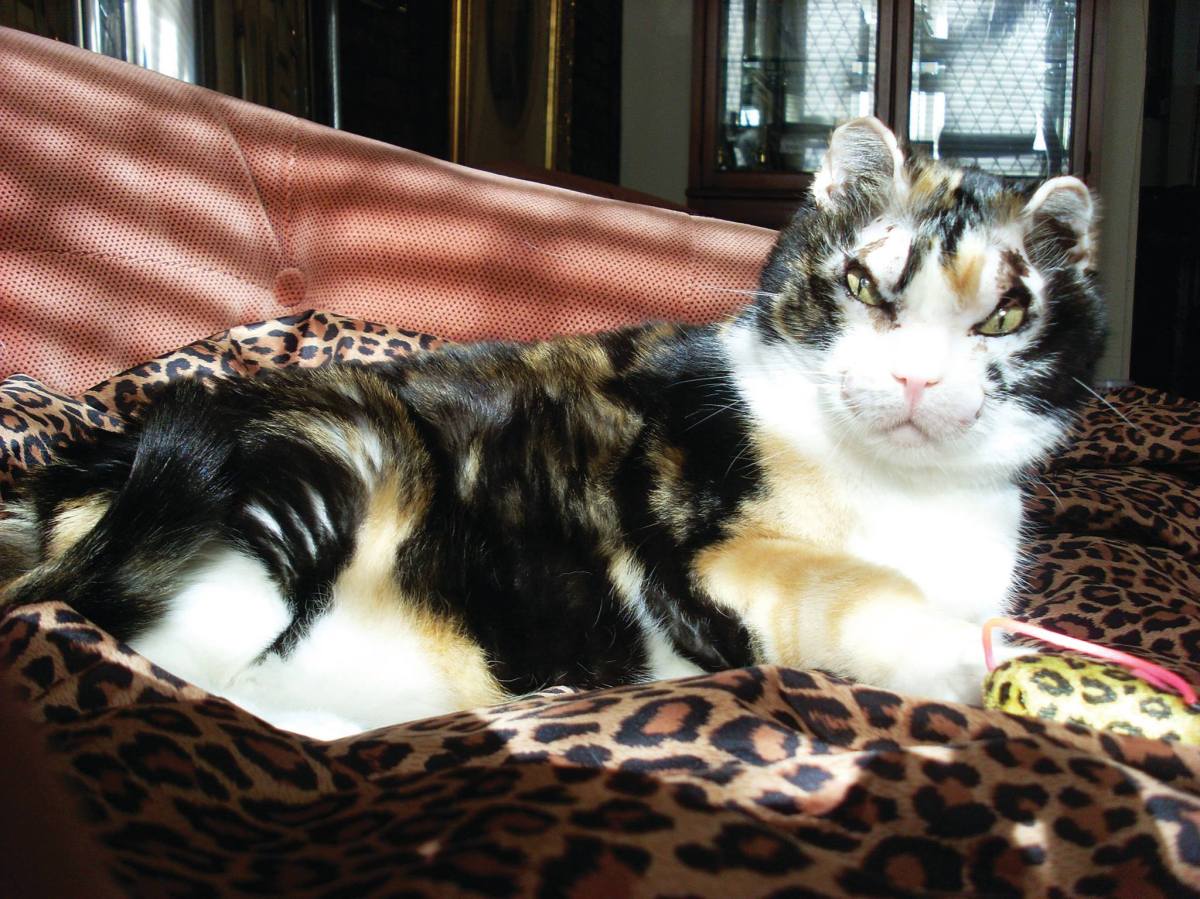
She paid a heavy toll for her actions. Her whiskers and the fur on her face was singed off, her ears were disfigured and she nearly died from smoke inhalation.

Giannelli brought the unconscious cat and her babies to New York’s North Shore Animal League, where veterinarians saved her life and put her on a path to recovery while also housing her with her beloved kittens.

Four of Scarlett’s kittens survived and were adopted out in pairs. Scarlett herself was adopted by New Yorker Karen Wellen, who was chosen out of thousands of applicants who wrote to the shelter. Wellen, who had suffered a medical emergency of her own, was specifically looking to adopt a special needs cat.

Scarlett’s kittens went to nearby families, who kept in touch with Wellen and scheduled reunions between her and the kittens she risked her life for.

“This cat is definitely the queen of the house,” Wellen told a TV news crew during a segment about Scarlett in the late 90s. “Whatever she wants is hers.”

Scarlett was a house cat for the rest of her life, living comfortably until she passed away on Oct. 11, 2008, at 13 years old.
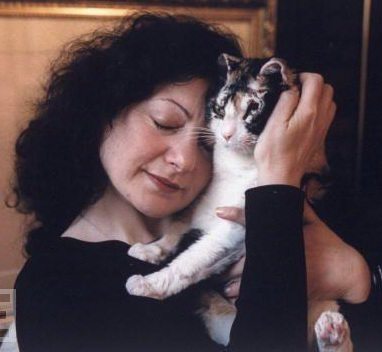
Wellen and Scarlett
Wellen with Scarlett.

Little Scarlett’s story is not only an example of extraordinary bravery, it’s testament to how much mother cats love their kittens and should give us pause before we separate mothers from their babies too early. The absolute minimum is eight weeks, but many shelters will only allow kittens to go home with adopters at 12 weeks old or older, which they say gives them enough time with their mothers and siblings to learn crucial social skills, like sharing, not playing too rough, and proper self-grooming.

In recent years, many shelters and rescues have enacted policies of requiring that kittens are adopted in pairs. Even when they’ve got loving homes with humans who dote on them and provide them with plenty of attention, having another kitten around to grow with and learn from has a huge positive effect on a young cat’s development.

Buddy’s my first cat, as regular readers of PITB know, and if I could do it all over again, I’d have adopted one of his litter mates too. And who knows? Maybe in the future we’ll learn that keeping feline families together is optimal. Scarlett is testament to the fact that mother cats will sacrifice their own lives to save their babies. If that’s not love, what is?
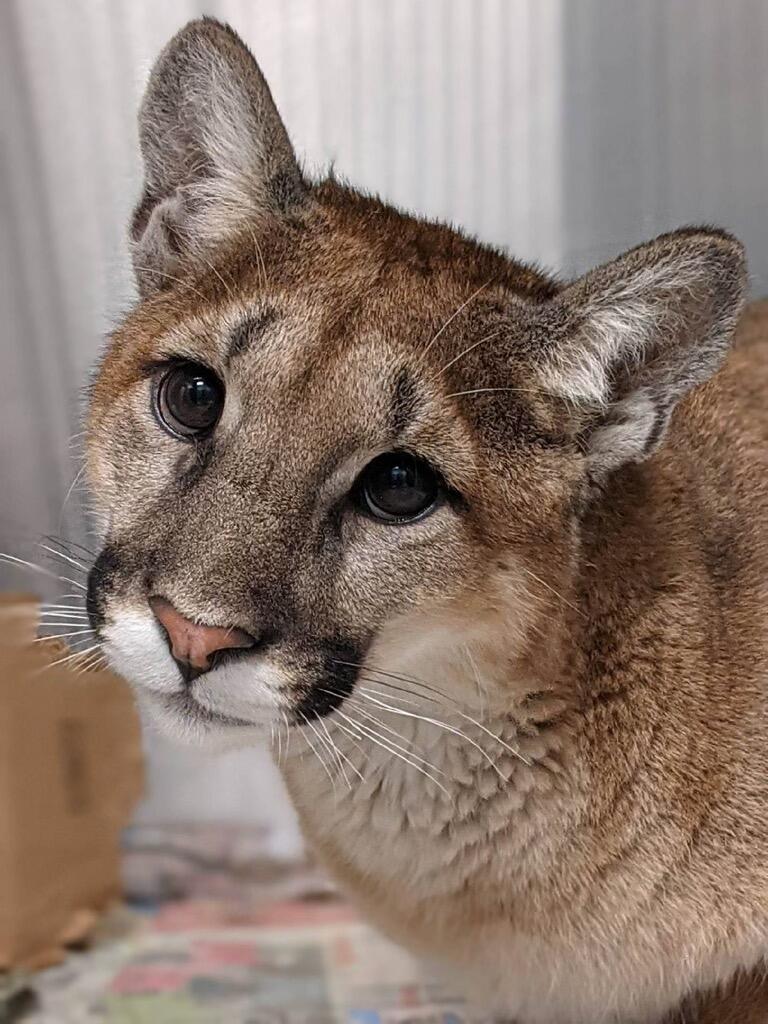
Things Are Looking Up For This Shy Orphaned Puma As He Settles Into A New Home

Nicholas was orphaned and severely injured as a cub as he and his mother tried to cross a busy highway. He’s settling into his new home, where he will have his own habitat, den and even his own pond.

Nicholas the mountain lion has a beautiful home waiting for him with his own pond, a rock den, a grassy area where he can run around and several other little hideaways where he can enjoy some privacy and naps.

But first the three-year-old puma will have to clear quarantine and become more comfortable with his new surroundings and new caretakers.

“He’s doing really well but he’s still very scared, he’s a very timid cat, so we’re just taking it really slow, day by day and the keepers are taking some quiet time with him,” said Bobbi Brink, the founder of San Diego County-based Lions, Tigers and Bears, Nicholas’ new home.

Nicholas the Mountain Lion
Nicholas stretches his legs in quarantine as he awaits the move to his own habitat. Credit: Lions, Tigers and Bears

The golden-coated feline with an expressive face has had a tough journey to the 93-acre sanctuary that will be his permanent home.

In 2020 when he was just a cub, Nicholas was following his mother across a busy highway when both were struck by a car. Nicholas was badly injured and his mom was killed in the collision, an unfortunately common fate for members of their species as their longtime habitats are increasingly fragmented by new developments and highways.

Because they require about two years with their mothers to learn how to survive on their own, it’s almost impossible to release orphaned pumas back into the wild. Unlike, say, the orphaned orangutans of Borneo and Sumatra, who can usually be taught to successfully fend for themselves because humans can show them how to physically manipulate their surroundings, there’s no way to teach orphaned pumas how to select prey, stalk, pounce and deliver kill bites.

A sanctuary in northern California provided a home for Nicholas for about three years, but recently went bankrupt, so the staff at Lions, Tigers and Bears secured him, prepared a habitat for him and took on the Herculean task of transporting him to San Diego County.

Nicholas’ case is even more complicated because he has lasting neurological damage from the car crash that killed his mother, including a pronounced head tilt that worsens when he’s scared.

Brink told PITB it’s normal for cats like mountain lions to be spooked by the commotion and uncertainty of a move, as well as leaving everything they know behind. Nicholas is simply obeying his wild instincts, which urge him to be guarded. But he’s got a loving team of caretakers who will work with him, as well as veterinary specialists who are well versed in caring for animals with neurological damage.

“Sometimes it can take (animals like Nicholas) a month, sometimes it can take three months to build up that trust,” Brink said. “His biggest need is he’s very afraid, so we’re gonna have to work around his fear so we don’t scare him more.”

Nicholas the Mountain Lion
Despite their impressive size, pumas are more closely related to domestic cats than the big cats of the panthera genus. Like their house cat cousins, pumas enjoy tearing up paper and playing with toys. Credit: Lions, Tigers and Bears

While Nicholas will have his own habitat and can keep to himself as much as he likes, recent observations of his secretive species have shown that pumas have “secret social lives,” and Nicholas will have the opportunity to meet and interact with other mountain lions if he’s comfortable with it.

Pumas — which are known by the scientific name puma concolor and are also called mountain lions, cougars, panthers, catamounts, screamers, painters, gato monte and many other names — are among the most adaptable felids in the world and range from the southernmost edge of South America to just over the Canadian border. They’re able to thrive in mountains, tropical regions, deserts, forests, human-adjacent rural areas and even in urban population centers, as the famed “Hollywood Mountain Lion” P-22 did for more than a decade in Los Angeles.

Their ability to adapt has served them well in a changing world, but they’re not immune to the pressures of human expansion.

In California their habitats have been carved up by the state’s busy and deadly highways, leaving the cats in genetically isolated pockets. Pumas who strike out in search of their own ranges are extremely vulnerable to vehicle traffic. P-22 famously crossed several of the world’s busiest highways to reach his eventual home in LA’s Griffith Park, but others like Nicholas and his mom aren’t so lucky.

Solutions like the $90 million Wallis Annenberg Wildlife Crossing, currently under construction in Los Angeles County, can connect fragmented ranges and give pumas, coyotes, foxes, deer, rabbits and other animals safe passage. But experts point out that they are just one component in a long-term solution that must include more careful zoning, fences to funnel animals toward safe crossings, and options like tunnels that run under highways, since not all animals will use overpasses.

As planners and wildlife experts figure out new ways to ensure the survival of wildlife in an increasingly crowded, human-dominated world, sanctuaries like Lions, Tigers and Bears play a crucial role by caring for the innocent animals who are injured, displaced and rescued from bad circumstances.

To learn more about Lions, Tigers and Bears or support their ongoing efforts to provide safe, stimulating and comfortable homes for wild animals, visit the non-profit’s site. To receive updates on Nicholas and the other animals at the sanctuary, follow Lions, Tigers and Bears on Instagram and Facebook. Readers who live in the California area can book guided educational tours or visit during one of the sanctuary’s special events. Thanks to Bobbi Brink and Olivia Stafford for allowing PITB to tell Nicholas’ story. All images and videos of Nicholas courtesy of Lions, Tigers and Bears.

Shelter Has Received ‘Zero Applications’ For Kaya The Kitten, Who Needs A Home

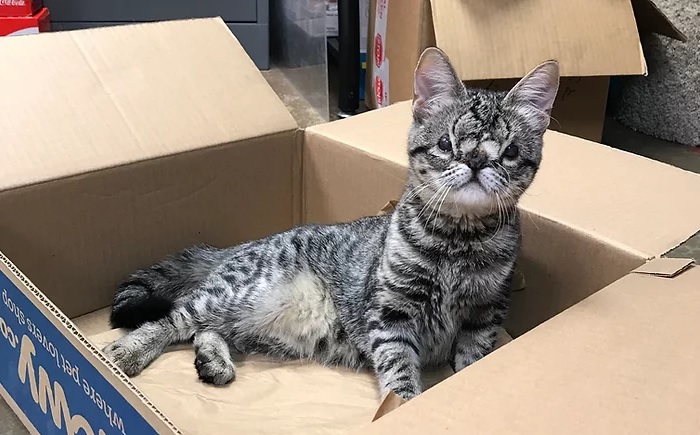
A shelter in California has turned to the internet for help after adopters passed over a kitten who looks a little different.

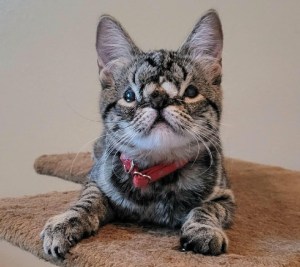
Kaya is a 5-month-old kitten with a congenital facial abnormality, which is almost certainly the reason why adopters have passed her over.

Now To Rescue, the shelter in California that’s been taking care of Kaya, has turned to the internet for help.

She has been through a lot in her short life but that hasn’t stopped her from being super affectionate and playful,” the group’s Facebook page says. “She gets along great with her foster families other cats and dogs. She is so deserving of a wonderful forever home. Kaya has received zero applications, we are hoping that her story will continue to be shared so she can find her forever home.”

Kaya recently had surgery to “relieve her discomfort in her eyes,” but the shelter’s staff say it’s a “one time procedure” and she won’t require any more surgery or special care beyond routine veterinary needs. She’s already spayed, vaccinated, dewormed and chipped, and now she’s living with a foster family, where she gets along with the resident cats and dogs.

To Rescue is located in Montclair, about 35 miles east of Los Angeles. If any of our California readers are interested in Kaya, or know someone looking to adopt a kitten, you can download an adoption application on To Rescue’s site.

Not that this should be the reason anyone adopts Kaya, but given how popular unusual cats are on Instagram and TikTok, an adopter with a solid eye for photos and videos could probably turn her into a social media star. I wouldn’t be surprised if little Kaya has her own considerable fan club before long.

Kaya the kitten. Credit: To Rescue (Montclair, California)

NYC Mayoral Candidate Has 16 Cats

Both major party mayoral candidates in NYC are longtime animal welfare advocates.

We normally avoid politics on this blog except for the occasional light-hearted satire imagining Buddy as a comically inept president of the Americats, but we’ll make an exception for the New York City mayoral race, which features two animal-loving major party candidates.

Eric Adams, a Democrat, is a former NYPD captain, Brooklyn borough president and vegan who has supported TNR programs in Brooklyn, pushed for more animal-friendly housing in the city and hosted adoption events in his home borough, according to the Humane Society’s Legislative Fund.

Curtis Sliwa is best known nationally as the founder of the unarmed crime prevention group the Guardian Angels, and in New York as a host on the city’s biggest talk radio station. (He’s been on hiatus since launching his mayoral campaign to comply with election law.)

He survived an attempted mafia hit in 1992, jumping out of a cab after he was shot several times by Gotti family enforcers, and he’s a dedicated cat lover, sharing his home with 16 rescues. Most of Sliwa’s cats have disabilities or were pulled from local shelter kill lists. Not all of them are permanent, and the Sliwas consider themselves long-term fosters until they can find the right homes for special needs cats. Last year they were able to place 10 kitties in good homes.

Still, the felines come first in their 87th Street apartment.

“Guess what? It’s the cats who rule the roost,” Sliwa told a New York Post cameraman in June. “We take whatever room is left after the cats carve out their territory.”

Cat furniture dominates the studio apartment Sliwa shares with his wife, Nancy, who told the Post she’s considering adopting more furballs, including a special-needs rescue who is blind. (They had 15 cats at the time and have adopted one more since then.)

Turning to her husband, she quipped: “We might have to lose your half of the closet.”

The couple share litter box duties and clean the multiple boxes in their home at least three times a day, they told the Post.

NYC mayoral candidate Curtis Sliwa plays with his cats.

At the end of Tuesday’s televised mayoral debate, when asked which qualities they admire in their opponents, both Sliwa and Adams praised each other for their work with animals.

The city and its surrounding environs lean heavily blue. Sixty-eight percent of registered voters in the five boroughs are registered Democrats, and Adams holds a commanding 36-point lead according to the latest poll.

Like all Republicans who set their sights on the mayor’s job, Sliwa knew it was going to be an uphill battle even though New Yorkers have tired of the current mayor, Democrat Bill DeBlasio. Sliwa hopes one of his central campaign promises — to enact a no-kill policy across the city’s shelter system — will resonate with voters across the aisle.

Republicans who have won in the past have been centrist, like former Mayor Rudy Giuliani, or nominally Republican, like businessman turned politician Michael Bloomberg. The latter enjoyed widespread name recognition before he turned to politics and supplemented his campaign hauls with his own considerable resources.

Still, the Guardian Angels founder sees Gracie Mansion, the mayor’s Upper East Side home, as a potentially fantastic cat house.

“I’ve been in Gracie Mansion before,” Sliwa told New York magazine. “There is easily room in there for 60 cats.”

Plankton The Cat Has A Home After 2,432 Days In The Shelter

At long last, a deserving cat finally has a home and humans to love him.

We’d like to offer a special congratulations to the SPCA, two kind-hearted adopters, and especially Plankton the cat for finding a forever home after a long, long wait.

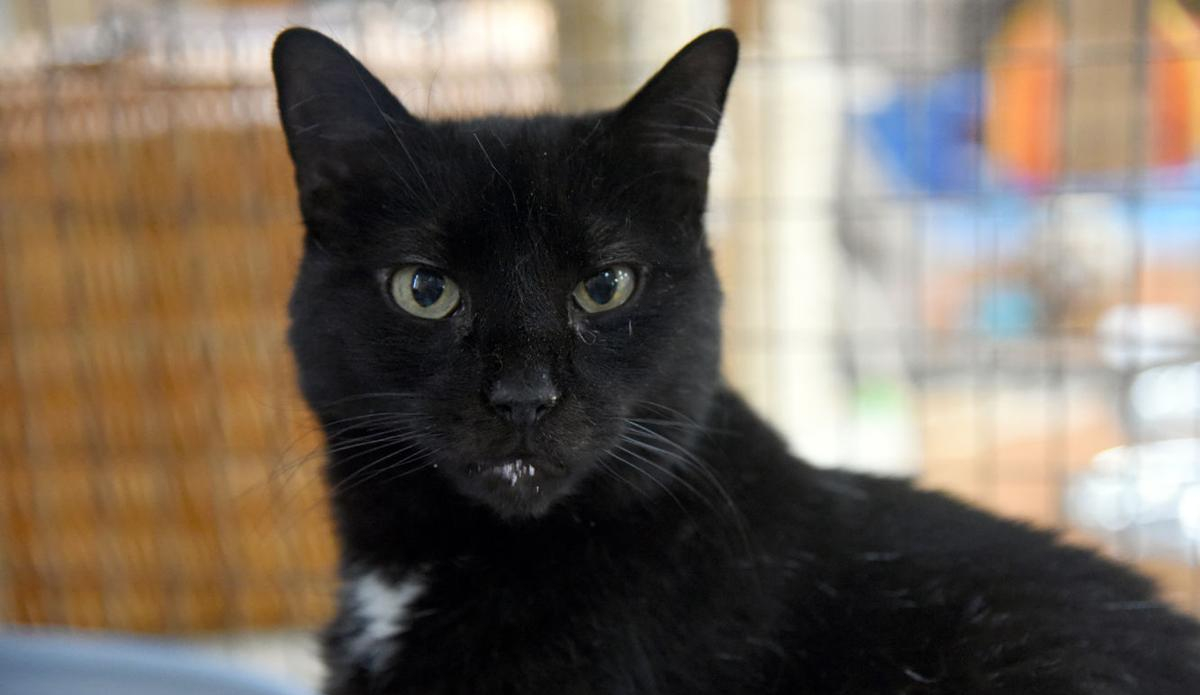
Plankton had a rough start to life: He was one of about 100 kittens and cats rescued from a hoarding situation in a two-bedroom apartment in late 2013 and suffered renal failure. For years, potential pet parents passed up on the handsome black-coated little dude because of his condition, and the thrice-weekly infusion of liquids he needs to stay healthy, even though staff at the shelter say he takes the infusions like a champ.

Ashlee Haughtaling read about Plankton in a Feb. 15 article by the Kingston Daily Freeman, a New York newspaper covering the mostly-rural Ulster County about 75 miles north of New York City.

Haughtaling had a dog who suffered from kidney problems as well, so she knew what caring for Plankton would entail. She reached out to the county SPCA immediately.

“I thought it was so sad that no one was adopting him because he had a medical condition,” she said, per the SPCA. “The fact that he had been there for so long, it really hit home for me. Sick cats need homes, too.”

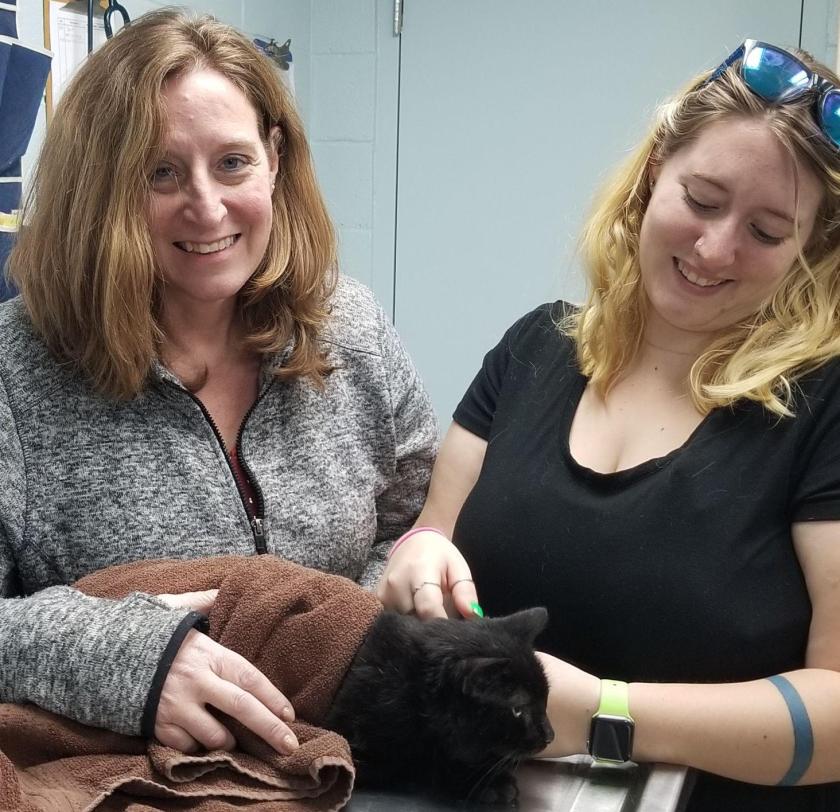
Ashleey and her mother Ann Houghtaling took Plankton home six days later. For the first time, the 6 1/2-year-old cat has a place to call home. He gets along well with other cats, the shelter said, and he’s got a pair of new feline friends, Nutmeg and Boots, in his new home as well.

planktonspca
Ann and Ashlee Houghtaling comfort Plankton, the newest member of their family, before bringing him home from a shelter where he’d been staying for 6 1/2 years. Credit: Ulster County SPCA
Plankton the Cat
Plankton suffers from kidney problems and must have fluid injections three times a week. Credit: SPCA