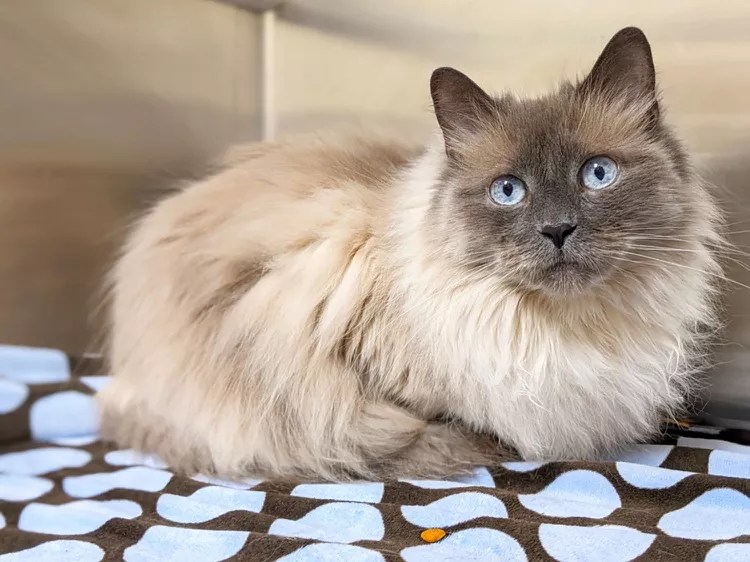
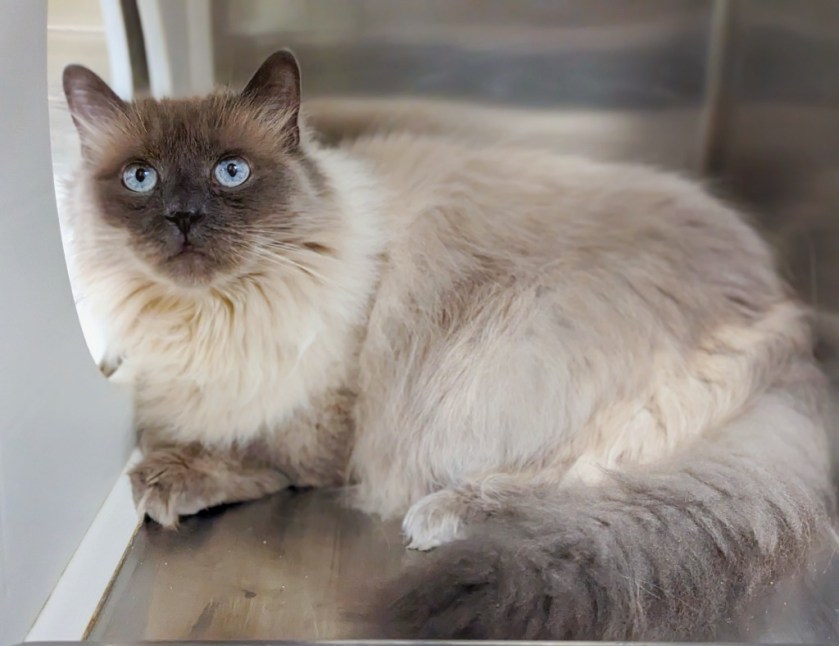
A veterinarian realized kitty was healthy and put her in the care of a local no-kill shelter, where she remains while hoping for a forever home.
Lulu is 13 years old and began eliminating outside her litter box last year after a long life of doing her business properly.
Instead of realizing that a change in behavior was almost certainly precipitated by health issues — and attempting to get those issues sorted out — Lulu’s “owner” brought her to a veterinarian to be euthanized.
The vet realized Lulu was healthy and her issues were easily remedied, wisely persuaded the woman to sign over ownership of Lulu and brought the Himalayan to the local SPCA. She’s been there since December.
Lulu had urinary crystals which were remedied after a change in diet, and she hasn’t had an “accident” in months.
Staff at the SPCA want people to know that they don’t have to surrender a cat for litter box issues or other behavioral changes even if they think they can’t afford veterinary treatment.
“If your pet is not behaving or their behavior has changed, the first step is to get them to a vet to see if something is medically wrong. Even if it is not a medical condition, there are numerous resources — many available at Dutchess County SPCA — to help resolve the issue and avoid both euthanasia and surrender to a shelter,” Lyne Meloccaro of the Dutchess County SPCA told People. “Medical assistance, expert guidance, and management plans, and training referrals are all available for you.”
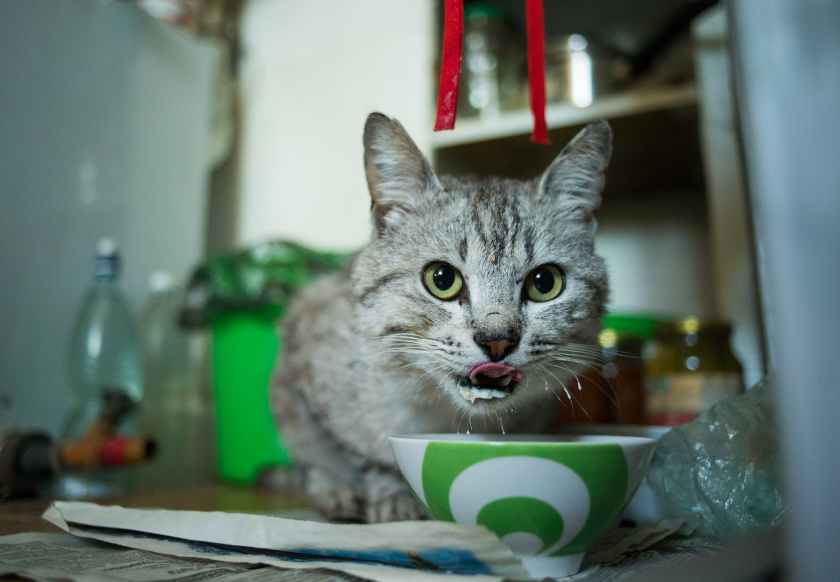
Lulu has a regal bearing, an epic coat and beautiful coloring. Credit: Dutchess County SPCA
Dutchess County, which is about 75 miles north of New York City, happens to be the former college stomping grounds of Big Buddy. I graduated from Marist College and lived in the area for some years after. The SPCA there does good work, and its law enforcement division has handled some high profile animal-related crimes over the years.
It’s sad that Lulu lost her home after 13 years, but maybe it’s for the best if she ends up with a devoted servant who will really love her. Her caretakers at the SPCA say she’s stubborn, demands affection on her own terms and wants an “emotional support human.”
Lulu is still available for adoption. The SPCA says she’ll do best as an only cat in a quiet household, and we have no doubt she’ll bring joy to the lucky person who brings her home.
More people are abandoning their pets, saying they can no longer afford to care for and feed them amid historic inflation.
Unless you’ve been living under a rock you’ve experienced sticker shock in the last six or seven months, especially in grocery stores.
Staples like milk and bread cost two or three times what they did pre-inflation, some retailers are taking the opportunity to arbitrarily hike prices even higher, and a perfect storm of economic uncertainty and a rampaging bird flu caused the price of eggs and poultry to skyrocket.
By late 2022, almost 50 million chickens and turkeys had been killed by avian flu or culled because of it, and almost 10 million more were lost to the virus in the first 12 weeks of 2023, according to the CDC. That breaks the record for most birds lost to avian flu, which was set in 2015 when 51 million died or were culled.
Pet food prices are up too, mirroring grocery inflation, as are veterinary costs and medicine for cats and dogs.
Inflation has squeezed so many people that shelters in the US and UK are reporting unprecedented surrenders from people who believe they can’t afford their pets anymore. In some areas it’s so bad that local shelters have waiting lists — or surrender queues, as they’re called in the UK — for people parting with their pets.
“We get between 10 and 12 surrenders per week, so we’re looking at anywhere between 30 and 50 a month,” Ashley Burling of Montana-based Help For Homeless Pets said. “When you’re talking about inflation, you’re talking about vet bills, pet food, pet supplies and pet rent. I think inflation, I think people going back to work after the pandemic, there’s other reasons that they’re surrendered.”
More than 70 percent of adoptable pets at the Nevada SPCA previous had homes, executive director Lori Heeren told the local NBC affiliate. Her organization is on pace for 2,500 surrenders in 2023.
News outlets tell the same story in local markets across the country, and the Humane Society is seeing the same trend nationally, CEO Kitty Block told CNN. While pet-related costs increased sharply in 2022 — with food and supplies increasing by as much as 30 percent, according to NielsenIQ — statistics show they haven’t relented yet this year. In fact, prices are still edging up, albeit at a slower rate than the previous year.
To cope, more people are leaning on pet food pantries. In Iowa, for example, the Animal Rescue League gave away more than 40,000 pounds of pet food in 2020 and 2021, and a whopping 146,000 pounds in 2022.
Shelter operators say they want people to know there are options so they don’t feel they have to part with cats and dogs who have become family.
“This is bigger than dogs or cats in shelters,” Block said. “It’s about the people who love them.”
PITB readers are the kind of people who dote on their cats and most of us couldn’t imagine abandoning them even in hard times, but chances are we all know someone who’s thought about parting with their fluffy overlords.
They don’t have to give their beloved cats and dogs up. There are resources to help them meet their animal’s needs to prevent them from surrendering:
– Many local chapters of the Humane Society and SPCA, as well as private shelters, offer free spay/neuter clinics and free or low-cost veterinary exams. A guide from the Humane Society notes PetFinder allows users to search for pet-specific food pantries and low cost veterinary services
– There are programs that provide pet food to people who can no longer afford it
– Some shelters will place pets in temporary foster homes to help relieve the burden until their owners can take them back
– Buying food and medicine online is significantly cheaper than in grocery stores. Some offer deep discounts on meds to existing customers and prices from online retailers have remained relatively stable, especially when buying in quantity
– Social services programs may include provisions for pets
It’s in the best interests of shelters and animal welfare programs for cats and dogs to stay with their people, and not only because they don’t have the resources to house hundreds of abandoned pets on top of their usual intake.
Keeping people and pets together benefits both. Cats and dogs obviously don’t understand that their people are tearfully, reluctantly giving them up. All they know is they’ve been abandoned by the people who made them feel safe and loved. For the mental health and overall well-being of humans and their furry companions, they should stay together.
For some people, like Patricia Kelvin of Poland, Ohio, that means scrounging up whatever she can and cutting back on her own expenses before she will allow her cat to go without.
“There’s just no question in my mind. If my diet was going to be more beans than something else, I wouldn’t hesitate,” Kelvin told CNN. “If I had to sell my sterling silver, which I’ve had for 60 years, that would go before my little ‘Whiskers’ would be deprived.”
More than 6,000 people, a capacity crowd, said goodbye to the famed mountain lion P-22 at The Greek Theatre in LA.
When police went to a Yorktown, NY, home for a welfare check this week, the last thing they expected was to find an army of cats.
The responding officers breached the home when no one answered, finding an elderly couple deceased inside, along with some 150 hungry, neglected cats. Police don’t believe there was foul play in the death of the couple, but the number of cats and the condition of the home have “hindered” their investigation.
The Westchester County SPCA is taking on the monumental task of collecting the cats, giving each of them veterinary care and finding homes for them. Staff there are calling it the largest single rescue in their history, and they’d already filled their own facilities and local shelters to capacity by the time they’d rescued 100 of the famished felines, leaving them scrambling for room to place the others. Some have upper respiratory, eye and skin infections, the SPCA said, while most of the cats were malnourished and dehydrated.
Credit: SPCA of Westchester County
Credit: SPCA of Westchester
Despite living in conditions police described as “filth and squalor,” the cats are well-socialized and friendly, rescuers say. They believe the husband and wife may have been Abyssinian breeders at some point.
“It’s very unusual in a case like this, especially with that number of cats, for them to be as social and sweet as they are, usually they are scared when they come from a situation like this because they haven’t had a lot of human interaction,” the SPCA of Westchester’s Lisa Bonnano told the New York Post.
Yorktown is about 28 miles north of Casa Buddy, and we can vouch for the excellent work done by the Westchester County SPCA, whose veterinarians gave kitten Buddy his first shots and gave him the snip.
Veterinary costs alone are expected to exceed $40,000, so if you’d like to help, you can make a donation here.
Alleged Dallas Zoo thief nabbed
When 24-year-old Davion Irvin stopped an employee at the Dallas World Aquarium to ask about exotic animals there, the staffer recognized him as the same man pictured in a surveillance still from the Dallas Zoo.
Police released the image to the public after three separate enclosures at the zoo were breached, leading to the brief disappearance of a spotted leopard on Jan. 13 and the theft of two emperor tamarin monkeys about two weeks later. The langur monkey exhibit was also breached, but the animals were not removed.
After the aquarium’s staff tipped them off, cops caught up to Irvin a few miles away and have since linked him to all three break-ins. They charged him with two counts of burglary — for the monkeys and the leopard — and six counts of animal cruelty. They’re also looking into whether Irvin may have been involved with the “very suspicious” death of an endangered lappet-faced vulture on Jan. 21.
Cops, who initially suspected the thief was looking for exotic animals to breed or sell, have said Irvin hasn’t told them why he wanted the primates and the medium size cats. Their investigation is ongoing.
Thousands say goodbye to P-22
More than six thousand people crowded into The Greek Theatre in Los Angeles on Saturday to say goodbye to P-22, the Hollywood Lion, a puma who made the hills above the city his home for more than a decade.
One of several new murals of beloved mountain lion P-22, who was euthanized in December after he was hit by a car and suffering from an infection.
People spoke about seeing his curious face pop up on their doorball cameras, spotting him disappearing into the trees in Griffith Park, and how his presence piqued the curiosity of many people who took the time to learn more about mountain lions.
But the unofficial theme of the event was how P-22 showed people humans and wildlife can co-exist, and how our species can do a lot more to make sure the animals we share the Earth with will survive in the future. One woman told LAist that before she learned about P-22, she “used to think they were scary” and aggressive like the big cats they’re often confused with.
Others said he inspired them to get directly involved with conservation efforts.
“We are wildlife. We are creatures of nature, just as all the animals and plants are,” archaeologist Desireé Martinez, a member of the indigenous Gabrielino-Tongva tribe, told KTLA. “What can we do to make sure that the creatures that we are sharing this nature with have the ability to survive and live on — just like us?”
P-22’s unforgettable visage, already familiar to Los Angelinos, is now ubiquitous in his former range, with several murals adorning the sides of buildings and other displays bearing his image.
“He inspired so much happiness. I mean, look at all the people that are here,” Babetta Gonzalez told LAist. “We have to remember that we are in their neighborhood and we need to respect their environment. We have integrated, but we could do a lot better.”
Local authorities have backed off the plan, but the story raises important questions about how local governments deal with stray cat populations.
The recent saga of a New Jersey town’s ill-advised plan to “destroy” feral cats highlights almost everything wrong with local government.
First, a notice went out from the northern New Jersey town of Matawan, informing residents that feral cats had become a “nuisance” and their presence posed a danger to “the welfare and safety of both the community and the cats.” The town, in cooperation with the police and SPCA, the notice said, would begin trapping stray, feral and free-roaming felines in November, and any cat not claimed after seven days would be “destroyed.”
The backlash was loud and immediate, and it took the Monmouth County SPCA by surprise.
After receiving angry complaints, the local SPCA posted a notice on Facebook blasting the “outlandish and outrageous campaign.” The SPCA’s leaders said they hadn’t been consulted and hadn’t approved of the policy, blaming the Matawan Animal Welfare Committee, a three-person group comprised of the town’s business administrator, Scott Carew, town councilwoman Melanie Wang and an animal control officer.
“We are completely outraged and disheartened that our organization has been attached to this archaic campaign to euthanize feral cats, when there are so many other successful, humane alternatives,” the Monmouth County SPCA wrote in its statement.
Carew backpedaled in the fallout, claiming the notice was a well-intentioned way of informing people who live in Matawan to keep their cats inside and stop feeding strays and ferals.
“By no means was the goal of the trapping efforts to destroy trapped cats,” Carew told NJ.com. “That said, since there was the chance that cats would be trapped and brought to the shelter, we wanted to alert cat owners whose cats are allowed to roam outside.”
But Carew also said he and the other were “obligated to address the complaint,” and said the town would have to enact “a resumption of trapping efforts” if it received more complaints about the cats. According to a statement by the Matawan police department, in a meeting between local leaders and people concerned about cats in one neighborhood, it was a single complaint about a possibly aggressive feral cat that prompted the plan.
That’s it. That’s all it took, in the eyes of local government officials, to justify a policy of trapping and killing sentient, human-habituated innocent animals, a group that includes free-roaming pets, former pets, strays and true ferals. A single, unverified complaint of a potentially “aggressive” cat, with no further detail about what the word aggressive means in that context, no information about what the cat supposedly did, or even confirmation that the cat was a feral and not a stray or a wandering pet.
When the dust cleared from all the finger-pointing, Carew said his committee should have informed the SPCA of its plans, and police brushed off responsibility by saying they “assumed” the notice was drafted with the cooperation and intent of the SPCA and other local animal welfare groups.
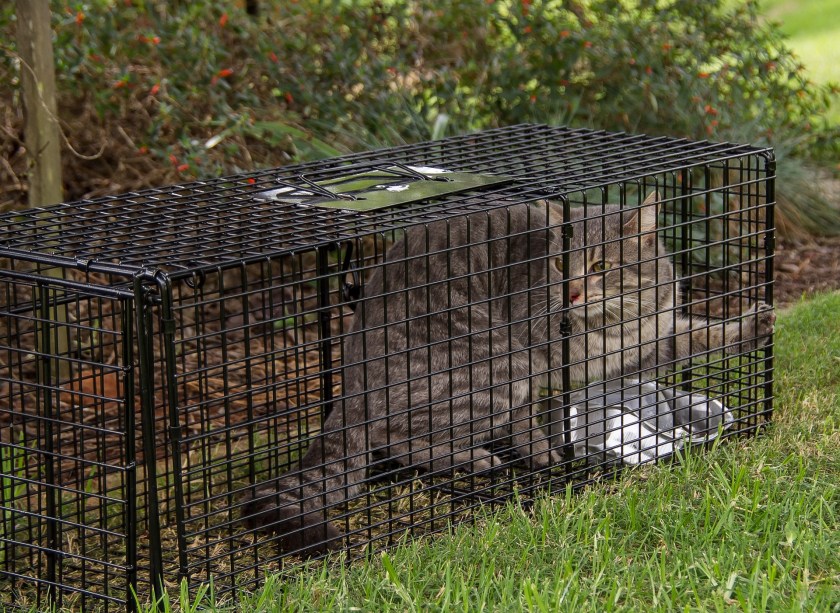
A cat caught during a trap, neuter, return program, which reduces feral/stray populations in the long term without the cruelty of culling. Credit: Pixabay
Local government leadership and incompetence has become a big problem. With the death of newspapers, particularly regional dailies that employed trained journalists, there are entire swaths of the country no longer served by local government watchdogs who have the time, skills and resources to monitor local officials and inform the public.
We’re fortunate that NJ Advanced Media, an online portal for content from more than a dozen New Jersey local newspapers, has found a way to exist as a viable business serving millions of readers throughout its home state. Without it, it’s doubtful the story would have surfaced anywhere.
Lots of people think local government is small potatoes, but the truth is that local officials are responsible for enormous budgets and wield considerable power. The decisions they make very likely have more impact on our lives than decisions made in the halls of congress, even if it’s the latter that gets people’s blood boiling.
In this case we have a meeting conducted in secret, without public notice, that would have determined the fate of an unknown number of animals. We have anonymous, nebulous complaints and allegations about “nuisances.” What constitutes a nuisance? How many cats are involved? Are the cats part of managed colonies and cared for by people who trap and neuter them? None of those questions were answered.
Additionally, instead of taking intermediary steps or using widely available resources — the “other successful, humane alternatives” the SPCA referenced, from the willing cooperation of local shelters to the free toolkit created by the authors of the incredible D.C. Cat Count — the local officials came up with their own ill-advised plan to trap and kill cats.
Outrage by animal lovers and the SPCA were enough to make sure a plan like this was quickly discarded this time around, but you have to wonder how many other places this kind of thing might be happening without so much as a blurb about it.
The UK demonstrated it doesn’t tolerate animal abuse with severe punishments for a star soccer player who abused his cat.
A North Carolina woman suffered a roller coaster of emotions after she lost her cat, then found out the local SPCA had taken her cat in, only for the shelter’s staff to tell her a family had already adopted the cute tuxedo.
Chevelle Griffin of Asheville says her cat, Sally, went missing on Oct. 18. She didn’t know what happened until a few days later when she saw a Facebook post indicating a neighbor had taken Sally to the local SPCA. Sally was wearing a flea collar, but not an ID collar and was not microchipped.
Griffin blamed herself.
“That was my fault,” Griffin said. “That was my mistake. I should have had her chipped, but I didn’t and she’s mine and I want her back.”
She wasn’t happy when staff at the shelter “very bluntly” told her Sally had already been adopted out.
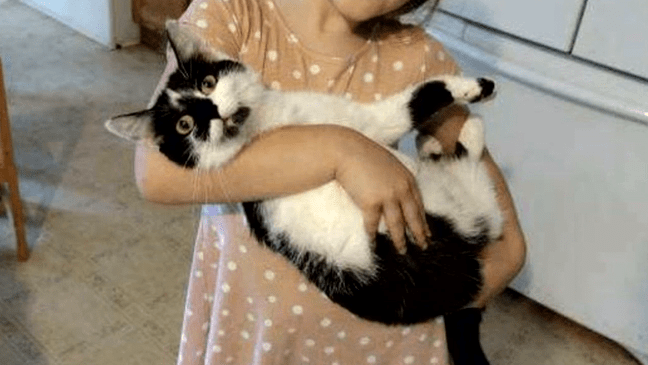
Sally was taken to the SPCA by a neighbor.
Lisa Johns, chief operating officer for the local SPCA, told local ABC affiliate WLOS that the shelter takes in as many as 35 cats a day and holds new animals for 72 hours. After that, if they have no health issues they’re put up for adoption.
Fortunately, the story has a happy ending. After Griffin lobbied the SPCA and WLOS began looking into the incident, SPCA staff contacted the family that had adopted Sally and asked if they would be willing to return her. They agreed, and Griffin said she’s relieved and has learned from the experience.
“I’ve kicked myself so much,” Griffin said. “If I’ve learned anything from this, get your pets chipped.”
It’s a tough balance for shelter operators dealing with overcrowding and the need to constantly free up spaces for new strays, but should the hold period be extended beyond 72 hours?
Zouma apologizes again
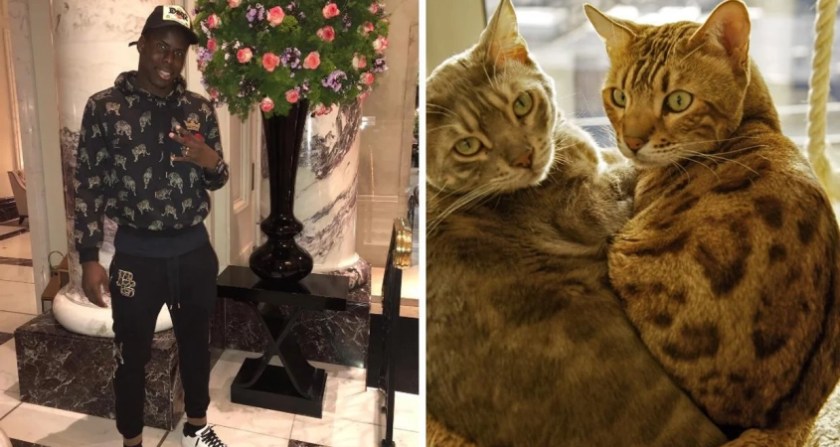
Zouma, left, and his Bengal cats, right. Both cats were confiscated and remain in the care of the RSPCA. As part of the sentencing agreement for his animal abuse plea, Zouma will not be permitted to own a pet for at least five years.
Zouma, a French national, faced consequences that would be unheard of in the US as a result of the abuse: He lost all his sponsorship contracts, was fined the maximum amount by his club team (£250,000, equal to about $338,00 at the time, a full one fifth of his salary), paid court fines of £9,000, is prohibited from owning pets for at least five years, and was ordered to complete 140 hours of community service. West Ham donated Zouma’s fined salary to animal charities in the UK.
He was persona non grata in the UK football world, subject to hearty boos and chants from crowds any time he touched the ball, and his cats were taken from him and placed in the care of the RSPCA. In addition, he was not selected for the French national team, meaning he won’t compete in the World Cup.
Following his sentencing this week in his first public comments about the controversy — aside from a terse apology in the form of a written statement issued months ago — Zouma said he acknowledges the video was “very tough for people to watch” and admitted he’d “done something very bad.”
Zouma’s brother Yoan was also convicted of animal abuse, receiving court fines and 140 hours of community service for participating in the abuse and filming it in front of his brother’s young son. Our readers might recall the brothers were turned in by a woman who was courted by the younger Zouma and was disgusted when she saw the video.
The woman had initially agreed to meet Yoan Zouma for an informal date, but told him to keep his distance after she saw the abuse clip, then reported the brothers to authorities.
“I don’t think hitting a cat like that is OK – don’t bother coming today,” she wrote in a message to Yoan Zouma at the time. “I do not want to associate with people who find that funny, in front of a child as well.”
Although what Zouma did was terrible, it feels like justice was served and the UK did right by the cats by taking the abuse seriously, both criminally and professionally. Instead of “canceling” Zouma, as would have likely been the response here in the US, the authorities in government and the Premier League made sure the footballer understood the gravity of his actions and took responsibility for them. Hopefully it served as an example to others who would think of harming their pets.