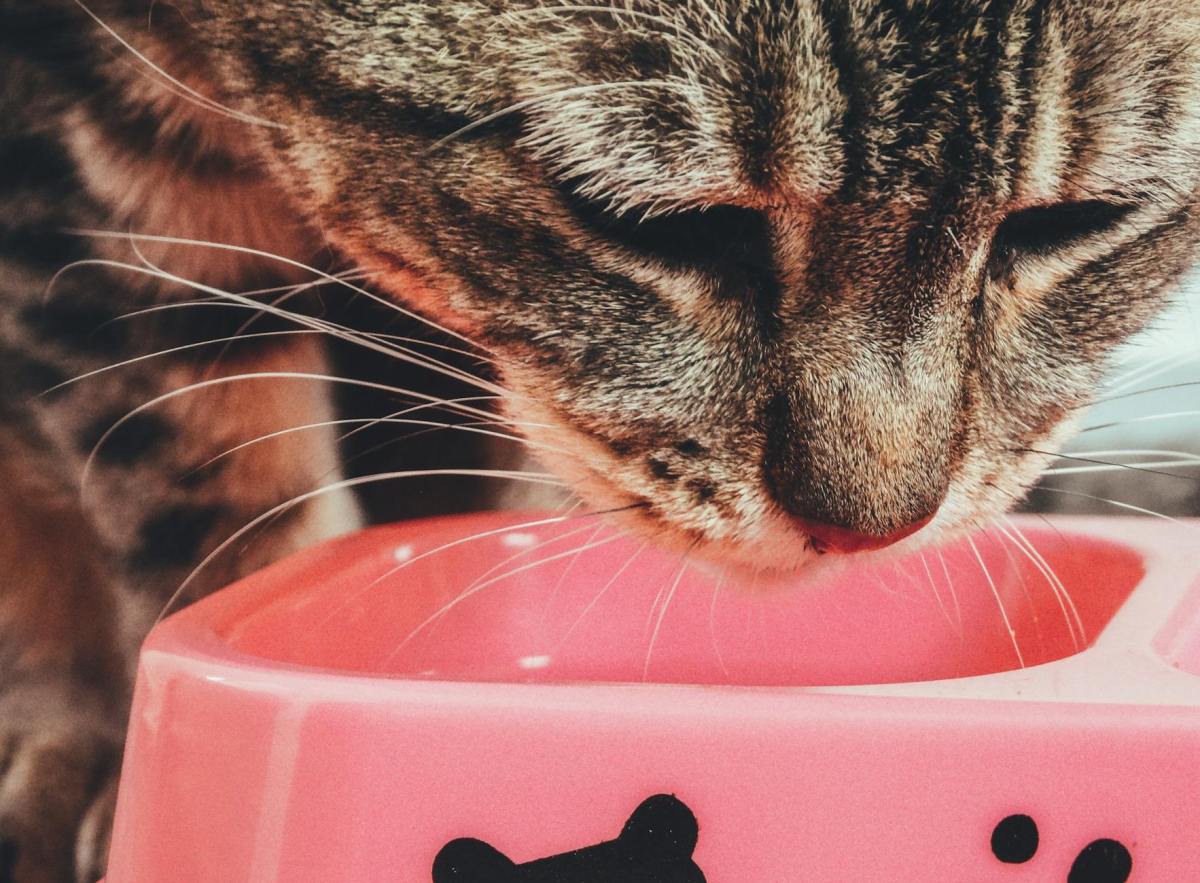
It’ll Take More Than Sketchy Surveys To Prove Vegan Cat Food Is OK

“People aren’t ready for us to turn carnivore cats vegan but I’m going to do it,” the CEO of a vegan cat food brand has vowed.

In September of last year, a research paper about feline health was published to the open-access journal PLOS-One, going mostly unnoticed.

The paper’s authors claim their research proves cats fed a “nutritionally complete” vegan diet are not only just as healthy as their meat-eating counterparts, they’re actually less likely to need veterinary visits, less dependent on medication, and more likely to be given a clean bill of health by their veterinarians.

When a company called Wild Earth announced the launch of a new line of vegan cat food this month, the company pointed directly to that paper as proof that “cats fed nutritionally sound vegan diets are healthier overall than those fed meat-based diets,” as the paper’s lead author put it.

Wild Earth CEO Ryan Bethencourt, who does not have a professional background in veterinary medicine or feline nutrition, summed up his goal in a tweet: “People aren’t ready for us to turn carnivore cats vegan but I’m going to do it.”

bethencourt
Bethencourt calls the effort to put pets on vegan diets “vegan biohacking.” Credit: Wild Earth

He painted the new offering as a bold counter to skeptics who say vegan cat food is unhealthy.

“We expect aggressive resistance from the meat industry on the launch of this industry-pioneering vegan cat food, but we know there are A LOT of cat parents looking for healthier plant-based and more sustainable options and we want to be the leader in providing them with that choice,” Bethencourt wrote in a statement.

What he didn’t mention was the fact that the loudest voices opposing “vegan cat food” are animal welfare organizations like the SPCA and Humane Society, as well as veterinarians and nutritionists, the same people who see the consequences of cats who are deprived of meat. Over the years they have reiterated that felines are obligate carnivores who have evolved to get their nutrients from meat, with digestive systems that cannot process most plants, meaning they can’t break them down and derive nutrients from them. That’s why we don’t see servals or leopards foraging for fruit in the wild.

In addition, the announcement did not mention that the 2023 research was funded by ProVeg International, a non-profit dedicated to reducing global meat consumption, weaning people and animals off of meat and onto plant-based food.

That didn’t stop other credulous reports, like one from GreenQueen claiming Wild Earth’s vegan cat food is “built on research proving that felines can be healthy on a vegan diet.”

And that’s exactly the point — the “study” was conceived and published so that advocates of vegan cat food can point to it and say “science says” cats can survive on plants.

Bad data makes for bad science

Extraordinary claims require extraordinary evidence, but the 2023 study did not examine veterinary records or log the results of vet visits over years. Instead, the data was self-reported by participants.

A total of 1,418 people responded to the survey, and only 127 of them said they feed their cats exclusively vegan diets. The claims that their cats get sick less often and do better in veterinary check-ups are based on their subjective assessments and recollections. The paper’s authors don’t know which vegan brands the 127 respondents were giving to their cats, nor do they have information on whether the food was wet or dry, how often the cats were fed, and how much they ate.

wildearthfood
A cat eating Wild Earth’s Unicorn Pate, which is made entirely from plant products. Credit: Wild Earth

One of the metrics cited by the authors is “guardian opinion of more severe illness,” which means arbitrary feedback from people who aren’t experts in veterinary medicine or nutrition.

If including respondent opinions as “data” doesn’t bother you, consider how many people buy products like Airborne, concluding that it works because they didn’t get sick once on a cross-country flight. Airborne, you may recall, was “invented” by a teacher who claimed she figured out how to cure the common cold, something no physician has done in centuries of trying.

Like vegan cat food proponents, Airborne had its own “study” that claimed its efficacy. The company eventually paid out more than $23 million in a class action settlement for its false claims. That’s not to say vegan cat food makers are precisely like Airborne, but pointing to poorly conducted research is a tactic that works because most people won’t go to the effort of finding the study and reading it.

Current global meat consumption is unsustainable, but…

I’m a vegetarian and I’ve seen enough evidence to convince me that the current rate of meat consumption, especially in the first world, is untenable as the global population rises toward its expected 11 billion-plus peak. Those forecasts and the horrors of factory farming are motivation enough to hope human civilization consumes less meat in the future.

But I’m also a guy who loves his cat, and I think if you’re going tell me that my little pal, designed by nature to be an obligate carnivore with a digestive system and body plan that hasn’t significantly changed for ages, can stop eating meat entirely with no deleterious effects — despite the experts saying otherwise — then you really need to show me something better than a self-reported survey paid for by a vegan advocacy group.

Cat with a salad
This cat is not happy. Credit: r/cats(reddit)

Especially when veterinarians who have no financial interest in the pet food industry relate horror stories of their four-legged patients slowly going blind and cats with no other ailments suffering catastrophic consequences, with their organs shutting down because they’re not getting the vital nutrients and proteins they need to survive.

It’s a horrific way to die, and it happens because misguided people think human morals should apply to cats. Notice in the press releases and marketing materials from vegan cat food manufacturers, there’s no mention of what’s in the best interest of cats — it’s all about people making “bold” choices, “disrupting” industries and leading the Earth to a shiny future without meat or suffering.

The truth is, felines cannot synthesize the proteins that are absolutely necessary for their survival, and their digestive systems aren’t evolved for breaking down nutrients from plants. Those are well-established facts, and ignoring them will not change reality. So anyone who claims “vegan cat food” is healthy faces a much bigger task than asking people to take a self-reported survey. A survey paid for by a nonprofit that lobbies for veganism isn’t proof, it’s wishful thinking masquerading as science.

Even if the authors of the paper had the complete veterinary records of the same cats, it would only be one tentative first step toward challenging everything we know about cat nutrition. Questions aren’t settled after one study, especially with such a small data set. Studies must be repeatable, and the difference between correlation and causation isn’t settled with a single well-designed, unimpeachable study, much less a self-reported survey.

When the stakes are the lives, happiness and health of innocent animals, we should be absolutely sure we’re doing right by them.

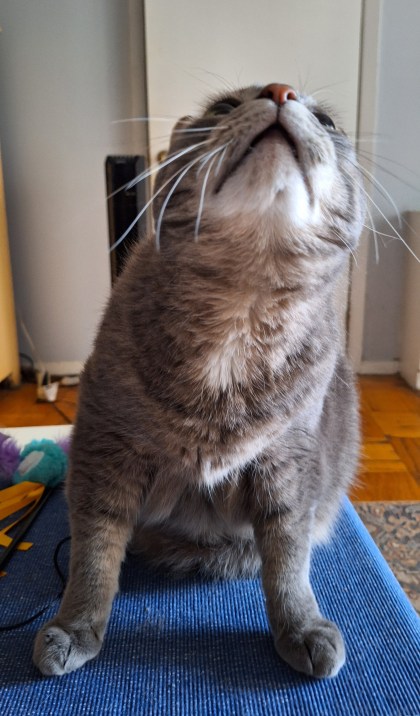
Is That A Cat Or A Seal?

Buddy does his best seal impression! Nearby, our local SPCA deals with a horrific hoarding case.

I snapped the photo below when Buddy heard the upstairs neighbors making noise. Little dude looks like a seal! (The animal, not the singer. Bud’s singing voice is terrible!) All he needs are some flippers:

20240215_195136

The acne spot I wrote about earlier is healed, but as you can see there’s still a tiny spot on his chin where his fur hasn’t completely grown back yet. Thankfully it’s no longer causing him any discomfort, and he’s back to asking for chin scratches while purring happily.

Of course he won’t be happy if I share an unflattering photo without a flattering one, so here he is looking cute:

20240215_194542

Note the huge meowscles and ripped physique!

In some sad news, there’s an ongoing hoarding case in White Plains, NY, just a few miles from Casa de Buddy.

Police responded to an apartment building in the city after neighbors began complaining of “horrific” smells coming from the unit and discovered an older woman living with at least 40 cats in appalling conditions.

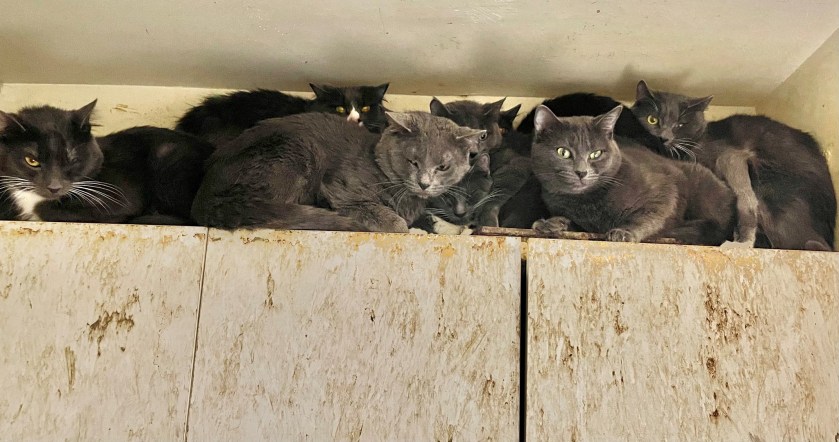
The cats, who are all suffering from ailments including respiratory and eye infections, were everywhere — including inside furniture and atop the kitchen cabinets where a few of them were able to get away from the feces-packed floor.

White Plains cat hoarding case
Cats crowd the limited space above the kitchen cabinets to escape the feces-encrusted floor of the apartment. Credit: Westchester SPCA

https://m.facebook.com/story.php?story_fbid=pfbid0vXAgeiLEQt4s65hG8zq3gEbn7oX1TKRB5r4K5dd1jTXkYU5K6q1m1uG9MhuVjxgml&id=100064390971511

Staff from the SPCA of Westchester County have had to wear hazmat suits to operate inside the apartment. They’re in the process of removing the cats and have set up food and water stations for those they haven’t trapped yet while they try to clean some of the fecal matter and garbage, but they say the number of cats could rise as they find more hiding in the apartment. One cat was pregnant and gave birth to a single kitten on the feces-caked floor. The kitten was quickly removed and is under the close care of veterinary staff but is sickly and “clinging to life,” the SPCA said.

Incredibly, authorities have not charged the human occupant of the apartment. They say she meant well at first but the situation quickly spiraled out of control, as it often does when people who aren’t equipped to care for multiple cats take it upon themselves to “rescue” strays. No one sets out to become a hoarder. It usually happens when initial good intentions become unmoored from reality, but I do wonder how people who find these situations slipping from their control aren’t horrified by the suffering of the animals. Mental illness has to play a part.

Regardless, the situation is dire for the cats and the SPCA anticipates many thousands of dollars in veterinary costs on top of supplies and man hours involved in trapping the cats, getting them veterinary care, cleaning them up and working with them to help them overcome the trauma of their experience so they can become ready for adoption.

The SPCA of Westchester County was Buddy’s first veterinary office where he got his first shots and the snip as a kitten. They were very kind and gentle with the little guy, and at the time I’d just been laid off from my job so it really helped to have a place that provided quality veterinary care for significantly less than private vets. They do good work, and we wish them luck as they deal with a difficult task.

Cat Hunt Canceled, Kiwi Journalist Says Cats ‘Need To Be Shot,’ ‘Run Over’ And ‘Wiped Off The Face Of Aotearoa’

Cats are blamed, to the exclusion of almost all other factors, for the decline in native bird populations in New Zealand.

A New Zealand group canceled a cat-hunting competition for kids after receiving massive backlash for the plan, but one Kiwi journalist told a national audience he thinks the cat hunt is a great idea and doesn’t go far enough.

“When it comes to feeral kets, I’m on the soide of the kea, the kākāpō and the kiwi ivery sangle doy of the week and my missige to [the organizers] is ‘Git the competition back on, git the keds back out thea,'” said the vowel-desecrating morning show host Patrick Gower. “If thea gonna hunt and thea’s feeral kets in the way, then we hif to woipe them out. Feeral kets need to be shot, they need to be run ovah, they need to be trepped, they need to be woiped off the foice of Aotearoa and I imploah the school to git it back on, and look, I’ll put up some rewoade as well foah any kets these kids git down theah as well.”

English translation: “I think the cat-killing contest is a wonderful idea, cats need to be shot, run over and exterminated from New Zealand, and I hate cats so much that I’ll put up some of my own money as prizes for the children who bag the most kills.”

You’ve got to wonder what cats have done to Patrick Gower for him to hate them so much, and fortunately dear readers, PITB has the answer!

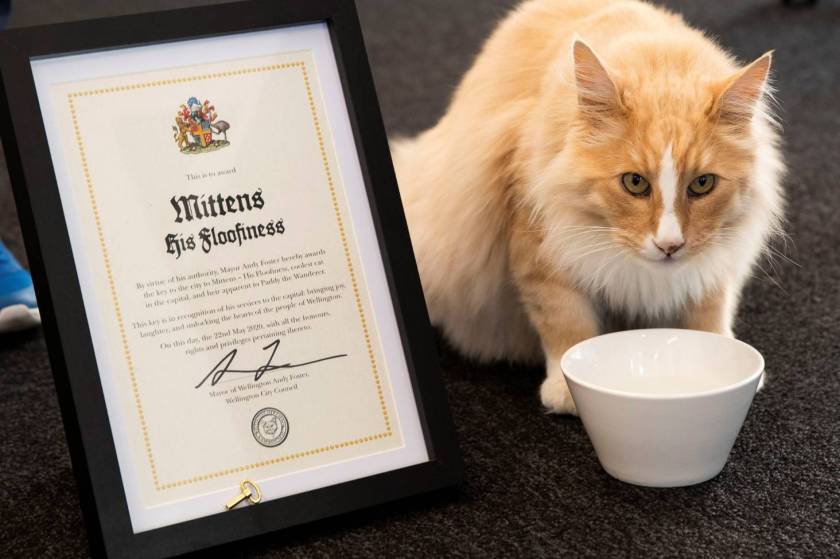
Gower lost the New Zealander of the Year competition of 2020 to a cute orange tabby named Mittens.

Think about that: All those years of doing Pulitzer-worthy breakfast show kitchen demonstrations, of slaving away at the anchor desk bringing viewers important news about reality TV stars and parroting former Prime Minister Jacinda Ardern’s declaration that New Zealand’s government is “the single source of truth” on COVID, and Gower loses the honor to a damn cat. Mittens even has the key to the City of Wellington, and Gower does not.

So sad.

Mittens the Cat
Mittens receiving honors that have eluded morning show host Patrick Gower. Credit: Wellington City Council

It’s unfortunate when a man in influential position, small country or not, enthusiastically encourages children to practice being future serial killers by slaughtering innocent animals because he thinks — despite the complete absence of evidence — that arbitrarily gunning down and running over sentient animals will save birds.

Really, you’d think before calling for the extirpation of an entire species of animal that these people would have something, even a single bogus research study, claiming that bird populations would recover if only people started killing cats on sight.

But no such proof exists, and the burden of proof rests with Gower, fellow Kiwi cat-hater Gareth Morgan and others who harbor an irrational and ill-advised hatred of tiny animals who are simply behaving the way nature designed them to behave.

What we do know is that managing cat populations can be done, but it’s difficult, time-consuming work that requires dedication and patience.

Cities like Washington, D.C., with its exhaustive cat count, and communities across the US have provided the blueprint with TNR efforts and a mass push for all pet owners to spay and neuter their cats. The results have been remarkable, and shelters save more than a million felines a year compared to just a decade ago. There’s still work to be done to bring the number of euthanizations down to zero.

Patrick Gower
Gower

It’s also worth noting that the organizers of the North Canterbury Hunting Competition and supporters like Gower are coming from a place of ignorance. In their original, now-deleted announcement, the organizers offered a “guide” to telling the difference between feral and pet cats, unaware that they are the same species. The only difference is that pet cats are fortunate enough to have homes, and strays and ferals do not.

The group said it was offering its “guide” as a way to prevent children from killing pet cats, but how exactly would they do that when a pet is indistinguishable from a colony stray or a feral? Would they find a microchip on the corpse of a cat they killed and say “Oops, guess that one doesn’t count!”?

Does a cat somehow feel less if it doesn’t have a home? Is its life worth less if it doesn’t have a collar and eat from a bowl?

It’s barbaric and so poorly thought-out, it really boggles the mind that the idea of a cat-killing competition for kids was voiced, let alone approved, planned and promoted by supposed adults.

As for the contest itself, we’re very glad it’s been called off, even if the organizers want to play victim and say their feelings have been hurt by the response to their murderous event.

That, however, doesn’t solve the problem. The fact that the organizers thought this was a good idea in the first place, and the increasingly pitched rhetoric from the likes of Gower and Morgan, are normalizing the idea of slaughtering innocent animals who have their own minds, thoughts and feelings, and who have been shaped by 10,000 years of history to live with and depend on humans.

Instead of calling for blood and whipping people into a frenzy, influential New Zealanders should read about cats and animal cognition in general, so they’re aware that felines experience the full range of primary and secondary emotions and are very much capable of suffering the same way we do when we’re injured, stressed and our lives are in danger.

That, unlike claims that cats are primarily responsible for the decline in bird populations, is hard scientific fact. We can peer into the brains of felines, watch their neurons fire, see different brain regions light up as they think specific thoughts and respond to specific smells and sights.

Maybe if people who hate cats understand what they are, they’ll feel some empathy for a beautiful species, animals who have been companions and literal life savers to humans since before deepest antiquity, animals whose lives have intrinsic value regardless of what they mean to us. At the very least, we owe them that.

New Zealand Hunting Contest For Children Offers Prizes For Killing The Most Cats

One of New Zealand’s most prominent economists has called cats “serial killers” who are driven by “bloodlust,” and is one of many who blame domestic cats for the decline of local wildlife.

An annual hunting competition for children in New Zealand has a new category this year, awarding a cash prize to the young hunter who kills the most cats.

You read that right.

The North Canterbury Hunting Competition announced the new category on Saturday and says it will offer a $250 prize to any child 14 or younger who kills the most felines.

In a statement, the local SPCA pointed out the obvious, that cats will suffer horribly, pets will die and the competition will result in bungled kills en masse, leaving wounded cats to suffer horribly before the children finish them off — if indeed they do.

“There is a good chance someone’s pet may be killed during this event,” the Canterbury SPCA wrote in a statement. “In addition, children often use air rifles in these sorts of events which increase the likelihood of pain and distress, and can cause a prolonged death.”

photo of cats
Credit: Ali Arapou011/pexels

Prompted by the same sloppy “research studies” that inspired Australia to kill millions of cats — and resulted in a mouse plague of biblical proportions in 2021 and 2022, causing billions of dollars in damage to farms, homes, businesses and infrastructure — New Zealand is on a disinformation-fueled jihad against felines.

Like all such studies, the claims that cats are singlehandedly responsible for declines in native wildlife, thus absolving direct human activities of blame, come by way of overzealous bird conservationists and others who insist the mass murder of cats will save native birds and small mammals. As if humans destroying habitats, dumping chemical waste, creating wind farms that act as bird dicers, building glass skyscrapers that millions of birds fly into every year, saturating entire swathes of the Earth with light pollution and EM radiation that harms and confuses animals — and all the other things people do — have no impact whatsoever, and it’s only those dastardly cats who are the culprits.

You’ve got to hand it to the misguided conservationists, who have picked tiny scapegoats who can’t defend themselves verbally or physically against humans.

To understand how the “hunting” (killing) competition can be real, it’s important to understand the context of the way cats are portrayed in New Zealand. Gareth Morgan, a Kiwi economist and politician, launched a campaign about a decade ago with the stated goal of eradicating cats from the island nation of 5.1 million people, which would forbid people from adopting new cats and end programs like trap, neuter, return (TNR) in favor of having local animal control departments kill felines.

Morgan, whose Cats to Go site portrays kitties with devil horns and glowing red eyes, says cats are evil animals driven by “bloodlust.”

“Cats are the only true sadists of the animal world, serial killers who torture without mercy,” Morgan has said.

Hunting Competition
A screenshot from the group’s Facebook page announcing a new prize for young hunters.

The North Canterbury Hunting Competition, which also offers prizes like dirt bikes for child hunters, pulled the new category announcement from its Facebook page on Monday but stopped short of canceling the event, blaming people who were upset by the idea of cat hunting.

Citing abusive feedback, the group said it’s “incredibly disappointed by this reaction” and said the hunt is for a good cause, raising money for local projects.

A Woman Wanted This Gorgeous Kitty Euthanized For Litter Box Issues

A veterinarian realized kitty was healthy and put her in the care of a local no-kill shelter, where she remains while hoping for a forever home.

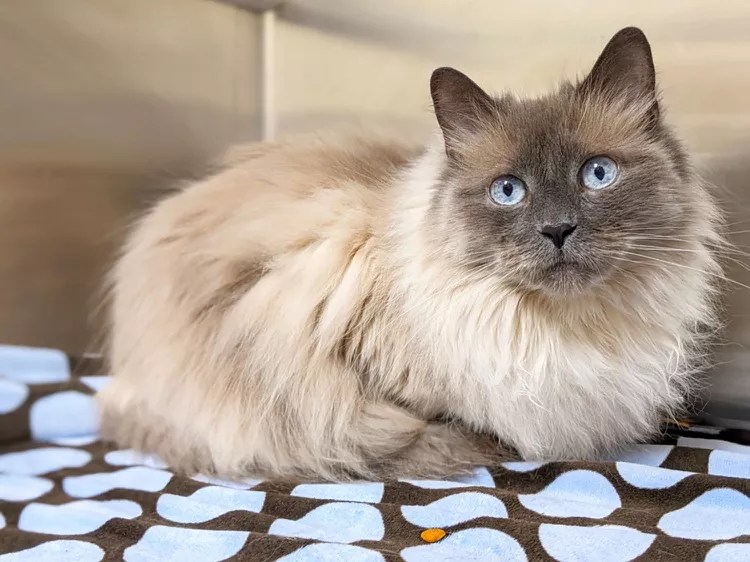
Lulu is 13 years old and began eliminating outside her litter box last year after a long life of doing her business properly.

Instead of realizing that a change in behavior was almost certainly precipitated by health issues — and attempting to get those issues sorted out — Lulu’s “owner” brought her to a veterinarian to be euthanized.

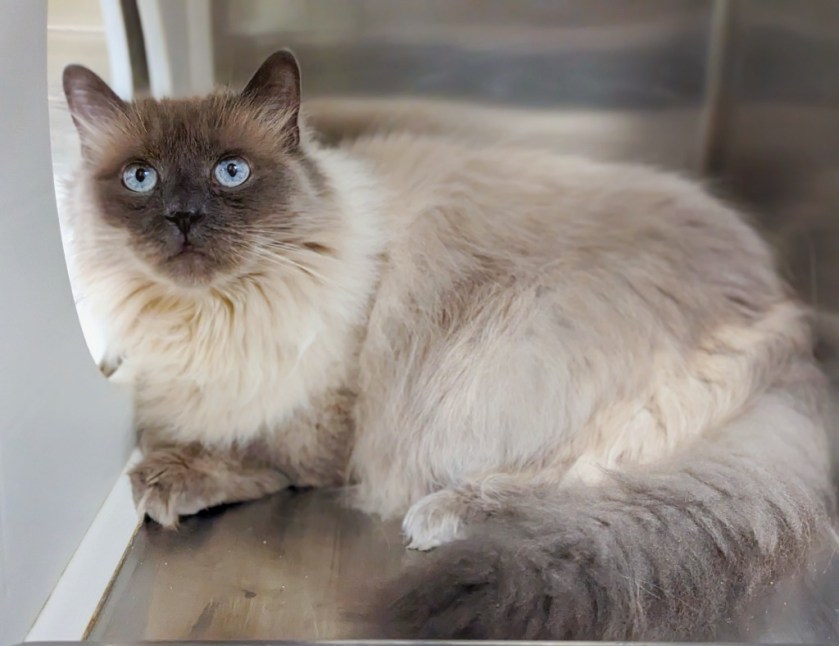
The vet realized Lulu was healthy and her issues were easily remedied, wisely persuaded the woman to sign over ownership of Lulu and brought the Himalayan to the local SPCA. She’s been there since December.

Lulu had urinary crystals which were remedied after a change in diet, and she hasn’t had an “accident” in months.

Staff at the SPCA want people to know that they don’t have to surrender a cat for litter box issues or other behavioral changes even if they think they can’t afford veterinary treatment.

“If your pet is not behaving or their behavior has changed, the first step is to get them to a vet to see if something is medically wrong. Even if it is not a medical condition, there are numerous resources — many available at Dutchess County SPCA — to help resolve the issue and avoid both euthanasia and surrender to a shelter,” Lyne Meloccaro of the Dutchess County SPCA told People. “Medical assistance, expert guidance, and management plans, and training referrals are all available for you.”

Lulu
Lulu has a regal bearing, an epic coat and beautiful coloring. Credit: Dutchess County SPCA

Dutchess County, which is about 75 miles north of New York City, happens to be the former college stomping grounds of Big Buddy. I graduated from Marist College and lived in the area for some years after. The SPCA there does good work, and its law enforcement division has handled some high profile animal-related crimes over the years.

It’s sad that Lulu lost her home after 13 years, but maybe it’s for the best if she ends up with a devoted servant who will really love her. Her caretakers at the SPCA say she’s stubborn, demands affection on her own terms and wants an “emotional support human.”

Lulu is still available for adoption. The SPCA says she’ll do best as an only cat in a quiet household, and we have no doubt she’ll bring joy to the lucky person who brings her home.